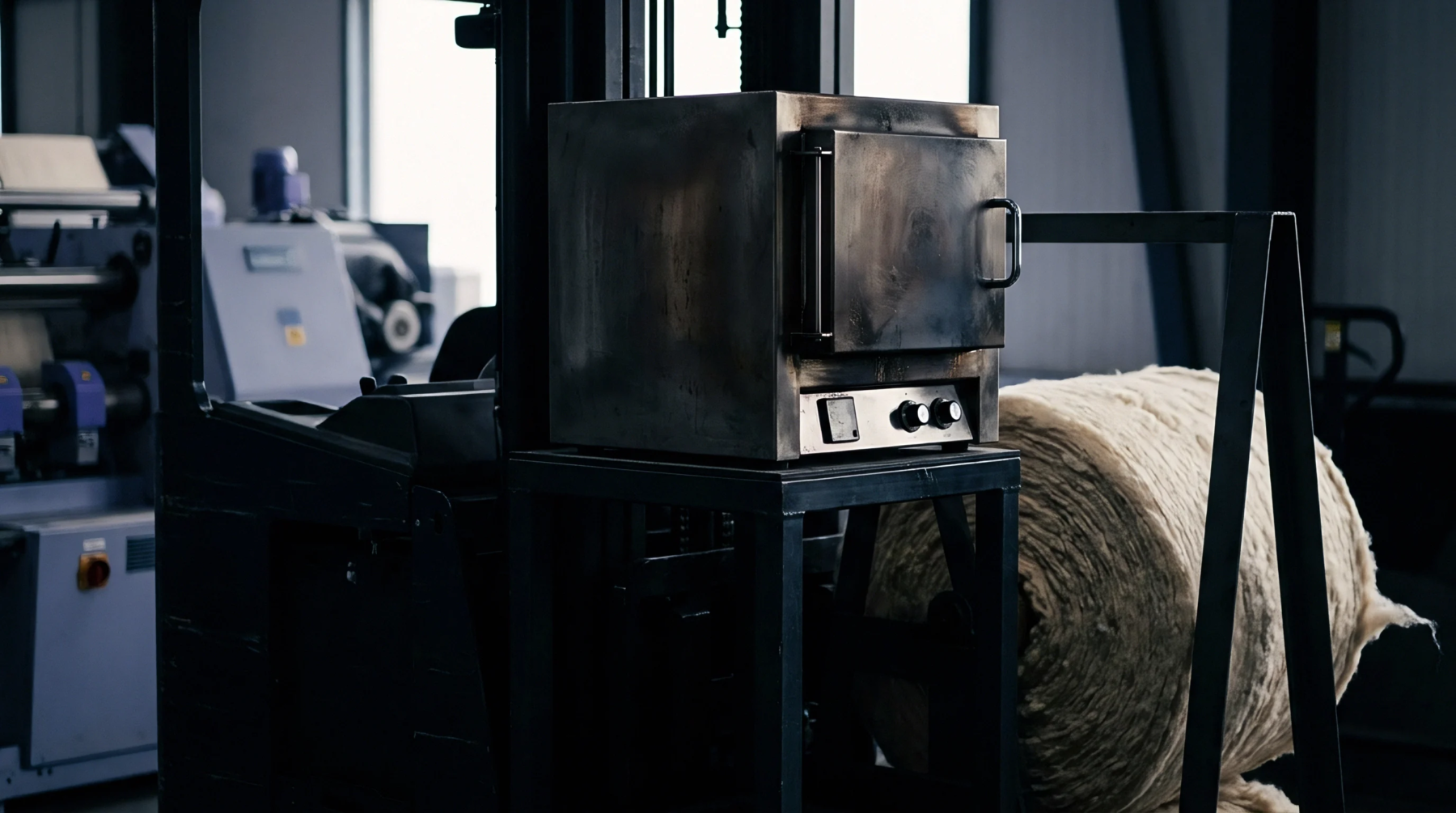
Viscoelastic Response Profile
Dynamic mechanical analysis evaluates polymer chain mobility by applying oscillating strain across a temperature sweep inside a thermal chamber. That mechanical testing protocol measures storage modulus and loss modulus to map how soft goods behave under cyclic stress. Commercial testing laboratories subject yarn bundles and technical fabrics to this measurement procedure before the material reaches commercial finishing lines.
Each resulting curve exposes glass transition temperatures where polymer segments shift from rigid networks to rubbery states. Raw polymer chips entering a textile extrusion plant require this thermal verification to prevent yarn breakage during high-speed melt spinning.
Deformation Mechanics
Oscillating stress forces the sample through sinusoidal displacement while temperature rises at a controlled rate per minute. Phase lag between input strain and output stress reveals damping properties that define polymer resilience. High-frequency sweeps simulate mechanical loading experienced by industrial conveyor belts during continuous manufacturing operations.
Molecular friction converts mechanical energy into heat, which the sensor records as tangent delta peaks. Technicians adjust clamping torque on the sample fixture to eliminate slippage errors during temperature ramps.
Modulus Separation
Storage modulus quantifies elastic energy recovery, while loss modulus isolates viscous dissipation of the polymer network. Comparing these two parameters exposes the exact boundary where a filament transitions from brittle to ductile behaviour. Molecular orientation induced during drawing operations shifts the storage modulus curve upward across ambient thermal ranges.
Fabric manufacturers rely on this numerical separation to set heat-setting temperatures on tenter frames without causing polymer degradation.
Thermal Boundary
Testing parameters restrict sample thickness to prevent thermal gradients from distorting the viscoelastic response curves. Sample holders must maintain constant geometry because thermal expansion alters the clamping span during high-temperature sweeps. Polymer degradation occurs beyond specific thermal thresholds, rendering subsequent modulus data invalid for manufacturing quality control.
High moisture content inside natural fibres interferes with oscillation dampening, requiring prior conditioning in a standard textile laboratory atmosphere. Final acceptance of a raw material batch depends entirely on whether the resulting storage modulus curve matches the established master reference profile.