Quantifying Thermo Mechanical Degradation Limits in Aged Elastomeric Fabrics during High Temperature Jet Processing
High temperature jet processing of aged elastomeric fabrics induces thermal hydrolytic cleavage, reducing retractive force and causing severe roll scrap.
Polymer
Structural decay in synthetic stretch filaments often begins long before grey goods reach wet processing. During extended warehouse storage, environmental exposure alters the polymer backbone of elastomeric yarns. Synthetic elastomers in technical wovens and knits ~ primarily block polyurethane ureas ~ consist of alternating flexible polyether or polyester soft segments and rigid polyurethane hard segments.
The soft blocks supply strain recovery, while the hard aromatic domains form physical cross-links through hydrogen bonding. High humidity, ambient ozone, UV exposure, and thermal swings during storage gradually weaken this chemical network.
Hydrolytic degradation mainly attacks the soft segments of polyester-polyurethane elastomers, splitting ester linkages into hydroxyl and carboxyl end groups. Polyether-polyurethane variants offer better hydrolysis resistance, but remain susceptible to photo-oxidative scission along ether linkages. This oxidation generates hydroperoxides that break into free radicals, cleaving polymer chains and reducing average molecular weight.
Ambient thermal spikes also drive micro-phase separation as hard segments agglomerate into larger crystalline domains, restricting adjacent soft-segment mobility. In 40-denier polyether elastane stored for eighteen months in an unconditioned warehouse, initial retractive force dropped by twenty-four percent before any wet processing began.
Microstructural Shift in Aged Elastane
In block copolymer architectures, ambient aging causes hard blocks to migrate into distinct macro-domains. This phase separation changes the hydrogen-bonding balance between hard-hard and hard-soft segments. Infrared spectroscopy tracks this through a shift in the hydrogen-bonded carbonyl peak, indicating that hard segments have disengaged from the matrix.
Once clustered into isolated domains, these hard blocks can no longer reinforce the soft polyether network effectively.
Soft segments can uncoil even without external load during storage. Winding tension on a batch beam or knitter roll keeps core yarns under continuous low-level elongation, and over twelve to twenty-four months, this static strain accelerates stress relaxation. As polymer chain coils lose entropic elasticity, the zero-load glass transition temperature of the soft phase shifts upward.
| Property Measured | Test Method | Virgin Elastane (2 Months Storage) | Aged Elastane (18 Months Storage) | Tolerance Limit for Jet Qualification |
|---|---|---|---|---|
| Retractive Force at 200% Elongation (cN/tex) | ISO 20932-1 | 0.48 ± 0.02 | 0.36 ± 0.03 | ≥ 0.42 cN/tex |
| Permanent Set after 100% Strain (%) | ASTM D2594 | 3.2 ± 0.4 | 8.7 ± 0.9 | ≤ 5.0% |
| Soft Segment Glass Transition Tg (°C) | DMA (ISO 6721-11) | -52.4 ± 0.5 | -44.1 ± 0.8 | ≤ -48.0°C |
| Carbonyl Hydrogen-Bonding Ratio | ATR-FTIR (I1700/I1730) | 1.45 ± 0.03 | 1.12 ± 0.04 | ≥ 1.30 |
| Weight Average Molecular Weight Mw (g/mol) | GPC / SEC | 112,000 ± 3,500 | 84,000 ± 4,200 | ≥ 100,000 g/mol |
Hydrolytic Cleavage and Storage Exposure
When rolls are stored above sixty-five percent relative humidity without climate control, moisture diffuses through the face fabric to reach the elastomeric core. Hydrolysis breaks urethane linkages directly, forming amine end-groups and carbon dioxide. In polyester-based elastanes, hydrolytic attack targets ester groups to produce carboxylic acids, which then autocatalyze further chain cleavage.
Unconditioned storage in high-humidity environments degrades elastomeric soft segments faster than high-temperature dry finishing.
Temperature swings in storage warehouses aggravate this decay. Daily cycling creates micro-condensation on grey rolls, concentrating atmospheric pollutants like sulfur dioxide and nitrogen oxides. Acidic micro-environments form along the selvedges, bringing local pH below 4.0 and degrading core yarns unevenly across the roll width.
This creates edge-to-center variance in retractive tension long before the fabric reaches wet processing.
Storage degradation also lowers the elastomer’s thermal resistance. While virgin polyurethane urea filaments remain stable up to 180°C during short heat-setting cycles, aged filaments with lower molecular weight begin softening around 115°C. When compromised grey goods enter high-temperature dyeing machinery, thermal softening and hydrodynamic forces combine to rupture internal filaments. In one instance, an unverified batch of eighteen-month-old stretch woven fabric suffered core collapse during a standard 130°C jet dyeing cycle, resulting in a thirty-two thousand dollar rejection.
Bath
High-pressure jet dyeing vessels expose circulating fabric ropes to heavy fluid dynamics. Moving through the drive reel, nozzle, venturi throat, and transport tube, the rope contracts, flexes, and stretches continuously. High hydraulic pressure in the venturi creates strong velocity differentials between the dyebath liquor and the moving fabric, while wall contact adds frictional drag that deforms heat-softened core filaments within the yarn structure.
Modern jet dyeing machines operate at low liquor ratios from 1:5 to 1:10, creating significant turbulence. As the fabric rope enters the nozzle at linear speeds between two hundred and four hundred metres per minute, pressure drops induce hydrodynamic cavitation. Micro-bubbles collapsing near yarn bundles generate localized hydraulic impacts that can strip away loose protective sheaths and fracture exposed elastomeric cores.
Hydrodynamic Stress in Jet Nozzles
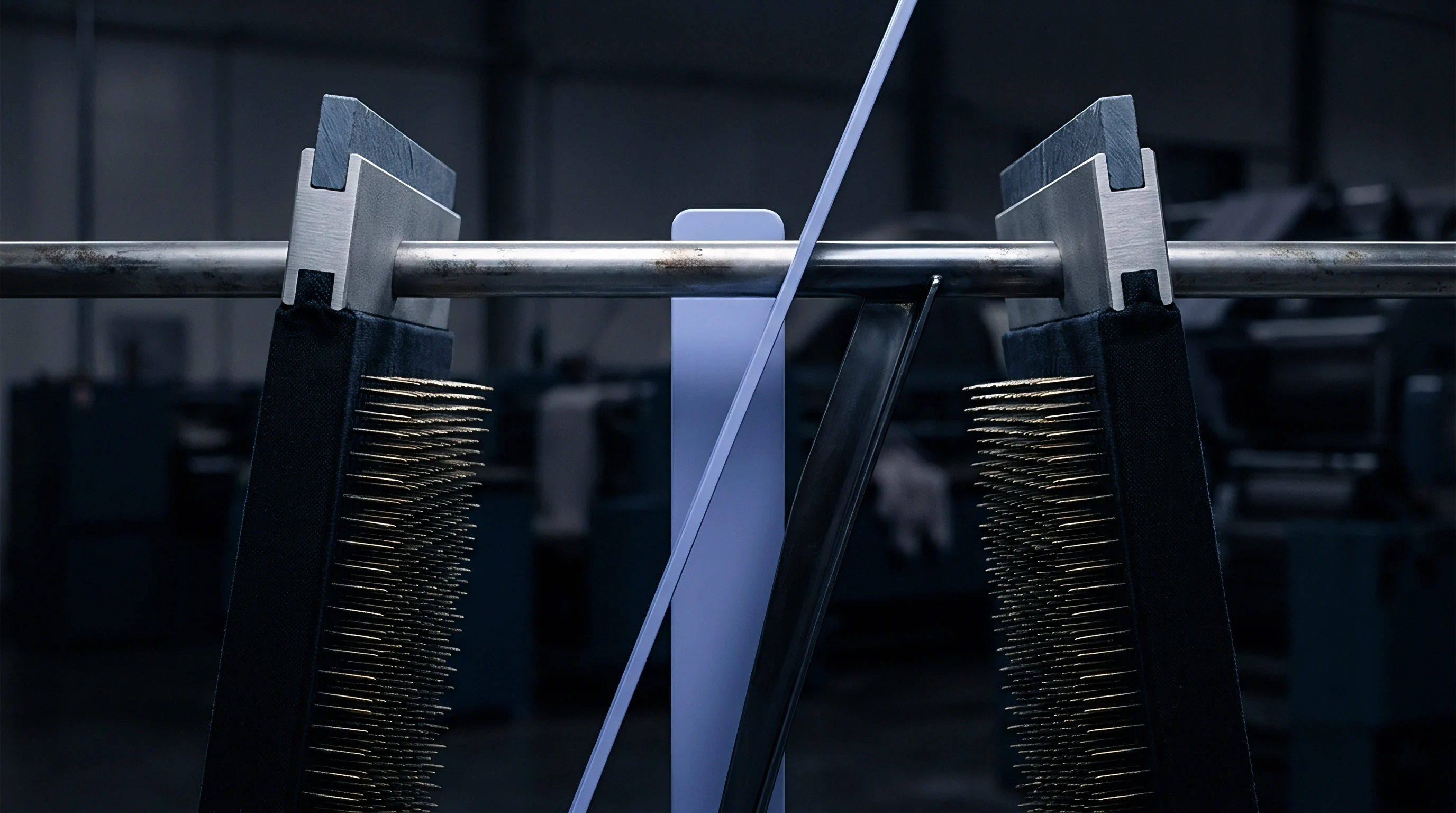
Fluid acceleration through constricted nozzle apertures produces steep velocity gradients across the rope cross-section. Because the outer sheath accelerates ahead of the inner core, shear stresses build up inside composite yarns. In aged core-spun yarns, this shear causes internal slip between the outer fiber sheath and the elastomeric core, exposing heat-softened elastane directly to the hot dye liquor.
Nozzle diameter directly controls the mechanical pressure exerted on the fabric. Running circular knit goods through a narrow 80-millimetre nozzle to maintain high rope speed increases fluid pressure to 2.2 bar, compressing the rope against transport tube walls and elevating surface friction. Switching to a 120-millimetre nozzle reduces fluid pressure to 0.9 bar, lowering shear forces at the cost of lower rope velocity and less uniform liquor turnover.
- Filament fibrillation appears as longitudinal splitting along the elastane core when shear stress exceeds the reduced yield strength of aged polyurethane.
- Core exposure occurs when outer sheath yarns slip under high jet pressure, revealing bare elastomeric filaments to bath friction.
- Chain scission accelerates inside the jet vessel when thermal energy ruptures hydrolytically weakened polyether soft segments under tension.
- Elastic hysteresis collapse develops when cyclic stretching through the transport tube exceeds the polymer’s plastic strain limit.
Mechanical Abrasion and Rope Tension
Driven reels pull wet fabric loops from the vessel chamber at speeds exceeding three hundred metres per minute. Reel overfeed must match liquor flow velocity through the nozzle to prevent excess longitudinal tension. When reel speed pulls ahead of fluid transport in a 130°C dyebath, the fabric undergoes mechanical draw right at temperatures where elastomeric hard segments begin to disassociate.
Rope accumulation in the storage J-box subjects lower fabric layers to static compression under the weight of wet cloth. As hot liquor circulates through the packed bundle, uneven thermal loads act on the compressed fabric. When goods made with aged elastane cores are compressed above their glass transition point, they develop permanent creasing and structural deformation.
Lowering liquor ratios is often thought to preserve elastomeric integrity by reducing thermal exposure time. However, this overlooks the higher chemical concentrations and increased mechanical impact per unit mass of fabric in low-liquor vessels. Running reduced dyebath volumes requires faster rope circulation to maintain level shades, increasing nozzle passes by forty percent and accelerating mechanical wear on aged elastane cores far more than longer dwell times in higher-volume baths.

Shear
Thermal energy and mechanical strain act together to destabilize synthetic elastomer yarns during high-temperature cycles. Heat disrupts hydrogen bonding between hard polyurethane segments, converting semi-crystalline domains into a viscous state. Simultaneously, hydrodynamic jet forces exert longitudinal tension on the fabric rope, allowing unanchored polyether soft chains to slide past one another irreversibly.
Mechanical shear lowers the activation energy required for thermal breakdown. While unstressed polyurethane urea filaments withstand temperatures up to 170°C before significant chain cleavage occurs, dynamic tension inside a jet vessel lowers this barrier. Under cyclic extension in the nozzle, thermal hydrolysis of urethane bonds proceeds rapidly at 125°C to 130°C.
Activation Energy of Thermo-Mechanical Failure
High bath temperatures reduce the mechanical force needed to break molecular bonds in elastomeric filaments. In polyamide dyeing, acidic liquors (pH 4.2 to 4.8) supply hydrogen ions that catalyze hydrolytic cleavage of urethane linkages. Conversely, alkaline processing for cotton blends or oligomer stripping (pH 9.5 to 10.5) attacks polyester elastanes through nucleophilic ester hydrolysis.
Combining chemical catalysis with mechanical tension sharply accelerates this decay.
Dynamic mechanical testing shows that aged elastane held under two percent strain loses fifty percent of its elastic modulus within thirty minutes at 130°C, whereas unstrained elastane retains eighty percent under the same conditions. Mechanical strain opens the polymer structure, allowing water molecules and hydrogen ions to penetrate deeper into hydrophobic core zones.
| Dyeing Temperature (°C) | Dwell Time (min) | Bath pH | Nozzle Shear (bar) | Retractive Force Retention (%) | Permanent Hysteresis Set (%) |
|---|---|---|---|---|---|
| 120 | 30 | 5.5 | 1.0 | 91.4 ± 1.2 | 4.1 ± 0.3 |
| 120 | 60 | 5.5 | 1.0 | 84.2 ± 1.5 | 6.8 ± 0.5 |
| 130 | 30 | 5.5 | 1.0 | 72.8 ± 2.1 | 12.4 ± 0.8 |
| 130 | 60 | 5.5 | 1.0 | 58.1 ± 2.4 | 21.9 ± 1.2 |
| 130 | 60 | 4.5 | 1.8 | 41.5 ± 3.1 | 34.7 ± 1.8 |
| 135 | 45 | 4.5 | 2.2 | 28.3 ± 3.8 | 48.2 ± 2.4 |
| Data measured on 80/20 Polyamide 6,6 / Polyether Elastane warp knit fabric aged 18 months prior to treatment. Retractive force measured at 200% elongation per ISO 20932-1. Permanent set measured after 100% strain per ASTM D2594. | |||||
Stress Relaxation Kinetics under Thermal Load
When heated past their soft-segment transition point under continuous strain, polyurethane chains quickly lose retractive force. The stress relaxation rate follows a non-linear exponential curve that rises with temperature. As the fabric rope passes through high-tension nozzle zones every thirty to sixty seconds, it experiences a repetitive cyclic fatigue profile.
Aged polyether elastane exposed to 130°C jet dyeing for 60 minutes loses up to 42 percent of its original retractive force.
Plastic strain accumulates with each pass through the nozzle. During the high-temperature hold phase, short cycle intervals prevent polymer chains from elastically re-coiling, leaving the elastomer continuously extended throughout the dwell period.
- Initial thermal disassociation of hard-segment hydrogen bonds occurs as bath temperature reaches 95°C.
- Mechanical elongation inside the nozzle venturi stretches unanchored soft segments past their linear elastic limit.
- Chemical hydrolysis cleaves exposed polyether chains at the peak dyeing temperature of 130°C.
- Irreversible plastic slip locks polymer chains into an extended conformation during rapid bath cooling.
- Recrystallization of hard segments occurs in distorted geometric positions, permanently reducing fabric retractive power.
Under optical magnification, filament fracture patterns in jet-dyed circular knits suffering from elastane degradation reveal severe cross-sectional erosion. Instead of the clean transverse snaps typical of mechanical overload, heat-softened aged filaments show fibrillated, mushroomed fracture tips with extensive longitudinal voiding. High-temperature jet processing effectively converts continuous elastic filaments into segmented filler strands inside the composite yarn core.
Longer dwell times at moderate temperatures cause less structural damage than short exposures to higher heat. Holding a dyebath profile at 120°C for seventy-five minutes preserves core elasticity far better than a forty-five minute cycle run at 132°C.
Diagnostics
Analytical procedures quantify structural loss in elastomeric knits and wovens before committing to bulk processing. Assessing grey goods before wet treatment requires distinguishing physical aging from irreversible chemical degradation. Because outer sheath yarns mask core damage during standard strain tests, tensile testing alone cannot detect early hydrolytic scission.
Spectroscopic, thermal, and mechanical characterization protocols isolate and measure core elastomeric integrity within composite fabrics.
Attenuated Total Reflectance Fourier Transform Infrared (ATR-FTIR) spectroscopy evaluates chemical breakdown by tracking changes in absorbance peaks. Solvent extraction with petroleum ether or dichloromethane removes spinning oils and finishes to expose clean fibers. The ratio of the hydrogen-bonded urethane carbonyl peak at 1700 cm⁻¹ to the free carbonyl peak at 1730 cm⁻¹ quantifies hard-segment disassociation, while comparing ether absorption at 1110 cm⁻¹ against aliphatic carbon-hydrogen peaks at 2940 cm⁻¹ measures hydrolytic soft-segment breakdown in polyether elastanes.
Spectrometric and Thermal Analysis Techniques
Infrared spectroscopy tracks polyurethane urea degradation through specific absorption bands. A drop in the carbonyl hydrogen-bonding index below 1.20 signals severe damage to hard-segment domains, while an increase in primary amine absorption at 3300 cm⁻¹ confirms scission along the urethane backbone. These spectral markers correlate directly with retractive power loss in finished fabrics.
Differential Scanning Calorimetry (DSC) and Dynamic Mechanical Analysis (DMA) identify phase separation behavior and shifts in glass transition temperature. DMA measures storage modulus (E’) and loss tangent (tan δ) from -80°C to 200°C. An upward shift in the soft-segment glass transition temperature (Tg) reflects lost chain mobility from cross-linking or oxidative breakdown, while a drop in the rubbery plateau modulus between 20°C and 100°C indicates lower active cross-link density.
| Diagnostic Method | Analytical Parameter | Baseline Value (Healthy Core) | Degraded Limit (Reject Goods) | Primary Failure Indication |
|---|---|---|---|---|
| ATR-FTIR Spectroscopy | I1700 / I1730 Peak Ratio | > 1.35 | < 1.15 | Hard segment hydrogen bond loss |
| Dynamic Mechanical Analysis | Rubbery Plateau E’ (MPa) | 12.5 ± 1.2 | < 6.2 | Cross-link network destruction |
| Gel Permeation Chromatography | Polydispersity Index (Mw/Mn) | 1.8 to 2.2 | > 3.5 | Chain scission and random degradation |
| Cyclic Tensile Loading (ISO 20932) | Unload Power at 50% Strain (N) | > 2.5 N | < 1.1 N | Loss of garment retractive force |
| Capillary Viscometry | Intrinsic Viscosity (dL/g) | 1.45 ± 0.05 | < 0.98 | Polymer molecular weight reduction |

Mechanical Modulus and Recovery Testing
Tensile testing frames evaluate load retention and permanent set across repeated extension cycles. Standardized under ISO 20932-1, cyclic testing between zero strain and a specified force or extension limit ~ run for five cycles at a crosshead speed of 500 millimetres per minute ~ generates the fabric hysteresis curve. Aged elastomeric goods exposed to high-temperature jet processing produce wide hysteresis loops with low retractive force during unloading.
Testing thresholds rely on retractive tension at twenty percent strain rather than ultimate breaking elongation. Ultimate tensile strength primarily reflects the load-bearing capacity of the rigid companion fibers in the sheath, masking core elastomeric failure. Measuring retractive force at twenty percent elongation on the fifth unloading cycle isolates the elastic contribution of the core, where a drop exceeding fifteen percent relative to unprocessed grey fabric confirms severe thermo-mechanical degradation.
Standard purchasing specifications stipulate that incoming elastomeric grey goods older than twelve months undergo dynamic mechanical qualification before wet processing.
Commercial contracts rely on standardized verification metrics to resolve quality disputes. International purchasing clauses typically stipulate that if fabric retractive power at fifty percent elongation drops by more than twenty percent after standard 130°C processing, the grey goods supplier assumes financial liability for the ruined batch. These testing clauses translate technical degradation metrics into clear contractual protections.
Parameters
Dyehouse process adjustments help prevent structural failure when processing aged stretch inventory. Operating conditions must balance level dye migration against the thermal and mechanical limits of compromised core yarns. Adjusting heating ramps, tightly controlling pH, lowering peak dyeing temperatures, and applying specialized auxiliaries all help preserve sensitive polyurethane structures.
Heating rates dictate the thermal stress applied to the polymer core. Standard jet dyeing profiles heat at 1.5°C to 2.0°C per minute directly to a peak of 130°C. For aged elastomeric goods, multi-stage ramping mitigates thermal shock: heating at 1.0°C per minute between 80°C and 110°C allows structural stress to relax gradually before hard segments disassociate, while holding at 115°C for fifteen minutes promotes dye migration with minimal soft-segment cleavage.
Can Process Ramping Prevent Thermal Breakdown?
Controlled heating gradients minimize exposure to peak temperatures. Dropping maximum dyeing temperature from 130°C to 122°C cuts hydrolytic scission rates by over fifty percent. Achieving full color depth and shade levelness at this lower temperature requires extending dwell times by twenty to thirty percent or using specialized carriers to accelerate dye diffusion into the companion fiber sheath.
Rope circulation speed should be reduced along with processing temperature. Dropping reel speed from 350 metres per minute to 240 metres per minute cuts mechanical shear inside the nozzle. To prevent rope creasing at these lower speeds, operators open the nozzle aperture and reduce pump pressure to establish a gentle soft-flow transport environment.
Auxiliary Chemistry and Lubrication Strategies
Chemical bath additives form a protective film over moving fabric surfaces. High-molecular-weight polyacrylamide or fatty acid ester lubricants drop the coefficient of friction between fabric ropes and steel vessel walls from 0.45 to under 0.15. Lowering surface friction prevents localized heating and reduces longitudinal tension on the inner elastane core during nozzle passes.
Bath antioxidants and hydroperoxide scavengers help shield aged elastomeric yarns from thermo-oxidative degradation during long holds. In acid dyebaths, ethoxylated fatty amine derivatives serve as fiber-protective agents by complexing with reactive sites along the polyurethane chain, helping preserve filament integrity under aggressive processing conditions.
- Thermal history auditing verifies grey roll storage duration and environmental conditions prior to recipe generation.
- Modified temperature profiles restrict peak dyeing temperatures to 122°C with extended dwell times.
- Anti-crease lubrication lowers hydrodynamic friction inside the transport tube to minimize longitudinal tension.
- pH stabilization maintains dyebath acidity within a tight 5.0 to 5.2 window to suppress acid-catalyzed hydrolytic scission.
- Gentle nozzle geometry uses oversized nozzle rings to minimize mechanical shear and cavitation stress.
Engineers continue to debate whether lower peak processing temperatures can achieve acceptable wash fastness on high-performance polyamide blends without compromising aged cores. Lowering dyeing temperatures from 130°C to 120°C preserves retractive force, but reduces dye fixation depth within the polyamide fiber. Poor laundering fastness often follows, forcing dyehouses to weigh structural integrity against commercial shade standards.
Landed
Financial losses from degraded elastomeric inventory manifest when finished widths fall out of specification or bulk lots are scrapped. Structural breakdown of core yarns destroys retractive force, leaving stretch fabrics unable to recover target dimensions after finishing. When heat-softened filaments break inside the jet vessel, finished cloth shows edge curl, width variation across the roll, and permanent bagging on the cutting table.
Scrap allowances on standard stretch production runs typically range from two to three percent. Processing aged elastomeric stock through high-temperature jet cycles without adjusting parameters can drive scrap rates up to fifteen to thirty-five percent, wasting raw materials and utilities while consuming machine capacity and causing missed delivery schedules.
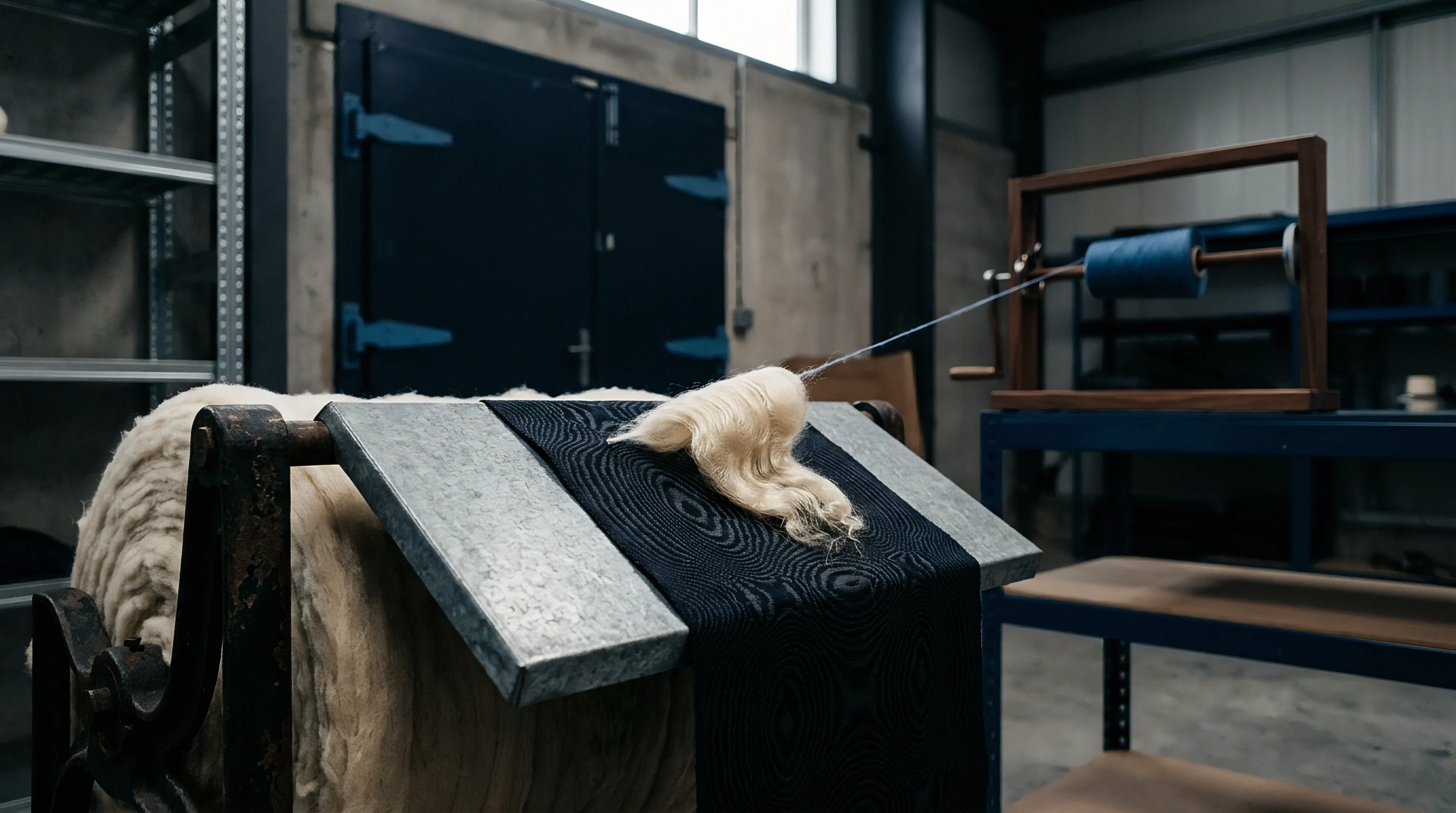
Yield Losses and Commercial Scrap Allowances
Filament breakage during dyeing leads to irreversible retractive loss, causing rolls to shrink excessively during stenter drying. Attempting to pull damaged cloth to width on the stenter frame produces longitudinal tears and selvedge bursts, while fabric weight falls below target because the structure lacks the retractive density to hold its specified weight.
Landed cost calculations must account for yield loss resulting from post-dyeing width reduction. A warp-knit stretch fabric specified at 160-centimetre finished width that contracts to 138 centimetres loses 13.7 percent of its usable surface area. Because garment markers require full cut width, narrow rolls generate substantial cutting table waste, inflating unit production costs.
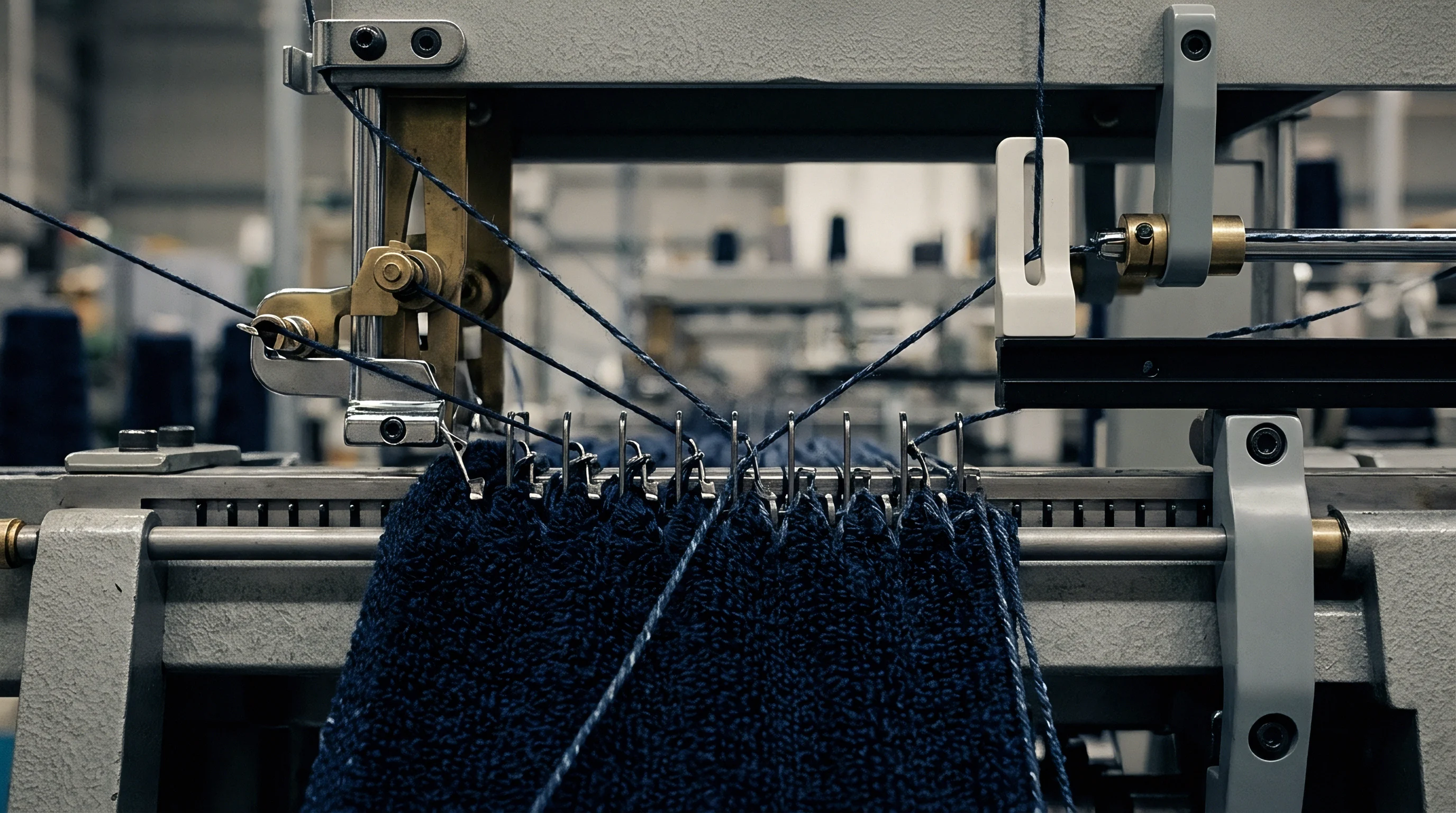
Contractual Sourcing Liability and Verification
Purchase specifications typically set shelf-life limits for raw yarn alongside finished fabric requirements. Sourcing agreements between brands, converters, and mills usually cap grey yarn age at twelve months from spinning, with standard clauses mandating incoming material testing for goods held over six months in non-climate-controlled storage.
Uncontrolled fabric width contraction during stenter drying signals systemic core filament rupture inside the jet vessel.
Converter audits verify whether raw grey roll storage logs match true yarn manufacturing dates, as mills may blend aged grey stock into fresh lots to clear older inventory. When jet processing fails, dyehouse managers frequently point to dye chemistry or mechanical issues rather than hydrolyzed grey stock. Standard supply agreements require full traceability of yarn lot numbers and spinning dates before any party assumes liability for destroyed dye lots.
Resolving commercial claims relies on sample retention protocols. Preserving un-dyed grey swatches alongside finished fabric rolls enables independent laboratory arbitration. If ATR-FTIR analysis of retained grey swatches demonstrates pre-existing soft-segment hydrolysis, financial liability rests directly with the grey goods supplier, protecting the dyehouse from conversion losses.