Dynamic Headspace Gas Scrubbing Kinetics for Separating Volatile Sulfur Dioxide from Formaldehyde Vapors
Differential gas scrubbing with dilute neutral peroxide removes volatile sulfur dioxide within seconds while preserving textile formaldehyde vapor for audit compliance.


Vapor
Co-Volatilization from Chemically Finished Cellulosic Lots
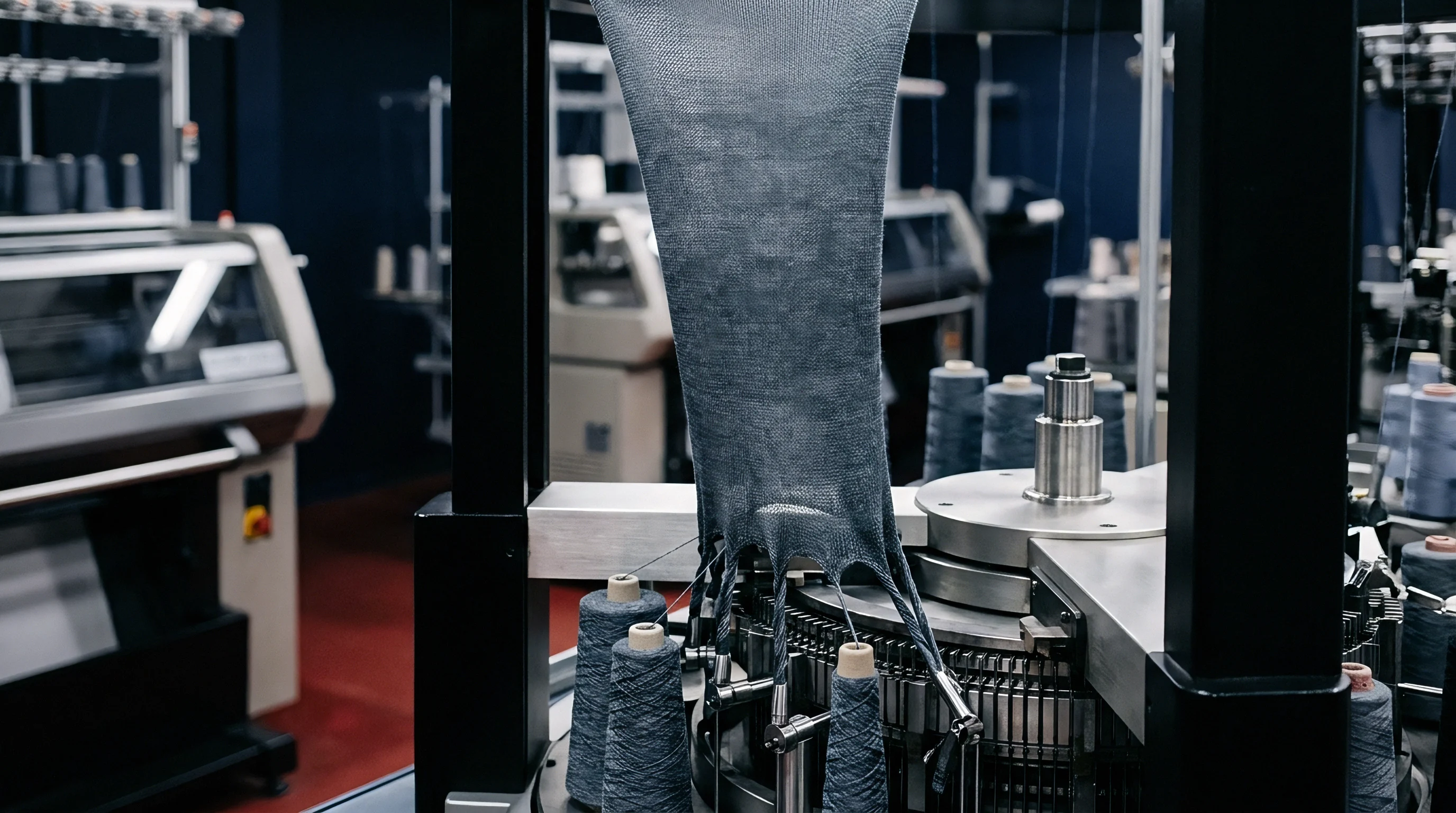
Thermal desorption of finished goods inside a continuous gas extraction vessel liberates formaldehyde alongside sulfur dioxide when chemical finishing packages contain sulfoxylate reducing agents or unreacted bisulfite stabilizers. Sodium hydroxymethanesulfinate, marketed widely under trade names for discharge printing and vat dye reduction, decomposes at temperatures above sixty degrees Celsius to generate equimolar gaseous fractions of formaldehyde and sulfur dioxide. Finishing facilities applying durable press reactants such as dimethyloldihydroxyethyleneurea introduce additional formaldehyde reservoirs through unbound reactant equilibrium.
When mills run reduction clearing on adjacent disperse-dyed polyester lots using sodium dithionite, aerosolized sulfites deposit across shared stenter frames and tenter house exhaust streams.
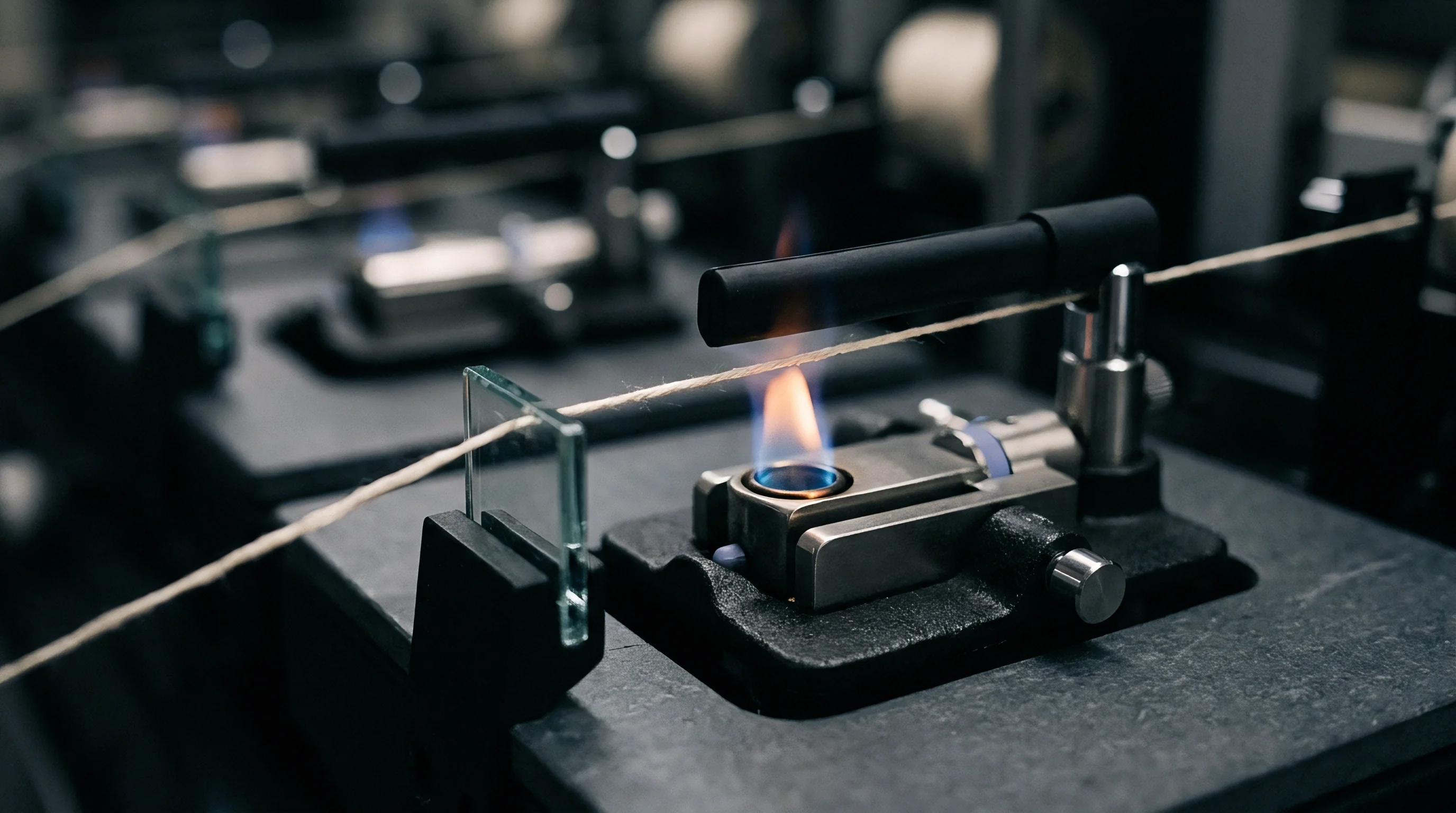
The gas phase above the heated swatch becomes an analytical battleground. The Henry law solubility constant of formaldehyde in aqueous surface condensates exceeds that of sulfur dioxide by more than three orders of magnitude at standard ambient temperature. Sulfur dioxide partitions aggressively into the sweeping nitrogen purge gas with a dimensionless gas-liquid distribution coefficient near 0.03 at twenty-five degrees Celsius.
Formaldehyde displays a coefficient approaching 3.4 multiplied by ten to the negative fifth under identical thermal exposure.
A twenty-gram cotton swatch finished with modified glyoxal resin releases up to twelve micrograms of sulfur dioxide per hour under eighty-degree nitrogen sweep conditions.
This thermodynamic divergence complicates direct headspace quantification. As carrier gas purges the vessel at fifty milliliters per minute, volatile sulfur dioxide leaves the specimen chamber almost immediately. Formaldehyde vapor trails behind, sustained by continuous release from etherified cellulose crosslinks and hydrating methylol groups.
The two vapors mix intimately within the heated effluent conduit before reaching collection traps or detection cells.
Analytical chemists face immediate cross-reactivity once these compounds enter sample absorption media. Nash reagent spectrophotometry relies on the condensation of formaldehyde with ammonium ions and acetylacetone to synthesize yellow 3,5-diacetyl-1,4-dihydrolutidine. Aqueous sulfur dioxide acts as a potent reducing bleach against this chromophore, diminishing optical density at four hundred twelve nanometers.
Co-eluting sulfur dioxide reacts simultaneously with unreacted formaldehyde in chilled liquid impingers to form hydroxymethanesulfonate, an exceptionally stable bisulfite adduct that ignores acetylacetone completely. The finishing mill manager routinely claims that sulfur odors disappear once the rolls air out on open pallets in the warehouse.


Flux

Do Bisulfite Adducts Inhibit Vapor Release Kinetics?
Purge gas velocity governs whether formaldehyde and sulfur dioxide separate in the headspace chamber or combine into non-volatile sulfonate salts. Hydroxymethanesulfonate formation occurs rapidly in aqueous micro-droplets condensed along transfer tubing. The forward bimolecular reaction rate constant between molecular formaldehyde and dissolved bisulfite reaches 1.2 multiplied by ten to the third liters per mole per second at twenty degrees Celsius.
The reverse dissociation reaction runs slowly in neutral liquid layers, exhibiting a first-order rate constant of 1.1 multiplied by ten to the negative fourth reciprocal seconds.
Accelerating the volumetric purge flow shifts the equilibrium by physically sweeping unreacted formaldehyde away before condensation occurs. Gas phase residence times below two seconds prevent secondary homogeneous recombination. The mass transfer flux of sulfur dioxide across the textile boundary layer depends almost exclusively on gas film resistance.
Formaldehyde transfer rates depend heavily on intra-fiber diffusion resistances through swollen cellulosic amorphous domains.
| Chemical Species | Henry Constant In Water (M / atm) | Gas Diffusion Coefficient (cm2 / s) | Scrubber Mass Transfer Rate (kLa, s-1) | Adduct Forward Constant (L / mol-s) |
|---|---|---|---|---|
| Sulfur Dioxide | 1.23 | 0.126 | 0.084 | 1200 |
| Formaldehyde | 3400.00 | 0.158 | 0.002 | 1200 |
| Hydroxymethanesulfonate | Non-Volatile | 0.000 | 0.000 | 0.00011 |
Differential gas scrubbing exploits these kinetic differences. Sulfur dioxide reacts instantly with selective basic or oxidizing liquid scrubbers through rapid gas-liquid interfacial transport. Hydrogen peroxide solutions convert dissolved sulfur dioxide into non-volatile sulfuric acid through irreversible oxidation.
Formaldehyde passes through dilute peroxide solutions without significant degradation when contact times remain brief and solution pH stays within slightly acidic margins.
Mass transfer efficiency inside gas bubbler systems hinges on bubble diameter and contact path length. Small bubbles produced by fine-porosity glass frits increase interfacial surface area, raising the volumetric mass transfer coefficient for sulfur dioxide to values exceeding 0.08 reciprocal seconds. Formaldehyde absorption in the same dilute scrubbing stage remains negligible due to the low rate of aqueous glycol formation during transient sub-second bubble lifetimes.
- Porous Glass Sparger Blockage creates backpressure variations inside the desorption chamber, altering sample evaporation rates and causing retention time fluctuations on downstream sensors.
- Scrubber Liquid Evaporation concentrates oxidizing reagents over prolonged analysis runs, accelerating secondary formaldehyde destruction and artificially lowering reported release values.
- Condensation In Transfer Lines dissolves gaseous formaldehyde prematurely, yielding catastrophic negative bias before the effluent reaches the selective chemical trap.
- Oxidizer Exhaustion In Scrubbing Vials allows unreacted sulfur dioxide to pass freely into collection flasks, quenching Nash chromophores and falsifying compliance certifications.
A testing laboratory running fifty swatches daily burns through scrubbing capacity rapidly. Reagent replenishments follow strict sample-count thresholds rather than calendar schedules. The detector signal drops.
Higher carrier gas velocity strips free aldehydes before secondary adduct decomposition begins.

Bed

Solid Chemical Scavengers and Media Packing
Solid-state reagent columns offer an alternative to liquid impingers for online gas cleanup. Granular lead dioxide packs neatly into five-millimeter inner diameter fluoropolymer tubes positioned immediately downstream from the thermal extraction vessel. Lead dioxide oxidizes volatile sulfur dioxide into insoluble lead sulfate upon physical contact at room temperature.
Formaldehyde vapor traverses the packed bed without measurable retention or catalytic decomposition when bed residence times remain below five hundred milliseconds.
Alternative packing materials introduce severe analytical errors. Activated charcoal adsorbs both target gases indiscriminately, stripping the purge stream of all organic analytes. Basic alumina retains sulfur dioxide effectively through chemisorption, but its active hydroxyl surfaces promote formaldehyde polymerization into cyclic trioxane and paraformaldehyde solids.
Anhydrous calcium sulfate columns configured to scrub humidity inadvertently absorb up to forty percent of vaporous formaldehyde through polar physical binding.
Immobilized lead dioxide cartridges maintain greater than ninety-nine percent sulfur dioxide collection efficiency across twelve consecutive hours of continuous gas purge.
Sodium carbonate coatings on inert glass beads present a non-heavy-metal alternative. The solid carbonate reacts with acidic sulfur dioxide gas to produce solid sodium sulfite and carbon dioxide. The reaction rate drops precipitously when carrier gas relative humidity dips below thirty percent.
Water vapor acts as a necessary interfacial catalyst for the salt conversion process. Cellulosic swatches conditioned at standard atmospheric humidity release sufficient moisture during initial heating stages to sustain this surface chemistry.
- Granular Particle Diameter ranges between sixty and eighty mesh to minimize column backpressure while providing sufficient contact area for complete gaseous sulfur capture.
- Operating Column Temperature sits precisely at forty degrees Celsius to suppress capillary water condensation without initiating thermal decomposition of captured reaction products.
- Bed Length To Diameter Ratio maintains a six-to-one geometry, ensuring uniform fluid velocity profiles and preventing gas channeling along tube walls.
Column breakthrough curves dictate operational bed lifespans. Once active surface sites convert to sulfate or sulfite salts, sulfur dioxide slips through into detection chambers. Whether immobilized solid oxidizers can maintain selective sorption efficiency across high-humidity purge streams without hydrolyzing oligomeric resin fragments remains undetermined in routine commercial laboratories.


Resolution
Is Peroxide Scrubbing Chemically Selective over Aldehydes?
Liquid scrubbing with hydrogen peroxide requires rigorous pH control to maintain analytical selectivity. In acidic media between pH 3.0 and 5.0, hydrogen peroxide oxidizes bisulfite and dissolved sulfur dioxide with a second-order rate constant exceeding two thousand liters per mole per second. Under these identical conditions, the oxidation of formaldehyde to formic acid proceeds at an imperceptible pace, showing rate constants below 0.001 liters per mole per second.
Acid accelerates adduct dissociation.
Raising the scrubber pH above 8.5 destroys this kinetic discrimination. Alkaline peroxide initiates rapid nucleophilic attack on formaldehyde carbonyl groups, forming hydroxymethyl hydroperoxide intermediates that swiftly degrade to formate and hydrogen gas. Unbuffered liquid scrubbers rapidly turn acidic as absorbed sulfur dioxide transforms into sulfuric acid, preserving formaldehyde but eventually lowering the scrubber sulfur dioxide absorption capacity.
| Scrubber Reagent Composition | Operating Solution pH | Analyte Contact Duration (s) | Formaldehyde Recovery (%) | Residual Sulfur Dioxide (ppm) |
|---|---|---|---|---|
| Deionized Water Blank | 6.2 | 1.2 | 61.4 | 185.0 |
| Three Percent Hydrogen Peroxide | 4.0 | 0.8 | 99.2 | < 0.5 |
| Five Percent Triethanolamine | 8.8 | 1.5 | 88.6 | 1.2 |
| Lead Dioxide Solid Packed Tube | Solid | 0.3 | 98.5 | < 0.1 |
| Values represent recovery across six replicate test runs using gas standards under forty milliliter per minute purge flow. | ||||
Downstream analysis shifts according to the scrubbed effluent purity. Liquid chromatography with 2,4-dinitrophenylhydrazine derivatization delivers definitive quantification of the preserved formaldehyde fraction. The chromatographic separation cleanly isolates the formaldehyde hydrazone derivative from trace organic volatiles at a retention time of 4.2 minutes under reversed-phase C18 conditions.
Unscrubbed sulfur dioxide depletes the acidic hydrazine reagent, yielding split chromatographic peaks and suppressing analyte response factors.
Photometric detection via Nash reagent remains the standard mill-floor routine due to speed and operating economics. When sulfur dioxide removal exceeds 99.5 percent, Nash reagent delivers quantitative recovery matching chromatographic benchmarks. Blank runs establish background drift.
Retention times shift under pressure. Paragraph 4 of ISO 14184-2 demands verification against reducing agent interferences, shifting the burden of proving adduct breakdown directly onto the testing facility.


Clearance

Batch Exposure and Customs Acceptance Criteria
Unevidenced formaldehyde test certificates create immediate commercial exposure at destination ports. OEKO-TEX STANDARD 100 sets strict limits: sixteen milligrams per kilogram for Product Class I infant articles, and seventy-five milligrams per kilogram for Class II direct-to-skin garments. Japanese Law 112 imposes an absolute zero tolerance threshold on infant apparel, defined analytically as an absorbance difference below 0.05 units under JIS L 1041 testing.
The container stays at anchor.
Laboratories that omit sulfur dioxide scrubbing report false negative formaldehyde readings on discharge-printed apparel. Sulfites left in the textile mask formaldehyde during liquid extraction testing. Port authorities employing dynamic headspace screening detect gaseous formaldehyde as ambient temperatures inside shipping containers reach fifty degrees Celsius during maritime transit.
The heat breaks the hydroxymethanesulfonate complex, releasing free formaldehyde gas that accumulates in the sealed container cargo space.
A false negative certificate issued at origin exposes the importer to mandatory recall costs exceeding forty thousand dollars per shipping container.
Customs surveillance teams sample rolls directly from landed ocean containers. When import audits discover discrepancies between origin test reports and destination clearance tests, authorities issue red alerts across subsequent shipments from the same manufacturing facility. Retest fees fall squarely upon the buyer unless commercial purchase orders explicitly allocate testing liabilities back to the vendor.
The mill absorbs the retest bill. The customs broker demands documentation. Uncorrected sulfur interference triggers formal customs detention notices, impounds the shipping container at terminal storage tariffs, and voids the seasonal retail window.