Standardized Acceptance Testing Methods for Formaldehyde Residues in Resin Finished Fabrics
Standardized formaldehyde acceptance testing relies on ISO 14184 water extraction and ISO 17226 chromatography to quantify residual resin risks before shipment.


Steam
Durable press treatments rely on dimethyloldihydroxyethyleneurea and modified cross-linking reagents to impart crease resistance to cellulosic fibers. In resin finishing, pre-condensates are applied to cotton and rayon substrates, followed by acid-catalyzed curing between 140 and 170 degrees Celsius. This thermochemical step bonds the resin matrix within the amorphous regions of cellulose microfibrils.
While complete cross-linking leaves minimal unreacted precursor, residual monomer and hydrolyzed pendant groups remain bound within the yarn bundle. Finished cloth carries two distinct chemical fractions: water extractable free formaldehyde and volatile releasable formaldehyde. Distinguishing between them determines whether a shipment clears customs or gets flagged for immediate compliance detention.
Unreacted N-methylol groups in resin cross-linkers exist in dynamic equilibrium with free formaldehyde and water. Ether linkages formed between cellulose hydroxyl groups and dimethyloldihydroxyethyleneurea molecules undergo reversible hydrolysis when exposed to atmospheric moisture, and unbound aldehydes migrate rapidly. Free formaldehyde dissolves readily into cold or warm aqueous media during immersion, whereas releasable formaldehyde requires ambient humidity and elevated heat to cleave weak ether bonds and unreacted methylol terminations.
Standard laboratory extraction protocols exploit this chemical difference to evaluate compliance against international restrictions.
Under ISO 14184-1, water extraction at 40 degrees Celsius for 60 minutes quantifies free water-extractable formaldehyde, simulating sweat contact and direct aqueous leaching from garments. By contrast, ISO 14184-2 suspends fabric in a sealed jar over a water reservoir at 49 degrees Celsius for 20 hours. This vapor absorption approach measures volatile formaldehyde evolved into the airspace under elevated temperature and humidity.
Textile mills using etherified resin formulations frequently pass water extraction while failing vapor absorption; substituting methanol or diethylene glycol into the N-methylol structure reduces immediate aqueous extractability but still permits volatile release during transit.
Japanese Law 112 Method takes a different approach for infant products, specifying an aqueous extraction at 25 degrees Celsius for 24 hours alongside a strict absorbance threshold. The lower extraction temperature minimizes artificial hydrolysis of the resin skeleton during testing, yielding a truer metric of free aldehyde present on the fabric prior to exposure. Hot extraction baths degrade unstable methylol terminations and generate artificial free formaldehyde during the test itself.
Selecting the right analytical standard ensures the reported value reflects actual residual monomer rather than laboratory-induced degradation of the finish.
ISO 14184-1 water extraction measures water-extractable free formaldehyde while ISO 14184-2 vapor absorption quantifies releasable formaldehyde under elevated temperature and humidity.
Finished cottons treated with low-formaldehyde cross-linkers often retain residual acid catalysts, typically magnesium chloride or citric acid systems. Left unneutralized in the matrix, these acidic residues accelerate post-curing hydrolysis during warehouse storage, causing free formaldehyde levels on mill test reports to climb significantly after six weeks in a shipping container. Wet processing facilities eliminate unreacted pre-condensates with a post-cure alkaline wash using sodium carbonate and alkylphenol-free surfactants.
Skipping this step can leave up to 800 milligrams per kilogram of extractable aldehyde on the cloth, whereas thoroughly washed goods consistently remain below 16 milligrams per kilogram.
Mills running continuous pad-dry-cure lines frequently adjust cure residence times to maximize line speed. Under-curing leaves high concentrations of uncross-linked N-methylol compounds trapped within the cellulose core. These monomers are highly water-soluble and cleave readily during standardized aqueous extraction.
Verifying curing efficiency via nitrogen content analysis or wet pick-up measurement serves as the primary engineering safeguard against high residual aldehyde counts. Chemistry dictates compliance here: acceptance protocols must reflect whether the target regulation governs immediate contact toxicity or long-term vapor emissions during storage.
Which chemical fraction predominates on low-formaldehyde modified resins subjected to extended tropical storage conditions remains open to debate across commercial testing laboratories.

Reagent
Quantifying extracted aldehydes depends on specific color-forming reactions evaluated photometrically. Colorimetric detection converts colorless aqueous extracts into light-absorbing chromophores. ISO 14184-1 relies on the Nash reaction, combining ammonium acetate, acetylacetone, and acetic acid to yield a yellow complex.
The condensation of acetylacetone and formaldehyde in the presence of ammonium ions produces 3,5-diacetyl-1,4-dihydrolutidine, which exhibits a sharp absorption peak at 412 nanometers. Spectrophotometers read absorbance at 412 nanometers against a reagent blank to determine mass concentration against established calibration curves.
Colorimetric detection with Nash reagent is prone to interference when testing heavily dyed or printed textiles. Direct, reactive, and acid dyes tend to bleed into warm water during the 40 degrees Celsius extraction phase. Any background color in the extract skews absorbance upward, producing false-positive failures.
Labs account for dyestuff interference by measuring extract absorbance before adding the Nash reagent, then subtracting this baseline from the final chromophore reading. Even so, high dye concentrations cause non-linear background absorbance that can invalidate photometric calculations.
High-Performance Liquid Chromatography coupled with 2,4-dinitrophenylhydrazine derivatization provides absolute chemical specificity. Under ISO 17226-1, formaldehyde reacts with 2,4-dinitrophenylhydrazine to form a stable hydrazone derivative. The chromatography column separates this target hydrazone from co-extracted dyes, optical brighteners, and finish auxiliaries prior to UV detection at 360 nanometers.
Because chromatographic separation eliminates optical background interference entirely, ISO 17226-1 serves as the definitive reference method whenever colorimetric results are disputed.
Another alternative is the chromotropic acid method, historically common in North American testing. Chromotropic acid is dissolved in concentrated sulfuric acid and reacts with formaldehyde to produce a purple chromophore absorbing at 570 nanometers. However, the strong acid matrix completely hydrolyzes the resin structure during the reaction, measuring total combined formaldehyde rather than free extractable residue.
Because this systematically overstates free formaldehyde on resin-finished fabrics, the method is unsuitable for verifying compliance against modern low-formaldehyde standards.
| Standard Code | Extraction Medium | Thermal Exposure | Detection Mechanism | Detection Limit | Interference Risks |
|---|---|---|---|---|---|
| ISO 14184-1 | Deionized Water | 40°C for 60 minutes | Photometric Nash Reagent (412 nm) | 16 mg/kg | Dyestuff leaching, background color |
| ISO 14184-2 | Vapor Phase over Water | 49°C for 20 hours | Photometric Nash Reagent (412 nm) | 20 mg/kg | Volatile organic compound co-absorption |
| ISO 17226-1 | Acetonitrile / Water | 40°C for 60 minutes | HPLC-UV with DNPH (360 nm) | 5 mg/kg | Incomplete derivative conversion |
| Japanese Law 112 | Deionized Water | 25°C for 24 hours | Photometric Acetylacetone (412 nm) | 15 mg/kg | Light-induced derivative degradation |
Reagent purity directly affects analytical sensitivity and baseline stability. Acetylacetone degrades under light and atmospheric oxygen, yielding oxidation products that raise background absorbance. Acceptance protocols require preparing fresh Nash reagent weekly and storing it in amber glass bottles away from sunlight.
Calibration curves require five concentration points spanning 0.5 to 5.0 milligrams per liter of formaldehyde. A linear correlation coefficient below 0.999 invalidates the curve, requiring fresh reagents and recalibration.
Evaluating batch evidence requires comparing colorimetric extraction data against liquid chromatographic validation files. Spectrophotometer drift, dirty cuvettes, and temperature variations during color development can introduce up to twelve percent analytical variance between independent laboratories. Tight control of the extraction bath at 40 degrees Celsius within plus or minus 0.5 degrees prevents thermal cleavage of stable ether bonds.
Allowing the bath to overheat artificially inflates measured values, turning compliant fabric into non-compliant scrap through lab error alone.
Extracts yielding colorimetric readings within ten percent of maximum regulatory thresholds require immediate liquid chromatographic confirmation prior to shipment rejection.
Aliquots
Representative sampling across finished fabric rolls forms the basis of defensible compliance data. Chemical finishing varies across both roll width and length due to uneven pad-mangle pressure, liquor migration, or temperature gradients across the tenter frame. Protocols mandate cutting specimens from multiple positions across the usable width, keeping at least ten centimeters away from the selvedges.
Taking swatches solely from roll headers introduces systematic bias, since outer wraps are exposed to ambient air that dissipates volatile formaldehyde before testing.
Specimen preparation requires prompt isolation to prevent volatile loss, as formaldehyde evaporates quickly from cut swatches left in open air. Technicians cut specimens into fragments roughly five millimeters square to maximize liquid extraction contact. Precision balances weigh test specimens to within 0.001 grams immediately after cutting.
Leaving cut swatches on an open bench for thirty minutes can lower measured free formaldehyde by up to twenty-five percent purely through ambient evaporation.
Fabric samples stored in permeable bags lose up to thirty percent of volatile formaldehyde within forty-eight hours of cutting.
Sealing cut swatches in gas-tight aluminum foil laminated bags or glass containers preserves residual aldehydes until extraction begins. Standard procedures require bagging specimens immediately upon collection from the inspection table. Transporting samples in standard polyethylene or paper envelopes permits gas diffusion, breaking chain-of-custody integrity and compromising acceptance decisions.
Laboratory conditioning must take place within sealed containers to maintain original moisture and volatile equilibrium prior to dosing.
Lot acceptance sampling follows ISO 2859-1 criteria, applying normal single sampling plans based on total batch yardage. Testing just one roll per shipment creates excessive commercial risk on multi-thousand-meter dye lots. Sampling plans require swatches from at least three rolls per 5,000 meters, either composited or tested independently to assess batch variance.
Independent roll analysis is preferable for spotting localized finish failures caused by pad-bath exhaustion or temperature drops across curing zones.
- Unsealed Specimen Transport leads to volatile gas loss during courier transit, yielding falsely compliant test results upon laboratory arrival.
- Selvedge Specimen Harvesting captures areas with atypical liquor pick-up and airflow, failing to represent core fabric finish performance.
- Delayed Balance Weighing permits ambient moisture uptake or volatile evaporation, corrupting the baseline specimen mass calculation.
- Thermal Over-Conditioning exposes swatches to warm room air, artificially driving off free aldehydes prior to volumetric extraction.
- Composite Sample Dilution mixes non-compliant roll fragments with clean fabric, masking localized resin cure failures beneath detection limits.
Chain-of-custody records must capture exact sampling times, ambient room temperatures, relative humidity, and roll identifiers. Standard forms should document fabric mass per unit area, fiber blends, and known resin types. Any discrepancy in sample tracking or missing sealing timestamps weakens the legal standing of test reports during commercial arbitration.
Physical sample integrity is what ties production line parameters directly to laboratory verification.
Improper sample bag selection allows volatile aldehydes to escape, turning a non-compliant 100 milligram per kilogram batch into an falsely passing 60 milligram per kilogram test report.
Assay
Photometric detection measures the light absorption of the visual chromophore at a designated wavelength, translating raw optical absorbance into a dry fabric concentration expressed in milligrams of formaldehyde per kilogram of textile. Standard workflows demand rigorous volumetric handling, strict water bath control, and careful spectrophotometer zeroing. Calibration standards prepared from primary stock solutions establish the mathematical relationship between optical density and aldehyde concentration.
Because concentrated aqueous formaldehyde is inherently unstable, stock solutions must be standardized via primary chemical titration ~ typically iodometric titration or sodium sulfite reaction protocols. In the latter, formaldehyde reacts with excess sodium sulfite to liberate sodium hydroxide, which is then titrated against standardized hydrochloric acid. These stock solutions are diluted to yield working standards of exactly 1.5 milligrams per liter.
Preparing working standards daily prevents degradation errors stemming from polymerization or oxidation to formic acid.
A standard ISO 14184-1 conversion proceeds as follows. An analyst weighs 2.500 grams of conditioned fabric into a 250-milliliter Erlenmeyer flask and adds 100 milliliters of deionized water. The sealed flask sits in a water bath at 40.0 degrees Celsius for 60 minutes under constant mechanical agitation.
Filtering the warm extract through a glass fiber filter yields a clear solution. The analyst pipettes 5.0 milliliters of extract into a tube, adds 5.0 milliliters of fresh Nash reagent, seals it, and incubates at 40.0 degrees Celsius for 30 minutes. A second tube with 5.0 milliliters of extract and 5.0 milliliters of deionized water serves as the fabric blank.
Photometric calibration curves for the acetylacetone method achieve dynamic linearity between zero point five and five point zero milligrams of formaldehyde per liter of aqueous extract.
Photometric measurements taken at 412 nanometers in a 10-millimeter quartz cuvette produce the following optical readings: Absorbance of sample with Nash reagent: 0.385 Absorbance of fabric background blank: 0.035 Absorbance of reagent blank against water: 0.010 Net corrected sample absorbance equals 0.385 minus 0.035 minus 0.010, resulting in an analytical value of 0.340.
The linear regression equation derived from five calibration standards reads: Absorbance = 0.120 Concentration (mg/L) + 0.004 Rearranging the equation to solve for extract concentration (c): c = (Absorbance – 0.004) / 0.120 c = (0.340 – 0.004) / 0.120 = 2.80 milligrams per liter.
Calculating residual free formaldehyde concentration (F) in milligrams per kilogram of fabric applies the formula: F = (c × V) / m Where c equals extract concentration in mg/L (2.80 mg/L), V equals total extraction volume in liters (0.100 L), and m equals dry fabric specimen mass in kilograms (0.00250 kg). F = (2.80 mg/L × 0.100 L) / 0.00250 kg = 112.0 milligrams per kilogram.
The calculated result of 112.0 milligrams per kilogram exceeds the 75 milligram per kilogram limit established for apparel worn in direct contact with skin. Duplicate specimen testing must confirm the result within a maximum allowable variance of five percent. If the duplicate specimen yields 108.0 milligrams per kilogram, the reported average equals 110.0 milligrams per kilogram.
Acceptance testing protocols dictate rounding final reported values to the nearest whole integer, yielding a formal laboratory finding of 110 milligrams per kilogram.
Limits of detection and quantitation define instrument boundaries. ISO 14184-1 sets a practical limit of quantitation at 16 milligrams per kilogram. Values calculated below 16 milligrams per kilogram fall within background signal noise and must be reported as non-detectable or less than 16 milligrams per kilogram.
Assigning numerical values below this threshold risks creating false compliance disputes out of baseline instrument noise.
Finishing suppliers frequently attribute elevated test values to natural timber background emissions or warehouse packaging contamination during technical dispute meetings.
Discrepancy
Discrepancies between mill exit reports and port arrival tests usually trace back to environmental conditions during storage and maritime transit. In dark shipping containers, temperatures can exceed 50 degrees Celsius alongside high relative humidity. This heat and moisture drive reverse hydrolysis of cross-linked resin finishes, cleaving ether linkages and liberating fresh formaldehyde gas.
A fabric lot tested at 45 milligrams per kilogram on the finishing floor can easily register 95 milligrams per kilogram at destination customs six weeks later.
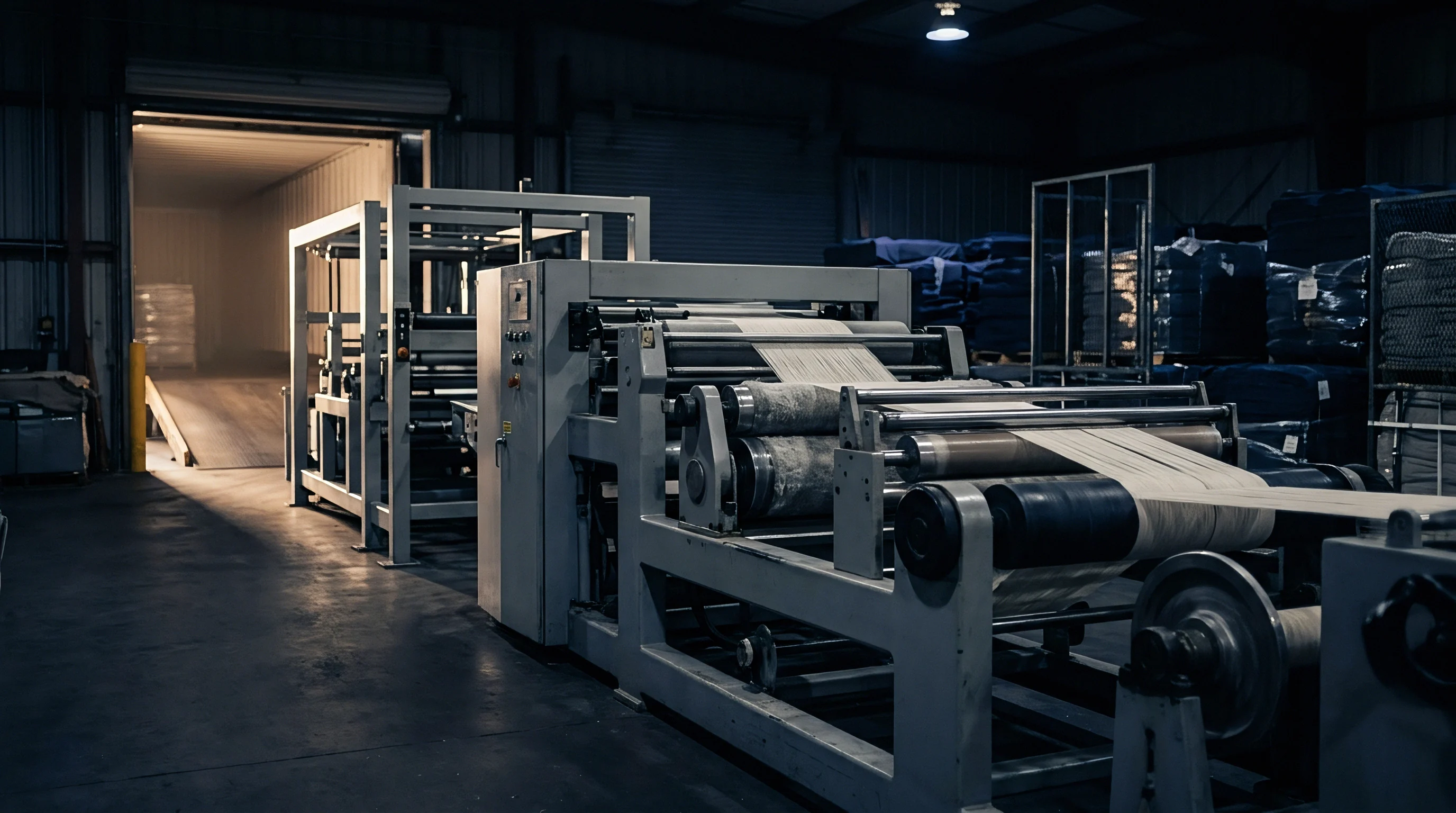
How Do Ambient Transit Conditions Accelerate Formaldehyde Regeneration?
Thermal breakdown of N-methylol groups accelerates under the warm, acidic microclimates inside wrapped fabric rolls. Unneutralized residual catalysts continue catalyzing hydrolysis during transit, while fabric moisture regain supplies the water molecules needed to cleave ether bonds between the resin matrix and cellulose chains. Tight roll packing prevents volatile dissipation, trapping liberated aldehyde gas within the roll core where it re-absorbs onto fiber surfaces.
Keeping fabric pH between 6.0 and 7.0 prior to packaging provides critical protection against this transit-driven regeneration.
| Resin Chemistry | Initial Free Level | Level After 30 Days (40°C / 80% RH) | Hydrolysis Susceptibility | Primary Regeneration Mechanism |
|---|---|---|---|---|
| Standard Unmodified DMDHEU | 65 mg/kg | 185 mg/kg | High | Cleavage of un-etherified methylol groups |
| Capped Methylated DMDHEU | 35 mg/kg | 62 mg/kg | Moderate | Slow cleavage of methoxy ether linkages |
| Modified Ultra-Low Formaldehyde (ULEU) | 18 mg/kg | 28 mg/kg | Low | Trace monomer hydrolysis under low pH |
| Zero-Formaldehyde Polycarboxylic Acid | 0 mg/kg | 0 mg/kg | None | No aldehyde structures present |
Inter-laboratory variance further complicates commercial acceptance. Small differences in bath agitation speed, spectrophotometer calibration, and pipetting technique can create up to fifteen percent variance on identical fabric swatches. Standard dispute clauses typically call for re-testing at a mutually agreed accredited laboratory using ISO 17226-1 liquid chromatography, which avoids photometric interference and isolates true monomer concentration.
Re-testing protocols require drawing fresh specimens from original unopened rolls kept in quarantine. Pulling swatches from rolls that were previously opened and aired out produces invalid results due to volatile loss. Purchase agreements generally stipulate that arbitration findings override initial port tests, provided sampling adheres to strict chain-of-custody protocols within ten days of container destuffing.
Standard purchase order terms dictate that if destination re-testing confirms formaldehyde concentrations above maximum contractual limits, the seller bears all freight, customs clearance, re-testing, and disposal costs under standard commercial indemnity clauses.

Ledger
Commercial contracts translate chemical thresholds into concrete financial obligations across supply chains. Statutory regulations and brand restricted substance lists set mandatory compliance ceilings based on intended product use, backed by border seizures, recalls, and public notices for non-compliant goods. Systematic acceptance testing verifies that resin-finished goods satisfy target market thresholds before title transfers from seller to buyer.
Chinese Standard GB 18401-2010 sets mandatory category thresholds across all textiles sold in domestic channels: Category A for infant wear under 36 months caps formaldehyde at 20 milligrams per kilogram or less; Category B for direct skin contact allows up to 75 milligrams per kilogram; and Category C for non-direct contact and decorative goods permits up to 300 milligrams per kilogram. In the European Union, REACH Regulation Annex XVII Entry 72 enforces a 75 milligram per kilogram limit for clothing and related accessories.
Private certification systems often impose limits tighter than statutory baselines. OEKO-TEX STANDARD 100 Class I for baby articles requires formaldehyde concentrations below the quantitative detection limit, creating an effective cap of 16 milligrams per kilogram under ISO 14184-1. OEKO-TEX Class II for skin-contact apparel sets a 75 milligram per kilogram limit, requiring annual renewals and random batch audits.
Verifying certificate scope and validity dates ensures test documentation matches the specific fabric article numbers on commercial invoices.
Regulatory compliance under Chinese Standard GB 18401 Class A imposes an absolute upper limit of twenty milligrams per kilogram for infant textile products.
Commercial purchase orders rely on technical compliance clauses to allocate risk and specify testing requirements. Buyers protect capital by establishing clear acceptance protocols prior to issuing production authorization.
- Statutory Threshold Alignment maps fabric finish specifications directly to target market regulations including GB 18401, REACH Annex XVII, and CPSIA requirements.
- Pre-Shipment Testing Verification obligates the finishing mill to supply accredited ISO 17025 test reports for every production lot prior to document release.
- Destination Retest Allocation assigns financial liability for third-party retesting costs to the seller whenever destination port testing reveals compliance failures.
- Chain of Custody Preservations mandates gas-tight foil packaging for all acceptance samples to ensure laboratory analytical validity.
- Commercial Indemnification Remedies secures full financial recovery for ocean freight, customs duties, and destruction fees resulting from regulatory border detentions.
A structured compliance execution sequence protects B2B buyers from receiving non-compliant shipments. Implementing systematic laboratory verification steps at defined production milestones controls chemical risk throughout manufacturing cycles.
- Submit representative bulk production swatches to an ISO 17025 accredited laboratory for ISO 14184-1 water extraction testing prior to roll packaging.
- Verify fabric pH levels fall strictly between 6.0 and 7.0 to eliminate residual acid catalyst activity that accelerates post-cure resin hydrolysis.
- Seal acceptance test specimens immediately in gas-tight aluminum foil laminated bags to prevent volatile formaldehyde dissipation during air transport.
- Compare photometric laboratory test values against target market statutory limits and private certification scope parameters.
- Issue formal commercial shipment authorization only upon receipt of passing accredited test reports matching invoice article descriptions.
- Conduct random destination audit sampling from unopened ocean containers within five business days of port discharge.
When port testing finds formaldehyde residues over legal limits, the buyer issues a non-conformity notice, freezes invoice payment, and initiates dispute resolution under the purchase contract’s indemnity terms. The shipment is placed in quarantine pending arbitration testing or return to origin. Total financial exposure covers cargo value, two-way freight, demurrage and storage, testing fees, and contractual delay penalties.
Standardized testing provides the empirical ground needed to enforce contracts and keep non-compliant goods out of retail channels.