Process Drift Control and Chemical Indicator Testing on Repeat Orders
Process drift on repeat textile orders requires mill-floor indicator testing backed by statistical skip-lot laboratory verification to prevent RSL border holds.


Variance

Chemical Shift in Continuous Dyebaths
Repeat textile orders frequently fail chemical compliance audits despite using identical nominal dye recipes, shade books, and bill of materials specifications. Mills running continuous pad-steam or exhaust dyeing ranges routinely make unrecorded process tweaks to adjust for minor variations in substrate absorbency, water hardness, or ambient humidity. These quick adjustments alter how functional auxiliaries, levelling agents, pH buffers, and unfixed dyes concentrate and behave in the bath.
A colorimetric spectrophotometer might show the fabric surface as visually acceptable within delta E color tolerances, but the underlying chemical residue profile still shifts from run to run.
Recycled process water systems cause steady chemical drift over longer production campaigns. Facilities running closed-loop or partial effluent recycling systems accumulate non-volatile organic compounds, heavy metal salts, and surfactants over multi-week runs. Ultrafiltration and reverse osmosis strip suspended solids and large dye molecules, but low-molecular-weight auxiliary fragments, sequestering agents, and free formaldehyde precursors pass through the membranes into fresh baths.
A repeat order dyed in week six of a water recycling cycle ends up with a distinct chemical footprint compared to a baseline lot produced in week one using fresh intake water.
Substrate variability introduces another source of unmonitored chemical variance. Raw greige goods from different spinning mills or cotton crops vary in wax content, residual pectin levels, and trace pesticide concentrations. Synthetic filament yarns carry spinning oils containing ethoxylated alkylphenols, organotin catalysts, or residual monomers that differ by spinning batch.
If a mill skips incoming greige scouring validation or cuts scouring liquor replacement rates to save energy, residual spinning lubricants react directly with dyebath chemistry. The resulting complex alters the extractable substance profile on finished cloth without ever showing up as a visual shade difference.
Mills routinely adjust alkali dosing to hit visual color targets without recalculating the downstream neutralisation load on repeat finishing passes.

Auxiliary Accumulation and Substrate Kinetics
Dyehouse auxiliaries represent a primary vector for restricted substance drift across repeat runs. Wetting agents, anti-foaming emulsions, levelling dyes, and yarn lubricants are commercial chemical formulations containing minor constituents, stabilizing compounds, and manufacturing impurities. Chemical suppliers frequently update raw material feeds or synthesis routes without modifying trade names or technical data sheets.
A wetting agent certified compliant with alkylphenol ethoxylate limits of less than 100 milligrams per kilogram under EN ISO 18218-1 in January can carry unannounced surfactant impurities in June that push finished fabric readings above brand threshold limits.
Fixation treatments applied during wash-off cycles suffer from progressive bath contamination. High-speed continuous washing ranges rely on counter-current water flow to strip unfixed reactive or acid dyes from processed cloth. If fresh water replenishment rates drop below design targets, unfixed dye molecules and hydrolyzed fixative agents accumulate in the final washing boxes.
Fabric passing through depleted washing compartments reabsorbs dissolved unfixed chemicals through physical redeposition. As a result, the outer surface of the yarn bundle retains high concentrations of unfixed water-soluble compounds, directly hurting wet fastness performance and extractable heavy metal assay values under acid perspiration extraction conditions.
Floor-level chemical indicator testing catches these operational variances before goods transition to final drying, stenter setting, and garment converting. Tracking bath specific gravity, redox potential, total dissolved solids, and surface tension gives real-time quantitative metrics reflecting chemical drift. Setting up systematic indicator testing protocols at designated wet-processing checkpoints establishes early warning thresholds, keeping minor bath adjustments from turning into costly restricted substance list non-conformities at destination ports.
The operational drivers of chemical variance across repeat production runs span raw material sourcing, chemical feed batch consistency, and mill-level wet-processing parameters:
- Dye Auxiliaries Lot Variation Commercial surfactant, leveler, and softener shipments carry minor chemical impurities that shift between manufacturing lots, altering extractable organotin, phthalate, or alkylphenol ethoxylate levels on finished goods.
- Recycled Water Accumulation Closed-loop water recovery systems concentrate low-molecular-weight salts, free formaldehyde, and organic acids over extended operational runs, transferring dissolved residues into subsequent repeat dyeing liquors.
- Scouring Liquor Depletion Continuous preparation ranges running on depleted surfactant concentrations leave hydrophobic spinning oils and residual agricultural pesticides on greige fibers, interfering with subsequent chemical fixation.
- Bath Alkali Compensation Dyehouse operators increase sodium carbonate or caustic soda dosing to force dye uptake on resistant fiber lots, pushing final fabric extractable pH beyond skin-neutral compliance ranges.
- Counter-Current Flow Reduction Cutting fresh water inflow rates in continuous wash ranges allows unfixed hydrolysed reactive dyes and chemical surfactants to redeposit onto finished fabric surfaces.

Indicator Screening Protocols
An effective process drift control program pairs rapid, mill-level chemical indicator tests with periodic accredited laboratory testing. Indicator tests prioritize speed, low unit cost, and high sensitivity to catch shifts right at the dye vat or stenter frame. Unlike full quantitative chromatographic assays, indicator methods give immediate qualitative or semi-quantitative feedback, letting mill technicians isolate out-of-spec fabric lots before bulk shipment packaging.
Monitoring process bath pH using calibrated digital probes prevents alkali build-up during reactive dyeing runs. Fabric surface pH testing, conducted via ISO 3071 aqueous extraction or direct indicator solution drops, flags incomplete washing or inadequate acid neutralization passes. When fabric surface pH drifts outside the targeted 5.5 to 7.5 window, downstream risks of skin irritation rise, and chemical conditions start favoring the hydrolysis of formaldehyde-releasing resin finishes during transit storage.
Spot-test indicator kits quickly identify specific hazardous chemical classes. Diphenylcarbazide colorimetric spot tests detect extractable hexavalent chromium on leather trims or dyed wool materials within two minutes at detection limits down to 0.5 milligrams per kilogram, providing rapid screening before standard EN ISO 17075 laboratory execution. Spot indicators for free formaldehyde use chromotropic acid or acetylacetone reactions, producing clear colorimetric shifts when exposed to off-gassing fabric swatches heated in sealed vapor vials.
Rapid spectrophotometric screening of dyebath effluent allows operators to quantify residual dye load and organic mass concentration. Tracking light absorbance across ultraviolet and visible spectrum wavelengths gives mill quality control teams baseline spectral profiles for certified standard dye recipes. Shifts in spectral absorption curves on repeat batch runs alert laboratory staff to auxiliary over-dosing, incomplete dye exhaustion, or cross-contamination from uncleaned chemical feed lines.
Visual color matches are often prioritized over chemical liquor limits when meeting tight shipment schedules.


Screening

Rapid Verification Technologies versus Laboratory Assays
Mill-floor chemical indicator screening and accredited laboratory testing serve distinct, complementary roles in a repeat order compliance framework. Rapid screening tools prioritize real-time operational feedback, low sample processing costs, and quick detection of major process anomalies. Standardized laboratory assays under ISO/IEC 17025 accreditation deliver absolute chemical identification, low limits of detection, and legally defensible quantitative reporting required for formal regulatory compliance declarations.
Handheld X-ray fluorescence spectrometers quantify total heavy metal content directly on fabric surfaces within seconds. These non-destructive devices measure elemental lead, cadmium, arsenic, mercury, and antimony down to single-digit parts per million thresholds. While X-ray fluorescence provides rapid identification of inorganic pigments or metallic trims containing restricted elements under REACH Annex XVII, the instrument cannot distinguish between toxic hexavalent chromium and non-regulated trivalent chromium states, nor can it determine whether a heavy metal is extractable by artificial perspiration under EN ISO 105-E04 testing conditions.
Thin-layer chromatography kits offer portable, semi-quantitative screening for banned azo dyes capable of releasing regulated aromatic amines under reducing conditions. Mill chemists extract dye samples from finished fabric swatches using warm solvent mixtures, spot the extract onto silica gel plates, and perform chromatographic separation alongside calibrated reference standards. This method identifies primary aromatic amines listed under EN 14362-1 at concentrations above 15 milligrams per kilogram, acting as an effective gatekeeper prior to dispatching official swatches for gas chromatography-mass spectrometry analysis.
Liquid chromatography paired with mass spectrometry remains the definitive analytical baseline for organic restricted substances including per- and polyfluoroalkyl substances, chlorinated phenols, and organotin compounds. Laboratory extraction procedures involve multi-hour solvent maceration, phase separation, concentration, and instrument calibration against isotopic internal standards. While laboratory testing achieves detection limits below 0.01 milligrams per kilogram, turn-around times ranging from three to seven business days make laboratory testing unsuitable for real-time batch release decisions on high-velocity repeat production lines.
| Chemical Target | Rapid Screening Method | Screening Limit / Time | Accredited Lab Method | Lab Detection Limit |
|---|---|---|---|---|
| Free Formaldehyde | Acetylacetone Spot Test / Vapor Vial | 10 mg/kg (15 min) | EN ISO 14184-1 (Water Extraction) | 2 to 16 mg/kg |
| Banned Azo Colorants | Thin-Layer Chromatography (TLC) | 15 mg/kg (45 min) | EN 14362-1 / EN 14362-3 (GC-MS) | 5 mg/kg |
| Hexavalent Chromium | Diphenylcarbazide Spot Reaction | 0.5 mg/kg (5 min) | EN ISO 17075-1 / 17075-2 (HPLC) | 0.5 mg/kg |
| Total Heavy Metals | Handheld XRF Spectrometry | 5 mg/kg (30 sec) | EN 16711-1 (ICP-OES / ICP-MS) | 0.1 mg/kg |
| Alkylphenol Ethoxylates | Colorimetric Surfactant Assay | 50 mg/kg (20 min) | EN ISO 18218-1 / 18218-2 (LC-MS) | 5 mg/kg |

Chemical Indicator Testing Standard Operating Procedure
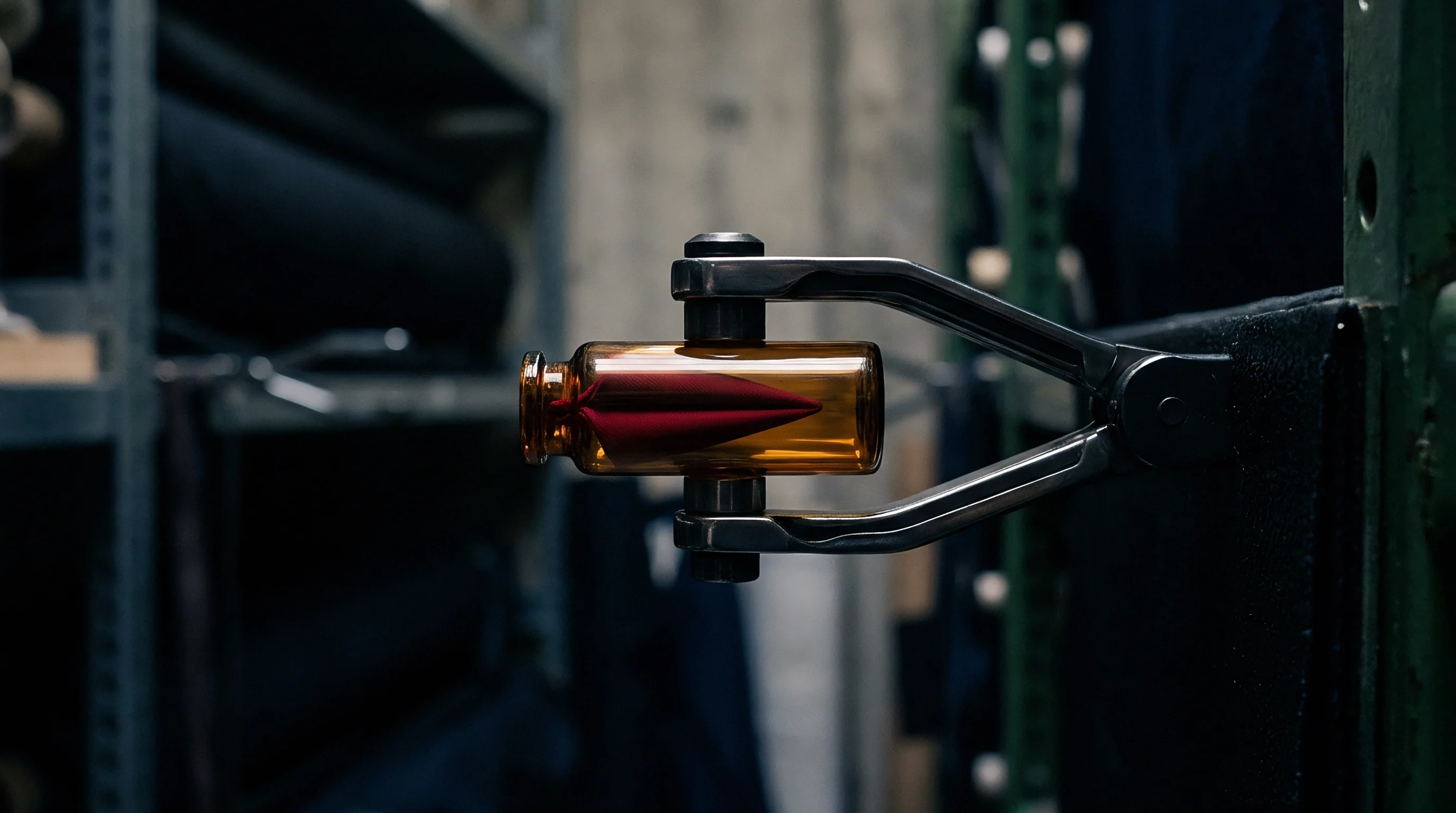
Implementing chemical indicator testing on the production floor requires structured execution protocols. The following operational sequence governs rapid formaldehyde off-gassing verification on repeat finishing lots prior to packing:
- Cut three representative fabric swatches measuring ten centimeters by ten centimeters from the lead, middle, and tail ends of the finished fabric roll using clean stainless steel shears.
- Place each fabric swatch into an individual twenty-milliliter glass headspace vial containing two milliliters of distilled water, ensuring the fabric remains suspended above the liquid phase via a Teflon insert.
- Seal the glass vials immediately with aluminum crimp caps fitted with PTFE-lined silicone septa to prevent volatile formaldehyde gas escape.
- Incubate the sealed sample vials in a dry heat block set to sixty degrees Celsius for precisely twenty minutes to accelerate formaldehyde off-gassing into the vial headspace.
- Inject one milliliter of acetylacetone reagent solution through the vial septum using a calibrated micro-syringe and agitate gentle for ten seconds.
- Observe colorimetric development after ten minutes of cooling at ambient room temperature, comparing the solution absorbance against pre-calibrated color reference strips.
- Log the observed absorbance value into the mill quality ledger; any sample exhibiting yellow coloration exceeding the fifteen milligram per kilogram reference standard triggers immediate quarantine of the entire lot.
Interpreting Indicator Discrepancies
Discrepancies between mill-level indicator screening results and official laboratory test reports stem from differences in extraction thermodynamics, matrix interferences, and sample preparation. Indicator tests rely on rapid surface extraction or volatile off-gassing, whereas standard laboratory methods employ complete chemical extractions using aggressive solvents, controlled temperatures, and extended duration periods. Recognizing these structural discrepancies prevents misinterpreting early indicator alerts as false alarms.
Matrix interference from fabric finishing agents is a frequent cause of screening anomalies. Optical brighteners, softeners, and dye levelling compounds can absorb light at similar wavelengths to colorimetric indicator reagents, producing apparent positive readings on clear fabrics. Conversely, heavy hydrophobic fluorocarbon finishes can block water penetration during rapid mill-level spot testing, masking underlying formaldehyde or heavy metal residues that full laboratory extraction methods easily liberate.
Sample handling protocols exert significant influence over chemical indicator reliability. Volatile organic compounds, including residual solvents like dimethylformamide or toluene, dissipate rapidly when fabric samples remain exposed to open ambient air on the inspection table. A swatch cut and exposed for six hours prior to indicator testing will show dramatically reduced solvent levels compared to a swatch immediately sealed in an airtight foil barrier bag upon exiting the stenter frame outlet.
Balancing mill testing throughput against the risk of unrecorded analytical drift on long production campaigns depends on setting a strict chemical indicator calibration schedule.

Steam

Thermal Processing and Chemical Decomposition
Stenter frame drying and heat-setting temperatures drive complex chemical transformations that directly alter restricted substance profiles on repeat fabric runs. Wet processing operations apply resins, crosslinkers, flame retardants, and water repellents in aqueous bath suspensions. As moist fabric webs enter gas-fired stenter zones operating between 150 and 190 degrees Celsius, rapid water evaporation concentrates non-volatile chemical compounds on yarn surfaces.
Thermal energy drives the intended crosslinking reactions, but excessive heat or prolonged dwell times cause thermal degradation of auxiliary chemistries.
Durable press finishing resins derived from dimethyloldihydroxyethyleneurea release free formaldehyde as a direct byproduct of thermal crosslinking with cellulose hydroxyl groups. On repeat orders where stenter chain speeds drop to accommodate heavier fabric weights, longer dwell times inside heat zones break ether linkages within the resin matrix. This thermal degradation liberates monomeric formaldehyde, increasing extractable free formaldehyde content under EN ISO 14184-1 testing from an acceptable 30 milligrams per kilogram up to non-compliant levels exceeding 150 milligrams per kilogram.
Organotin catalysts utilized in polyurethane coatings and silicone softeners undergo oxidation during high-temperature stenter processing. Monobutyltin and dibutyltin compounds, applied as thermal stabilizers or reaction catalysts, decompose under combined heat and moisture into toxic dioctyltin or tributyltin derivatives. When stenter exhaust ventilation rates drop during cost-saving energy recovery initiatives, volatile organotin breakdown products recirculate within the dryer atmosphere, contaminating subsequent fabric lots passing through the chamber.
Thermal crosslinking reactions inside the stenter chamber release volatile formaldehyde precursors whenever fabric dwell times exceed calibrated speed targets by more than ten percent.
Fluorocarbon liquid repellent finishes requiring thermal activation present additional process drift risks. C6 fluorinated acrylate polymers require precise temperature windows, typically 160 to 170 degrees Celsius, to reorient hydrophobic fluoroalkyl side chains on the fiber surface. Under-heating leaves poor water repellency and high levels of extractable unreacted monomer fragments, including perfluorooctanoic acid precursor impurities.
Over-heating degrades the fluoromer backbone, generating short-chain perfluoroalkyl carboxylic acids that trigger REACH Annex XVII non-compliance during destination market surveillance audits.

Fixative Depletion and Carryover Mechanics
Dye fixatives applied after reactive, acid, or direct dyeing cycles exhibit progressive depletion dynamics across multi-roll production runs. Cationic dye fixing agents bind to negatively charged dye molecules via ionic interactions, creating insoluble chemical complexes within the fiber structure. In continuous pad-dry-cure finishing lines, cationic fixative baths suffer from preferential adsorption, where active polymer molecules exhaust onto the leading fabric length at rates exceeding bulk bath feed replenishment.
As preferential adsorption reduces active cationic polymer concentration in the padding trough, trailing rolls receive diminished chemical fixation treatments. Unfixed dye levels rise systematically from roll one to roll twenty within the same repeat order batch. While initial rolls pass wash fastness and extractable dye assays under ISO 105-C06, trailing rolls carry elevated quantities of mobile, unfixed dye molecules capable of releasing toxic primary aromatic amines during reductive cleaving tests under EN 14362-1.
Carryover mechanics between chemical padding troughs introduce unexpected cross-contamination across repeat production scheduling blocks. Continuous finishing ranges utilize sequential dip-pad arrangements where fabric moves through washing, softening, and functional finishing troughs without complete drying between steps. Carryover water dragged by high-speed fabric webs dilutes downstream finishing liquors, lowering active crosslinker concentrations while transferring residual surfactants and bath salts into final curing padder troughs.
Neutralization steps following alkaline processing require precise chemical stoichiometry to prevent latent pH rebound. High-speed padding ranges applying citric, acetic, or formic acid to neutralize residual sodium hydroxide must compensate for variations in fabric speed, thickness, and liquor pickup percentages. Inadequate acid application leaves localized alkaline pockets within core yarn structures.
During subsequent steam pressing or humid ocean container transport, core alkali migrates to the fabric surface, elevating extractable surface pH and accelerating hydrolytic cleavage of sensitive dye-fiber bonds.

High-Speed Washing Range Dynamics
High-speed washing ranges designed to strip unfixed chemicals operate under strict hydrodynamic balances that collapse when process parameters drift. Counter-current washing systems pump fresh heated water into the final wash box, allowing water to flow upstream against fabric movement toward the initial entry compartment. This setup maintains a continuous concentration gradient between washing liquor and fabric impurity levels, maximizing extraction efficiency while minimizing total water consumption.
Operational drift occurs when operators restrict fresh water inflow volumes to reduce steam heating costs. Lower fresh water replacement rates cause chemical concentration equilibrium to establish within intermediate wash boxes. Instead of stripping residues, wash liquors reach saturation, preventing further diffusion of unfixed dyes, hydrolyzed fixatives, and residual surfactants out of the fabric web.
Fabric exiting saturated washing boxes retains concentrated chemical thin-films on outer yarn faces.
Mechanical squeeze rolls positioned between washing compartments serve as physical gatekeepers against chemical carryover. Pneumatic pressure applied to top squeegee rolls maintains uniform liquor carryover rates between 50 percent and 70 percent of dry fabric weight. Squeegee roll degradation, uneven pneumatic pressure distribution, or worn rubber roll profiles allow carryover rates to rise above 90 percent.
Excess liquor dragged from contaminated entry boxes bypasses intermediate washing stages, delivering concentrated process impurities directly into final rinsing boxes.
Continuous finishing runs carrying degraded cationic fixative residues risk releasing banned aromatic amines upon destination border testing, potentially resulting in twenty-eight thousand dollars in detention charges.
Temperature gradients across washing compartments govern chemical dissolution and diffusion kinetics. Optimal removal of unfixed reactive dyes requires initial washing boxes to operate at 90 to 95 degrees Celsius to open cellulosic fiber pores and dissolve hydrolyzed dye aggregates, followed by gradual cooling steps down to 40 degrees Celsius to prevent thermal shock. When heating coils drop below 80 degrees Celsius due to boiler pressure fluctuations or scale accumulation inside steam heat exchangers, unfixed dye molecules remain trapped within internal fiber channels, rendering surface washing ineffective.


Frequency

When Does Repeat Order Drift Exceed Allowable RSL Limits?
Determining testing frequency on repeat orders requires balancing chemical non-compliance exposure against testing budgets. Assuming that a certified baseline lot guarantees compliance across subsequent repeat runs creates significant operational risk. Chemical process drift follows stochastic patterns driven by supplier raw material lot changes, water recycling cycles, and mill operator adjustments.
Establishing statistically sound testing intervals ensures non-compliant lots are intercepted before export dispatch.
Acceptance sampling frameworks governed by ISO 2859-1 provide structured mechanisms for setting chemical testing frequencies. Standard quality control applies Acceptable Quality Limit frameworks to visual defects, but chemical compliance demands stringent sampling plans due to legal restricted substance zero-tolerance thresholds. For repeat orders with established compliance histories, mills transition from normal single sampling plans to reduced or skip-lot testing protocols only after demonstrating consistent statistical process control over multiple consecutive production batches.
Skip-lot sampling protocols require qualifying minimum baseline stability criteria before reducing laboratory test frequencies. A standard qualification protocol mandates full quantitative testing on ten consecutive production lots from the same mill, fiber construction, and dye formulation. If all ten lots yield restricted substance values below 50 percent of brand standard limits, testing frequency reduces to one test per five repeat orders.
Any single lot yielding chemical levels between 50 percent and 100 percent of maximum limits resets the skip-lot counter, requiring five additional consecutive compliant lots before returning to reduced frequency testing.
Statistical process control charts track continuous quantitative parameters including fabric surface pH, free formaldehyde content, and extractable heavy metal concentrations across repeat production runs. By plotting test results against Upper Control Limits and Lower Control Limits set at three standard deviations from historical batch means, quality managers identify process drift trends long before values cross absolute regulatory threshold limits. A continuous upward trend across four consecutive repeat lots signals process instability, triggering immediate bath chemistry auditing regardless of current compliance status.
| Compliance Status Stage | Lot Qualification Criteria | Required Lab Test Frequency | Indicator Test Frequency | Action Upon Deviation |
|---|---|---|---|---|
| Initial Order Qualification | First production run of new style or fabric | 100% of lots (Full RSL Panel) | Every roll (pH / Formaldehyde) | Immediate batch quarantine |
| Standard Repeat Production | 1 to 5 consecutive compliant lots | 1 in every 2 lots (Targeted RSL) | Every roll (pH / Formaldehyde) | Return to 100% lab testing |
| Skip-Lot Qualified | 6+ consecutive compliant lots under 50% limit | 1 in every 5 lots (Targeted RSL) | 1 in every 3 rolls | Reset skip-lot counter to zero |
| High-Risk Chemical Finish | Resin, flame retardant, or water repellent | 100% of lots (Specific Chem panel) | Every roll ( headspace screening) | Immediate process shutdown |

Risk-Based Skip-Lot Testing Protocols
Deploying risk-based skip-lot testing protocols allows compliance teams to allocate testing resources toward high-risk chemical operations while maintaining oversight over low-risk repeat runs. High-risk operations include resin finishing releasing formaldehyde, fluorinated durable water repellents, flame retardant coatings, and dark shade dyeing utilizing complex metal-complex dyes. Low-risk operations comprise un-dyed white goods, mechanically finished fabrics, and light pastel shades dyed with simple reactive dye recipes.
Risk categorization incorporates mill performance history, local environmental enforcement rigor, and sub-supplier chemical control capabilities. Mills maintaining zero-discharge of hazardous chemicals certification and verified chemical inventory management systems qualify for accelerated skip-lot schedules. Conversely, facilities utilizing third-party subcontract dyehouses for repeat order spillover volume remain locked at 100 percent laboratory testing frequencies due to unverified bath control practices at secondary processing sites.
The operational sequence for executing a risk-based skip-lot decision checklist relies on rigid threshold evaluations:
- Documented Chemical Baseline Verify that the specific fabric style, colorway, and mill facility hold an accredited laboratory test report dated within the preceding 12 months with zero non-conformities.
- Recipe Identity Check Confirm via mill production records that chemical auxiliaries, dye codes, pad pressures, and drying temperature profiles match the original baseline specification sheet without alteration.
- Chemical Supplier Verification Cross-check batch delivery tags for core dyes and functional auxiliaries against approved chemical safety data sheets and positive compliance certificates.
- Mill-Floor Indicator Pass Conduct rapid on-site indicator screening for pH, formaldehyde off-gassing, and surface heavy metals on lead and tail swatches from the current production lot.
- Random Skip-Lot Audit Selection Execute automated random lot selection algorithms to pull designated skip-lot samples for full laboratory verification, preventing mill personnel from anticipating audit lots.
Statistical Confidence Intervals in Lot Release
Relying on a single fabric swatch to clear a multi-thousand-yard repeat order introduces statistical sampling risk. Chemical distribution across a finished fabric roll is rarely uniform; edge-to-center padder pressure variations, stenter temperature gradients, and liquor exhaust kinetics create localized chemical concentration zones. Standard compliance testing protocols cutting one 100-gram sample per 10,000 yards capture a single data point within a broad distribution curve.
Calculating statistical confidence intervals around quantitative test results accounts for analytical measurement uncertainty and batch sampling variance. An accredited laboratory test reporting extractable lead at 80 milligrams per kilogram carries an expanded measurement uncertainty of typically plus or minus 15 percent under standard EN 16711-1 procedures. The true lead concentration within the tested sample falls between 68 and 92 milligrams per kilogram.
If the target brand standard limit is 90 milligrams per kilogram, the batch carries a statistically significant probability of non-compliance upon re-testing by market surveillance authorities.
Smart clearance frameworks establish internal action limits set below external regulatory thresholds to absorb measurement uncertainty and intra-lot variance. When standard limits specify a maximum of 100 milligrams per kilogram for extractable free formaldehyde, the internal action limit for lot release is fixed at 75 milligrams per kilogram. Any repeat lot yielding test values between 75 and 100 milligrams per kilogram undergoes immediate secondary sampling across multiple rolls before shipment release authorization is granted.
Skip-lot testing programs maintain integrity only when every lot skipping laboratory testing remains fully subject to mill-floor chemical indicator screening.


Record

Document Chain Verification and Traceability
Documentary proof of chemical compliance requires a continuous, verifiable paper trail linking mill-level production lots to accredited test reports and international standard scope certificates. A standard test report issued for a baseline order does not cover repeat shipments unless the documentation establishes absolute material identity, processing facility continuity, and chemical formulation preservation. Customs officials and brand auditors inspect document chains for gaps where unapproved subcontractors or altered chemical auxiliaries enter the supply chain.
Scope certificates issued under schemes such as OEKO-TEX STANDARD 100 or the Global Organic Textile Standard validate a manufacturing facility’s operational capability to produce compliant goods within specified product classes. However, a valid scope certificate does not guarantee that every individual fabric batch leaving the facility complies with restricted substance limits. Demonstrating lot-level compliance requires pairing scope certificates with batch-specific transaction certificates and accredited laboratory test reports linked directly to the purchase order lot numbers.
Transaction certificates provide legal traceability by recording exact quantities, fiber compositions, delivery roll numbers, and buyer details for specific fabric shipments. On repeat orders, mills must supply transaction certificates issued by accredited certification bodies confirming that goods delivered under invoice X originate from certified processing lines operating under scope certificate Y. A scope certificate lacking corresponding transaction certificates leaves the repeat shipment unevidenced before border control agencies.
Laboratory test reports presented in compliance dossiers must match the specific chemical risk profile of the article class. Test reports issued under OEKO-TEX STANDARD 100 Class I for baby products enforce stricter chemical limits than Class IV for decorative furnishing materials. Presenting a Class IV test report to clear a repeat order intended for apparel applications constitutes compliance failure, as extractable formaldehydes, heavy metals, and phthalate limits differ significantly across product classification boundaries.
| Document Type | Issuing Authority | Validity / Scope Boundary | Verification Function on Repeat Orders |
|---|---|---|---|
| Scope Certificate (SC) | Accredited Certification Body | Annual renewal / Facility & product class | Proves mill capability and approved processing scope |
| Transaction Certificate (TC) | Accredited Certification Body | Batch-specific / Exact net weight | Links shipped fabric volume directly to certified scope |
| Laboratory Test Report | ISO/IEC 17025 Accredited Lab | 12-month max age / Specific style & shade | Provides quantitative analytical proof against RSL limits |
| Mill Chemical Ledger | Internal Mill Quality Desk | Per production lot / Roll-by-roll logs | Records real-time indicator screening data (pH, temp) |
| Chemical Declaration (SDS) | Auxiliary Chemical Supplier | Version controlled / REACH compliant | Confirms raw chemical inputs match approved baseline |

Mapping Test Reports to Purchase Orders
Mapping accredited test reports to purchase order line items requires explicit cross-referencing between commercial documentation and analytical laboratory records. Compliance managers verify that fabric style numbers, fiber blend percentages, colorway names, and mill processing facility addresses printed on the test report align precisely with purchase order specifications. Discrepancies in style names or shade codes render test reports legally invalid during border audits.
The age of test reports presented for repeat order clearance represents a critical vulnerability point. Most brand compliance frameworks enforce a maximum test report age of twelve months, assuming mill processing parameters remain static over one year. However, if a mill modifies its water treatment plant, changes dyestuff vendors, or shifts production to a secondary facility during that twelve-month window, the original test report no longer reflects current production reality.
Component-level mapping is mandatory for complex garments or finished textile goods comprising multiple trims, linings, and shell fabrics. A test report validating only the outer shell fabric of a jacket does not clear repeat orders containing un-tested zippers, pocket linings, pocketing membranes, or brand labels. Each individual component material requires documented test evidence corresponding to its specific material composition and mass fraction within the finished product.
The required constituents of a complete repeat order chemical compliance dossier include the following essential verification elements:
- Master Scope Certificate Current certification document issued by an accredited third-party body covering the mill facility, specific processing operations, and designated product class.
- Batch Transaction Certificate Official TC detailing exact fabric net weights, roll serial numbers, invoice numbers, and recipient purchase order details for the delivered repeat lot.
- ISO 17025 Test Report Quantitative laboratory test report issued by an accredited lab within the past 12 months, explicitly listing tested style numbers and shade codes.
- Mill Indicator Logs Signed mill-floor quality records documenting roll-by-roll surface pH measurements, rapid formaldehyde off-gassing scores, and stenter curing temperature charts.
- Chemical Input Declarations Signed declarations from dye and auxiliary suppliers confirming chemical batches delivered during the repeat order cycle comply with current ZDHC manufacturing RSL lists.
Laboratory Accreditation and Method Scopes
Evaluating laboratory test reports requires inspecting the testing facility’s ISO/IEC 17025 accreditation scope document. ISO/IEC 17025 accreditation confirms that a laboratory possesses technical competence and analytical infrastructure to perform specific test methods. A laboratory accredited for textile physical testing (tensile strength, dimensional stability) may lack accreditation scope for complex analytical chemistry procedures such as perfluorinated compound analysis or organotin quantification.
Test report validation involves confirming that individual analytical methods listed on the report match official standard regulatory methods. A test report citing internal laboratory test procedures instead of recognized international standard methods (EN, ISO, ASTM, GB) presents regulatory exposure. Customs authorities in the European Union and the United States reject compliance files relying on non-standard, un-validated analytical protocols during market surveillance enforcement actions.
Limits of Detection and Limits of Quantification reported by laboratories must sit below regulatory threshold limits specified by destination market laws. If REACH Annex XVII limits free formaldehyde to 75 milligrams per kilogram for textile articles coming into contact with skin, an analytical test report carrying a limit of quantification of 50 milligrams per kilogram provides inadequate resolution to verify compliance at lower action limits. Accredited laboratories must demonstrate reporting limits capable of quantifying target substances down to at least ten percent of the legal threshold value.
Section 4.2 of the master sourcing agreement specifies that presenting a test report lacking explicit ISO/IEC 17025 accreditation for EN 14362-1 primary aromatic amine analysis automatically invalidates lot release approval, transferring all demurrage and detention liabilities directly to the seller.


Recourse

Contractual Risk Allocation for Process Drift
Contractual terms governing repeat textile orders must explicitly assign legal liability and financial recourse for process drift non-conformities. Standard purchase order templates relying on generic statements such as “goods must comply with all applicable environmental laws” fail to protect buyers when repeat shipments suffer chemical drift. Precision contract drafting incorporates specific restricted substance list limits, clear sampling rights, defined re-testing protocols, and binding financial penalty formulas directly into purchase order terms.
Chemical warranty clauses require sellers to guarantee that every individual production batch delivered under a repeat purchase order conforms to the buyer’s restricted substance list specification. The warranty must state that initial prototype or baseline sample approval does not constitute a waiver of chemical compliance obligations for subsequent repeat lots. Contracts explicitly stipulate that seller liability extends beyond fabric delivery, surviving customs entry clearance and remaining active through final retail distribution phases.
Incorporating process drift tolerance windows within chemical specifications establishes clear legal boundaries for lot rejection. While legal thresholds set absolute maximum limits, purchasing contracts define process control limits that trigger supplier corrective actions. If a brand standard sets a maximum threshold of 100 milligrams per kilogram for extractable free formaldehyde, the contract establishes a mill corrective action threshold at 50 milligrams per kilogram, empowering buyers to reject drift-affected lots before goods depart the supplier’s port of origin.
Subcontracting restrictions form an essential contractual safeguard against unmonitored chemical drift. Contracts explicitly forbid mills from transferring repeat order production volumes to uncertified secondary dyehouses or finishing plants without prior written authorization from the buyer. Unauthorized subcontracting constitutes a material breach of contract, subjecting the supplier to immediate order cancellation, forfeiture of performance bonds, and full financial indemnification for resulting compliance audit expenses.
Detention and Recall Chargeback Mechanics
When destination market surveillance authorities detain or seize repeat orders due to chemical non-compliance, financial chargeback mechanics determine who absorbs the resulting losses. Border detentions trigger immediate costs, including port demurrage, container storage fees, specialized hazardous waste destruction charges, and administrative customs fines. Well-drafted compliance contracts contain pre-agreed chargeback formulas that automatically debit supplier accounts upon presentation of official government detention notices.
Direct costs associated with destination border rejections extend far beyond the immediate commercial value of the non-compliant fabric lot. The following financial exposure items are systematically incorporated into seller chargeback indemnification schedules:
- Original purchase order value of the non-compliant fabric or finished garments.
- International freight, marine insurance, customs duty, and port handling fees incurred during transportation.
- Demurrage and container storage charges accruing at destination port terminals during customs hold periods.
- Accredited laboratory verification re-testing fees ordered by regulatory authorities or buyer compliance teams.
- Mandatory hazardous material destruction, incinerator transport, and certified waste disposal charges.
- Administrative fines, legal expenses, and brand audit costs associated with regulatory authority enforcement actions.
- Lost retail margin and pre-agreed commercial line disruption penalties assessed by downstream retail customers.

Chargeback Formula Structures
Constructing enforceable chargeback formulas requires establishing objective financial metrics based on verifiable cost documentation. Standard recovery clauses compute total chargeback liabilities (Ctotal) using the following operational structure:
Ctotal = Vgoods + Flogistics + Dport + Tlab + Wdisposal + Ppenalty
Where Vgoods represents the landed purchase order cost, Flogistics covers total freight and duty expenditures, Dport accounts for port demurrage accruals, Tlab covers third-party re-testing costs, Wdisposal covers hazardous waste destruction fees, and Ppenalty applies a pre-agreed contract liquidated damages percentage, typically between fifteen and twenty-five percent of invoice value, to compensate for administrative resource expenditure.
Indemnification clauses must hold buyers harmless against third-party product liability claims resulting from chemical non-compliance. If a consumer suffers allergic dermatitis resulting from excessive free formaldehyde or residual toxic fixatives on a repeat order garment, the supplier’s legal liability includes defending court claims, paying settlement awards, and covering public relations damage control expenditures. Contracts require suppliers to maintain comprehensive product liability insurance policies carrying minimum single-limit coverage amounts of five million dollars, naming the buyer as an additional insured party.
Escrow accounts and payment retention mechanisms provide operational enforcement leverage for buyers managing overseas suppliers. Holding back five to ten percent of purchase order contract values until independent indicator testing and accredited laboratory verification clear incoming container shipments ensures funds remain available to cover chargebacks if destination testing flags process drift non-conformities. Once chemical verification checks clear, retained funds release automatically to the supplier’s bank account.
Enforcing financial recourse across international legal jurisdictions requires selecting appropriate arbitration venues and governing law clauses. Designating international arbitration centers located in primary trade hubs such as Singapore, London, or Hong Kong under UNCITRAL rules provides enforceable cross-border recovery judgments against overseas mill entities under the New York Convention on the Recognition and Enforcement of Foreign Arbitral Awards.
Sourcing teams operating without contractual retention mechanisms absorb the full landed cost of non-compliant repeat shipments whenever overseas dyehouses refuse to honor border detention chargeback invoices.