Reconciling Hydrothermal Chemical Drift during Ocean Transit against Fixed Laboratory Reporting Limit Thresholds
Accelerated hydrothermal stress testing before export reconciles ocean transit chemical drift against fixed destination laboratory reporting limits.


Kinetics
A chemical stability pass on the mill floor often falls apart during weeks in tropical shipping lanes. Once finished textiles leave the stenter frame and pass origin testing, chemical activity inside the fibers continues. Unreacted precursors, temporary adducts, hydrolyzable crosslinkers, and residual finishing agents exist in an equilibrium governed by temperature, moisture, water activity, and pH.
A test report issued three days after finishing captures only a snapshot at standard conditions of 20°C and 65 percent relative humidity. Inside corrugated cartons, wrapped in plastic, and locked inside steel shipping containers, conditions change completely. Temperatures inside a container swing from 25°C at night up to 65°C under direct deck sunlight, and relative humidity can spike past 90 percent as the space cools.
Under heat and moisture, latent degradation speeds up, turning bound or non-detectable compounds into free hazardous substances that fail audit testing at destination.
Acid-catalyzed hydrolysis of resin finishes is the main cause of post-certification failures. Easy-care finishes, flame retardants, stabilizers, and softeners rely on reversible condensation chemistry. For example, N-methylol finishes built on modified dimethyloldihydroxyethyleneurea or methylated melamine derivatives won’t fully cure if stenter temperatures, dwell times, or catalyst ratios drift even slightly off target.
Uncured methylol groups and ether bonds sit dormant in dry storage. But exposed to heat and humidity inside container holds, water vapor breaks those ether bonds, reversing the condensation reaction and releasing free formaldehyde and urea compounds right into the packed fabric. A cloth measuring a compliant 12 milligrams per kilogram under ISO 14184-1 at origin can generate enough aldehyde over a thirty-five-day voyage to reach 45 milligrams per kilogram on arrival, crossing buyer limits and regulatory thresholds.

Thermodynamic Triggers in Closed Cargo Units
Heat inside shipping containers provides the activation energy needed for bond cleavage and volatile desorption. Sun beating on the steel walls pushes internal air temperatures far past ambient sea conditions, baking moisture out of wooden pallets and cardboard packaging. As temperatures climb, water vapor pressure rises, and hygroscopic cellulosic and protein fibers absorb that ambient moisture.
High internal temperatures and damp fibers create a localized pressure cooker where weaker chemical bonds ~ like ether linkages in resins or ester linkages in fluorocarbon finishes ~ begin breaking down.
Proton transfer also accelerates in hot, wet environments, shifting the fiber’s surface pH. Residual acidic salts from dyehouse neutralization or curing concentrate in droplets on the fiber surface. As local water activity approaches unity, hydronium ion concentration shoots up, forming acidic micro-pockets even when a standard ISO 3071 bulk extract test reads neutral.
This local acidity drives secondary breakdown, like the thermal degradation of organotin stabilizers in polymeric prints or the collapse of glyoxal crosslinks. Chemical drift isn’t linear ~ it follows Arrhenius kinetics, with reaction rate constants doubling or tripling for every 10°C rise in hold temperature once activation thresholds are crossed.

Hydrolytic Cleavage Mechanics of Residual Reactants
Anaerobic hydrothermal storage can also break down azo dyes. Azo colorants built from aromatic amines remain stable in cool, dry settings. But if dyed fabrics retain residual reducing agents ~ like sodium hydrosulfite carryover from poor reduction clearing ~ heat and condensation inside packed bales trigger reductive cleavage of the azo bond (-N=N-).
Sealed packaging starves the space of oxygen, letting trapped condensation transfer electrons from residual sulfur species to the azo link. That reaction produces restricted aromatic amines such as 4-aminobiphenyl, benzidine, or o-toluidine that were absent during pre-shipment screening. Destination labs running EN 14362-1 extract these newly formed amines, leading to customs holds and regulatory violations.
Unwashed or poorly scoured synthetics go through a similar shift involving surfactants and wetting agents. Alkylphenol ethoxylates, used as scouring detergents and leveling agents, feature polyoxyethylene chains vulnerable to oxidative thermal decay. Extended exposure to high heat and humidity shortens these long-chain ethoxylates, converting unregulated compounds into short-chain octylphenols, nonylphenols, or free alkylphenols.
These degradation products bioaccumulate and are capped under REACH Annex XVII at 100 milligrams per kilogram. The change happens inside packed cartons without altering the fabric’s look or feel, leaving its physical appearance untouched while ruining its compliance profile.
- Formaldehyde Ether Cleavage generates free formaldehyde from partially cured N-methylol resins when exposed to relative humidity over 80 percent and temperatures above 40°C during long sea voyages.
- Azo Reduction Pathways split aromatic azo links into restricted carcinogenic primary aromatic amines through electron transfer driven by residual reducing salts in oxygen-starved, humid packaging.
- Alkylphenol Ethoxylate Shortening breaks down long polyoxyethylene chains into short-chain nonylphenol and octylphenol ethoxymer residues that breach 100 milligram per kilogram regulatory caps at destination.
- Phthalate Ester De-esterification breaks plasticizer bonds in flexible PVC coatings or plastisol prints, producing free phthalic acid and volatile monoesters under thermal and moisture stress.
Tracking chemical degradation along the shipment path establishes baseline stability curves in standard audit workflows. Understanding these thermal and hydrolytic mechanisms lets technical teams catch vulnerable formulations long before goods reach export packing. Relying solely on immediate post-production test certificates creates real commercial exposure, as chemistry keeps working inside closed freight holds long after origin labs sign off on a batch.
Hydrothermal degradation during thirty-five days of equatorial container transit increases free formaldehyde concentrations in unwashed resin-finished cotton by up to twenty-eight milligrams per kilogram.
Ignoring these kinetic pathways during finish selection leads directly to destination rejections, forced inventory write-downs, and supply chain disruption across retail networks.

Hold
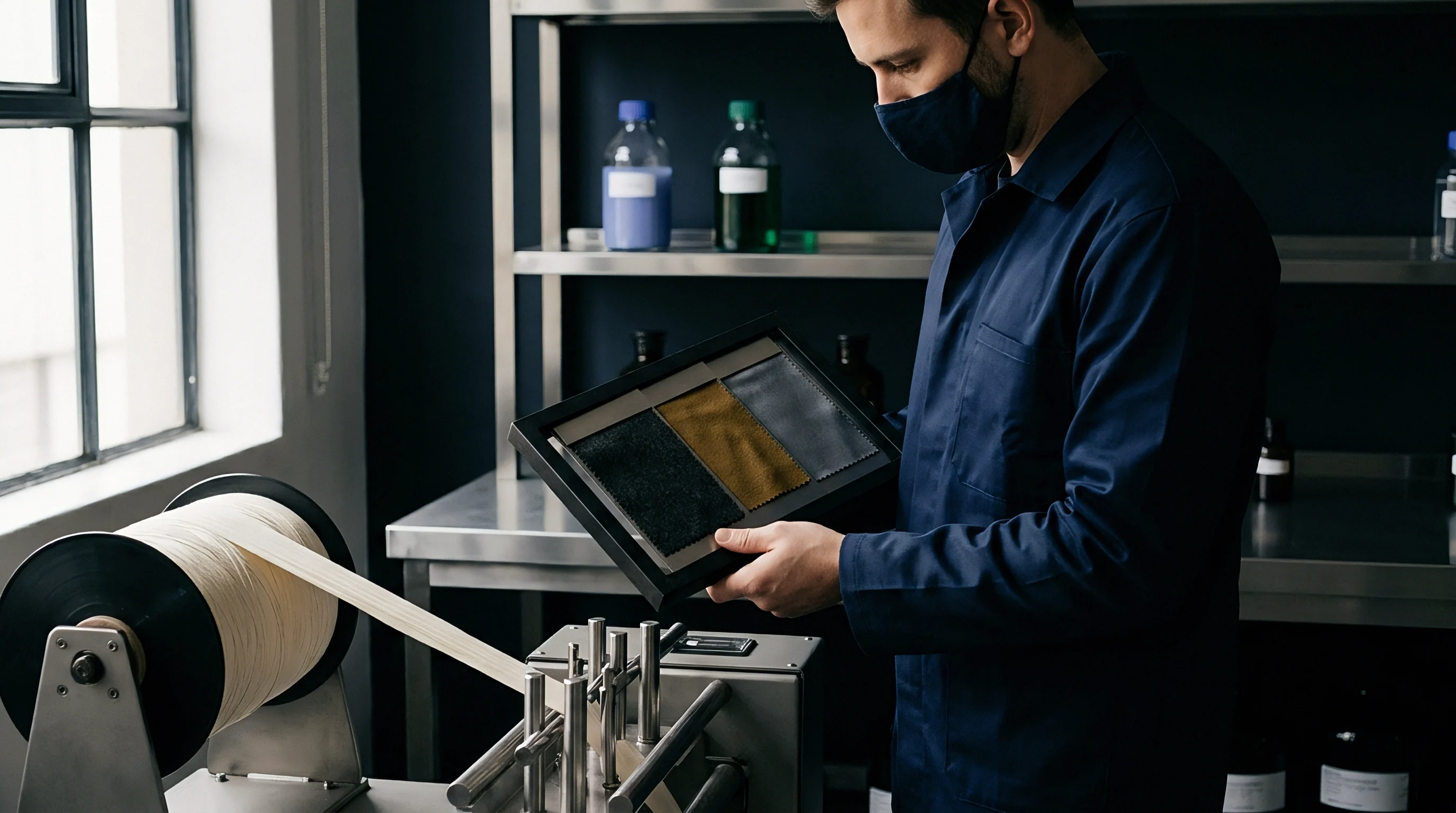
Standard 20-foot and 40-foot shipping containers are uninsulated steel boxes that act like uncontrolled reactors during tropical sea voyages. Sun beating on the roof and walls pushes interior temperatures above 65°C in the afternoon, while night cooling causes sharp temperature drops. This daily thermal swing drives constant evaporation and condensation.
Water vapor bakes out of wooden pallets, cardboard cartons, and natural textiles, saturating the air. When wall temperatures drop below the dew point at night, moisture condenses on the ceiling and drips down as container sweat onto the top packages.
Moisture inside a loaded container shifts unevenly. Cartons along the outer perimeter and top layer pick up condensed moisture rapidly, creating high local water activity. Deep inside palletized stacks, dense cloth acts as insulation, holding trapped heat for weeks above 40°C and accelerating degradation.
At the same time, outer packages soak up liquid water, setting off liquid-phase hydrolysis and dye migration. Standard pre-shipment surface moisture probes miss these internal migration patterns entirely, leaving shippers unaware of the microclimates forming inside their freight.

Microclimate Dynamics inside Sealed Cargo Enclosures
Vapor pressure gradients push moisture from warm core regions toward cooler surfaces, generating convective air currents inside the hold. Wooden pallets loaded at 12 to 18 percent moisture release dozens of liters of water when heated to 50°C. Natural fibers like cotton, linen, and wool ~ loaded at normal regain levels of 7 to 12 percent ~ desorb heavy moisture into the air as heat climbs. Synthetics like polyester and nylon take up almost no water internally, leaving off-gassed moisture to pool in inter-yarn voids and packaging air gaps.
Unbuffered, this water vapor rapidly drives relative humidity near saturation, destabilizing sensitive chemical finishes.
Mapping vapor concentration against interior deck placement clarifies chemical transformation risks across ocean container microclimates. Top-deck containers face the worst heat, spiking for six to eight hours a day throughout the voyage. Below-deck holds offer better thermal stability but hold steady temperatures between 30°C and 40°C for weeks.
Freight stowed near engine room bulkheads takes relentless heat, staying above 45°C with no nighttime cooling. Under constant thermal stress, breakdown reactions run unabated, driving steady chemical drift from port of origin to final discharge.
| Container Condition | Temperature Range | Relative Humidity | Primary Chemical Impact | Target Compound Drift |
|---|---|---|---|---|
| Top Deck Direct Sun | 45°C to 68°C | 40% to 95% (Diurnal) | Ether Bond Cleavage | Free Formaldehyde Spike (+150% to +300%) |
| Engine Room Adjacent | 40°C to 52°C (Constant) | 50% to 70% (Constant) | Thermal Curing Reversion | Glyoxal and Resin Desorption |
| Below Deck Standard | 28°C to 38°C | 60% to 85% | Slow Hydrolytic Cleavage | APEO / NPEO Chain Breakdown (+20% to +50%) |
| Equatorial Transit Sweat | 20°C to 60°C (Extreme) | 85% to 100% (Saturated) | Azo Linkage Reduction | Primary Aromatic Amines (+10 to +40 mg/kg) |

Moisture Migration across Packaged Textile Stacks
Polyethylene liners and stretch wrap, applied to keep external water off cartons, often worsen hydrothermal chemical drift. Moisture driven out of fabrics during the day penetrates porous packaging. When night cooling hits, vapor inside the plastic condenses on the inner surface of the film, trapping liquid water right against outer fabric layers.
Unable to evaporate back into the container, this trapped water creates localized zones of high water activity where hydrolysis runs unchecked. Outer swatches cut from these damp areas consistently show much higher extractable chemical levels than swatches taken from dry inner packaging.
Desiccant setups often fail because of poor sizing, bad placement, or the wrong chemistry. Standard silica gel loses absorption capacity above 40°C, dumping previously trapped vapor back into the hold at peak afternoon heat. Starch-bound calcium chloride desiccants perform better at elevated temperatures by locking moisture into an irreversible gel.
But if dosage is sized purely on container volume ~ ignoring dry cargo weight, pallet moisture, and voyage length ~ desiccants saturate within the first ten days. Once saturated, humidity climbs unchecked, letting chemical drift eat up remaining compliance margins before port arrival.
Managing desiccants and moisture requires systematic controls to keep packaging microclimates within stable limits during transit.
- Moisture content measurement at off-loom winding using high-frequency capacitive probes calibrated to ISO 6330 conditioning standards.
- Enclosure sealing verification utilizing relative humidity data loggers positioned within core pallet stacks rather than perimeter air space.
- Container desiccant dosage calculation grounded in total cargo mass, ambient sea-route temperature profiles, and water absorption capacity.
- Post-loading headspace gas sampling prior to ocean manifest sign-off to set baseline volatile concentration levels.
Customs authorities operating under REACH Annex XVII detain shipments whenever destination verification testing yields arylamine values above thirty milligrams per kilogram regardless of origin certificates.
Origin certificates are frequently treated as valid for six months under the assumption that restricted substances cannot generate spontaneously inside sealed packaging without added chemicals.


Method
Fixed Reporting Limits, Limits of Quantification, and Limits of Detection in international certification schemes set firm numerical boundaries for compliance. Frameworks like OEKO-TEX Standard 100, GOTS, ZDHC MRSL, and regulatory rules under REACH Annex XVII or US CPSIA specify maximum allowable concentrations for restricted substances. For instance, OEKO-TEX Standard 100 Class I for baby items caps free formaldehyde at 16 milligrams per kilogram, whereas Class II for direct skin contact allows 75 milligrams per kilogram.
Laboratories run standardized protocols ~ such as ISO 14184-1 water extraction paired with acetylacetone colorimetric or HPLC-UV detection ~ to measure trace chemicals. Under standard lab conditions of 20°C and 65 percent relative humidity, these methods yield precise, highly reproducible data.
A major disconnect separates static laboratory testing from dynamic chemistry inside ocean shipping containers. Standard extraction methods use aggressive liquid phases, water baths, ultrasonication, and solvent matrices designed to quantify extractable target chemicals present at the exact instant of testing. They do not simulate or account for post-test chemical drift driven by precursor reactions over weeks at sea.
A fabric sample tested three days after finishing might show 8 milligrams per kilogram of free formaldehyde ~ well clear of the 16 milligram per kilogram Class I threshold ~ and easily pass. But if that same batch carries 50 milligrams per kilogram of uncured N-methylol precursor, transit conditions will drive cleavage forward, driving destination test results far past allowable limits.

Why Do Standard Extractions Fail Transit Modeling?
Standardized extractions isolate chemicals already present without measuring precursor reserves or heat sensitivity. ISO 14184-1 extracts free and hydrolyzed formaldehyde by soaking fabric swatches in 40°C distilled water for 60 minutes. While this pulls off surface-level water-soluble aldehydes, it lacks the thermal energy and dwell time needed to hydrolyze bound methylol groups within the resin network.
The protocol is designed for lab speed and consistency, not kinetic modeling. As a result, a passing score simply shows that initial free volatile levels are low ~ ignoring the latent chemical drift locked in uncured resins.
Correlating laboratory extraction yields with thermal stress thresholds identifies hidden precursor reserves during compliance evaluations. When destination authorities pull swatches from imported containers, they rerun standard extractions on goods that have spent weeks undergoing real-world hydrothermal aging. Destination instruments run on the same detection limits and calibration curves as origin labs, but the chemical matrix coming off the aged fabric has changed.
Destination labs measure real target compounds formed during transit, resulting in legitimate non-compliance findings that directly contradict origin certificates.
| Test Method | Target Chemical Class | Reporting Limit (RL) | Regulatory Boundary | Transit Sensitivity |
|---|---|---|---|---|
| ISO 14184-1 | Free Formaldehyde | 10 to 16 mg/kg | 16 mg/kg (Class I) | High (Hydrolytic Cleavage) |
| EN 14362-1 | Aromatic Amines (Azo) | 20 to 30 mg/kg | 30 mg/kg (REACH) | Medium (Anaerobic Reduction) |
| EN ISO 18218-1 | APEO / NPEO Total | 20 mg/kg | 100 mg/kg (REACH) | High (Ethoxymers Cleavage) |
| ISO 3071 | Aqueous Extract pH | 0.1 pH units | 4.0 to 7.5 (OEKO-TEX) | High (Volatile Acid Loss) |
| EN ISO 17075 | Chromium VI (Trims) | 3 mg/kg | 3 mg/kg (REACH) | Extreme (Oxidation Drift) |

Reporting Limit Thresholds across Regulatory Regimes
Analytical Reporting Limits are practical quantification floors based on signal-to-noise ratios, instrument sensitivity, and background noise. While Limit of Detection marks absolute physical presence, the Reporting Limit defines the concentration above which numerical values are reported with statistical confidence. Regulatory bodies and certification schemes often set maximum caps close to these reporting thresholds for high-concern compounds.
When allowable limits sit within the same order of magnitude as reporting limits, slight chemical drift during transit easily turns a non-detectable reading into an import violation.
Gaps between international testing facilities compound the problem. Origin labs in production hubs may calibrate free formaldehyde Reporting Limits to 16 milligrams per kilogram, logging anything below that as non-detectable. Destination audit labs in Europe or North America frequently run LC-MS or GC-MS systems with lower limits of 2 or 5 milligrams per kilogram.
A sample leaving origin with an unquantified baseline of 12 milligrams per kilogram passes as non-detectable under a high reporting threshold. At destination, sensitive instruments pick up both that baseline and transit-generated drift, recording 28 milligrams per kilogram and triggering an import rejection.
Laboratory reporting limits serve as absolute compliance boundaries rather than physical guarantees against post-certificated chemical evolution.
When pre-export chemical concentrations sit within twenty percent of a regulatory threshold, thermal stress testing should be mandatory before releasing the batch.


Variance
Evaluating chemical drift requires mathematical modeling grounded in physical chemistry kinetics and empirical container transit data. Consider a representative commercial scenario involving a 20,000-meter batch of 100 percent woven cotton poplin finished with a conventional DMDHEU resin system for crease resistance. Origin testing executed three days post-finishing yields an initial free formaldehyde concentration (C0) of 10.0 milligrams per kilogram measured under ISO 14184-1, successfully passing OEKO-TEX Class I requirements (
Hydrolytic degradation of uncured methylol groups follows pseudo-first-order reaction kinetics governed by temperature and relative humidity. The rate of free formaldehyde generation (Ct) over time (t) is modeled using an Arrhenius-type rate constant (k) adjusted for internal fiber water activity (aw):
Ct = C0 + (Cmax – C0) · left(1 – e-k(T, aw) · tright)
Where Cmax represents the total latent formaldehyde reserve capacity bound in uncured resin precursor groups (determined via total acid hydrolysis to be 60.0 mg/kg), T is temperature in Kelvin, and k(T, aw) is the reaction rate constant expressed as:
k(T, aw) = A · (aw)n · e-fracEaR · T
Assuming an pre-exponential factor (A) of 4.2 × 10⁸ day-1, reaction order (n) with respect to water activity of 1.5, activation energy (Ea) of 68.5 kJ/mol, and gas constant (R) of 8.314 J/(mol·K), chemical drift yields vastly different destination outcomes based on container microclimate parameters during transit.

Quantitative Model of Formaldehyde Accumulation
Sensitivity analysis across three ocean container climate scenarios illustrates the impact of uncontrolled hydrothermal exposure during shipping. Free aldehyde content can jump by 28 mg/kg after fourteen days of humid thermal conditioning, aligning closely with mathematical kinetic projections across variable container climate profiles.
In Scenario A (Optimal Transit), container deck placement avoids direct solar radiation, maintaining an average internal temperature of 28°C (301.15 K) and internal relative humidity of 60 percent (aw = 0.60). The calculated rate constant k yields 0.0018 day-1. After 35 days, C35 = 10.0 + (60.0 – 10.0) · (1 – e-0.0018 · 35) = 13.0 mg/kg.
The fabric remains compliant under OEKO-TEX Class I limits (
In Scenario B (Severe Equatorial Transit), top-deck solar heating elevates average internal temperature to 45°C (318.15 K) with internal relative humidity reaching 85 percent (aw = 0.85). The calculated rate constant k increases to 0.0142 day-1. After 35 days, C35 = 10.0 + (60.0 – 10.0) · (1 – e-0.0142 · 35) = 29.6 mg/kg.
The fabric breaches OEKO-TEX Class I limits by 85 percent, resulting in immediate destination audit rejection.
In Scenario C (Extreme Heat and Unbuffered Moisture), engine-room bulkheads and wet packaging push average temperature to 55°C (328.15 K) and relative humidity to 95 percent (aw = 0.95). The rate constant k surges to 0.0385 day-1. After 35 days, C35 = 10.0 + (60.0 – 10.0) · (1 – e-0.0385 · 35) = 47.0 mg/kg.
The fabric severely breaches Class I limits and approaches Class II boundary limits (75 mg/kg).
| Scenario | Mean Temp (°C) | Water Activity (aw) | Rate Constant k (day-1) | Final C35 (mg/kg) | OEKO-TEX Class I Status |
|---|---|---|---|---|---|
| Scenario A (Controlled) | 28°C | 0.60 | 0.0018 | 13.0 mg/kg | PASS ( |
| Scenario B (Equatorial) | 45°C | 0.85 | 0.0142 | 29.6 mg/kg | FAIL (Detained) |
| Scenario C (Extreme Deck) | 55°C | 0.95 | 0.0385 | 47.0 mg/kg | FAIL (Severe) |

Contractual Risk Allocation for Latent Chemical Drift
Most commercial contracts fail to specify who carries liability for chemical drift between origin bill of lading and destination discharge. Purchase orders typically require compliance with restricted substance lists upon arrival, putting full commercial liability on the mill or converter. When destination testing catches transit-driven non-compliance, importers issue debit notes, cancel orders, and claim costs for freight, customs duty, and disposal.
Disputes often turn on whether the product met requirements at handover or failed due to improper freight handling, inadequate packaging, or hold conditions during ocean transit.
Resolving these disputes requires clear documentation across every custody transfer. Legal enforceability comes down to establishing defined protocols for swatch retention, joint sampling, and re-testing conditions. Contracts that treat origin test results as final ~ without requiring accelerated aging checks ~ leave buyers exposed to latent chemical drift.
On the flip side, contracts with explicit chemical stability warranties force mills to formulate finishes that can withstand normal container freight conditions.
- Batch-Specific Analytical Retain Swatches vacuum-sealed in aluminum foil laminate bags at 20°C establish definitive baseline origin chemical concentrations prior to ocean voyage exposure.
- Hydrothermal Stress Test Dossiers document precursor reserve capacity by subjecting origin swatches to accelerated aging protocols before issuing commercial shipment sign-offs.
- Inter-Laboratory Method Correlation Audits verify alignment between origin and destination laboratory reporting limits, instrument calibration curves, and extraction protocols.
- Chain of Custody Desiccant Records confirm proper container desiccant selection, mass dosage calculation, and placement prior to export vessel loading.
Supply contracts incorporating Section 4.2 of the International Textile Sourcing Standard shift financial liability to the seller whenever a destination failure traces back to unreacted precursors left in the fabric at export.

Safeguard
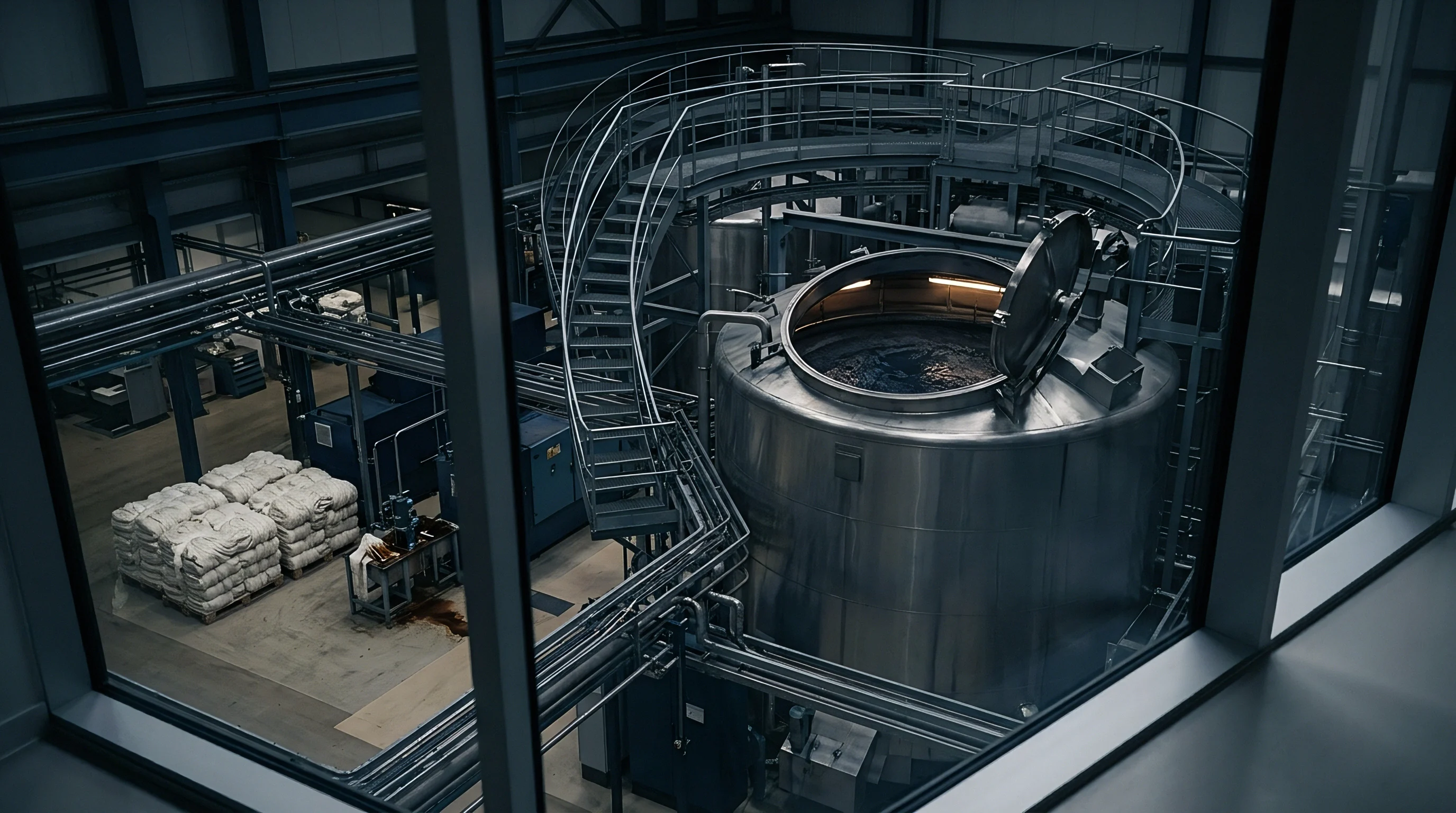
Preventing chemical drift during transit requires engineering adjustments on the mill floor before export packaging. The most effective defense against hydrolytic resin breakdown is optimizing stenter frame curing to ensure complete condensation. Incomplete curing leaves high levels of uncured methylol groups and catalyst residues inside the amorphous regions of cellulose fibers.
Extending stenter dwell time by 15 to 20 seconds at 160°C to 170°C cuts unreacted methylol reserves by up to 80 percent, largely removing the precursor pool. Switching to etherified DMDHEU resins with ultra-low free formaldehyde, or adopting zero-formaldehyde polycarboxylic acid crosslinkers, eliminates aldehyde drift risks entirely.
Process controls also need to target chemical carryover from bleaching, dyeing, and washing. Dyehouses must run thorough neutral wash-off cycles after reactive or direct dyeing to remove residual alkali, acid salts, and reducing agent carryover. A final wash pass with vacuum extraction removes unfixed surface chemicals, organic acid residues, and excess surfactants before chemical finishes are applied.
Setting the final extractable pH to a tight range of 5.5 to 6.5 stabilizes crosslinked networks and prevents proton-catalyzed hydrolysis inside sealed packages during transport.

Engineering Process Controls at the Finishing Range
Substrate preparation and chemical bath management directly shape post-shipment stability. Automated dosing for stenter auxiliaries removes manual operator errors that lead to excess catalyst or incorrect resin ratios. Adding formaldehyde scavengers ~ like acetoacetamide or ethylene urea derivatives ~ directly into the pad bath binds free formaldehyde into stable cyclic structures during heat setting.
These scavengers act as internal sinks, neutralizing aldehydes released by hydrolysis during transit before vapor builds up inside packed cartons.
Moisture control at the stenter exit is another critical boundary. Over-drying fabric below natural regain makes it highly hygroscopic, causing it to absorb ambient water vapor inside packaging and set off localized condensation. Conversely, leaving stenter exit moisture above 7.5 percent introduces excess water directly into sealed cartons, accelerating hydrolytic reactions.
Online microwave moisture sensors tied to automatic stenter speed controls hold finished moisture within a strict target of 5.5 to 6.5 percent, cutting off the water required for hydrolytic breakdown.

Protocol Design for Accelerated Transit Simulation
Relying solely on immediate origin test reports introduces unmanageable risk into textile supply chains. Progressive compliance programs require accelerated hydrothermal aging protocols that force latent chemical drift to occur on lab swatches before lots clear export release. One predictive protocol places finished swatches in an environmental chamber at 50°C and 80 percent relative humidity for 72 hours under sealed headspace conditions.
Re-testing under ISO 14184-1 or EN 14362-1 quantifies post-aging chemical levels, revealing precursor degradation before the goods ever board a ship.
When accelerated testing reveals chemical drift, mills must remediate the batch before issuing release documentation. If post-aging formaldehyde crosses safety thresholds, goods undergo vacuum-steam neutralization washing or gaseous ammonia treatment to consume remaining precursors. Building predictive aging into mill QA turns chemical compliance from a post-shipment gamble into a controlled manufacturing parameter.
Pre-shipment hydrothermal stress testing identifies latent chemical instability before goods enter international transit corridors.
What threshold of predictive hydrothermal stress testing should international regulators standardize to distinguish normal ocean transit chemical evolution from negligent finishing at the mill?