Verifying Repeat Fabric Orders against Existing Type Approvals
Repeat order verification relies on targeted chemical screening and transaction document cross-checking to confirm batch conformity against baseline approvals.


Origin
Initial qualification of a woven or knitted substrate sets the benchmark for all future production runs. When a mill submits a master sample for laboratory screening, the test report creates a statutory and contractual presumption of conformity. Qualification evaluations address chemical composition, physical performance, and structural properties.
On a dyed synthetic blend, a standard panel covers ISO 14362-1 testing for released aromatic amines, ISO 17075 for hexavalent chromium in leather elements, ISO 17294-2 for heavy metals in aqueous extracts, and total fluorine by combustion ion chromatography for per- and polyfluoroalkyl substance limits. This type approval documentation creates a permanent dossier covering fiber composition ratios, yarn linear density, weave construction parameters, dyestuff chemical classes, and applied finish mass fractions.
Brands and sourcing teams often mistake an initial qualification certificate for permanent clearance across future production. A type approval reflects only a single, controlled batch made under ideal mill conditions. Master samples are frequently produced on pilot equipment or dedicated sample looms, where senior colorists continuously monitor dye bath exhaustion, stenter temperatures, and chemical pick-up percentages.
Commercial runs executed six to eighteen months later operate under vastly different realities: bulk dye baths in high-capacity jet machines, fiber lots from separate harvests or synthesis batches, and wet-finishing lines running faster to drive throughput. Expecting a repeat containerload to match the chemical profile of a golden sample tested twelve months prior is a major compliance risk in cross-border trade.

Baseline Dossier Parameters and Test Scope
Building a reliable baseline file requires recording exact physical and chemical metrics rather than accepting simple pass-fail summaries. The technical dossier logs fiber blend tolerances to single-percentage points, yarn twist multipliers, warp and weft thread counts per centimeter, finished mass in grams per square meter, and residual chemical thresholds. Chemical signatures in the baseline file need to name the exact test methods used.
Fluorine content measured by combustion ion chromatography under EN 14582 sets the total fluorine baseline, while liquid chromatography-tandem mass spectrometry target screening under CEN/TS 15968 isolates extractable perfluorinated carboxylic acids. Listing these precise test protocols and reporting limits ensures subsequent lot testing measures identical variables on identical analytical equipment.
Qualification panels must reflect the end-use classification defined by international chemical regulations. Under European Union Regulation 1907/2006 REACH Annex XVII, Entry 72 places strict limits on thirty-three carcinogenic, mutagenic, or reprotoxic substances in textiles intended for direct skin contact. These set clear thresholds, including free formaldehyde at 75 milligrams per kilogram, extractable arsenic at 1 milligram per kilogram, and extractable cadmium at 1 milligram per kilogram.
The baseline certificate confirms compliance against these benchmarks, anchoring the chemical baseline for all subsequent purchase orders tied to that technical specification.
A type approval test report older than twelve months loses presumption of conformity under European market surveillance guidelines unless accompanied by batch-specific chemical traceability records.

Regulatory Presumptions of Conformity
Market surveillance authorities evaluate textile imports on lot-specific evidence rather than historical brand approvals. Under the United States Consumer Product Safety Improvement Act, importers are legally liable for ensuring every commercial lot of children’s sleepwear meets flammability standards under 16 CFR Part 1610 alongside total lead content rules under Section 101. An initial type approval report proves only that the mill could produce compliant material when sampled.
That historical record does not meet the statutory burden of proof for a container arriving twenty-four months later. Customs officers and surveillance auditors inspect batch-level documentation to verify that the specific lot in the shipment matches the chemical and structural composition of the originally qualified material.
Certifier scope limits create another compliance gap when buyers rely on historical approvals. Schemes like OEKO-TEX Standard 100 or the Global Organic Textile Standard issue annual certificates based on audit samples taken at a single point in time. While an annual certificate covers listed article groups, its legal validity assumes the mill uses identical chemical inputs throughout that twelve-month period.
If a mill switches auxiliary chemical suppliers, changes washing surfactants, or substitutes a sizing agent mid-year, the historical certificate no longer covers those production lots. Compliance managers need to separate the static qualification document sitting in the mill file from the dynamic conformity status of individual shipments arriving at port.
| Compliance Scheme | Qualification Test Scope | Validity Window | Repeat Order Mandate | Retention Sample Requirement |
|---|---|---|---|---|
| OEKO-TEX Standard 100 Class I | Full Annex 4/6 Chemical Panel, pH, Colorfastness | 12 Months | Annual Renewal plus Spot Verification | 3 Years Minimum at Accredited Lab |
| REACH Annex XVII Entry 72 | 33 Restricted CMR Substances Panel | Static Snapshot | Lot-Specific Verification Recommended | Retain Lot Samples for 5 Years |
| US CPSIA 16 CFR 1610 | Flammability Flame Spread Class 1/2/3 | Per Production Year | Certificate of Conformity per Shipment | Retain Test Records for 5 Years |
| GOTS Version 7.0 | Dual Organic Purity and Technical Chemical Panel | 12 Months | Transaction Certificate per Batch | Retain Batch Samples for 3 Years |
| Source: Compiled from OEKO-TEX Standard 100 technical criteria, ECHA REACH Annex XVII enforcement guidance, and CPSC import compliance manuals. | ||||
Documented baseline profiles serve as the primary benchmark when resolving cross-border quality disputes. If a buyer receives a production lot with unexpected odor, yellowing, or an altered hand-feel, the baseline dossier provides the original physical and chemical values for comparative testing. Laboratories test the retained baseline sample alongside swatches pulled from the non-conforming shipment.
Discrepancies in FTIR spectral profiles or gas chromatography peak distributions reveal exact deviations from the approved baseline. Building a thorough baseline dossier ensures commercial buyers keep absolute clarity on product specifications across multi-year production cycles.
When a mill maintains identical fiber sourcing and chemical recipes across multiple order cycles, the baseline technical qualification remains valid for twelve full calendar months.

Vat
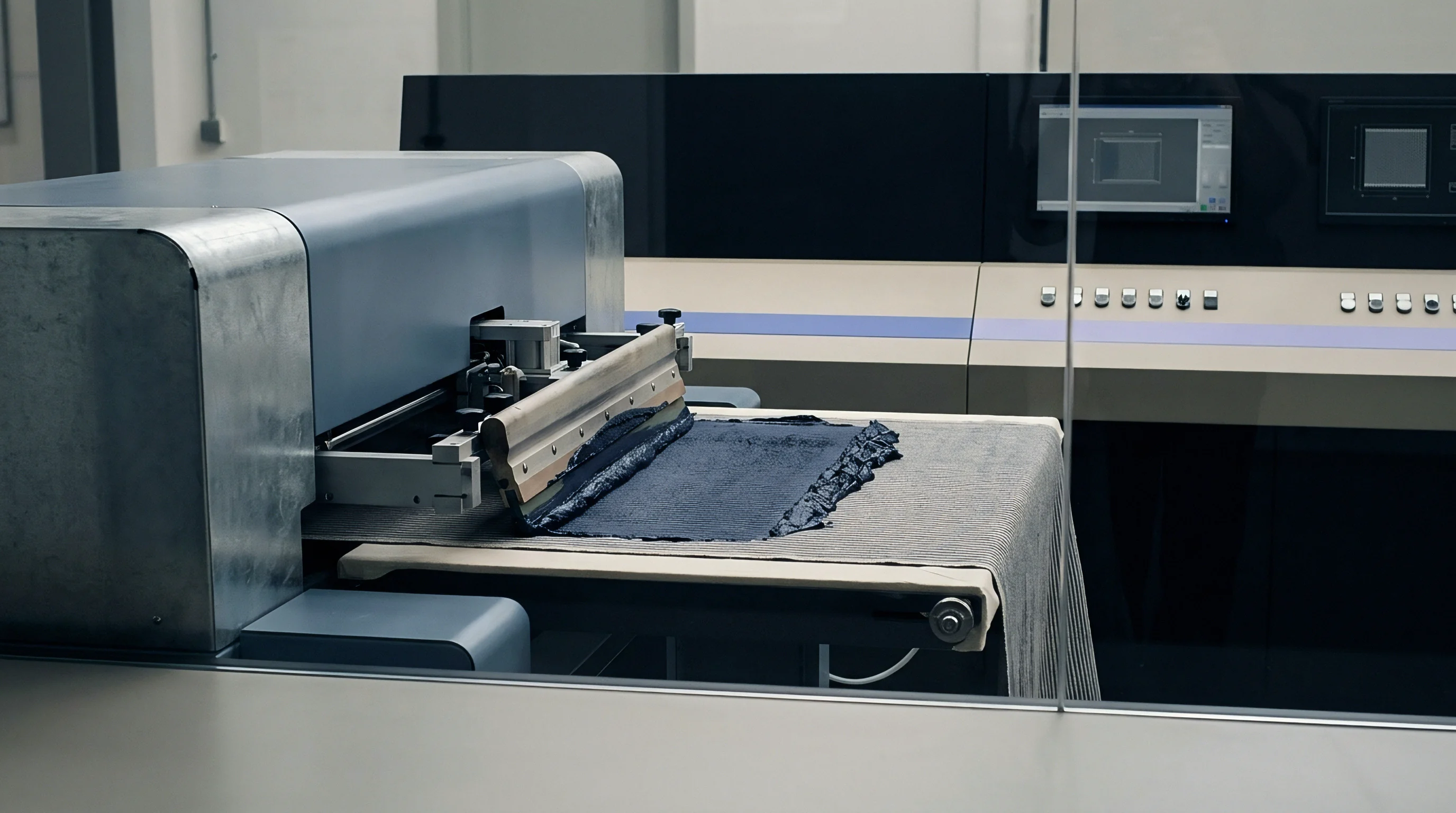
Dyehouse operations naturally introduce chemical and physical variations into repeat manufacturing runs. Wet processing line adjustments are the single largest source of non-compliance in repeat piece goods orders. Even when a mill uses the exact dyestuff brand and color code from the master recipe, batch-to-batch chemical variations happen during dyestuff synthesis at the chemical plant.
Dyes bought six months apart carry different salt concentrations, dispersing agent fractions, and residual impurities. To match shades against the approved lab dip, colorists adjust dye bath formulations on the fly ~ changing dye concentrations, adding shading dyes, or extending liquor exposure times. These real-time tweaks alter the residual chemical footprint on the finished fabric.
Auxiliary chemical drift poses an even greater risk during repeat wet processing runs. Mills routinely swap auxiliary chemicals to save money on spot markets, work around supply delays, or boost processing speeds. Surfactants used in scouring and washing can easily shift from ethoxylated fatty alcohols to cheaper alkylphenol ethoxylates, introducing restricted nonylphenol and octylphenol ethoxylates onto the finished substrate above the 100 milligram per kilogram REACH Annex XVII limit.
Likewise, wetting agents, leveling chemicals, and defoamers added to high-speed jet machines often carry unlisted preservatives like free formaldehyde or chlorinated aromatic solvents. These chemicals leave non-compliant residues without changing the fabric’s visual shade or weight.

Wet Processing Drift in Repeat Production
Stenter frame operating parameters determine whether applied chemical finishes cure properly or degrade into hazardous compounds. Water-repellent finishes, flame retardant coatings, and easy-care durable press resins rely on precise thermal curing profiles to cross-link chemical agents into the fiber’s polymer matrix. If a mill pushes stenter line speed from fifteen to twenty-five meters per minute to boost daily output, the fabric never reaches the required cross-linking temperature.
Unreacted monomer residues, residual free formaldehyde from dimethyloldihydroxyethyleneurea resins, and unbound fluorinated polymers stay trapped loose inside the yarn structure. These unbonded residues wash out quickly in consumer laundering and off-gas high levels of volatile organic compounds in storage, triggering severe failures during post-import testing.
Water quality and tank sanitation shift with the seasons, introducing unexpected mineral and biological contaminants into repeat runs. Mills in regions with seasonal groundwater changes face fluctuations in water hardness, iron content, and ambient pH. High concentrations of calcium and magnesium ions reduce the efficiency of anionic scouring agents, forcing operators to increase surfactant dosages.
In addition, recycled water systems in zero-liquid-discharge dyehouses accumulate trace heavy metals and salts over repeated cycles. Metals like copper, nickel, and chromium deposit on the substrate during boiling-off and dyeing, pushing extractable heavy metal concentrations above OEKO-TEX Class I limits.
When a dyehouse shifts its auxiliary wetting agent to cut batch processing time, the flammability rating and water-column resistance change before the shade shifts.

Raw Fiber Feedstock and Auxiliary Chemical Shifts
Upstream raw material substitutions at the spinning mill create silent compliance failures in repeat yarn orders. Synthetic fiber producers frequently tweak spin finish formulations applied during extrusion to improve cohesion during high-speed spinning. These finishes are complex blends of lubricants, antistatic agents, and emulsifiers.
Swapping spin finish components can introduce alkylphosphate esters, diethanolamine residues, or silicone fluids that interfere with downstream dyeing and finishing chemistry. For cellulosics, virgin cotton bales from different agricultural regions carry different pesticide residues ~ including organochlorine compounds like endosulfan, hexachlorobenzene, and DDT isomers ~ that survive standard bleaching and scouring.
Recycled fiber inputs bring extreme batch-to-batch chemical variability to repeat manufacturing. Recycled polyethylene terephthalate polymer chips made from post-consumer beverage bottles carry unpredictable levels of antimony trioxide catalyst residues, residual bisphenol A from caps, and trace phthalate plasticizers from label adhesives. When a mill runs a repeat order of recycled polyester fleece using a new batch of recycled chips, total antimony concentrations can jump from 150 milligrams per kilogram up to 450 milligrams per kilogram.
That surge breaches brand restricted substance limits without changing the physical strength or visual appearance of the fabric.
- Anilox roller wear reduces applied liquid flame retardant volume across repeat runs, causing severe flammability test failures on technical protective textiles.
- Stenter dwell time reduction leaves un-crosslinked formaldehyde resins on cellulosic goods, driving free formaldehyde emissions far above maximum regulatory limits.
- pH imbalance in wash ranges prevents thorough neutralizing of acid-dyed nylon substrates, leading to colorfastness failures and skin irritation risks.
- Recycled chip contamination introduces variable organotin catalyst residues into synthetic yarns, exceeding brand limits for dibutyltin and dioctyltin compounds.
- Carrier solvent substitution in polyester dyeing operations introduces residual trichlorobenzenes, violating global restricted substance lists without visual indication.
Finishing mills frequently top off chemical batches when running high-volume repeat orders over several weeks. Mixing tanks that receive continuous top-ups of water-repellent emulsions suffer bath degradation over time. As emulsion stability breaks down, active fluorinated or silicone polymers agglomerate into microscopic gels.
These gels deposit unevenly across the textile web, creating localized spots of heavy chemical density right next to areas with no water repellency at all. Sampling swatches from the tail end of a long run frequently uncovers chemical non-compliance that wasn’t present in the first fifty meters of the batch.
Dyestuff suppliers frequently change auxiliaries between production cycles, leading mills to explain away discrepancies by claiming that minor chemical recipe adjustments fall within standard industrial manufacturing tolerances.


Sampling
Verifying a high-volume repeat shipment requires a statistically sound sampling strategy that balances testing budgets against compliance risk. Pulling a single swatch from the roll right inside the container door gives zero statistical confidence about the chemical compliance of the remaining five hundred rolls. Standardized lot acceptance protocols like ANSI/ASQ Z1.4 and ISO 2859-1 supply the mathematical framework for selecting inspection units.
For chemical conformity testing, sampling plans operate under Special Inspection Levels S-3 or S-4, limiting destructive cutting of expensive piece goods while keeping enough statistical power to spot systemic batch defects.
Selecting sample rolls requires deliberate randomization paired with targeted risk assessment. Inspectors need to pull rolls from the top, middle, and bottom tiers of palletized freight to cover different production dates and dye lots. Roll selection must cross-reference mill packing lists to identify individual dye lot numbers, making sure swatches are collected from every distinct dye bath executed during the run.
If a five-thousand-meter order came out of five separate one-thousand-meter dye vats, the inspection plan must require swatches from all five vats instead of concentrating samples in a single lot.

Statistical Lot Acceptance and Selection Protocols
Composite sampling must be carefully controlled to avoid analytical dilution errors. To cut testing fees, buyers often ask laboratories to combine swatches from five rolls into a single composite sample for gas chromatography-mass spectrometry testing. While composite testing lowers lab invoices, it creates a dangerous dilution effect.
If one roll in a five-roll composite contains 400 milligrams per kilogram of a restricted phthalate while the other four rolls contain zero, the combined sample yields a result of 80 milligrams per kilogram. Against a pass-fail threshold of 100 milligrams per kilogram, that non-compliant roll passes inspection and enters commercial distribution undetected.
To prevent dilution failures, analytical protocols should use an adjusted threshold known as the Smart Composite Limit. The Smart Composite Limit divides the statutory limit by the number of swatches in the composite sample. For a five-swatch composite evaluated against a 100 milligram per kilogram regulatory limit, any result above 20 milligrams per kilogram triggers immediate de-compositing.
The laboratory then tests all five swatches individually to pinpoint the non-compliant roll. Using Smart Composite Limits maintains cost efficiency while eliminating the risk of false-negative compliance clearances.

What Triggers a Required Retest on Repeat Orders?
Operational rules within sourcing departments must clearly define when a repeat order cannot rely on historical data and must undergo full laboratory re-testing. Changes in key manufacturing variables instantly invalidate prior qualification status, mandating a fresh compliance dossier before goods leave the factory floor.
- Verify that the mill has issued a formal declaration confirming zero alterations in fiber origin, yarn spinning location, dyestuff brand, or auxiliary chemical formulations since the baseline test report date.
- Cross-check the total elapsed time since the last full laboratory screening against the maximum allowable twelve-month validity window established by brand compliance risk policies.
- Inspect incoming shipment packing lists to identify any new dye lot numbers, dyehouse sub-contractors, or wet-finishing facility locations not included in the original qualification file.
- Review historical factory quality performance records, triggering full mandatory laboratory re-testing if the mill incurred any quality non-conformity clearance failures during the preceding six months.
- Extract swatch samples across multiple rolls using ANSI/ASQ Z1.4 single sampling plans, securing physical chain-of-custody tamper-evident seals on all laboratory dispatch bags.
- Dispatch sealed swatches to an ISO 17025 accredited laboratory with explicit instructions to execute targeted screening panels rather than full baseline qualification suites.
Physical extraction of verification swatches requires strict discipline on the warehouse floor. Swatches must be cut across the full usable width of the textile web, measuring at least thirty centimeters in length by the full roll width. Full-width cuts allow the laboratory to evaluate edge-to-middle-to-edge chemical uniformity, catching stenter frame airflow imbalances that cause uneven curing.
Swatches must be bagged immediately in clean polyethylene or aluminum foil to prevent cross-contamination from ambient warehouse air, forklift exhaust, or plasticized packaging. Every sample bag needs a tamper-evident seal with a unique barcode matching the inspection log.
An importer lost a dispute over a twenty-thousand-meter shipment of technical outerwear because the warehouse team stored verification swatches in unsealed PVC packaging bags, allowing phthalate plasticizers from the packaging film to migrate onto the tested fabric swatches and generating false-positive laboratory failures that cost $14,000 in unnecessary re-testing and freight delays.


Fingerprint
Replacing full qualification testing batteries with targeted verification panels cuts compliance costs dramatically while preserving strong analytical coverage. Re-testing a repeat order against a complete baseline panel runs between $3,000 and $8,000 per colorway, creating steep friction for high-frequency replenishment programs. Targeted verification relies on rapid screening techniques that check chemical consistency against the baseline record for a fraction of that cost.
Rather than quantifying every restricted substance, targeted screening verifies that key chemical markers, polymer structures, and residual footprints match the approved baseline profile within tight statistical tolerances.
Fourier-Transform Infrared Spectroscopy coupled with Attenuated Total Reflectance offers a fast, non-destructive way to verify fiber polymer identity and finish presence. An ATR-FTIR scan takes under two minutes, generating an infrared absorption spectrum that acts as a molecular fingerprint of the textile surface. Overlaying the FTIR spectrum of a repeat order swatch against the baseline master spectrum allows technicians to spot missing water-repellent coatings, substituted synthetic polymers, or altered polyurethane backing layers.
Spectral correlation algorithms calculate a match percentage; any swatch scoring below 98 percent relative to the baseline is flagged for secondary lab investigation.

Targeted Analytical Screening Methods
X-Ray Fluorescence spectroscopy provides non-destructive, high-throughput screening for heavy metal contaminants and organohalogen markers. Energy-dispersive XRF instruments direct high-energy X-rays at the textile sample and measure the characteristic fluorescent X-rays emitted by metallic atoms. An XRF screen quantifies total lead, cadmium, mercury, chromium, arsenic, and antimony down to low milligram per kilogram detection limits within ninety seconds.
In addition, XRF measurements of total bromine and total chlorine act as rapid surrogate markers for brominated flame retardants and chlorinated paraffin plasticizers, letting lab technicians screen out compliant lots instantly without running costly chromatographic separations.
Chromatographic target screens focus strictly on high-risk chemical groups known to fluctuate between dyehouse runs. High-Performance Liquid Chromatography coupled with tandem Mass Spectrometry target screens quantify restricted alkylphenol ethoxylates and specific azo-derived aromatic amines (such as benzidine, 4-aminobiphenyl, and o-toluidine) under EN ISO 14362-1 procedures. Gas Chromatography-Mass Spectrometry target panels focus on extractable phthalates, organotin compounds, and carrier solvents.
Running targeted LC-MS/MS and GC-MS screens reduces testing costs to $400-$800 per lot while providing definitive quantitative verification of compliance with restricted substance lists.
| Analytical Technique | Targeted Chemical / Physical Parameter | Limit of Detection | Cost per Sample | Turnaround Time |
|---|---|---|---|---|
| ATR-FTIR Spectroscopy | Polymer Identity, Surface Finish, Coating Class | Qualitative Fingerprint | $40 – $80 | Same Day |
| ED-XRF Spectroscopy | Total Heavy Metals (Pb, Cd, Cr, Hg, Sb), Total Br/Cl | 5 – 10 mg/kg | $60 – $120 | Same Day |
| Target LC-MS/MS Panel | Alkylphenol Ethoxylates, Azo Aromatic Amines | 5 mg/kg (APEO), 1 mg/kg (Amine) | $250 – $450 | 24 – 48 Hours |
| Target GC-MS Panel | Phthalates, Organotin Compounds, Chlorinated Solvents | 10 mg/kg (Phthalates), 0.05 mg/kg (Tin) | $300 – $550 | 24 – 48 Hours |
| Combustion Ion Chromatography | Total Fluorine (PFAS Surrogate Marker) | 10 mg/kg Total F | $200 – $350 | 24 – 48 Hours |
Pyrolysis Gas Chromatography-Mass Spectrometry gives definitive chemical characterization of non-volatile organic polymers, complex dye structures, and rubberized backings. In Py-GC-MS testing, a micro-sample of fabric is thermally decomposed in an inert helium atmosphere at temperatures exceeding 600 degrees Celsius. The volatile degradation fragments pass straight into a gas chromatograph for separation and mass spectrometric identification.
Pyrolysis profiles produce complex, highly specific pyrograms that reveal subtle changes in dye structures, binder resins, and chemical cross-linkers that solvent extraction misses entirely.
Under ISO 17025 accredited laboratory criteria, composite sampling across three separate dye lots invalidates the statistical integrity of a trace heavy metal screening report.

Detection Limits and Spectroscopic Verification
Analytical verification succeeds or fails on setting the right limits of detection and quantification. The Limit of Detection is the lowest concentration an instrument can distinguish from background noise, while the Limit of Quantification marks the lowest level measured with acceptable precision. Compliance managers must confirm that accredited labs use instruments capable of reaching LOQ values well below statutory thresholds.
For example, when verifying compliance with European Union restrictions on perfluorooctanoic acid (PFOA) ~ which sets a legal limit of 25 parts per billion (0.025 milligrams per kilogram) ~ the lab instrument must achieve an LOQ of at least 5 parts per billion to yield legally defensible results.
Discrepancies between screening test results and formal reference methods require clear escalation steps. When rapid XRF screening shows a total bromine concentration of 150 milligrams per kilogram on a flame-retardant polyester cloth, that finding does not prove the presence of a restricted polybrominated diphenyl ether, because total bromine includes non-restricted organobromine reactive flame retardants. In cases like this, the initial screen serves as an automatic trigger for secondary confirmatory testing via solvent extraction followed by GC-MS analysis.
Confirmatory testing isolates and quantifies the exact molecular species to determine whether the material violates chemical thresholds or simply uses permitted functional chemistry.
Does the presence of trace residual solvents detected via headspace gas chromatography indicate systemic chemical non-compliance in wet processing operations, or does it merely represent volatile cross-contamination absorbed during maritime container transit?


Paperwork
Documentary audit trails provide the legal link connecting physical production lots to accredited test reports and certifier scope certificates. A container of piece goods arriving at port without fully reconciled transaction documents faces immediate customs detention under regional market surveillance laws. Reconciliation requires systematic verification across five core instruments: the Purchase Order, the Commercial Invoice, the Bill of Lading, the Mill Certificate of Analysis, and the certifier-issued Scope or Transaction Certificates.
Every document in the chain must show total continuity across material descriptions, fiber compositions, mill facility numbers, and batch lot codes.
Verifying certifier scope certificates requires cross-checking against public databases maintained by certification bodies. Compliance teams need to enter the license or certificate number from the supplier’s document into verification portals hosted by organizations like OEKO-TEX, Control Union, or Textile Exchange. Database checks confirm four parameters: current certificate validity, authorized licensee company name, authorized facility address, and the specific article categories covered under the scope.
A scope certificate issued to a spinning mill for raw grey yarn provides zero legal authorization for a wet-processing dyehouse to claim certified status on finished dyed goods.

Reconciling Transaction Certificates and Invoices
Transaction Certificates provide lot-specific proof of compliance for certified sustainable and organic supply chains. Unlike annual Scope Certificates, which attest to a facility’s general operational capacity, a Transaction Certificate is issued by an accredited certification body for a specific shipment. The TC documents the exact mass of certified raw material transferred from seller to buyer, detailing net weights, container numbers, invoice references, and raw material lot codes.
Compliance officers must reconcile the net weight on the TC against the physical weight on the commercial invoice and bill of lading; any variance beyond standard moisture regain allowances suggests potential substitution of non-certified conventional fiber.
Mill Certificates of Analysis accompanying repeat orders must be audited for technical completeness rather than filed as routine paperwork. A compliant CoA presents batch-specific laboratory test results for key physical and chemical metrics, signed by the mill quality control manager. The CoA must display unique batch and dye lot numbers matching the physical labels on the fabric roll cores inside the container.
Compliance checkers verify that reported values align with agreed purchase order specifications for mass per unit area, dimensional stability after laundering, tear strength, colorfastness to light and rubbing, and residual pH. Pass-fail stampings lacking raw quantitative data fail standard import audit requirements.

Database Cross-Checking and Scope Validation
Audit failures on repeat order documentation stem from predictable administrative oversights and structural scope mismatches. Identifying these documentation errors prior to vessel loading prevents costly port detentions and brand audit penalties.
- Expired Scope Certificates presented by suppliers where the annual renewal date passed prior to the actual manufacturing and dispatch dates of the repeat order.
- Mismatched facility addresses where the production facility listed on the commercial invoice differs from the certified facility address registered on the certifier database.
- Article class omissions where the scope certificate covers Class IV decorative materials but the purchase order specifies Class I infant wear products carrying stricter chemical limits.
- Tonnage discrepancy overflows where the aggregate volume of Transaction Certificates issued by a mill exceeds the total certified raw material input capacity verified during their annual audit.
- Missing batch lot continuity where commercial invoices lack explicit dye lot references, breaking the traceability chain between laboratory test reports and physical rolls.
Maintaining a digital compliance ledger turns fragmented document verification into a structured, automated workflow. Digital platforms extract data from uploaded CoAs, test reports, and transaction certificates using optical character recognition, automatically matching key parameters against purchase order specifications and regulatory limit tables. Discrepancies in yarn counts, missing chemical test parameters, or impending certificate expirations trigger automated holds on purchase order approvals, keeping non-compliant goods from reaching the shipment stage.
Verification workflows demonstrate that certified organic cotton shipments accompanied by valid Transaction Certificates frequently contain non-compliant synthetic sizing agents introduced during subcontracted weaving operations.
Standard purchase order terms must incorporate explicit documentation clauses stating: “Seller warrants that every commercial shipment executed under this Purchase Order shall be accompanied by a lot-specific Certificate of Analysis and valid Transaction Certificate referencing the exact dye lot numbers contained therein, and failure to provide validated documentation prior to vessel loading shall grant Buyer the absolute right to reject the shipment at Seller’s sole expense.”


Liability
Commercial contracts governing repeat fabric orders must establish clear legal liability for chemical non-compliance, test failures, and regulatory detentions. Supply agreements negotiated by procurement teams often focus on unit pricing, payment terms, and delivery schedules, treating compliance requirements as generic boilerplate. When customs detains a container at port over restricted amine detection or PFAS contamination, boilerplate clauses fail to protect the importer from heavy financial losses.
Well-structured purchase agreements translate technical compliance obligations into enforceable commercial liabilities backed by explicit financial remedies.
Cost allocation rules need to address both routine verification testing and extraordinary re-testing costs triggered by initial screening failures. Standard commercial terms usually state that the buyer absorbs routine testing fees for compliant lots as part of regular quality assurance. But contracts must mandate that if a sample fails screening, the supplier assumes immediate liability for secondary confirmatory testing, third-party laboratory arbitration costs, and administrative processing fees.
Furthermore, the contract must obligate the supplier to fund 100 percent re-inspection sampling across all remaining rolls in the affected lot.

Contractual Allocation of Testing and Detention Costs
Port detention, demurrage, and customs delays represent immediate, high-volume financial risks during enforcement actions. When import authorities quarantine a textile shipment for suspected non-compliance, demurrage and storage fees accumulate daily at steep rates. Purchase agreements should include explicit indemnification clauses holding the seller fully liable for demurrage charges, storage fees, customs broker intervention costs, and legal expenses incurred while resolving detentions caused by non-compliant goods or faulty supplier paperwork.
Re-export and destruction procedures must be clearly defined in purchase contracts to handle non-compliant shipments that cannot be remediated. Import regulations in jurisdictions like the European Union and the United States strictly forbid the domestic sale of goods containing restricted CMR substances above legal limits. Customs authorities will order either certified destruction of the non-compliant merchandise or mandatory re-export to the country of origin.
Supply contracts must require the seller to absorb all hazardous waste destruction costs or international return freight, while issuing an immediate full refund or credit note for the purchase order value within fourteen calendar days of failure notification.
| Failure Event | Verification Trigger | Primary Financial Liability | Secondary Commercial Remedy |
|---|---|---|---|
| Screening Test Failure (Screening Panel) | FTIR/XRF Deviates from Baseline | Seller pays Confirmatory GC-MS Testing Fees | Shipment placed on mandatory hold pending lab result |
| Restricted Substance Detection (REACH/CPSIA) | Confirmatory Testing Exceeds Statutory Limit | Seller funds Total Shipment Refund plus Return Freight | Mandatory full audit of mill wet-processing facility |
| Port Customs Quarantine (REACH Entry 72) | Customs Border Enforcement Testing | Seller indemnifies Port Demurrage and Storage Costs | Seller posts customs clearance performance bond |
| Transaction Certificate Rejection | Scope/Volume Audit Discrepancy | Seller pays Administrative Re-issuance Surcharges | Payment terms converted from L/C to Net 90 post-clearance |
Importers bear full regulatory liability at the customs border regardless of whether the overseas mill supplied a valid scope certificate.

Remediation Protocols for Non-Conforming Batches
Commercial remedies for quality failures must extend beyond immediate lot refunds to cover downstream production disruptions and brand damage. When non-compliant fabric causes garment factory shutdowns, missed retail launch dates, or late-delivery penalties, the financial impact far exceeds the landed fabric value. Strong purchasing agreements incorporate liquidated damages clauses that quantify downstream disruption penalties, obligating the mill to pay agreed percentage surcharges per day of delayed garment production resulting from fabric compliance failures.
Dispute resolution protocols must designate an authoritative, independent third-party lab to arbitrate conflicting test results. Overseas dyehouses frequently dispute buyer test failures by presenting internal mill reports showing compliant results. Contracts should mandate that in the event of conflicting test data, an agreed ISO 17025 accredited independent laboratory (such as SGS, Intertek, or Bureau Veritas) extracts fresh swatches from retained shipping samples under strict chain of custody.
The independent lab’s analytical findings serve as legally binding arbitration, with all testing fees billed entirely to the losing party.
Structuring repeat order contracts with automatic re-test cost transfer triggers ensures that suppliers absorb full analytical expenses whenever incoming lot verification uncovers chemical deviations exceeding 5 percent of the baseline specification. When a supplier accepts these terms within the master purchase agreement, the mill enforces far stricter internal wet-processing controls, dramatically reducing the incidence of non-compliant containers arriving at destination ports.