Woven Fabric Greige Sett Effects on Finishing Shrinkage Rates
Greige sett density determines yarn mobility and crimp capacity, directly establishing wet processing shrinkage and final finishing compaction limits.

Crimp
Woven construction parameters established on the weaving frame dictate how yarn bends and settles during subsequent wet processing. Loom tension holds warp yarns under high linear stress, keeping warp crimp artificially suppressed while forcing weft yarns to bend around the straight warp threads. Densities defined by ends per centimetre and picks per centimetre establish the open spatial envelope available for yarns to alter their geometry once that tension releases, which dictates dimensional shift.
When a loom delivers greige fabric, the structural state remains far from thermodynamic equilibrium.
Cover factor calculations quantify the geometric area occupied by yarns relative to total fabric surface area. In a plain weave structure, Fractional Cover (K) derives from thread density (n) and yarn diameter (d), expressed as K = n × d. As total cover factor exceeds theoretical threshold values, adjacent yarns enter a jammed structural state that restricts yarn mobility.
In low-density setts, loose yarn arrangement leaves substantial interstitial void space, giving yarns space to bend into deeper wave shapes during scouring and bleaching.

Interchange Mechanics in Loom State Goods
Crimp interchange occurs when tension changes in one yarn system force structural rebalancing in the orthogonal system. High warp tension on the air-jet or rapier loom forces the weft yarn into maximum crimp while the warp yarn lies virtually flat. During wet processing, water penetrates yarn bundles, swelling individual fibres and softening starch sizes until yarn jam points limit further contraction.
The warp yarn relaxes, absorbing length to form undulating waves around the weft yarns, while weft crimp flattens slightly to accommodate the movement.
Sett density sets the boundary conditions for this geometric exchange. Low pick counts allow the warp yarn to take on substantial crimp uptake without hitting structural resistance from adjacent weft threads. High pick counts force warp yarns to contend with crowded cross-over points, restricting warp crimp increase.
Conversely, high warp end counts lock weft threads in place, preventing weft contraction and stabilizing finished fabric width. Evaluating greige specification sheets without accounting for thread spatial constraints leads directly to incorrect finished width and weight projections.
Yarn crimp balance established at the loom determines the baseline contraction capacity during aqueous wet processing.
Jamming Limits and Spatial Yarn Mobility
Peirce’s structural model defines the jammed state as the point where adjacent threads touch along their entire length, preventing further packing without fiber deformation. When greige construction approaches the jammed cover factor limit, warp and weft yarns cannot alter their spatial position without pushing against neighboring threads, causing looser weaves to shrink more vertically.
Structural jamming limits dictate whether dimensional movement occurs as free yarn bending or forced thread crowding. Fabrics woven well below jammed cover factor levels undergo significant relaxation shrinkage when wet because the yarns easily migrate into high-crimp positions. Fabrics woven at or near jammed density display minimal freedom for additional yarn bending, resulting in low greige-to-finished contraction rates.
| Weave Structure | Greige Sett (Ends x Picks / cm) | Cover Factor (Peirce) | Warp Crimp (%) | Potential Relaxation Shrinkage (%) |
|---|---|---|---|---|
| Plain Weave 30s/1 Ne | 24 x 20 | 0.62 | 4.2 | 11.5 |
| Plain Weave 30s/1 Ne | 28 x 24 | 0.74 | 5.8 | 7.2 |
| Plain Weave 30s/1 Ne | 32 x 28 | 0.85 | 7.1 | 3.8 |
| 2/1 Twill 40s/1 Ne | 36 x 30 | 0.78 | 6.4 | 6.5 |
| 2/1 Twill 40s/1 Ne | 44 x 36 | 0.91 | 8.2 | 2.9 |
Physical constraints imposed by greige density dictate how yarn components respond to aqueous tension release. Structural adjustments implemented at the loom stage establish the foundation for all finishing stabilization operations.
- Open settlement geometry yields low initial cover factor, giving yarn bundles maximum space to contract and bend when exposed to hot liquor.
- Asymmetric yarn density shifts dimensional instability predominantly onto the system with lower thread frequency, creating uneven shrinkage directional ratios.
- Jammed structural limit restricts cross-sectional yarn flattening, causing residual stress to store as latent fiber strain rather than geometric crimp.
- High warp density locks weft movement, minimizing width contraction in the dyehouse while transferring residual stress along the length axis.
Loose constructions contract until thread interaction forces an internal mechanical stop.

Relaxation
Aqueous processing environments undo the mechanical stretching imposed by warp tensioning systems during weaving, as water releases temporary loom strain. When cellulosic or synthetic yarns encounter water, hydrogen bonding structures alter, allowing fibers to return to unstressed spatial positions. This relaxation process reduces overall fabric area while increasing mass per unit area and yarn frequency per unit length.
Machinery selection during wet processing directly modulates this structural contraction. Processing fabric on a continuous jig keeps high longitudinal tension on the warp, suppressing warp crimp development while allowing weft shrinkage. Jet dyeing machines subject cloth to cyclic rope-form relaxation with low longitudinal stress, allowing maximum warp relaxation shrinkage to take place in the bath.
Aqueous Tension Release in Continuous Range Washing
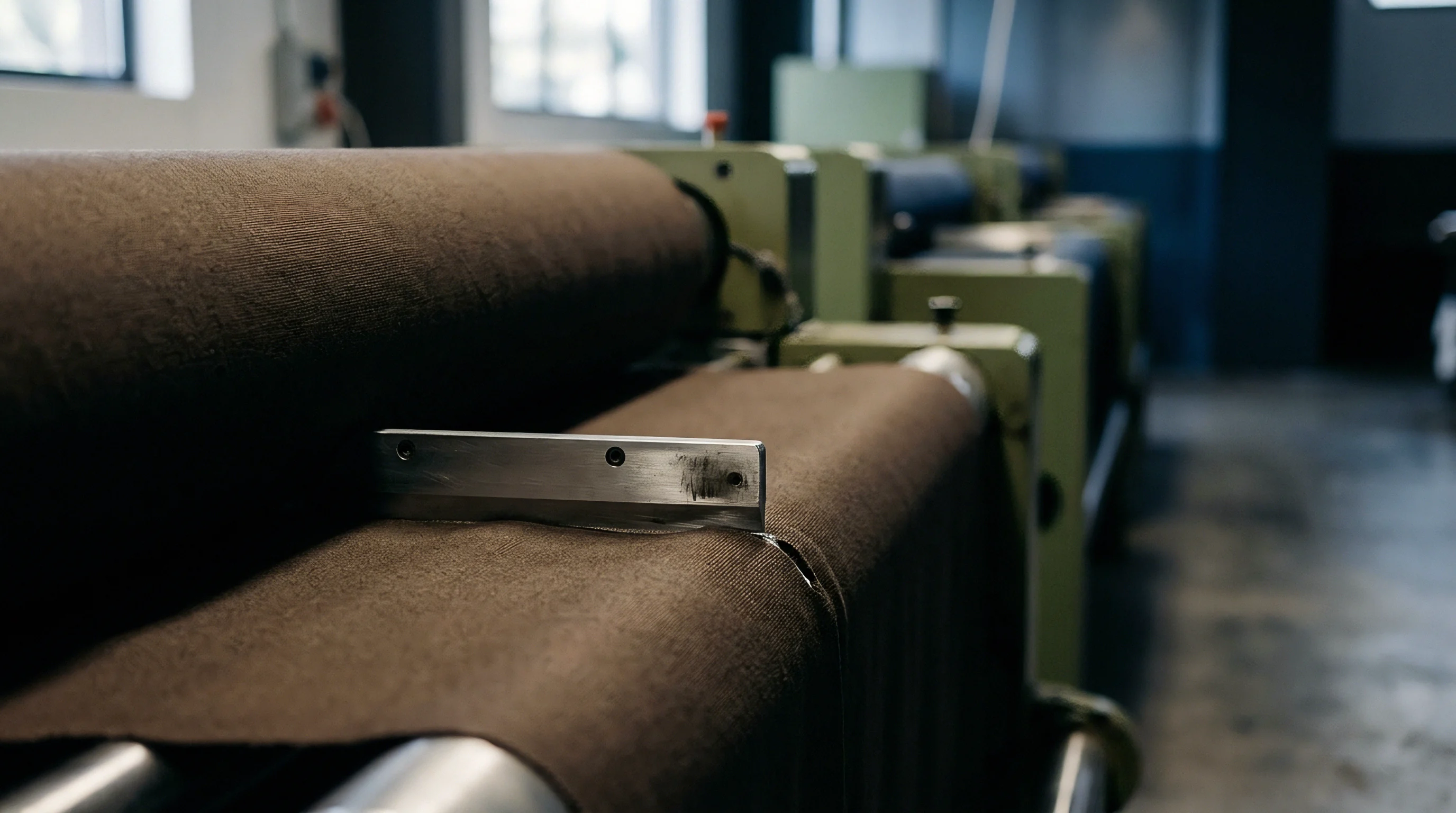
Continuous open-width washing ranges apply sequential spray and immersion steps designed to remove size materials and impurities. These processing steps apply longitudinal machine tension to pull fabric through squeeze rollers and immersion tanks. High machine drive speed differentials pull the warp direction tight, stripping out warp crimp and extending fabric length.
Fabrics with low pick density yield quickly under continuous machine tension, stretching warpwise and narrowing in width. Dense greige structures resist machine-induced stretching because inter-yarn friction stabilizes the thread intersections. When continuous washing ranges operate at high speeds, machine tension offsets thermal relaxation, leaving high latent warp strain inside the wet-processed fabric.
Jet dyeing achieves full structural relaxation by maintaining low longitudinal liquor-to-cloth mechanical stress.
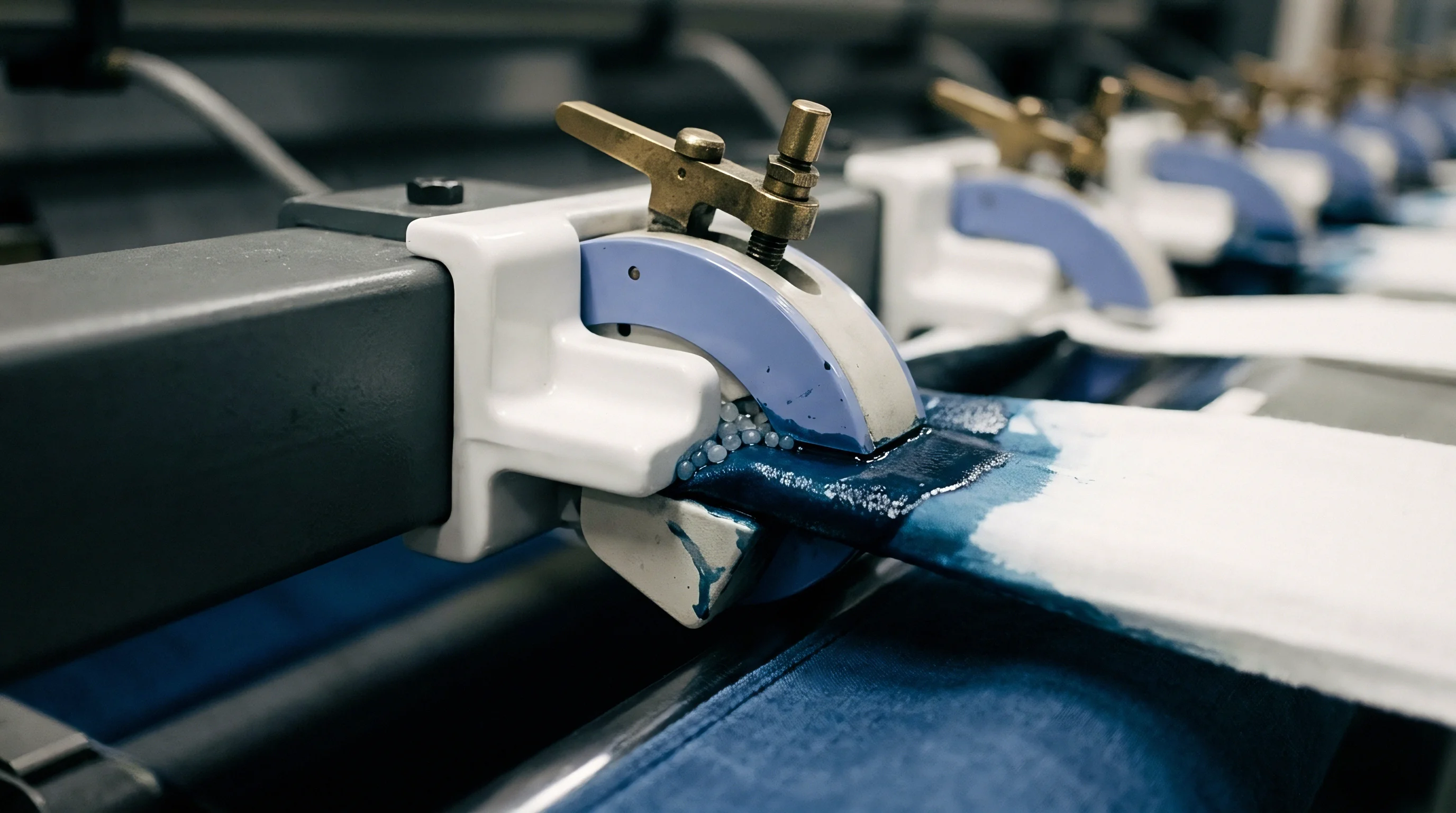
Swell Contraction Dynamics in Cellulosic Structures
Cellulosic fibers exhibit anisotropic swelling when wetted, expanding significantly in diameter while changing very little in length. Cotton fibers expand roughly 14 percent in diameter upon hydration. As individual yarn diameters increase inside the woven matrix, they force adjacent orthogonal yarns to take a longer, more tortuous path around them, increasing picks per inch post-wash.
This cross-sectional swelling forces an automatic increase in yarn crimp, shortening total fabric length and width. High greige setts create immediate structural interference during fiber swelling. Because spatial clearance between dense threads is minimal, yarn diameter expansion forces the entire woven structure to buckle or compact tightly, generating high internal forces that prevent further geometric movement.
- Immerse greige fabric rolls in neutral aqueous liquor at 60 degrees Celsius to initiate size film hydration and hydrogen bond destabilization.
- Pass fabric through low-tension squeeze nip rollers at 0.2 Megapascals pressure to expel trapped air and ensure complete liquor penetration into yarn centers.
- Maintain dwell time in tensionless scray accumulators for 180 seconds, permitting unhindered internal crimp interchange across warp and weft systems.
- Extract excess water through vacuum slot extractors operating at 30 kilopascals differential pressure without applying linear warp pulling force.
- Deliver wet relaxed fabric directly to drying machinery with positive nip feeder controls set to match natural wet contraction velocity.
Heavy-pick greige constructions shrink three percent less in jet washers because the yarns run out of room to bend.
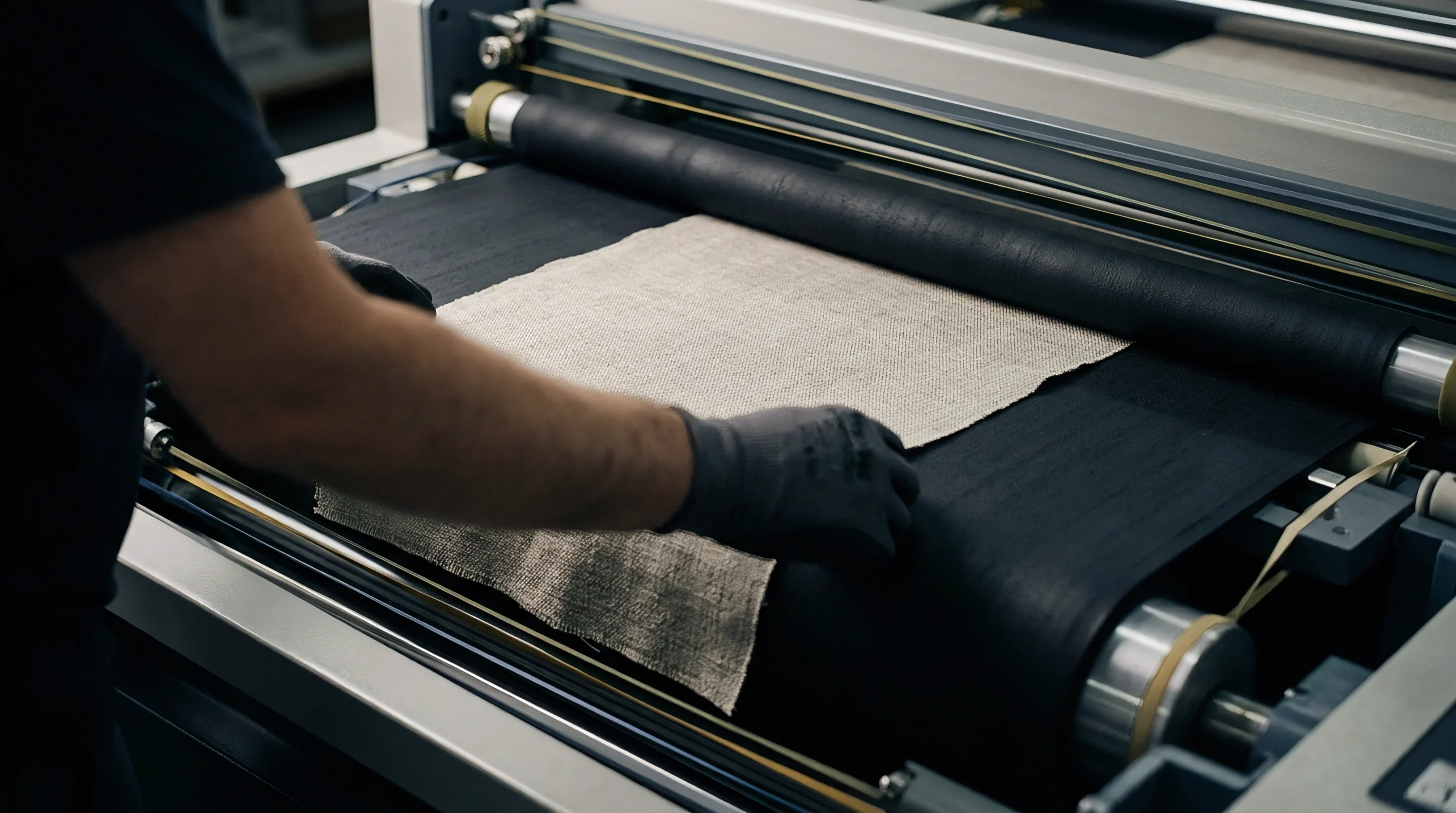
Overfeed
Stenter frames introduce longitudinal slack to permit controlled yarn contraction before thermal setting fixes fabric dimensions. Overfeed controls allow finishing technicians to feed fabric onto stenter pin chains at a linear speed faster than chain track velocity, preventing garment distortion. This speed differential creates longitudinal slack, giving warp yarns the spatial freedom to recoil into high-crimp geometry while heat dries the structure.
Mechanical compaction systems, including Sanforizers and rubber-belt compactors, go beyond thermal drying overfeed. These units mechanically compress fabric along its length using elastic deformation of a thick rubber belt. Greige setts dictate how much compressive compaction a fabric can accept before structural surface distortion occurs.
How Does Overfeed Correct Low Ends per Inch?
Low end-density fabrics present excessive crosswise yarn mobility and poor longitudinal stability. When greige end count is low, weft yarns slip easily along the warp, allowing warp yarns to stretch under minor handling loads. Finishing an open construction requires aggressive stenter overfeed to force warp crimp back into the fabric before drying.
Feeding a low-end fabric onto a pin chain at 12 percent overfeed allows warp yarns to contract naturally inside the stenter chamber. The heat sets yarn crimp, stabilizing dimensional properties against laundering. If overfeed rate is set lower than natural contraction potential, residual warp tension stays locked in the dried cloth, causing severe post-wash relaxation shrinkage in finished garments.
| Greige Sett (Ends x Picks / cm) | Fabric Mass (g/m²) | Stenter Overfeed (%) | Sanforizer Compaction (%) | Residual ISO 5077 Warp Shrinkage (%) |
|---|---|---|---|---|
| 24 x 20 | 115 | +6.0 | 2.5 | -4.8 |
| 24 x 20 | 122 | +12.0 | 5.0 | -1.2 |
| 32 x 28 | 140 | +4.0 | 2.0 | -1.1 |
| 32 x 28 | 142 | +8.0 | 3.5 | +0.4 |
| 40 x 34 | 165 | +2.0 | 1.5 | -0.8 |
Compaction capability scales inversely with greige thread packing density.

Sanforizing Belt Mechanics and Compaction Limits
Sanforizing units force longitudinal compression by feeding wet-conditioned fabric onto a stretched rubber belt. As the belt passes over a curved drive cylinder and recoils to its neutral state, it physically squeezes warp threads closer together, forcing warp crimp to rise. The processed cloth then immediately contacts a heated drying cylinder that sets this compacted state.
Greige sett density governs maximum allowable Sanforizer compaction. Dense fabrics with high pick counts resist mechanical compaction because adjacent picks hit jamming limits rapidly under belt compression. Forcing high compaction percentages on a high-density greige cloth causes surface rippling, wave formation, and yarn shear failure.
High-density setts reach structural compaction limits at lower strain levels than open constructions.
- Mechanical overfeed matching adjusts feeder roll velocity relative to chain speed to match calculated greige relaxation potential exactly.
- Moisture profile management applies steam conditioning ahead of rubber-belt entry to maximize fiber plasticity before compressive force application.
- Pin chain width expansion sets cross-track distance to manage weft crimp recovery while warp overfeed stabilizes longitudinal dimensions.
- Thermal dwell stabilization maintains drying chamber temperatures long enough to lock heat-set yarn crimp geometry permanently.
Setting stenter overfeed below the natural crimp contraction capacity of a loose greige weave leaves unrelaxed longitudinal strain in the finished goods, guaranteeing pattern distortion during garment laundering operations.

Sizing
Polymer films applied to warp yarns during slasher preparation temporarily stabilize structural geometry against early dimensional movement. Starch, polyvinyl alcohol, and carboxymethyl cellulose binders form cross-linked films around yarn surfaces, increasing tensile strength and gluing surface fibers down. This chemical coating locks warp crimp in its stretched loom state, preventing structural relaxation until size removal occurs in wet finishing.
Size pick-up levels typically range between 6 and 14 percent of total warp weight. High size add-on creates a rigid mechanical lattice that holds fabric dimensions stable during dry handling. Full desizing breaks down this protective polymer shell, exposing raw yarn to hydration and releasing locked loom stresses.

Desizing Extraction Strain and Crimp Unlocking
Enzymatic or oxidative desizing breaks down starch and synthetic size polymers into water-soluble compounds. As size materials dissolve, water penetrates yarn cores immediately. The sudden breakdown of the protective film releases locked loom strains, triggering rapid warp crimp recovery in the washing bath.
Dense greige setts alter size extraction kinetics. High thread counts restrict liquor circulation through interstitial voids, slowing enzyme penetration into internal fiber bundles. Incomplete size removal leaves residual polymer film on yarn contact points, suppressing full crimp relaxation during continuous washing.
When remaining size washes out in consumer home laundering, latent crimp contraction releases, causing unexpected late-stage garment shrinkage.
Size polymer removal releases locked loom tension, initiating immediate structural relaxation.
Testing Methodologies for Dimensional Stability Verification
ISO 5077 specifies procedures for determining fabric dimensional change after standard washing and drying treatments defined in ISO 6330. Specimens undergo calibrated wash cycles at specified water temperatures, detergent concentrations, and mechanical agitation levels. Dimensional stability tests evaluate total cumulative contraction from relaxation and felting mechanisms.
Test protocols mandate specimen conditioning at 20 degrees Celsius and 65 percent relative humidity for 24 hours before baseline measurement according to ISO 139 standards. Benchmarks drawn on conditioned fabric track warp and weft movement after three standardized wash-dry cycles. Testing loose setts against tight setts highlights how structural thread density alters dimensional tolerance margins.
- Specimen preparation standards require minimum 500 millimetre square swatches marked with 350 millimetre gauge distances clear of cut roll edges.
- Wash cycle parameters define washing machine type, liquor volume ratios, mechanical stroke action, and rinse cycle sequences.
- Drying method selection isolates tumble drying mechanical action effects from flat line-drying gravitational forces.
- Dimensional change calculation records percentage length and width shifts accurate to 0.1 percent against pre-wash reference marks.
In commercial supply contracts, a clause stipulating compliance with ISO 5077 after five ISO 6330 wash cycles at 40 degrees Celsius shifts full financial liability for post-wash garment shrinkage onto mills that finish open-sett greige fabrics without full mechanical stabilization.


Invoice
Commercial yield equations convert greige loom meterage into finished billable goods through width contraction and linear loss. When fabric undergoes finishing relaxation and compaction, total linear length drops while mass per unit area increases, altering final GSM. A mill purchasing 10,000 linear metres of loose greige cloth may yield only 9,100 linear metres of finished fabric after full stabilization processing.
Finishing costs tie directly to this yield loss. A conversion mill buying greige goods must calculate landed cost per finished linear metre by incorporating linear contraction, width trimming waste, and weight changes. Greige sett selection controls this commercial yield equation.
Linear Loss Calculations across Variable Setts
Linear loss calculations integrate greige warp contraction, stenter overfeed rates, and Sanforizer compaction settings. Dense setts undergo lower percentage linear loss during wet processing because high initial cover factor limits crimp uptake. Open setts suffer substantial linear loss as yarns bend into deep crimp geometry during stabilization.
Consider a worked commercial comparison evaluating two cotton twill options designed to meet a finished specification of 210 grams per square metre at 150 centimetres usable width. Construction A utilizes an open greige sett of 36 ends by 26 picks per centimetre with 30s/1 Ne yarn, costing $1.40 per greige linear metre. Construction B utilizes a denser greige sett of 42 ends by 32 picks per centimetre with 32s/1 Ne yarn, costing $1.58 per greige linear metre.
Assume a 2,000 metre order run for both options.
Construction A requires 11.5 percent warp overfeed and compaction to reach target post-wash dimensional stability, resulting in a finished yield of 1,770 linear metres from the 2,000 metre greige lot. Finishing costs, including desizing, dyeing, stentering, and compacting, total $0.65 per greige metre ($1,300 total wet processing outlay). Total landed fabric cost equals $4,100 ($2,800 greige plus $1,300 finishing).
Dividing $4,100 by 1,770 finished metres yields a true landed price of $2.316 per finished linear metre.
Construction B, featuring tighter initial thread packing, requires only 4.5 percent compaction to achieve identical stability, yielding 1,910 finished linear metres from 2,000 greige metres. Total production expense reaches $4,460 ($3,160 greige plus $1,300 finishing). Dividing $4,460 by 1,910 finished metres yields $2.335 per finished linear metre.
The initial greige price gap of $0.18 per metre shrinks to a net finished cost difference of less than two cents per linear metre once yield loss factors into accounting.
Mass per Unit Area Adjustments in Landed Costing
Fabric weight measured in grams per square metre increases as thread density rises during finishing relaxation. Picks per centimetre increase in direct proportion to warp linear contraction, while ends per centimetre increase as the fabric narrows during width relaxation.
A buyer specifying target finished fabric weight must balance greige yarn count against greige sett selection. Choosing a lower greige sett to save money forces the finisher to contract the fabric heavily to hit target finished weight, destroying linear meterage yield. Establishing correct greige sett parameters avoids purchasing excess linear meterage that vanishes during finishing relaxation.
| Parameter | Open Sett (Construction A) | Dense Sett (Construction B) |
|---|---|---|
| Greige Sett (Ends x Picks / cm) | 36 x 26 | 42 x 32 |
| Greige Width (cm) | 170 | 162 |
| Greige Price ($/m) | 1.40 | 1.58 |
| Finishing Cost ($/m) | 0.65 | 0.65 |
| Warp Contraction / Overfeed (%) | 11.5 | 4.5 |
| Finished Yield from 2,000m Greige (m) | 1,770 | 1,910 |
| Finished Usable Width (cm) | 150 | 150 |
| Finished Mass (g/m²) | 210 | 211 |
| Landed Cost Per Finished Metre ($) | 2.316 | 2.335 |
What structural thread density optimum allows converters to minimize raw yarn input costs while keeping wet processing length loss low enough to protect finished margin goals?