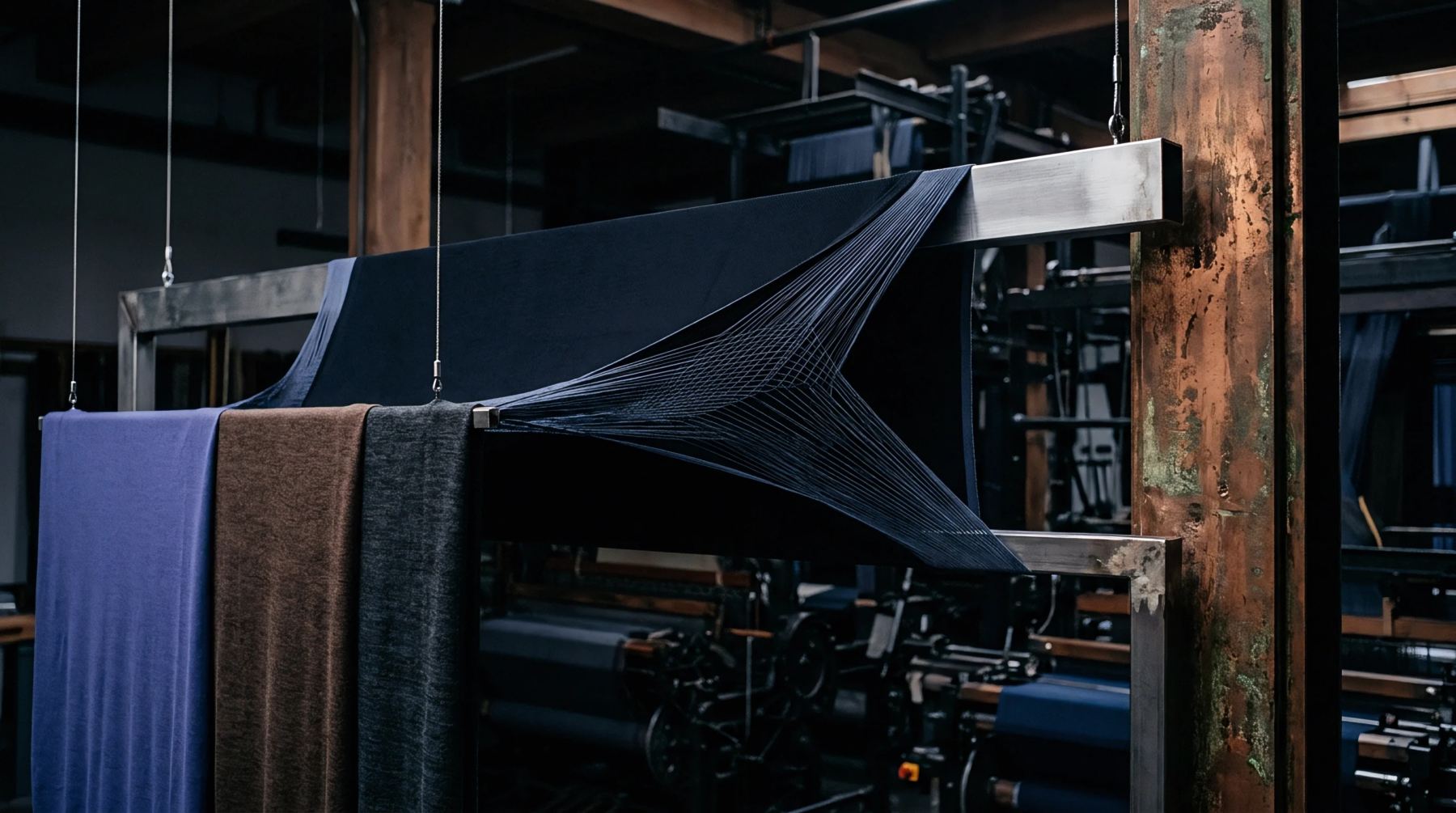
Elastic Contraction
Dimensional reduction occurs when woven or knitted fabric releases residual mechanical stress accumulated during spinning and finishing operations, establishing the baseline for relaxation shrinkage. This metric governs finishing length allowances and pattern grading tolerances, applying strictly to finished goods before consumer care begins and stopping at initial wetting or steaming. Commercial specifications rely on standardized washing procedures to quantify dimensional stability across warp and filling directions.
Mills measure changes after laundering cycles to verify compliance with purchasing contracts signed by garment manufacturers.
Dimensional Vector
Mechanical tension distorts yarn geometry during weaving and dyeing, pulling structures beyond their natural equilibrium state until moisture or heat prompts internal forces to realign. Internal strain dissipates once free water penetrates the molecular matrix and allows polymer chains to slide back into relaxed configurations. Garment assembly lines accommodate this movement by applying overfeeding techniques during cutting and sewing operations.
Production facilities verify correction factors using accelerated wash tests on small yardage samples pulled directly from bulk rolls.
Postwash Variance
Discrepancies between dry measurements and postwash dimensions dictate whether an apparel batch meets brand tolerances or requires rejection at the receiving dock. Laboratory technicians execute immersion protocols under controlled temperatures to force maximum contraction within specified time limits. Automated measuring tables record dimensional shifts with high repeatability across multiple specimens extracted from distinct positions along the fabric roll.
Suppliers absorb financial penalties when contraction rates exceed agreed limits established during initial purchase order negotiations.
Stabilization Thresholds
Finished garments retain residual tension until the first laundering cycle neutralizes internal forces permanently. Processing plants adjust heat setting parameters to minimize subsequent movement during consumer use. Final inspection reports document remaining contraction tendencies to protect retail brands from excessive returns.
Laboratory data confirms that postwash stability depends heavily on yarn twist levels and preliminary finishing tensions.