Correlating Loom Sett and Machine Gauge to Wet Processing Shrinkage
Correlating loom sett and machine gauge to wet shrinkage requires matching grey thread density and stitch length to wet relaxation limits before finishing.
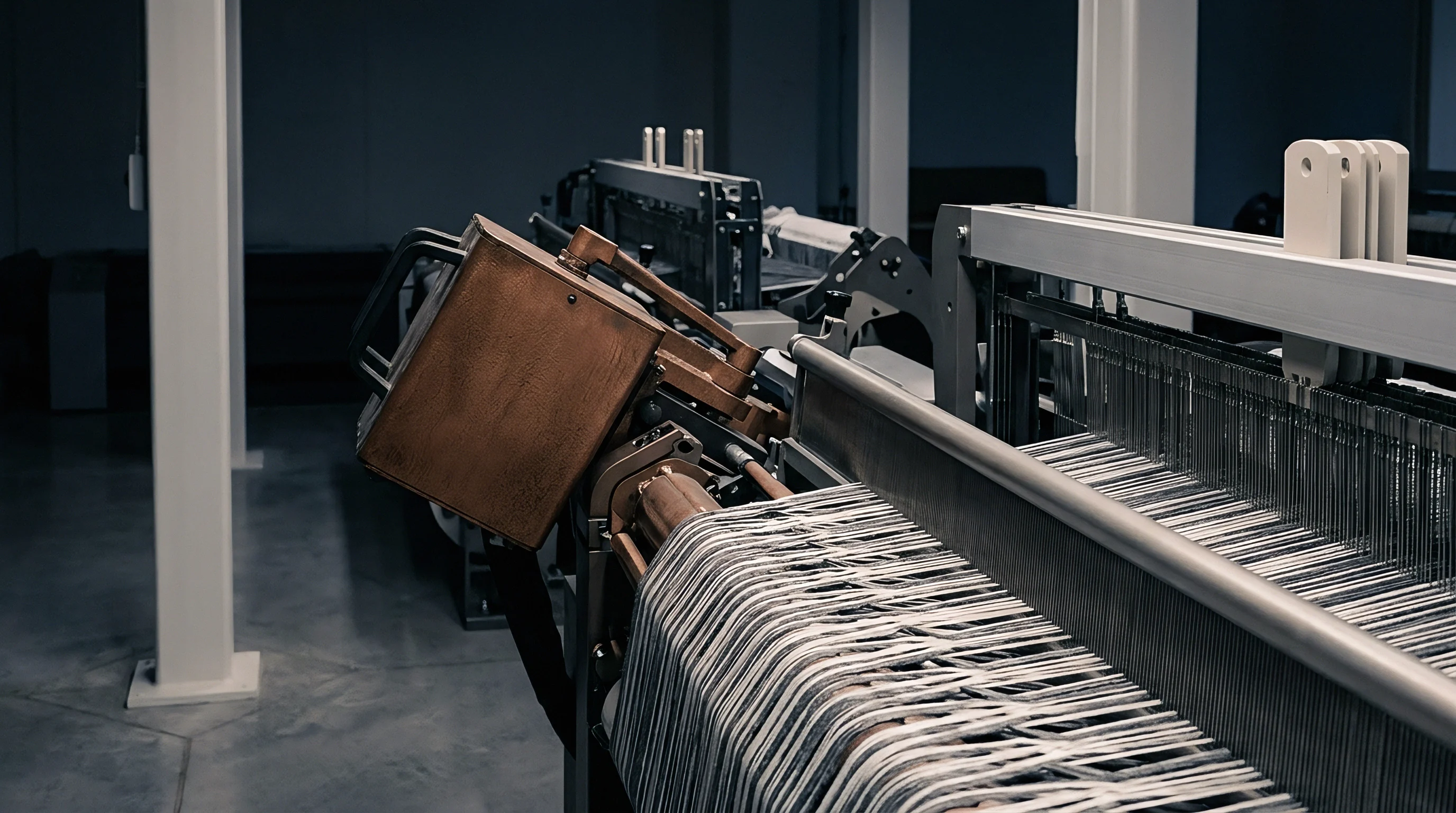
Reed
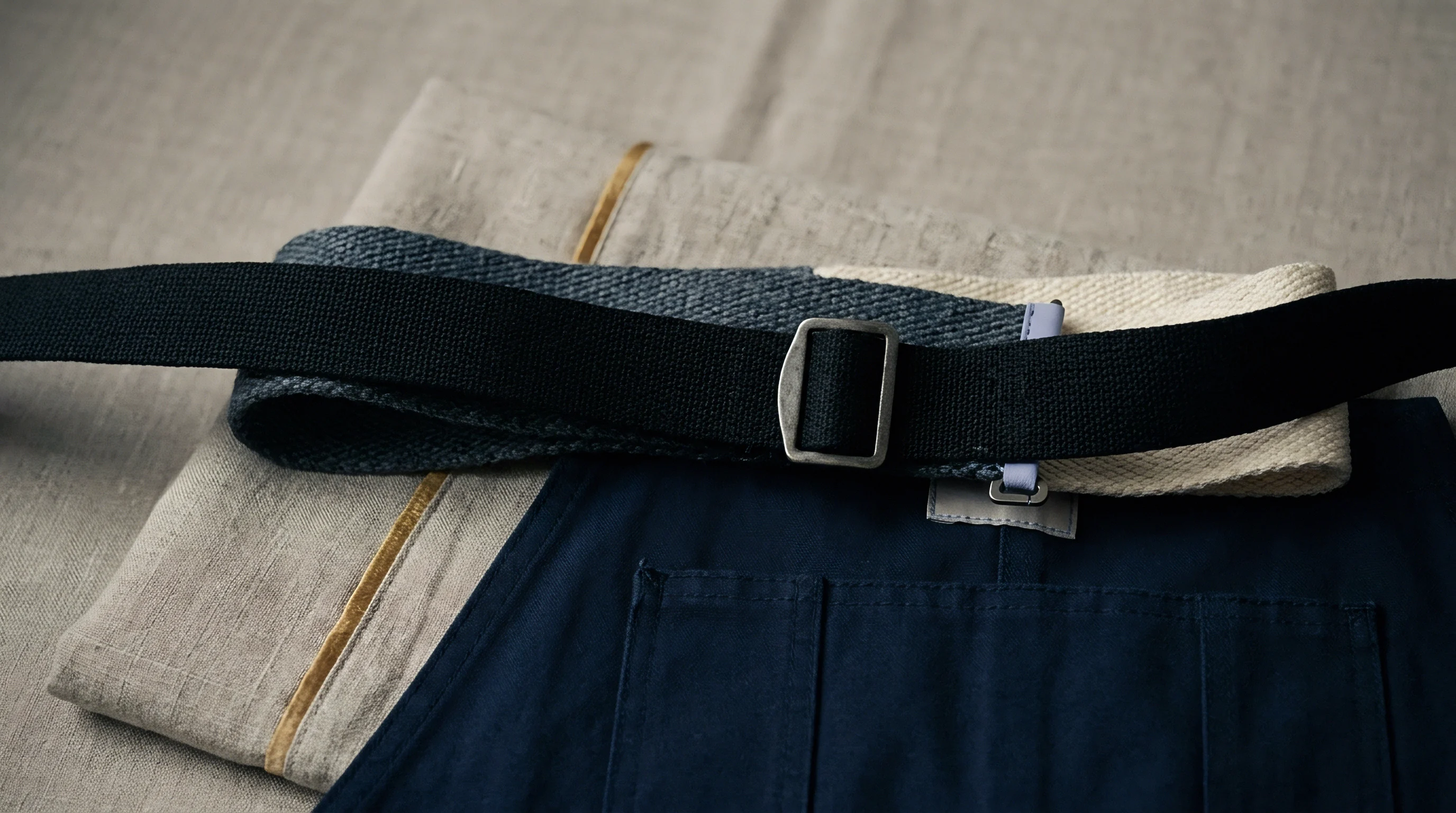
Warp End Spacing and Greige Density Limits
A woven fabric’s geometry starts in the loom harness assembly and the denting pattern of the reed. Thread spacing set during warp preparation creates the boundaries within which yarns shift, swell, and flex when exposed to liquids. Drawing warp ends through dent splits at a given density establishes lateral clearance between adjacent threads, limiting how much yarn diameters expand upon wetting.
High end counts per unit width restrict this lateral movement, forcing swelling yarns either to expand outward from the fabric plane or to absorb the shift by increasing crimp amplitude. That mechanical constraint creates internal stress that releases later during desizing, scouring, and bleaching.
Loom density settings make little sense without considering yarn linear density and fiber cross-sectional shape. A high ends-per-inch count using fine combed cotton operates with entirely different structural clearances than the same count in coarse ring-spun cotton. The Peirce cover factor provides the benchmark formula for this setup by calculating the ratio of yarn area to total fabric area.
Cover factors that approach jammed-state limits leave almost no internal void space in the weave matrix. When wet processing dissolves sizing agents and lubricates yarn contact points, these stored structural forces trigger significant dimensional shifting.
Grey fabric structure determines ultimate shrinkage.
Warp and filling crimp balance each other in mechanical equilibrium. On the loom, warp yarns stay under constant tension between the let-off beam and take-up roll, which flattens warp crimp and forces filling yarns to bend around straight warp threads. This asymmetry leaves the grey cloth with stored strain along the warp and high crimp along the filling.
Immersing the fabric releases that strain. As water hydrates the cellulose, hydrogen bonds in the fiber matrix break and reform, letting warp yarns draw back into a relaxed crimp while filling yarns straighten slightly to balance the shift. The initial denting width on the loom frame sets the upper limit from which wet contraction starts.

Denting Patterns and Interlacing Geometry Mechanics
Threading warp threads through individual reed dents creates localized density variations that affect wet contraction across the width. Reed wires leave periodic gaps that yarn migration must close during wet processing. A two-ends-per-dent plan distributes warp tension differently than a four-ends-per-dent setup with the same total end count.
Dense reeding patterns leave micro-voids between dent groups that snap shut upon wetting, driving localized widthwise contraction that changes finished pick density. If greige density exceeds sixty-eight percent of the theoretical jammed cover limit, warp contraction during scouring forces filling yarns into extreme bending, showing up as length loss during wash testing.
The yarn twist multiplier acts as a primary mechanical governor of crimp interchange. High-twist yarns carry high torsional rigidity and compress less in cross-section. When high-twist warp yarns hit water during processing, their resistance to flattening forces filling yarns to bend more, raising filling crimp and reducing finished usable width.
Conversely, low-twist ring-spun yarns flatten under hydraulic pressure in dye vessels, widening contact area at interlacing points and locking crimp interchange. That spatial locking reduces warp contraction but resists width relaxation in open-width scouring.
ISO 5077 dimensional testing on un-heat-set grey woven poplin reveals warp contraction exceeds twelve percent when loom reed width leaves warp crimp below four percent.
Picks per inch on an air-jet or rapier loom set the longitudinal packing density of filling yarns. High pick counts force warp yarns to bend tighter around filling threads, building up greige warp crimp. Once wet processing releases tension, that high warp crimp collapses into a tightly locked structure.
The jump from grey to finished pick count is not linear. A fabric off the loom at sixty picks per inch might condense to sixty-eight after scouring, while one woven at seventy-two picks per inch can surge to eighty-four, exceeding what the yarn diameter can physically accommodate and causing stiff fabric along with dimensional instability.
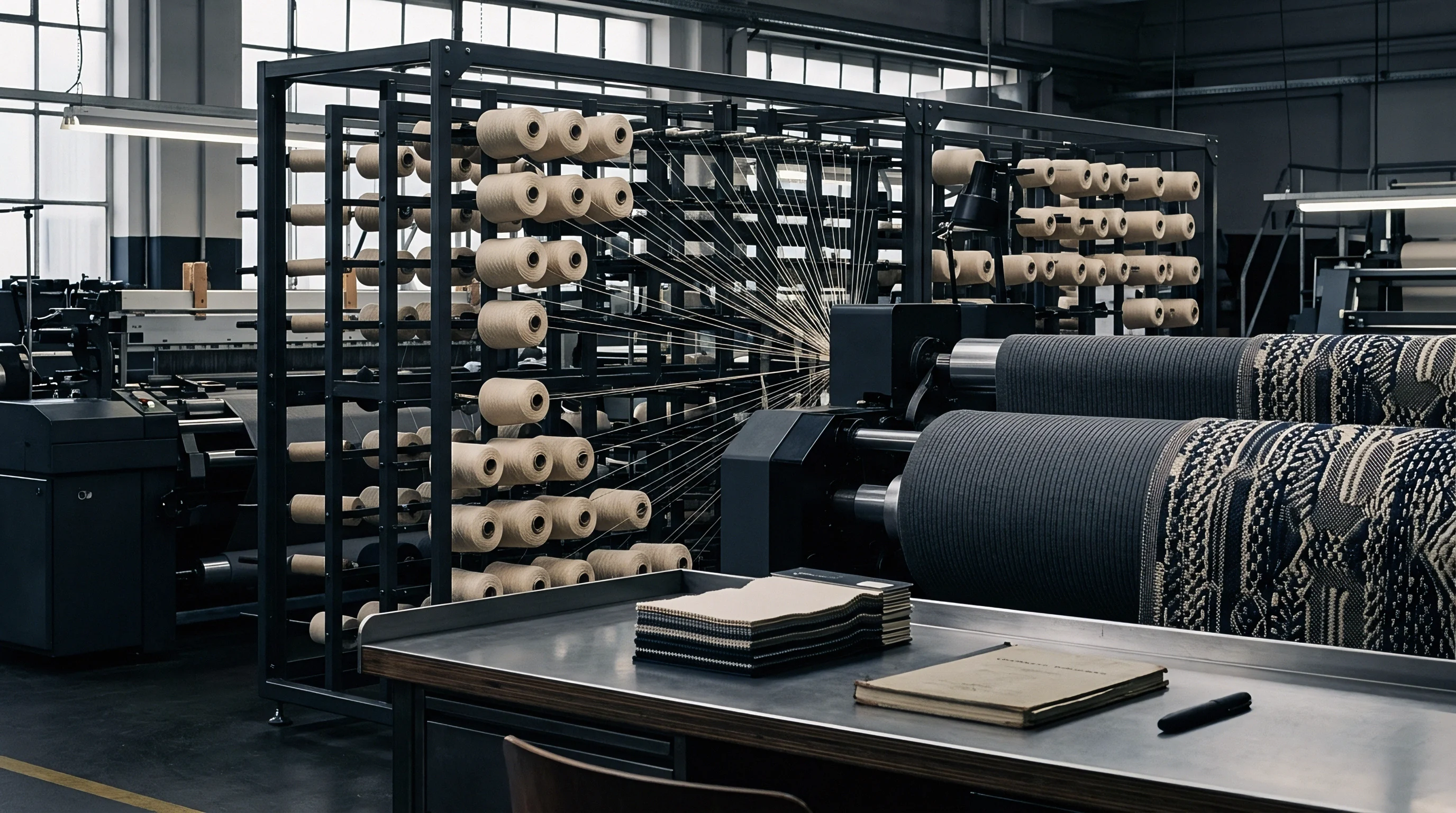
Woven Greige Density and Wet Processing Contraction Matrix
Linking loom parameters to dimensional movement during wet processing requires tracking physical measurements through every stage. Table 1 outlines the mechanical transformation of three distinct woven constructions from off-loom greige through open-width scouring and final relaxed drying.
| Fabric Construction Class | Reed Width vs Grey Width (cm) | Loom Sett Warp x Weft (ends/cm x picks/cm) | Grey Cover Factor (Peirce K) | Finished Sett Target (ends/cm x picks/cm) | Scour & Relaxed Warp Contraction (%) | Scour & Relaxed Weft Contraction (%) |
|---|---|---|---|---|---|---|
| Plain Weave 100% Combed Cotton 30/1 Ne | 172.0 / 165.0 | 32.0 x 24.0 | 18.4 | 36.5 x 27.5 | 8.5 | 6.2 |
| 3/1 Left-Hand Twill Poly-Cotton 40/2 Ne | 185.0 / 178.0 | 42.0 x 28.0 | 21.2 | 46.8 x 31.2 | 10.2 | 4.8 |
| 5-Harness Satin Filament Warp / Spun Weft | 168.0 / 162.0 | 54.0 x 30.0 | 24.6 | 57.2 x 32.8 | 5.8 | 3.1 |
The data in Table 1 shows how directly loom sett controls dimensional movement. Plain weave constructions contract evenly in both warp and weft due to uniform interlacing frequency. In contrast, the high cover factor of the 3/1 twill produces an asymmetric profile: tight warp packing drives substantial warp length loss during relaxation while limiting weft movement.
The 5-harness satin, with its long floats and fewer interlacing points, shows lower overall contraction despite high warp end counts, as low friction at yarn intersections allows smooth structural relaxation without sharp crimp interchange.
Loom beam tension introduces hidden variables into greige specifications. Running weaving machinery at elevated warp beam tensions produces grey cloth with artificially low warp crimp, masking how much the fabric will shrink later. When this cloth enters continuous wet processing on jig or jet machinery, hydraulic swelling combined with longitudinal tension creates unpredictable dimensional shifts.
Off-loom pick counts frequently match buyer spec sheets, but excessive warp tension during weaving stretches the grey cloth and sets it up for dimensional failure during laundering.

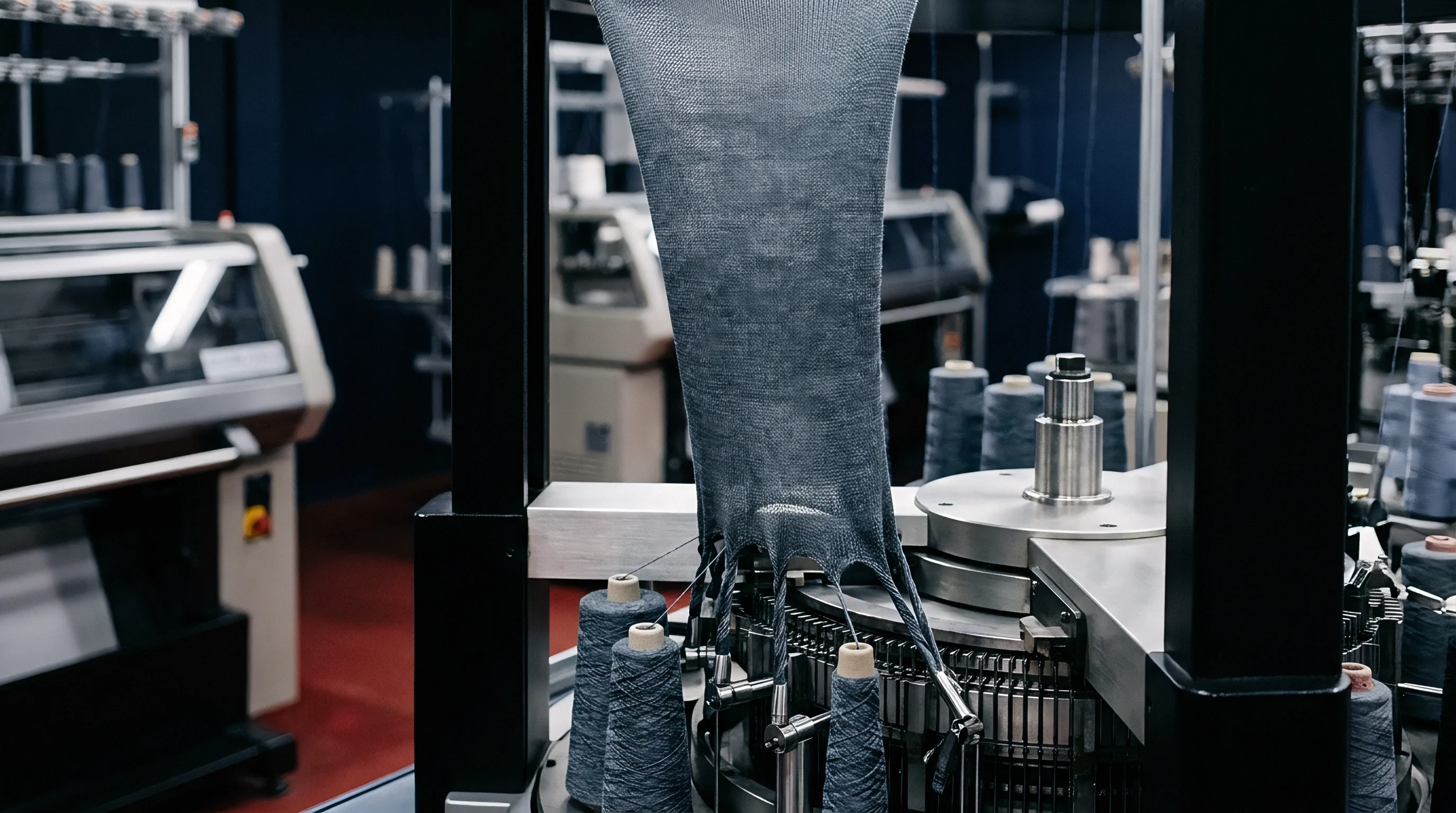
Gauge

Knitting Machine Pitch and Structural Loop Geometry
Machine pitch in circular and flatbed knitting equipment sets the lateral space allocated to each stitch. Machine gauge indicates how many tricks or needles fit into one inch of needle bed length or circumference. Fine gauges like E28 or E32 space needles at intervals of 0.907 mm and 0.794 mm, fixing the maximum envelope available for loop formation.
As yarn feeds into the knitting zone under controlled tension, this trick spacing forces the yarn into a specific loop arch and stem shape. The stitch length ~ the length of yarn in a single complete loop ~ acts as the core unit controlling the finished fabric’s physical behavior.
Stitch length selection on a given machine gauge determines the grey fabric’s tight factor ~ the ratio of yarn cross-sectional area to loop area, which functions like the cover factor in woven goods. A low stitch length on a fine gauge produces a rigid loop structure with almost no room for loop reshaping. A high stitch length creates a loose structure whose loops deform easily under load.
In wet processing, aqueous relaxation releases mechanical bending stresses from sinkers and needles, letting distorted elliptical loops shift into a stable, three-dimensional relaxed shape.
Unrelaxed loops store internal torque.
Loop density in knits is measured in courses per inch (cpi) vertically and wales per inch (wpi) horizontally. Off-machine grey measurements rarely indicate true finished dimensions. Circular fabric exiting the cylinder pulled by take-down rollers experiences longitudinal draft that stretches loops vertically and lowers horizontal wale density.
That stretching creates heavy structural anisotropy. Once the fabric hits the wet processing bath, liquid lubricates fiber contact points inside the loop interlock zones, allowing stretched loops to pull back vertically and widen laterally until reaching equilibrium.
Loop Deformation Dynamics and Wet Relaxation Coefficients
Knitted fabric relaxation follows empirical geometry models that connect stitch length to finished course and wale densities through structural constants. Parameters in the Starfish model define constants for dry relaxed, wet relaxed, and fully finished states. The shape factor Kc links courses per unit length to stitch length l, while Kw links wales per unit length to stitch length.
Multiplying Kc by Kw gives the area constant Ks. In wet processing, Kc rises sharply as stretched grey loops round out, driving longitudinal shrinkage. At the same time, Kw stabilizes as wale spacing adjusts to yarn thickness and loop width.
Spun yarn torque creates spirality in single jersey knitted on single-cylinder machines. Yarn twist cants the legs of the loop away from the fabric’s vertical axis. During scouring and dyeing, fiber swelling releases residual torque, distorting loops and skewing the fabric.
Fine machine gauges make this spirality worse when using high-twist single yarns. Preventing this instability requires balancing machine gauge, yarn count, and twist direction before setup, so loop dimensions relax cleanly without twisting the fabric.
Systemic failures appear when machine gauge and yarn linear density are mismatched before wet processing. The following list details degradation patterns observed when setup parameters exceed geometric relaxation limits:
- Vertical course collapse occurs when loose stitch lengths knitted on fine machine gauges undergo full wet relaxation, driving longitudinal contraction over fifteen percent during initial scouring.
- Horizontal wale crowding arises when coarse yarns are forced into fine machine gauges, pressing adjacent loop stems together so tightly that wet contraction shows up entirely as fabric thickening.
- Spirality distortion develops when high yarn twist multipliers on single-cylinder machines tilt loop legs, twisting finished garment side seams after washing.
- Crease marking forms during jet dyeing when rigid, tight grey structures fail to flex smoothly inside liquid transport tubes, leaving permanent structural fold lines.
Machine Gauge to Wet Shrinkage Correlation Profile
Controlling circular knit shrinkage requires mapping machine gauge and stitch length against dimensional changes during wet processing. Table 2 details the performance of single jersey 100% combed cotton across three gauge configurations under identical jet dyeing and relaxed drying parameters.
| Machine Gauge (NPI / E) | Yarn Linear Density (Ne / Tex) | Target Stitch Length (mm) | Grey State Sett (cpi x wpi) | Fully Relaxed Sett (cpi x wpi) | Length Wet Shrinkage (%) | Width Wet Shrinkage (%) |
|---|---|---|---|---|---|---|
| E24 Single Jersey | 30/1 Ne / 19.7 Tex | 2.85 | 40.0 x 30.0 | 48.0 x 32.0 | 12.5 | 4.2 |
| E28 Single Jersey | 36/1 Ne / 16.4 Tex | 2.65 | 45.0 x 34.0 | 54.0 x 36.5 | 11.0 | 3.8 |
| E32 Single Jersey | 40/1 Ne / 14.8 Tex | 2.48 | 50.0 x 38.0 | 61.0 x 40.0 | 9.8 | 3.0 |
The comparison in Table 2 shows that finer machine gauges paired with shorter stitch lengths yield better dimensional stability after wet processing. The E32 construction achieves higher wet-relaxed course density relative to its grey state, leading to less length shrinkage in wash testing. Finer loops displace over smaller absolute distances when relaxing, keeping dimensional movement within narrower boundaries than coarse structures.
Knitting machine take-down tension controls grey dimensions off the needles, but has no bearing on permanent finished dimensions. Operators often increase take-down roll pressure to keep production running smoothly, stretching courses vertically and creating a false sense of hourly yield. That stretching vanishes within fifteen minutes of hitting the wet bath, as hydraulic forces let loops snap back to an equilibrium shape governed entirely by machine gauge and stitch length.
Setting the correct stitch length on the knitting frame establishes fabric dimensional potential before wet processing begins.

Soak
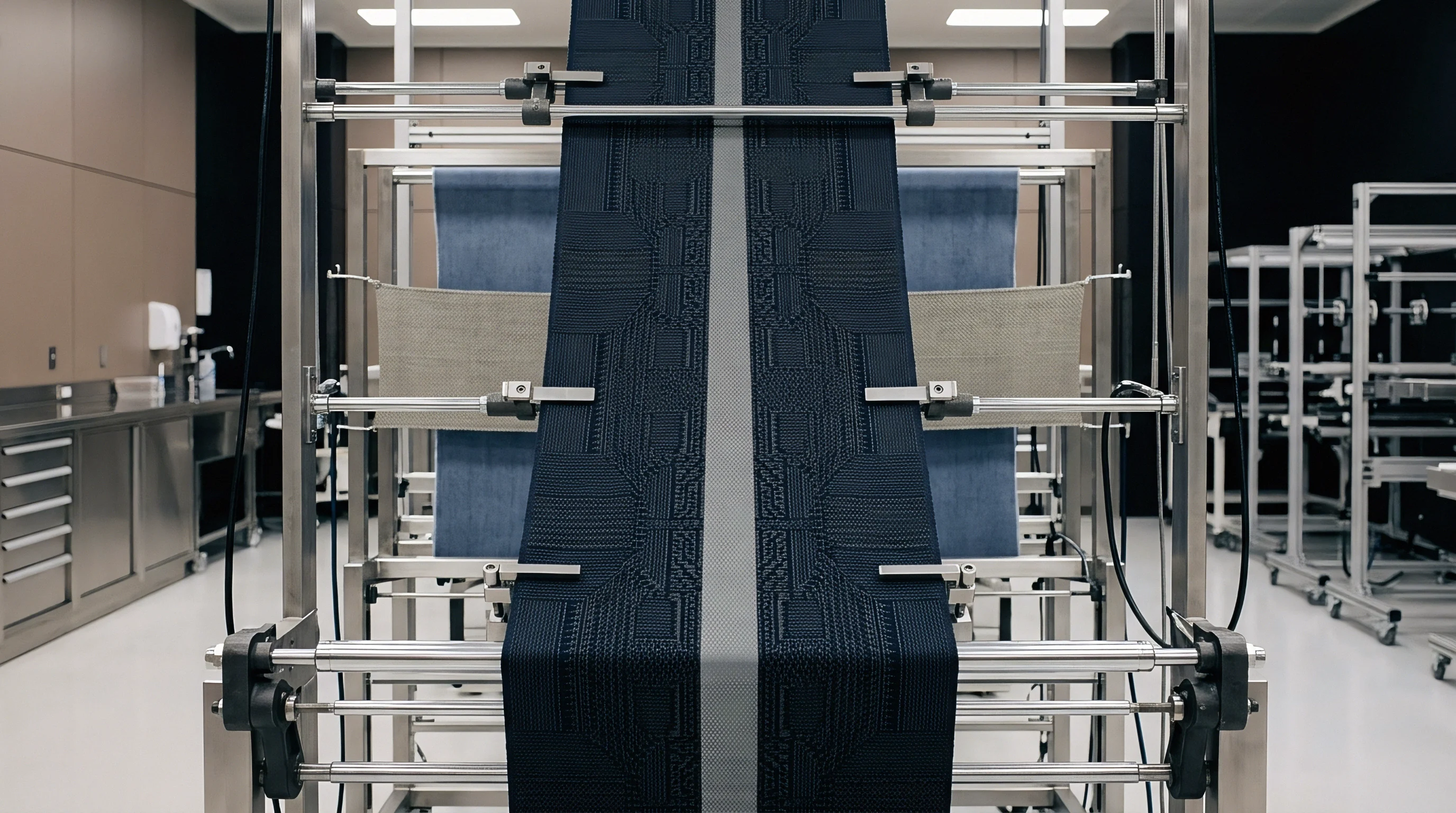
Fiber Swelling Physics and Hydraulic Bath Relaxation
Immersing grey textiles in liquid triggers immediate physical and chemical changes inside individual fibers. Hydrophilic fibers ~ like natural cotton, regenerated viscose, and wool ~ carry high concentrations of hydroxyl or polar groups that readily form hydrogen bonds with water. Upon entering the bath, water penetrates amorphous regions of the fiber, forcing polymer chains apart and swelling fiber diameter by fourteen to twenty percent.
This lateral expansion swells yarn diameter, shortening yarn along its length and increasing bending stiffness in the fabric matrix.
Hydrophobic synthetics, including polyester and polyamide, absorb almost no water and barely swell in room-temperature baths. Their dimensional shifts during processing depend on thermal energy and mechanical movement. As bath temperatures climb past the polymer’s glass transition temperature (Tg), internal amorphous segments become mobile.
Heat releases frozen-in mechanical stress from extrusion, drawing, and texturing. As a result, synthetic yarn shrinkage in the dye vessel follows thermal relaxation kinetics rather than hydraulic swelling.
High processing tension on continuous jet dye vessels elongates warp yarns while suppressing natural weft shrinkage until final tumble drying release.
Hydraulic agitation in dyeing and bleaching vessels acts as a mechanical catalyst that speeds up structural relaxation. Water turbulence breaks the frictional locks holding greige structures in metastable states. In wovens, liquid lubrication lets warp and filling yarns slide past each other at interlacing points, balancing crimp between the two systems.
In knits, bath movement lets loop heads and stems shift, releasing stored take-down tension and clearing angular torque before chemical auxiliaries penetrate yarn cores.
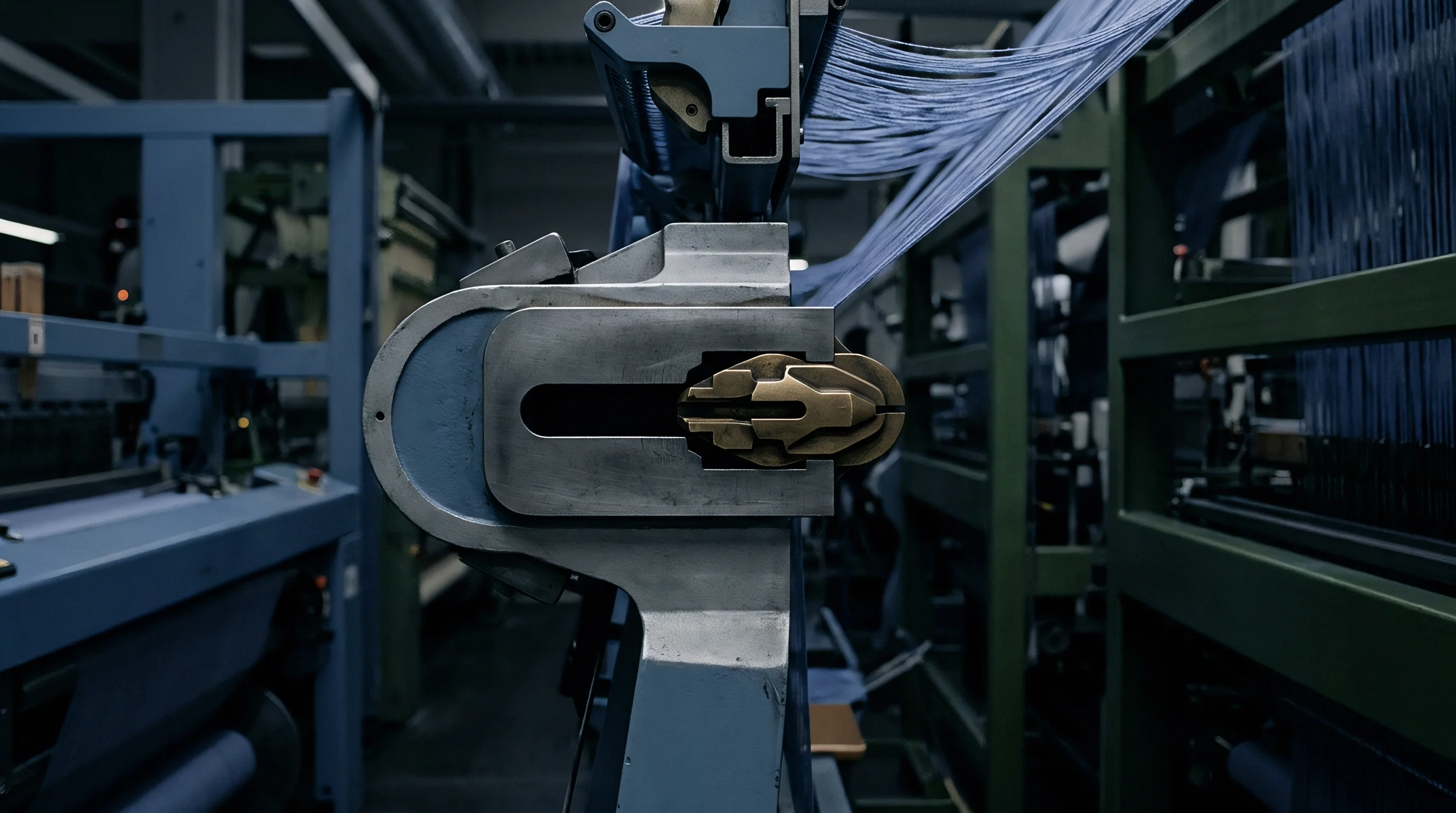
Alkaline Scouring and Mercerization Structural Contraction
Chemical steps introduce aggressive structural shifts that permanently alter fabric dimensions. Alkaline scouring with sodium hydroxide solutions at high temperatures strips natural waxes, pectins, and sizing agents from cotton fibers. Removing sizing polymers ~ which held warp yarns in rigid alignment ~ allows immediate warp contraction.
Once freed from size, stiff warp threads turn pliable and highly crimped, pulling back rapidly under continuous agitation.
Caustic soda swells cellulose fibers.
Mercerization is the most drastic structural intervention in cotton processing. Exposing cotton cloth to high concentrations of sodium hydroxide (28 to 30 degrees Baume) at ambient or cold temperatures swells fibers intensely, rounding raw cotton’s elliptical cross-section into a cylinder and untwisting natural convolutions. That transformation generates heavy longitudinal contraction forces.
If mercerized without tension on chainless ranges, warp shrinkage can exceed fifteen percent in one pass. Cold mercerization converts the crystalline lattice from Cellulose I to Cellulose II, permanently altering yarn packing density and establishing a new baseline for fabric width and weight.
Machine setup determines whether structural relaxation proceeds uniformly or under restrictive mechanical tension. Jig dyeing machines pull fabric continuously end-to-end through dye liquor, stretching the warp and suppressing crimp relaxation while allowing width loss. Jet dyeing machines transport fabric in rope form using fluid flow through venturi nozzles, which reduces warp tension but creates friction along fold lines.
Continuous open-width washers use driven rolls to keep fabric flat, but poorly synchronized box speeds add longitudinal draft, turning potential finished width into permanent warp stretch.
In 2022, adjusting grey reed width by three centimeters across a twenty-thousand-meter dye lot fixed a five percent warp contraction deficit. The original order specified a finished width of 148 cm with under 3.0% residual warp shrinkage under ISO 5077 testing. The grey mill delivered cloth woven at 160 cm reed width, assuming standard scouring contraction.
But the converter ran the lot through a continuous high-tension bleaching range before entering tensionless jet dyeing. That initial bleaching step pulled the warp length by 3.2%, artificially flattening warp crimp. When the cloth reached the jet dye vessel, sudden tension release caused uncontrolled warp contraction that collapsed fabric length by 11.5%, driving finished weight to 235 gsm against a target cap of 210 gsm.
The entire lot was downgraded to secondary sales at a thirty-five percent financial loss because the greige reed width was never calculated for the combined tension profiles of continuous bleaching and batch jet dyeing.

Stenter

Thermal Fixation Mechanics and Overfeed Setting Calibration
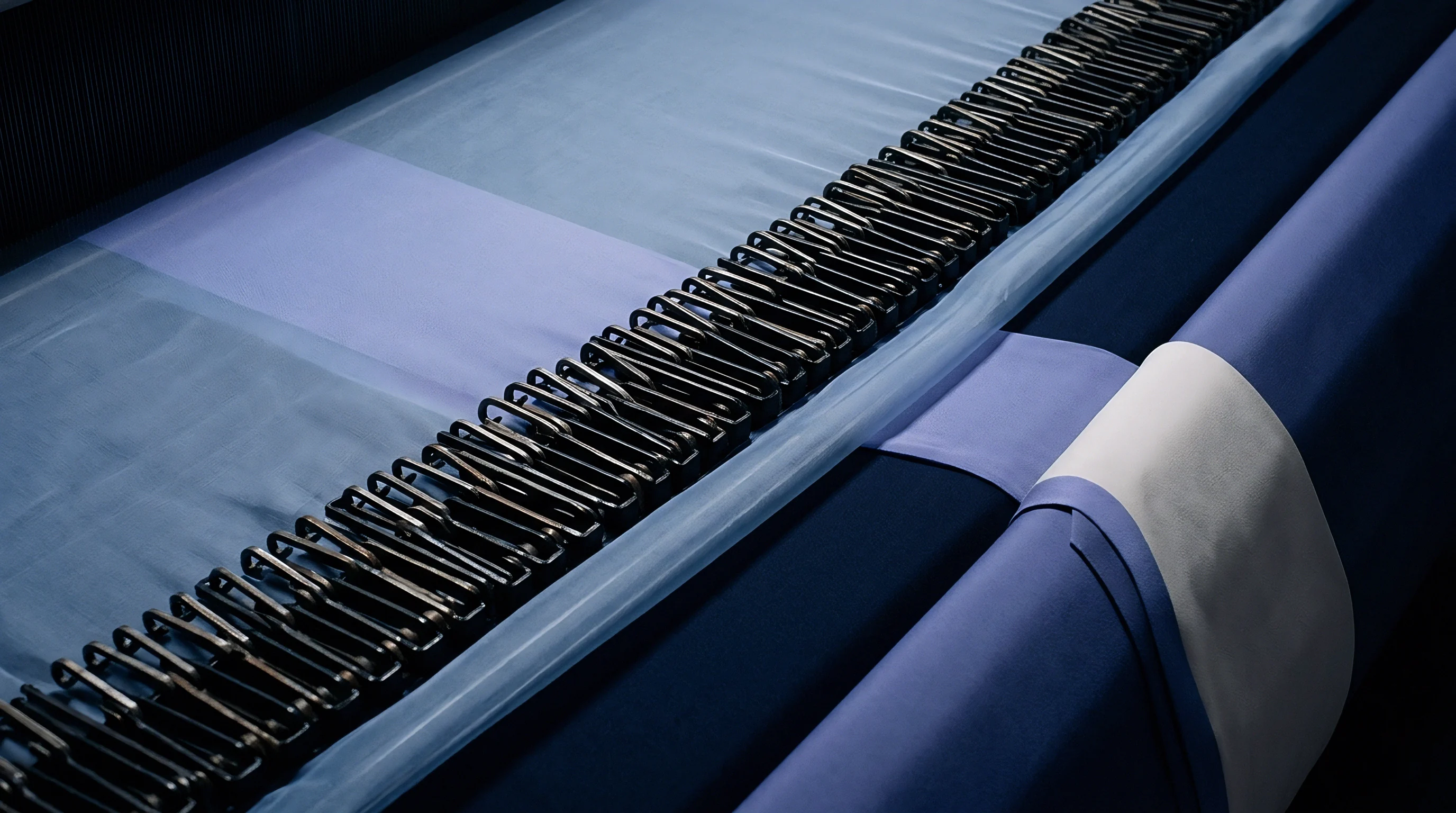
Mechanical drying and heat finishing on the stenter frame are the final stages where fabric dimensions are stabilized, locked, or artificially distorted. The stenter uses two continuous pin or clip chains traveling through heated drying zones to set fabric width, while overfeed rolls feed fabric onto the chains faster than chain speed. Overfeed introduces longitudinal slack, allowing warp threads or knitted courses to shrink fully during drying and eliminating residual length shrinkage.
Calibrating overfeed counteracts length stretch from earlier wet processing. If a knit stretched longitudinally in jet dyeing, feeding it onto stenter pin chains at +25% overfeed compresses courses together along the pins. As moisture evaporates, heat sets the compressed loops into a stable state.
Inadequate overfeed leaves the fabric stretched; during home washing, water breaks those temporary thermal bonds, allowing the fabric to snap back to its relaxed length and causing severe shrinkage failure.
Compaction mechanically shortens fabric length.
Stenter rail width sets finished width and weft density. Pinning fabric wider than its natural wet-relaxed width introduces lateral tension that stretches filling yarns or wales. While this hits target width at the exit batcher, it leaves high residual width shrinkage.
The fabric retains an elastic memory of being forced open. When laundered, stretched filling threads or loop arches retract toward their relaxed equilibrium. Good plant discipline requires setting stenter rail width within two percent of the wet-relaxed width measured after tensionless tumble drying.
Does Thermal Setting Permanently Lock Knit Loop Dimensions?
Heat setting synthetic fibers and elastomeric blends alters polymer structure to freeze fabric dimensions. Elastane in single jersey or French terry exerts high recovery force that pulls fabric width in dramatically during scouring. Heating to 180 ~ 195 degrees Celsius relaxes internal stresses in the elastane’s polyurethane blocks, recrystallizing hard segments and locking the surrounding fiber matrix at the pinned width and length.
This thermal memory resists breakdown during standard washing.
Overfeeding circular jersey by twenty-five percent on a stenter frame yields four percent residual washing shrinkage under ISO 6330 procedure 4N.
Heat-setting cotton-elastane blends before wet processing stabilizes grey loop shape, preventing crease marks and controlling fabric weight. Heat setting after dyeing adjusts final weight and width. Even so, thermal setting cannot fix fundamental mismatches between machine gauge and stitch length.
If a circular knit is produced with too short a stitch length on an E28 frame, forcing target width through high lateral chain tension degrades elastane recovery over time, leading to bagging and edge curl after washing despite initial passing test results.
Compressive shrinking ranges ~ such as Sanforizing machines for wovens and rubber-belt compactors for knits ~ use mechanical force to shorten fabric length without high heat setting. Fabric passes over a dampened rubber belt or felt blanket under tension; as the belt flexes around a heated cylinder, it compresses the length, driving warp yarns into deeper crimp or pushing courses together. This compaction eliminates residual length shrinkage, producing stable finished goods that meet strict standards.
Calibrating a stenter frame properly requires a strict sequence during finishing operations:
- Measure wet-relaxed fabric width and course density from a continuous, tensionless exit sample.
- Adjust entry roller speed to set an overfeed percentage matching wet length contraction.
- Set the chain rail entry width to match incoming wet width, tapering outward by no more than three percent in drying zones.
- Calibrate fan air velocity to evaporate all moisture without lifting fabric off pin rails.
- Set chamber temperature and dwell time to match fiber heat-setting kinetics without compromising dye fastness.
- Run fabric through an exit steam box and cooling zone to discharge static and set dimensional memory.
A constant tension exists between stenter throughput speed and full heat fixation. Production managers often increase chain speeds to boost daily yardage, cutting dwell time inside heated chambers below what polymer relaxation requires. The fabric exits dry and flat, but its internal stress remains unrelaxed, leaving downstream garment cutting vulnerable to heavy dimensional shifts.
Strain

Mathematical Shrinkage Prediction and Geometry Models
Connecting grey fabric parameters to wet processing shrinkage requires combining mechanical yarn models with empirical relaxation coefficients. This framework connects loom denting density and knitting machine pitch directly to finished dimensional stability under standards like ISO 5077, ISO 6330, and AATCC 135. Classical fabric geometry models developed by Peirce for wovens and Munden for knits provide the mathematical basis for these calculations.
Peirce geometry defines the relationship between warp thread spacing p1, filling thread spacing p2, yarn diameters d1 and d2, and crimp values c1 and c2. The structural height h1 for warp bending amplitude is calculated through:
h1 = frac43 · p2 · sqrtc1
In a fully relaxed post-wet state, yarn heights h1 + h2 must equal total fabric thickness D. As wet processing releases weaving tension, warp crimp c1 rises while filling crimp c2 drops according to the crimp interchange formula:
Δ c1 = fracp2grey – p2finishedp2finished
For knits, the Starfish model links machine gauge, yarn density in Tex, and stitch length l in millimeters to finished fabric weight and shrinkage. Course density C and wale density W at full relaxation are calculated as:
C = fracKcl
W = fracKwl
Finished fabric weight GSM is predicted through the equation:
GSM = fracKs · Texl · 100
Where Ks = Kc · Kw. Length shrinkage SL and width shrinkage SW from grey state to finished fabric follow directly from shifts in course and wale density:
SL = left(1 – fracCgreyCfinishedright) · 100
SW = left(1 – fracWgreyWfinishedright) · 100
Grey density bounds wet relaxation.
Yarn crimp differential between warp and weft determines whether thermal shrinkage manifests as width loss or length contraction.

Worked Case Study Sensitivity and Predictive Calculations
Testing these structural models involves evaluating three candidate grey constructions designed for a finished 100% cotton plain weave shirting at 135 gsm weight and 148 cm width. Target maximum residual shrinkage was set at 2.0% in both warp and weft under ISO 6330 testing.
| Design Parameter / Physical Property | Option A: Low Sett / High Compaction | Option B: Balanced Sett / Natural Relax | Option C: Over-Packed Loom Sett |
|---|---|---|---|
| Loom Reed Width (cm) | 158.0 | 164.0 | 172.0 |
| Off-Loom Sett (warp ends/cm x weft picks/cm) | 30.0 x 22.0 | 33.0 x 24.5 | 37.0 x 27.0 |
| Yarn Linear Density (Warp / Weft in Ne) | 40/1 / 40/1 | 40/1 / 40/1 | 40/1 / 40/1 |
| Grey Cover Factor (Peirce K) | 16.8 | 18.5 | 20.7 |
| Calculated Warp Crimp Off-Loom (%) | 3.2 | 5.8 | 8.4 |
| Scour & Mercerize Warp Shrinkage (%) | 6.5 | 8.2 | 11.5 |
| Finished Sett (ends/cm x picks/cm) | 33.2 x 24.8 | 36.5 x 27.0 | 41.2 x 30.5 |
| Sanforizer Compaction Applied (%) | 6.0 | 4.5 | 2.0 |
| Finished Fabric Weight (gsm) | 124.0 | 136.0 | 152.0 |
| ISO 5077 Residual Warp Shrinkage (%) | +4.2 (Growth) | -1.8 (Pass) | -4.8 (Fail) |
Comparing the options in Table 3 highlights the risks of extreme engineering choices. Option A uses a loose grey sett, relying on heavy Sanforizer compaction to hit pick targets. Because thread packing is too loose off the loom, mechanical compaction over-compresses warp yarns past equilibrium.
In subsequent washing, those over-compacted yarns release strain and expand, resulting in fabric growth (+4.2%) instead of shrinkage. Option C over-packs ends and picks on the loom to a cover factor of 20.7. When wet, yarn swelling jams the structure so tightly that threads cannot flex past each other.
This causes extreme warp contraction during mercerization that no Sanforizer pass can undo, leaving the fabric heavy (152 gsm) and failing shrinkage (-4.8%).
Option B is the balanced solution. A loom sett of 33 ends/cm by 24.5 picks/cm establishes a grey cover factor of 18.5, leaving enough void space for crimp interchange during scouring and mercerization. A natural warp contraction of 8.2% brings warp crimp to equilibrium without structural jamming.
A modest 4.5% Sanforizer compaction secures a stable weight of 136 gsm while holding residual washing shrinkage to 1.8% ~ well within commercial specs.
Setting up engineering controls requires a clear qualification checklist during fabric development:
- Greige cover factor validation confirms grey thread packing stays between seventeen and nineteen Peirce units for balanced plain weaves before loom setup.
- Wet relaxation benchmarking verifies yarn crimp differential between warp and weft on laboratory immersion samples before fixing stenter width.
- Compaction limit auditing keeps mechanical Sanforizer or rubber-belt compaction under six percent of total length to prevent wash-growth.
- Yarn twist mobility assessment confirms warp twist multipliers allow enough cross-sectional deformation during chemical scouring.
Master supply agreements in cross-border procurement should incorporate explicit dimensional stability clauses to bind converter performance:
Standard Commercial Quality Clause: Finished fabric shall demonstrate dimensional stability exceeding ISO 5077 requirements when tested in accordance with ISO 6330 Procedure 4N (wash temperature 40 degrees Celsius, tumble dry flat). Maximum allowable dimensional change shall not exceed minus 2.0 percent longitudinal and minus 2.0 percent transverse. Dimensional evaluation shall be conducted on fabric conditioned for twenty-four hours at 20 degrees Celsius and sixty-five percent relative humidity per ISO 139.
Deliveries exhibiting dimensional change outside these boundaries are subject to full lot rejection or mandatory mill-funded re-compacting processing at the buyer sole discretion.

Margin
Landed Yield Calculations and Grey Ordering Formulas
Translating finished fabric requirements into grey cloth order quantities takes accurate accounting of yield losses and contraction across every mill involved. A contract written for finished linear meters has to factor in length lost during desizing, scouring, bleaching, dyeing, and compacting. Failing to calculate grey length accurately leads to inventory shortfalls or inflated unit costs.
The grey length ordering equation combines cumulative process contraction to determine the greige meterage needed for a target finished batch size. Let Lf be the targeted finished length in meters, Sw the decimal length shrinkage during wet relaxation, and Cm the decimal compaction applied on the stenter or Sanforizer. Required grey loom length Lg is calculated as:
Lg = fracLf(1 – Sw) · (1 – Cm) · (1 – Wl)
Where Wl is the decimal waste loss factor from seam joining, frame threading, and end-cuts across processing steps, typically benchmarked between 0.025 and 0.040 (2.5% to 4.0%).
Width conversion requires calculating reed width relative to target cuttable width. If a 148 cm finished usable width is specified, and wet processing reduces width by 6.5%, the grey width exiting the loom reed must cover both contraction and selvedge trimming allowances:
Wreed = fracWfinished usable + Wselvedges(1 – Swidth contraction)
For a target usable width of 148 cm, a total selvedge allowance of 4 cm, and width contraction of 6.5%, required loom reed width is 162.5 cm. Ordering grey cloth woven on narrower reed widths forces the finishing mill to stretch fabric laterally on the stenter to hit 148 cm, ruining widthwise stability.
Converter Financial Risk and Procurement Dossier Rules
Financial exposure for converters centers on the gap between raw grey cloth input and finished yield output. When an un-engineered grey construction enters wet processing, unexpected length contraction inflates the landed cost per finished meter. Table 4 shows the financial impact of poor grey sett selection on yield economics for a 50,000-meter production order.
Landed cost calculations are written directly into converter master contracts to lock financial yields before grey yarn spinning commences.
The financial impact of grey construction choices becomes clear when looking at landed costs. If a converter buys an unstable grey construction showing 12% wet length shrinkage instead of an engineered fabric with 7% shrinkage, total finished yield drops by 2,750 meters on a 50,000-meter grey order. Factor in fixed finishing fees per grey meter, and the landed cost per finished meter rises by 0.28 USD ~ wiping out operating margin across the bulk order.
Procurement dossiers sent to mills must state non-negotiable construction parameters alongside performance targets. Technical spec sheets need to spell out off-loom end and pick counts, maximum beam tensions, machine gauge pitch, target stitch lengths, and grey fabric weight tolerances under ISO 3801. Specifying only finished weight and width lets grey mills tweak yarn counts and density setts to cut weaving costs, passing structural instability down to dyehouses and cutting floors.
Splitting wet processing across multiple independent mills introduces compounding process variance that worsens dimensional instability. Buying grey cloth from one mill, sending it to a separate dyehouse for jet dyeing, and using a third facility for stenter drying creates a chain of custody where no single party accepts financial responsibility for performance. The weaver blames the dyer for excessive tension; the dyer blames the finisher for stenter rail settings; the finisher points to grey reed selection as the cause of width collapse.
Eliminating this risk takes single-point technical control over the full production route, with grey parameters and finishing protocols audited against one binding specification dossier.