Calculating Wet Pick up Values for Mercerized Cotton Wovens
Calculating wet pick-up on mercerized wovens demands adjusting liquor volume formulas for Cellulose II capillary swelling and wet-on-wet bath dilution.

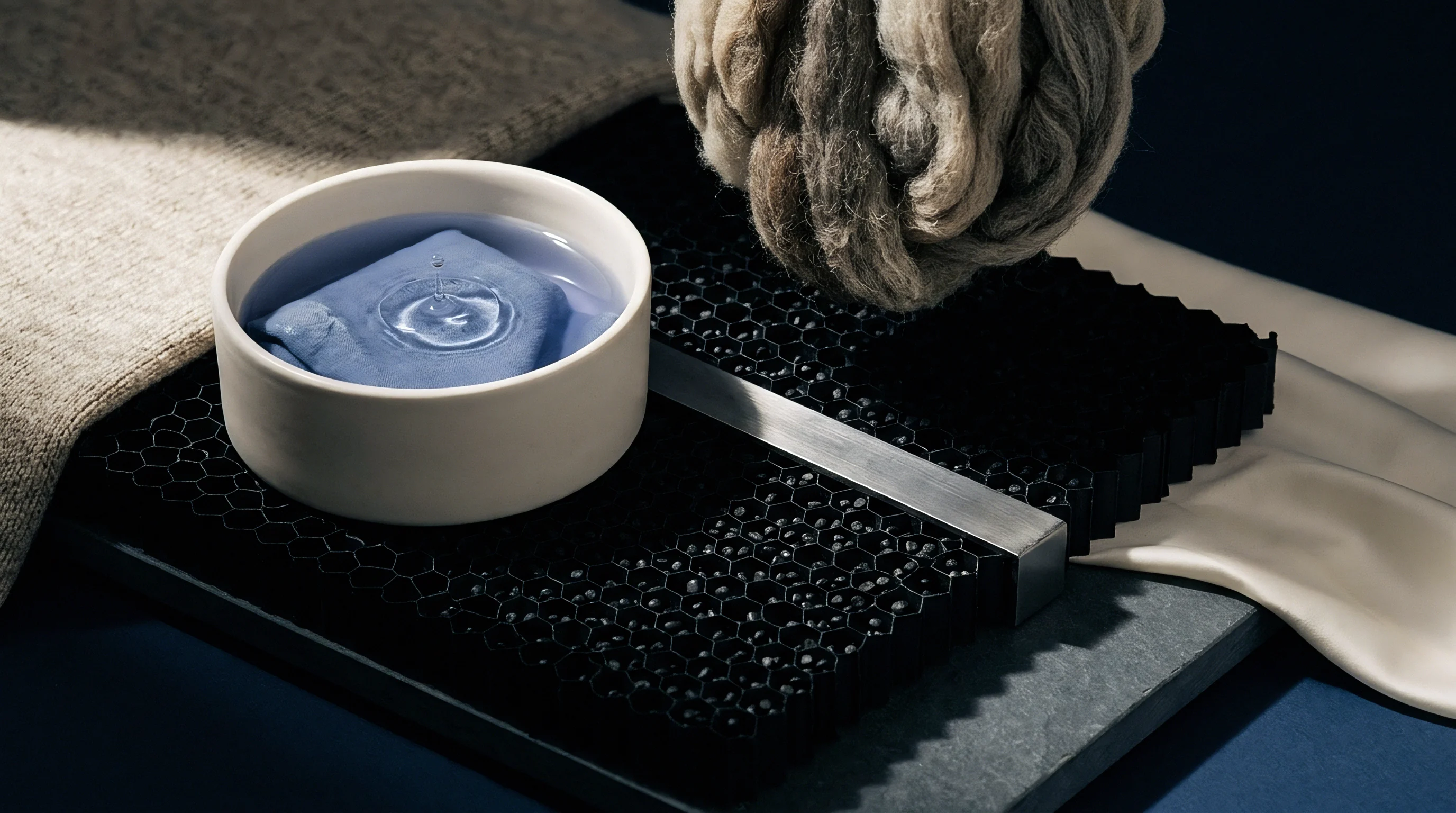
Mass
Accurate wet pick-up calculations require precise weight determinations taken before and immediately after pad application. In wet processing, wet pick-up defines the total mass of liquid finish or dye liquor retained by a fabric substrate, expressed as a percentage of the dry fabric weight. Weight rules the equation.
Expressed mathematically, the relationship governs all subsequent liquor concentration calculations on the finishing floor:
Wet Πck-Up (%) = left( fracWwet – WdryWdry right) × 100
Where Wwet is the mass of the fabric immediately exiting the mangle nip, and Wdry is the dry substrate mass. Standardizing Wdry introduces the first critical variable in commercial operations. Laboratories frequently substitute conditioned fabric mass measured under standard atmosphere according to ISO 139, which permits an 8.5 percent moisture regain for unmercerized cotton and up to 12.0 percent for mercerized structures.
Substituting conditioned weight for true oven-dry mass systematically understates the absolute volume of water absorbed during padding.
Commercial laboratory testing under ISO 139 establishes an 8.5 percent baseline moisture regain that underestimates total liquor volume when applied to oven-dry mercerized substrates.
Calculating liquor uptake against an incorrect dry baseline creates immediate downstream errors in chemical add-on. When calculating the add-on percentage of solid functional chemicals, such as fluorocarbon water repellents, softeners, or cross-linking resins, the target solid add-on links directly to wet pick-up through liquor concentration. A baseline weight error propagates through every kilogram of chemical pumped into the pad trough.
- Conditioned Weight Bias occurs when standard laboratory atmospheric moisture regain is counted as dry fiber mass, artificially depressing calculated pick-up percentages by 6 to 10 percent.
- Oven-Dry Desiccation Drift arises when hot samples taken directly from an inline dryer absorb ambient humidity before placement on precision analytical balances, inflating the baseline dry weight reading.
- Residual Size Retention skews baseline structural mass when incomplete desizing leaves unremoved starch or synthetic sizing agents on the warp yarns, altering dry density measurements.
- Extractable Wax Variance shifts mass readings when aggressive scouring removes natural cotton lipids, altering the reference dry weight between greige and prepared states.
Establishing the true dry reference mass requires taking sample swatches from the exact prepared batch prior to pad entering. Water weighs one gram per millilitre. Utilizing greige specifications or unmercerized target weights introduces systematic errors that distort liquor balance calculations across long production runs, causing off-spec functional performance, shade variations, and unbudgeted chemical consumption.

Swell
Treatment of cotton woven fabric with concentrated sodium hydroxide solution, typically between 28 and 30 degrees Baumé, alters the physical morphology and chemical accessibility of the cellulose microfibrils. Native cotton fiber possesses a bean-shaped cross-section containing a hollow central cavity known as the lumen. Caustic liquor breaks inter-molecular hydrogen bonds within crystalline regions, inducing irreversible conversion from Cellulose I to Cellulose II crystal lattices.
The fiber expands radially while shrinking longitudinally.
The lumen collapses permanently. Radial expansion transforms the flat, twisted ribbon geometry into a smooth, circular cylinder. This morphological transformation expands the internal amorphous volume of the fiber while increasing accessibility to hydroxyl binding sites.
Consequently, mercerized cotton exhibits elevated capillary suction pressure and higher moisture retention capacity compared to scoured, unmercerized wovens. Fabric construction parameters interact directly with this enhanced capillary capacity.
| Fabric Construction | Yarn Count (Ne) | Finished Sett (ends/cm x picks/cm) | Unmercerized WPU (%) | Mercerized WPU (%) | Water Retention Capacity (%) |
|---|---|---|---|---|---|
| 40/1 x 40/1 | 53 x 28 | 68.5 | 82.0 | 52.4 | |
| 20/1 x 16/1 | 42 x 22 | 62.0 | 74.5 | 48.1 | |
| 60/2 x 60/2 | 68 x 36 | 71.0 | 88.5 | 58.2 | |
| 30/2 x 30/2 | 34 x 30 | 75.2 | 91.0 | 61.0 |
Yarn twist factor heavily dictates how deeply caustic liquor penetrates during mercerization. High warp twist restricts caustic diffusion into the core of the yarn bundle, yielding ring-mercerized structures where only outer envelope fibers undergo lattice transformation. When ring-mercerized yarns are padded, the transformed surface envelope absorbs liquid rapidly, but the dense, unmercerized core resists deep hydraulic penetration under brief padder dwell times.
Higher capillary suction in Mercerized Cellulose II fibers increases baseline liquor retention by 15 to 25 percent over unmercerized greige fabrics under identical squeeze pressures.
Cover factor and inter-yarn void volume dictate the proportion of liquor held within structural yarn intersections versus liquor held inside fiber pores. Dense constructions with high warp cover factors reduce inter-yarn pore dimensions, creating mechanical resistance to liquor flow during expression at the padder nip. Caustic alters crystal geometry.
When mills attempt to apply unmercerized wet pick-up targets to mercerized builds, squeeze rolls fail to displace capillary liquor, resulting in elevated actual pick-up levels and uneven chemical distribution.
Finishing mills frequently attribute unanticipated chemical consumption to fabric weight variance rather than acknowledging structural changes in fiber porosity induced by high-tension caustic processing.
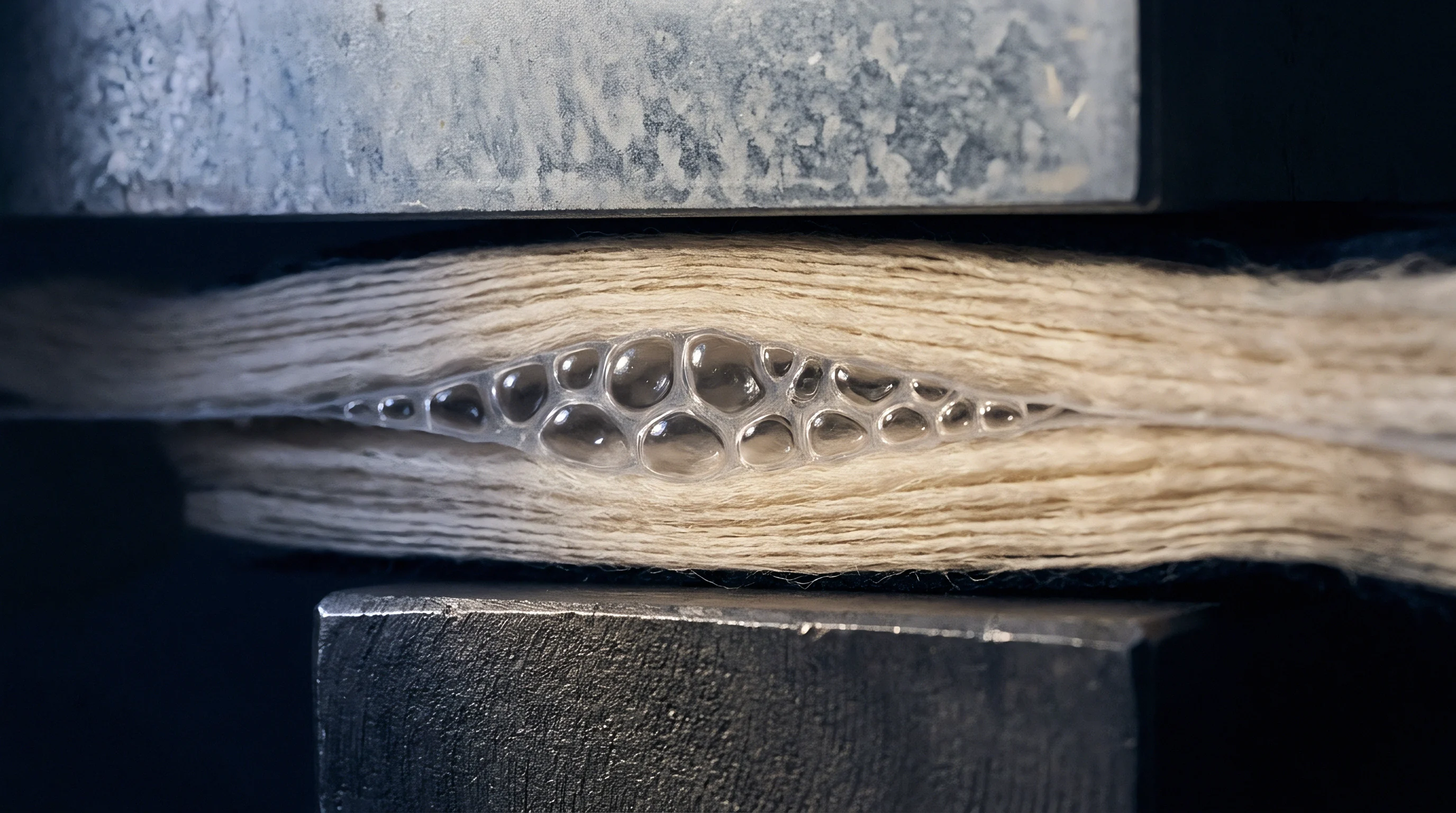
Pad
Mechanical expressors utilize elastomer-coated mangle bowls operating under pneumatic or hydraulic load to enforce uniform liquor distribution across the moving fabric web. Hydrodynamic nip dynamics control the final liquid content retained by the substrate. As fabric enters the flooded liquor trough and passes into the nip, it carries both surface-adhered fluid and internal capillary water.
Squeeze rolls compress the porous structure, forcing air out and compelling liquid into void spaces before stripping excess surface volume.
Roll durometer, expressed in Shore A hardness, determines the contact footprint or nip width under load. Soft rolls increase contact area. Softer roll covers between 65 and 70 Shore A deform noticeably under load, broadening the nip area and extending dwell time, which promotes deep liquor penetration into tight weave intersections.
Hard rolls ranging from 80 to 85 Shore A produce narrow nip widths that exert high peak hydraulic pressures, maximizing fluid expression and driving pick-up values to their lowest achievable threshold.
- Verify pneumatic pressure gauges across left, center, and right bowl cylinders using calibrated load cells to ensure symmetrical linear force distribution across the roll face.
- Measure bowl shore hardness at 100-millimeter intervals along the roll barrel using a Type A durometer to detect localized crown wear or elastomer hardening.
- Check pad trough liquor temperature using an inline resistance thermometer to maintain targeted fluid viscosity throughout the production run.
- Calculate line speed and nip dwell time to verify that mechanical compression duration matches the fluid relaxation time of the specified fabric density.
- Execute static fluid expression tests across three cut swatches across the web width to establish cross-deck wet pick-up uniformity within a 1.5 percent tolerance.
Liquor temperature controls fluid viscosity and surface tension, directly influencing capillary penetration speed into mercerized yarn bundles. Elevating bath temperature from 20 degrees Celsius to 40 degrees Celsius lowers dynamic water viscosity from 1.002 mPa·s to 0.653 mPa·s. Lower viscosity enables faster liquid displacement through micro-porous channels, allowing higher line speeds without suffering from shallow surface application.
Speed reduces immersion time.
According to ISO 105-C06 testing guidelines, mechanical squeeze calibration across the padder face must maintain wet pick-up uniformity within a positive or negative 1.5 percent margin across the full usable fabric width.
Machine speed dictates the immersion time in the trough and the compression duration within the nip. At speeds exceeding 60 metres per minute, fluid residence time in the trough drops below 0.5 seconds. For high-density mercerized poplins, this brief contact window prevents complete displacement of trapped air within core yarn bundles unless specialized non-foaming wetting agents are incorporated into the pad liquor.
Sourcing agreements governing wet processing require that padder calibration records, roll durometer certifications, and cross-web pick-up profiles be submitted alongside bulk lot shade submission dossiers.
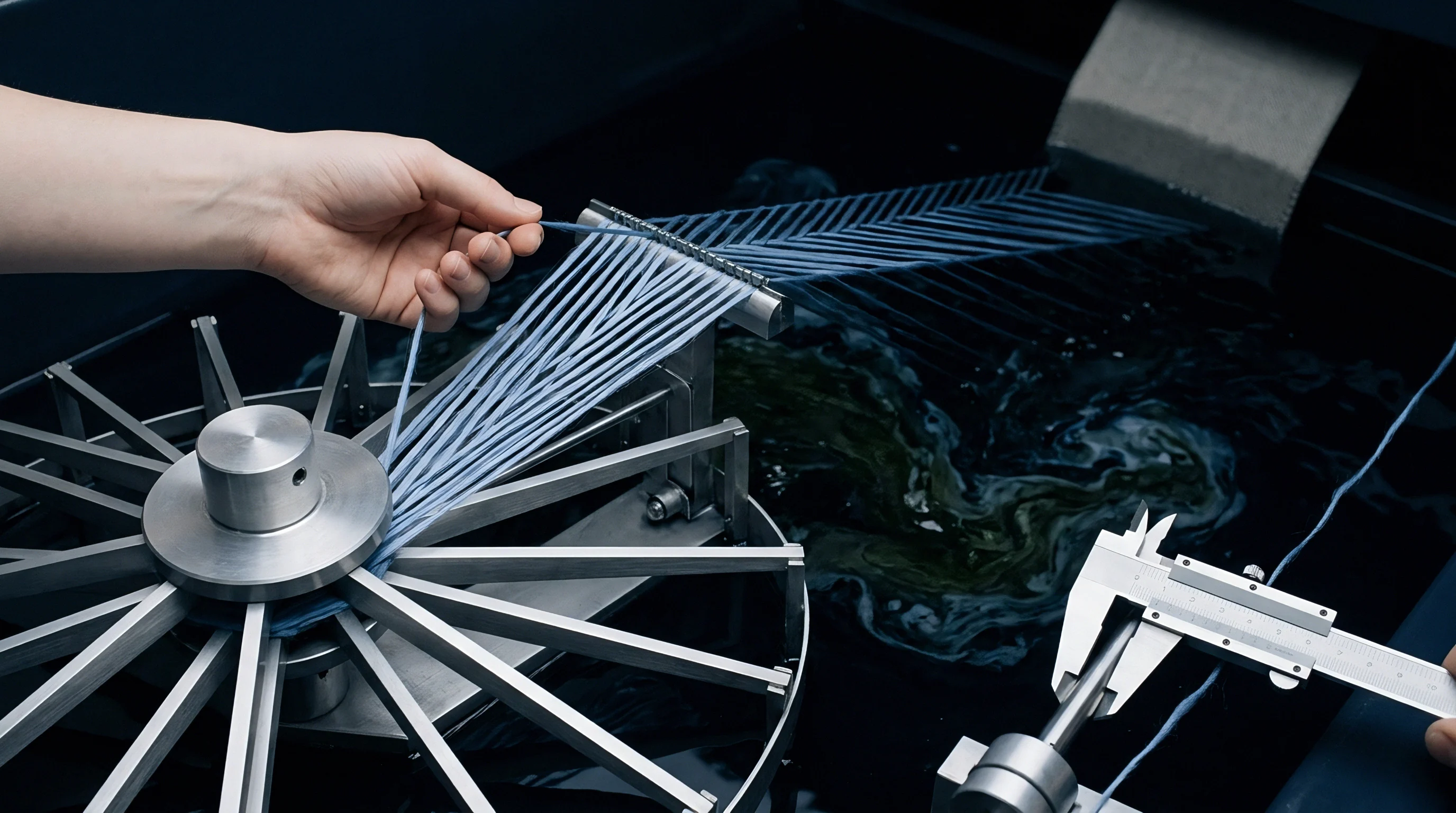

Dosage
Translating target solid application rates into operational bath concentrations demands precise conversion math tied directly to measured wet pick-up values. When padding dry fabric, chemical concentration in the trough remains constant, assuming no selective adsorption occurs. The baseline equation establishing bath concentration reads:
Cbath (g/L) = fracTarget Solid Add-On (%) × 1000Wet Πck-Up (%)
If a technical specification mandates a 2.5 percent solid add-on of a soil-release agent on a mercerized 200 GSM twill, and empirical measurement establishes a stabilized wet pick-up of 72 percent on the production padder, the calculated bath concentration equals 34.72 grams per litre. Should the padder pressure be altered, shifting wet pick-up down to 62 percent, the bath concentration must be recalibrated to 40.32 grams per litre to maintain identical solid mass deposition per square metre.

Where Does Wet on Wet Padding Shift Chemical Concentration Requirements?
Wet-on-wet finishing introduces complex mass-balance dynamics that differ significantly from wet-on-dry applications. When fabric enters the finishing padder directly from an upstream washing or mercerizing range without passing through an intermediate drying oven, it carries residual moisture. This incoming wetness dilutes the pad bath while simultaneously restricting the fabric’s capacity to absorb additional fluid from the trough.
Calculating dosage under wet-on-wet conditions requires establishing both the entering wet content percentage (Win) and the exiting wet content percentage (Wout). The net wet pick-up (NPU) reflects the net liquid weight added in the second padder:
NPU (%) = Wout (%) – Win (%)
Dilution alters bath balance. Because the incoming water occupying the fabric pores continuously mixes with the concentrated chemical bath in the trough, the effective concentration in the bath decreases over time unless replenished by a fortified feed liquor. The concentration of the interchange liquor feed (Cfeed) must exceed the target bath concentration (Cbath) to counteract continuous dilution from incoming substrate moisture.
| Process Mode | Initial Web Moisture W_in (%) | Exiting Moisture W_out (%) | Net Wet Pick-Up NPU (%) | Target Add-On (%) | Required Bath Concentration (g/L) |
|---|---|---|---|---|---|
| Wet-on-Dry | 0.0 (Conditioned) | 55.0 | 55.0 | 2.0 | 36.36 |
| Wet-on-Dry | 0.0 (Conditioned) | 70.0 | 70.0 | 2.0 | 28.57 |
| Wet-on-Dry | 0.0 (Conditioned) | 85.0 | 85.0 | 2.0 | 23.53 |
| Wet-on-Wet | 35.0 | 70.0 | 35.0 | 2.0 | 57.14 |
| Wet-on-Wet | 45.0 | 80.0 | 35.0 | 2.0 | 57.14 |
| Wet-on-Wet | 30.0 | 85.0 | 55.0 | 2.0 | 36.36 |
To quantify this mathematically, consider a wet-on-wet pad application where a mercerized cotton satin enters the pad trough at 35 percent initial moisture and exits at 75 percent final wetness, yielding a net wet pick-up of 40 percent. If the targeted finish add-on is 1.8 percent dry solid weight, computing bath concentration strictly against the exiting 75 percent wet figure yields 24.0 grams per litre. This calculation under-doses the fabric because the net liquid mass absorbed from the bath is only 40 percent of dry fabric weight.
Recalculating against the true net wet pick-up establishes the required effective chemical concentration: 1.8 multiplied by 1000 and divided by 40, which equals 45.0 grams per litre. Applying finishes via wet-on-wet routes without adjusting feed liquor concentration for bath dilution results in a progressive reduction of functional agent deposition across the production lot, causing the tail end of a bulk run to fail performance specifications.
Does dynamic moisture variation across the web width during high-speed wet-on-wet processing introduce localized dilution gradients that exceed acceptable finish tolerances?
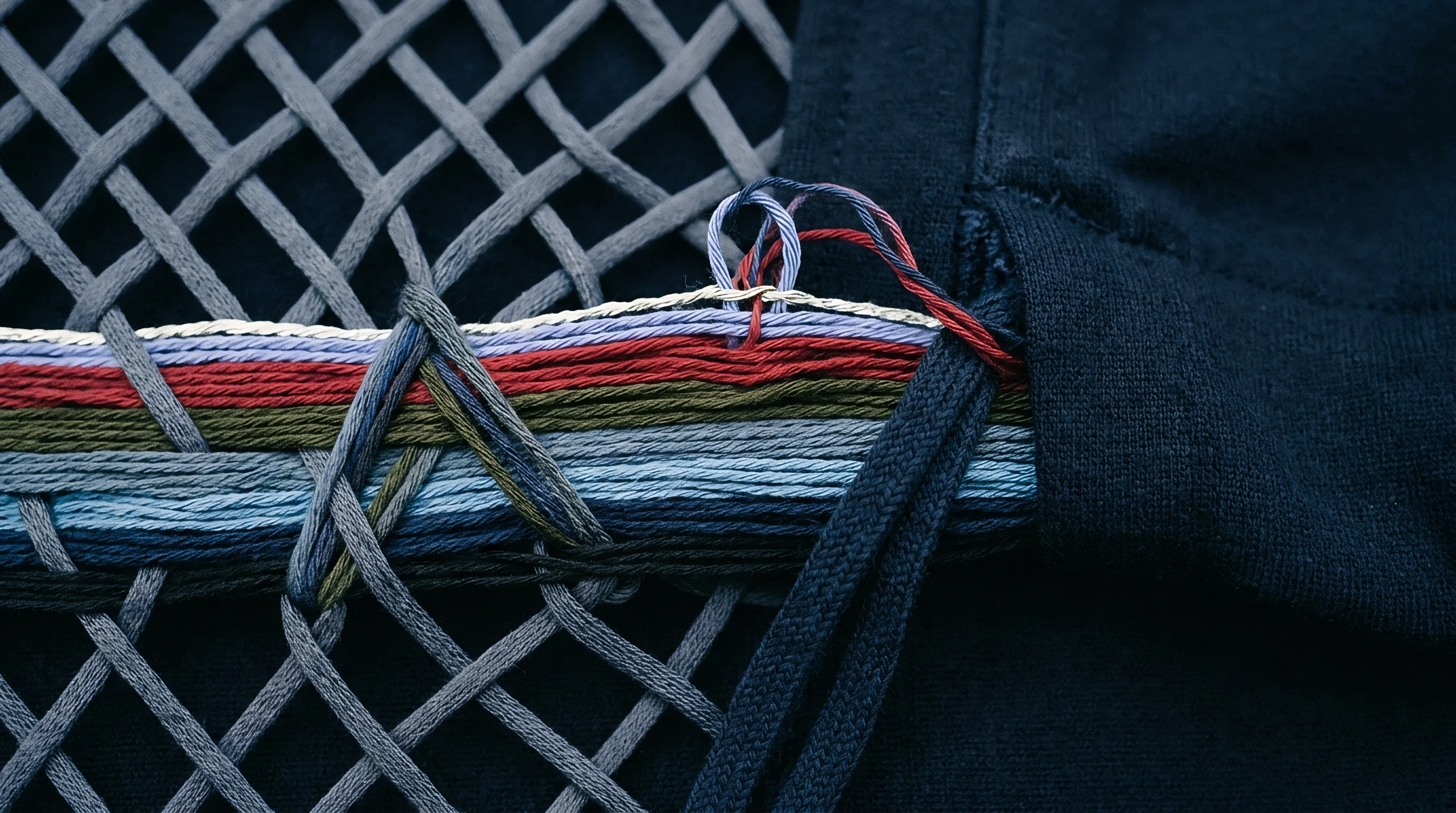
Yield
Thermal evaporation requirements inside the stenter drying chamber scale linearly with the absolute volume of water applied during padding. Evaporating water demands approximately 2,260 kilojoules of thermal energy per kilogram at atmospheric pressure, excluding energy losses associated with heating the air stream and metallic machine structure. Excess wet pick-up imposes a massive thermal penalization on production throughput and energy consumption.
Water removal demands gas. Operating a padder at an uncontrolled wet pick-up of 85 percent instead of an optimized 65 percent on a 220 GSM mercerized cotton twill forces the stenter to evaporate an additional 0.44 kilograms of water per linear metre of fabric. Running at a production speed of 40 metres per minute translates to an additional 1,056 kilograms of water evaporation per hour.
Gas burners must fire at higher outputs, or line speeds must be reduced by 20 to 25 percent to ensure complete drying before the web reaches the exit nip.
An uncalibrated 10 percent elevation in wet pick-up increases stenter thermal energy consumption by up to 18 percent per dried kilogram of finished fabric.
Heat drives surface migration. High wet pick-up values elevate liquid volume within inter-yarn voids. As hot air strikes the wet fabric face inside the first stenter drying zone, rapid surface evaporation establishes strong capillary flow from the interior of the yarn bundle toward the outer surface.
Unfixed dye molecules, cross-linking resins, and fluorochemical particles migrate along these water pathways, concentrating at the fabric surface.
Solute migration induces severe quality defects, including side-to-center shade listing, back-to-face shade variation, and harsh fabric hand caused by localized resin crusting. Over-application drains margin. Controlling wet pick-up through high-expression vacuum extractors or minimal-application rotor damping systems reduces liquid load prior to drying, suppressing capillaric migration drivers while securing line speeds.
Modern continuous finishing lines incorporate inline radiometric beta-gauges or high-frequency microwave absorption sensors situated immediately after the padder exit. These online systems continually map wet mass density across the web, feeding real-time signals back to automated pneumatic nip control units. Calibration halts compound errors.
Machine automation instantly corrects cross-web expression imbalances, maintaining pick-up targets across long bulk runs without stopping the range.