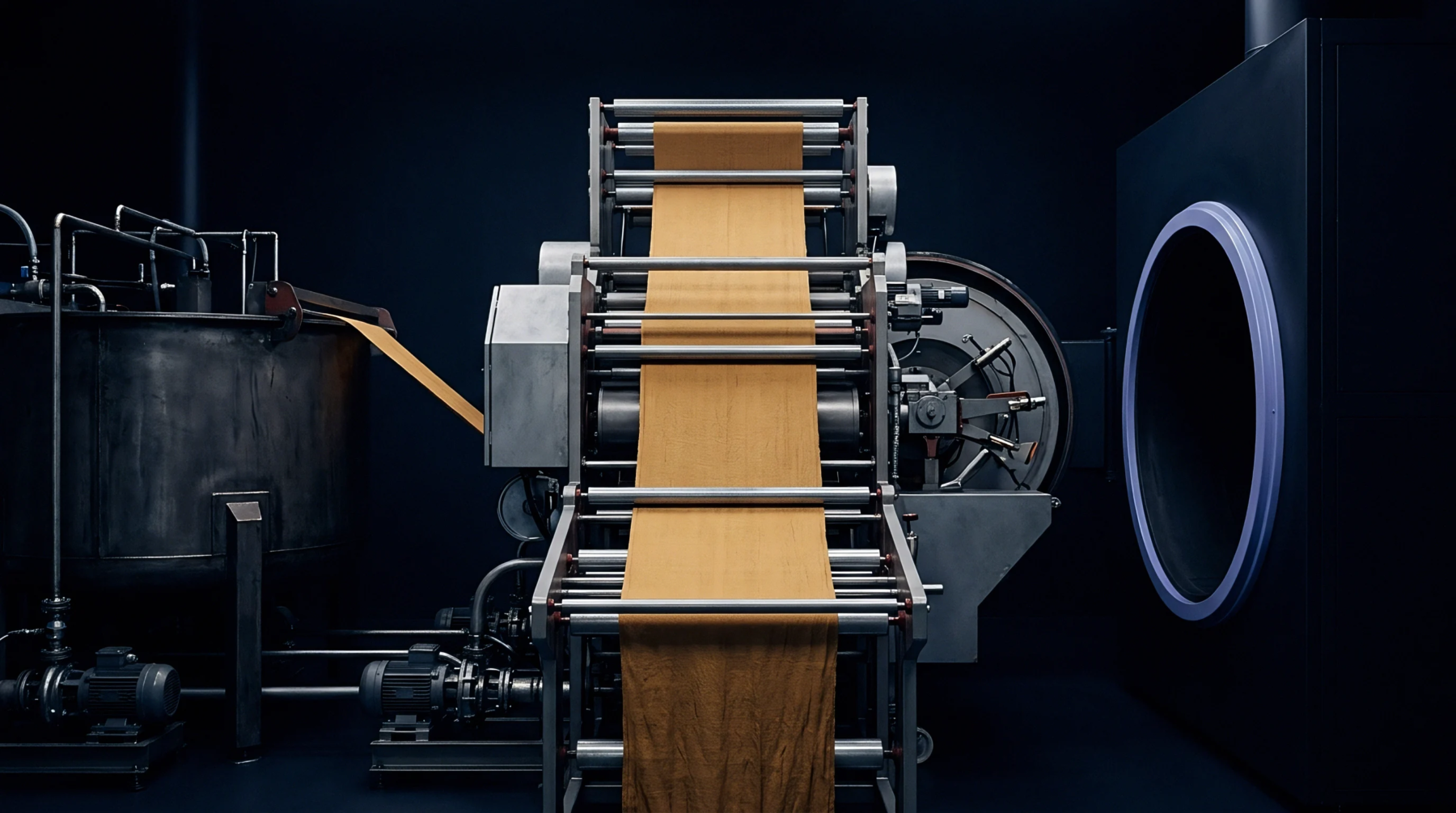
Mechanical Roller Force
Hydraulic nip load applied across opposing steel and rubber rolls governs the expulsion of excess liquor during continuous padding operations. Pad mangle pressure dictates the percentage pickup of finishing chemicals within wet processing lines before goods enter drying chambers. Insufficient force leaves retained moisture high, resulting in uneven resin distribution across the fabric cross section during subsequent polymerization stages.
Excessive force flattens yarn geometries within woven constructions, reducing handle and altering dimensional recovery before goods reach final inspection tables. Technicians verify pneumatic cylinder gauges against load cells during routine calibration cycles.
Hydraulic Nip Dynamics
Pneumatic actuators transfer force through mechanical levers to create a linear nip across the entire working width of heavy squeeze rolls. Air pressure regulated within closed loop circuits determines the exact downward thrust delivered to the moving web. Variations across the roll face cause uneven chemical retention, leading to striped dyeing defects visible under standard daylight assessment booths.
Operators adjust individual pressure regulators to compensate for roll deflection caused by high line speeds and heavy fabric weights. Cylinder seals wear over extended production shifts, introducing pressure drops that require continuous monitoring by automated control systems.
Chemical Pickup Regulation
Finishing liquor absorption depends entirely on the mechanical squeeze applied immediately after immersion tanks. Excessive liquor volume adds drying energy costs and risks chemical migration during moisture evaporation on cylinder cans. Low liquid retention causes substandard performance in durable press treatments and flame retardant applications.
Laboratory padding tests establish target wet pickup percentages before production runs begin on commercial ranges. Mill auditors check production logs against master recipes to confirm chemical add-on rates remain within specified tolerances.
Substrate Density Limits
Heavy denim fabrics and dense canvas constructions demand higher linear loads to achieve uniform liquor penetration through thick yarn bundles. Lightweight silk materials suffer permanent fiber crushing if subjected to excessive nip forces during finishing operations. Fabric stiffness increases when synthetic blends receive heavy mechanical compaction without adequate roll deflection compensation.
Production supervisors adjust hydraulic pressure settings whenever style changes occur on continuous ranges. Proper nip calibration prevents shade variation along the length of each processed roll.