Thermal Extraction
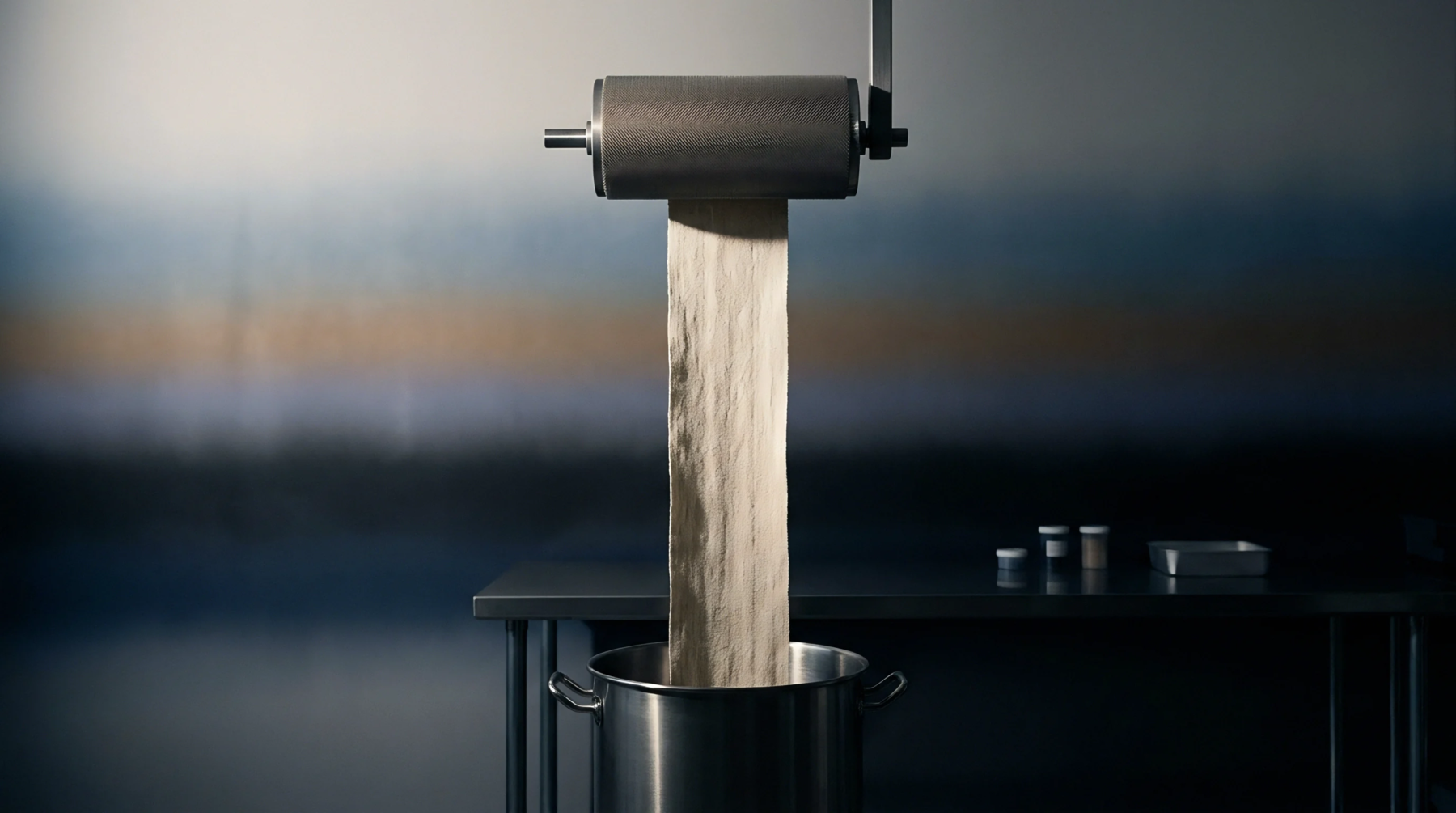
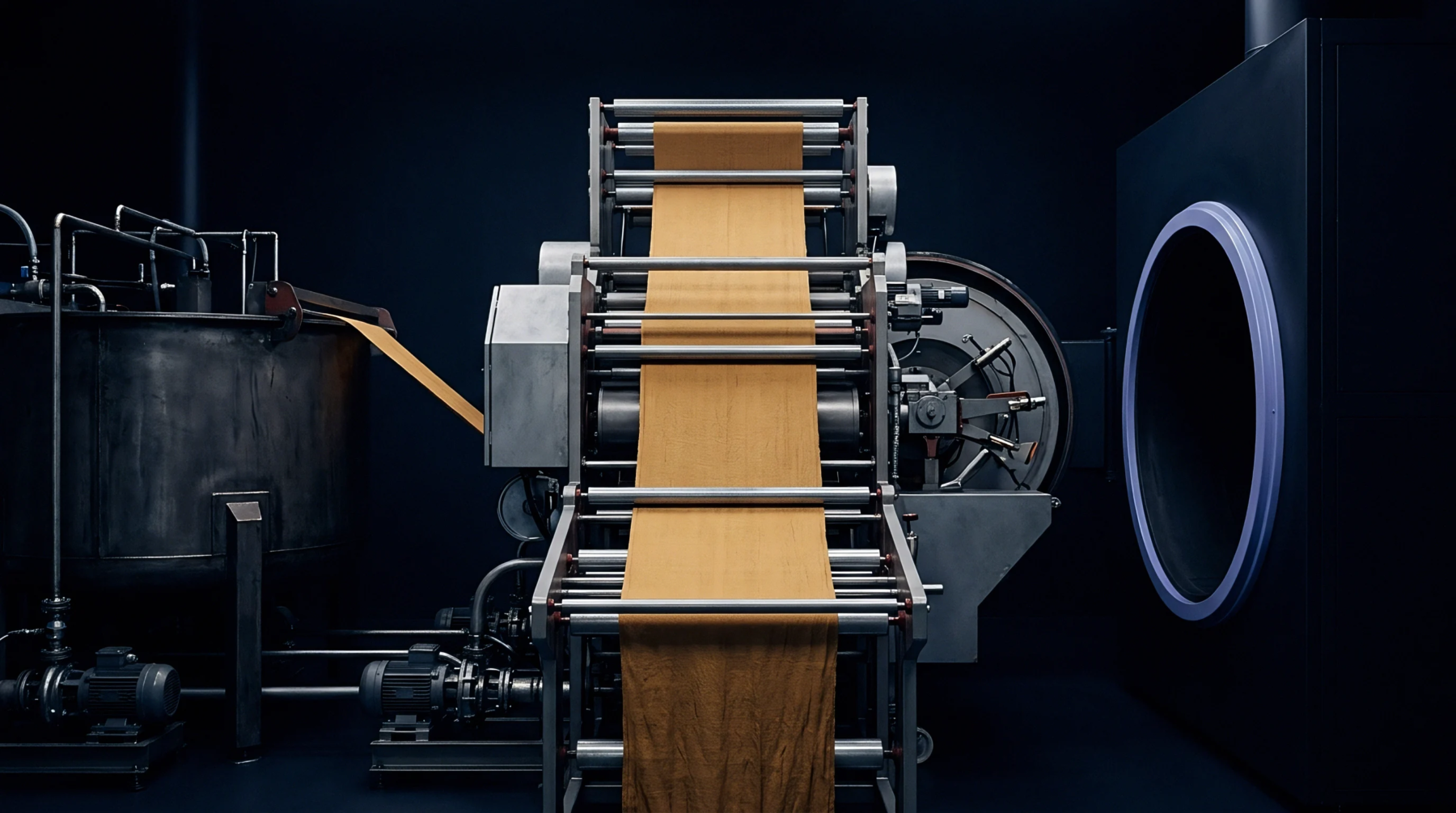
Continuous thermal treatment belongs to the finishing stage of woven fabric production where moisture is driven from wet textiles by forced convection. Industrial machinery known as a hot flue dryer forces heated air across moving webs of cloth inside an enclosed chamber to stabilize dimensions before final inspection. Commercial buyers verify the output parameters against specified shrinkage limits after the material exits the drying zone.
Fabric properties differ from fibre properties because mechanical tension alters width and length during moisture removal, whereas raw stock characteristics remain unchanged. Mills rely on exact temperature profiles to prevent surface scorching while meeting delivery moisture targets agreed upon with garment manufacturers.
Moisture Evaporation
Water removal occurs through simultaneous heat and mass transfer as high velocity blowers direct thermal energy onto both sides of the moving textile substrate. Heated air absorbs surrounding moisture within the drying enclosure before extraction fans expel the humid atmosphere outside the mill building. Air temperature gradients dictate drying rates across heavy canvas or lightweight shirting fabrics during continuous processing runs.
Production speed adjustments compensate for variations in initial cloth wetness originating from preceding dyeing ranges or washing compartments. Inadequate airflow inside internal nozzle boxes creates uneven residual moisture across the fabric width, leading to inconsistent dimensional recovery during subsequent Sanforizing treatments.
Inspection Checkpoint
Quality control technicians monitor residual moisture content at the delivery end of the machine using continuous capacitance probes or periodic oven drying tests on sampled cuttings. Laboratory results from conditioned specimens establish baseline benchmarks for bulk production acceptance at the commercial shipping dock. Mill claims regarding fabric stability are verified by accredited third party laboratories before commercial release to apparel brands.
Tension control mechanisms limit warpwise elongation while the fabric passes through heated zones under mechanical restraint. Excessive overfeed settings induce wavy selvages that reject the material during automated garment spreading operations.
Operational Boundary
Thermal efficiency drops when ambient humidity levels inside the finishing plant rise above specific threshold parameters during wet weather conditions. Exhaust duct maintenance prevents condensation accumulation that otherwise drips onto delicate silk or synthetic filament fabrics passing below the nozzle assembly. High temperature settings degrade elastomeric yarn blends if dwell times exceed safe mechanical limits specified by fibre producers.
Mechanical reliability depends on regular bearing lubrication and burner calibration to sustain uniform heat distribution across wide width processing ranges. Final acceptance depends entirely on measured dimensional recovery values recorded after standard laundering tests.