Calibrating Intermediate Infrared Pre-Dryer Radiant Emission Profiles against High-Viscosity Polyelectrolyte Antimigrant Rheology Tolerances
Matching intermediate infrared radiant emission wavelength to polyelectrolyte thermal gelation viscosity prevents dye migration in continuous wet processing.
Flux
Energy transfer rates on continuous dyeing lines determine how fast moisture evaporates from padded fabric. Right out of the padder, aqueous dye liquor sits inside the yarn structure, filling both inter-yarn voids and intra-yarn capillaries. If damp cloth goes straight into a high-velocity hot-flue dryer, fast air movement strips vapor from the surface and sets up a steep moisture gradient.
Water inside the fabric rushes to the faces to replace what evaporated, carrying unfixed disperse, reactive, or vat pigment particles with it. That liquid migration causes severe face-to-back shading, listing, and two-sidedness. Positioned before convective air drying, an intermediate infrared pre-dryer applies targeted electromagnetic energy to lock the liquid matrix in place.
Radiant heating transfers energy directly to water molecules in the liquid film rather than relying on air conductivity, heating the bath quickly to start evaporation across the web. Intermediate pre-drying aims to drive wet pick-up down from typical padding levels of sixty-five to eighty percent to a critical threshold between thirty and thirty-five percent. Below that threshold, liquid water stops acting as a continuous phase inside the yarn voids.
Capillary flow ends, leaving any remaining moisture isolated in droplets or bound within amorphous fiber regions. Locking the liquid phase freezes suspended dye particles in place before capillary forces can drag color to the fabric surfaces.

Energy Density Profiles across Intermediate Heating Zones
Infrared dryer banks between the padder and the hot-flue chamber run specific thermal outputs across sequential arrays, usually split into two or three zones along the run. Zone one delivers peak radiative energy to bring the liquor from ambient temperature up to the activation point of the polyelectrolyte antimigrant. Zone two holds that elevated temperature while driving off most of the moisture, and zone three ~ when used ~ tapers power so faster-drying sections of the web do not overheat.
Controlling power density across these zones determines whether pre-drying works clean or leaves surface defects.
High thermal output in zone one has to be balanced against the polymer’s thermal stability. Exceeding thirty-five kilowatts per square meter of radiative flux causes the surface water to vaporize almost instantly, forming a dry skin over saturated yarn cores. That skin traps interior steam until it blows micro-explosions through the yarn structure, leaving spotty migration defects.
Running the first heating zone at twenty-two to twenty-eight kilowatts per square meter provides steady, uniform heating through the full thickness of the fabric.
| Wavelength Band (µm) | Peak Emitter Temp (°C) | Moisture Evaporation Efficiency (%) | Antimigrant Thermal Degradation Risk | Optimal Application Zone |
|---|---|---|---|---|
| 0.8 – 1.4 (Short Wave) | 1800 – 2200 | 42 | High (Localized Surface Overheating) | Not Recommended for Sensitive Synthetics |
| 1.4 – 2.0 (Fast Medium Wave) | 1200 – 1500 | 78 | Low (Uniform Volumetric Penetration) | Zone 1 and Zone 2 High-Speed Lines |
| 2.0 – 3.5 (Medium Wave) | 750 – 950 | 85 | Very Low (Optimal Water Resonance) | Zone 2 Stabilization and Zone 3 Tail-Off |
| 3.5 – 6.0 (Long Wave) | 300 – 500 | 31 | Negligible (Slow Thermal Response) | Auxiliary Edge Heating Arrays Only |

Moisture Evaporation Rates and Critical Water Content Thresholds
Continuous operation requires lowering wet pick-up to where internal capillary flow stops. Moisture evaporation during intermediate pre-drying depends directly on absorbed radiant energy and water’s latent heat of vaporization (two thousand two hundred and fifty-seven kilojoules per kilogram). Removing thirty percentage points of wet pick-up from a four-hundred-gram-per-square-meter cotton drill running at fifty meters per minute requires transferring roughly forty-five kilowatts of net thermal energy straight into the damp web.
As water leaves the web, non-volatile bath components concentrate rapidly. Dissolved polyelectrolyte antimigrants, added at ten to twenty grams per liter, soon reach saturation in the shrinking liquid phase. This brings polymer chains close together, triggering intermolecular entanglements that sharply increase viscosity.
The critical water content threshold marks the point where viscosity in the polymer network grows strong enough to withstand capillary pressure gradients.
Moisture reduction from 65 percent to 30 percent wet pick-up at an emitter surface temperature of 820 degrees Celsius prevents face-to-back migration without triggering polyelectrolyte skinning.
Thermal Absorption Characteristics of Dyehouse Water Films
Liquid water has distinct infrared absorption peaks at one point four five, one point nine four, two point nine five, and six point one micrometers. Matching emitter spectra to these bands maximizes transfer efficiency into the wet pad bath. Short-wave emitters operating above two thousand degrees Celsius peak below one point two micrometers; at those wavelengths, water absorption is weak, so radiation passes right through the liquid film without dumping much heat into it.
Fast-response medium-wave quartz emitters running at filament temperatures of twelve hundred to fifteen hundred degrees Celsius peak between two point zero and two point five micrometers, matching the principal O-H vibrational absorption modes of water. Energy in this window gets absorbed in the top two hundred micrometers of fabric thickness, putting thermal energy right into the water film containing the dye and antimigrant. Technical evaluations of continuous pad-dry lines show that fast-response medium wave quartz emitters deliver superior power modulation compared to ceramic panels.
Improper power allocation across intermediate heating zones leads to uncontrolled dye migration, causing unrecoverable face-to-back shading across thousands of meters of cloth.
Rheometry
Polyelectrolytes alter the flow of aqueous padding liquors to keep dye particles from shifting during drying. In an unmodified bath, dye particles undergo rapid Brownian motion and travel freely with water moving toward evaporative surfaces. High molecular weight polymers ~ such as sodium alginate, purified carboxymethyl cellulose, or synthetic sodium polyacrylates ~ introduce non-Newtonian behavior.
These long-chain molecules entangle in solution, giving the dye mixture high zero-shear viscosity alongside strong shear-thinning properties.
During continuous running, the padding bath experiences extreme changes in shear rate. Inside the pad mangle nip, squeeze rolls drive liquor into the fabric at shear rates above ten thousand reciprocal seconds. Under this pressure, polyelectrolyte chains align with the flow, dropping viscosity dramatically so the liquor thins out to wet fibers thoroughly and penetrate yarn cross-sections evenly.
Leaving the nip drops shear back to near zero, letting polymer chains relax into random coils and restoring high zero-shear viscosity.
Viscoelastic Parameters of Polyacrylate and Alginate Formulations
Dissolved polymers establish non-Newtonian flow that responds dynamically to shear and temperature. Sodium alginate, a natural linear polysaccharide from brown seaweed, works through steric hindrance and simple chain entanglement. Commercial alginates typically run eighty thousand to one hundred and twenty thousand Daltons; at ten to fifteen grams per liter, their zero-shear viscosity sits between zero point five and one point two Pascal-seconds.
Synthetic polyacrylates reach molecular weights of several million Daltons, building structural viscosity through electrostatic repulsion along charged carboxylate groups on the polymer backbone.
In tests on high-viscosity polyacrylate antimigrants, the zero-shear viscosity maintains a threshold above twelve Pascal-seconds to resist thermal convection. At equal active solids levels, polyacrylates offer higher yield stress than alginate systems. Yield stress is the minimum force needed to start fluid movement; a value of two point five Pascals prevents pigment particles denser than water from settling or migrating under gravity and capillary pull as cloth moves from the mangle to the pre-dryer.
| Antimigrant Chemistry | Zero-Shear Viscosity (Pa·s) | Yield Stress (Pa) | Shear-Thinning Index (n) | Thermal Gelation Temp (°C) |
|---|---|---|---|---|
| High Molecular Weight Polyacrylate | 14.5 | 3.2 | 0.28 | 58 |
| Medium Molecular Weight Polyacrylate | 8.2 | 1.8 | 0.35 | 64 |
| Refined Sodium Alginate (High Viscosity) | 1.4 | 0.2 | 0.62 | Non-Gelling (Concentration Dependent) |
| Modified Carboxymethyl Cellulose | 3.8 | 0.8 | 0.48 | 72 |
| Polyacrylate / Alginate Blends (50/50) | 6.5 | 1.5 | 0.41 | 61 |

Shear Thinning Dynamics in the Pad Mangle Nip
At running speeds above sixty meters per minute, squeezing rolls force liquor through warp and weft intersections under heavy hydraulic pressure. The power-law fluid model describes this flow, where shear stress equals consistency index multiplied by shear rate raised to the power of the flow behavior index. Effective padding requires a flow behavior index below zero point five.
Values between zero point two five and zero point thirty-five give strong shear-thinning, letting thick formulations fluidize inside the nip and rebuild structural viscosity milliseconds after pressure drops off.
Fast viscosity recovery stops liquor from dripping off the damp web or pooling in loop bottoms during vertical runs. If recovery lags coming out of the nip, gravity pulls the wet film down, creating top-to-bottom shade variation across rolls. Well-formulated polymers rebuild eighty-five percent of their zero-shear viscosity within zero point two seconds of clearing the high-shear zone at the rollers.
Thermal Flocculation and Yield Stress Development
Rising temperature inside the fabric triggers structural shifts that convert soluble polymers into gelled barriers. As IR emitters heat the cloth from thirty to seventy degrees Celsius, synthetic polyacrylates undergo a sharp conformational change. Hydrophobic interactions between methyl groups strengthen with heat, forcing polymer chains into a rigid three-dimensional gel network.
This process ~ thermal gelation ~ raises solution viscosity by orders of magnitude even while water evaporates.
The thermal gelation temperature has to match the pre-dryer’s heating profile. If gelation occurs at sixty degrees Celsius, zone one must deliver enough radiant flux to bring the fabric surface to sixty degrees within two seconds of entry. Any delay allows capillary forces to shift dye particles during early transit, leaving unlevel shade before the polymer network can solidify.
Increasing radiant intensity prior to solidifying the polymer matrix accelerates dye transport toward the evaporative front.
- Excessive Shear Degradation occurs when high mechanical agitation in the pad trough breaks polymer chains, reducing zero-shear viscosity below six Pascal-seconds.
- Premature Thermal Gelation occurs when liquor temperature in the pad bath exceeds forty-five degrees Celsius, causing polymer precipitation before fabric entry.
- Insufficient Yield Stress allows pigment particles to settle and migrate under gravity during low-velocity transit between padder and pre-dryer.
- Polymer Skinning Defect occurs when high surface energy radiation rapidly dries the top liquor layer, trapping moisture underneath and causing surface blistering.
Higher molecular weight polyacrylates lock down the water matrix effectively, though excessive polymer loading stiffens fabric hand beyond acceptable limits.
Emitter
Emitter selection determines energy efficiency and system response in wet processing. Intermediate pre-dryers typically rely on gas-fired infrared burners, electric short-wave halogen lamps, or fast-response medium-wave quartz tubes. Gas-fired units radiate broad-spectrum heat centered around three micrometers via ceramic surface combustion.
While economical for high-energy lines, gas systems carry high thermal inertia ~ taking minutes to heat or cool ~ which presents severe burning risks if the line stops unexpectedly.
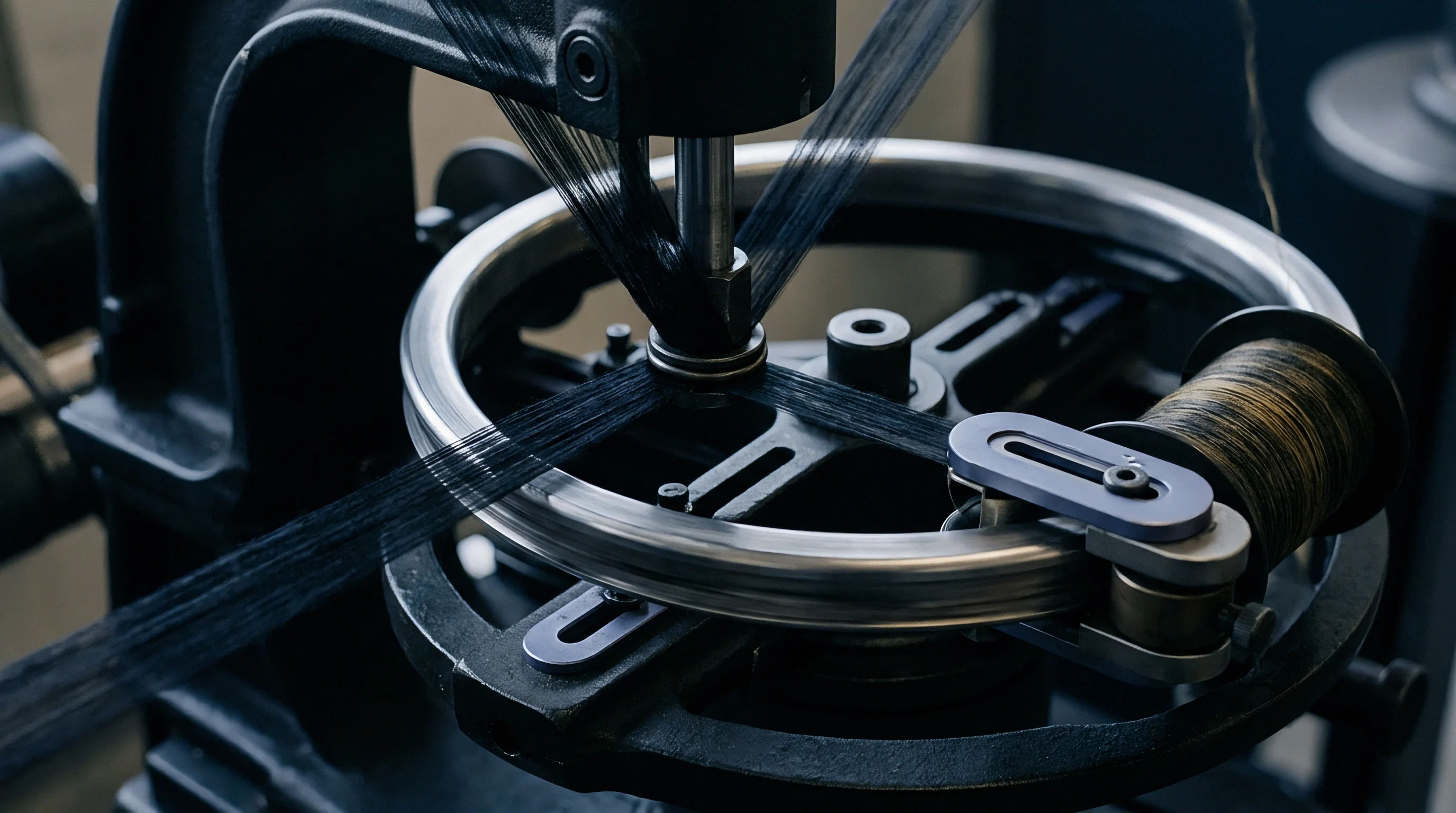
Fast-response medium-wave quartz emitters combine targeted spectral output with response times under two seconds. Built with coiled tungsten filaments inside quartz envelopes containing halogen gas, they reach surface temperatures of twelve hundred degrees Celsius to match water absorption bands. Because power adjustments take effect almost instantly, automated controls can drop output to zero within milliseconds if the line stops, saving lightweight fabrics from thermal damage.
Fast Response Medium Wave Emitter Configuration
Tungsten quartz lamps peak between two and two point five micrometers. Installing them inside pre-drying cabinets requires balancing reflector geometry and tube spacing. Polished parabolic aluminum or gold-coated quartz reflectors mounted behind the tubes direct over ninety percent of back-emitted radiation toward the web.
Gold coatings reflect above ninety-eight percent in the medium-wave infrared region, maximizing power conversion while keeping cabinet temperatures down.
Tube spacing dictates radiation uniformity across the web. Spacing elements too far apart creates alternating bands of high and low thermal flux, leaving longitudinal streak marks known as tiger-striping. Maintaining center-to-center tube spacing equal to the gap between the emitter plane and the fabric line ~ typically seventy-five to one hundred millimeters ~ overlaps the radiation cones to create a uniform thermal field.
Modulation Controls and Line Speed Synchronization
Closed-loop control systems adjust current to the lamps based on optical sensors and line speed. Speed changes during startup, roll changes, or grade transitions alter how long fabric spends inside the cabinet. If emitter power stays constant while line speed drops from sixty meters per minute down to twenty, fabric temperatures spike, causing polymer breakdown and severe over-drying defects.
Modulating emitter voltage proportional to line speed via thyristor controllers maintains a constant energy dose per square meter.
Matching emitter power density to the measured wet pick-up reduction rate is recommended during initial setup. Pyrometric sensors at the cabinet exit monitor fabric surface temperature continuously. If exit temperature exceeds seventy-five degrees Celsius while wet pick-up is still above forty percent, the control system scales back emitter intensity to prevent boiling inside the moisture film, which creates steam bubbles, pinhole defects, and micro-foaming across finished rolls.
- Position optical pyrometers ten centimeters after the final intermediate infrared radiator bank to record fabric surface temperature across three transverse points.
- Adjust electrical power input to fast-response medium wave quartz lamps until moisture content drops from sixty-five percent to thirty-five percent wet pick-up.
- Verify that the peak spectral emission stays within the two point zero to two point four micrometer wavelength band corresponding to water absorption peaks.
- Modulate power output dynamically using line speed feedback to prevent fabric overheating during unplanned machine slowdowns.

Power Density Allocation across Fabric Width
Radiant elements across the machine width require independent wattage control to offset edge cooling from ambient drafts. Fabric edges lose moisture faster than the center because lateral air gets drawn into open cabinet ends. This premature edge drying accelerates capillary migration toward the selvages, producing dark edges or side-to-center shading.
Splitting emitter banks into independent transverse zones prevents these edge discrepancies.
Setting edge emitters fifteen to twenty percent higher than central zones offsets localized convective cooling. Dynamic transverse zoning lets operators adjust edge radiation based on thermal camera readings taken after the exit. Fine-tuning edge heat compensates for construction variations ~ like heavy selvages or dense warp packing ~ maintaining flat moisture profiles across web widths exceeding three meters.
Lamp response delays often originate from electrical line fluctuations rather than thermal inertia in the quartz element assembly.
Capillarity
Liquid moves through woven structures via voids created by warp and weft intersections. These networks comprise macro-capillaries between yarn bundles and micro-capillaries between individual fibers within a yarn. With radii of just one to ten micrometers, micro-capillaries generate capillary pressures exceeding fifty kilopascals.
Under Laplace pressure gradients, water draws preferentially into smaller pores, dragging dissolved dyes and pigments with it. The Lucas-Washburn equation models this flow through porous media, showing that capillary velocity scales inversely with viscosity and pore radius.
As surface water evaporates in the pre-dryer, the liquid meniscus inside surface capillaries sharpens, creating negative pressure that pulls water from the interior toward the surface. Without an antimigrant, this suction velocity reaches several millimeters per second, quickly concentrating dye on the outer faces. Polyelectrolytes increase bulk viscosity, cutting capillary flow rates by two orders of magnitude and keeping colorants distributed evenly throughout the yarn core.
Where Does Thermal Gelation Fail during High-Speed Padding?
Incomplete immobilization occurs when radiant energy absorption lags behind rapid water loss at high line speeds. Above eighty meters per minute, residence time in a standard two-meter pre-dryer drops below one point five seconds. If the heating profile fails to reach the thermal gelation point within the first zero point five seconds, capillary transport begins redistributing dye particles before the protective gel network takes shape.
High line speeds demand elevated power density in zone one to heat the web fast enough. If the IR array cannot deliver that power, liquor stays below the critical gelation point during transit, triggering severe face-to-back migration despite high antimigrant loadings in the bath.
| Substrate Construction | Fabric Mass (g/m²) | Antimigrant Concentration (g/L) | Capillary Migration Speed (mm/s) | Face-to-Back Delta E CMC |
|---|---|---|---|---|
| 100% Cotton Plain Weave (60×60/20×20) | 140 | 0 (Water Control) | 3.85 | 2.45 (Severe Migration) |
| 100% Cotton Plain Weave (60×60/20×20) | 140 | 12 (Polyacrylate) | 0.12 | 0.32 (Pass Threshold) |
| 65/35 Poly/Cotton Twill (108×58/16×12) | 260 | 8 (Polyacrylate) | 0.28 | 0.48 (Pass Threshold) |
| 65/35 Poly/Cotton Twill (108×58/16×12) | 260 | 16 (Polyacrylate) | 0.05 | 0.21 (Superior Levelness) |
| 100% Polyester Microfiber Interlock | 180 | 10 (Alginate/Polymer Blend) | 0.41 | 0.58 (Borderline Limit) |

Liquid Transport Mechanisms in Woven Fiber Bundles
Padding liquor moves along internal yarn channels driven by pressure gradients and evaporation. In staple yarns like cotton or viscose, surface hairiness expands the effective evaporative surface area, creating local hot spots where capillary action concentrates color. Filament yarns have smoother profiles and uniform inter-filament channels, leading to predictable capillary flow kinetics.
Tuning pre-dryer radiant profiles requires accounting for these differences in fiber morphology and yarn structure.
High web tension flattens yarn cross-sections, compressing micro-capillary channels and boosting internal suction pressure. Running the padder and pre-dryer under low web tension prevents mechanical squeezing of yarn voids, reducing the capillary force that drives dye to the fabric surfaces.
Compliance with ISO 105-J03 shade difference evaluation mandates a total color variance threshold below 0.6 Delta E CMC under illuminant D65.
Surface Tension Gradients and Marangoni Convection Effects
Differences in solute concentration across damp cloth create surface energy variations that draw fluid toward hotter spots. These surface tension gradients trigger Marangoni convection inside the liquid film, creating local circulation cells that disrupt suspended pigment dispersions. Rapid evaporation under high radiative flux amplifies temperature variations across the web, accelerating lateral liquid movement.
High-viscosity polyelectrolytes eliminate Marangoni convection by building high yield stress throughout the wet matrix. That yield stress counteracts surface tension gradients, stopping fluid circulation inside yarn pores and maintaining colorant stability under high radiant heat.
Standard purchasing agreements specify that fabric displaying capillary migration artifacts exceeding class four on the grey scale for staining triggers immediate lot rejection and mill re-processing penalties.

Dispersal
Pigment particles suspended in pad baths tend to redistribute along moisture transport paths during early drying. Vat and disperse dyes exist in padding liquors as insoluble solid dispersions with particle sizes between zero point two and one point five micrometers. Because these fine particles have high specific surface areas, they rely on dispersing agents ~ like lignosulfonates or naphthalene formaldehyde condensates ~ to avoid clumping.
Unlike soluble reactive dyes, particulate dyes move passively with fluid currents without bonding to fibers during early processing.
When padded cloth enters the pre-dryer, liquid moving through yarn pores carries insoluble dye particles along. If the dye aggregates into large clusters, hydrodynamic drag increases and slows particle movement through the pore structure, though large aggregates leave visible specks on the finished fabric. Fine, well-dispersed dye particles move freely in fluid streams, requiring higher polyelectrolyte viscosity to stop thermal migration.
Particulate Particle Migration Dynamics in Disperse and Vat Dyeing
Unfixed colorant solids move through fluid channels until rising local solids concentrations restrict their motion. In continuous thermosol dyeing of polyester/cotton blends, disperse dyes target the synthetic fiber while vat or reactive dyes target the cellulose. Disperse dye dispersions are less thermally stable than soluble reactive dyes; as infrared radiation heats the wet web above fifty degrees Celsius, ionic dispersing agents lose steric stabilization, triggering controlled particle flocculation.
If flocculation happens before the antimigrant forms a structural gel, dye agglomerates drop out of suspension and deposit unevenly on yarn faces, causing frosting defects. Aligning the pre-dryer heating profile with the thermal stability of the dye dispersion ensures polyelectrolyte gelation occurs before dye particles destabilize.
High molecular weight anionic polymers create a three-dimensional gel network that resists thermal convection inside wet fabric voids.
Shade Uniformity Assessment across Continuous Run Lengths
Spectrophotometric readings along bulk rolls reveal color shifts caused by thermal or mechanical processing variations. Uniformity testing measures color coordinates L , a , and b under standard illuminants D65, A, and TL84. Comparing total color difference Delta E CMC between head, middle, and tail samples across a fifty-thousand-meter run highlights gradual drifts in pre-dryer heating efficiency or antimigrant concentration decay in the pad trough.
Continuous evaporation in the pad trough ~ driven by liquor recirculation and heat from passing fabric ~ increases active antimigrant concentration over time. That rise in polymer concentration alters bath viscosity, changing wet pick-up rates and shifting shade depth from the start of a run to the end. Automated bath replenishment systems keep temperature and viscosity steady, preserving consistent rheology across multi-shift production runs.
Color Density Fluctuations in Multi-Zone Dryer Transitions
Shade variations across fabric faces often develop as material transitions from radiant heating banks into high-velocity convective air chambers. The gap between the pre-dryer exit and the hot-flue entry nozzle is a high-risk zone for dye movement. If fabric leaves the pre-dryer above thirty-five percent moisture, exposure to ambient air in the transfer bridge causes rapid surface cooling and localized evaporation, driving late-stage migration.
Enclosing the transfer bridge keeps ambient drafts off the damp web. Holding internal air at sixty degrees Celsius inside the enclosure prevents surface cooling, keeping the polyelectrolyte antimigrant gelled until cloth enters the main drying cabinet.
- Substrate Porosity Index defines the capillary void fraction within the yarn bundle and dictates the required antimigrant concentration in the padding bath.
- Dye Dispersion Particle Size determines the hydrodynamic drag experienced by colorant particles moving through the gelling polymer network.
- Infrared Absorption Spectrum matches the emitter radiation profile to the combined absorbance of water, fiber, and bath auxiliaries.
- Thermal Gelation Temperature sets the lower limit for infrared flux required to immobilize the liquid matrix before convective air drying begins.
The precise interaction between synthetic polyelectrolyte side-chains and nanoscale vat pigment aggregates under ultra-high radiant energy pulses remains an open question in continuous wet processing research.
Audit
Quality management in continuous dyehouses relies on thorough testing and verification before starting full production runs. Setting reliable calibration standards between IR pre-dryers and polyelectrolyte rheology tolerances requires collecting systematic data from laboratory testing and production machinery alike. Mills must maintain strict process controls on the line rather than relying on post-production shading inspections to sort out defective rolls.
Standard qualification protocols require measuring pad bath viscosity profiles from twenty to eighty degrees Celsius before approving formulations for production. Mill audits review rotational viscometer calibration logs, pyrometer accuracy certificates, and reflector maintenance records to verify the line stays within process limits.

Technical Specifications for Antimigrant Rheology Verification
Lab procedures measure viscosity profiles across shear rates from zero point one to ten thousand reciprocal seconds. Cone-and-plate rheometers evaluate elastic modulus G’ and loss modulus G” to quantify viscoelastic structure in candidate antimigrant polymers. A high G’ relative to G” in the linear viscoelastic region indicates dominant elastic behavior, confirming the gel network will resist deformation under low-shear capillary forces during pre-drying.
Verification includes thermal sweep testing, recording viscosity changes as temperature rises at five degrees Celsius per minute. The resulting curve identifies the exact gelation onset temperature, letting engineers calibrate zone one IR emitter output to hit this activation threshold within the first meter of travel inside the pre-dryer.

Standardizing Infrared Calibration Protocols across Mill Lines
Matching thermal output curves across finishing plants requires systematic pyrometer cross-checks. Infrared spectra degrade over time as reflectors collect airborne dye mist and tungsten filaments age. Annual radiometer calibrations measure absolute irradiance in watts per square centimeter across each emitter zone to adjust for component aging.
Auditing the spectral emission profile of intermediate pre-dryers ensures that wet processing mills eliminate migration defects before running commercial bulk quantities. Cleaning reflectors monthly with isopropyl alcohol restores gold film reflectivity, maintaining high thermal transfer efficiency and preventing localized hot spots that disrupt antimigrant performance.
Commercial Tolerances for Bulk Shade Consistency Verification
Contractual agreements between dyehouses and buyers define color variation limits using standardized colorimetric formulas. Specifications limit total color difference Delta E CMC to a maximum of zero point six between production fabric and approved lab dips. Side-to-center and face-to-back limits are tighter, requiring Delta E CMC values below zero point four across thirty-point grid measurements along single rolls.
- Rheological Test Dossier detailing zero-shear viscosity, yield stress, and viscosity recovery curves measured across temperatures from twenty to eighty degrees Celsius.
- Infrared Emitter Calibration Log recording spectral power distribution, reflector cleanliness, and pyrometer feedback accuracy across all heating zones.
- Dye Liquors Formulations Record specifying polyelectrolyte type, active polymer percentage, electrolyte concentration, and bath temperature limits.
- Continuous Line Speed Map establishing maximum allowable drying velocities based on fabric mass, wet pick-up, and pre-dryer radiant power capability.
Establishing strict rheological criteria alongside calibrated pyrometric controls ensures that continuous dyeings maintain narrow color tolerances across diverse fabric weights and fiber blends.