Liquid Transport
Interstitial moisture movement through fibrous substrates describes the unintended displacement of dye molecules or chemical finishing agents from localized high concentration zones toward dry areas. Capillary migration represents a distinct physical phenomenon governed by the porous architecture of textile structures. Small spaces between individual filaments create suction pressure that pulls aqueous solutions along the yarn path or across the fabric width during drying phases.
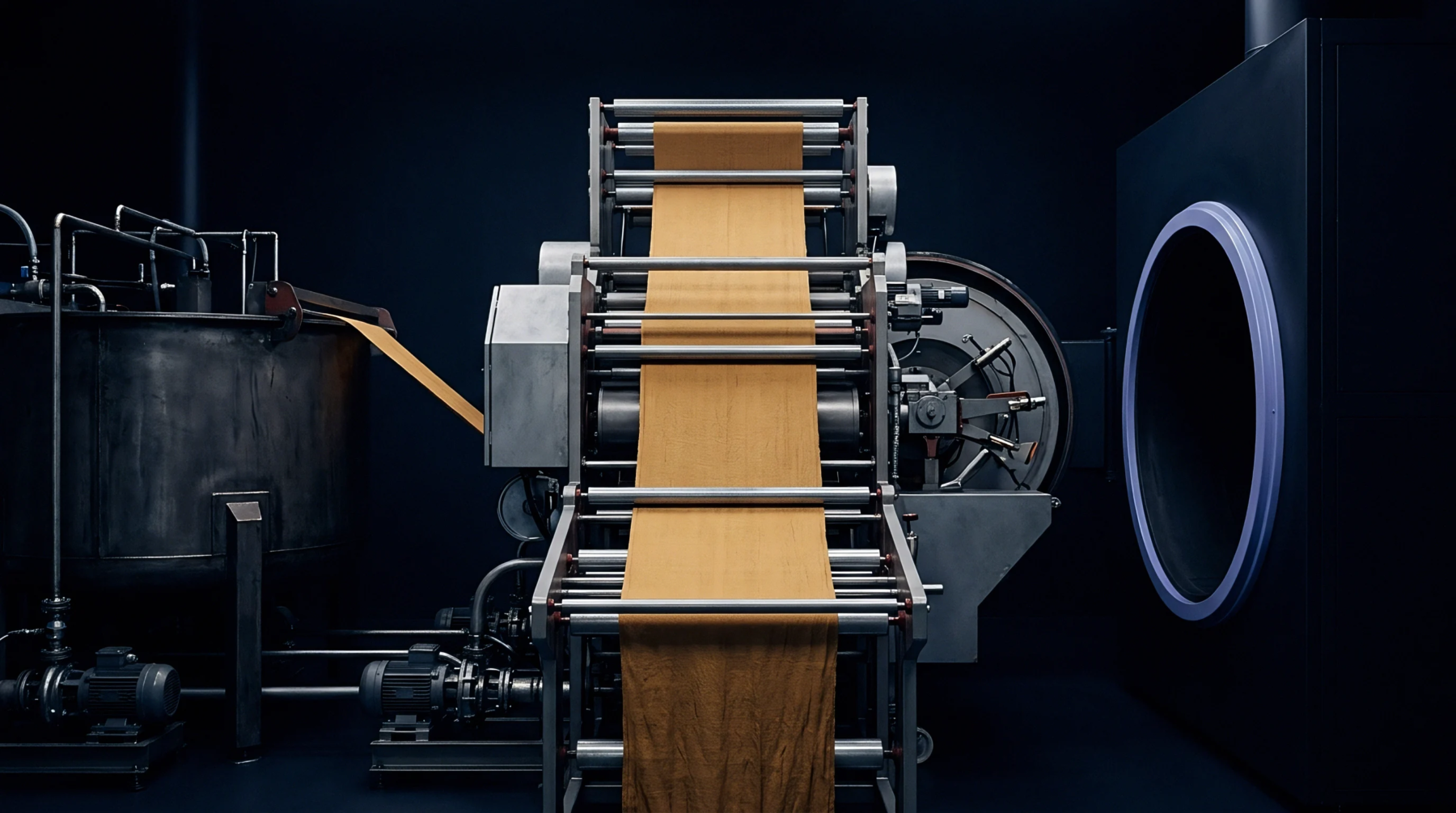
Heat application causes water to evaporate from the surface while the internal pressure drives the remaining liquid toward the evaporation front. This movement carries dissolved solutes along with the fluid, creating uneven distribution of pigments across the goods. Dyers observe these variations as shade differences between the center and the edges of a fabric roll.
Physical Mechanism
Surface tension forces drive the flow within the narrow channels formed by twisted fibres. The intensity of this displacement relies on the pore geometry and the saturation level of the textile matrix. Wet goods placed on a heated cylinder lose water at the contact point while the adjacent regions remain cool, creating a thermal gradient that accelerates the rate of flow toward the hot surface.
Fine denier synthetics with high surface area often exhibit faster rates of liquid travel compared to coarse natural fibres. Designers must account for these dynamics during the finishing process because uncontrolled flow alters the final hue of the finished product. Excessive drying speeds compound the hazard by hardening the surface before the interior has stabilized.
Technicians minimize the risk by ensuring uniform moisture removal across the width of the fabric. Uniformity in drying prevents the accumulation of additives at the edges of the roll.
Textile Verification
Quality control departments assess the impact of this movement through standardized color assessment of finished batches. Inspectors compare the lightness values of center samples against edge sections to identify gradients that deviate from the target specification. Labs utilize spectrophotometers to measure the reflectance of the material at specific intervals.
Production managers accept or reject goods based on established delta E limits that define the tolerance for hue shifts. Discrepancies exceeding these values indicate a failure in the drying cycle that necessitates reprocessing. Mills verify these results before shipping the material to garment factories.
Verification confirms that the chemical distribution remains stable across the entire length of the production run.
Material Constraint
Natural hydrophilic fibres such as cotton retain significant amounts of moisture, which increases the likelihood of solute redistribution during slow drying operations. Synthetic materials with low moisture regain properties demonstrate limited travel, yet the presence of surfactants in the chemical formulation can lower the liquid surface tension and encourage faster movement regardless of the fibre type. Additives modify the rheology of the dye solution and dictate the extent of the travel.
Proper adjustment of the chemical bath composition reduces the propensity for unwanted shifting. The physical state of the substrate at the commencement of the drying stage determines the magnitude of the final migration.