Analytical Limits for Unintentional Fluorocarbon Migration between Certified and Uncertified Stored Fabrics
Stored finished textiles absorb volatile fluorocarbons across air gaps, pushing total fluorine above regulatory limits without direct physical lot contact.
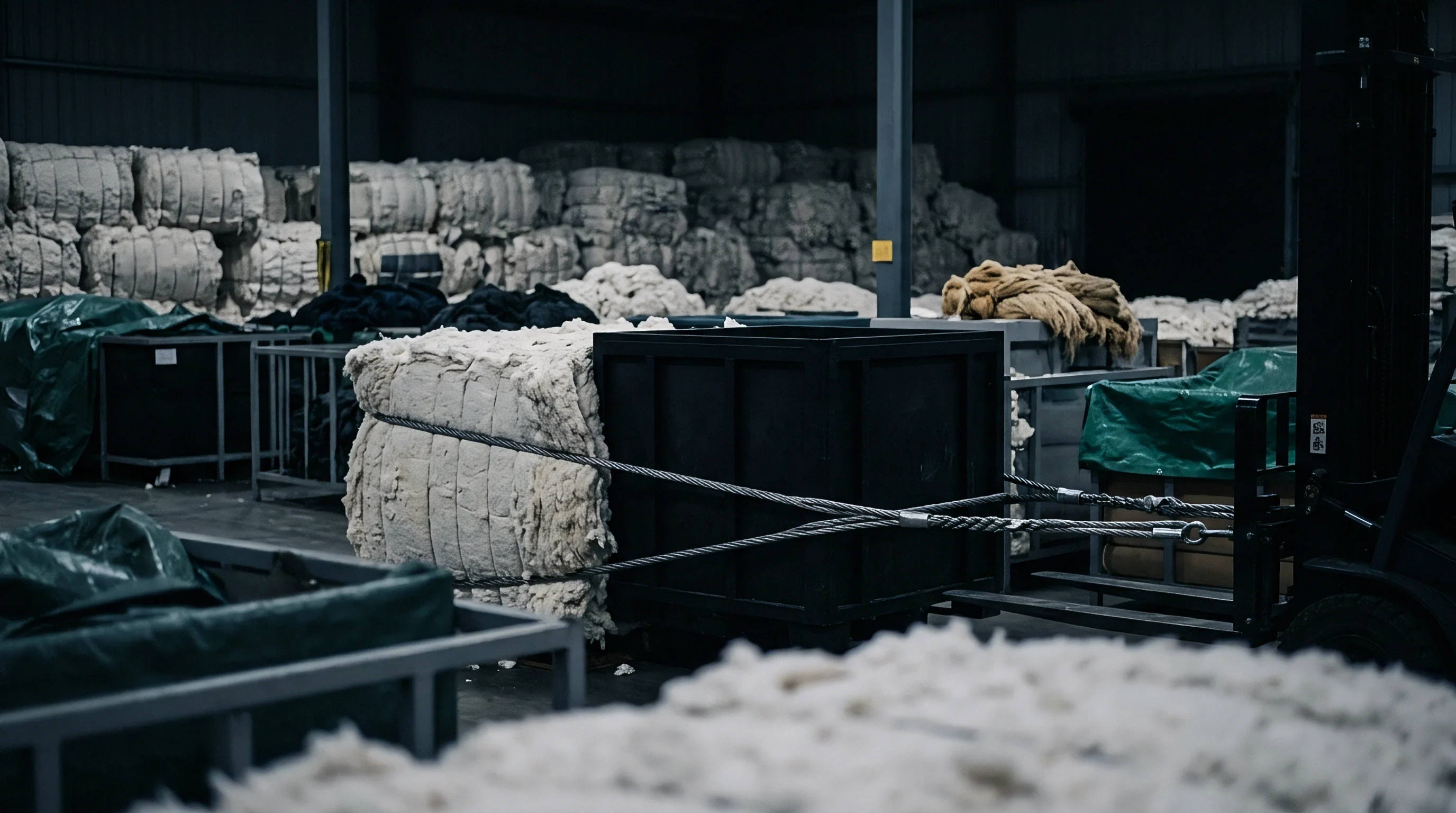

Ceiling
Under enforceable international supply agreements and statutory market surveillance rules, finished goods face strict total fluorine cutoffs alongside targeted analyte bans. An untreated batch stored in proximity to fluorinated water-repellent goods absorbs airborne telomers over ordinary warehousing intervals. Target limits remain unforgiving.
European Union regulations and state-level United States statutes evaluate compliance at port entry through total fluorine screening, treating any measurable halogen signature as presumptive evidence of intentional per- and polyfluoroalkyl substance addition.
Analytical boundaries split into two distinct tiers: total fluorine screening thresholds executed by combustion ion chromatography and targeted compound limits resolved through liquid chromatography tandem mass spectrometry. When testing laboratory reports exceed a regulatory total fluorine screening threshold, border authorities and certifying bodies initiate compound-specific sweeps. If targeted chromatography identifies regulated perfluorocarboxylic acids or fluorotelomer alcohols above trace limits, customs agents seize the shipment regardless of whether the chemical entered through finishing liquor or ambient warehouse migration.
A total fluorine reading above fifty parts per million in certified organic goods invalidates transaction paperwork under prevailing international guidelines.
OEKO-TEX Standard 100 Class I through IV parameters restrict total fluorine content to 100 milligrams per kilogram, while individual targeted substances such as perfluorooctanoic acid and related salts face limits of 0.025 milligrams per kilogram. The Global Organic Textile Standard Version 7.0 enforces a stricter limit, setting the total fluorine threshold at 50 milligrams per kilogram and strictly prohibiting any detectable quantity of targeted perfluorinated compounds. Finished goods absorbing volatile fluorinated compounds from adjacent inventory racks readily surpass these thresholds within sixty days of shared warehouse exposure.
- Combustion ion screening determines whether the aggregate halogen concentration crosses the statutory action threshold before any targeted extraction begins.
- Targeted compound extraction identifies whether the halogen signal stems from regulated long-chain acids or unrestricted short-chain telomers.
- Solvent extractable fluorine evaluation measures the portion of organofluorine free to migrate off the fiber matrix during commercial wear or washing.
- Transaction certificate rejection follows automatically when an audited lot breaches the maximum allowable limit defined in the certification scope.
California Assembly Bill 1817 establishes an enforceable total organic fluorine ceiling of 100 parts per million for apparel textiles, dropping to 50 parts per million for specific garment categories. Washington State Department of Ecology standards and European Union Persistent Organic Pollutants legislation enforce comparable administrative ceilings. An importer holding clean chemical batch records from the dyeing facility remains fully exposed if warehouse storage permits organofluorine accumulation before retail distribution.
| Standard or Regulatory Authority | Total Fluorine Limit | Targeted PFOA Limit | Targeted PFOS Limit | Individual PFAS Analyte Limit |
|---|---|---|---|---|
| OEKO-TEX Standard 100 (Class I) | 100 mg/kg | 0.025 mg/kg | 0.025 mg/kg | 0.100 mg/kg |
| Global Organic Textile Standard 7.0 | 50 mg/kg | 0.010 mg/kg | 0.010 mg/kg | 0.025 mg/kg |
| EU POPs Regulation (EU 2019/1021) | Screening Trigger | 0.025 mg/kg | 0.010 mg/kg | 1.000 mg/kg sum |
| California AB 1817 (Apparel) | 100 mg/kg (50 mg/kg 2027) | Non-detectable | Non-detectable | Applicable to all PFAS |
| bluesign System Substances List | 100 mg/kg | 0.025 mg/kg | 0.025 mg/kg | 0.050 mg/kg |
| Methods: Total fluorine quantified by DIN EN 14582; targeted analytes resolved by liquid chromatography tandem mass spectrometry following solvent extraction under methanol or methyl tert-butyl ether. | ||||
A single non-compliant total fluorine reading triggers mandatory commercial quarantine, forfeits customs clearance, and voids valid transaction certificates across the entire production lot.


Vapor
Airborne transport represents the primary mechanism driving unintended fluorochemical contamination between stacked warehouse items. Direct mechanical contact between rolls plays a secondary role compared to the continuous evaporation and redeposition of volatile fluorinated side-chain fragments. Volatilization increases under humid heat.
Warehouse microclimates characterized by elevated ambient temperatures, poor ventilation, and dense pallet arrays accelerate the equilibrium gas-phase release of fluorotelomer alcohols from treated outerwear fabrics onto untreated cotton, viscose, and polyester webs.
Water-repellent formulations built on C6 fluorochemical polymers carry trace unreacted monomers and residual synthetic intermediates, principally 6:2 fluorotelomer alcohol and 8:2 fluorotelomer alcohol. These molecules possess low molecular weights and moderate vapor pressures at ordinary storage temperatures between twenty and thirty-five degrees Celsius. Sublimation occurs continuously from the microscopic surface coating of treated goods into the surrounding warehouse boundary layer.
Volatile fluorotelomer alcohols sublime continuously from water-repellent apparel into enclosed warehouse airspace.
Untreated cellulosic and synthetic textiles operate as passive chemical sinks. The high specific surface area of spun yarns combined with the porosity of woven structures creates an energetic thermodynamic trap for airborne fluorinated molecules. Hydrophobic forces and van der Waals interactions bind the fluorinated tails of volatile telomers directly to fiber surfaces.
Cotton goods absorb these airborne species rapidly due to the dense microporous network of the secondary cell wall, accumulating measurable fluorine signatures within several weeks of shared storage.

Sublimation of Volatile Telomers
Ambient thermal energy provides sufficient enthalpy to overcome the weak van der Waals binding energies holding residual fluorotelomer alcohols within the polymer matrix of durable water-repellent coatings. Once released into the gas phase, 6:2 fluorotelomer alcohol molecules disperse along concentration gradients toward adjacent storage bays. Cross-contamination occurs without direct touch.
An unfluorinated roll positioned three meters away from treated inventory in a stagnant air room registers detectable surface contamination within fourteen days.
Relative humidity shifts the sorption kinetics of the receiving substrate. Elevated moisture levels plasticize natural fibers like wool and cotton, swelling amorphous cellulose regions and exposing additional internal binding sites. As atmospheric humidity fluctuates between day and night cycles, the receiving roll breathes in airborne volatile organofluorines, locking them within internal crystalline boundaries upon drying.
The migration rate doubles when warehouse temperatures climb above thirty degrees Celsius during transit or regional summer storage.

Do Packaging Films Halt Fluorocarbon Vapor Transfer?
Polyethylene roll wraps exhibit high permeability toward organic fluorine gases at ambient room temperatures. Low-density polyethylene and linear low-density polyethylene films contain significant amorphous free volume, allowing small non-polar molecules like fluorotelomer alcohols to dissolve into the film and diffuse through to the opposite face. Polyethylene films permit gas passage.
A certified organic cotton shipment wrapped tightly in eighty-gauge polyethylene packaging absorbs significant fluorotelomer concentrations when stored beside uncovered fluorinated outerwear.
Micro-perforations introduced into packaging films during industrial extrusion or handling destroy whatever partial gas barrier the plastic might have afforded. Pressure variations within stacked storage containers drive convective airflow through these pinholes, drawing contaminated air straight into the roll core. Mechanical compression within lower pallet tiers expels air from treated rolls, discharging concentrated fluorochemical vapor directly against adjacent materials.
- Inter-roll contact pressure drives immediate interfacial chemical transfer between adjacent roll surfaces under tight pallet strapping.
- Vapor phase permeation allows fluorotelomer alcohols to penetrate standard low-density polyethylene wraps across warehouse air gaps.
- Pin-hole convective currents draw ambient volatile telomers through handling tears and intentional extrusion perforations into the core.
- Container heat cycling generates thermal pumping effects during ocean transit, accelerating volatile off-gassing and deposition cycles inside sealed steel boxes.
Dyehouse managers routinely maintain that unfluorinated goods emerged completely clean from the stenter frame and that warehouse air currents remain outside commercial supply contracts.


Assay
Analytical laboratories deploy dual-tier instrumentation pathways to separate intentional water-repellent finishes from airborne warehouse contamination. The analytical challenge centers on distinguishing between polymer-bound fluorocarbon finishes applied during finishing and trace volatile monomers accumulated on the yarn surface during warehousing. Combustion ion chromatography runs first.
This thermal combustion technique measures total fluorine without compound specificity, converting all organic and inorganic fluorides into aqueous hydrofluoric acid for electrochemical conductivity detection.
Sample preparation introduces immediate vulnerabilities to false-positive determinations. Cutting swatches with shears cleaned in municipal tap water transfers inorganic fluorides to the sample edges. Laboratory blanks demand routine checking.
Combustion ion chromatography operating under standard DIN EN 14582 yields a limit of detection between ten and twenty milligrams per kilogram, and a limit of quantitation of fifty milligrams per kilogram. Unintentional storage migration rarely deposits more than one hundred milligrams per kilogram of total fluorine, leaving commercial acceptance decisions balanced directly along the limit of quantitation boundary.
A total fluorine measurement below fifty parts per million remains within the margin of analytical uncertainty for combustion ion chromatography.
When total fluorine screening yields values exceeding contractual limits, laboratories initiate solvent extraction to isolate organofluorines from background inorganic salts. Extraction with methanol or an equal mixture of methanol and water targets soluble fluorotelomer alcohols and residual surfactant acids while leaving the underlying polyester or cellulosic matrix intact. Liquid chromatography detects specific telomers.
Targeted analysis by liquid chromatography tandem mass spectrometry achieves reporting limits down to one microgram per kilogram for specific substances such as perfluorohexanoic acid, perfluorooctanoic acid, and 6:2 fluorotelomer alcohol.
| Targeted Compound Group | Instrument Method | Limit of Detection | Limit of Quantitation | Spike Recovery Rate (Cellulose) | Spike Recovery Rate (Polyester) |
|---|---|---|---|---|---|
| Total Fluorine (DIN EN 14582) | Combustion Ion Chromatography | 10.0 mg/kg | 50.0 mg/kg | 88 – 104 % | 92 – 108 % |
| Fluorotelomer Alcohols (FTOHs) | GC-MS / CI Mode | 0.005 mg/kg | 0.020 mg/kg | 65 – 82 % | 78 – 94 % |
| Perfluorocarboxylic Acids (PFCAs) | LC-MS/MS (ESI Negative) | 0.001 mg/kg | 0.005 mg/kg | 84 – 96 % | 89 – 102 % |
| Perfluoroalkane Sulfonates (PFSAs) | LC-MS/MS (ESI Negative) | 0.001 mg/kg | 0.005 mg/kg | 81 – 95 % | 87 – 101 % |
| Fluorotelomer Acrylates (FTACs) | GC-MS / EI Mode | 0.010 mg/kg | 0.050 mg/kg | 58 – 74 % | 72 – 88 % |
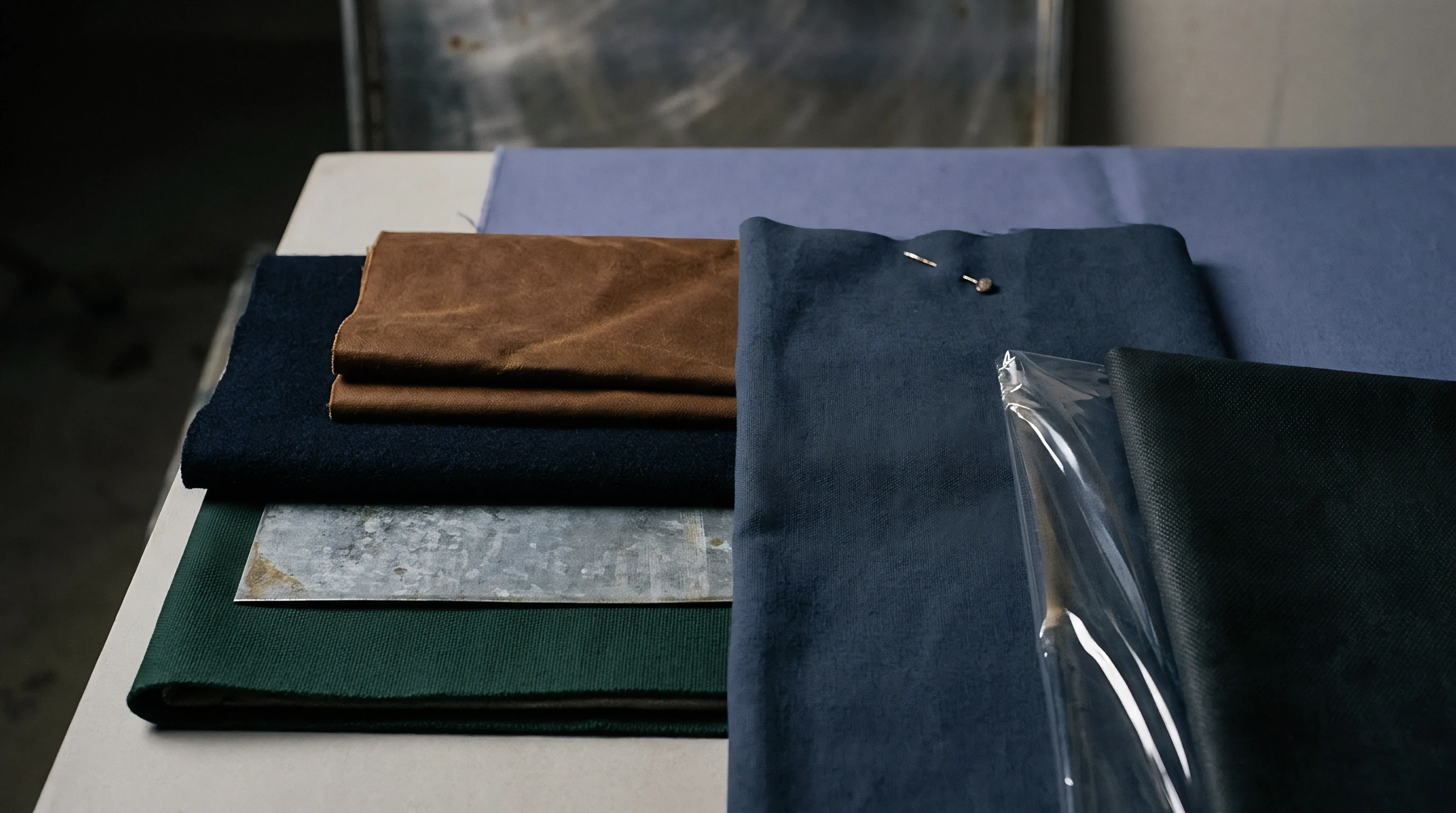
Total Fluorine by Combustion Ion Chromatography
Thermal decomposition inside a quartz tube at 1050 degrees Celsius converts all organically bound halogens into hydrofluoric acid for electrochemical quantification. The process consumes the entire textile substrate, oxidizing organic polymers into carbon dioxide and water while halogens dissolve into an aqueous absorption solution. Combustion ion chromatography captures both organic fluorine from chemical finishes and inorganic fluorine derived from natural dirt, soil minerals, or dyehouse processing water.
Combustion ion procedures cannot discriminate between intentional polymer applications and unintentional warehouse dust containing fluoridated particles. Natural cotton fibers cultivate trace concentrations of inorganic fluoride during field maturation, especially in agricultural zones using fluoridated irrigation water or phosphate fertilizers containing fluorapatite residues. Without a preliminary solvent-washing step to separate inorganic mineral ions, combustion ion testing reports these harmless agricultural minerals as total fluorine, generating false alarms under retailer chemical restrictions.

Is Total Fluorine Screening Sufficient for Release?
Elevated screening readings demand targeted tandem mass spectrometry to identify the specific molecular species responsible for the signal. Gas chromatography coupled with chemical ionization mass spectrometry isolates volatile fluorotelomer alcohols, while liquid chromatography tandem mass spectrometry quantifies polar perfluorocarboxylic and perfluorosulfonic acids. Solvent purity dictates baseline noise.
Airborne migration deposits a distinct chemical fingerprint compared to deliberate topical finishes. Goods receiving intentional durable water-repellent chemistry display high concentrations of fluorotelomer acrylates, polymeric side-chains, and total fluorine levels ranging from two thousand to twenty thousand milligrams per kilogram. Unintentional storage contamination exhibits low total fluorine values beneath one hundred milligrams per kilogram, dominated almost exclusively by free volatile 6:2 and 8:2 fluorotelomer alcohols with negligible concentrations of polymeric backbone constituents.
Sample cutting introduces border errors. Pulling swatches from the exterior edges of a fabric roll captures maximum airborne exposure, reflecting external warehouse atmosphere contamination rather than the interior batch quality. Extracting swatches from the center core reveals negligible migration, demonstrating that the chemical deposit remained confined to the outermost layers of the packaging wrap.
Analytical bodies still disagree on whether a twenty milligram per kilogram total fluorine baseline on untreated greige goods originates from volatile storage migration or municipal water processing salts.
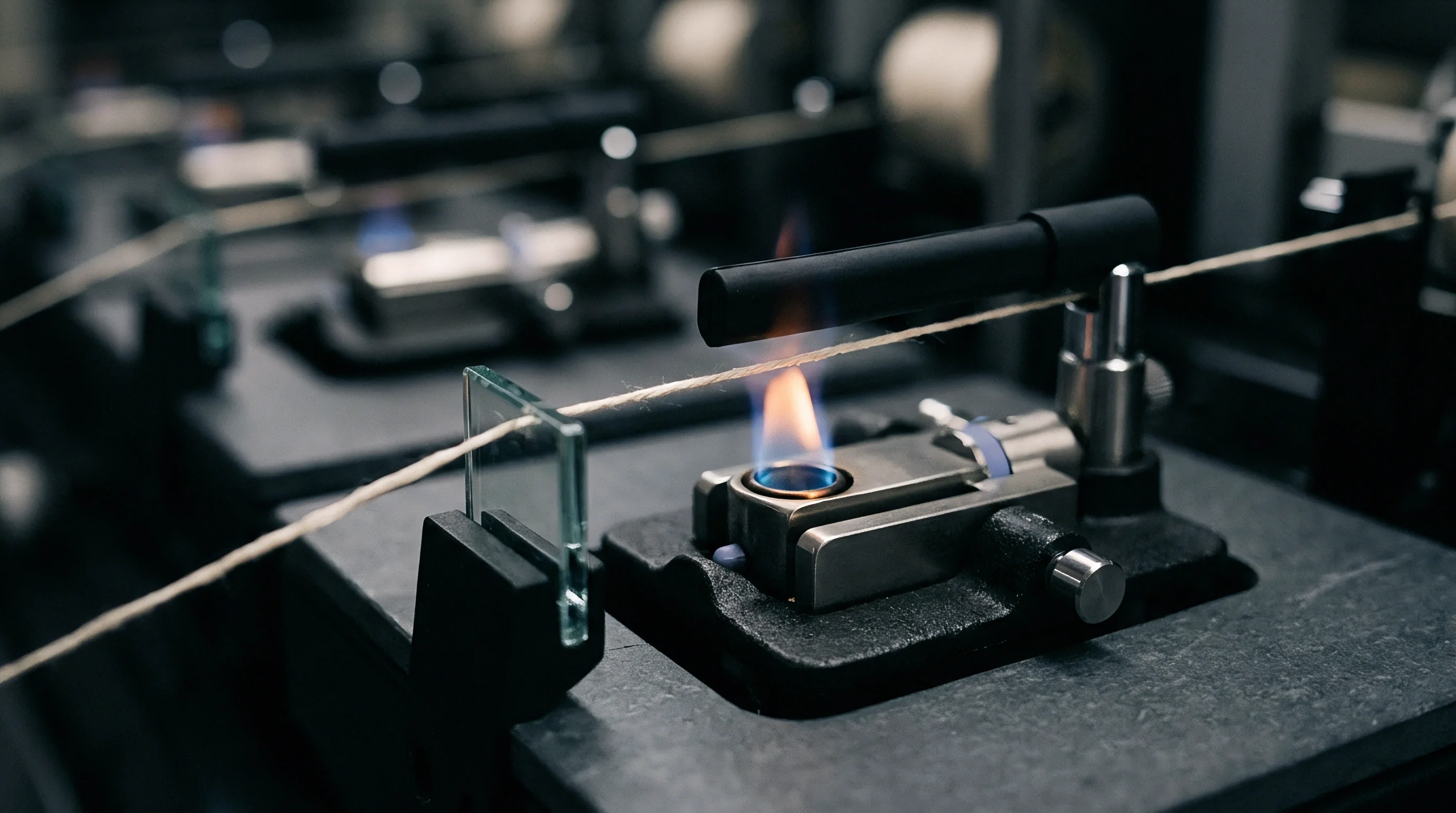

Wrap
Physical storage enclosures govern the rate of volatile fluorochemical cross-contamination between adjacent warehouse racks. Standard procurement practices treat roll packaging as mechanical protection against dirt and moisture, neglecting the barrier properties needed to halt volatile organic vapor transmission. Aluminum foil blocks vapor transfer.
Multi-layer packaging structures containing aluminum barrier films or high-barrier metallized polyolefins prevent gaseous fluorotelomer penetration, whereas ordinary mono-layer polyethylene remains chemically transparent to airborne fluorotelomers over extended storage times.
Material thickness provides inadequate protection against gas diffusion when polymer chemistry lacks barrier polarity. Doubling the gauge of standard low-density polyethylene wrap merely delays migration onset by several days without altering the ultimate equilibrium concentration on the interior cloth. Cold storage retards chemical movement.
Maintaining warehouse temperatures below twenty degrees Celsius combined with dedicated air filtration systems reduces gas-phase migration velocity across inventory rows.
| Packaging Film Construction | Film Thickness | 6:2 FTOH Vapor Permeation Rate | Contamination Halftime (Cotton Web) | Commercial Packaging Suitability |
|---|---|---|---|---|
| Mono-layer Low-Density PE | 50 µm | 14.2 g / m² · day | 12 days | Unacceptable for mixed storage |
| Heavy-duty Linear Low-Density PE | 100 µm | 7.8 g / m² · day | 22 days | Unacceptable for mixed storage |
| Oriented Polypropylene (BOPP) | 35 µm | 2.1 g / m² · day | 68 days | Marginal for short transit only |
| Polyamide / Polyethylene Laminate | 75 µm | 0.4 g / m² · day | 240 days | Acceptable for warehouse storage |
| Aluminum Foil Composite Laminate | 90 µm | < 0.001 g / m² · day | > 1800 days | Impermeable vapor barrier |

Polymer Barrier Permeability
Conventional plastic membranes fail to prevent the slow migration of fluorotelomer alcohols across shared pallet rows. The non-polar carbon backbone of polyethylene allows lipophilic organofluorine vapors to dissolve readily into the polymer matrix. Once dissolved, small molecules migrate through the amorphous regions via Fickian diffusion, evaporating from the inner surface directly onto the stored cloth roll.
Polyamide and ethylene vinyl alcohol copolymer films supply superior vapor containment. The high intermolecular polarity of these barrier resins creates strong crystalline networks that resist non-polar organic gas penetration. Laminating a thin layer of polyamide or aluminum foil to an outer polyethylene skin produces a hermetic barrier, containing volatile off-gassing from treated technical outerwear and safeguarding certified organic yardage sharing the same logistics warehouse.

Environmental Control Specifications
Lowering ambient warehouse temperatures below twenty degrees Celsius substantially suppresses the equilibrium vapor pressure of volatile chemical finishes. At fifteen degrees Celsius, the evaporation rate of 6:2 fluorotelomer alcohol declines by more than sixty percent compared to its off-gassing rate at thirty degrees Celsius. Active warehouse ventilation incorporating activated carbon air scrubbing extracts airborne fluorinated organic compounds, preventing volatile accumulation within stagnant air pockets.
- Hermetic heat sealing of all packaging seams prevents convective vapor entry through mechanically folded or taped wrapper openings.
- Pallet-level segregation spacing maintains a minimum physical separation distance of six meters between fluorinated technical goods and certified organic stock.
- Negative pressure ventilation draws airflow away from chemical finishing inventory bays toward dedicated exterior filtration outlets.
- Barrier wrap integrity testing confirms absence of micro-pinholes or stress tears in moisture barrier liners prior to container loading.
Physical separation of untreated rolls from water-repellent stocks preserves compliance far more reliably than thin single-layer plastic covers.


Quarantine
Segregated holding areas isolate suspect rolls while technical teams arbitrate analytical discrepancies. Border detentions compound daily storage. When an incoming port inspection or distribution center quality gate detects total fluorine above contractual thresholds, the entire shipment faces mandatory operational quarantine.
The commercial costs of demurrage, inventory detention, and accredited retesting mount rapidly while laboratories execute multi-week compound identification runs.
Chain-of-custody documentation must demonstrate that the detected chemical presence stems from unintentional physical migration rather than unauthorized mill-floor application. Importers manage this exposure by preserving retention swatches cut immediately from the stenter frame before factory warehouse entry. When stenter swatches test completely negative for total fluorine while port samples fail, the importer demonstrates that the contamination occurred during third-party storage or marine transit.
A retention sample taken at the stenter frame isolates mill-floor chemistry from post-finishing storage contamination.
Retesting rarely overturns positive findings. Combustion ion chromatography screening errors run almost exclusively toward false positives from mineral contamination, whereas targeted liquid chromatography mass spectrometry yields unambiguous molecular confirmation. When targeted testing uncovers 6:2 fluorotelomer alcohol on untreated certified organic goods, certifiers withdraw transaction documents, barring the goods from entering clean distribution streams.

Border Detention Evidence Dossiers
Customs releases demand precise analytical documentation tracing the contamination to non-intentional warehouse migration rather than wet-end application. A defensible evidence package pairs original chemical inventory logs and stenter frame recipe sheets with depth-profile testing across the roll cross-section. Surface contamination displaying a steep concentration gradient from outer wrap to core confirms external gas-phase migration, proving absence of intentional uniform chemical padding.
Non-target high-resolution mass spectrometry assists in mapping the complete chemical fingerprint of the detained cloth. Identifying plasticizer residues, polyethylene oxidation byproducts, and volatile telomers concurrently on the outer yardage demonstrates that the substances migrated simultaneously from storage packaging and ambient warehouse air. This depth-profile analytical dossier provides customs authorities with objective evidence to dismiss allegations of deliberate prohibited water-repellent treatment.

Commercial Allocation of Contamination Costs
Standard purchase contracts place full landed financial liability on the final processing entity when shipped goods fail incoming chemical audits. Without protective contract clauses acknowledging unintentional gas-phase migration, the converter or dyeing mill carries the cost of rejected goods, port destruction fees, and customer chargebacks. Sourcing organizations incorporate explicit liability thresholds specifying analytical limits for volatile cross-contamination.
Commercial contracts incorporating explicit mutual cross-contamination exclusion terms shift the landed retest expense directly onto the inventory keeper whose facility housed mixed finishing stocks.