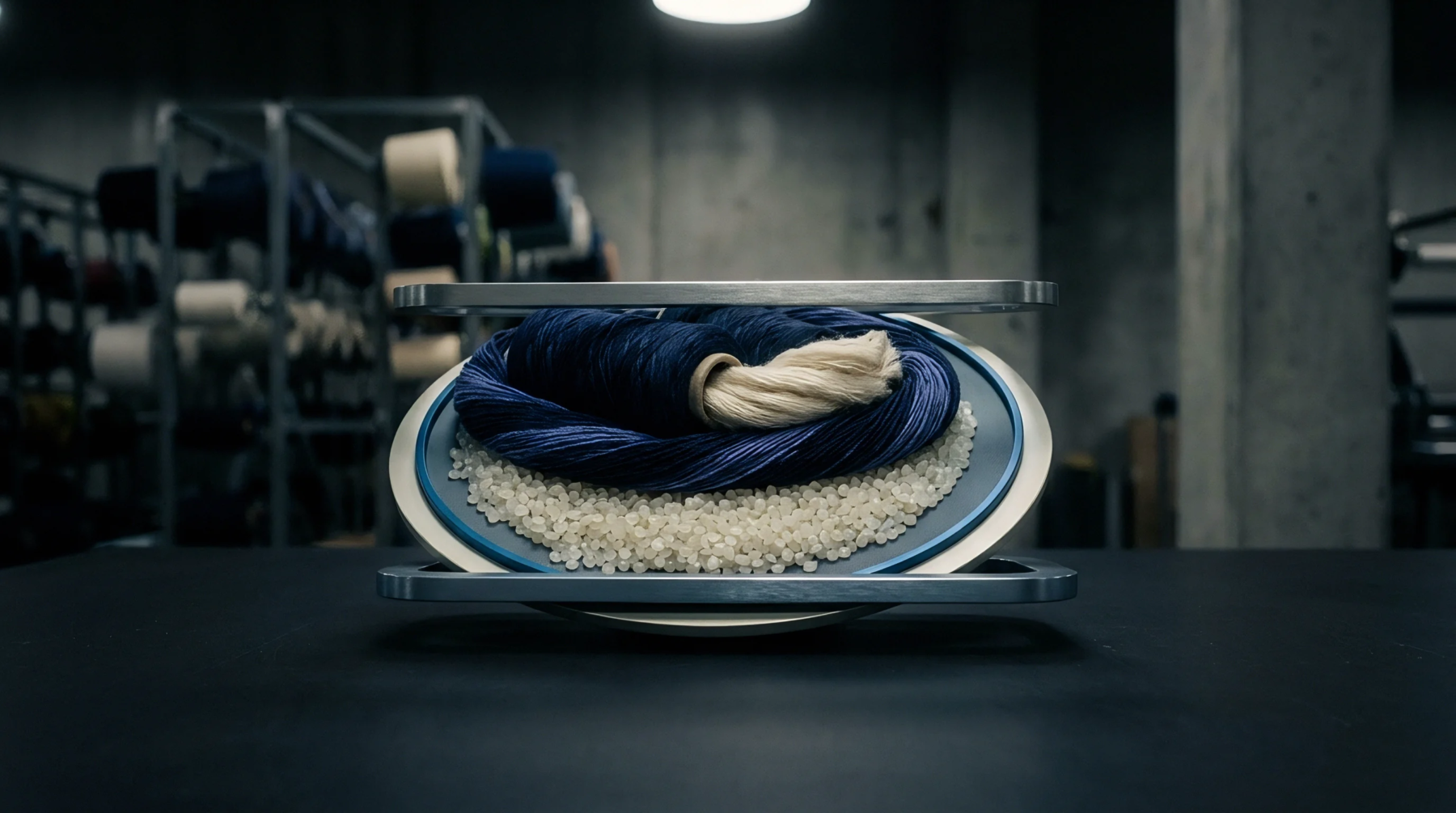
Polymer Structure
Polymeric networks in finished fabrics are characterized by the concentration of chemical bonds that join adjacent polymer chains together. The metric known as crosslink density determines how effectively these bridges restrict molecular movement under moisture and heat. It defines the durability of press-free garment finishes by locking the cellulose molecules in place.
Swelling Behaviour
Chemical solvents cause untreated fibers to swell significantly more than those that have been heavily crosslinked. A higher crosslink density reduces the volume of solvent that can penetrate the fiber structure, which allows researchers to calculate the density by comparing the dry and swollen weights of the sample.
Mechanical Impact
Tensile strength and elongation decrease as the number of chemical bridges between the polymeric chains increases. While a high crosslink density provides superior wrinkle resistance, it makes the cotton fiber more brittle and susceptible to tear damage. Mills must optimize this parameter to avoid fabric failure in high-wear areas like cuffs and collars.
Measurement Method
Laboratory technicians estimate this structural property by utilizing wet chemical tests and mathematical calculations rather than direct microscopic observation. They measure the uptake of copper ethylenediamine or use swelling equations to assess how the crosslinked cotton behaves under chemical exposure. This quantitative analysis gives the finishing mill precise control over the durability of the chemical treatment before the fabric is shipped to garment factories.