Enzymatic Hydrolysis Profiling of Residual Cross Linked Cellulosic Fragments in Shredded Recycled Yarns
Enzymatic profiling identifies unhydrolyzed crosslinked fragments in shredded yarn, preventing spinning failures, dye defects, and customs misdeclaration.


Substrate
Analytical examination of shredded post-consumer cotton yarns frequently uncovers an insoluble residue that resists dissolution in standard cupriethylenediamine hydroxide solvents. A five-gram sample of rotor-spun yarn recovered from post-consumer shirting fabric yields up to eighteen percent non-hydrolyzable matter when exposed to standard commercial cellulase cocktails at forty-five degrees Celsius. This recalcitrance stems from the presence of chemical finishes applied during the original textile life cycle.
Wrinkle-resistant finishing relies on crosslinking agents such as 1,3-dimethylol-4,5-dihydroxyethyleneurea, commonly known as DMDHEU, alongside modified etherified variants and polycarboxylic acids like 1,2,3,4-butanetetracarboxylic acid. These bi- or multi-functional chemical bridges bind hydroxyl groups situated at the C-2, C-3, and C-6 positions of adjacent anhydroglucose units within the cellulose polymer chain. Mechanical tearing and garnetting pull the cloth into individual fibrous entities, yet mechanical action fails to break these primary covalent bonds.
Ether links survive mechanical tearing. The crosslinks maintain inter-chain bonds that arrest both moisture penetration and biological degradation. In virgin cotton, the internal accessible surface area accommodates cellulolytic enzymes whose globular molecular diameters average between four and eight nanometers.
Introducing covalent resin bridges condenses the amorphous regions, reducing the wet pore diameter below two nanometers. Resin bridges block the pores. When mechanical tearing fractures the macroscopic integrity of the yarn, it generates fragmented fibrils containing an uneven distribution of crosslink densities.
High-stress tearing shears weaker crystalline planes while leaving the chemically stiffened resin-rich domains intact as rigid, irregular fragments.
Post-consumer shirting garnets bearing DMDHEU finishes regularly retain crosslink densities exceeding 0.12 moles of crosslinker per mole of anhydroglucose.
These rigid cellulosic particles remain suspended in subsequent wet processing baths or downstream spinning systems without participating in fibrillar entanglement. Their presence lowers the drafting coherence of the recycled sliver. Because the cellulose chains are immobilized by stable methylene or alkyl bridges, standard dye molecules cannot diffuse into the inner crystalline surfaces of these fragments.
Uneven optical appearance in dyed yarns traced to recycled origins arises from these unreactive, unswollen particulate domains rather than basic fibre diameter variations.
| Resin System | Covalent Bond Configuration | Nitrogen Mass Fraction | Pore Exclusion Boundary | Digestion Resistance Index |
|---|---|---|---|---|
| Classic DMDHEU | Di-ether methylene bridge | 0.018 to 0.026 | 1.8 nanometers | 0.74 |
| Methylated DMDHEU | Alkoxy-ether bridge | 0.014 to 0.021 | 2.1 nanometers | 0.68 |
| BTCA System | Di-ester carboxylate crosslink | Zero | 1.6 nanometers | 0.81 |
| DMI Formaldehyde-Free | Cyclic urea ether | 0.022 to 0.029 | 2.4 nanometers | 0.59 |
Characterizing the morphology of these crosslinked particles requires distinguishing surface fibrillar damage from primary chemical substitution. High shear forces in shredding cylinders peel the outer primary cell wall, exposing inner secondary wall layers that retain the crosslinked architecture. Standard mechanical recycling processes strip the natural wax layer, but they leave the underlying resin network untouched.
The resulting raw stock exhibits severe stiffness that impedes yarn spinning unless quantified and managed prior to carding. Failure to isolate and profile these substituted fragments results in catastrophic yarn breakages on rotor frames and uncorrectable barre defects across finished knitted fabrics.


Cleavage
Enzymatic breakdown of crystalline and amorphous cellulose relies on the concerted interaction of three primary enzyme classes: endoglucanases, cellobiohydrolases, and beta-glucosidases. Endoglucanases hydrolyze internal glucosidic linkages at random locations within non-crystalline segments. Cellobiohydrolases attach processively to exposed reducing or non-reducing chain ends, sliding along the glucan sheet to release cellobiose subunits.
Beta-glucosidases resolve the released cellobiose dimers into monomeric D-glucose. The addition of synthetic crosslinks alters this kinetic pathway by creating steric checkpoints that disrupt processive motion.

What Alters Digestion Rates in Crosslinked Cellulosics?
Bulky chemical adducts on anhydroglucose hydroxyls prevent the catalytic tunnel of cellobiohydrolases from threading the glucan chain. When a cellobiohydrolase encounters a DMDHEU bridge or a polycarboxylic ester junction, processive movement halts abruptly. The enzyme stalls or unbinds from the microfibril without releasing cellobiose.
Enzymes stall at substituted sites. Endoglucanases retain the capacity to cleave unhindered segments between crosslink clusters, producing water-soluble oligomers that carry intact crosslinker moieties instead of pure glucose or cellobiose fragments.
Assessing the enzymatic kinetics of shredded recycled cotton requires tight control over enzyme loading and reaction staging. A standard digestion environment applies fifteen filter paper units of fungal cellulase derived from Trichoderma reesei per gram of dry substrate, buffered to pH 4.8 with fifty millimolar sodium citrate at fifty degrees Celsius. In unmodified virgin cotton, enzymatic hydrolysis achieves eighty-five to ninety-two percent total substrate conversion to soluble monosaccharides within seventy-two hours.
Crosslinked post-consumer cotton subjected to identical digestion conditions levels off at forty to sixty-two percent conversion. Mass loss plateaus after forty hours.
Consider a laboratory digestion scenario evaluating ten grams of shredded recycled cotton yarn carrying a two percent nitrogen content derived from historical resin finishes. At an enzyme loading of twenty filter paper units per gram, initial glucose liberation proceeds at 0.42 grams per hour during the first six hours. By hour twenty-four, the liberation rate declines to 0.03 grams per hour.
Unhydrolyzed particulate mass settles at 4.6 grams. The remaining solid phase consists of highly substituted cellulose crystalline core bundles whose surface crosslink density rejects further endoglucanase scission. The soluble supernatant contains a complex population of modified cellotriose, cellotetraose, and cellopentaose fragments linked by residual methylene-bis-urea groups.
Whether specific fungal carbohydrate-binding modules possess sufficient conformational flexibility to seat onto heavily crosslinked glucan faces without triggering enzyme deactivation remains open to ongoing investigation.
Swell
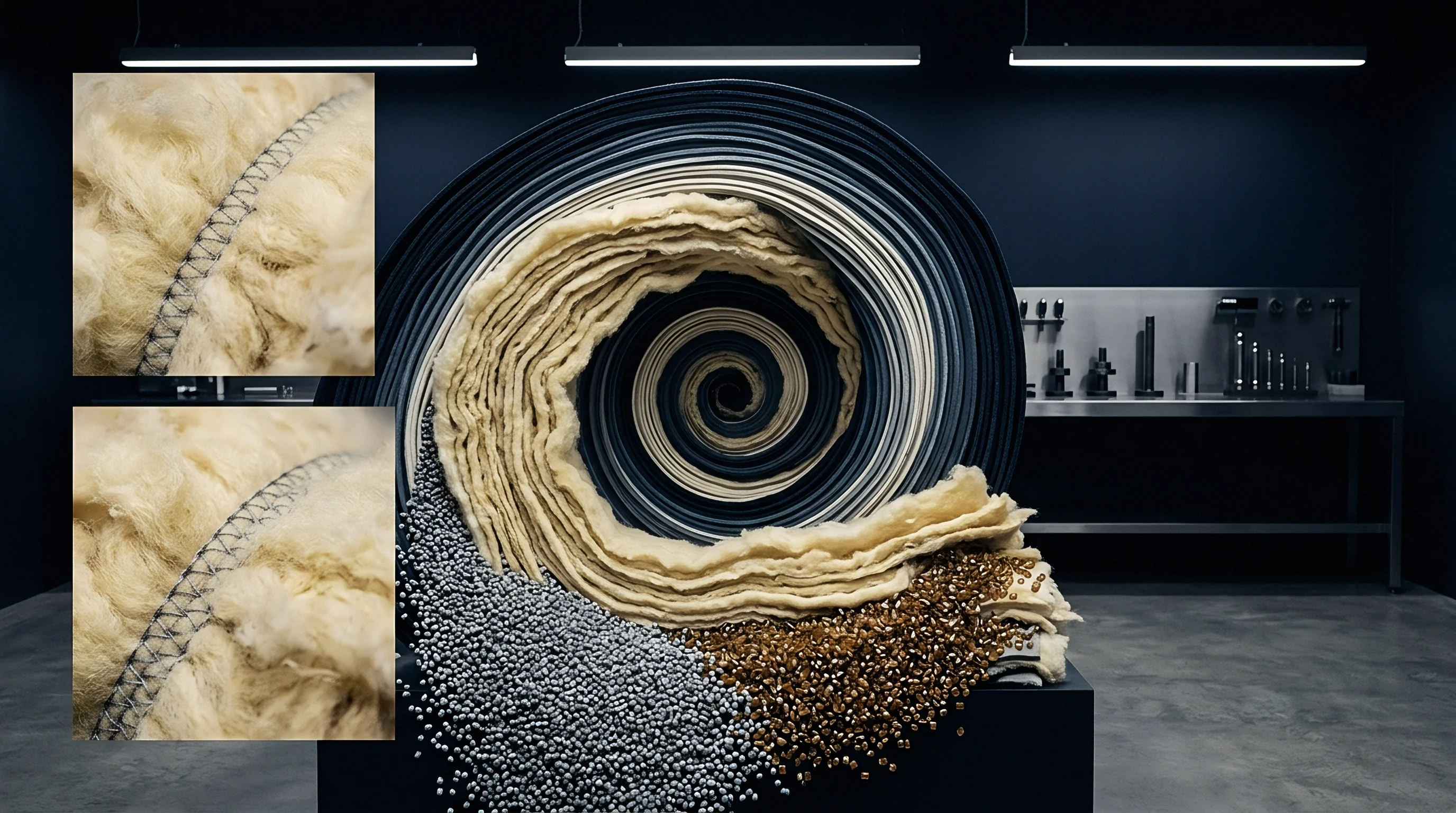
Penetration of macromolecular biocatalysts into dense cellulosic aggregates requires loosening the hydrogen-bonded network through swelling pretreatments. Unprocessed post-consumer fragments resist enzyme intrusion because the microfibrils remain collapsed in a dense dry-state conformation. Expanding the sub-microscopic void architecture enables enzymatic access to internal glycosidic bonds situated between adjacent chemical crosslinks.
Liquid ammonia and aqueous sodium hydroxide treatments serve as the principal chemical systems for widening the inter-fibrillar spacing.
- Aqueous Dewaxing Extraction removes residual spinning lubricants and waxes in a ninety-degree bath containing two grams per litre of non-ionic alcohol ethoxylate for twenty minutes to restore wettability.
- Alkaline Mercerization Impregnation submerges the degreased yarn fragments in fourteen weight percent sodium hydroxide at fifteen degrees Celsius for sixty seconds under controlled mechanical agitation.
- Neutralizing Acid Rinse bathes the swollen slurry in five percent acetic acid to halt alkaline conversion and convert residual alkali to water-soluble sodium acetate.
- Deionized Water Displacement flushes the cellulosic mass until the wash liquor reaches neutral pH 7.0 and electrical conductivity drops below fifteen microsiemens per centimetre.
- Buffered Enzymatic Resuspension transfers the wet swollen pulp directly into a fifty millimolar sodium citrate buffer matrix at pH 4.8 without intermediate thermal drying.
Caustic concentrations alter crystal lattice. Immersing crosslinked shredded cotton in fourteen to eighteen percent sodium hydroxide transforms portions of the native Cellulose I crystalline lattice into the more accessible Cellulose II allomorph. This swelling expands the accessible internal surface area by up to two hundred percent, yet it fails to cleave covalent N-methylol linkages.
Sodium hydroxide swells the fibril wall. The crosslinked junctions anchor the surrounding microfibrils, preventing unrestricted lattice expansion and producing localized zones of high mechanical tension. When the swelling pressure exceeds the tensile strength of the heavily crosslinked crystalline regions, micro-fissuring occurs along the fibril axis.
A fourteen percent caustic soak executed at twelve degrees Celsius elevates total accessible enzyme surface area from 38 square metres per gram to 114 square metres per gram in post-consumer denim garnets.
Liquid ammonia treatments operate through a distinct swelling mechanism. Because ammonia molecules feature smaller van der Waals radii than hydrated sodium ions, liquid ammonia penetrates the narrowest voids without damaging the ester crosslinks established by polycarboxylic acids. Liquid ammonia preserves lumen structure.
Evaporation of the ammonia leaves a relaxed Cellulose III lattice characterized by low cohesive energy density between parallel glucan chains. Enzymatic hydrolysis rates on ammonia-treated shredded stock consistently outpace those observed on caustic-treated material by fourteen to twenty-two percent. The mill yarn supplier routinely claims that any lack of enzymatic digestion simply reflects ordinary crystalline resistance rather than the presence of durable press resins.

Chromatography
Evaluating the products of incomplete enzymatic cleavage requires advanced separation techniques capable of resolving unsubstituted cello-oligosaccharides from chemically modified fragments. High-Performance Anion-Exchange Chromatography paired with Pulsed Amperometric Detection, designated HPAEC-PAD, provides the analytical baseline for profiling these hydrolysate mixtures. High pH conditions, typically achieved using 100 millimolar sodium hydroxide eluents, ionize the hydroxyl groups of carbohydrates into oxyanions.
These ionized fragments interact with strong anion-exchange stationary phases, separating species based on chain length, branching, and the charge-shielding effects of residual resin groups.
Where Does Unhydrolyzed Residue Settle in Calibration Curves?
Unsubstituted glucose, cellobiose, and linear oligomers up to a degree of polymerization of seven elute at predictable intervals under sodium acetate gradient elution. Fragments carrying intact crosslinking groups exhibit altered retention times. The baseline drifts with temperature shifts.
A crosslinked dimer consisting of two glucose rings bridged by a DMDHEU residue displays reduced retention relative to native cellotriose because the crosslinking adduct partially shields the anionic charge of adjacent hydroxyls. Size-Exclusion Chromatography running on multi-detector gel permeation setups further verifies the mass distributions of the soluble fragments, separating unhydrolyzed high molecular weight fractions from low molecular weight cleavage products.
| Analyte Fragment | Stationary Phase | Mobile Phase Gradient | Retention Time | Quantification Limit |
|---|---|---|---|---|
| Monomeric D-Glucose | CarboPac PA1 Anion Exchange | 100 mM NaOH, Isocratic | 3.2 minutes | 0.05 mg/L |
| Cellobiose Dimer | CarboPac PA1 Anion Exchange | 100 mM NaOH, 20 mM NaOAc | 6.8 minutes | 0.08 mg/L |
| Linear Cellotetraose | CarboPac PA1 Anion Exchange | 100 mM NaOH, 80 mM NaOAc | 14.1 minutes | 0.12 mg/L |
| Methylene-Bridged Dimer | CarboPac PA1 Anion Exchange | 100 mM NaOH, 45 mM NaOAc | 9.4 minutes | 0.25 mg/L |
| DMDHEU-Cellotriose Adduct | CarboPac PA1 Anion Exchange | 100 mM NaOH, 110 mM NaOAc | 18.7 minutes | 0.30 mg/L |
| Insoluble Glucan Core | SEC Polyhydroxymethacrylate | DMSO with 0.5% LiBr | Void Volume | 1.00 mg/L |
Separation profiles from crosslinked cellulosic digestions mirror the analytical challenges encountered in petrochemical polymer degradation, where long-chain branched polyethylene oligomers elute outside standard linear paraffinic calibration windows. Amperometric cells require clean gold electrodes. In carbohydrate profiling, the gold working electrode detects catalytic oxidation of carbohydrate hydroxyls at potentials alternating between plus 0.1 volts and minus 0.2 volts.
Chemical crosslinkers modify this oxidation efficiency, requiring dedicated response factor calibrations for every specific resin chemistry identified in the shredded feedstock.
- Guard Column Saturation occurs rapidly when unhydrolyzed colloidal particles enter the injection loop, driving system backpressure increases above thirty bar.
- Mobile Phase Carbonate Scavenging strips dissolved carbon dioxide from the sodium hydroxide eluent using continuous helium sparging to prevent retention time drift across extended analytical runs.
- Electrode Surface Fouling manifests as decaying peak areas for cellobiose standards after twelve continuous analytical injections, necessitating programmed electrochemical cleaning pulses.
- Gradient Re-equilibration Windows require twelve column volumes of starting eluent between runs to stabilize the ion-exchange equilibrium on pellicular resin columns.
A two-millimolar rise in eluent carbonate contamination shifts cellotriose retention windows by up to forty-eight seconds on pellicular anion-exchange resins.
Chromatographic peak integration must account for non-carbohydrate background signals produced by urea-based resin degradation products. Formaldehyde released from unwashed DMDHEU fragments oxidizes readily at the gold electrode surface, creating an interfering peak that overlaps the elution window of monomeric glucose. Performing pre-column solid-phase extraction with graphitized carbon cartridges removes free urea derivatives while preserving oligosaccharide fractions in the aqueous phase.
Analytical accuracy depends on absolute baseline stability across the entire gradient elution profile.

Assay
Quantifying residual crosslinks across heterogeneous shredded recycled yarns requires pairing enzymatic digestion kinetics with elemental compositional verification. Enzymatic hydrolysis serves as a selective purification mechanism, digesting accessible cellulose while concentrating recalcitrant crosslinked domains in the unhydrolyzed solid phase. Analyzing the mass fraction and chemical composition of this solid residue reveals the true degree of crosslinking present in the incoming recycled bale.
Total Kjeldahl Nitrogen and elemental combustion analysis of the washed residue provide definitive verification of amino-formaldehyde resin concentrations.
- Incomplete Mechanical Opening leaves tightly twisted yarn plies that restrict enzyme infiltration into inner fiber bundles, inflating apparent crosslink metrics. Unopened yarn twists bias the extraction.
- Lignin Interference from co-mingled recycled bast fibers introduces non-carbohydrate aromatic residues that mimic the enzymatic recalcitrance of synthetic resin networks.
- Thermal Degradation Artifacts created during aggressive garnetting produce localized anhydrocellulose structures that resist biological cleavage in the absence of chemical resins.
- Enzyme Denaturation caused by residual acidic stripping agents remaining on unwashed fiber stock terminates cellulase activity prior to complete hydrolysis.
Elemental nitrogen mass fractions in pure virgin cotton do not exceed 0.03 percent by weight. Post-consumer yarns finished with durable press resins exhibit nitrogen contents between 0.35 and 1.85 percent. Subjecting the recycled stock to exhaustive enzymatic digestion removes the unmodified cellulose, concentrating the nitrogen-bearing resin structures within the unhydrolyzed cake.
Measuring the nitrogen content of this concentrated residue allows backward calculation of the original crosslink density across the raw fibrous mass. Nitrogen levels track resin content directly.
| Garnetting Shredding Intensity | Residual Solid Fraction | Cake Nitrogen Content | Tenacity Retention | Dye Affinity Metric |
|---|---|---|---|---|
| Low Shear Coarse Ragging | 0.48 | 0.038 by mass | 12.4 cN/tex | 0.42 |
| Medium Shear Single Cylinder | 0.41 | 0.044 by mass | 9.8 cN/tex | 0.51 |
| High Shear Four Cylinder Garnet | 0.34 | 0.052 by mass | 7.1 cN/tex | 0.63 |
| Severe Rotary Knife Milling | 0.29 | 0.059 by mass | 5.4 cN/tex | 0.68 |
Relying on standard gravimetric solubility tests codified in ISO 1833 yields flawed conclusions when evaluating crosslinked recycled stock. ISO 1833 Part 1 prescribes sulfuric acid dissolution to separate cellulosic fibers from polyester in binary mixtures. Heavily crosslinked cellulosic fragments resist room-temperature acid dissolution, causing the analytical balance to register crosslinked cotton as part of the insoluble synthetic fraction.
Misclassifying cellulose as polyester corrupts commercial yarn specifications and violates legal textile composition thresholds. Incorporating calibrated enzymatic hydrolysis profiling prior to chemical dissolution eliminates this misclassification by isolating the recalcitrant cellulosic fragments under non-destructive conditions. Commercial purchase agreements for recycled cellulosic yarns now routinely mandate specific crosslink tolerance annexes defining maximum permissible insoluble residues under standardized cellulase exposure.

Tariff
Customs authorities classify imported yarns and waste stocks according to chief weight and raw material origin under Harmonized Tariff Schedule guidelines. Post-consumer garnetted stock lands under tariff heading 5202 as cotton waste or heading 5505 as man-made fiber waste, depending on whether the base substrate originated from natural seed hair or regenerated cellulose. The presence of residual crosslinking resins introduces significant customs liabilities.
If a customs laboratory applies standard sulfuric acid dissolution to verify fiber composition, the insoluble crosslinked cotton fragments remain grouped with synthetic components like polyester. Customs examiners target tariff code discrepancies.
Commercial import contracts that lack explicit test definitions leave the buyer fully liable for customs reclassification penalties when residual resin fragments resist sulfuric acid dissolution.
Consider an imported forty-tonne shipment of open-end rotor yarn invoiced as eighty percent recycled cotton and twenty percent virgin polyester, valued at 3.20 dollars per kilogram. Under Chapter 52, heading 5206, the applicable import duty stands at eight percent. If a customs laboratory report misinterprets six percent of the total shipment weight as synthetic fiber due to unhydrolyzed, acid-resistant crosslinked cellulosic fragments, the official composition shifts to seventy-four percent cotton and twenty-six percent polyester.
In jurisdictions enforcing steep duty spreads between pure cotton mixtures and synthetic-dominated constructions, this reclassification triggers automatic tariff revisions, back taxes, and administrative penalties. Tenacity drops past this threshold.
Physical yarn performance on spinning floors reflects the same crosslinking density that disrupts analytical chromatography. Crosslinked fragments lack the elongation properties required for rotor spinning. Spinning breaks climb on open-end frames.
An open-end spinning line running sliver containing four percent heavily crosslinked cellulosic fragments registers rotor stoppage rates exceeding 180 breaks per one thousand rotor hours. Each break requires manual clearing or automatic piecing, driving labor costs upward and generating irregular yarn joints that fail subsequent weaving tension tests.
Cost modeling across integrated spinning and finishing operations demonstrates the commercial consequence of raw stock selection. Virgin cotton stock trading at 2.10 dollars per kilogram yields first-grade knitted fabric with dyeing second-quality defect rates under two percent. Shredded post-consumer stock purchased at 1.45 dollars per kilogram appears commercially advantageous on the raw material purchase ledger.
When that post-consumer stock contains unprofiled crosslinked fragments, fabric rework climbs rapidly. Undyed fragment specks, uneven shade depths, and yarn tensiometer trips push finished fabric defect rates to eleven percent. Calculating the landed cost per finished linear metre reveals that downstream fabric write-downs erase the seventy-five cent per kilogram raw stock discount entirely, establishing enzymatic profiling as an indispensable prerequisite for industrial recycled yarn procurement.