Thermodynamic Modeling of Bifunctional Dye Hydrolysis under High Shear Boundary Layer Flow
High fluid shear compresses boundary layers, accelerating hydroxyl mass transfer and driving hydrolytic dyestuff loss in bifunctional reactive dyeing.

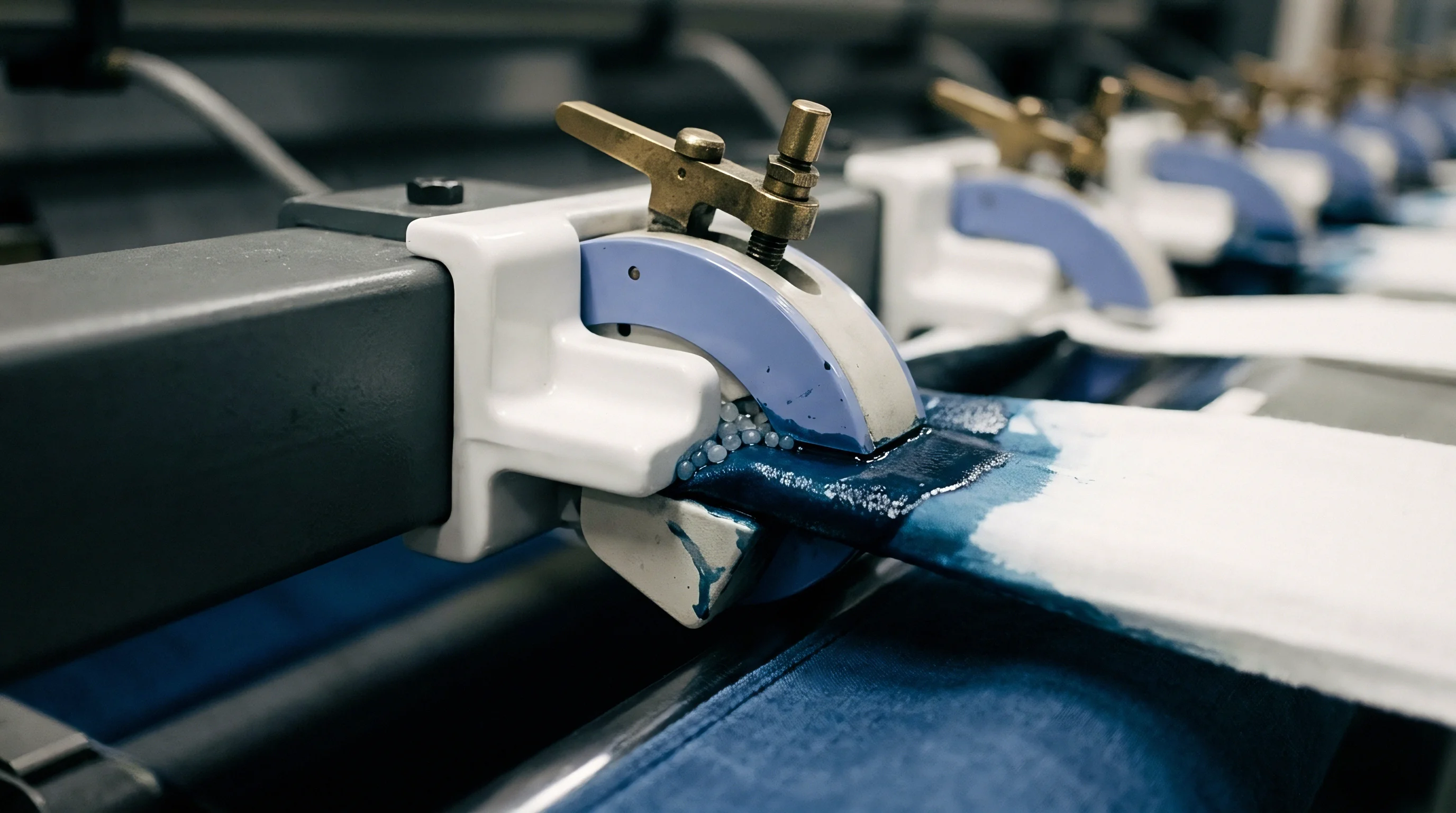
Shear
In modern high-speed jet machines, dye bath liquid is forced through narrow orifices at velocities exceeding six metres per second, accelerating surface mass transfer. Inside ultra-low liquor ratio jets (operating between 1:3 and 1:5), this rapid movement creates steep velocity gradients across moving cellulosic yarn bundles, where liquid drag governs boundary film thickness. The mechanical action of the stream propels the rope while stripping away the stagnant diffusion layer surrounding individual cotton filaments.
Physical measurements of fluid velocity inside venturi nozzles show local shear rates reaching 50000 to 120000 reciprocal seconds under standard circulation pressures (1.8 to 3.2 bar). Compressing this boundary layer alters the delivery balance of reactive colorant molecules and hydroxyl ions at the fiber surface. When fluid motion forces reactive chemical species through the stagnant outer film faster than internal pores can absorb them, surface side-reactions accelerate.

Fluid Shear Profiles in Ultra-Low Liquor Jet Nozzles
Fluid acceleration through a venturi nozzle creates a sharp velocity gradient between core turbulent flow and the moving yarn bundle. The profile shifts from fully turbulent at the nozzle center to a viscous sub-layer against the fiber walls. Modified Navier-Stokes models accounting for non-Newtonian dye liquor rheology indicate this sub-layer (δ) thins from 12 down to 2.5 micrometres at full pump output.
- Measure jet pump differential pressure across the constriction zone using calibrated digital transducers to verify nominal flow rates.
- Adjust nozzle orifice diameter to maintain liquid velocity between four and six metres per second relative to the moving rope.
- Regulate textile transport reel speed to eliminate mechanical drag while maintaining continuous rope tension through the venturi throat.
- Verify boundary film displacement rates by sampling bath concentration gradients at five-minute intervals during alkali dosing.
Excessive fluid velocity inside jet constrictions damages delicate knit loops, shifts kinetic pathways toward hydrolytic destruction, and inflates raw material costs across the dyehouse.
Hydrodynamic Boundary Layer Compression Mechanics
Moving textile substrates drag adjacent fluid along their surface, forming a stagnant film that resists chemical transport. Mechanical shear from high-velocity liquid jets compresses this film, shortening the physical distance alkali and dyestuff ions must traverse by pure molecular diffusion. Boundary layer thinning increases local hydroxyl delivery, bringing hydroxyl ion concentration at the outer cellulose surface to near-bulk bath levels almost immediately upon alkali addition.
Increasing nozzle liquid velocity past the point of boundary film detachment accelerates dyestuff hydrolysis faster than it improves shade levelness.
High mechanical action across the constriction zone also generates micro-scale fluid eddies that penetrate the outer spaces of the yarn bundle. These eddies equalize bulk bath chemical concentrations outside the yarn structure but leave intra-fiber micropores reliant on Fickian diffusion. The resulting imbalance between rapid surface delivery and slow internal penetration creates a localized surplus of alkali on the fiber exterior during the critical fixation window.

Equilibrium
Chemical reactions between reactive dyestuffs and cellulosic polymers depend on temperature-dependent thermodynamic state functions, with active cellulosate site concentration determining potential yield. In aqueous alkaline dye baths, cellulose hydroxyl groups exist in dynamic equilibrium with cellulosate anions (Cell-O-). As temperature rises, the primary reaction pathway shifts, and the concentration of reactive cellulosate ions dictates the rate of nucleophilic substitution or addition, competing directly with free hydroxyl ions (OH-) in the aqueous phase.
Thermodynamic modeling requires precise determination of activation enthalpy (Δ Hddagger) and activation entropy (Δ Sddagger) for both desired fixation reactions and unwanted hydrolytic side-reactions. Nucleophilic attack of Cell-O- onto monochlorotriazine (MCT) or vinylsulfone (VS) reactive centers carries a distinct energetic barrier compared to attack by OH- ions. Balancing these thermodynamic parameters forms the basis for controlling shade consistency in industrial dyeing operations.
| Functional Group | Reaction Target | Activation Enthalpy (kJ/mol) | Activation Entropy (J/mol·K) | Reaction Order (Pseudo-First) |
|---|---|---|---|---|
| Monochlorotriazine (MCT) | Cellulose Cell-O⁻ | 84.5 ± 2.1 | -42.1 ± 1.5 | First-Order |
| Monochlorotriazine (MCT) | Water Hydroxyl OH⁻ | 96.2 ± 2.8 | -28.4 ± 1.8 | First-Order |
| Vinylsulfone (VS) | Cellulose Cell-O⁻ | 62.8 ± 1.8 | -88.3 ± 2.2 | First-Order |
| Vinylsulfone (VS) | Water Hydroxyl OH⁻ | 74.1 ± 2.3 | -71.0 ± 2.0 | First-Order |
| Fluorotriazine (FT) | Cellulose Cell-O⁻ | 51.2 ± 1.4 | -112.5 ± 3.1 | First-Order |
| Fluorotriazine (FT) | Water Hydroxyl OH⁻ | 65.8 ± 1.9 | -94.2 ± 2.7 | First-Order |
Activation Enthalpy Divergence between Substitution and Addition
The energy barrier governing monochlorotriazine coupling differs significantly from the threshold required for vinylsulfone reaction. Heterobifunctional dyes containing both MCT and VS reactive centers exhibit dual-stage thermodynamic profiles. Nucleophilic substitution of the chlorine atom on the triazine ring demands higher thermal activation, dominating at temperatures between 75 and 85 degrees Celsius, whereas nucleophilic addition of the activated vinylsulfone group proceeds efficiently at 60 degrees Celsius.
Because the activation enthalpy for dyestuff hydrolysis is consistently higher than that for covalent cellulosate bonding across both functional groups, raising bath temperature selectively accelerates hydrolytic destruction over primary fixation. Thermal control within ±0.5 degrees Celsius across the bulk cycle prevents shifts in the kinetic rate constant ratio (kfix / khyd) as dynamic viscosity drops with rising temperature.

Cellulosate Deprotonation and Hydroxyl Ion Competition
Cellulose hydroxyl groups yield protons to form reactive cellulosate anions under alkaline bath conditions. The ionization constant of cellulose (pKa ≈ 13.5 at 25 degrees Celsius) drops to approximately 12.2 at 80 degrees Celsius, expanding the population of active Cell-O- sites. Alkali addition using sodium carbonate and sodium hydroxide elevates bath pH to between 10.8 and 11.5, establishing the operational environment.
Hydroxyl ions in the bath act as competing nucleophiles. The ratio of active cellulosate anions within the swollen cotton matrix to free hydroxyl ions in the pore liquid determines the maximum theoretical fixation yield. When high-shear boundary layer flow accelerates hydroxyl delivery to the outer fiber surface before cellulosate equilibrium develops in the yarn core, premature dye inactivation occurs at the surface boundary.
Whether sub-micron structural variations in swollen cotton micro-fibrils alter the local activation enthalpy ratio between cellulosate coupling and water attack remains uncertain under industrial jet flow conditions.

Transport
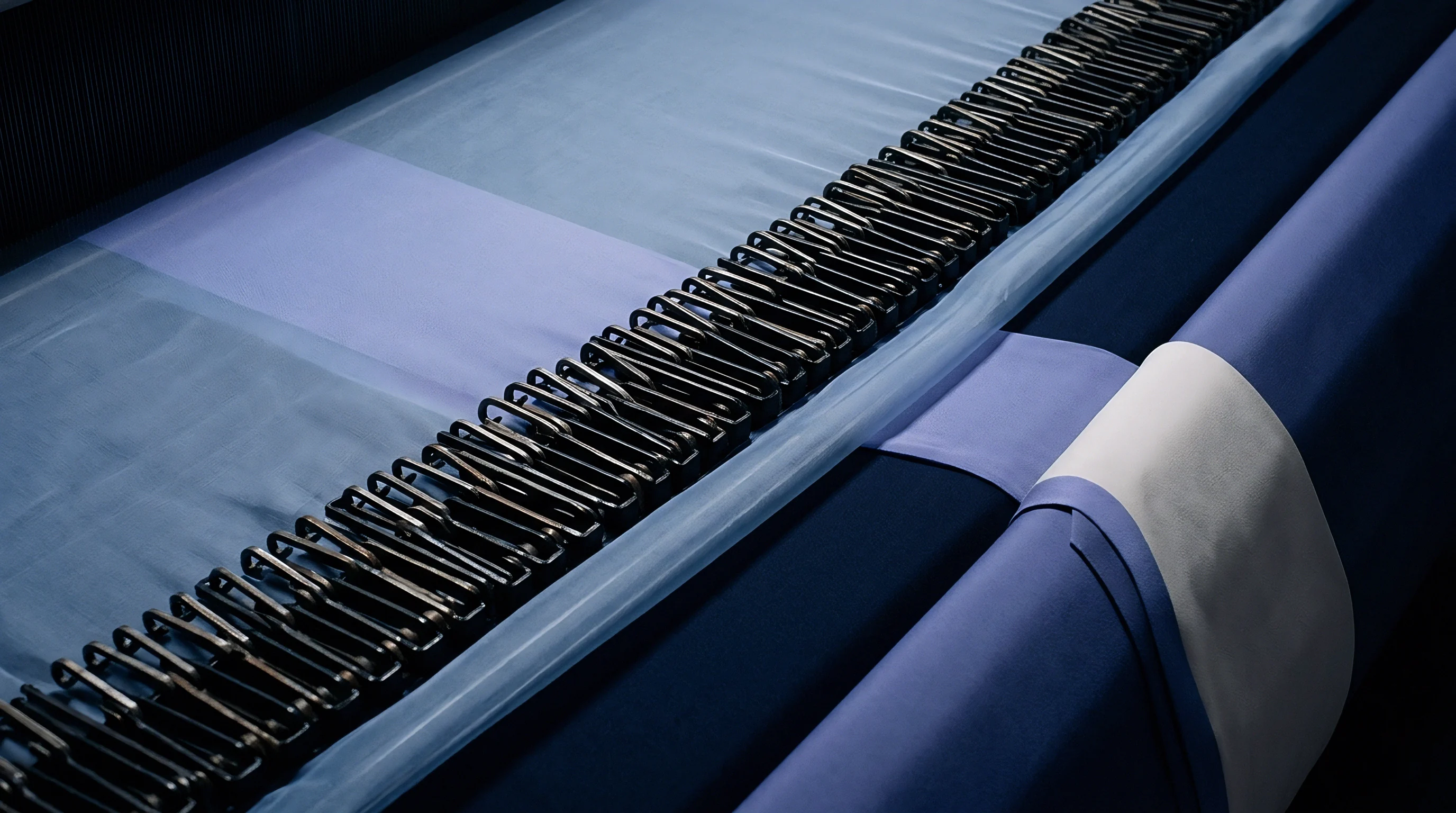
Mass movement of chemical species from the bulk bath to active sites inside cellulosic fibres follows convective and diffusive pathways. High flow velocities inside jet dyeing equipment generate turbulent mixing in the main bath, reducing global concentration gradients. Inside yarn cross-sections, fluid velocity drops rapidly, leaving transport dependent on molecular diffusion within the liquid-filled pore structure of the swollen cotton filaments.
Boundary layer hydrodynamics dictate the rate at which chemical reagents pass from the turbulent bulk stream into the stagnant liquid film surrounding each fiber bundle. The Peclet number (Pe = Re · Sc), measuring the ratio of convective transport to mass diffusive transport, exceeds 105 in the nozzle core but drops below unity inside yarn capillaries where tight weave sett restricts internal circulation. Balancing convective delivery outside the yarn with diffusive transport inside the pore matrix prevents surface-localized hydrolysis.
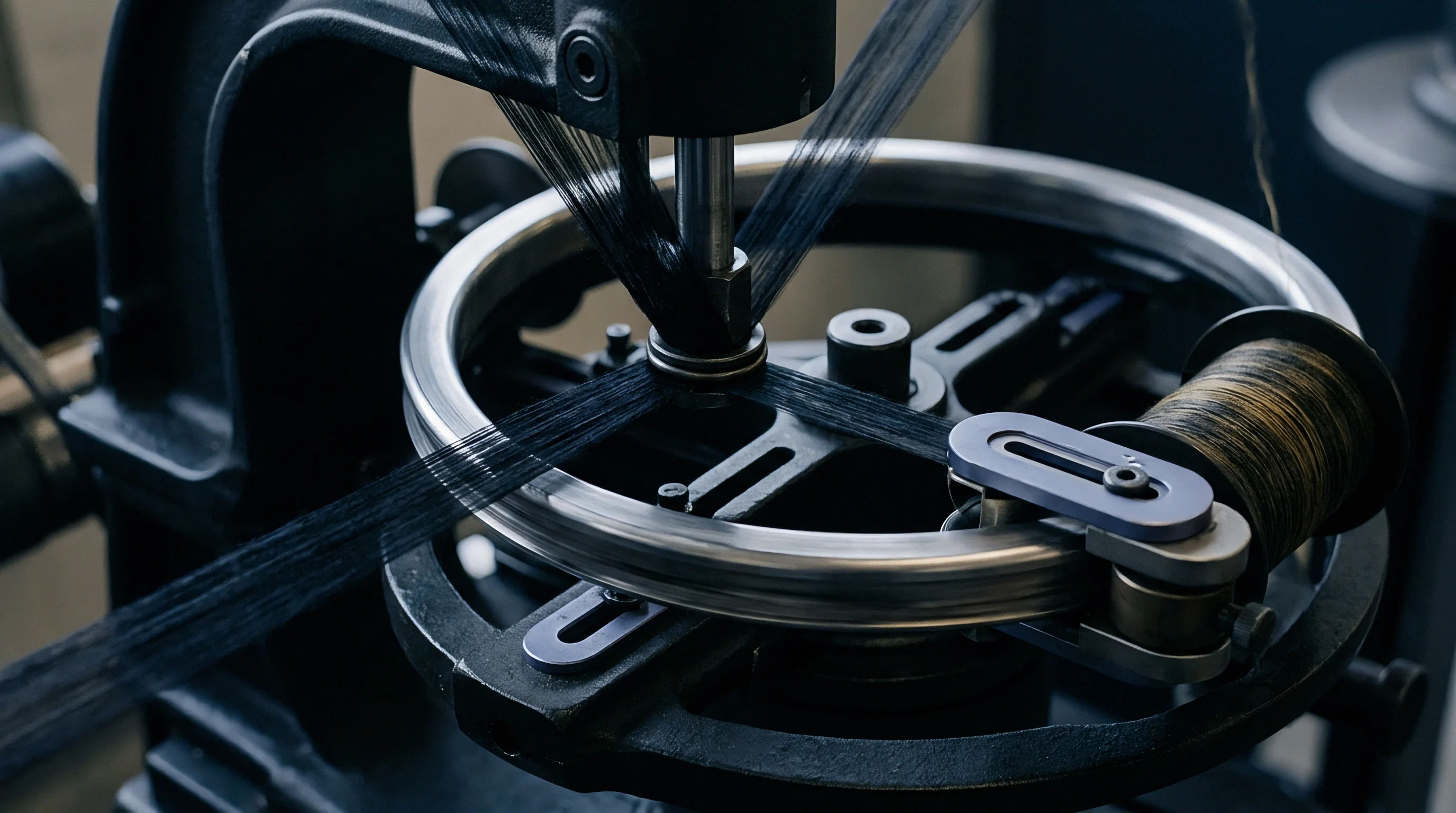
Non-Dimensional Mass Transfer under High Reynolds Numbers
Dimensionless correlations evaluate how high-velocity liquid motion reduces the effective thickness of stagnant liquid films. The Sherwood number (Sh), governing mass transport across the fluid boundary, relates directly to the Reynolds number (Re) and Schmidt number (Sc) through established boundary layer equations:
Sh = 2.0 + 0.6 , Re1/2 , Sc1/3
In high-shear jet environments where Re exceeds 20000 inside the nozzle constriction, the calculated liquid-film mass transfer coefficient (kL) increases by a factor of 3.5 to 5.0 compared to conventional package dyeing circulation velocities.
At a Reynolds number of 24000 inside the nozzle throat, the local liquid film mass transfer coefficient reaches 4.2 times 10 to the minus 5 metres per second at 60 degrees Celsius.

Does Mass Transport Acceleration Distort Local Kinetic Ratios?
Rapid replacement of depleted alkali at the yarn perimeter maintains high local hydroxyl concentration throughout the fixation phase. Because hydroxyl ions are small, highly mobile species (DOH- ≈ 5.3 × 10⁻⁹ m2/s at 60 degrees Celsius), their mass transport coefficient across the compressed boundary layer exceeds that of large, bulky bifunctional reactive dye molecules (Ddye ≈ 1.2 × 10⁻¹⁰ m2/s) by more than forty times.
- Boundary Layer Stagnation occurs when low nozzle velocity allows a thick fluid film to build around yarn bundles, restricting alkali movement and causing unlevel fixation across the substrate.
- Local Hydroxyl Over-Concentration develops under extreme turbulent flow, flooding active polymer sites with hydroxide ions before dyestuff molecules diffuse into the internal fiber matrix.
- Thermal Shear Dissipation transforms mechanical energy into localized boundary layer heat, selectively accelerating the activation rate of dyestuff hydrolysis over cellulosic coupling.
- Pore Mass Transfer Starvation limits dye penetration into high-density yarn cores while surface groups undergo premature hydrolytic degradation in the high-flow outer boundary zone.
Under intense liquid shear, hydroxyl ions reach the fiber surface long before bulky dye molecules can diffuse deeper into the internal yarn structure. The local ratio of to at the fiber boundary rises sharply, skewing reaction kinetics toward hydrolysis. Colorant molecules held in the outer boundary film are inactivated by water attack before penetrating to internal binding sites, causing loss of yield and poor shade depth.
Operating liquid circulation at flow rates beyond boundary film saturation depletes dyestuff inventory without improving shade uniformity.


Hydrolysis
Unwanted nucleophilic attack by water molecules degrades reactive dyestuffs into unreactive forms before covalent bonding occurs, leading to bleeding during wet storage. Bifunctional dyes, engineered with two distinct reactive groups per chromophore, mitigate this loss by offering two potential reaction centers for cellulosic coupling. If one reactive group undergoes hydrolytic cleavage, the secondary group can still form a covalent bond with the polymer matrix.
High-shear boundary layer flow complicates this dual-reaction mechanism. Friction within high-shear nozzles generates localized temperature spikes (Δ Tlocal) within the micro-film surrounding the yarn. Because hydrolysis reactions possess higher activation energies than primary substitution or addition reactions, localized heating selectively boosts colorant inactivation, counteracting the structural advantages of bifunctional chemistry.

Heterobifunctional Kinetic Competition Models
Combining monochlorotriazine and vinylsulfone chemistry on a single chromophore alters reaction pathway dynamics. The overall fixation and hydrolytic destruction process follows a parallel-consecutive pseudo-first-order kinetic scheme. The total rate of dye consumption (rtotal) represents the sum of individual fixation rates (rf1, rf2) and hydrolysis rates (rh1, rh2) for each functional group:
rtotal = (kf1 + kf2 + kh1 + kh2 )
Under uniform bulk bath conditions, heterobifunctional dyes achieve overall fixation yields of 80% to 88%. When boundary layer shear compresses the stagnant film, differential mass transfer coefficients for and dye molecules alter the effective rate constants (kh1, kh2), driving hydrolytic loss upward.
| Dye System Type | Nozzle Shear Rate (s⁻¹) | Local Film Temp Rise (°C) | Fixation Rate k_fix (min⁻¹) | Hydrolysis Rate k_hyd (min⁻¹) | Final Fixation Yield (%) |
|---|---|---|---|---|---|
| Homobifunctional MCT/MCT | 10000 (Quiescent) | +0.1 | 0.032 | 0.006 | 84.2 |
| Homobifunctional MCT/MCT | 85000 (High Shear) | +2.1 | 0.038 | 0.009 | 80.8 |
| Heterobifunctional MCT/VS | 10000 (Quiescent) | +0.1 | 0.045 | 0.009 | 83.3 |
| Heterobifunctional MCT/VS | 85000 (High Shear) | +2.4 | 0.054 | 0.015 | 78.2 |
| Homobifunctional VS/VS | 10000 (Quiescent) | +0.1 | 0.051 | 0.011 | 82.2 |
| Homobifunctional VS/VS | 85000 (High Shear) | +2.6 | 0.062 | 0.019 | 76.5 |
| Kinetic parameters determined at 60 °C nominal bath temperature, pH 11.2, liquor ratio 1:4 on 100% combed cotton knit goods. | |||||

Shear-Induced Local Thermal Dissipation and Hydrolytic Yield
Mechanical friction generated inside high-velocity liquid nozzles converts kinetic energy into localized heat. Viscous energy dissipation (Φ = τ · dotγ) within a boundary layer operating at a shear rate (dotγ) of 85000 s-1 generates a localized micro-zone temperature increase of up to 2.6 degrees Celsius directly at the fiber surface, even while bulk bath sensors indicate stable thermal conditions.
Consider a worked calculation for a 500-kilogram lot of 100% combed cotton jersey (180 grams per square metre) dyed at a 1:4 liquor ratio in a jet machine. The formulation applies 2.0% on weight of goods (o.w.g.) of a heterobifunctional monochlorotriazine/vinylsulfone dye (total dye mass: 10.0 kilograms). At a bath temperature of 60 degrees Celsius and pH 11.2, the pseudo-first-order rate constant for cellulosate fixation is kfix = 0.045 min-1, while the baseline bulk hydrolysis rate constant is khyd = 0.009 min-1 under quiescent flow conditions (ratio kfix / khyd = 5.0).
Under high shear boundary layer flow with a nozzle shear rate of 85000 s-1, viscous energy dissipation elevates local boundary layer temperature by 2.4 degrees Celsius above bulk bath temperature. Applying activation parameters (Ea,fix = 68 kJ/mol, Ea,hyd = 82 kJ/mol), the higher activation energy of hydrolysis causes khyd to increase by 28.5% (to 0.0116 min-1) whereas kfix increases by 21.2% (to 0.0545 min-1). The effective kinetic ratio kfix / khyd decreases from 5.0 to 4.7.
Over a 60-minute fixation window, total dyestuff utilization drops: fixed dye yield decreases from 83.3% (8.33 kg) under quiescent conditions to 78.2% (7.82 kg) under high shear flow. Hydrolyzed dye loss increases from 1.67 kg to 2.18 kg, representing an additional 510 grams of wasted colorant per 500 kilograms of processed cloth. High salt concentrations promote dye aggregation phenomena.
Under ISO 105-C06 Test Condition C2S, unfixed hydrolyzed dye remaining above 0.15 percent on weight of goods causes fastness ratings to drop below Grade 3-4.
Poor fixation rates can stem from raw material impurities as well as nozzle flow turbulence and localized thermal destruction.

Waste
Incompletely reacted dyestuff remaining inside the yarn bundle demands extensive hot rinsing cycles to remove hydrolyzed dye from internal pores and prevent poor wash fastness. Inactivated colorant molecules exhibit substantive affinity for cellulosic polymers, requiring elevated temperatures and surfactant additions to promote desorption from the internal fiber surface into the bulk wash bath.
When high-shear flow increases the mass of hydrolyzed dye generated during fixation, wash-off cycles must expand. While modern ultra-low liquor ratios reduce total water consumption, higher concentrations of hydrolyzed dye in the wash bath lower the concentration gradient (Δ C) driving dye desorption from cotton pores, ultimately inflating landed costs.
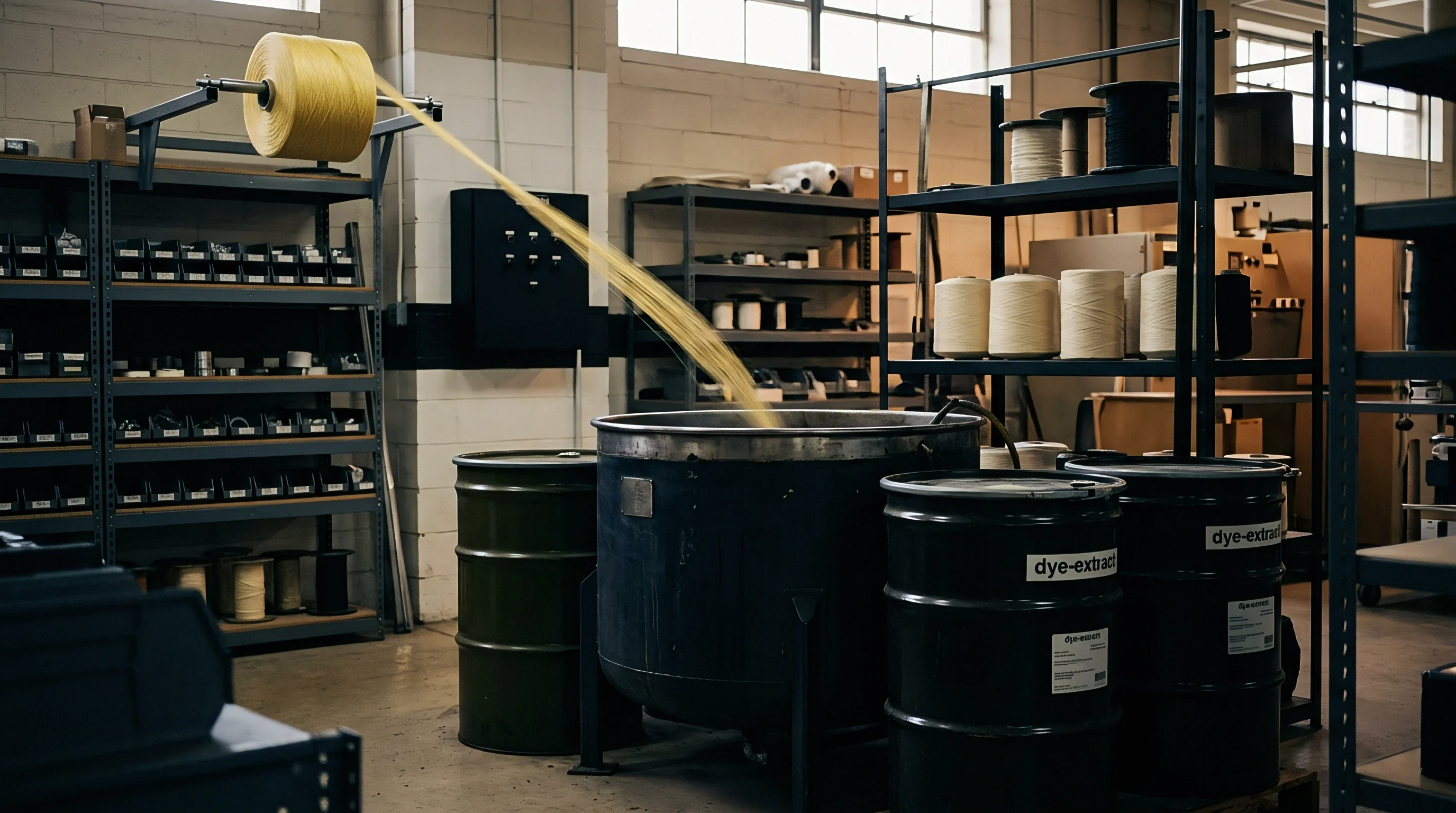
Wash-Off Efficiency Curves and Desorption Kinetics
Rinsing dynamics follow multi-stage extraction profiles as unbound molecules diffuse out of swollen cotton pores. Desorption rate kinetics depend directly on wash temperature and bath liquor ratio. Operating wash baths at 95 degrees Celsius swells the cellulosic structure and breaks hydrogen bonds holding hydrolyzed dye within micro-fibril channels, accelerating extraction into the surrounding liquid.
- Alkali Dosing Profile matches the exponential rate of dye exhaustion to prevent localized pH spikes inside high-shear nozzle throats.
- Rinsing Bath Temperature Gradient maintains water at 95 degrees Celsius during initial washes to maximize hydrolyzed dye solubility before applying cold neutralizing rinses.
- Liquor Ratio Control maintains liquid volumes between 1:4 and 1:6 to ensure sufficient concentration gradients for fast mass transfer during extraction.
- Sequestering Agent Addition prevents calcium and magnesium ions from complexing with hydrolyzed dye molecules and precipitating back onto substrate surfaces.

Effluent Load and Chemical Cost Calculations
Discharging unfixed colorant increases wastewater treatment costs while consuming raw dyestuff stock. Financial evaluations of dyehouse operations must account for both unreacted colorant loss and the utility expenditure needed to clear unfixed residue to meet ISO fastness benchmarks.
| Fixation Efficiency Level (%) | Hydrolyzed Dye Mass (kg/tonne) | Required Wash Baths (Count) | Total Wash Water Volume (L/kg) | Effluent Color Load (Pt-Co Units) | Landed Dyestuff Loss Cost (USD/tonne) |
|---|---|---|---|---|---|
| 88.0 (Optimal Low Shear) | 2.40 | 4 | 16.0 | 450 | 38.40 |
| 83.0 (Standard Jet Flow) | 3.40 | 5 | 20.0 | 780 | 54.40 |
| 78.0 (High Shear Turbulence) | 4.40 | 7 | 28.0 | 1250 | 70.40 |
| 72.0 (Extreme Hydrolysis) | 5.60 | 9 | 36.0 | 1850 | 89.60 |
Dyeing 1000 kilograms of cotton cloth with bifunctional reactive dye generates up to 35 kilograms of hydrolyzed dyestuff residue requiring chemical destruction in wastewater facilities.
Inserting an explicit fastness penalty clause into supply contracts shifts financial liability for hydrolytic shade stripping directly to the wet processing mill when fastness ratings fall below ISO standards.


Dossier
Translating fluid dynamic and thermodynamic models into commercial fabric contracts requires precise laboratory verification, as lab dips fail without matching shear conditions. A technical purchase specification must establish boundaries for physical yarn parameters, machine circulation rates, and shade reproducibility tolerances to protect the buyer against batch-to-batch shade variance caused by unmanaged hydrolysis.
Securing consistent bulk delivery demands that laboratory dip procedures match the hydrodynamic shear profiles of production jet machines. Conventional laboratory beaker dyeing units operate under near-quiescent liquid flow conditions (Re < 500), yielding higher dye fixation efficiencies than bulk jet machines (Re > 20000). Standardizing qualification protocols ensures that chemical recipes account for nozzle boundary layer effects prior to bulk sign-off.

Technical Specification Parameters for High-Velocity Jet Processing
Purchase orders define physical construction tolerances alongside wet processing operational windows. Specifying exact thread counts, yarn twist factors, and machine gauge settings ensures that fabric porosity remains consistent across production lots. Variations in yarn twist directly alter internal diffusion rates, changing the substrate’s sensitivity to high-shear boundary layer hydrolysis.
Technical dossiers submitted by processing mills must record jet nozzle dimensions, pump operating frequencies, and measured liquor flow velocities alongside standard temperature-time diagrams. Including these boundary layer flow metrics inside standard dyehouse recipes eliminates discrepancies between laboratory shade matching and bulk production output.
Lab-Dip to Bulk Qualification Criteria
Standardized testing validates whether production lots match approved master shade samples under specified light sources. Spectrophotometric shade evaluation using CIELAB space coordinates (L , a , b ) establishes objective acceptance boundaries. A total color difference (Δ Ecmc) limit of less than 0.8 units relative to the approved master sample serves as the standard industrial pass-fail threshold for high-grade retail apparel knit goods.
When bulk dyeing runs show consistent shade drift toward lighter values despite accurate dyestuff weighing, boundary layer hydrolysis is usually the root cause. Adjusting nozzle circulation pumps to decrease shear rates while extending fixation holding times restores target shade depth, bringing bulk output into alignment with approved laboratory dip standards.
Establishing precise boundary layer flow velocity controls within bulk dyeing recipes aligns laboratory shade matching with dyehouse production output.