Quantifying Core Sheath Shear Slip in Jet Processed Stretch Fabrics under Extended Static Load
Exceeding 3.5 elastane draft without heat-setting crosslinking causes sheath slip under prolonged static load.


Creep
Under sustained mechanical load, polymers inevitably undergo viscous creep. In stretch fabrics made with elastomeric core yarns, this deformation appears at the yarn level as shear slip between the core and its outer wrap. When a stretch woven or knit sits under continuous static tension, the polyurethane core filament and the surrounding sheath do not share the stress equally.
The low initial modulus of the core allows it to elongate immediately, whereas the sheath ~ whether cotton, staple viscose, or textured polyester ~ resists stretching through packing density and inter-fiber friction. Over time, that mismatch forces internal stresses to redistribute directly across the boundary where the two components meet.
Continuous static tension forces ongoing strain through the elastomeric core.
Shear stress concentrated where the smooth elastane meets the inner fiber wall eventually overcomes static friction. As the polyurethane filament stretches, Poisson contraction narrows its diameter, relieving the radial clamping pressure exerted by the outer wrapper. Once local friction drops below what is needed to grip the extended core, the sheath begins sliding along the filament axis.
This decoupling starts microscopically in low-twist zones or spots of uneven mass distribution, then creeps along the yarn over hours under load.
Sustained tension at thirty percent elongation for seventy-two hours causes elastomeric core displacement exceeding two millimetres when interfacial cohesion falls below zero point fifteen Newtons per millimetre.
Elevated tension noticeably accelerates this interfacial debonding.
Once the core begins to slide, the fabric forfeits its dimensional recovery.
Interfacial Debonding under Sustained Tensile Stress
Stress fields within composite stretch yarns depend heavily on the contact area and surface energy of the bare elastane. Spandex filaments are inherently smooth, offering minimal surface roughness for fibers to grip. In ring-spun cotton blends, boundary cohesion depends almost entirely on the radial clamping force delivered by spinning twist.
Under prolonged static strain, the polyurethane relaxes stress through molecular slip within its hard segments while holding its extended length. Because the outer cotton wrapper cannot mimic this viscoelastic relaxation, the interface slips, allowing debonding to migrate inward from fabric edges toward stressed seam junctions.
This structural breakdown presents in several distinct forms depending on the yarn and fabric construction:
- Sheath puckering Staple sheath fibers bunch irregularly along the filament after prolonged extension, producing visible slubs.
- Core exposure Continuous strain pulls the outer bundle away from high-stress seams, exposing bare elastane underneath.
- Elastic recovery hysteresis The decoupled core snaps back inside a loose sheath cavity, preventing the fabric from returning to its starting dimensions.
- Seam grin distortion Loss of interfacial grip between core and wrap causes needle loops to shift and gap under prolonged tension.
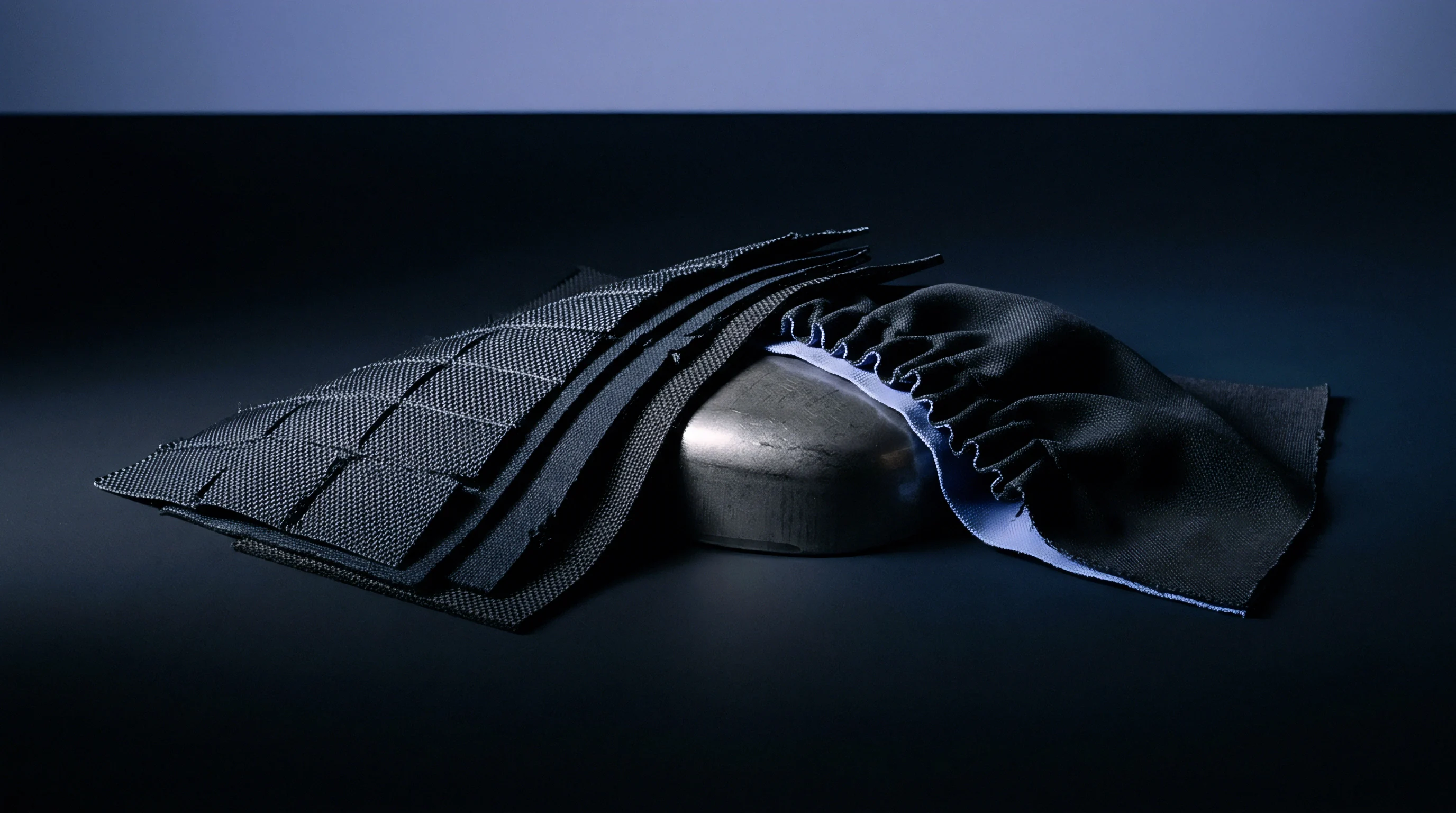
Frictional Decoupling along the Elastomeric Core
Tension on a stretch woven cloth generates direct shear between the concentric layers of each yarn. Transferring force along the yarn axis depends entirely on the shear strength of that boundary. If wet processing washes away friction through lubricants or relaxed yarn packing, boundary cohesion drops precipitously.
During routine consumer wear ~ such as sitting for hours in stretch jeans or keeping knees bent in athletic wear ~ the tension pulls the core straight through the outer fiber sleeve. When the load comes off, the elastane snaps back before the bunched sheath can follow, trapping excess fiber in tiny folds that read visually as bagging and permanent growth.
When the core separates entirely from its sheath during wear, the result is irreversible fabric bagging, seam slippage, and broad dimensional failure.
Bath
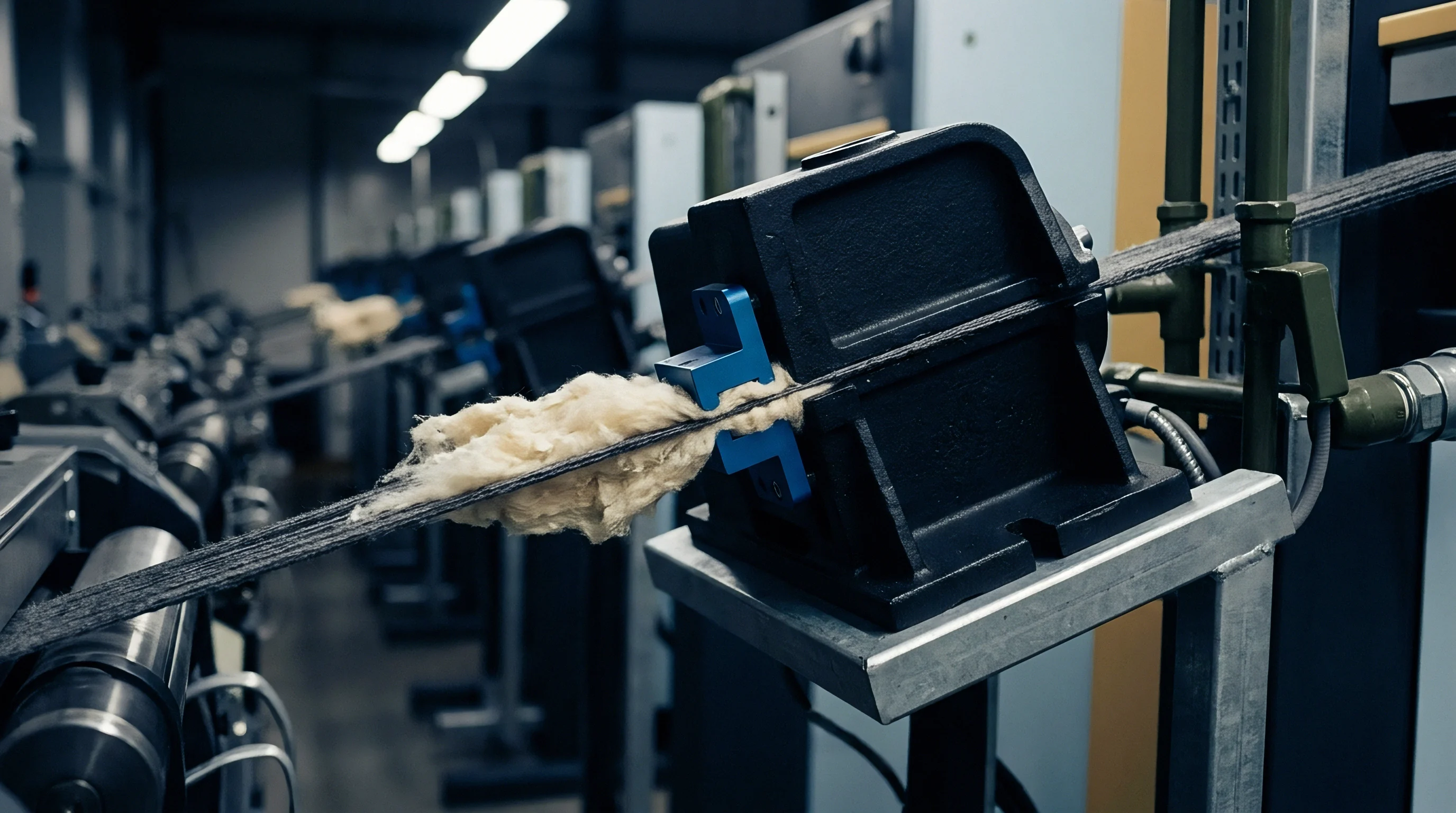
Fluid dynamics inside jet dyeing vessels place substantial mechanical stress on yarn structure. Running fabric ropes through high-temperature jets subjects them to rapid hydraulic acceleration, severe flexing, and heavy shear. As liquor pumps through restricted venturis at up to four hundred metres per minute, hydrodynamic forces crush the rope repeatedly just as high bath temperatures begin softening thermoplastic fibers.
For elastomeric core-spun textiles, jet finishing functions as an aggressive mechanical trial, frequently compromising core-sheath adhesion long before cloth ever hits the cutting room.
Elevated nozzle pressures erode interfacial friction across the yarn bundle.
Prolonged contact with hot dye liquor swells the elastomeric filament.
Scouring surfactants strip the natural waxes that help staple fibers grip the core.
Hydrodynamic Compression in High Pressure Jets
Liquor striking the fabric rope at velocities over three hundred metres per minute drives fluid deep into the interior of each yarn. As pressure differentials slam the rope against transport tubes and baffle plates, yarns flatten out, nudging core filaments off-center within their sheaths. Cycling through the venturi seventy to one hundred times over a typical dye cycle produces substantial flexural fatigue.
If the operator misjudges nozzle sizing or pump pressure, the resulting mechanical shock strips away internal friction long before heat setting can stabilize the yarn.
| Process Stage | Temperature Range | Nozzle Pressure | Liquor Ratio | Interfacial Friction Retention |
|---|---|---|---|---|
| Jet Scouring and Presetting | 80 – 90 C | 1.2 – 1.5 bar | 1:10 | 88 percent |
| Disperse Polyester Dyeing | 130 – 135 C | 2.0 – 2.5 bar | 1:8 | 62 percent |
| Reactive Cotton Dyeing | 60 – 80 C | 1.5 – 1.8 bar | 1:10 | 81 percent |
| Reductive Clearing Bath | 70 – 85 C | 1.2 – 1.5 bar | 1:8 | 75 percent |
Surfactant Solvation and Core Thermal Plasticization
Scouring chemistry strips the cotton wax layer that contributes to inter-fiber cohesion. Non-ionic surfactants, levelling auxiliaries, and bath lubricants migrate into the yarn core, where, above one hundred and twenty degrees Celsius, the polyurethane absorbs these organics and swells. This temporary plasticization expands the core diameter within its surrounding sleeve.
When the fabric cools and dries, the core shrinks back to its original cross-section, leaving annular micro-voids between the filament and the sheath. With contact surface area compromised, the core can slip under minor static loads.
Exceeding a jet processing temperature of one hundred and thirty degrees Celsius without pre-setting reduces core-sheath friction below the threshold required to prevent static load slippage.
Achieving level shade dispersion across dense stretch ropes often involves high elastane draft ratios and aggressive surfactant scours, though both conditions directly increase post-wash core slippage.
Anchor
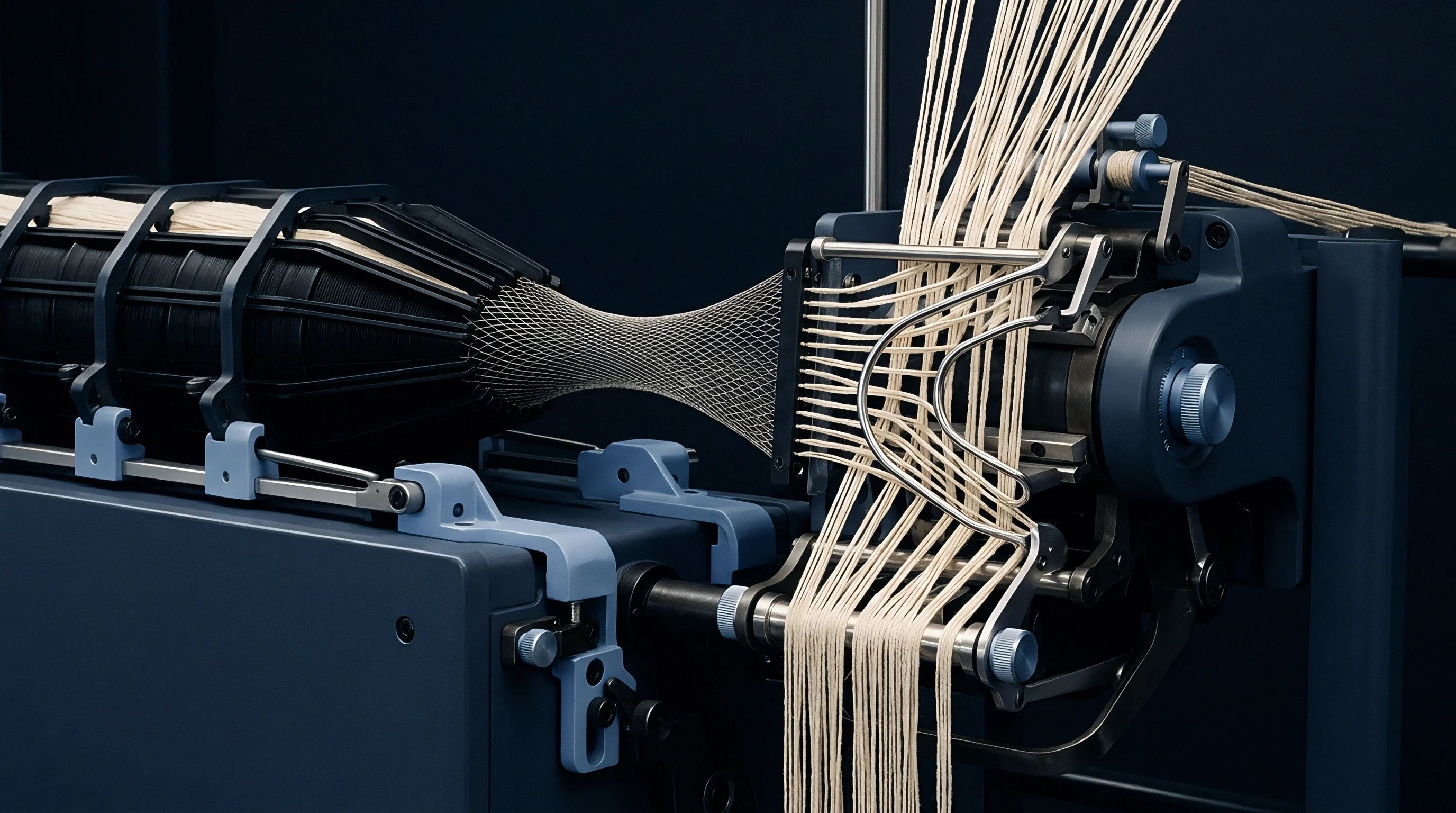
Spinning geometry dictates how firmly the outer sheath grips the elastomeric core, making yarn architecture the first line of defense against creep. Ring core-spinning relies on true mechanical twist to lock staple fibers around a centered spandex core. Air-jet covered yarns use pneumatic vortices to create intermittent entanglement points along the strand.
Single- and double-covered yarns wrap continuous filament yarns spirally around the core under tension. Each method produces a fundamentally different interfacial friction profile and level of mechanical interlocking.
Radial twist density provides the mechanical force needed to secure the core.
Counter-wrapped double covering virtually eliminates sheath migration along the core.

Spinning Architecture and Mechanical Interlocking
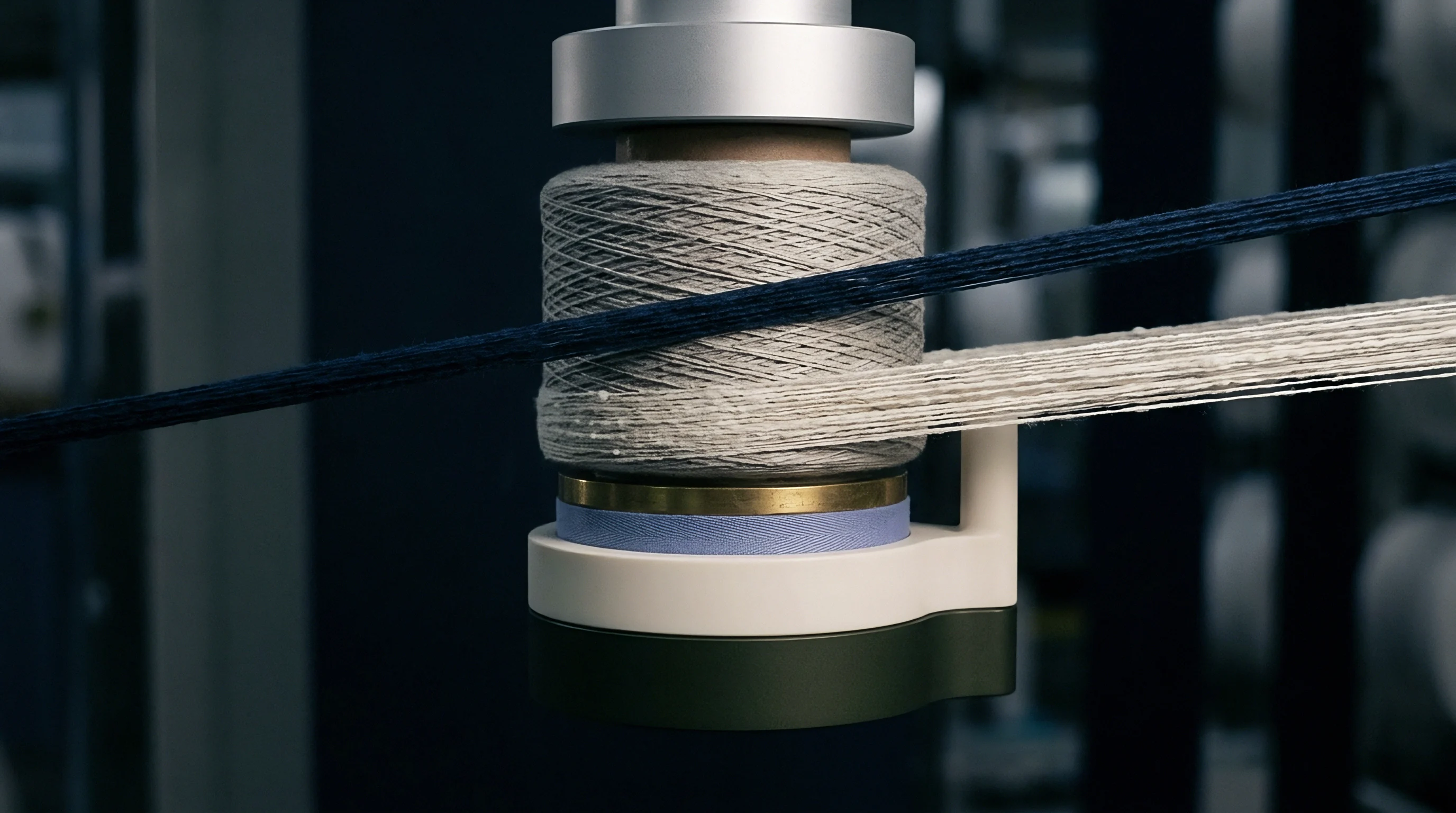
In ring core-spinning, spandex feeds directly into the center of the drafting staple ribbon. The draft ratio applied at this stage governs not only fabric stretch, but internal residual tension. Pulling the core at draft ratios above three point eight creates a thin filament with high elasticity, but it also generates aggressive axial recovery forces that encourage the sheath to slide.
Dropping the draft ratio to between three point zero and three point two eases that retraction force and preserves core cross-section, improving mechanical purchase. At the same time, higher twist multipliers raise the radial clamping force that presses the sheath fibers against the elastane.
| Yarn Structure | Covering Method | Twist Multipliers | Static Load Slip Rate | Production Cost Rating |
|---|---|---|---|---|
| Ring Core-Spun CSY | Mechanical Friction | 3.8 TM | 0.45 mm/hr | Standard Base |
| Air-Jet Covered ACY | Intermittent Tack Points | N/A | 0.82 mm/hr | 12 percent lower |
| Single Covered SCY | Spiral Wrapping | 650 TPM | 0.31 mm/hr | 18 percent higher |
| Double Covered DCY | Counter-Spiral Wrap | 850/700 TPM | 0.12 mm/hr | 35 percent higher |
| Dual-Core Spandex T400 | Core-Spun Matrix | 4.2 TM | 0.08 mm/hr | 42 percent higher |
Covering Methods and Twist Factors
Filament wrap density controls the grip exerted on the spandex core. In double-covered yarns, opposing spiral wraps balance torque and form an uninterrupted barrier around the filament. Air-jet covering, by contrast, secures the core only at intermittent tack points several millimetres apart.
Although air-jet covering runs faster and costs less, the unbonded gaps between nodes slip readily under sustained static strain. Dual-core spinning addresses this by pairing spandex with a bi-component polyester such as T400; the rigid secondary filament creates an internal skeleton that caps total elongation and curtails shear movement.
Consider a 200 gsm stretch woven fabric using 30s/1 cotton/spandex yarn. Spun at an elastane draft of 3.8, internal core stress reaches zero point eighteen cN/dtex, whereas dropping the draft to 3.2 keeps it at zero point eleven cN/dtex. Subjected to twenty percent static extension for seventy-two hours, the 3.8-draft fabric shows zero point nine millimetres of core slippage; the 3.2-draft fabric slips only zero point two millimetres.
That modest reduction in spinning draft cuts the core retraction rate by seventy-seven percent under identical conditions.
Increasing outer sheath twist density improves mechanical clamping around the elastomeric core, preventing sheath bundle migration during extended stretch periods.
Heat Setting Stenter Crosslinking Mechanics
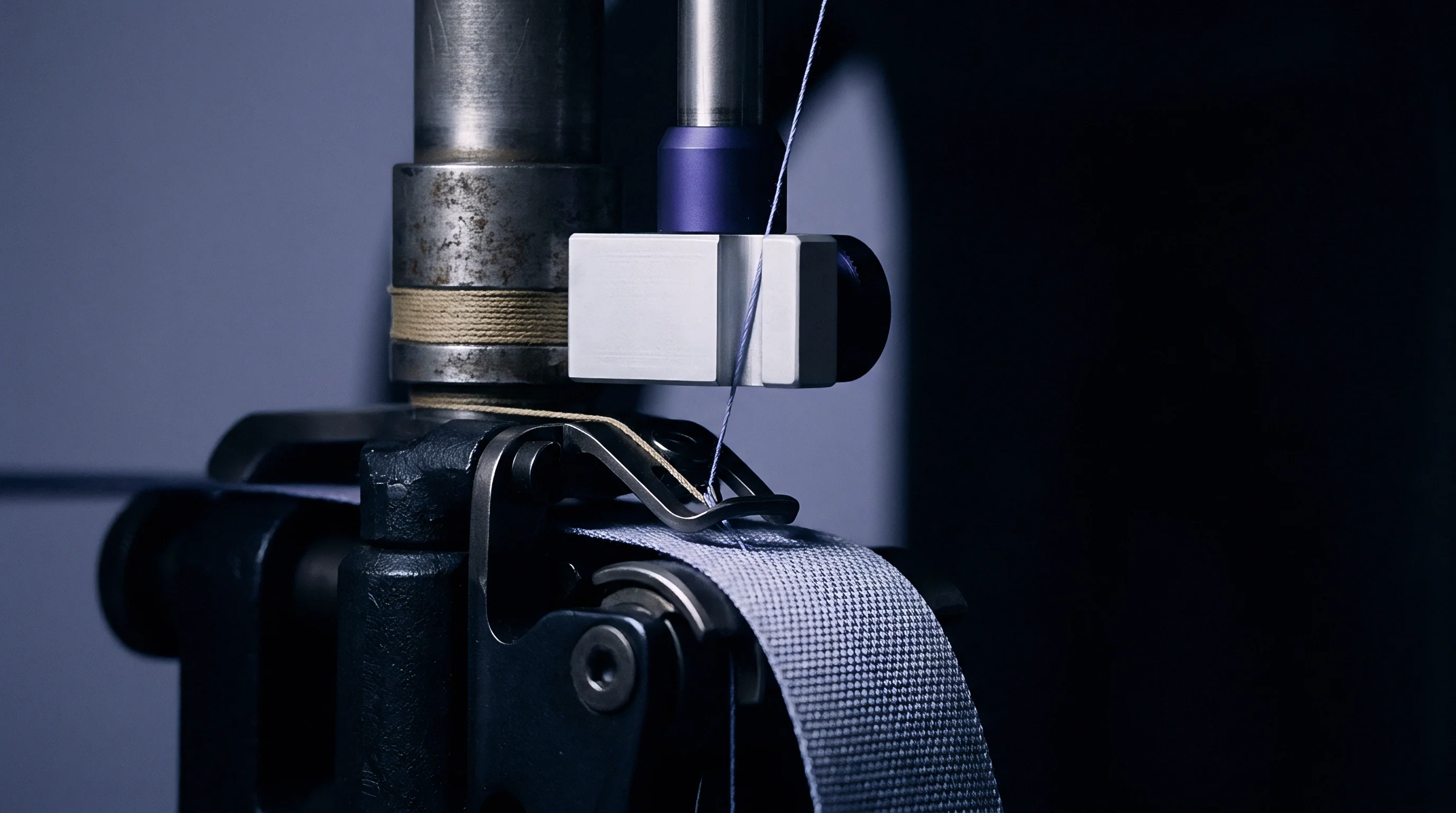
Stenter heat setting reorganizes the polyurethane chain network under fixed dimensions. Operating between one hundred and eighty-five and one hundred and ninety-five degrees Celsius melts the soft-segment crystallites, allowing internal stresses to relax while the cloth is held at target width. Proper execution imparts a stable thermal memory to the spandex, aligning its relaxed dimension with the target geometry of the finished fabric.
Thermal dwell fixes the polymer chains in their newly relaxed orientation.
Proper stenter overfeed prevents residual tension from accumulating along the warp.
Stenter processing requires a disciplined thermal sequence to stabilize the core:
- Feed greige fabric into the stenter frame with controlled overfeed between ten and fifteen percent to compensate for warpwise relaxation.
- Heat the fabric zones progressively up to one hundred and ninety-five degrees Celsius to crystallize the polyurethane core structure.
- Maintain mechanical dwell time for exactly forty-five seconds to lock the elastane thermal memory without embrittling sheath cotton fibers.
- Cool the fabric rapidly in the exit zone using forced chilled air to stabilize the core-sheath interfacial bond before winding onto rolls.
An elastomeric core that has been properly heat-set inside a high-twist sheath resists interfacial shear slip through subsequent wet finishing stages.

Gauge
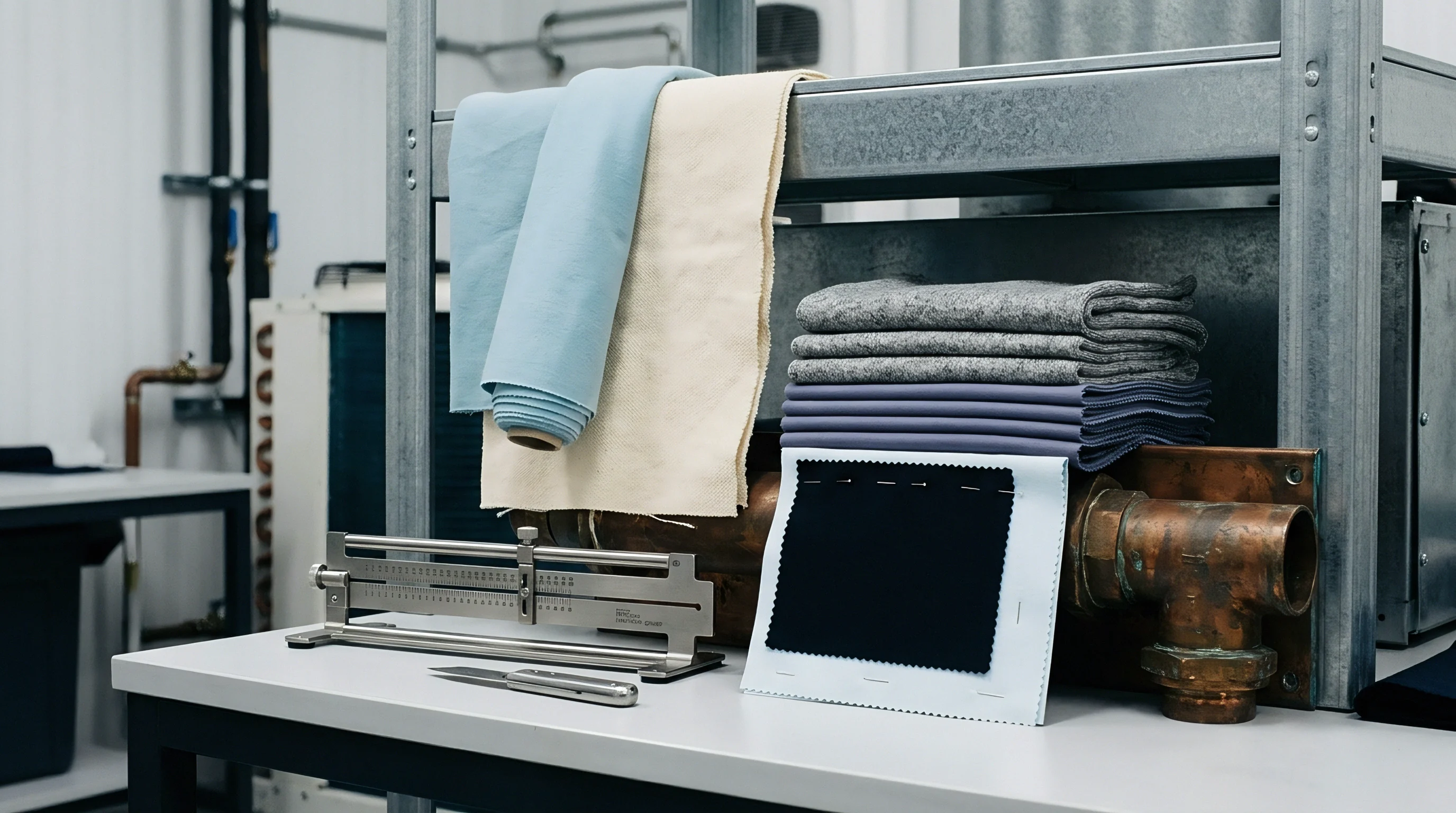
Bench testing must separate static creep from routine dynamic wear. Standard recovery standards like ASTM D3107 and ISO 20932 capture immediate rebound after short pulls, but they miss core-sheath slippage entirely because the mechanism takes hours of sustained strain to develop. Capturing shear slip requires deadweight creep protocols: holding swatches under constant tension in conditioned air while tracking filament movement under a microscope.
Deadweight loading isolates weaknesses in the core-sheath boundary.
Extended creep testing reveals internal slippage that standard tests overlook.
The rate of creep under sustained load directly predicts garment bagging in the field.
Deadweight Static Strain Testing Protocols
Suspending calibrated deadweights from conditioned fabric strips exposes progressive structural yield. Strips measuring one hundred millimetres wide by three hundred millimetres long hang inside a chamber conditioned to twenty degrees Celsius and sixty-five percent relative humidity. Technicians clamp a deadweight equal to twenty or thirty percent of full fabric extension to the lower grip and leave the sample loaded for seventy-two hours.
At set intervals, microscopic inspection of cut yarn ends reveals the displacement between the outer sheath edge and the retracted elastane filament.
| Fabric Specimen | Finishing State | 1 Hour Slip mm | 24 Hour Slip mm | 72 Hour Slip mm | Pass Fail Limit |
|---|---|---|---|---|---|
| Sample A Jet Polyester Spandex | Standard Softener | 0.35 | 1.12 | 2.45 | Fail |
| Sample B Jet Polyester Spandex | Polyurethane Binder | 0.10 | 0.28 | 0.48 | Pass |
| Sample C Pad Cotton Spandex | Standard Softener | 0.15 | 0.42 | 0.85 | Pass |
| Sample D Jet Cotton Spandex | Excessive Lubricant | 0.62 | 2.15 | 4.80 | Fail |
Microscopic Shear Displacement Measurement
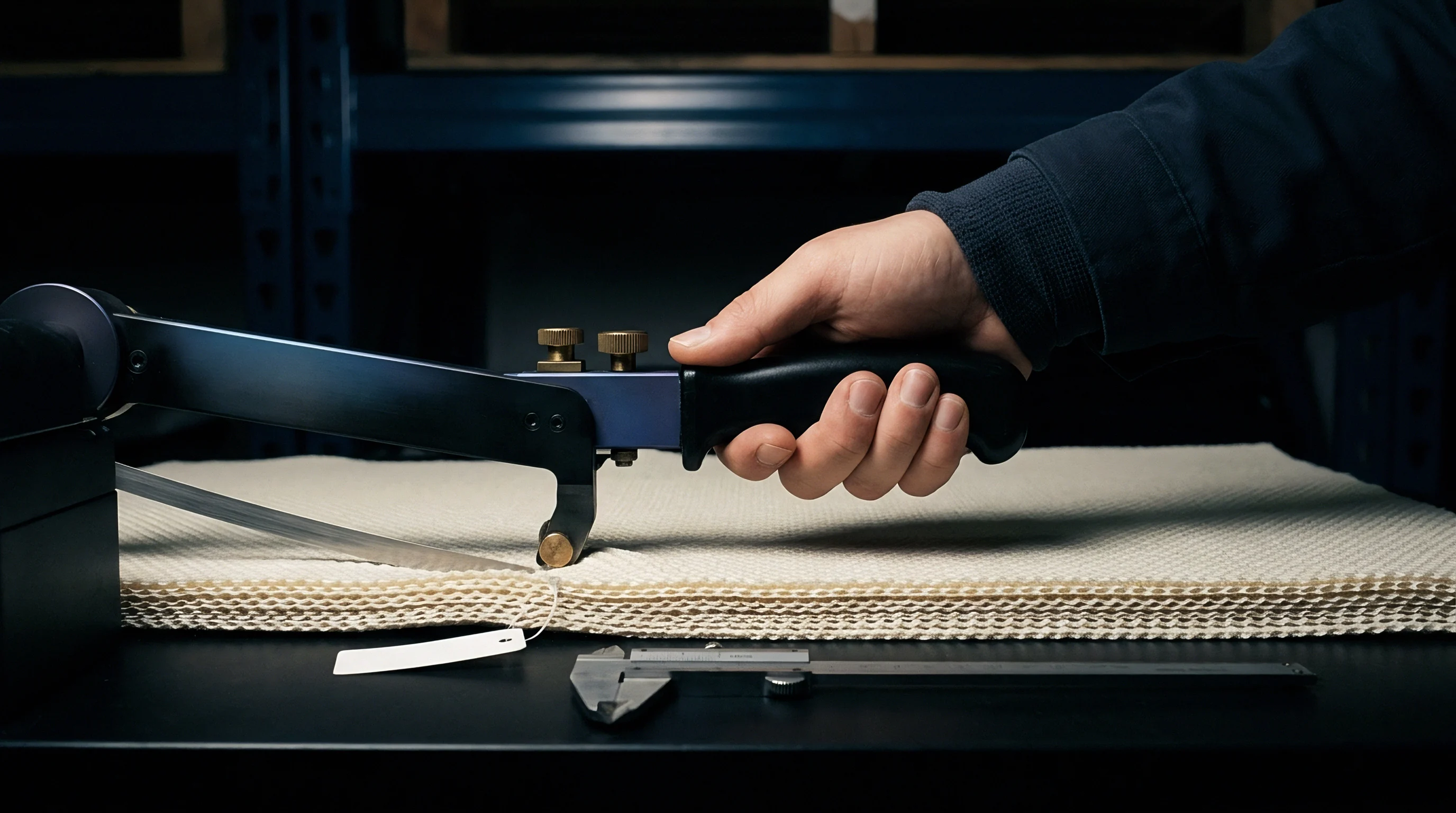
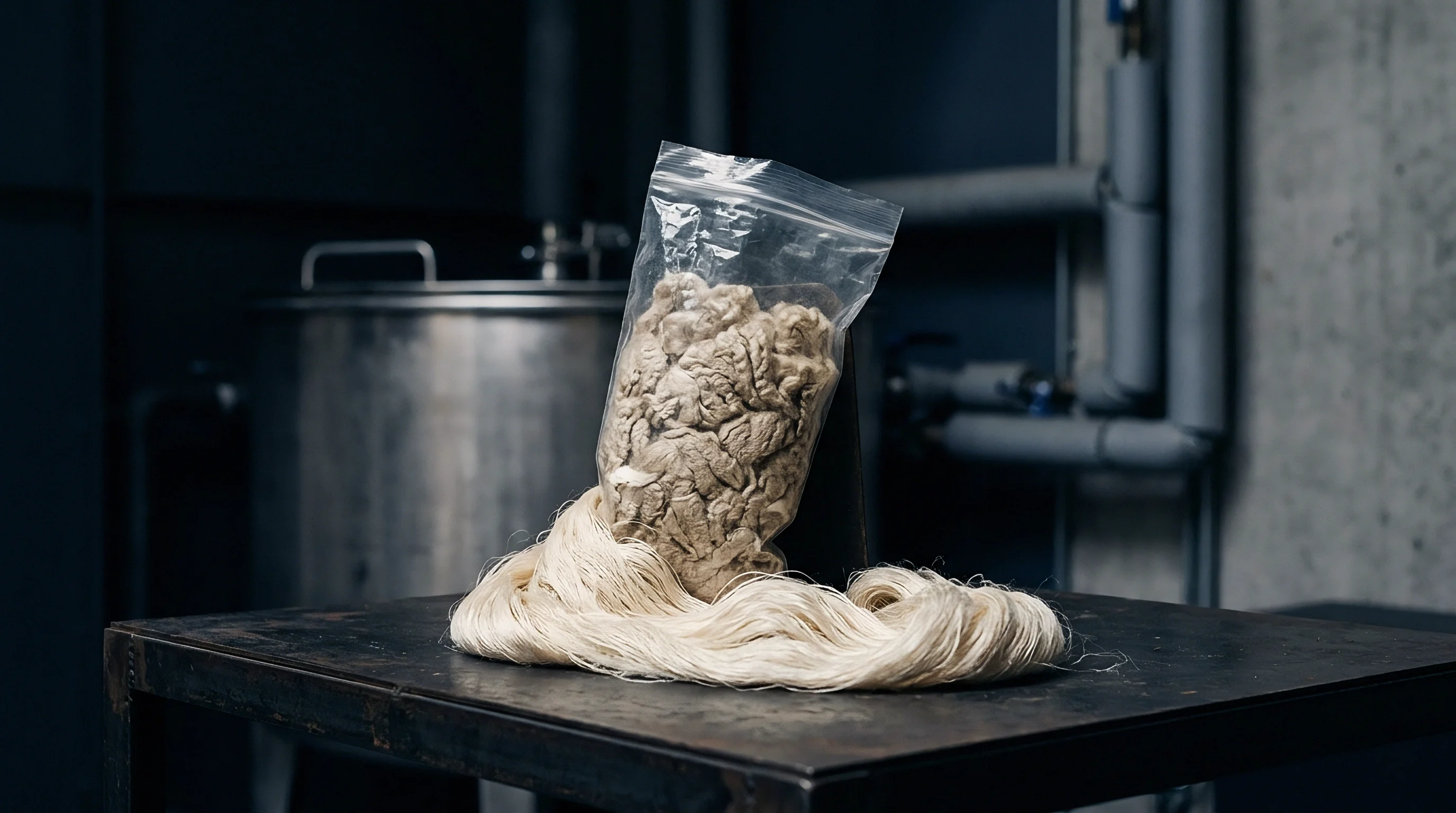
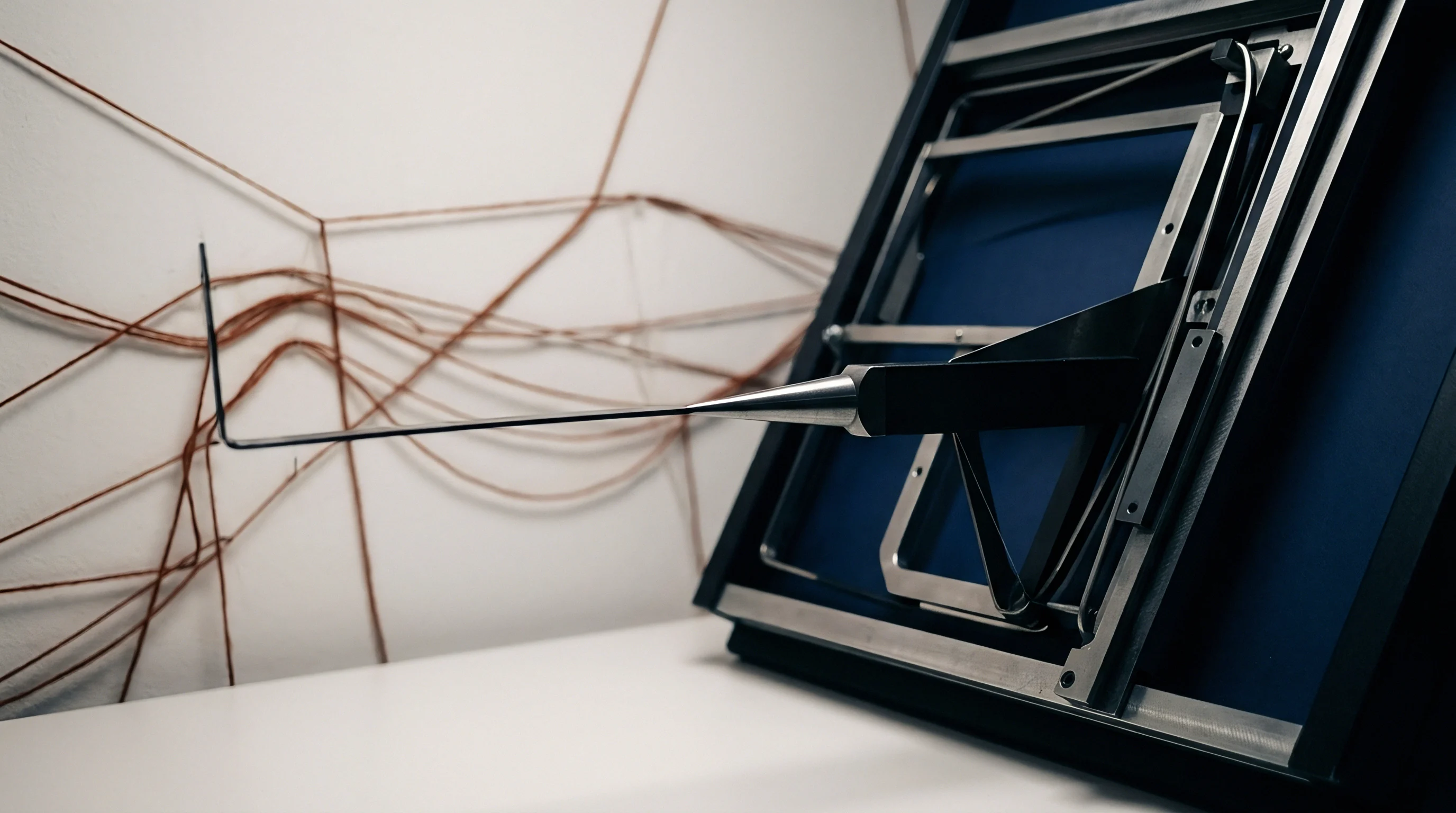
Measuring core displacement requires optical inspection at fifty-times magnification. Before loading, technicians cut swatches cleanly along thread lines with fresh razor blades to establish an unperturbed yarn cross-section, then photograph initial core positions using image analysis software. Following static load exposure, the specimen is unclipped and allowed to rest unconstrained for four hours.
Follow-up microscopy measures core retraction, the height of sheath puckers, and yarn fringe displacement.
- Specimen conditioning Swatches condition in standard atmosphere at twenty degrees Celsius and sixty-five percent relative humidity for twenty-four hours before testing.
- Deadweight clamp alignment Clamp jaws grip across the full width of the warp to prevent uneven stress concentrations along the edges.
- Dissection margin preparation Sheath fibers along cut edges are trimmed under five-times magnification to set an accurate zero-point baseline.
- Displacement recording intervals Operators record core retraction at one hour, twenty-four hours, and seventy-two hours to plot creep velocity curves.
Core displacement accelerates exponentially once static extension breaks the initial static frictional threshold between sheath fibers and polyurethane filaments.
Whether low-temperature crosslinking finishes can permanently compensate for low twist in the spinning room remains an open question.
Penalty
Bulk fabric rejections carry immediate commercial penalties throughout the supply chain. When stretch garments bag or distort at the seams during wear, consumer return rates climb, and retailers push those losses straight back to garment vendors through chargebacks, penalties, and cancelled orders. Exposure multiplies with every step fabric takes from greige stock to boxed garments on a retail floor.
Selecting robust yarn constructions prevents downstream retail chargebacks.
Poorly stabilized stretch fabrics undergo substantial residual shrinkage.

Financial Exposure in Bulk Garment Rejections
Chargebacks for bagged out garments eclipse any minor savings found in cheap yarn. Upgrading from simple air-jet covered spandex to double-covered or dual-core constructions adds roughly zero point thirty to zero point fifty US dollars per metre to fabric cost. Saving that margin on an inadequately anchored yarn, however, risks the entire run.
If a twenty-thousand-unit order of stretch trousers bags out on the sales floor, combined claims for cut-and-sew, freight, duty, and retail penalties can easily surpass two hundred and fifty thousand US dollars.

Commercial Risk Mitigation in Fabric Specifications
Technical datasheets need enforceable defect thresholds, not general guidance. Sourcing agreements should set specific static creep limits alongside standard elongation and recovery metrics, stipulating the maximum allowable core slippage under sustained tension. Specifying a deadweight creep test on incoming fabric inspections protects the brand and establishes clear contractual grounds for rejecting off-spec lots before fabric enters the cutting room.
Specifying a static core slip ceiling of zero point five millimetres under ISO 20932 testing on bulk purchase orders shifts commercial liability for core-sheath separation directly to the weaver and dyehouse.