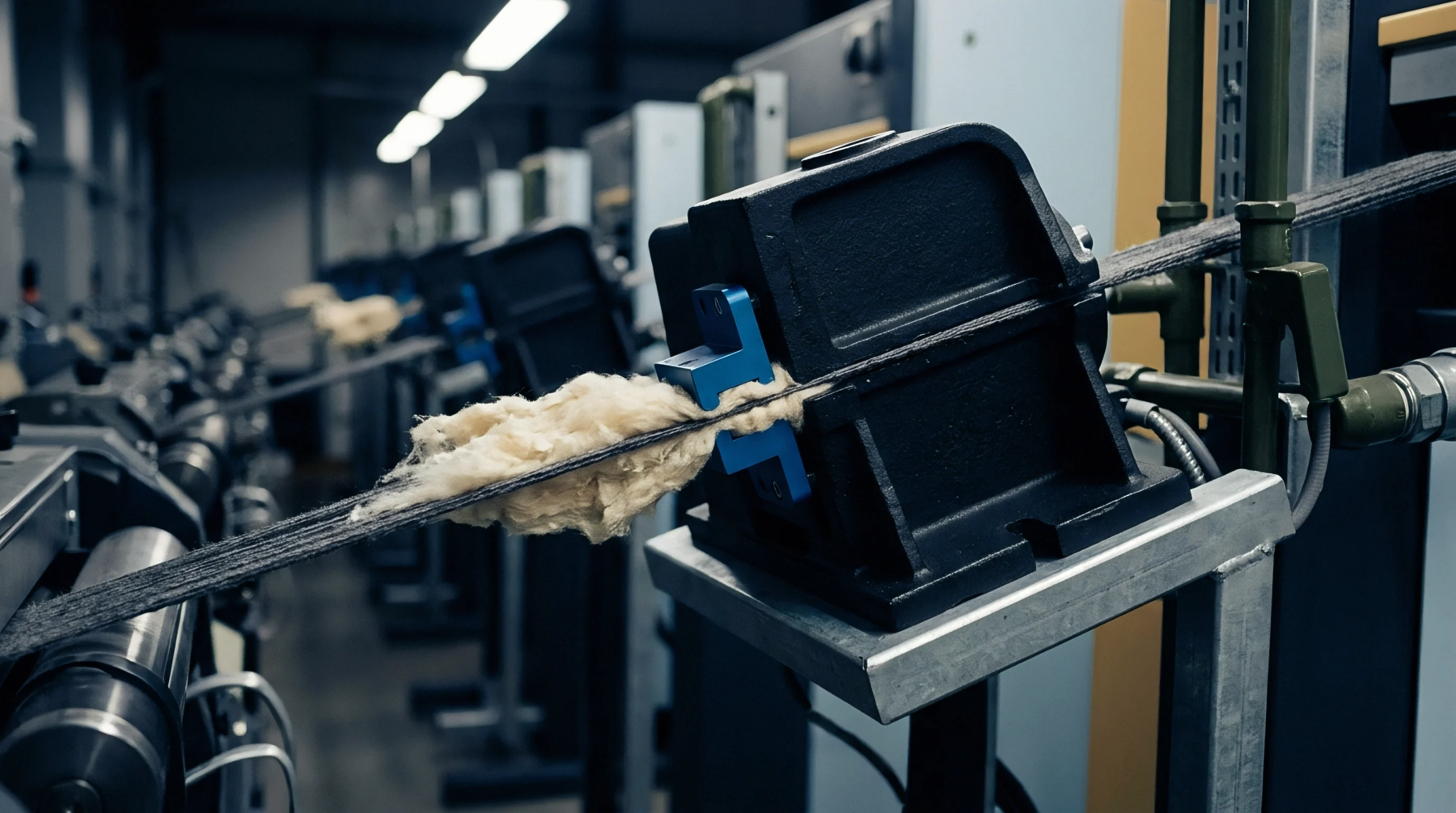
Coating Separation
Mechanical layer separation occurs when the outer covering of a yarn slides away from the central core. Sheath stripping happens during sewing or high-speed weaving when friction overcomes the bond between the two layers. This effect creates lumps in the fabric or causes the machine to jam.
Friction Dynamic
Sharp changes in direction or high-tension needles create the abrasive force that peels the cover back. If the twist level in the core-spun yarn is too low, the sheath lacks the grip needed to stay in place. This failure is a common problem when using low-quality elastic yarns in heavy-duty sewing applications.
Material Choice
Selecting a core-spun yarn with a textured or chemically treated core can improve the adhesion of the staple fibres. Some manufacturers use a co-polymer core that slightly melts during processing to fuse the sheath to the center. These advanced yarns are necessary for high-speed automated sewing where the needle heat is extreme.
Proper lubrication of the yarn path also reduces the drag that leads to coating displacement.
Detection Method
Visual inspection of the yarn path on a circular knitting machine often reveals the first signs of this issue as small nests of lint. If sheath stripping occurs inside a fabric, it appears as a thick-and-thin defect or a change in dye uptake. Constant monitoring of tension sensors helps to detect the problem before large quantities of waste are produced.