Quantifying Landed Yarn Cost Exposure from Polypropylene Fiber Defect Rates in Fine Combed Cotton
Polypropylene contamination in fine combed cotton causes undyed white specks and high winding cuts, inflating effective landed yarn costs by up to 21 percent.

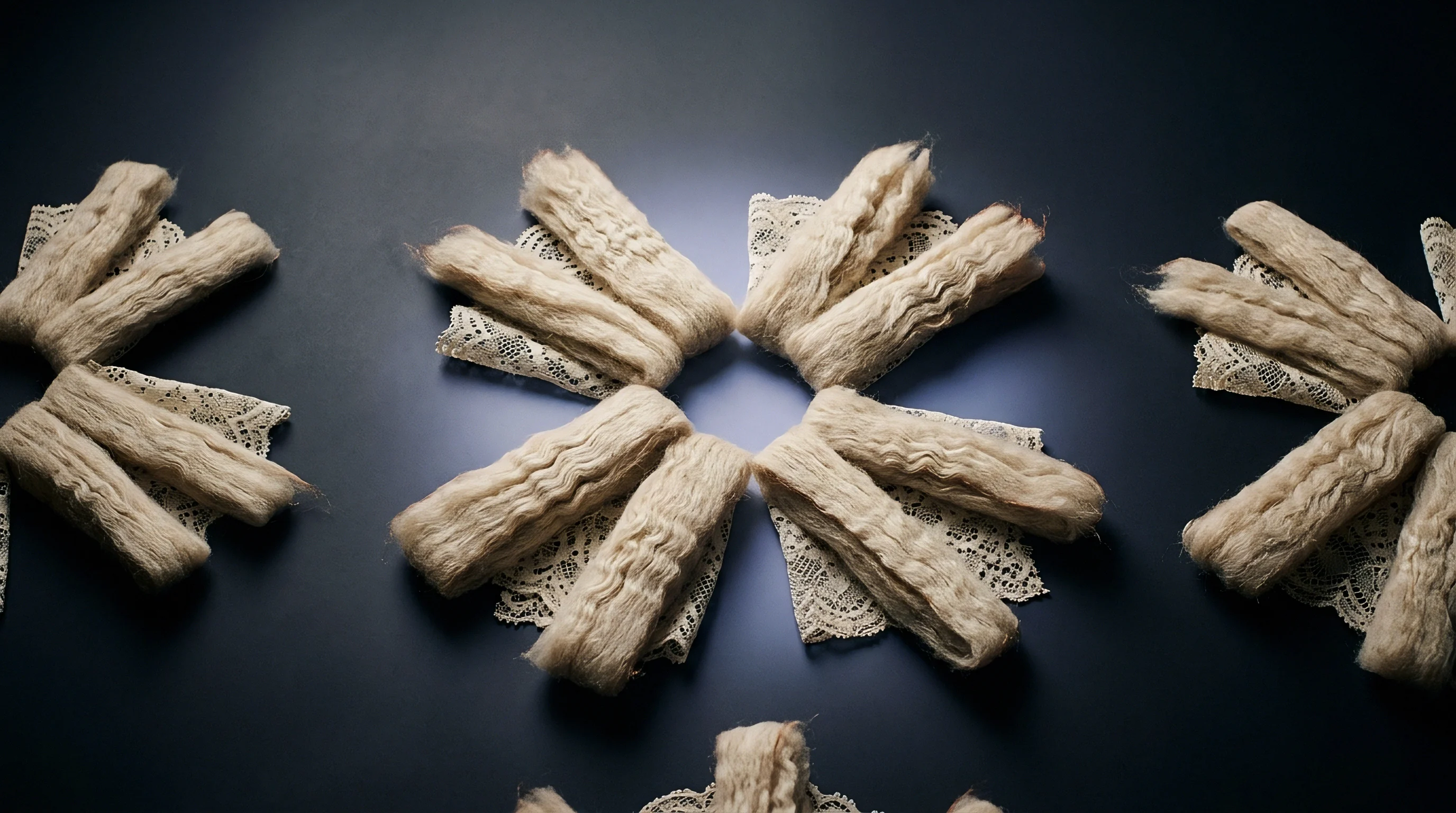
Contamination
Seed cotton harvesting, handling, and ginning introduce plastic polymer waste that slides clean through mechanical cleaning lines in spinning mills. Wrapping materials ~ mostly woven polyolefin bags and baling ties ~ fray under transit friction, shedding thin film ribbons into raw lint. Standard high-volume instrument testing profiles micronaire, length uniformity, and color grade, but misses low-density plastic strips trapped inside dense cotton bales.
Once bales hit opening beaters, polyolefin tape gets shredded into thousands of micro-fibrils. Fine combed yarn production relies on long-staple cotton exceeding 31 millimeters, run through intensive carding and combing. Circular nippers and top combs pull out short fibers and neps easily enough.
Thin polyolefin ribbons, however, simply orient along the fiber axis during sliver formation and slide between comb pins without being intercepted.
Polypropylene has a specific gravity around 0.90 grams per cubic centimeter, while raw cotton sits at 1.54 grams per cubic centimeter. Heavy-particle separators in blowrooms pull out stone, iron scrap, and dense rubber, but buoyant plastic ribbons ride the pneumatic currents right along with clean cotton tufts. Once these synthetic fragments enter the combed sliver, they end up spun permanently into the yarn core.
- Agricultural bale packaging Shredded woven polypropylene covers and tie fragments enter raw seed cotton during field storage and regional transit.
- Ground cover film fragments Degraded weed barrier sheets from automated harvesting fields mix with lower-boll seed cotton during mechanical stripping.
- Manual harvesting sacks Frayed synthetic hand-picking bags introduce transparent film shreds across smallholder farming collection centers.
- Ginning apron degradation Abraded plastic seals and transport belting inside older ginning stands release synthetic shreds directly into lint cleaner chutes.
- Spinning floor bale ties Manual knife cuts through plastic strapping during bale opening produce flying plastic splinters that settle onto open fiber tufts.
Comber waste analyses show that circular combs catch under fifteen percent of incoming synthetic tape by weight. Drawn polyolefin film behaves mechanically like long, high-tenacity cotton staple under tension. After clearing the drawing frames, foreign film in the drafted sliver disperses across the entire batch of roving bobbins.
Synthetic debris in raw bales is routinely classified as ambient agricultural background unless zero-defect terms are explicitly written into the seed cotton procurement agreement.
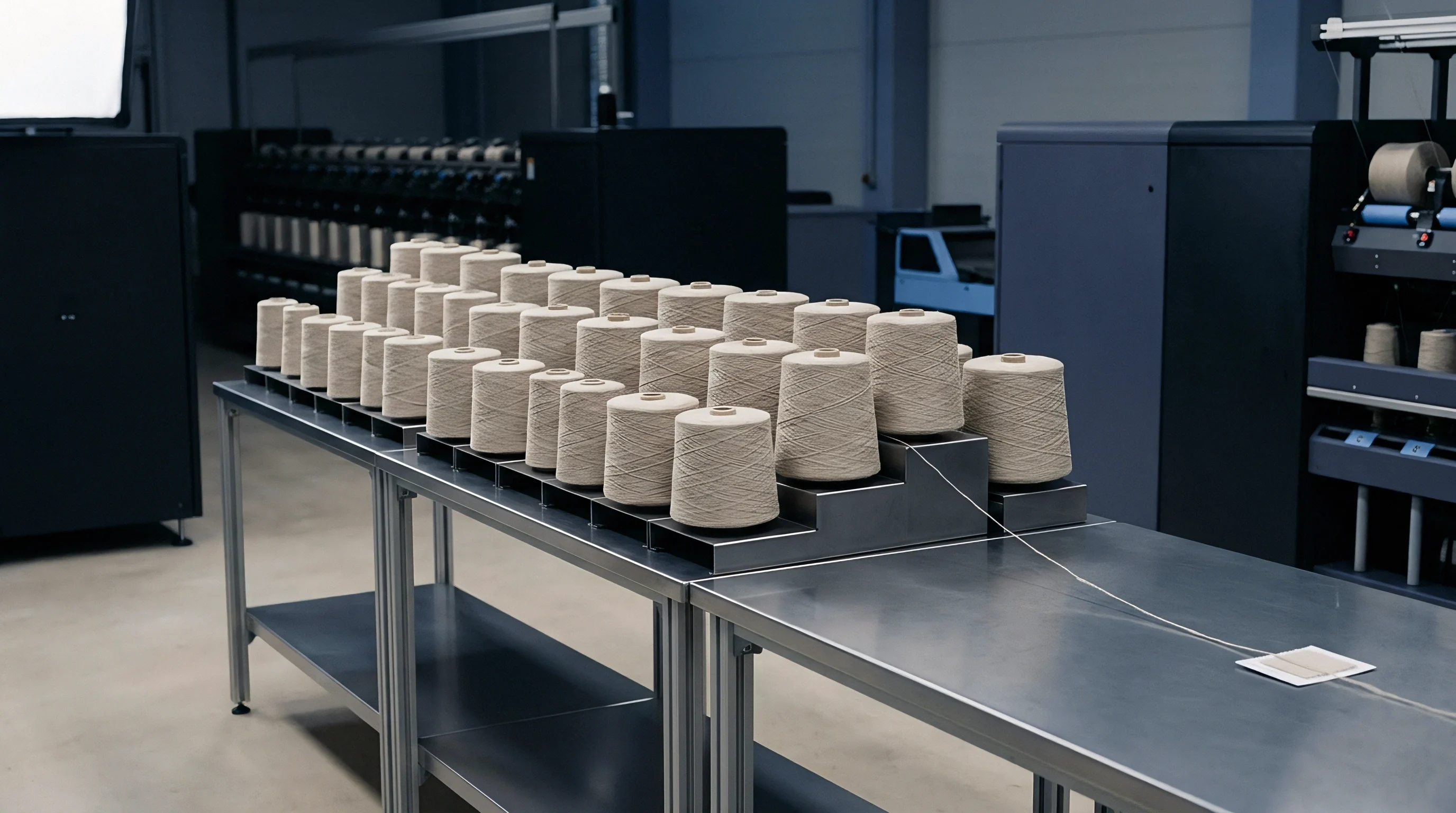

Detection
Opening lines rely on optical arrays and ultraviolet channels to catch non-cellulosic matter before carding. High-speed optical sorters view falling cotton tufts under polarized light, pulsing targeted air valves to blow out discolored or reflective trash. Clear or white polyolefin tape, however, reflects light almost identically to clean cotton lint, which drags inline optical separation efficiency down below forty percent.
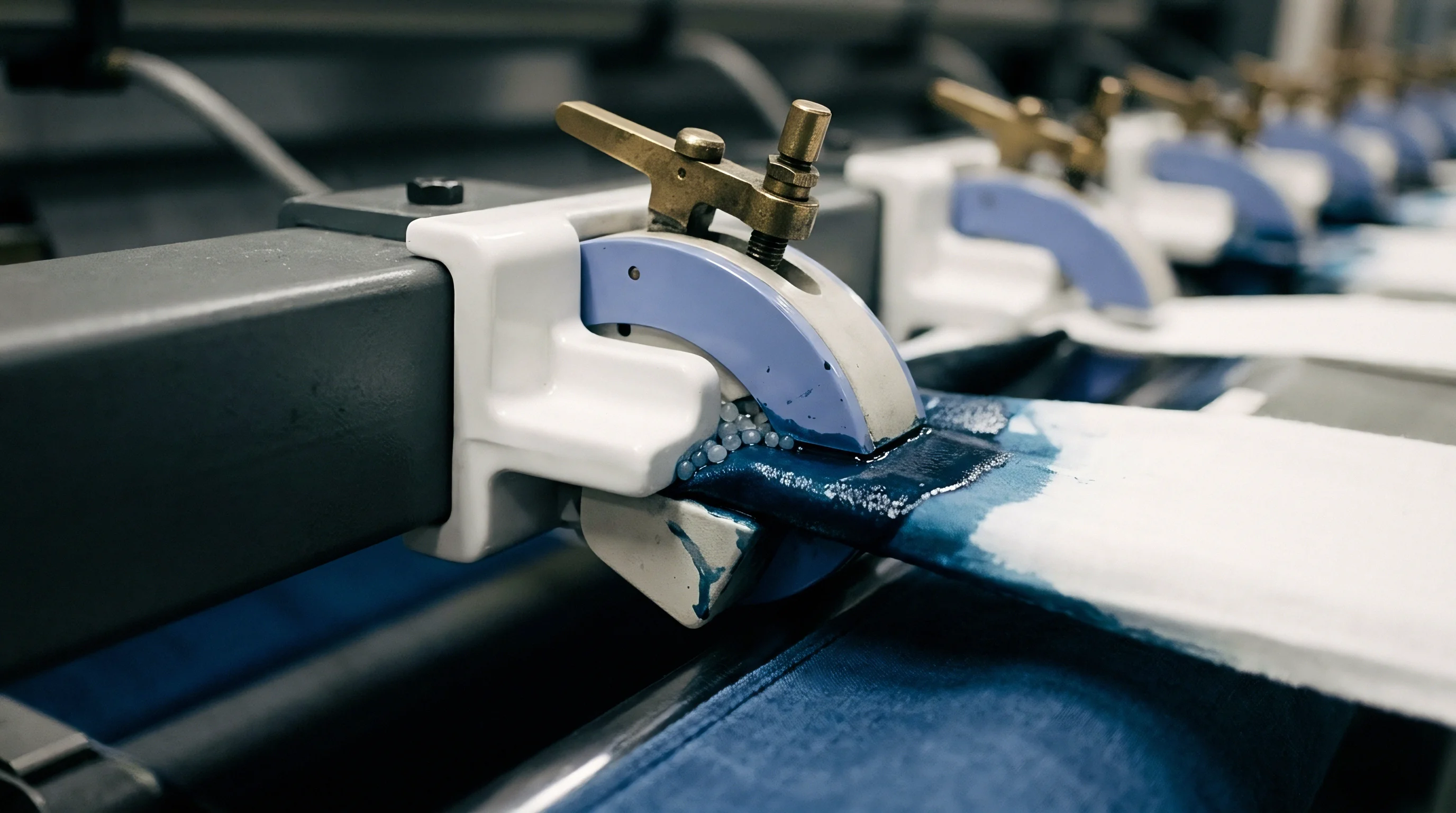
Sensor Wavelengths and Foreign Fiber Clearing
Spectral sorting systems scan narrow bands to tell synthetic polymers apart from organic seed coat fragments. Modern automatic winders monitor passing yarn through paired optical and acoustic clearer heads. Optical sensors evaluate cross-sectional mass profile and shade variation, while near-infrared units detect distinct chemical structures by measuring absorption at dedicated wavelengths.
| Yarn Linear Density | Sensor Channel Type | Clearing Threshold Setting | Detection Rate Range | Winding Cut Frequency Per 100km |
|---|---|---|---|---|
| Ne 50/1 (11.8 tex) | Optical Color Matrix | 15 mm length / +20% mass | 45% to 55% | 0.8 to 1.4 cuts |
| Ne 50/1 (11.8 tex) | Near-Infrared Polarized | 12 mm length / foreign film | 82% to 91% | 2.1 to 3.5 cuts |
| Ne 80/1 (7.4 tex) | Optical Color Matrix | 12 mm length / +15% mass | 38% to 48% | 1.2 to 2.0 cuts |
| Ne 80/1 (7.4 tex) | Near-Infrared Polarized | 10 mm length / foreign film | 88% to 95% | 4.2 to 6.8 cuts |

Is Foreign Fiber Clearing Effective at Ne 80?
Spinning counts as fine as Ne 80/1 magnifies the hazard of residual plastic ribbons because lean yarn cross-sections have fewer fibers to mask inclusions. With only forty to sixty fibers in a typical cross-section of fine combed yarn, one drafted synthetic filament displaces a major share of the load-bearing cotton core. Running winding clearers at aggressive sensitivity settings triggers continuous yarn cuts and floods the package with air splices.
Each clearer cut brakes the winding drum, trims out the fault, and splices the ends with compressed air. These splices create localized irregularities that tend to fail under tension in high-speed warping or weaving. Raising sensor sensitivity removes foreign tape, but the resulting drop in winding efficiency drives up production cost per kilogram.
- Calibrate ultraviolet and optical sensor channels against calibrated reference yarns.
- Set the clearing threshold on winding heads between twelve and sixteen millimeters for synthetic film channels.
- Run a hundred-kilogram test lot through the winding frame to log cut frequency per hundred kilometers.
- Compare ejection logs against acceptable cut limits prior to approving full bulk lot processing.
Writing International Cotton Association Rule 228 into the raw fiber purchase contract establishes binding dispute procedures, shifting testing costs and contamination liabilities to the seller whenever laboratory assays show foreign polymer counts above contractual limits.
Arithmetic
Calculating financial exposure means tracing contamination levels from raw bales directly through winding room interruptions and final fabric downgrade rates. In fine combed spinning, margins depend on strict control over raw lint costs, electrical loads, and winding frame utilization. Foreign synthetic fragments undermine all three through direct lint loss, extra air demand, lost spindle run-time, and off-spec fabric claims.

Linear Density and Defect Frequency Mathematics
Take a 10,000-kilogram lot of Ne 60/1 combed yarn spun for fine woven shirting. With raw cotton priced at $2.40 per kilogram and conversion costs running $3.80 per kilogram, total manufacturing cost reaches $6.20 per kilogram, giving the lot a baseline value of $62,000.
If incoming bales push defect density to 4.5 synthetic clearer cuts per 100 kilometers of yarn, winder efficiency drops hard. Normal winding schedules assume cut counts under 1.0 cut per 100 kilometers. Every extra cut uses compressed air, cycles mechanical splicers, and eats into spindle output.
| Cost Component | Baseline Lot (0.8 Cuts / 100km) | Contaminated Lot (4.5 Cuts / 100km) | Variance Impact |
|---|---|---|---|
| Winding Frame Efficiency | 91.5% | 79.2% | -12.3 percentage points |
| Direct Winding Cost / kg | $0.42 | $0.71 | +$0.29 per kg ($2,900 lot impact) |
| Pneumatic Splice Air Usage | 12,000 m³ | 67,500 m³ | +$1,110 energy penalty |
| Woven Fabric Yield (Grade A) | 9,400 kg (94%) | 8,200 kg (82%) | -1,200 kg Grade A fabric |
| Downgraded Fabric Allowance | 200 kg @ 15% discount | 1,400 kg @ 50% discount | +$9,100 revenue loss |
| Total Landed Exposure | Baseline reference | Calculated financial loss | +$13,110 per 10,000 kg lot |
That ten-thousand-kilogram batch yields roughly 1,016,000 kilometers of single Ne 60/1 yarn. At 4.5 cuts per 100 kilometers, the winding frames make 45,720 cuts, against 8,128 under baseline conditions. Those 37,592 extra splicing cycles drive up compressor load, air waste, and operator intervention.
A contamination density of four polypropylene fragments per hundred kilometers in Ne 60 combed yarn increases winding cut frequency by over three hundred percent compared to baseline clean cotton.
On the loom, that yarn weaves out to about 72,000 linear meters of shirting. Winder clearers let smaller polyolefin shreds under 10 millimeters slip through, which end up in the woven cloth at an average rate of 1.2 residual plastic specks per 100 square meters of fabric.
Graded under the ASTM D5430 four-point system, undyed synthetic inclusions take heavy point deductions. A single roll with clustered plastic inclusions easily exceeds allowable point thresholds per hundred square meters, forcing an immediate downgrade from Grade A to Grade B or triggering an outright rejection.
- Laboratory fiber isolation Solvent extraction using hot xylene separates polyolefin fractions from cellulosic cotton samples to confirm defect chemistry.
- Winding clearer event logging Exporting digital cut reports from winding frames provides exact counts of foreign matter ejections per lot weight.
- Piece-dyed swatch inspection Laboratory dyeing of ten-meter sample swatches under high-contrast reactive dyes reveals residual white resist spots.
- Customs duty adjustment documentation Commercial claims present lab analysis figures to secure tariff refunds on rejected imported yarn batches.
Combined winding surcharges, compressed air costs, and fabric downgrade claims bring the total financial hit on a 10,000-kilogram lot to $13,110. Measured against the original yarn cost, raw plastic debris inflates the effective cost of Grade A finished fabric by 21.1 percent per kilogram.
Purchasing fine combed yarn without pricing in contamination risk leaves buyers bearing downstream claims that can easily erase the entire operating margin on a spinning lot.
Dyeing
The contrast between cellulosic cotton and polyolefin film is why foreign synthetic particles show up so starkly as uncolored resist spots in piece goods. Cotton cellulose consists of beta-D-glucopyranose units loaded with reactive hydroxyl groups. Piece dyeing relies on water-soluble reactive dyes forming durable covalent ether or ester bonds with the cellulose structure in an alkaline bath.

Polyolefin Chemical Hydrophobicity and Dye Resist Mechanisms
Polypropylene is an uncharged, saturated hydrocarbon chain with no hydroxyl, carboxyl, or amino groups. Water and dissolved reactive dyes find no hydrogen-bonding or ionic sites along the polymer chain, so aqueous dye liquor rolls off the plastic during wet processing.
In the wash-off range, reactive dyes strip cleanly off the non-porous film surfaces. The undyed plastic ribbon stays chalky white or semi-translucent against the deeply colored cotton ground. That stark contrast makes even sub-millimeter synthetic specks jump out to visual inspectors.
Applying ISO 105 color fastness protocols alongside microscopic foreign fiber inspection validates whether undyed specks stem from immature cotton neps or synthetic polyolefin contamination.

Visibility Thresholds across Fabric Constructions
Fine yarns let ambient light penetrate surface yarn intersections, exposing small polymer strips in high-count poplins and fine knits. A polyolefin shred just 0.05 millimeters wide and 2.0 millimeters long is enough to interrupt the line of a fine Ne 80/1 warp end. Immature cotton neps cause similar light flecks, but under a lens the difference is immediate.
Immature fibers take up faint dye traces and reveal irregular cell lumens under polarized light. Extruded polyolefin tape, by contrast, shows smooth, non-porous faces, uniform profiles, and clean sheared edges from opening beaters. Attenuated total reflectance FTIR spectroscopy confirms sharp aliphatic C-H peaks at 2950, 2917, and 2838 wave-numbers, settling any question of polypropylene content.
Topping up reactive dye baths does nothing to cover polyolefin flecks; it only darkens the ground cotton, which sharpens the contrast. Disperse dyes capable of tinting polypropylene need liquor temperatures around 130 degrees Celsius under pressure ~ conditions that ruin fine combed cotton goods and throw target color formulas off shade.
Whether inline infrared cameras built directly into carding engines can reliably intercept microscopic polyolefin fibrils before sliver drafting remains unproven in commercial spinning mills.
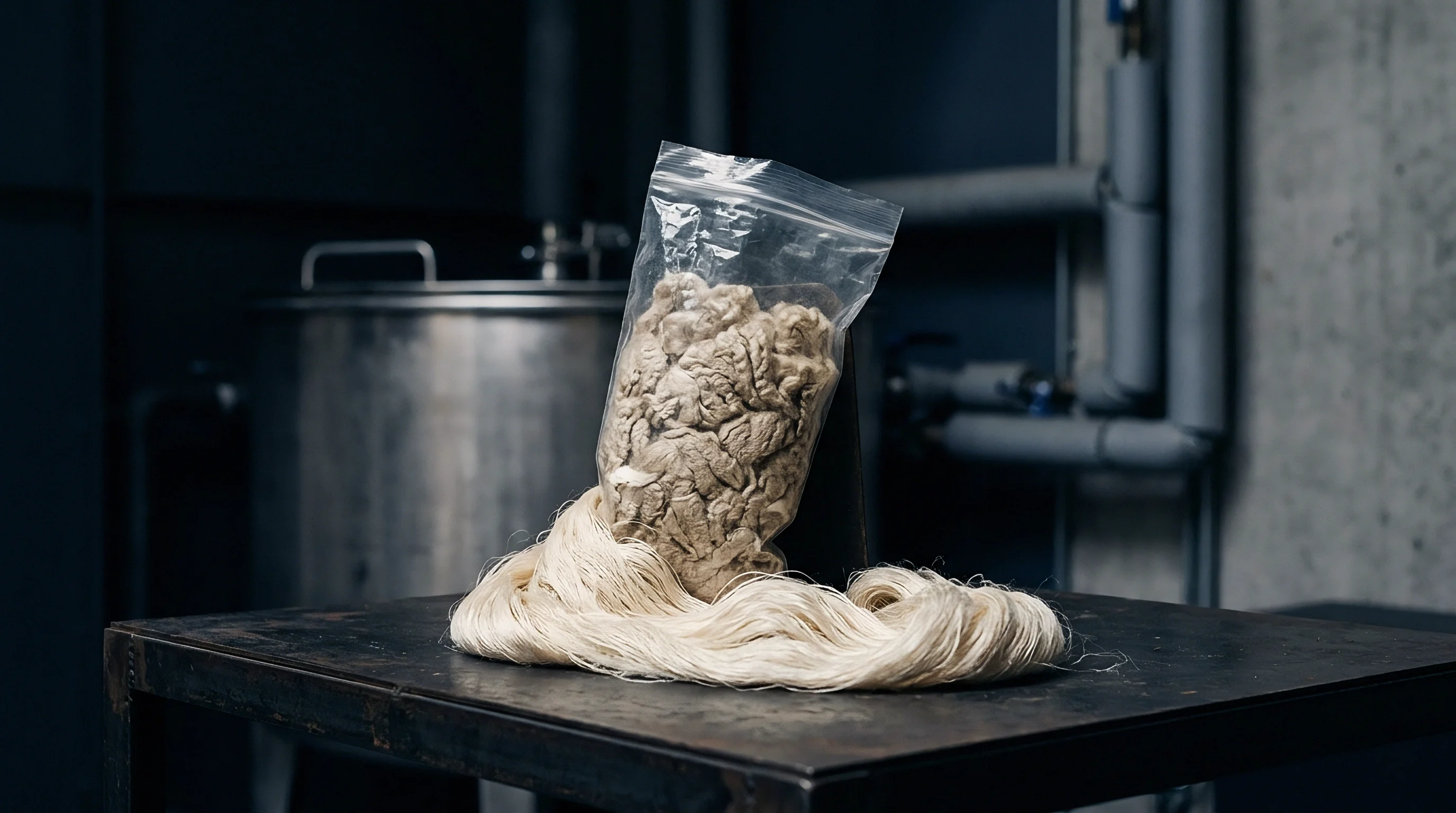
Crate
Inspection at the bale receiving bay determines whether incoming cotton carries manageable polyolefin risk before inventory enters the blowroom line. Fine combed cotton requires intake checks well beyond baseline high-volume instrument classing data. Mills that lay down bales without inspecting bale wrap take on unhedged processing risk.
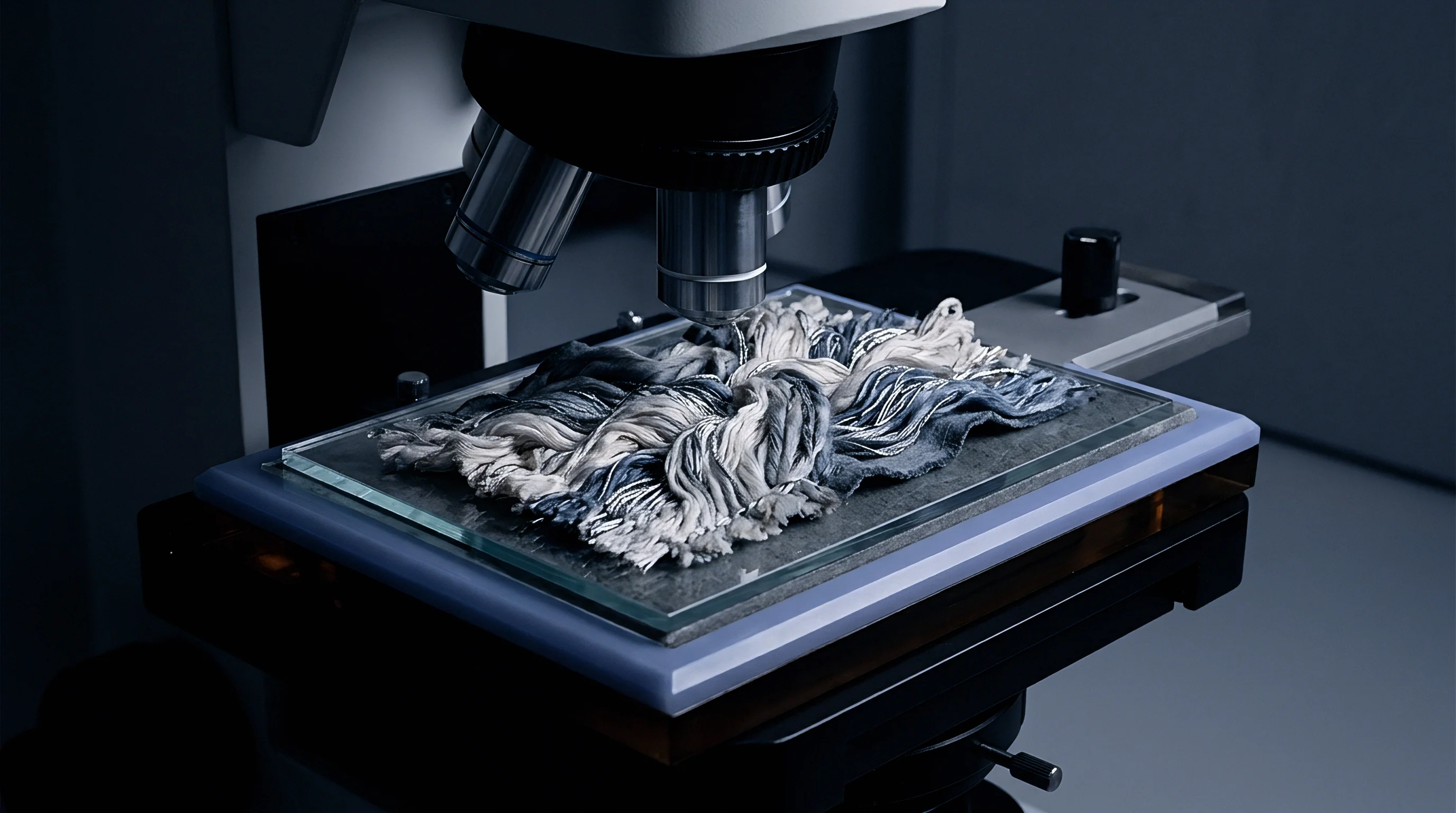
Bale Room Sampling Procedures and ITMF Guidelines
Pulling hand tufts from ten percent of landed bales across top, middle, and bottom tiers provides material for visual inspection and hot-stage screening. The International Textile Manufacturers Federation tracks foreign matter rates by growth in its biennial surveys. West African, Indian, and Pakistani upland cottons show consistently higher synthetic contamination rates, driven by manual harvest methods and polypropylene collection sacks.
Receiving classers evaluate pulled lint under dark-field ultraviolet tables. Polypropylene packaging uses optical brighteners and processing stabilizers that glow brightly under 365-nanometer ultraviolet light, while raw cotton shows only a dull yellowish luminescence. Synthetic splinters stand out clearly for manual counting.
Contractual Risk Transfer and Quality Specifications
Specifying maximum allowable foreign matter in grams per metric ton shifts financial liability back to the ginner before bales are blended. Mill purchase orders should explicitly rule out synthetic packaging, requiring pure cotton bagging or wire-tied cardboard wraps. Setting firm rejection limits under recognized trade arbitration rules gives spinning mills clear legal grounds when deliveries breach contract limits.
Testing sample swatches through dark-field dye baths before releasing full yarn lots prevents contaminated material from reaching weaving looms and knitting cylinders.
Sales contracts for fine combed yarn routinely set caps on foreign fiber cuts per 100 kilometers during winding. When winder clearers register cut counts over those thresholds, the buyer holds contractual grounds to cancel outstanding balances or discount the lot to offset weaving losses. Naming the exact testing protocols in the supply agreement keeps defect claims objective and enforceable.
Checking bale purity at intake keeps contaminated cotton off the opening floor, preventing quality disputes from spreading through the weaving and finishing pipeline.