Predicting Localized Hydrolysis Kinetics in High Density Cotton Rope Microenvironments
Localized cotton rope hydrolysis kinetics depend on core capillary ion concentration and localized temperature dynamics rather than bulk liquor pH.


Diffusion
During industrial wet processing, mass transport inside dense cellulosic assemblies faces tight spatial limits. Gathering multi-ply cotton yarns into heavy ropes with thousands of individual filaments often pushes structural packing factors above 0.75 by volume. As aqueous liquors penetrate the bundle, the cotton cell walls swell immediately, narrowing inter-fiber channels to sub-micron dimensions.
Water absorption into the amorphous regions of primary and secondary cell walls expands the fiber cross-section by 14 percent to 20 percent, pinching the space between fibers. This channel contraction chokes off bulk convective flow, leaving fluid transport inside the rope core governed almost entirely by Fickian molecular diffusion along tortuous paths.
Inside the strand core, fluid movement effectively comes to a standstill.
Standard open-width fabric processing relies on forced liquor circulation to keep chemical concentrations uniform across the fabric surface. In dense rope configurations, however, only the outer boundary layer of the strand sees constant hydrodynamic renewal; the inner core remains hydraulically isolated. Machinery speed and liquor velocity set the boundary layer thickness around the perimeter, but the stagnant fluid column locked inside the central axis relies entirely on passive diffusion down steep concentration gradients.
Hydronium ions, hydroxide ions, and active reagents must navigate extended pore paths through overlapping yarn intersections. Steric hindrance and viscous drag within the swollen interstices cut the core’s effective diffusion coefficient by up to two orders of magnitude relative to unconstrained aqueous solutions.

Capillary Constriction and Interstitial Transport Hindrance
Capillary pressure in a compact yarn bundle draws liquid into micro-cavities, but once initial saturation is complete, it hinders further liquid exchange. Because dynamic capillary pressure varies inversely with pore radius, strong suction initially pulls bath chemistry into the core. As the cellulose hydrates, local swelling shrinks the hydraulic diameter of inter-fiber capillaries from about 5 micrometres to under 0.3 micrometres.
According to the Hagen-Poiseuille relation, viscous resistance along these micro-capillaries increases inversely with the fourth power of the radius. Fluid transport within the core shifts from bulk convection to hindered capillary movement, leaving isolated pockets of stagnant liquid.
Fluid movement within dense bundle cores decays exponentially as cellulosic swelling reduces inter-fiber channel dimensions below sub-micron thresholds.
Fiber cross-sections reshape internal geometry as processing progresses. Raw cotton fibers have a kidney-bean cross-section that leaves irregular gaps in dry yarn. Hot aqueous treatments partially collapse the lumens while expanding the secondary walls, rounding the fiber perimeters so they pack together far more tightly.
Yarn twist compounds this obstruction: outer fibers wrap around the core under tension, generating radial compressive forces that squeeze interstitial liquor out of the center and bar incoming fluid from the bath.
- Radial Drag Resistance from high twist multipliers slows molecular movement between exterior liquor channels and the central yarn axis.
- Steric Pore Entrapment in swollen amorphous cellulose networks locks active chemical species inside intra-fiber micro-voids.
- Viscous Fluid Stagnation within sub-micron capillaries stops convective mass turnover during fast continuous processing cycles.
- Concentration Boundary Layers along the outer rope perimeter shield the core from sudden concentration shifts in the bath.

Fluid Boundary Layer Impedance across Bundles
Hydrodynamic shear along the exterior of continuous processing machinery does not reach the central axis of compacted yarn strands. Fluid velocity drops off sharply from the outer bath inward through the bundle cross-section. Just 1.5 millimetres inside the perimeter of a 20-millimetre diameter cotton rope, convective velocity drops near zero under standard jet or washer circulation.
Beyond this boundary layer, chemical movement relies entirely on passive diffusion through stagnant pore fluid.
In high-density rope architectures, the structural packing factor sets the initial void volume. Chemicals consumed in local surface reactions cannot be replenished quickly from the bulk bath, forming localized depletion zones. At the same time, reaction byproducts ~ such as degraded oligosaccharides and released acid fragments ~ build up in the stagnant interstitial fluid, hindered by the dense network’s high tortuosity.
Tortuosity values in heavily twisted cotton ropes generally run between 2.8 and 4.2, tripling the distance solutes must travel to clear the core.
Increasing bulk pump turnover rates fivefold does not guarantee uniform chemical equilibrium through the dense center of continuous rope bundles.


Pore
Chemistry inside the interstitial spaces of dense cotton bundles diverges sharply from conditions in the bulk bath. Within the narrow aqueous domains of cell-wall voids and inter-fiber pores, fixed negative charges on the cellulose chains drive selective ion partitioning. Unbleached and partially refined cotton carries carboxyl groups along its backbone, remnants of native pectins and carbohydrate oxidation from preliminary scouring.
These fixed charges create a Donnan membrane equilibrium that dictates how mobile cations and anions distribute between the main bath and the core fluid.
Water bound to the cellulose structure substantially alters internal ion mobility.
Hydronium ions concentrate inside charged interstitial cavities to balance the fixed carboxylate anions, pulling internal pH up to 1.8 units below bulk bath readings during acid processing. In alkaline baths, the reverse happens: negative wall charges repel hydroxide ions, keeping pore concentrations lower than in the main liquor. In pores narrower than 5 nanometers, water molecules arrange into structured hydrogen-bonded networks along the hydroxylated cellulose surfaces.
This ordered water shows lower dielectric permittivity and higher viscosity, slowing ionic mobility compared to free solution.

Donnan Equilibrium and Solute Partitioning in Compact Cellulosic Networks
Electrostatic forces create uneven solute balances between the bulk bath and the fluid inside the core. The Donnan equilibrium potential across the fiber wall pulls small counter-ions into the pore fluid while excluding co-ions. The size of this concentration gap depends on the volumetric charge density of the cotton and the ionic strength of the bath.
When bath electrolyte levels are low, hydronium ions accumulate heavily in the core, producing localized acidic micro-zones even under moderate bath acidity.
Fixed carboxylate charges along internal fiber surfaces reduce core pH levels relative to bulk liquor values under low ionic strength conditions.
Adding salt shifts solute partitioning quickly. Introducing sodium chloride or sodium sulfate screens the fixed surface charges on the cellulose, suppressing the Donnan potential so co-ions enter the pores more easily. In acid treatments, higher salt levels yield a more even hydronium distribution across the rope cross-section, softening severe micro-acidity in the core while increasing bulk bath consumption.
| Parameter | Bulk Processing Bath Value | Inter-Fiber Core Microenvironment | Intra-Fiber Cell Wall Void | Analytical Method |
|---|---|---|---|---|
| Hydronium Concentration (pH) | 3.80 pH | 2.95 pH | 2.15 pH | Potentiometric Micro-Probe / Indicator Dye Spectrum |
| Effective Water Activity (a_w) | 0.998 | 0.945 | 0.880 | Isopiestic Vapor Sorption / Isothermal Titration |
| Free Salt Ionic Strength (mol/L) | 0.050 M | 0.125 M | 0.240 M | Donnan Membrane Partitioning Calculation |
| Dynamic Viscosity (mPa·s) | 1.002 mPa·s | 2.450 mPa·s | 8.800 mPa·s | Fluorescence Polarization Micro-Viscometry |
| Temperature Stability (°C) | 85.0 °C | 92.4 °C | 94.1 °C | Embedded Fiber-Optic Thermal Sensing |
What Governs Hydronium Accumulation inside Core Voids?
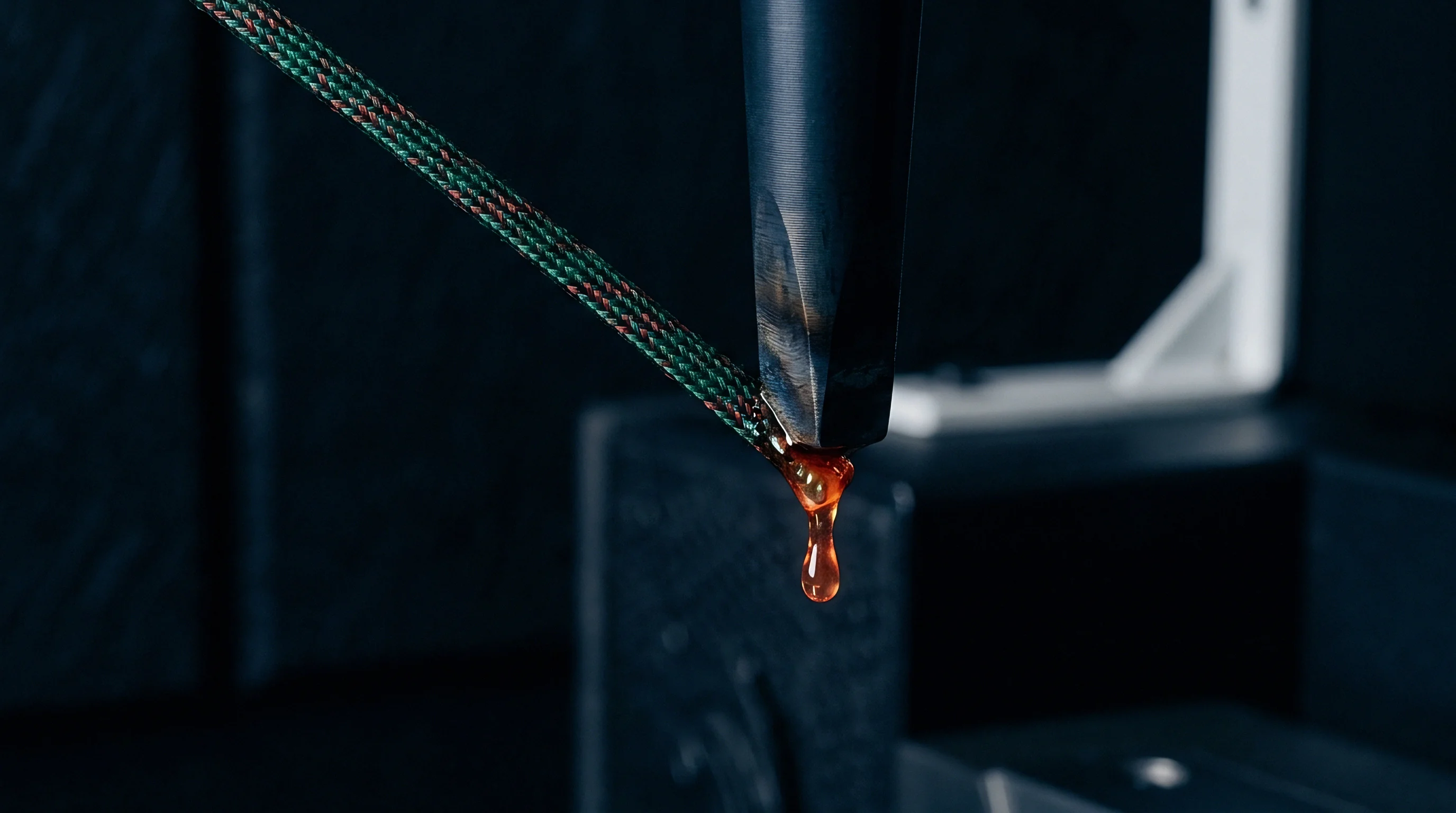
Hydronium ions accumulate inside core voids through a combination of capillary trapping, surface charge attraction, and local solvent depletion. As water binds tightly to crystalline cellulose surfaces, less free solvent remains to dilute ionic species. The effective hydronium concentration within intra-fiber pores tracks the ratio of free water to total internal volume, driving local chemical activity far higher than simple volumetric bath additions suggest.
Trapped acid in these restricted spaces significantly accelerates chain scission.
Mapping micro-environmental fluid chemistry within intact ropes requires precise extraction and micro-analysis to isolate core fluid from surface bath liquor. The following protocol outlines how internal chemical profiles are measured under operating conditions:
- Cryogenic quenching of intact rope samples immediately after sampling freezes thermal and chemical gradients across radial zones.
- Sectioning the frozen strands into concentric radial shells separates the outer boundary layer, intermediate transition zones, and central core axis.
- Centrifugal extraction under controlled osmotic pressure separates inter-fiber interstitial liquor from bound intra-fiber cell-wall water.
- Micro-potentiometric glass capillary electrodes measure hydronium ion activity within the isolated micro-volume samples.
- High-performance liquid chromatography quantifies dissolved monomeric and oligomeric carbohydrate fragments extracted from the pore fluid.
Ignoring local ion partitioning leads to severe core degradation during high-temperature acid processing. The yarn core suffers catastrophic strength loss even while the outer surface fibers appear completely sound.

Catalysis
Cellulose depolymerization inside dense cotton ropes occurs mainly through hydrolytic cleavage of the 1,4-β-D-glucan glycosidic bonds linking anhydroglucose units. Reaction kinetics depend on temperature, local hydronium activity, and how accessible the glycosidic bonds are within the polymer structure. Cellulose features ordered crystalline domains interspersed with disordered amorphous regions.
Hydronium ions readily enter amorphous zones, breaking accessible glycosidic bonds with a low energy barrier. In crystalline domains, hydrolysis is orders of magnitude slower because dense hydrogen-bonding networks exclude hydronium ions from reaction sites.
Thermal energy directly drives the cleavage of these glycosidic bonds.
The reaction follows a specific acid-catalyzed pathway starting with rapid protonation of either the glycosidic or ring oxygen on an anhydroglucose unit. This forms a conjugate acid intermediate, which then undergoes slow, rate-determining unimolecular heterolysis to yield a cyclic carbonium-oxocarbenium ion and a polymer fragment with a non-reducing end. Fast reaction of the oxocarbenium intermediate with a local water molecule regenerates the hydronium ion while leaving a new reducing end group on the shortened chain.
The rate equation for this reaction incorporates both local hydronium activity and local water activity within the microenvironment.
Protonation accelerates rapidly as temperature rises in enclosed machinery. The Arrhenius activation energy for hydrolyzing amorphous cellulose typically ranges from 105 to 125 kilojoules per mole, compared to over 145 kilojoules per mole for crystalline domains. In dense cores where heat transfer lags surface exposure, transient temperature gradients complicate the kinetics.
Core temperatures often lag behind the bulk bath during heating, but retain heat during rapid cooling steps, prolonging high-temperature hydrolysis in the center long after the bath has cooled.

Heterogeneous Glycosidic Cleavage Dynamics
Structural heterogeneity in cotton fibers determines how chain scission unfolds over time. Hydrolysis attacks weak links in amorphous domains first, including distorted glycosidic bonds strained by yarn twist. This fast early phase chops long polymer chains down to crystallite lengths, driving a sharp drop in degree of polymerization with very little overall mass loss.
Once accessible amorphous bonds are consumed, hydrolysis slows to a surface-controlled reaction along the outer faces of crystalline microfibrils.
Localized acid hydrolysis of cellulose proceeds through initial rapid amorphous chain scission followed by slow zero-order crystalline surface erosion.
Internal temperature gradients strongly influence the pace of core hydrolysis.
Local hydronium activity coefficients are evaluated using thermodynamic electrolyte models rather than bulk pH readings. In confined micro-environments, the hydronium activity coefficient diverges sharply from unity. High local ionic strength and reduced free water activity boost effective hydronium activity, pushing reaction rates past predictions from basic concentration kinetics.
When dense cotton ropes are processed above 80 degrees Celsius, this activity boost accelerates amorphous scission and rapidly degrades core tenacity.

Thermal and Chemical Synergy in Enclosed Micro-Spaces
Trapped micro-spaces in high-density yarn bundles suffer compound degradation when high heat meets trapped acid residues. Steam injection heats the outer rope layers quickly, vaporizing moisture that moves inward toward the cooler core. This vapor condenses in internal micro-pores, releasing latent heat of condensation that spikes core temperatures.
If the interstitial fluid contains residual acid, this thermal burst triggers accelerated hydrolysis inside what is effectively a concentrated micro-reactor.
Under continuous processing conditions, core degradation rates depend on internal hydronium activity rather than nominal chemical additions to the external bath.
Kinetics
Predicting local cellulose hydrolysis kinetics in dense cotton ropes requires solving coupled non-linear partial differential equations combining Fickian diffusion, heat conduction, and reaction rate laws. Chain scission kinetics follow the classic Ekenstam relation for random cleavage along linear polymer chains. For polydisperse cellulosic systems under mild to moderate hydrolysis, the reciprocal of the number-average degree of polymerization increases linearly over time:
frac1DPt – frac1DP0 = khyd · aH3O+ · aH2O · t
where DPt is the degree of polymerization at time t, DP0 is the initial degree of polymerization of the untreated cotton fiber, khyd is the intrinsic hydrolytic rate constant, aH3O+ is local hydronium ion activity, and aH2O is local water activity within the pore space.
Standard bulk measurements fail to capture localized core degradation.
Mapping spatial variations in degradation across the cross-section of a dense rope requires dividing the cylindrical strand into concentric radial shells. Within each shell, mass conservation equations balance the influx and outflux of reactive hydronium ions against local consumption and buffering within the cellulosic matrix. Radial diffusion coefficients adjust dynamically based on local fiber swelling, packing density, and liquor viscosity.
| Radial Strand Zone (Normalized Radius r/R) | Hydronium Activity (a_H3O+) | Local Temp (°C) | Rate Constant k_hyd (min⁻¹) | Viscometric DP after 60 min | Yarn Tenacity Loss (%) |
|---|---|---|---|---|---|
| 1.00 (Outer Exterior Surface) | 0.0016 M | 85.0 °C | 1.12 x 10⁻⁴ min⁻¹ | 2180 DP | 3.2 % |
| 0.75 (Outer Sub-Surface Shell) | 0.0031 M | 85.2 °C | 2.25 x 10⁻⁴ min⁻¹ | 1940 DP | 7.8 % |
| 0.50 (Intermediate Radial Shell) | 0.0058 M | 86.1 °C | 4.48 x 10⁻⁴ min⁻¹ | 1610 DP | 14.5 % |
| 0.25 (Inner Core Shell) | 0.0094 M | 87.4 °C | 7.82 x 10⁻⁴ min⁻¹ | 1280 DP | 24.1 % |
| 0.00 (Central Rope Axis) | 0.0125 M | 88.2 °C | 1.08 x 10⁻³ min⁻¹ | 1050 DP | 31.6 % |

Radial Differential Kinetic Integration
Integrating kinetic models across radial dimensions accounts for steep gradients in chemical exposure. Outer radial shells (r/R > 0.8) remain near equilibrium with the bulk bath, showing slow depolymerization because catalytic species are continuously washed out under uniform temperature control. Inner radial shells ($r/R
At extreme liquor ratios, the temperature gradient across the strand core alters predicted hydrolysis rates. Transient thermal analysis shows that during rapid heating cycles, inner core zones lag behind bath temperatures by 30 to 90 seconds. During extended high-temperature holds, however, exothermic hydration and thermal insulation by outer fiber layers raise central core temperatures 1.0 to 3.2 degrees Celsius above the bulk bath.
This micro-thermal rise multiplies the local rate constant khyd according to Arrhenius behavior, accelerating depolymerization at the center of the rope.
A localized temperature elevation of 3 degrees Celsius inside a dense cotton rope core accelerates acid hydrolysis rates by approximately 38 percent.

Non-Isothermal Degradation Modeling in Swollen Assemblies
Non-isothermal conditions inside swollen yarn assemblies complicate Kinetic parameter calibration. As cellulose chains undergo cleavage, the degree of polymerization drops below critical threshold values ($DP
- Local Void Fraction Profiles determined via micro-computed tomography map spatial variations in inter-fiber liquid volume across radial strand positions.
- Solute Diffusion Coefficients calibrated across temperature and packing density ranges define mass transfer rates between adjacent concentric shells.
- Intrinsic Activation Energies measured separately for amorphous and crystalline cellulosic domains establish temperature sensitivity parameters.
- Donnan Partitioning Coefficients derived as a function of localized pH and background electrolyte concentration fix equilibrium ion distribution ratios.
Commercial contracts for high-density continuous wet processing mandate that bulk fabric shipments maintain an average intrinsic viscosity corresponding to a degree of polymerization above 1800 DP, with maximum radial variance across the strand cross-section not exceeding 12 percent.


Tenacity
Cellulose depolymerization within high-density cotton ropes directly degrades the macro-mechanical properties of the yarn and finished fabric. Individual cotton fibers get their tensile strength from long polymer chains aligned along the fibrillar axis. As local acid hydrolysis cleaves glycosidic bonds and drops the degree of polymerization from native levels near 2500 below critical thresholds, shortened chains can no longer transfer stress effectively across amorphous regions.
Fiber tensile strength declines rapidly once DP drops below 1500, and yarn tenacity suffers catastrophic loss below 900 DP.
The loss of tensile strength closely tracks this reduction in degree of polymerization.
Degradation concentrated in the central core creates a structurally compromised yarn. Single-strand tensile testing (ISO 2062) of plied yarns pulled from degraded cores reveals asymmetric failure: outer wrapper fibers retain high tenacity and elongation, while inner core fibers snap prematurely under load. This uneven load distribution causes step-wise yarn rupture, cutting total yarn tenacity by up to 35 percent even when bulk chemical analysis shows only moderate average fiber degradation across the strand.

Mechanical Property Degradation Mechanics
Tensile loss depends directly on where chain scission occurs. Random hydrolysis in amorphous regions destroys the stress-transfer bridges connecting crystalline microfibrils. Under axial tension, micro-cracks start at these damaged amorphous sites and spread quickly through adjacent microfibrils.
In plied yarns, core fiber breaks transfer sudden peak loads to surviving outer fibers, exceeding their tensile limits and triggering yarn failure during downstream weaving or knitting.
| Analytical Parameter | Standard Test Method | Bulk Measurement Limit | Micro-Kinetic Model Capability |
|---|---|---|---|
| Cellulose Molecular Weight / DP | ISO 5351 (Cuen Viscometry) | Average value of whole sample blend | Resolves radial DP gradients within core |
| Single Yarn Tensile Strength | ISO 2062 / ASTM D2256 | Overall yarn break force and elongation | Predicts core fiber premature rupture load |
| Carboxyl Group Content | ASTM D1926 (Methylene Blue) | Total chemical acidity per gram fiber | Maps spatial Donnan charge distribution |
| Fabric Bursting Strength | ISO 13938-1 (Hydraulic Method) | Macro fabric mechanical failure point | Correlates localized core decay to burst loss |
Industrial Quality Claims and Process Qualification
Downstream converters face severe operational disruptions when buying fabric woven from rope-processed yarn with core hydrolysis. High-speed weaving looms (running above 700 picks per minute) suffer frequent warp breaks when yarn core tenacity drops below 14 cN/tex. Non-uniform depolymerization also alters dye uptake: hydrolytic cleavage creates new reducing end-groups and opens up cellulosic structures, causing reactive and direct dyes to absorb unevenly relative to undamaged cellulose.
The result is persistent longitudinal streakiness and failed shade levelness across dyed fabric rolls.
High capillary drag further hampers effective acid removal during rinsing.
This dossier outlines the exact kinetic formulations required to quantify localized chain scission. Preventing localized core hydrolysis requires adjusting continuous wet processing protocols to match kinetic model predictions. Dyehouses must update rinsing profiles, neutralize trapped acid residues using micro-emulsified alkalis capable of fast core penetration, and manage thermal dwell times in steam chambers.
Procurement specifications for high-density cotton rope processing should require micro-analytical verification of intrinsic viscosity retention across both inner core and outer surface fiber fractions before releasing bulk production runs.
How can process engineers reliably differentiate between bulk bath oxidation damage and localized core hydrolytic cleavage during post-mortem quality audits of failed bulk production lots?