Solute Migration
Mass transfer of chemical additives through a polymer matrix driven by concentration gradients governs moisture barrier failure during high temperature dye house fixation. Liquid dye carriers and auxiliary finishing agents undergo fickian diffusion when concentration boundaries remain constant at the fiber surface while interior polymer chains absorb the migrating species. Penetration rates follow concentration gradients exactly until equilibrium saturation occurs throughout the amorphous regions of the synthetic substrate.
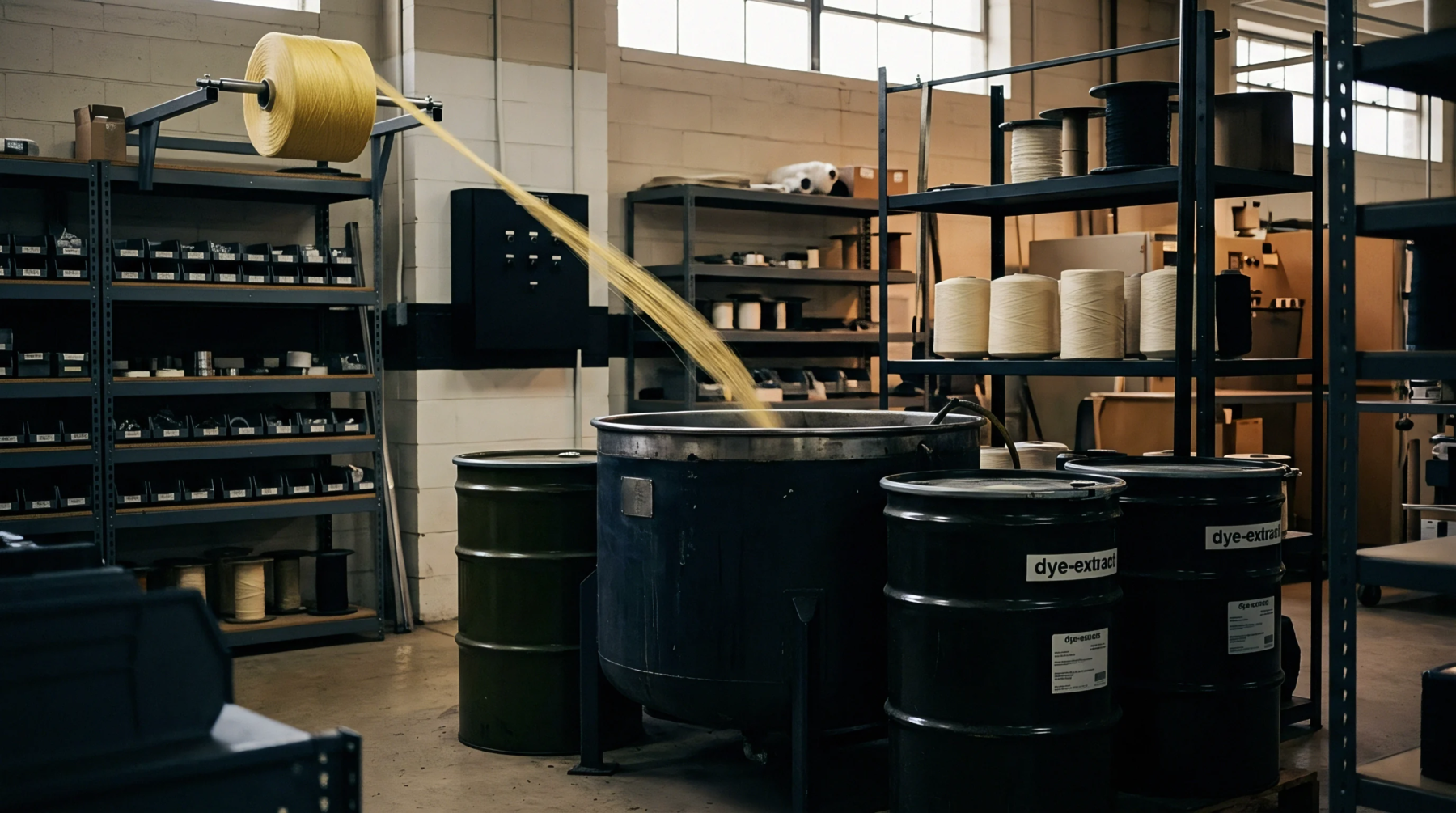
Laboratory testing at the commercial checkpoint relies on accelerated permeation cells maintained at elevated temperatures to verify whether dye bath auxiliaries penetrate polyester filaments uniformly or segregate near outer perimeters. Auxiliary chemicals cease obeying this linear migration law once swelling reaches saturation limits or when polymer crystallization blocks internal void pathways permanently.
Penetration Kinetics
Molecular transport velocity depends directly on temperature coefficients and amorphous fraction density within synthetic filaments during wet processing. Thermal energy increases chain segment mobility, which lowers resistance against migrating molecules moving through the amorphous regions of polyester yarn. Mathematical models calculate diffusion coefficients from concentration profiles measured after specific exposure durations inside controlled chamber tests.
Sorption experiments on raw filament bundles provide baseline figures for chemical uptake speeds before bulk dyeing commences on industrial ranges. Processing temperatures exceeding glass transition thresholds accelerate molecular mobility significantly, shortening the duration required for complete core saturation during carrier application stages.
Concentration Gradients
Chemical potential differences between outer dye liquor baths and interior fiber cores supply the driving force for mass transfer. High surface concentrations force molecules inward along descending concentration profiles until chemical potentials equalize across the entire cross section of the filament. Intermolecular friction slows down migrating species when local saturation approaches maximum capacity inside dense crystalline domains.
Quality control inspectors measure concentration slopes using cross sectional microscopy on dyed cross wound packages to detect uneven chemical distribution before commercial shipment occurs. Dyes stop moving inward entirely once external bath exhaustion matches internal absorption capacity, ending net mass transfer across the boundary interface.
Matrix Resistance
Polymer crystallinity and orientation restrict molecular mobility by creating physical barriers that lengthen diffusion pathways inside technical yarns. Highly oriented filaments force migrating additives to travel around crystalline lamellae, increasing the effective path length compared with amorphous polymer films. Structural compaction during high draw ratio stretching reduces free volume between polymer chains, lowering permeability rates for finishing chemicals applied during post extrusion treatments.
Commercial acceptance testing confirms that heat set treatments increase crystalline order, which restricts subsequent chemical migration during wet finishing operations.