Bayesian Nonparametric Inter Layer Diffusion Analysis in Plasticized PVC Architectural Membranes
Bayesian nonparametric depth profiling maps non-Fickian plasticizer accumulation across PVC layers, preventing premature adhesive seam failure.

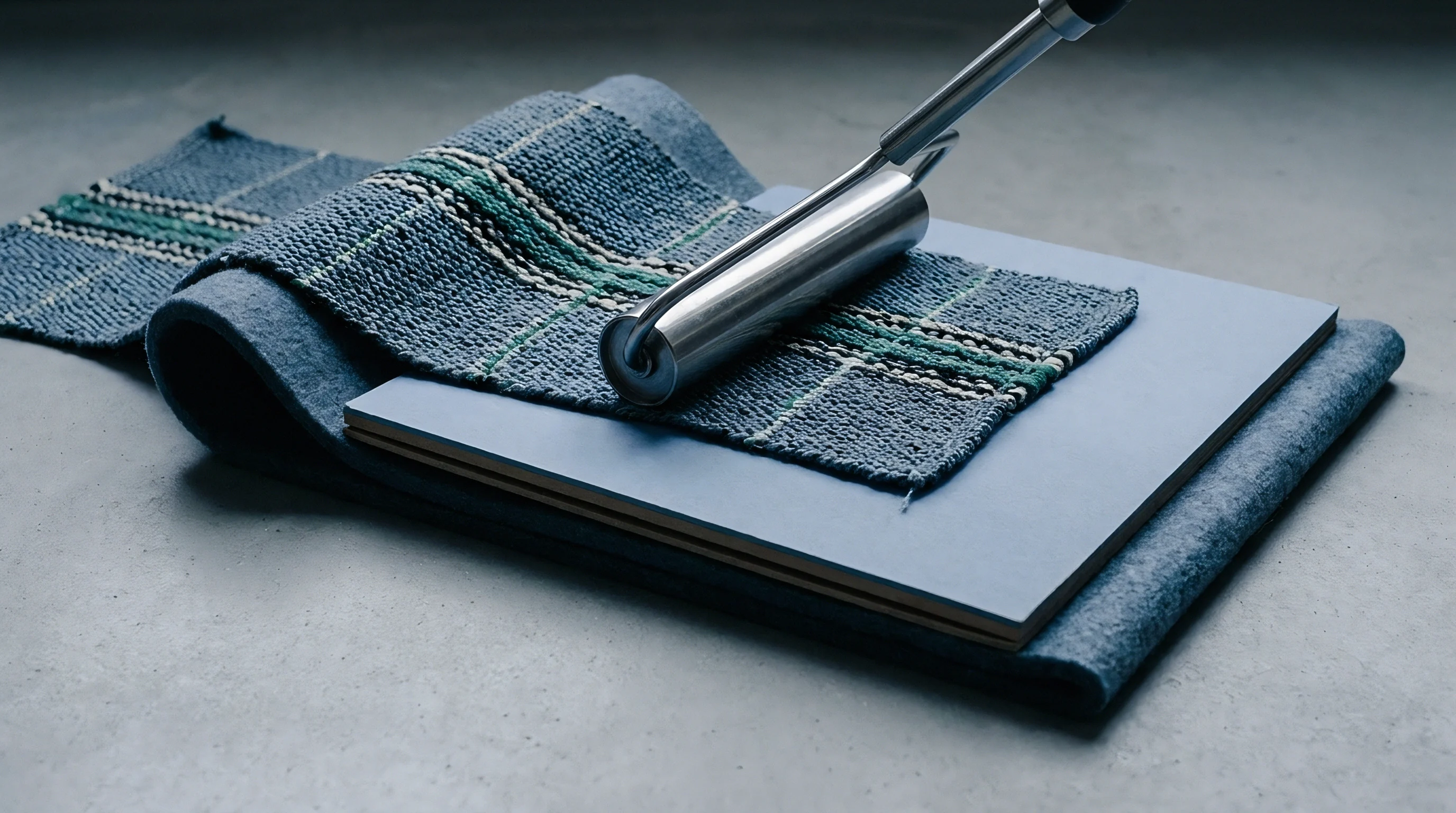
Migrant
Architectural membranes made from plasticized PVC rely on low-molecular-weight esters or high-viscosity polymeric additives for flexural fatigue resistance, cold-crack durability, and field pliability. In multi-layer composites ~ typically an acrylic or PVDF topcoat, an upper PVC plastisol pass, an adhesive tie-layer, a woven high-tenacity polyester base fabric, and a lower PVC pass ~ plasticizers migrate continuously down concentration, temperature, and chemical potential gradients. Standard laboratory tests assume Fickian transport driven by a single diffusion coefficient, but actual solar thermal loading and UV exposure produce complex non-Fickian behavior.
Phase separation, surface volatilization, and differential solubility across tie-layers create steep, time-dependent concentration profiles that standard parametric equations cannot capture.
Phthalates such as diisononyl phthalate and diisodecyl phthalate, as well as non-phthalate alternatives like diisononyl cyclohexane-1,2-dicarboxylate and trioctyl trimellitate, partition differently at internal interfaces. As surface temperatures swing between sub-zero night conditions and up to 80 degrees Celsius in direct sun, plasticizer in the bulk PVC matrix moves toward outer surfaces and internal fabric interfaces. This mass transfer shifts local glass transition temperatures, weakens interfacial bonding, and disrupts flame retardant dispersion.
Standard quality control relies on gravimetric loss under ISO 177 or accelerated oven aging. These aggregate mass-loss measurements offer no visibility into inter-layer pooling or local concentration spikes that drive premature field delamination.

Polymeric Formulation and Barrier Layers
Formulating high-performance architectural textiles requires balancing processing viscosity on the line against long-term retention in the field. Low-viscosity monomeric plasticizers allow high line speeds in knife-over-roll coating, but their vapor pressure and mobility speed up migration into topcoats. Polymeric plasticizers derived from adipic acid polyesters slow mass transfer through larger hydrodynamic radii and chain entanglement, though they raise compound viscosity and require tailored solvent blends or higher gelation temperatures.
Fluoropolymer topcoats, such as polyvinylidene fluoride blended with polymethyl methacrylate, serve as passive diffusion barriers whose performance hinges on defect-free film formation without micro-pinholes or oven-drying voids.
If topcoat thickness falls below three micrometers, or if surface micro-cracking develops under wind-driven abrasion, plasticizer bypasses the barrier layer. The resulting exudation attracts atmospheric dirt, fuels fungal growth, and degrades translucency. At the same time, loss of plasticizer from the underlying PVC core raises its glass transition temperature, leaving the membrane susceptible to brittle cracking and low-temperature flex fatigue under wind loads.
| Plasticizer Chemistry | Molecular Weight (g/mol) | Viscosity at 20°C (mPa·s) | Activation Energy (kJ/mol) | Dominant Transport Anomaly |
|---|---|---|---|---|
| Diisodecyl Phthalate (DIDP) | 446.7 | 130 | 82.4 | Interface accumulation at tie-layer boundary |
| Diisononyl Cyclohexane-1,2-dicarboxylate (DINCH) | 424.6 | 52 | 76.1 | Rapid volatilization through porous topcoat |
| Trioctyl Trimellitate (TOTM) | 546.8 | 300 | 98.5 | Slow matrix diffusion with temperature sensitivity |
| Polymeric Adipate Polyester (MW 2000) | 2000.0 | 2500 | 124.0 | Phase separation and concentration-dependent clustering |
Unannounced shifts in plasticizer isomer ratios within allowable specification bands can alter migration dynamics and lead to field exudation or coating softening.


Phase
Micro-phase behavior in plasticized vinyl dictates how plasticizer molecules separate from polymer chains and enter mobile interstitial spaces. Polyvinyl chloride contains semi-crystalline domains, with amorphous regions hosting plasticizer via weak dipole-dipole interactions between carbon-chlorine bonds and plasticizer carbonyls. Once plasticizer levels cross a critical saturation threshold in the amorphous matrix, excess plasticizer aggregates into micro-domains, accelerating transport along phase boundaries.
Dynamic mechanical strain from wind loading further drives this micro-phase separation.
Coating delamination during dynamic shear loading correlates directly with local plasticizer enrichment at the adhesive tie-layer interface.
Inter-layer mass transfer in structural membranes spans several distinct zones: the weather-side topcoat, the primary outer PVC pass, a liquid-applied polyurethane or acrylic tie-layer, the polyester substrate, and the inner PVC pass. Because each layer has a different partition coefficient, plasticizer with an affinity for the tie-layer polymer accumulates at that interface, forming a weak, plasticized boundary layer. This concentration peak depresses the local glass transition temperature at the interface while depleting the surrounding PVC matrix, generating internal stress and micro-cracking under flexure.

Interface Equilibrium and Mass Distribution
Concentration discontinuities occur at every internal interface. Thermodynamically, equilibrium depends on equal chemical potential across layer boundaries rather than equal concentration. Rapid changes in ambient temperature shift the activity coefficient of plasticizer in the acrylic topcoat at a different rate than in the PVC underneath.
The resulting chemical potential gradient can drive plasticizer toward the interface even against an otherwise flat concentration gradient.
Inter-layer plasticizer accumulation and boundary phase shifts drive several characteristic failure modes in architectural membranes.
- Adhesive Seam Softening occurs when migrated monomeric plasticizer dissolves the solvent-based polyurethane structural adhesive, reducing lap-shear resistance across hot-air welded structural joints.
- Topcoat Micro-Cracking develops when plasticizer loss elevates the surface layer glass transition temperature above ambient operating thresholds, leading to brittle fracture under dynamic flex fatigue.
- Subsurface Void Formation appears when volatile plasticizer fractions evaporate rapidly from surface regions while internal mass transport remains restricted by high matrix viscosity.
- Hydrophobic Coating Separation manifests when exuded plasticizer forms an immiscible liquid film between the primary PVC pass and the acrylic topcoat, destroying mechanical keying.
Plasticizer moves from heavily loaded lower coating passes toward lower-concentration topcoats until chemical potential reaches equilibrium across all interfaces.

Kinetics
Classical transport models rely on Fick’s second law using a constant diffusion coefficient, assuming homogeneous, isotropic media with stable properties. Architectural PVC membranes violate those assumptions: mechanical stresses are anisotropic, polymer free volume changes with temperature, and multiple additives interact during migration. When plasticizers, UV stabilizers, and flame retardants move simultaneously, their interaction coefficients alter diffusion rates.
As a result, parametric Fickian fits introduce substantial error when extrapolating long-term field performance from short-term thermal aging.
Bayesian non-parametric analysis avoids rigid assumptions about diffusivity functions. By applying Dirichlet Process Mixture Models and Gaussian Process priors to spatial-temporal concentration data, the diffusion coefficient D(C, z, t) is derived directly from experimental profiles. This captures non-monotonic curves, interfacial accumulation peaks, and anomalous transport without forcing data into pre-assigned parabolic or exponential formulas.
A Bayesian Gaussian Process prior calibrated on 500 hours of depth-profile data predicts 20-year migration profiles with an uncertainty bound under nine percent.
Non-parametric estimation treats the diffusion coefficient as a continuous stochastic surface conditioned on depth z and exposure time t. The resulting posterior probability density gives both the expected concentration profile and explicit uncertainty bounds at every depth level. This framework makes it possible to distinguish between formulation defects and thermal degradation caused by heat-sealing during fabrication.

Dirichlet Process Mixture Profiling
Dirichlet Process Mixture Models break complex, multi-modal concentration profiles into a mixture of spatial kernel functions, each representing diffusion within a specific micro-domain or boundary zone. As spectroscopic or mass spectrometry depth data feeds into the model, it identifies functional zones automatically without requiring preset layer boundaries.
| Analytical Method | Spatial Resolution (μm) | Limit of Detection (wt%) | Sample Preparation Mandate | Primary Data Output |
|---|---|---|---|---|
| Confocal Raman Spectroscopy | 0.8 to 1.5 | 0.10 | Non-destructive, polished cross-section | Vibrational band intensity ratio |
| ATR-FTIR Step-Scan Depth Profiling | 2.0 to 5.0 | 0.50 | Variable-angle germanium crystal contact | Infrared absorbance depth decay |
| TOF-SIMS Microtome Sectioning | 0.05 to 0.2 | 0.01 | Cryogenic ultra-microtome slice | Secondary ion mass intensity spectrum |
| TD-GC-MS Slicing Profiling | 10.0 to 20.0 | 0.001 | Physical microtome layer separation | Absolute chemical mass per unit layer |
Structural modifications to the acrylic topcoat network can prevent sub-surface plasticizer accumulation without compromising low-temperature impact resistance.

Profiling
Calibrating non-parametric models requires high-resolution depth profiling through physical or spectroscopic cross-sectioning. Confocal Raman spectroscopy maps plasticizer-specific vibrational bands relative to the backbone PVC carbon-chlorine stretch. By stepping a focused laser beam through a transparent topcoat at 0.5-micrometer depth increments, the instrument measures local plasticizer concentration via the intensity ratio of the ester carbonyl stretch at 1720 wavenumbers to the PVC C-Cl stretch at 635 wavenumbers.
For opaque or heavily pigmented membranes, cryogenic microtome sectioning paired with Time-of-Flight Secondary Ion Mass Spectrometry (TOF-SIMS) offers sub-micron resolution. The sample is frozen below its glass transition temperature with liquid nitrogen, sliced into uniform sections, and rastered using a focused bismuth liquid metal ion source. Mass spectra taken across spatial positions generate absolute mass maps of plasticizer parent and fragment ions, detailing accumulation at the tie-layer interface.

What Concentration Gradients Trigger Plasticizer Exuded Tack?
Exudation occurs when surface concentration exceeds the thermodynamic solubility limit of the topcoat, typically above 35 percent by weight. At this point, excess plasticizer aggregates into microscopic droplets that coalesce on the surface. The resulting liquid film increases surface energy, binding atmospheric dust, diesel soot, and organic pollutants.
High ambient temperatures combined with relative humidity above 85 percent accelerate migration by plasticizing the topcoat matrix and increasing overall free volume.
Exudation thresholds are reached when local interface plasticizer concentrations exceed the ambient thermodynamic matrix capacity by more than five weight percent.
Accurate microtome isolation for depth profiling requires tight control over sample temperature and cutting mechanics.
- Mount the membrane cross-section specimen in a liquid-nitrogen-cooled cryogenic vice assembly maintained at minus 60 degrees Celsius to prevent plasticizer smearing across layer boundaries during cutting.
- Align a diamond knife edge parallel to the membrane surface planes using an optical alignment goniometer with sub-degree rotational accuracy.
- Slice sequential horizontal sections at fixed nominal thickness settings of two micrometers, collecting individual slices in solvent-washed glass vials.
- Extract each sliced section with high-purity dichloromethane for twelve hours at ambient laboratory room temperature.
- Inject the concentrated solvent extract into a calibrated thermal desorption gas chromatograph coupled with a triple-quadrupole mass spectrometer.
- Calculate absolute plasticizer mass concentrations by comparing integrated ion peak areas against internal deuterated standard calibration curves.
ISO 177 testing compliance requires weighing specimens immediately upon removal from desiccators to prevent moisture absorption from distorting volatilization figures.

Flux
Translating spatial-temporal plasticizer profiles into engineering predictions requires integrating local flux values over projected service lifetimes. The local mass flux vector J(z,t) defines the mass crossing a unit area per unit time. Where non-parametric models show flux diverging from classical Fickian predictions, structural life models must adjust allowable stress limits for welded seams and membrane tension fields.
Field data from installed tensioned structures shows that welded seam strength decays non-linearly as plasticizer accumulates at the bond line. Classical Fickian models can underestimate interface plasticizer build-up after ten years of outdoor exposure by up to 40 percent because they ignore temperature-driven diffusivity spikes during extreme heat. A Bayesian Gaussian Process framework incorporates actual temperature histories, yielding failure probability distributions tailored to local microclimates.
| Exposure Horizon (Years) | Fickian Predicted Core Mass Loss (%) | Bayesian Non-Parametric Core Loss (%) | Predicted Tie-Layer Plasticizer (wt%) | Calculated Seam Shear Retained Strength (%) |
|---|---|---|---|---|
| 2 | 1.2 | 1.8 | 28.5 | 94.0 |
| 5 | 3.1 | 4.9 | 34.2 | 81.5 |
| 10 | 5.8 | 9.3 | 39.8 | 62.0 |
| 15 | 8.2 | 14.1 | 42.5 | 41.5 |
| 20 | 10.4 | 18.6 | 44.1 | 28.0 |
Factory production certificates should be verified against inter-layer migration specifications using the following criteria.
- Batch Chromatography Traces must confirm that total low-molecular-weight monomeric phthalate impurities remain below 0.05 percent by weight of the supplied plasticizer stock.
- Topcoat Thickness Profiles must demonstrate a minimum continuous dry film thickness of 4.0 micrometers across 100 percent of the roll width when measured via optical coherence tomography.
- Accelerated Thermal Loss Ratios must not exceed 2.5 percent total mass change after 14 days of oven storage at 80 degrees Celsius under ISO 177 testing protocols.
- Infrared Interface Spectra must confirm the presence of cross-linked polyurethane blocking agents within the tie-layer pass prior to topcoat application.
Underestimating inter-layer plasticizer flux can lead to premature joint failure, driving costly membrane replacements, structural liability, and warranty disputes.

Retention
Maintaining the structural integrity of PVC architectural membranes over time depends on controlling chemical transport across internal interfaces. Incorporating non-parametric modeling into quality assurance replaces empirical lifespan estimates with detailed mass transfer predictions. Plant verification protocols should combine spatial spectroscopic profiling with dynamic mechanical analysis to confirm that formulation changes do not open unintended diffusion paths.
Standard gravimetric tests miss localized interfacial pooling, masking degradation that occurs under actual field conditions.
Predictable service life requires coaters, chemical suppliers, and structural engineers to align raw material specifications with measured boundary transport. Compliance specifications should set limits for plasticizer accumulation at adhesive tie-layers alongside total mass loss metrics. Traceability documentation that combines raw material gas chromatography records, confocal Raman cross-sectional maps, and non-parametric life predictions provides verification for quality audits, regulatory compliance, and warranty claims.
Non-parametric diffusion modeling provides a practical framework for evaluating architectural fabric durability. Quantifying non-Fickian transport across heterogeneous polymer boundaries enables coaters to refine barrier layers and structural engineers to evaluate long-term performance risks across different climates.