Dirichlet Process Prior Modelling for Inter-Layer Volatilization Variance in High-Performance Coated Architectural Fabrics
Dirichlet process prior mixture modeling resolves latent outgassing clusters in architectural fabrics, identifying volatile-rich rolls before structural seam failure.
Substrate
Coated technical textiles used in architectural tension structures rely on multi-layer composite systems. A woven structural base cloth ~ typically high-tenacity polyester or glass fiber ~ is built up with functional polymer coatings, tie layers, and protective topcoats. In poly(vinyl chloride) (PVC) coated polyester, the compounding incorporates high proportions of plasticizers (monomeric or polymeric), thermal stabilizers, flame retardants, and processing aids.
In polytetrafluoroethylene (PTFE) coated glass-fiber membranes, aqueous fluoropolymer dispersions carrying surfactants undergo high-temperature consolidation and sintering. Silicone-coated glass composites rely on crosslinked polyorganosiloxanes containing residual low-molecular-weight siloxanes. These volatile components settle in specific structural zones across the cross-section, creating chemical potential gradients that drive mass transport toward the outer surfaces.
The volatilization of low-molecular-weight additives across these multi-layer boundaries alters both mechanical integrity and visual appearance over an architectural membrane’s service life. When phthalate or polymeric plasticizers migrate out of internal coating layers, the glass transition temperature of the polymer matrix rises, causing embrittlement, modulus loss, and micro-cracking under flexural fatigue. Trapped volatile solvents ~ such as dimethylformamide (DMF) and tetrahydrofuran (THF) left behind during topcoat lacquering ~ tend to gather as gas at topcoat interfaces.
Direct solar heat triggers internal vapor pressure spikes that cause delamination between the base coat and fluoropolymer topcoats like poly(vinylidene fluoride) (PVDF). Dynamic thermal cycles from solar exposure sustain mass transport through the outer boundary layer, causing localized variations in thickness and structural tensile behavior.

Laminated Membrane Architectures and Interface Chemistry
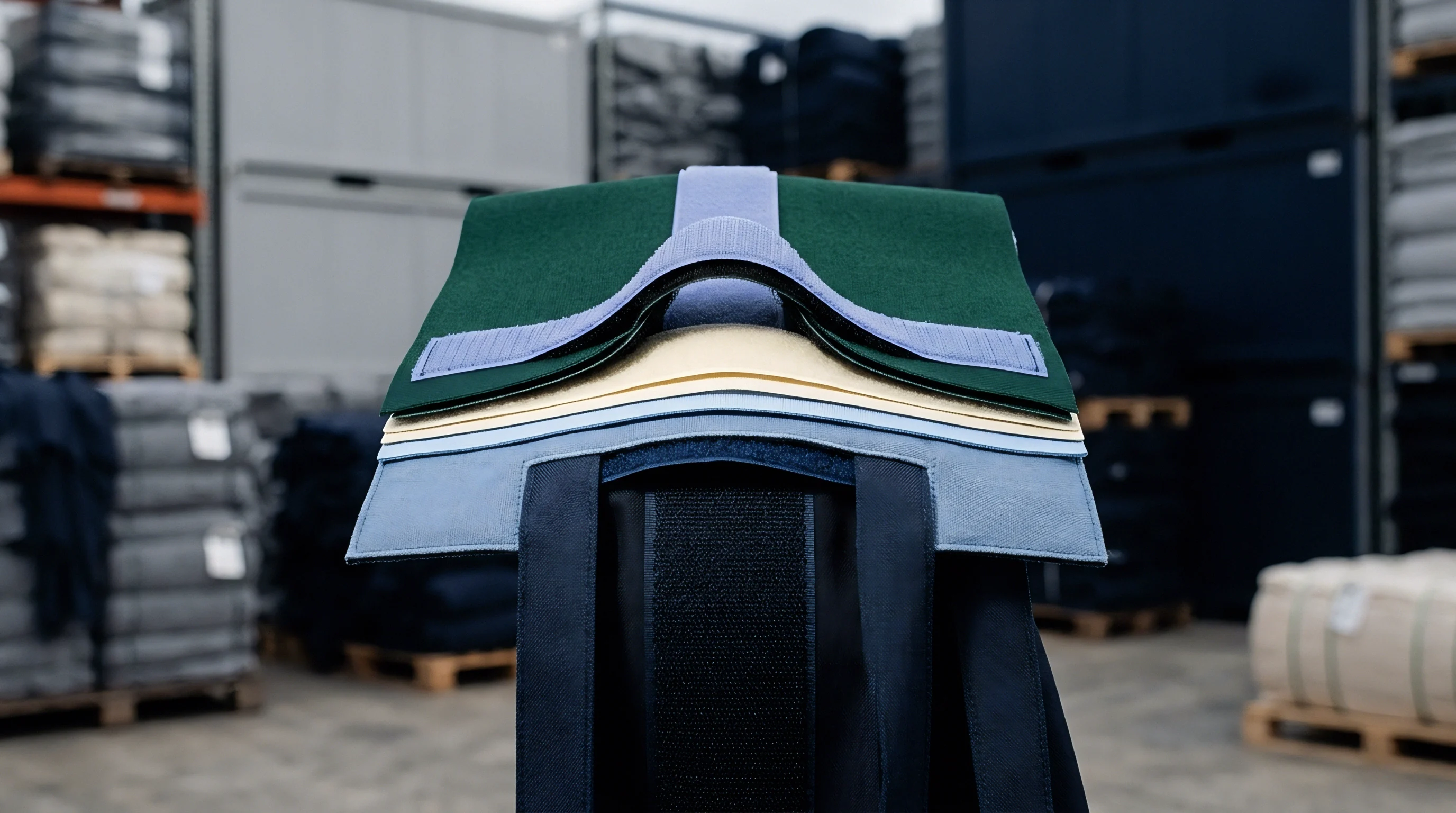
Architectural membrane reliability depends on consistent layer adhesion and uniform coating across wide web widths, which typically run 2.5 to 5.0 meters. A standard PVC fabric starts with a base weave of 1100 dtex or 1670 dtex polyethylene terephthalate (PET) yarns, coated on both sides using knife-over-roll or dip-coating processes. The primary coat uses plasticized PVC resin formulated with diisononyl phthalate (DINP), diisodecyl phthalate (DIDP), or high-molecular-weight linear phthalates at concentrations between 35 and 55 parts per hundred resin (phr).
An intermediate acrylic or polyurethane tie coat binds this primary layer to an outer PVDF protective varnish. Across this multi-layered cross-section, volatile constituents display widely differing solubility and diffusion rates.
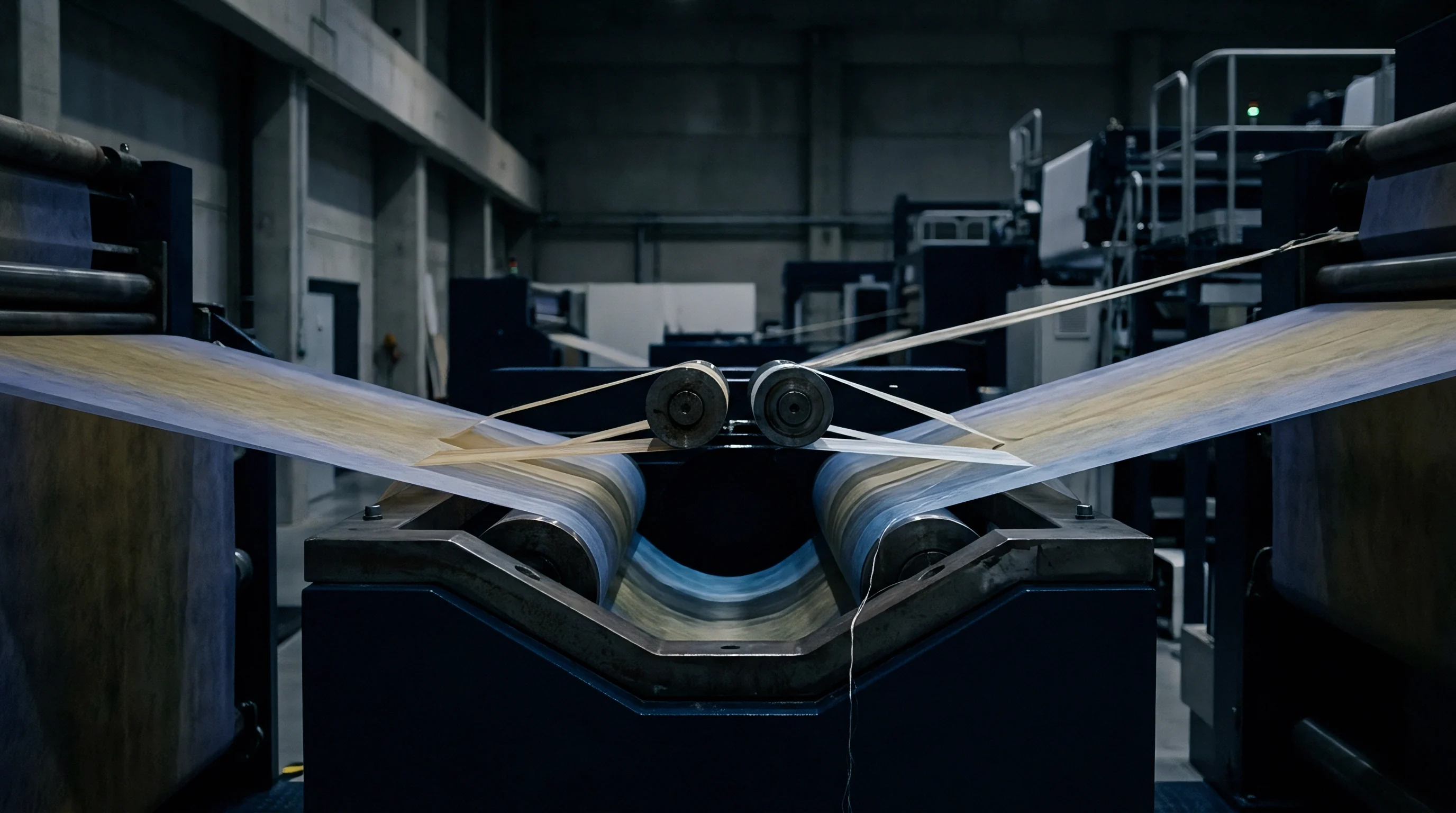
Manufacturing introduces systematic thermal variation during drying, gelation, and surface embossing. Temperature gradients across the stenter frame, fluctuations in web tension, and uneven exhaust air speeds produce localized differences in residual solvent content and monomer distribution. Once finished fabric rolls are wound under tension, residual volatiles begin to equilibrate within the compressed layers.
Core zones retain more volatiles during cooling because mass transfer is restricted, while outer windings lose low-boiling species to ambient air. This combined thermal and mechanical history leaves a multi-modal variance in residual volatile content across production lots.
| Coating Polymer | Base Fiber Reinforcement | Primary Volatile Species | Volatilization Rate Constant at 70°C (1/s) | EN ISO 2286-2 Mass per Unit Area Variance (%) |
|---|---|---|---|---|
| Plasticized PVC (DINP/DIDP) | High-Tenacity PET (1670 dtex) | Phthalate Esters, Residual DMF | 1.42 × 10⁻⁶ | ± 2.8 |
| PTFE Dispersion | EC10 136 Glass Fiber | Surfactant Residues (PFOA-free), Fluorosilanes | 3.15 × 10⁻⁷ | ± 1.4 |
| Liquid Silicone Rubber (LSR) | EC9 68 Glass Fiber | Cyclic Siloxanes (D4-D6), Platinum Catalyst Carriers | 8.90 × 10⁻⁷ | ± 1.9 |
| Flexible Polyurethane (TPU) | High-Tenacity PET (1100 dtex) | Isocyanate Monomers, Methyl Ethyl Ketone (MEK) | 2.10 × 10⁻⁶ | ± 3.2 |

Thermal Desorption and Volatilization Kinematics
Mass loss from technical fabric layers follows a two-stage transport regime. Internal diffusion within the bulk coating dominates the initial phase, which Fickian mass transfer models describe reasonably well. Surface evaporation into the external boundary layer becomes the rate-limiting step once surface concentrations fall below bulk equilibrium levels.
The process exhibits strong Arrhenius temperature dependence: even modest increases in membrane surface temperature under direct sunlight sharply accelerate molecular mobility and vaporization rates. Inter-layer variance develops when adjacent polymer layers have mismatched diffusion coefficients, trapping volatiles at internal interfaces.
PTFE-coated glass structural membranes exhibit non-linear outgassing profiles governed by boundary-layer boundary migration during hot-air sintering.
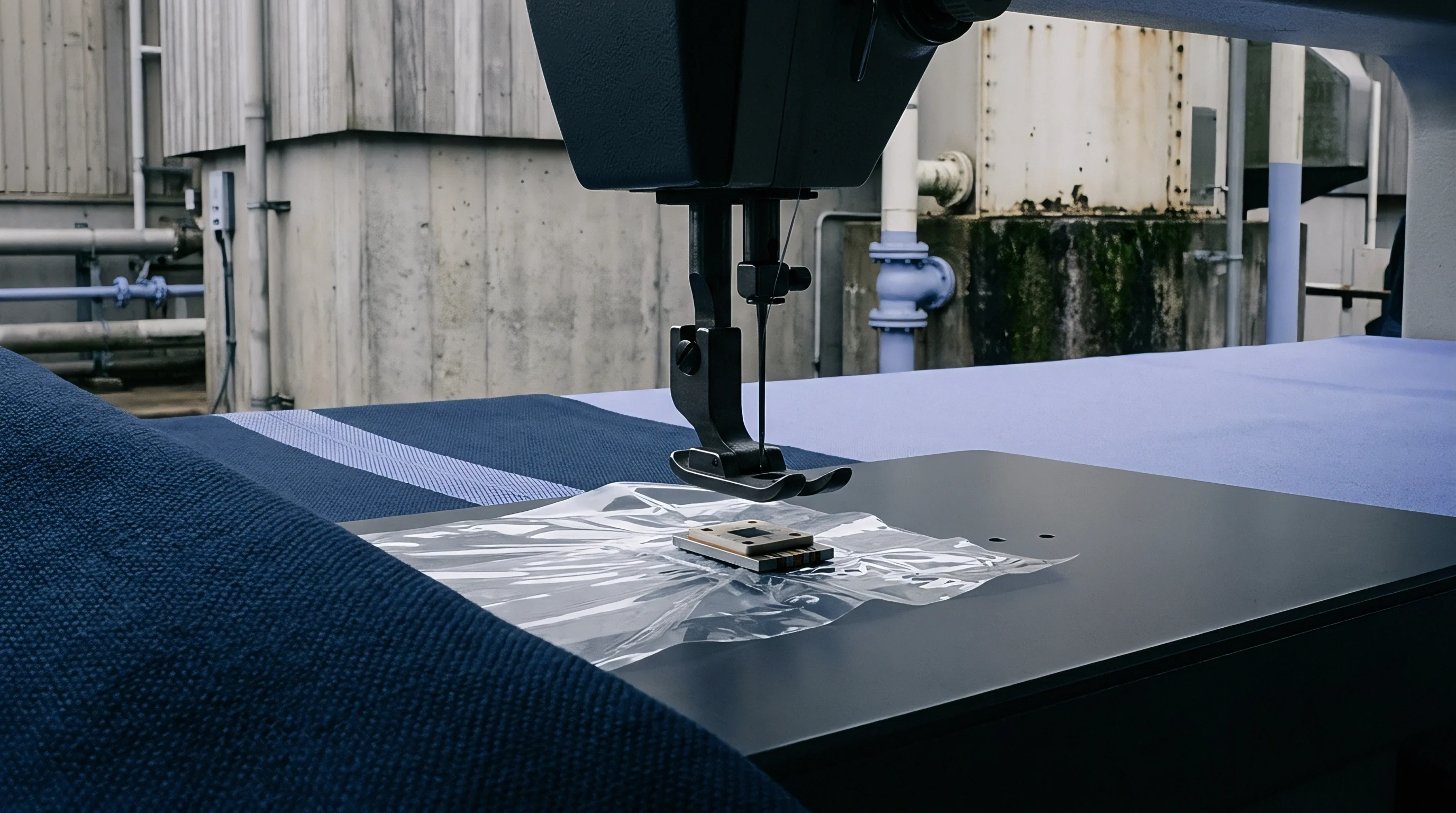
If localized inter-layer volatilization rates vary across a fabric batch, installed panels develop uneven shrinkage and localized stress concentrations. Fabricators who weld architectural panels using high-frequency or hot-wedge techniques hit seam strength failures when trapped solvents outgas during thermal bonding. Rapid volatilization along the weld line leaves micro-voids in the molten polymer pool, dropping peel strength below the minimum structural limits mandated by DIN EN ISO 1421.
Accounting for the full probability distribution of this variance across production runs is essential to ensure long-term structural reliability.
Converters routinely blame inter-layer blistering on high ambient humidity during installation, overlooking residual solvent trapped inside the tie-coat matrix during high-speed stenter drying.
Outgassing
Chemical transport of low-molecular-weight compounds out of multi-layer technical fabrics depends directly on molecular weight, matrix crosslink density, and thermal exposure history. Phthalate plasticizers in architectural PVC membranes make up a substantial share of total material mass and continuously migrate from inner layers toward outer surfaces. A concentration gradient between the plasticizer-rich primary coat and the unplasticized PVDF finish drives this steady-state molecular flux.
As surface evaporation strips plasticizer from the top layer, diffusion from the bulk matrix attempts to restore chemical equilibrium. Local variations in coating thickness across the roll width modulate mass flux directly, producing non-uniform outgassing across a single production lot.
Environmental regulations and industrial standards set strict limits on volatile organic compounds (VOCs) and semi-volatile organic compounds (SVOCs) released by building materials. REACH Annex XVII Entries 51 and 52 restrict specific phthalate species ~ including DEHP, DBP, BBP, DINP, DIDP, and DNOP ~ limiting their combined concentration to under 0.1 percent by weight in plasticized layers. OEKO-TEX Standard 100 Class IV rules for architectural materials enforce a total phthalate cap of 1000 mg/kg alongside VOC emission limits measured by micro-chamber testing under ISO 16000-9.
Meeting these standards requires precise quantification of emission variance across production batches so non-compliant rolls are caught before reaching job sites.

Fickian Transport across Polymer Interfaces
Mass transport through laminated textile layers follows continuous boundary diffusion governed by Fick’s laws when matrix swelling is minimal. Because diffusion coefficients vary non-linearly with temperature and local plasticizer concentration, exact analytical solutions are rarely feasible for multi-layer geometries. The mass flux J across an inter-layer thickness x is defined as:
J = -D(C, T) fracpartial Cpartial x
where D(C, T) represents the concentration- and temperature-dependent diffusion coefficient, and C denotes the volatile species concentration. At internal interfaces, partition coefficients dictate step changes in concentration between adjacent polymer phases, creating localized stress regions where plasticizer depletion shifts viscoelastic relaxation behavior.
Uneven diffusion rates across different fabric zones produce non-uniform aging. Outer layers exposed to UV radiation and thermal cycling undergo fast surface volatilization, causing localized stiffening while inner layers retain more plasticizer. This sharp concentration gradient generates residual shear stress at the interface between the base coat and topcoat varnish.
Over prolonged exposure, cyclic shear stresses can exceed inter-layer bond strength, leading to localized blistering, topcoat cracking, and premature delamination.
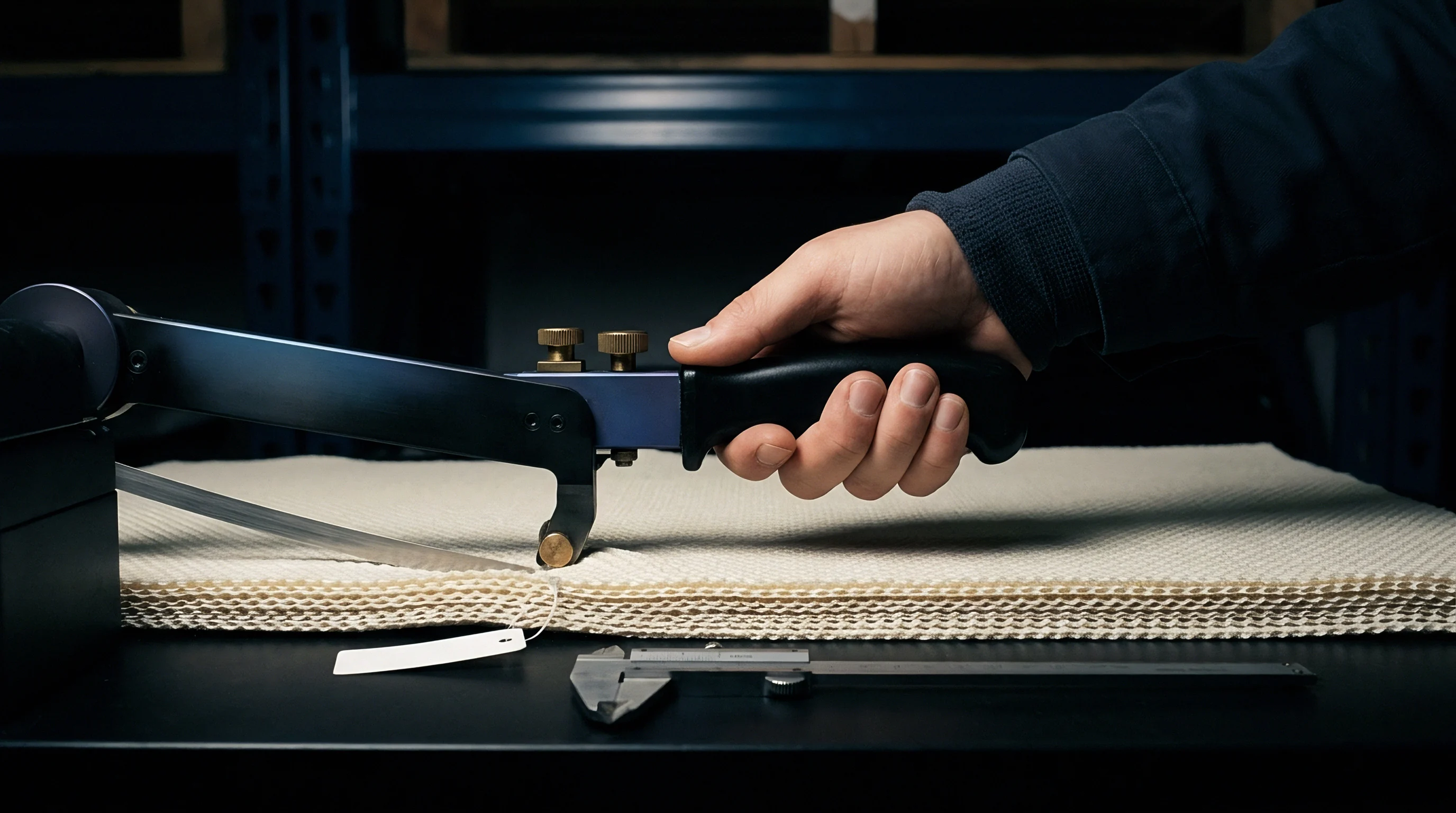
Thermal Acceleration and Degradation Kinetics
Thermal aging tests under ISO 188 evaluate outgassing dynamics by placing specimens in forced-air ovens at elevated temperatures. Standard protocols expose PVC-coated fabrics to 70°C or 100°C for 7 to 28 days to accelerate volatilization and project multi-year performance. Accelerated mass loss curves show distinct outgassing stages: an initial burst of low-boiling residual solvents, followed by steady, prolonged migration of plasticizer monomers and liquid additives.
Micro-chamber VOC analysis under ISO 16000-9 reveals a 42 percent increase in total volatilization rates when thermal aging temperature rises from 23°C to 60°C across three-layer PVC architectural membranes.
Quantifying these mechanisms requires categorizing the main failure modes caused by volatile migration across fabric interfaces:
- Plasticizer Exudation and Interface Delamination occurs when monomeric plasticizers reach the topcoat boundary faster than they evaporate, forming a fluid film that breaks adhesion between the PVC base coat and PVDF lacquer.
- Plasticizer Migration Induced Micro-Cracking develops when local plasticizer concentrations fall below critical thresholds, stiffening the matrix until wind loads cause brittle surface fractures.
- Fluoropolymer Topcoat Voiding occurs as residual high-boiling solvents evaporate through the top coat, leaving microscopic pinholes that admit moisture and foster microbial growth.
- Isocyanate Unblocking and Gaseous Blistering occurs in polyurethane tie coats when heat unblocks residual latent isocyanate groups, releasing carbon dioxide gas that expands between layers under solar exposure.
- Siloxane Oligomer Condensation Fogging appears in silicone-coated glass fabrics when cyclic siloxanes (D4 through D6) volatilize from the elastomer matrix and condense on nearby structural glass or glazing.
Thermal testing links mass loss to mechanical degradation, but predicting batch-level volatility across extended production runs remains difficult because processing conditions drift unobserved.
How do subtle shifts in stenter oven humidity profiles during curing alter the ratio of retained solvent to plasticizer migration rates across large fabric lots?


Kernel
Modeling volatilization variance across heterogeneous fabric batches requires a flexible Bayesian nonparametric framework. Standard parametric distributions, such as Gaussian or Weibull models, fail to capture the multi-modal outgassing profiles caused by localized defects, coat-weight variations, and raw material lot changes. Dirichlet Process Mixture Models (DPMM) avoid these assumptions by treating the number of emission clusters as an unknown parameter inferred directly from empirical test data.
A Dirichlet Process prior partitions fabric samples into distinct behavioral groups without imposing arbitrary distribution shapes.
The Dirichlet Process prior, written DP(α, G0), uses a positive concentration parameter α and a base probability distribution G0. The concentration parameter governs the likelihood of identifying new volatile emission clusters as testing data accumulates. Higher α values reflect greater roll-to-roll heterogeneity, pointing to frequent process fluctuations during coating.
The base measure G0 captures prior expectations across the population, typically formulated as a conjugate Normal-Inverse-Wishart distribution over mean volatilization rates and covariance matrices.

Bayesian Nonparametric Formulation for Heterogeneous Batches
Formulating a Bayesian mixture model for inter-layer volatilization uses the constructive stick-breaking representation introduced by Sethuraman. The infinite discrete distribution G drawn from DP(α, G0) is written as:
G = sumk=1infty πk δthηk
where δthηk represents a point mass at parameter value thηk drawn independently from base distribution G0. The mixture weights πk are generated through a sequential stick-breaking process defined by random variables Vk sim Bη(1, α):
πk = Vk prodj=1k-1 (1 – Vj)
In this framework, sample i from fabric batch j has a volatilization vector yij representing measured mass loss rates across several temperature intervals. The observation yij is modeled as a draw from a component density f(yij | thηij), where the latent parameters thηij follow G. This naturally groups samples with matching outgassing profiles into latent clusters, uncovering localized processing anomalies without arbitrary manual thresholds.

Where Does Latent Cluster Overlap Distort Volatilization Variance Predictions?
Latent cluster overlap distorts predictions when the concentration parameter α is constrained by overly restrictive hyper-priors, blurring the line between baseline plasticizer loss and solvent spikes from insufficient stenter drying. When posterior components overlap heavily, it becomes difficult to separate conforming rolls from defective ones. Disentangling these latent states requires Markov Chain Monte Carlo (MCMC) sampling techniques that update cluster assignments dynamically against continuous thermal desorption data.
Adjusting this concentration parameter directly alters how mass is distributed among the mixture components.
Inference over the Dirichlet Process prior uses Gibbs sampling or variational inference algorithms to build posterior distributions over component parameters thηk and assignment indicators zi. The resulting posterior yields realistic credible intervals for expected mass loss on any random sample from a given lot. Integrating latent mixture components isolates outlying rolls with abnormal volatile retention before they reach structural fabrication.
Fabric lots exhibiting multi-modal volatilization distributions under Bayesian Dirichlet process analysis require immediate segregated storage to prevent blending highly volatile rolls into structural canopy panel assemblies.


Diffusion
Quantifying volatile species released from technical fabrics requires standardized sampling and sensitive analytical instrumentation. Micro-chamber testing under ISO 16000-9 combined with thermal desorption gas chromatography-mass spectrometry (TD-GC-MS) per ISO 16000-6 is the standard benchmark for identifying and measuring VOCs. Specimen swatches cut from specific roll positions are conditioned inside sealed micro-vessels under controlled temperature, humidity, and airflow.
Headspace emissions accumulate on Tenax TA sorbent tubes, which are then thermally desorbed into the GC-MS column.
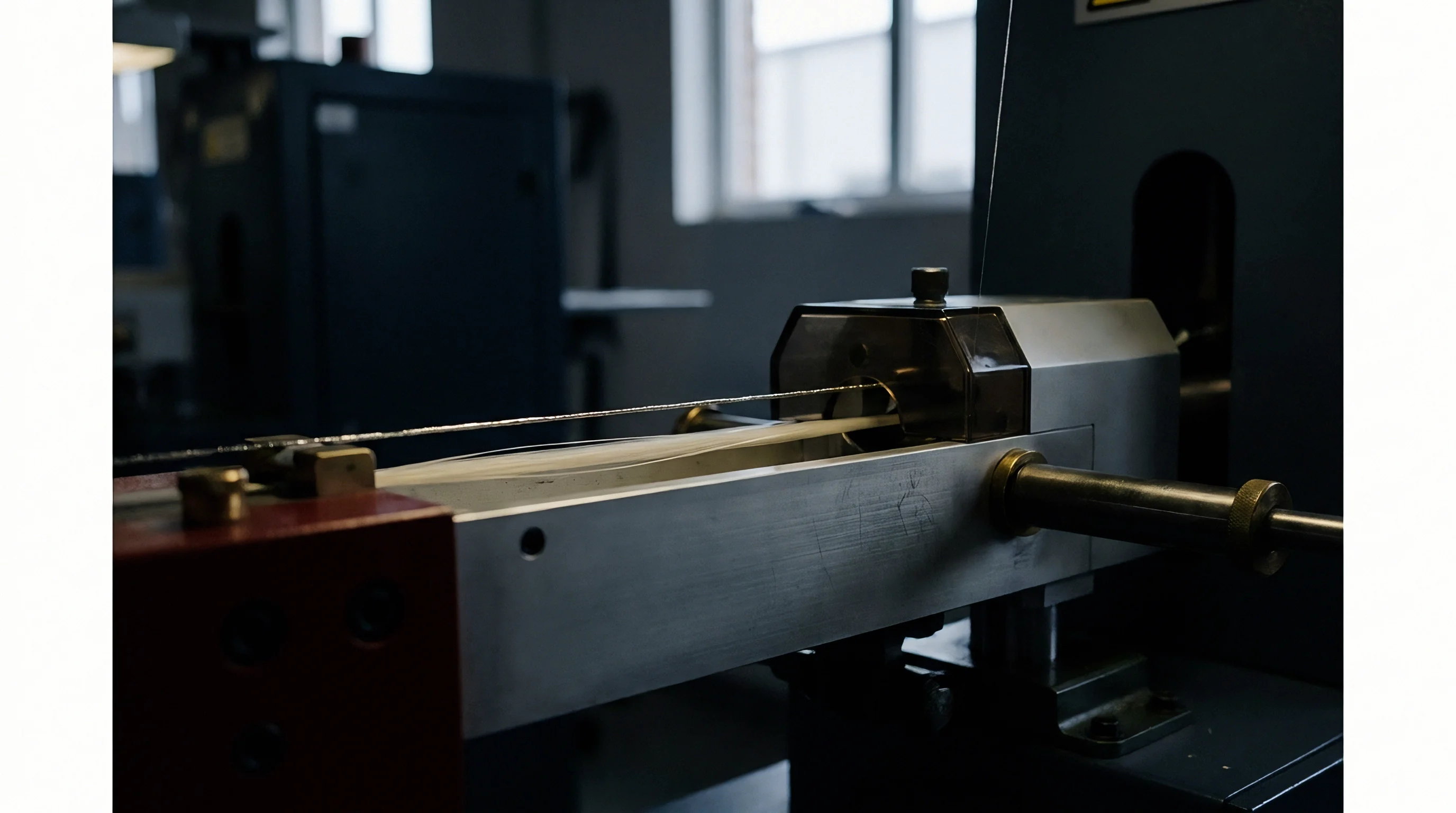
A complementary method uses thermogravimetric analysis coupled with Fourier-transform infrared spectroscopy (TGA-FTIR). TGA continuously tracks sample weight loss under a nitrogen purge while temperature ramps from 23°C to 600°C at fixed rates (e.g., 10°C/min). The evolved gas passes through a transfer line kept at 250°C into a gas-cell FTIR spectrometer, identifying functional groups associated with evaporating solvents, plasticizer fragments, and crosslinker breakdown products in real time.
Calibrating TGA mass loss curves allows calculation of absolute volatile mass fractions in individual coating layers.
| Standard Test Method | Target Volatile Residues | Quantification Limit | Test Duration | Measurement Uncertainty (%) |
|---|---|---|---|---|
| ISO 16000-6 / TD-GC-MS | TVOC (C6 to C16), DMF, THF, Toluene | 0.001 mg/m³ | 24 Hours | ± 4.5 |
| EN 16516 / Emission Chamber | SVOC (Phthalates, Phenols, Siloxanes) | 0.002 mg/m³ | 28 Days | ± 6.2 |
| ISO 11358-1 / TGA-FTIR | Total Plasticizer Mass Fraction, Solvents | 0.05 % Mass | 2 Hours | ± 1.8 |
| DIN 53381-1 / Thermal Stability | Dehydrochlorination (HCl Gas from PVC) | 1.0 ppm HCl | 4 Hours | ± 3.1 |

Micro-Chamber TD-GC-MS Sampling Protocols
Reliable batch characterization requires systematic physical sampling across fabric rolls. Outer windings exposed to air during storage lose volatiles faster than tightly packed core turns. Sampling protocols must extract swatches across a grid spanning the full web width (left edge, center, right edge) and along the roll length (outer turn, middle, inner core) to map spatial outgassing variations accurately.
The TD-GC-MS sampling execution protocol follows a continuous five-stage laboratory workflow:
- Cut circular test swatches measuring 64 mm in diameter from specified positions using a calibrated stainless steel punch die, then seal them immediately in gas-tight fluoropolymer barrier bags.
- Place the prepared swatch in a clean 115 mL stainless steel micro-chamber held at 60°C ± 0.5°C under a high-purity nitrogen carrier flow of 100 mL/min.
- Attach a pre-conditioned Tenax TA sorbent tube to the chamber exhaust port to collect volatile emissions over a 60-minute sampling interval.
- Transfer the sorbent tube to an automated thermal desorber, heating it to 300°C for 10 minutes to load analytes onto a cold trap held at -10°C.
- Desorb the cold trap at 320°C onto a capillary GC column (30 m × 0.25 mm × 0.25 µm 5% phenyl-methylpolysiloxane), running a thermal program from 40°C to 300°C while recording total ion chromatograms.

Hyperparameter Estimation via MCMC Gibbs Sampling
Converting TD-GC-MS peak areas into hyperparameter inputs for Dirichlet Process modeling requires calibrating raw analyte concentrations against analytical standards. Let yi represent the vector of quantified volatile mass fractions for sample i. The observational model assumes yi sim mathcalN(μzi, Σzi), where zi identifies the latent cluster assignment for sample i.
The conditional distribution for updating cluster indicator zi given all other assignments z-i follows standard Dirichlet Process mixture updates:
P(zi = k | z-i, yi, α, thη) propto begincases n-i, k · mathcalN(yi | μk, Σk) & for eξsting cluster k \ α · int mathcalN(yi | thη) dG0(thη) & for new cluster knew endcases
where n-i, k counts samples assigned to cluster k excluding sample i. Running Gibbs sampling for 20,000 iterations yields marginal posterior distributions for the concentration parameter α and cluster means μk.
Uniform coat weights measured at roll edges frequently conceal multi-modal outgassing clusters inside the inner windings.
Thermal desorption chromatography revealing a secondary latent cluster containing 4,200 mg/kg of unevaporated DMF solvent trapped within the tie coat prompted the rejection of the structural membrane shipment.


Vapor
Applying Dirichlet Process mixture modeling can be demonstrated on a 25,000 m² lot of PVC/PES architectural membrane specified for a stadium roof. Engineering specifications capped plasticizer mass loss at 3.5 percent after accelerated thermal exposure (70°C for 168 hours per ISO 188) to ensure a 20-year service life free of flexural cracking or seam failure. Initial mill testing across 18 sampled rolls showed a sample mean mass loss of 2.8 percent with a standard deviation of 0.6 percent, leading the manufacturer to report full compliance based on standard Gaussian assumptions.
Applying a Dirichlet Process Mixture Model to the 18 TD-GC-MS volatile mass loss profiles evaluated multi-modality and hidden defect clusters across the batch. The model used a Dirichlet Process prior DP(α, G0) with hyper-prior α sim Γ(2, 1) and a conjugate Normal-Inverse-Wishart base distribution G0 = NIW(μ0, λ0, Ψ0, ν0) calibrated against historical mill data. Sampling ran for 50,000 MCMC iterations with a 10,000-iteration burn-in, reaching convergence confirmed by Gelman-Rubin diagnostics (hatR
Predictive Volatilization Modeling for Stadium Roof Membranes
The posterior distribution revealed distinct clustering within the 18 sampled rolls, splitting the shipment into two latent operational groups:
Cluster 1 (Baseline Group): Comprising 78 percent of the estimated lot mass, this group exhibited a tight mean mass loss of 2.3 percent ($σ2 = 0.04), representing standard fully cured production where plasticizer migration proceeded under standard Fickian diffusion.
Cluster 2 (Non-Conforming Outlier Group): Comprising 22 percent of the lot mass, this group exhibited an elevated mean mass loss of 4.6 percent (σ2 = 0.38), driven by high concentrations of residual DMF solvent and low-molecular-weight phthalate fractions left behind during an unrecorded speed increase on stenter line 3.
| Latent Cluster | Lot Weight Fraction (%) | Posterior Mean Mass Loss (%) | 95% Credible Interval (%) | Predicted 10-Year Plasticizer Retention (%) |
|---|---|---|---|---|
| Cluster 1 (Standard Batch) | 78.4 | 2.31 | 91.2 | |
| Cluster 2 (Solvent Retained) | 21.6 | 4.64 | 76.8 | |
| Combined (DPMM Model) | 100.0 | 2.81 | 88.1 | |
| Gaussian Assumption Model | 100.0 | 2.80 | 89.4 |
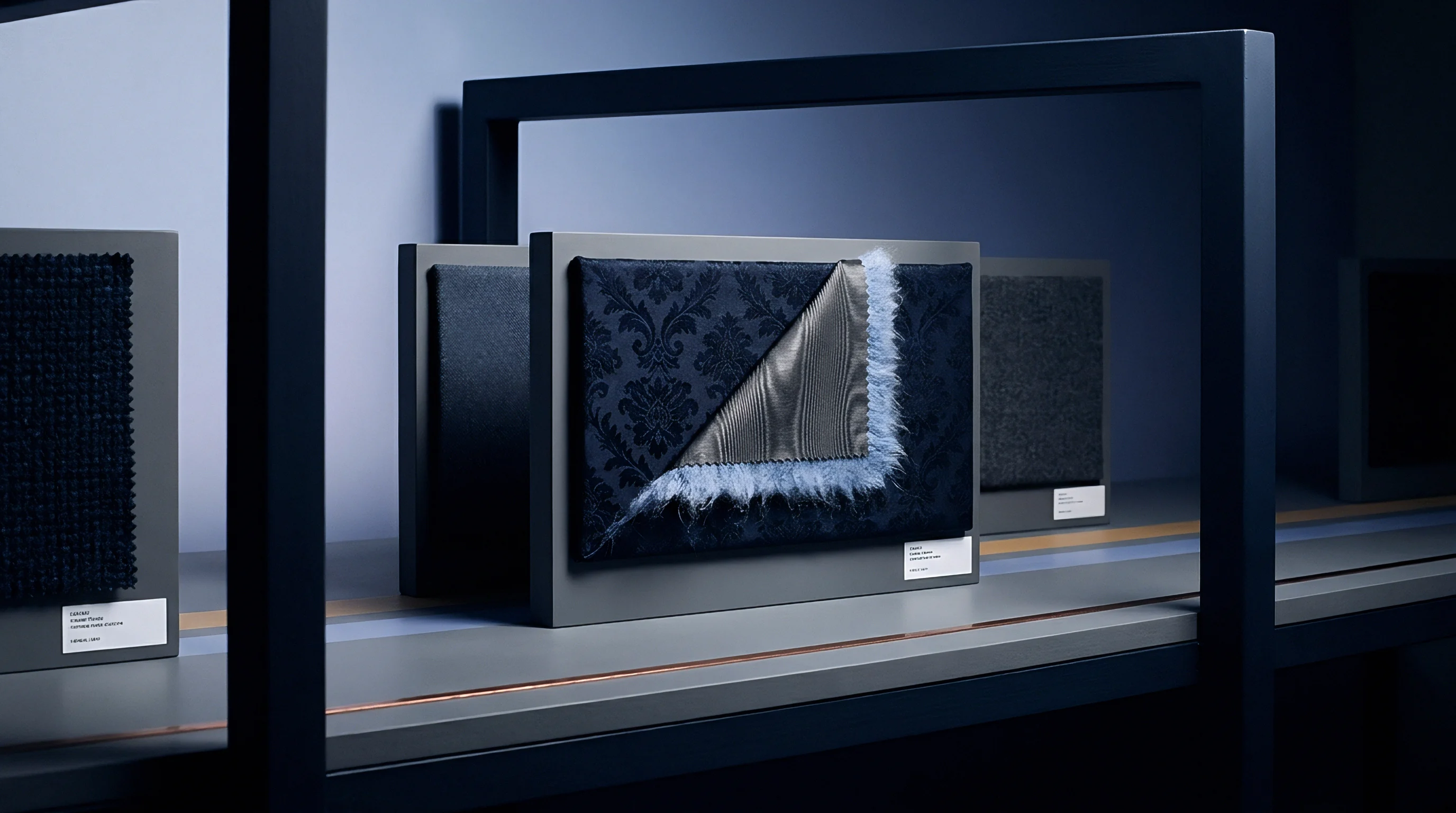
Posterior Credible Intervals for Structural Seam Integrity
Standard parametric models averaged the two clusters together, producing a naive 95 percent confidence interval of that masked the structural risk. The Dirichlet Process posterior predictive distribution correctly preserved the distinct bi-modal structure, showing a 21.6 percent probability that any randomly selected roll from the batch would exceed the 3.5 percent maximum allowable mass loss limit under thermal exposure.
Under concentrated plasticizer depletion, joint peel resistance falls below allowable structural limits.
Fabric panels cut from Cluster 2 rolls undergo rapid plasticizer depletion under ambient solar heating, causing localized shrinkage and elevating tensile stresses beyond structural design limits. Furthermore, rapid plasticizer loss at weld interfaces reduces high-frequency seam peel strength from an initial 120 N/5cm to under 45 N/5cm after 36 months of exterior exposure. Applying the Dirichlet Process prior allowed precise identification of the specific roll IDs belonging to Cluster 2, enabling targeted rejection of non-conforming material without discarding the entire conforming 78 percent production batch.
Environmental product declarations specifying low-VOC emissions under EN 15804 fail to shield project developers from structural liability when inter-layer plasticizer depletion reduces seam shear resistance below design safety margins.
Before releasing technical fabric lots for panel fabrication, the buyer must verify that the compliance file includes a batch-specific Dirichlet process mixture analysis report establishing that the posterior probability of exceeding maximum allowable volatilization thresholds remains below 0.05 across all sampled roll windings.
Technical compliance files require complete analytical documentation to survive legal scrutiny during structural failure claims:
- Scope Certificate Verification for Specific Article Numbers confirms that certification covers the exact article number, coat weight, and colorway listed on the invoice, rather than relying on generic product family approvals.
- Thermal Desorption Mass Spectrometry Lot Screen provides full TD-GC-MS mass spectra that pinpoint residual volatile solvents and plasticizer fractions across both inner and outer roll windings.
- Inter-Layer Plasticizer Depletion Projection Model integrates empirical outgassing rate constants into Fickian diffusion equations to estimate 10-year and 20-year flexural modulus retention under expected climatic conditions.
- Seam Shear Strength Retention Under Accelerated Thermal Aging proves that high-frequency welded seams maintain at least 80 percent of their initial tensile strength after 28 days of exposure at 70°C per ISO 188.
- Customs REACH Annex XVII Conformity Statement verifies that restricted phthalate plasticizers (DINP, DIDP, DEHP, DBP) stay below the 0.1 percent mass threshold based on direct lot testing.

Ledger
Managing regulatory exposure in high-performance coated textiles requires converting chemical transport dynamics into enforceable contractual terms and customs documentation. Authorities enforcing REACH Annex XVII and national market surveillance standards frequently use thermal desorption screening to catch non-compliant fabrics at entry ports. Shipments carrying undeclared solvents like DMF above 1000 mg/kg face detention, forced re-exportation, or destruction at the importer’s expense.
Relying on generic mill certificates without batch-level testing creates major financial and legal exposure for EPC contractors and fabricators.
The financial impact of undetected outgassing goes far beyond border delays. When a tension structure develops coating cracks or seam failure from rapid inter-layer outgassing, remediation costs can easily dwarf the original fabric price. Stripping a tensioned roof, setting up temporary weather protection, recutting replacement panels, and re-erecting the canopy creates massive liability.
Validating batch homogeneity with Bayesian mixture models provides the strongest defense against structural failures down the road.

REACH Annex XVII Enforcement and Border Detention
Border enforcement agencies target restricted volatile substances using targeted sampling protocols. Customs labs inspect imported PVC and polyurethane textiles for solvent residues, organotin catalyst breakdown products, and regulated phthalates. Finding restricted substances above legal limits triggers immediate rejection and flags the importer for heightened screening on future shipments.
Relying solely on standard lot certificates rarely provides adequate legal or technical protection during border checks.
Contracts between fabric buyers and coating mills should explicitly assign liability for re-testing and container detention. Generic clauses promising compliance with environmental laws offer little protection during a customs audit. Procurement contracts need to mandate lot-level testing by ISO/IEC 17025 accredited laboratories, specifying exact test protocols (TD-GC-MS, TGA-FTIR) and statistical acceptance criteria tied to posterior credible intervals.

Batch Verification Dossiers for Long-Term Architectural Guarantees
A technical compliance file for architectural fabric must tie together raw material logs, mill process data, and post-production test results. Linking stenter frame temperature logs directly to TD-GC-MS outgassing profiles creates a clear audit trail of lot consistency. This dossier provides the factual groundwork required to back 10-year or 20-year structural warranties for project lenders and insurers.
Without these complete traceability records, non-conforming batches frequently pass initial receiving and fail in service.
Importers, fabricators, and engineering teams need active verification workflows that evaluate incoming lots against Bayesian outgassing models. Combining micro-chamber testing with Dirichlet Process mixture models catches defective rolls before cutting and welding, protecting both structural integrity and legal standing.