Potassium Chloride Reference Electrolyte Outflow Drift under High Sodium Background
High sodium backgrounds reverse reference electrolyte outflow through porous frits, driving osmotic junction potential drift and causing significant pH measurement error.
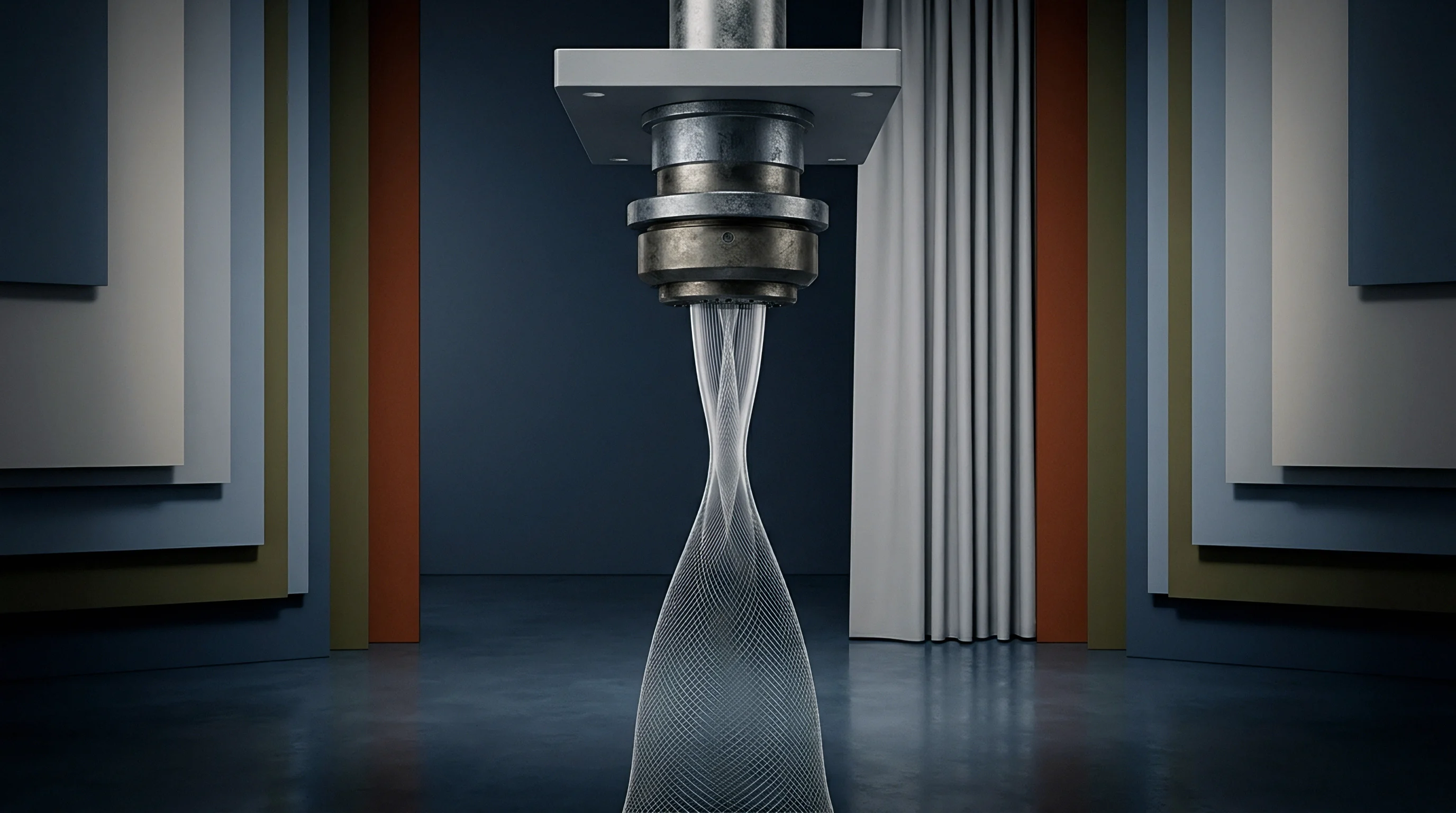

Frit
In potentiometric measurements using silver-silver chloride reference systems, fluid outflow through porous liquid barriers maintains a stable electrical bridge between internal reference elements and sample solutions. Standard laboratory sensors rely on sintered ceramic discs, porous glass plugs, or ground-sleeve capillaries to meter this discharge. Under baseline conditions in low ionic strength aqueous media, a 3.0 M or saturated potassium chloride solution leaks outward at roughly 0.01 mL to 0.20 mL per twenty-four hour period, though outflow velocity drops rapidly as opposing forces mount.

Hydrostatic Pressure and Porous Boundary Dynamics
Maintaining a liquid column inside the reference reservoir establishes outward convection through sub-micron channels, and this positive hydraulic head keeps external sample ions from penetrating the reference compartment. Hydraulic pressure generated by a thirty millimeter internal electrolyte column yields an outward linear velocity through ceramic pore radii ranging from 0.1 to 1.0 micrometers. When the external bath contains minimal dissolved solids, outward fluid transport dominates, sweeping sample ions clear of the boundary face before differential diffusion rates can shift the junction potential.
Analytical accuracy depends on this outward sweep to preserve a fixed chloride activity around the internal silver wire coated with silver chloride. If external fluid enters the pore channels, chloride concentration shifts, altering the half-cell potential defined by the Nernst relationship whenever salt precipitation blocks outer pores.
Viscous Resistance and Permeability Coefficients
Fluid transport through narrow ceramic or glass structures follows Hagen-Poiseuille relations governing laminar flow, where volumetric outflow scales with the fourth power of effective pore radius and the inverse of fluid viscosity. Saturated potassium chloride exhibits a dynamic viscosity of approximately 1.02 centipoise at twenty-five degrees Celsius. External test solutions carrying heavy solute loads increase viscosity directly at the interface, generating localized resistance to electrolyte flow as water moves toward higher concentration.
When reference sensors operate in dense chemical matrices, localized concentration gradients reduce effective pore permeability. Ceramic junctions with low total porosity are particularly vulnerable to flow suppression: sub-micron pore channels choke once viscous external liquids establish a stable interface at the outer boundary, leaving the hydrostatic head struggling against backpressure.
Measurement drift in high-salt media is often attributed to diaphragm aging, though osmotic flow reversal across the porous element is frequently the governing factor.


Matrix
Aqueous solutions with heavy sodium concentrations exert severe osmotic and ionic influences on adjacent liquid junctions. Concentrated alkaline dye baths, mercerizing liquors, and high-salinity textile effluent samples frequently carry sodium ion concentrations from 2.0 M up to 5.0 M Na+, disrupting the equimolar transport needed to maintain electrical contact.

Ionic Strength and Transport Number Asymmetry
Potassium and chloride ions possess nearly identical ionic mobilities in dilute aqueous environments, yielding near-zero diffusion potential. Potassium exhibits a limiting ionic molar conductivity of 73.5 cm2/ohm mol, while chloride shows 76.3 cm2/ohm mol at twenty-five degrees Celsius. This symmetry establishes potassium chloride as the standard reference electrolyte for analytical potentiometry, an arrangement that fails when foreign sodium ions penetrate the reference chamber.
Sodium ions have a lower limiting ionic conductivity of 50.1 cm2/ohm mol owing to their larger hydrated radius. When an electrode enters a bath containing 3.0 M sodium chloride or sodium sulfate, the mobility difference between outward-diffusing potassium and inward-diffusing sodium sets up an uncompensated charge separation within the porous boundary. This transport asymmetry produces a phase-boundary voltage shift ranging from 5 mV to over 25 mV.
Liquid Junction Performance under Concentrated Salt
Selecting reference hardware for concentrated alkali testing requires weighing flow geometry against ionic composition. Standard ceramic frits have low outflow rates that conserve internal electrolyte, but they succumb quickly to osmotic flow suppression. Ground-glass sleeve junctions maintain significantly higher discharge, establishing a clean boundary layer through active convection.
Because high salt distorts calibration curves, pressurized gel-filled reference sensors incorporate chemical gelling agents to resist back-diffusion, though fixed gel structures cannot flush contaminants from boundary pores once precipitation occurs.
| Junction Architecture | Outflow Rate (mL/24h) | Osmotic Backpressure Susceptibility | Potential Drift Rate (mV/h) | Primary Failure Mode |
|---|---|---|---|---|
| Single Ceramic Frit | 0.01 to 0.05 | High | 4.5 to 12.0 | Pore blockage and flow inversion |
| Multiple Ceramic Frits | 0.05 to 0.15 | Moderate | 2.0 to 6.0 | Asymmetric flow and gradient drift |
| Ground-Glass Sleeve | 0.50 to 3.00 | Low | 0.2 to 1.0 | Rapid internal electrolyte depletion |
| Pressurized PTFE Capillary | 0.10 to 0.40 | Very Low | 0.5 to 1.5 | Capillary fouling by particulate matter |
- Inspect the internal reference fill level to confirm the liquid head sits twenty millimeters above the sample surface.
- Flush the liquid junction using warm deionized water to dissolve residual salt crystals inside the porous structure.
- Measure reference electrolyte outflow velocity by tracking reservoir liquid volume over a twelve-hour calibration window.
- Record reference potential against a secondary calomel electrode in equimolar potassium chloride solution to verify offset.
- Calibrate the electrode pair using two buffer solutions containing matching background salt concentrations.
Double junction reference electrodes with renewable outer electrolyte boundaries maintain baseline stability where porous ceramic disks fail.
Refilling the reference reservoir daily prevents inward salt diffusion into the internal chamber.

Osmosis
Water activity differences between saturated potassium chloride reference electrolytes and hyper-saline sample baths drive solvent transport across the liquid diaphragm. A 3.0 M KCl reference electrolyte exhibits a water activity of approximately 0.90, whereas concentrated sodium dye liquors or saline extraction fluids often exhibit lower water activities depending on salt concentration and dissolved auxiliary solids, undermining the controlled convection required for measurement accuracy.

When Does Elevated Sodium Background Invert Reference Electrolyte Outflow?
Concentrated aqueous sodium solutions exceeding two molar alter local chemical potentials across porous junctions, setting up an opposing hydraulic drive. Water molecules spontaneously migrate through the barrier from regions of higher water activity to lower. When the sample solution contains elevated solute concentrations, osmotic transport draws water out of the reference chamber, or forces fluid inward if external water activity drops below internal levels.
This solvent migration works directly against the positive hydrostatic head inside the electrode stem. Net electrolyte outflow falls toward zero when osmotic backpressure balances the internal liquid column pressure. At that threshold, convective flushing ceases, leaving passive ionic diffusion as the sole transport mechanism across the porous diaphragm unless sleeve junctions are deployed to increase outflow volume.

Junction Blockage and Common-Ion Salt Crystallization
Concentration polarization at the outer face of porous ceramic frits induces salt precipitation within internal pores. Outward-diffusing potassium and chloride ions meet high concentrations of external sodium ions right at the narrow pore exit. The localized solubility limit of potassium sodium salt mixtures can be exceeded, causing micro-crystallization inside sub-micron channels.
These crystalline deposits choke effective pore diameters and curtail outflow according to capillary flow mechanics. Complete blockage drives electrical impedance across the liquid junction from typical values of 2 to 5 kilohms up to several megohms, inducing severe voltage instability in automated titration equipment.
- Osmotic Water Extraction causes electrolyte dilution inside narrow junction channels, reducing outward velocity.
- Sodium Ion Inward Diffusion shifts the internal chloride activity, inducing steady potential drift in Ag/AgCl reference half-cells.
- Porous Micro-Precipitation clogs sub-micron ceramic channels, increasing electrical resistance across the liquid diaphragm.
- Charge Separation Asymmetry generates an uncompensated liquid junction potential due to lower sodium ion mobility.
Inward osmotic flow dilutes the internal potassium chloride solution, shifting the half-cell potential away from standard values.
Measuring dye liquor pH with an osmotically compromised reference electrode causes false alkali dosing adjustments, leading to unlevel shade development and costly batch re-dyeing.


Potential
Electromotive force shifts in reference half-cells distort millivolt readings and alter calculated ion activities. In potentiometric pH or ion-selective electrode measurements, total measured voltage equals the sum of indicator electrode potential, internal reference potential, and liquid junction potential. When the liquid junction potential shifts under sodium background interference, the meter misinterprets the voltage change as a change in target ion concentration, an effect compounded when junction impedance spikes during blockage.

Henderson Equation and Diffusion Voltage Calculation
Calculating phase boundary voltages across liquid junctions relies on ion mobilities, valence charges, and activity coefficients. The Henderson equation estimates liquid junction potential by integrating ion concentrations across the boundary layer:
E_lj = (R T / F) ln( sum( z_i^2 u_i C_i(a) ) / sum( z_i^2 u_i C_i(b) ) )
Where z_i represents ionic valence, u_i represents ionic mobility, and C_i represents molar concentration on side a and side b of the junction interface. In a standard 3.0 M KCl reference electrode measuring a dilute pH 7 buffer, calculated junction potential remains below 1.5 mV. Immersed in a 3.0 M NaCl textile processing bath, the ionic concentration imbalance generates a calculated junction potential offset exceeding 14.0 mV.

Sensitivity Analysis of Voltage Bias and Apparent Ph Drift
Evaluating measurement error under varying salt concentrations demonstrates non-linear voltage deviation as outflow decreases and concentration gradients drive water across the barrier.
Assume an Ag/AgCl reference electrode filled with 3.0 M KCl measuring an aqueous textile bath containing 3.0 M Na+ at 25 degrees Celsius (298.15 K). Under baseline conditions with unhindered outflow (0.05 mL/h), the liquid junction voltage offset equals +14.8 mV. By Nernstian slope factors, 59.16 mV corresponds to one pH unit shift at 298.15 K. Dividing +14.8 mV by 59.16 mV/pH yields an apparent measurement bias of -0.25 pH units.
If osmotic backpressure reduces reference outflow to 0.002 mL/h, inward diffusion of Na+ enriches the pore channels. The effective concentration interface shifts deeper inside the ceramic frit, elevating local liquid junction voltage offset to +28.3 mV. Dividing +28.3 mV by 59.16 mV/pH produces an apparent measurement bias of -0.48 pH units.
An uncorrected pH shift of half a unit distorts chemical dosing calculations in wet processing systems.
| External Na+ (M) | Electrolyte Outflow (mL/h) | Junction Potential (mV) | Apparent pH Error | Measurement Bias Severity |
|---|---|---|---|---|
| 0.50 | 0.050 | +3.2 | -0.05 | Negligible |
| 1.50 | 0.030 | +8.1 | -0.14 | Moderate |
| 3.00 | 0.010 | +14.8 | -0.25 | Significant |
| 3.00 | 0.002 | +28.3 | -0.48 | Critical |
| 5.00 | 0.000 | +36.5 | -0.62 | Severe Failure |
- Outflow Velocity Decay reduces convective transport, allowing external cations to penetrate the porous reference junction.
- Nernstian Half-Cell Drift occurs when inward sodium diffusion alters internal chloride activity in the Ag/AgCl chamber.
- High Junction Impedance increases electrical noise and slows meter response times during titrations.
- Calibration Curve Distortion results from standardized buffer measurements lacking matching salt backgrounds.
At three molar sodium concentration, liquid junction voltage offset reaches fourteen point eight millivolts when outflow drops below five microliters per hour.
Uncorrected voltage drift directly alters reported analytical values.
Whether pressurized gel reference electrodes can eliminate diffusion drift over extended continuous monitoring in four-molar sodium baths remains subject to ongoing laboratory trials.


Correction
Mitigating liquid junction errors in high ionic strength testing demands controlled hydraulic overpressure and specialized bridge formulations. Continuous positive displacement of internal electrolyte sweeps incoming sodium ions away from the junction zone, preserving fixed phase boundary potentials before dilution can change the half-cell potential.
Positive Head Pressure and Ground-Glass Sleeve Assemblies
Applying external pressure to the internal electrolyte reservoir maintains outward fluid flow against high osmotic backpressure. Pressurized reference systems operating at 0.5 to 2.0 bar overpressure maintain stable convection through capillary or sleeve openings even in 4.0 M sodium matrices. Sleeve geometries provide larger surface contact areas, reducing overall electrical resistance and distributing fluid outflow evenly across the boundary.
Replacing standard potassium chloride with bridge electrolytes containing intermediate salt compositions can reduce diffusion potential shifts. Double junction electrode configurations utilize an outer chamber filled with 1.0 M lithium acetate or 1.0 M ammonium nitrate. These intermediate bridge solutions isolate the primary Ag/AgCl reference cell from direct contact with high sodium sample matrices, preventing common-ion precipitation and maintaining stable potential baselines.

ISO 17025 Conformity and Quality Assurance Parameters
Accredited analytical testing laboratories document electrode slope, drift rates, and junction maintenance intervals in batch validation records. ISO 17025 compliance frameworks mandate quantifying measurement uncertainty caused by matrix effects during chemical certification testing. When evaluating textile extracts under REACH Annex XVII or OEKO-TEX Standard 100 testing, uncorrected pH errors lead to improper extractions or false non-compliance reporting.
Standard operating procedures require verification of electrode response using matrix-matched calibration standards. Incorporating neutral background salts into calibration buffers matches the ionic strength of sample solutions, canceling out phase boundary voltage shifts during potentiometric titrations.
Test reports under ISO 17025 require recording liquid junction reference types and outflow rates when measuring high ionic strength samples.
Quality assurance addendums in high-salt wet processing contracts specify that pH compliance reports detail electrode junction construction and reference outflow rates to validate test results.