Isotopic Traceability Protocols for Validating Fiber Provenance under Import Enforcement Scrutiny
Isotopic baseline matching on isolated cellulose provides objective proof of fiber origin to release detained shipments under import enforcement scrutiny.


Soil

Isotopic Geolocation Fundamentals in Plant Biomass
Natural plant fibers incorporate hydrogen, oxygen, carbon, nitrogen, and strontium into their structural tissue during cell growth. The ratios of these stable isotopes reflect local environmental parameters including rainfall, atmospheric temperature, elevation, soil mineralogy, and agricultural fertilizer composition. Stable isotope ratio mass spectrometry measures the relative abundance of heavy to light isotopes, expressed in delta notation as parts per thousand relative to international reference standards.
Carbon isotope ratios indicate plant photosynthetic pathways and water stress levels. Oxygen and hydrogen isotope values correlate directly with local meteoric water profiles and evaporative transpiration rates during fiber development.
Geographic origin verification relies on the predictability of these geochemical markers across distinct agricultural zones. Global meteoric water trends drive predictable spatial gradients in hydrogen and oxygen values across continents. Cotton plants uptake ground water and soil nutrients during seed boll formation, permanently fixing the local isotopic signature into cellulose chains.
Chemical processing, mechanical ginning, and long-distance transit alter physical fiber properties without modifying the core stable isotope ratios locked within insoluble cellulose molecules. Testing laboratories isolate pure cellulose to evaluate geographic signals against compiled regional reference baselines.

Environmental Drivers of Chemical Signature Variations
Bedrock geology determines the isotopic distribution of strontium present in plant matter. Weathering processes release soluble strontium ions into ground water, where growing root systems absorb them alongside calcium. Because strontium isotopes do not undergo significant biological fractionation, the ratio of strontium-87 to strontium-86 in harvested raw fiber mirrors the underlying geological formation age of the crop field.
Young volcanic terrains display lower ratios than ancient granitic cratons, providing a distinct chemical coordinate that operates independently of seasonal climate swings.
Atmospheric factors modulate hydrogen and oxygen isotopic signatures across annual growing cycles. Coastal growing zones systematically possess higher concentrations of heavy oxygen isotopes than inland agricultural basins due to progressive moisture loss from ocean-derived air masses. Temperature variations and relative humidity dictate the degree of evaporative enrichment that occurs within plant leaf fluids prior to cellulose synthesis.
Irrigated crops fed by mountain snowmelt introduce deliberate offsets to local precipitation baselines, requiring regional database calibrations tailored specifically to agricultural irrigation practices.
Cotton cellulose grown under arid irrigation exhibits heavy oxygen isotope ratios exceeding plus thirty-two per mil relative to Vienna Standard Mean Ocean Water.
Nitrogen isotope ratios capture agricultural management decisions and soil treatment histories. Organic fertilizers, animal manures, and synthetic nitrogen sources carry distinct isotope signatures that plants assimilate during growth phase transitions. High application rates of synthetic fertilizers yield lower delta nitrogen values compared to fields treated with organic waste products.
Integrating multi-element isotopic profiles reduces classification errors, establishing a multi-dimensional coordinate system for every production zone.
The degree to which extreme seasonal weather shifts destabilize multi-year baseline maps across secondary cotton growing regions remains an open technical uncertainty.


Spectrum
Sample Processing and Matrix Interference Removal
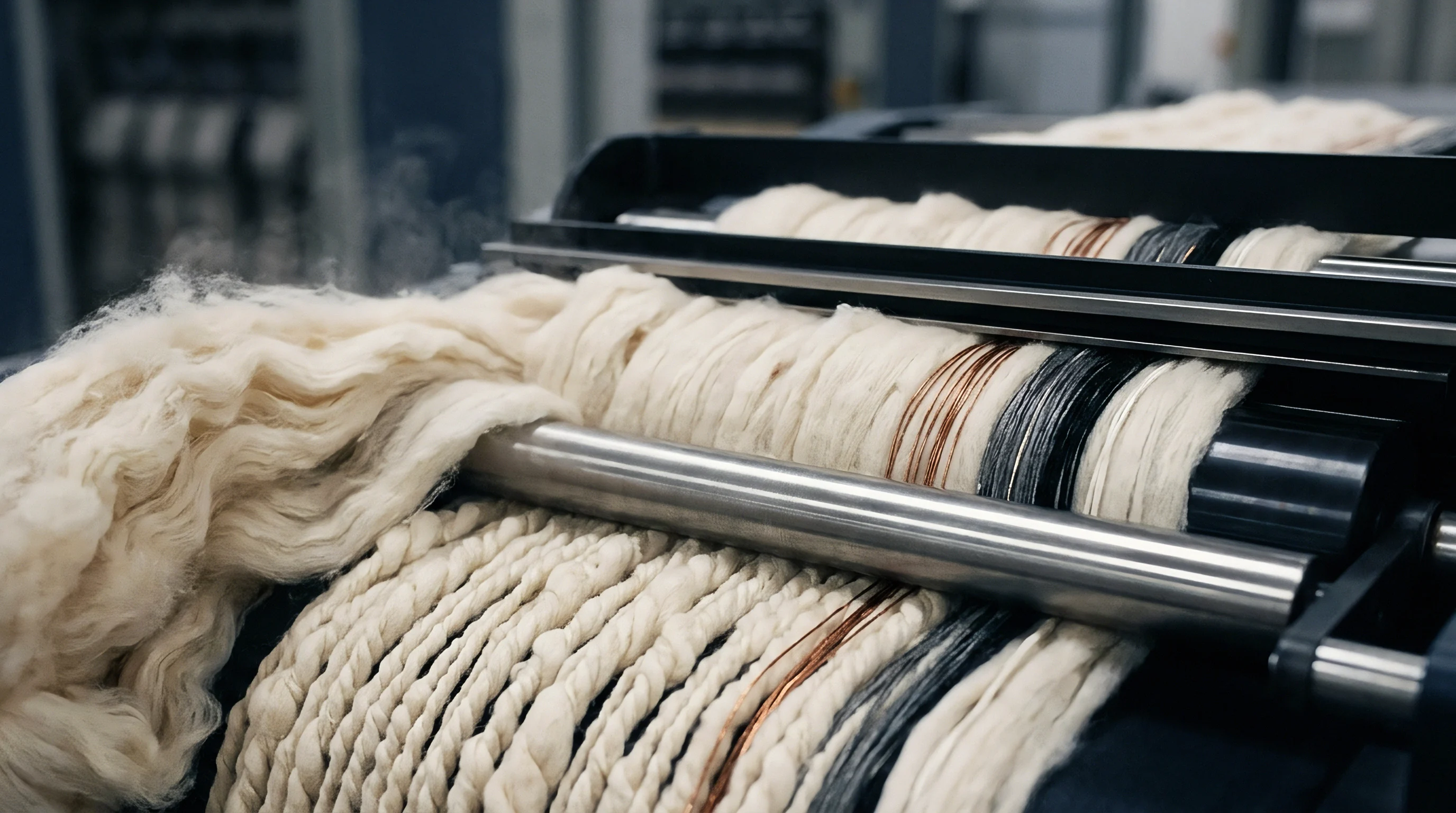
Preparing harvested fibers for analytical testing requires complete removal of non-cellulosic constituents, chemical finishes, surface waxes, and residual dyes. Raw cotton fibers contain non-cellulosic components including lipids, proteins, and pectins that carry distinct isotopic compositions capable of skewing stable isotope ratio measurements. Synthetic sizing agents, reactive dyes, softeners, and flame retardants added during textile conversions introduce exogenous carbon, hydrogen, and nitrogen atoms into the test sample.
Standardized extraction protocols employ sequence-specific solvent washes to isolate insoluble pure alpha-cellulose prior to combustion or pyrolysis.
Solvent extraction using toluene and ethanol mixtures eliminates lipophilic surface compounds without altering the underlying cellulose backbone. Subsequent chemical delignification and alkaline washes strip proteins, residual hemicellulose, and organic finishes from the fiber matrix. Oxygen and hydrogen isotope analysis demands rigorous moisture equilibration because ambient humidity exchanges oxygen and hydrogen atoms with hydroxyl groups on the cellulose polymer.
Laboratories hold purified samples in vacuum desiccators or automated climate chambers to standard atmospheric moisture conditions before sealing them in tin or silver capsules for instrument insertion.

What Isotope Ratios Distinguish Regional Cotton Harvests?
Gas chromatography paired with isotope ratio mass spectrometry isolates pure elemental gases generated through high-temperature sample conversion. Thermal conversion elemental analysis pyrolyzes cellulose at temperatures exceeding fourteen hundred degrees Celsius, converting organic oxygen and hydrogen into carbon monoxide and hydrogen gas. Combustive elemental analysis at one thousand degrees Celsius oxidizes carbon and nitrogen into carbon dioxide and nitrogen dioxide for isotopic dispersion.
Inductively coupled plasma mass spectrometry measures heavy element ratios like strontium following microwave-assisted acid digestion in concentrated nitric acid.
Ensuring analytical accuracy demands systematic controls against sample contamination and matrix interferences that distort baseline comparisons.
- Solvent Residue Contamination arises when volatile organic reagents remain in purified cellulose matrices, shifting measured carbon isotope ratios away from true botanical values.
- Exogenous Hydrogen Exchange occurs when exposed hydroxyl groups absorb atmospheric moisture, altering hydrogen isotope values during sample weighing.
- Finishing Resins Residues distort elemental nitrogen measurements by introducing petroleum-derived amine compounds into raw fiber test batches.
- Incomplete Ashing Digestion leaves residual silicates or uncombusted carbon fragments, causing mass spectrometer ion source fouling and isotopic drift.
Accredited laboratories calibrate mass spectrometers using certified international reference materials. Working standard materials run alongside unknown textile samples every ten injections to monitor instrumental drift and ensure analytical reproducibility. Reporting formats state isotopic composition relative to Vienna Standard Mean Ocean Water for hydrogen and oxygen, Vienna Pee Dee Belemnite for carbon, Atmospheric Nitrogen for nitrogen, and NIST SRM 987 for strontium ratios.
| Production Basin | Delta Oxygen-18 Range | Delta Carbon-13 Range | Strontium-87/86 Ratio | Dominant Water Source |
|---|---|---|---|---|
| +31.5 to +35.2 per mil | -24.1 to -22.5 per mil | 0.7115 to 0.7142 | Alpine Glacial Melt | |
| +22.1 to +25.8 per mil | -27.8 to -25.6 per mil | 0.7205 to 0.7280 | Tropical Rainfall | |
| +28.0 to +31.2 per mil | -25.5 to -23.8 per mil | 0.7082 to 0.7098 | Sierra Nevada Runoff | |
| +25.4 to +28.9 per mil | -26.2 to -24.0 per mil | 0.7150 to 0.7195 | Monsoon and River Canals |
Mills frequently claim that thermal mechanical processing during spinning and reactive dyeing alters isotopic fractionation beyond the limits of laboratory calibration.


Dock
Enforcement Frameworks and Admissibility Burden
Customs authorities mandate that importers demonstrate clear and convincing evidence regarding raw material origin to clear restricted entry holds. Under statutory authorities such as the United States Uyghur Forced Labor Prevention Act and European Union supply chain due diligence regulations, goods containing targeted fibers face a rebuttable presumption of inadmissibility. Importers must substantiate every node of the supply chain from raw agricultural harvest to finished garment.
Physical testing report documentation provides objective verification that complements paper transaction records, bridging gaps in commercial documentation chains.
Releasing a detained container requires a comprehensive evidentiary package presented within strict statutory timelines. Customs officers evaluate isotopic laboratory reports against declared origin invoices, bills of lading, and manufacturing records. Discrepancies between physical isotope signatures and paper origin claims result in formal detention notices, forced re-exportation, or administrative seizure.
Importers establish routine sampling schedules at foreign origin spinning mills to audit incoming fiber shipments before loading export vessels.

Chain of Custody Alignment with Isotopic Evidence
Documentary chains must connect physical testing lots directly to specific commercial shipping invoices and mill production orders. Scope certificates and transaction certificates issued by third-party certification bodies confirm procedural compliance but do not establish physical fiber presence. Isotopic analytical reports fill this gap by verifying that raw fiber in the finished cloth matches the isotopic footprint of the certified origin farm cooperative.
Importers map individual yarn lots, fabric rolls, and cutting yield sheets to discrete test sample reports.
A transaction certificate lacking explicit bale identification numbers corresponding to isotopic test lots fails customs review during an detention audit.
Managing border enforcement compliance requires an established operational protocol when customs authorities select shipments for physical verification sampling.
- Importers receive formal detention notices specifying suspect entry line items and applicable regulatory authorities.
- Legal counsel files immediate notices of appearance and requests joint physical sampling permission at the port facility.
- Certified independent surveyors pull representative swatches from sealed containers following strict statistical sampling standards.
- Chain-of-custody sealed sample bags transfer directly to accredited isotope ratio mass spectrometry testing facilities.
- Analytical laboratories process samples and generate comparative baseline matching reports within ten business days.
- Trade counsel submits the completed isotopic dossier alongside matched mill production records to customs review officers.
Failing to align physical testing schedules with port arrival windows leaves shipments in demurrage at costs exceeding three thousand dollars per container per day.

Arithmetic

Isotopic Blending Models and Origin Attribution
Yarn manufacturing processes routinely combine raw cotton bales from multiple geographic regions to achieve specific fiber length, strength, and color uniformities. Isotopic profiles derived from blended fiber yarns reflect linear combination mass balances of each individual component origin. Mathematical mixing equations calculate expected isotopic coordinates based on source blend ratios.
Disentangling multi-origin blends demands multi-element isotopic vectors to determine whether a finished textile contains targeted or restricted fiber sources.
Linear mass balance equations express composite isotopic signatures as the sum of fractional source contributions multiplied by individual source isotope ratios. In a two-component fiber blend containing primary origin fiber and secondary origin fiber, the delta value of the final mixture equals the fractional mass of the first component times its delta value plus the fractional mass of the second component times its delta value. When testing composite textiles, multi-dimensional Bayesian probability models compute likelihood distributions across multi-element reference databases to calculate origin confidence percentages.

Worked Sensitivity Matrix for Regional Classification
Consider a commercial purchase order covering forty metric tons of combed cotton yarn declared as one hundred percent Brazilian origin. Regulatory enforcement agencies pull swatches for oxygen and strontium isotopic testing. Reference baseline data for the declared Brazilian region establishes a mean delta oxygen-18 value of plus twenty-four per mil with a standard deviation of zero point six, and a mean strontium ratio of zero point seven two four zero.
The subject test sample yields a delta oxygen-18 value of plus twenty-nine point five per mil and a strontium ratio of zero point seven one five five.
The observed isotopic values diverge significantly from the declared Brazilian baseline coordinates. Applying a two-component linear mixing calculation against known restricted region baselines (mean delta oxygen-18 of plus thirty-three point five per mil, strontium ratio of zero point seven one two five) determines the presence of undeclared fiber blends. The calculated mass balance indicates a fiber composition consisting of approximately fifty-eight percent restricted regional fiber and forty-two percent declared origin fiber.
Isotopic profiles derived from blended fiber batches reflect the weighted average of all origin sources rather than a single distinct geography.
| Declared Origin Percentage | Restricted Component Share | Measured Delta Oxygen-18 | Measured Strontium Ratio | Classification Confidence |
|---|---|---|---|---|
| 100% Declared | 0% Secondary | +24.1 per mil | 0.7242 | 99.4% Match Declared |
| 85% Declared | 15% Restricted | +25.5 per mil | 0.7223 | 88.2% Blend Detected |
| 70% Declared | 30% Restricted | +26.9 per mil | 0.7205 | 97.6% Blend Detected |
| 50% Declared | 50% Restricted | +28.8 per mil | 0.7181 | 99.9% Non-Compliant Hold |
Evaluating potential lot rejections requires clear quantitative thresholds to separate processing noise from intentional fiber substitution.
- Statistical Standard Deviation Bands set initial screening limits, flagging any sample falling outside two standard deviations from declared origin baseline means.
- Multi-Element Vector Distances aggregate carbon, oxygen, hydrogen, and strontium shifts into a single Mahalanobis distance metric for regional classification.
- Blend Detection Floor Limits define the minimum percentage of non-declared fiber detectable before regional attribution models lose statistical confidence.
- Analytical Uncertainty Bounds incorporate instrument measurement uncertainties into final risk scoring formulas to prevent false positive detentions.
Analytical confidence increases when isotope signatures rely on insoluble cellulose structures rather than volatile surface extractables.


Dossier

Structuring Defense Submissions for Regulatory Audits
Assembling a defensible compliance file requires binding physical isotopic laboratory evidence directly to supply chain transaction documents. Customs auditors evaluate entry documentation using strict evidentiary standards that demand unbroken traceability from agricultural point of harvest to finished entry port. An optimal defense submission presents analytical certificates alongside matching purchase orders, mill processing logs, yarn spinning records, and transport bills of lading.
Cross-referencing batch lot numbers across testing reports and commercial invoices establishes verified chain-of-custody continuity.
Auditors discard compliance files that rely exclusively on general corporate affidavits or unverified transaction certificates. Testing reports must originate from laboratories holding ISO/IEC 17025 accreditation with stable isotope ratio analysis explicitly named within their accredited scope of testing. The audit package organizes evidence chronologically, opening with an executive summary table that maps every physical container seal to its corresponding isotopic test report number and spinning lot identifier.
Customs authority rejections trigger immediate contractual defaults under standard international commercial terms.
| Regulatory Enforcement Body | Primary Statutory Basis | Required Traceability Depth | Isotopic Evidence Weight |
|---|---|---|---|
| US Customs and Border Protection | 19 U.S.C. 1307 / UFLPA | Raw Cotton Farm / Gin Level | Primary Rebuttal Evidence |
| European Commission Authorities | EU CSDDD / Deforestation Reg | Plot Level Geolocation Data | Corroborative Risk Verification |
| UK Border Force Enforcement | Modern Slavery Act 2015 | Tier-1 to Tier-4 Supply Chain | Supplementary Due Diligence |

Contractual Allocation of Verification Liabilities
Commercial purchase agreements must define financial and operational liabilities associated with border enforcement holds and origin testing failures. Sourcing contracts allocate testing expenses, delay costs, container demurrage, and legal fees directly to counterparty suppliers when physical testing contradicts declared origin documentation. Including explicit isotope testing clauses in master service agreements establishes clear protocols for sample collection, re-testing rights, and batch rejection triggers.
Supply agreements incorporate specific compliance covenants mandating that yarn and fabric converters maintain regional fiber segregation throughout manufacturing operations. Contracts specify that independent laboratory findings using isotope ratio mass spectrometry constitute definitive proof of origin for commercial acceptance. Suppliers agree to indemnify buyers against all direct damages, customs penalties, and administrative costs resulting from origin misrepresentation uncovered through isotopic surveillance.
Standard purchase order addenda specifying ISO 17025 isotopic verification as a prerequisite for letter of credit release shift pre-shipment testing expenses directly onto the yarn converter.