Thermodynamic Equilibrium Shifts of Cyclic Oligomers during High Temperature Yarn Texturing
High heater temperatures mobilize PET cyclic trimers, driving surface crystallization that glazes texturing discs and requires strict HPLC wash thresholds.
Heater
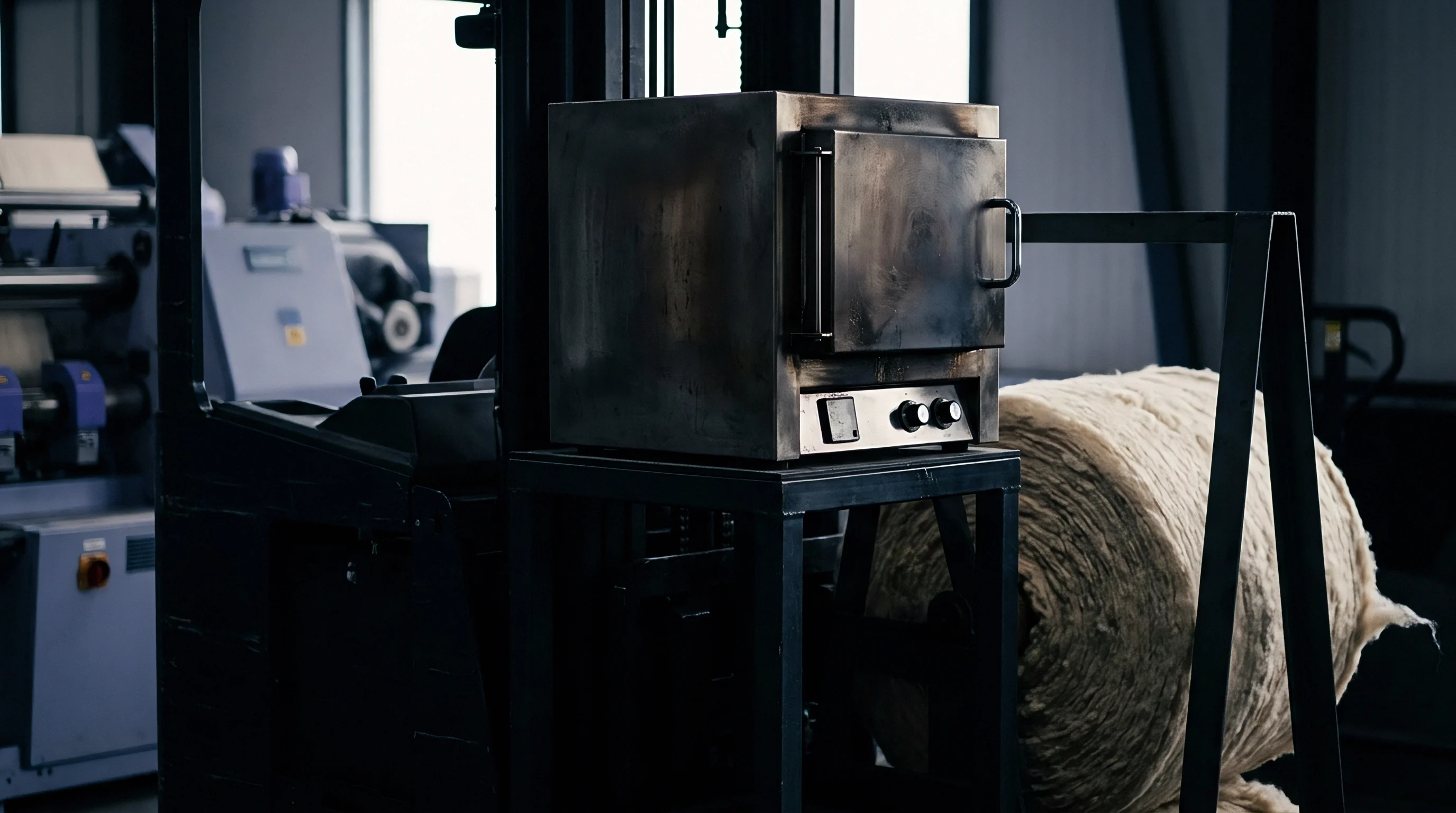
Polyethylene terephthalate partially oriented yarn enters the primary texturing heater carrying between 1.2% and 1.8% total oligomeric content by weight, locked inside the amorphous matrix of the spun filaments. Exposure to temperatures between 190°C and 230°C inside contact or condensation heating zones mobilizes these low molecular weight species. Thermal energy above the glass transition point lowers the structural viscosity of the polymer chain segments.
Cyclic species, dominated by the cyclic trimer tris(ethylene terephthalate), diffuse along concentration gradients from the core toward the filament periphery.
The rate of mass transport triples when heater residence times exceed 0.8 seconds under drawing tension. False-twist texturing applies continuous mechanical twisting while the yarn traverses the heating track, generating radial pressure gradients that force low molecular weight fractions toward the surface. Volatilization occurs directly from the outer filament wall into the heater atmosphere, followed by rapid redeposition onto cooler mechanical contact points.
Machine tracks, friction aggregates, and downstream traverse guides accumulate dense, crystalline crusts that abrade the traveling filament.
A surface accumulation rate of cyclic trimer exceeding 0.04% by weight of yarn increases downstream broken filament counts tenfold during high-speed warping.
Thermal texturing conditions alter the mobility of linear oligomers and cyclic species at disparate rates. The cyclic trimer, possessing a symmetrical 30-membered ring without terminal carboxyl or hydroxyl end groups, exhibits higher thermal stability and higher crystalline melting points than linear analogues. At 210°C, cyclic trimer crystals nucleate on texturing plates rather than volatilizing cleanly into exhaust ducts.
Accumulation on heater surfaces accelerates thermal degradation of the spin finish applied during yarn extrusion. The thermal breakdown of finish emulsifiers releases carbonaceous char that blends with depositing cyclic crystals. Texturing machines running at speeds above 800 metres per minute develop hard ceramic-like deposits along the cooling plates within 72 operating hours.
Inadequate thermal maintenance schedules generate tension variations along the spindle run, causing micro-loops, irregular bulk development, and localized dye-resist defects across finished textured packages.
Partition
Polycondensation equilibrium establishes a fixed thermodynamic balance between high molecular weight linear polyester chains and small cyclic rings according to Jacobson-Stockmayer theory. Industrial polyethylene terephthalate synthesis achieves ring-chain equilibrium in the melt state at approximately 280°C. Total cyclic oligomer concentration stabilizes between 1.3% and 1.7% by weight, where cyclic trimer accounts for roughly 80% of the cyclic total, complemented by cyclic tetramers, pentamers, and dimers.
Thermodynamic State and Ring Distribution
Solid-state heating during texturing below the crystalline melting point shifts this equilibrium through transesterification and ring-opening reactions within amorphous domains. Chain mobility permits ester interchange at elevated temperatures, generating fresh cyclic species when texturing temperatures approach 225°C. The thermodynamic partition between linear and cyclic forms depends on temperature, orientation factor, and local moisture levels.
| Oligomeric Species | Ring Members | Molecular Weight (g/mol) | Melting Point (°C) | Equilibrium Fraction (wt%) |
|---|---|---|---|---|
| Cyclic Dimer | 20 | 384.4 | 244 | 0.08 – 0.12 |
| Cyclic Trimer | 30 | 576.5 | 318 | 1.10 – 1.45 |
| Cyclic Tetramer | 40 | 768.7 | 248 | 0.14 – 0.18 |
| Cyclic Pentamer | 50 | 960.9 | 240 | 0.05 – 0.09 |
| Cyclic Hexamer | 60 | 1153.1 | 222 | 0.02 – 0.05 |
Crystalline domains reject cyclic oligomers during yarn drawing and thermal crystallization. Drawing partially oriented yarn at draw ratios between 1.65 and 1.85 induces rapid orientation-induced crystallization, locking straight chains into monoclinic unit cells. The bulky ring structure of the cyclic trimer cannot integrate into the PET crystal lattice.
The oligomer molecules undergo phase separation into remaining amorphous zones, establishing a steep thermodynamic driving force toward the filament boundary.
Are Higher Texturing Temperatures Shifting Total Ring Concentration?
Elevated heater settings accelerate structural reorganization while increasing ester interchange kinetics. Texturing at 235°C increases the extractable cyclic trimer fraction by 0.15% to 0.25% absolute compared to yarn processed at 195°C. Moisture trapped in the raw POY package hydrolyzes ester linkages, creating shorter linear chains that undergo intramolecular cyclization under secondary heating.
- Raw POY package conditioning stabilizes yarn moisture below 0.40% to limit hydrolytic chain scission during initial heating.
- First heater drawing aligns linear chains, rejecting cyclic rings into inter-lamellar amorphous corridors.
- False-twist torque induction drives mobile amorphous fractions toward the outer filament diameter under centripetal stress.
- Secondary heater relaxation at 160°C to 180°C relieves internal torque while fixing oligomeric surface deposits.
The cyclic trimer fraction remains insoluble in standard finish formulations. Its melting point at 318°C exceeds the texturing process temperature by nearly a hundred degrees. The migrating trimer deposits as solid, diamond-shaped microcrystals on the filament skin rather than forming a uniform liquid film.
This distinct solid-phase separation establishes the baseline abrasive properties observed during subsequent winding.
Friction
Surface-segregated cyclic crystals transform the filament interface from a smooth, lubricated boundary into an abrasive profile. Polyurethane texturing discs on false-twist aggregates experience rapid surface deterioration when processing yarn lots exhibiting high surface trimer migration. Micro-hardness testing shows cyclic trimer crystals reach values of 35 to 40 Shore D equivalent hardness, gouging polyurethane disc working edges within 200 operational hours.
Standard disc wear allowances require replacement when friction aggregate profile depth deviates by more than twelve micrometres from nominal profile geometry.
Ceramic discs fabricated from 99.7% alpha-alumina resist cutting but accumulate compressed oligomer layers across their friction surfaces. The accumulated oligomer smooths the micro-texture of the ceramic surface, reducing the effective coefficient of friction between disc and yarn from 0.85 to 0.52. This loss of frictional grip induces false-twist slip, reducing twist insertion by up to 80 turns per metre.
Textured yarn produced under these slipping conditions exhibits irregular crimp contraction, variable bulk, and visible tightness bands in downstream knitted structures.
Yarn tension profiles show severe instability downstream of the friction unit when cyclic oligomer dust builds up. High-speed texturing aggregates generate centrifugal air currents that strip loosened crystals from the yarn bundle. White powder coats the machine creel, the traverse guides, the oiler rollers, and the take-up cradles.
The loose powder contaminates the final package face, migrating between yarn layers during cross-winding.
- Ceramic guide contamination raises yarn-to-metal kinetic friction coefficients from 0.18 to 0.42, increasing running filament tension beyond standard draft limits.
- Disc aggregate glazing forces frequent cleaning cycles, shifting production schedules and inducing batch-to-batch tension variance.
- Package edge buildup causes severe yarn snagging during high-speed unwinding on beam warpers and circular knitting creels.
- Dye house resist spotting occurs when localized oligomer clusters block disperse dye penetration inside atmospheric or low-liquor jet vessels.
Accumulation inside circular knitting needle slots creates mechanical sticking, needle latch failure, and continuous horizontal line defects across single-jersey fabrics. Spin finish containing tailored antistatic and lubricant esters minimizes the dry adhesion of crystals to metal guides, allowing the yarn to transport particles cleanly to the take-up package without local guide glazing.

Chromatography
Accurate quantification of total and surface oligomers separates internal polymer synthesis defects from texturing-induced thermal degradation. Standard Soxhlet extraction using 1,4-dioxane or dichloromethane dissolves both cyclic species and surface spin finish. High-performance liquid chromatography achieves baseline resolution of individual ring sizes from dimer through heptamer on octadecylsilane reverse-phase columns.
Surface Extraction Protocol
Surface oligomer extraction requires controlled room-temperature solvent washing to prevent extraction of internal oligomers from the amorphous core. Yarn samples undergo immersion in spectroscopic-grade dichloromethane for precisely 120 seconds at 20°C with gentle agitation. The solvent wash extracts surface-residing cyclic trimers and spin finish without dissolving the underlying PET filament structure.
| Parameter | HPLC Specification | Tolerance |
|---|---|---|
| Stationary Phase | C18 Reverse Phase (250 × 4.6 mm, 5 µm) | Standard analytical grade |
| Mobile Phase Gradient | Methanol / Water (70:30 to 100:0 in 20 min) | ±0.5% composition |
| Flow Rate | 1.0 mL/min isocratic segment | ±0.02 mL/min |
| UV Detection Wavelength | 242 nm (Ester carbonyl absorption) | ±1.0 nm |
| Column Temperature | 40.0°C | ±0.5°C |
| Injection Volume | 10.0 µL | ±0.1 µL |
Total oligomer quantification demands complete polymer dissolution in ortho-chlorophenol, hexafluoroisopropanol, or trifluoroacetic acid at elevated temperatures. Precipitation of high molecular weight PET chains using chilled acetone or methanol leaves the low molecular weight cyclic species dissolved in the supernatant. Centrifugation at 4000 rpm for 15 minutes clears the high-polymer residue before direct HPLC injection.
Which Extraction Techniques Separate External from Bulk Oligomers?
Thermal desorption gas chromatography combined with mass spectrometry offers rapid qualitative screening of volatile oligomeric fractions. Supercritical fluid extraction utilizing carbon dioxide modified with 5% methanol delivers quantitative extraction at 80°C and 350 bar, eliminating toxic chlorinated waste streams. Differential scanning calorimetry confirms cyclic trimer presence through a distinct endothermic melting peak at 316°C to 319°C on isolated crystal residues.
A two-minute dichloromethane room-temperature wash limits polymer matrix dissolution while stripping surface-accessible cyclic species with ninety-eight percent repeatability.
Quantitative analysis shows that high-speed drawn textured yarn with total cyclic oligomer levels of 1.45% can exhibit surface trimer loads ranging from 0.03% to 0.18% depending strictly on heater configuration and draw ratios. What remains unresolved in current testing methodologies is the exact degree to which rapid solvent immersion swells the immediate outer skin layer of drawn microfilaments during the standard room-temperature extraction window.
Settlement
Procurement specifications for high-tenacity and micro-denier textured polyester yarns must incorporate explicit limits for both bulk and surface oligomer contents. Standard commercial contracts referencing bare filament tenacity, elongation, and crimp contraction values fail to protect buyers against downstream weaving and knitting stops driven by surface trimer migration.
Commercial Specifications and Acceptance Limits
A rigorous quality agreement defines clear analytical thresholds for incoming textured yarn batches. Filament linear density, filament count, and heater setup dictate realistic tolerance windows. Microfilament yarns, possessing significantly higher specific surface areas per kilogram, require tighter absolute weight limits on extractable surface trimers to prevent knitting creel fouling.
| Yarn Classification | Filament Linear Density (dpf) | Max Total Cyclic Oligomer (wt%) | Max Surface Cyclic Trimer (wt%) | Test Method Reference |
|---|---|---|---|---|
| Standard Filament DTY | 1.5 – 3.0 dpf | 1.50 | 0.06 | HPLC via DCM Surface Wash |
| Microfiber DTY | 0.5 – 1.0 dpf | 1.40 | 0.04 | HPLC via DCM Surface Wash |
| Superfine Microfiber | < 0.5 dpf | 1.30 | 0.03 | HPLC via DCM Surface Wash |
| High-Tenacity Industrial DTY | > 3.0 dpf | 1.60 | 0.08 | HPLC via DCM Surface Wash |
Customs declarations under Harmonized Tariff Schedule Chapter 54 rely on linear density and tenacity verifications under ISO 2060 and ISO 2062. Import valuations do not adjust for processability defects caused by oligomeric blooms. When lots fail processing due to surface trimer crystallization, commercial recovery depends strictly on the purchase contract wording.
Contractual rejection clauses enforce full batch debit notes when surface cyclic trimer exceeds 0.050% by yarn weight under certified laboratory HPLC testing.
A buyer sourcing textured yarn for high-speed warp knitting or continuous water-jet weaving protects capital outlay by tying invoice clearance to incoming laboratory extraction data. Standard purchasing terms stipulate that any delivery showing surface cyclic trimer content above 0.05% by weight grants the buyer immediate rights to cancel remaining container balances and charge back sorting, disc replacement, and dye-house clearing expenses directly against outstanding supplier letters of credit.