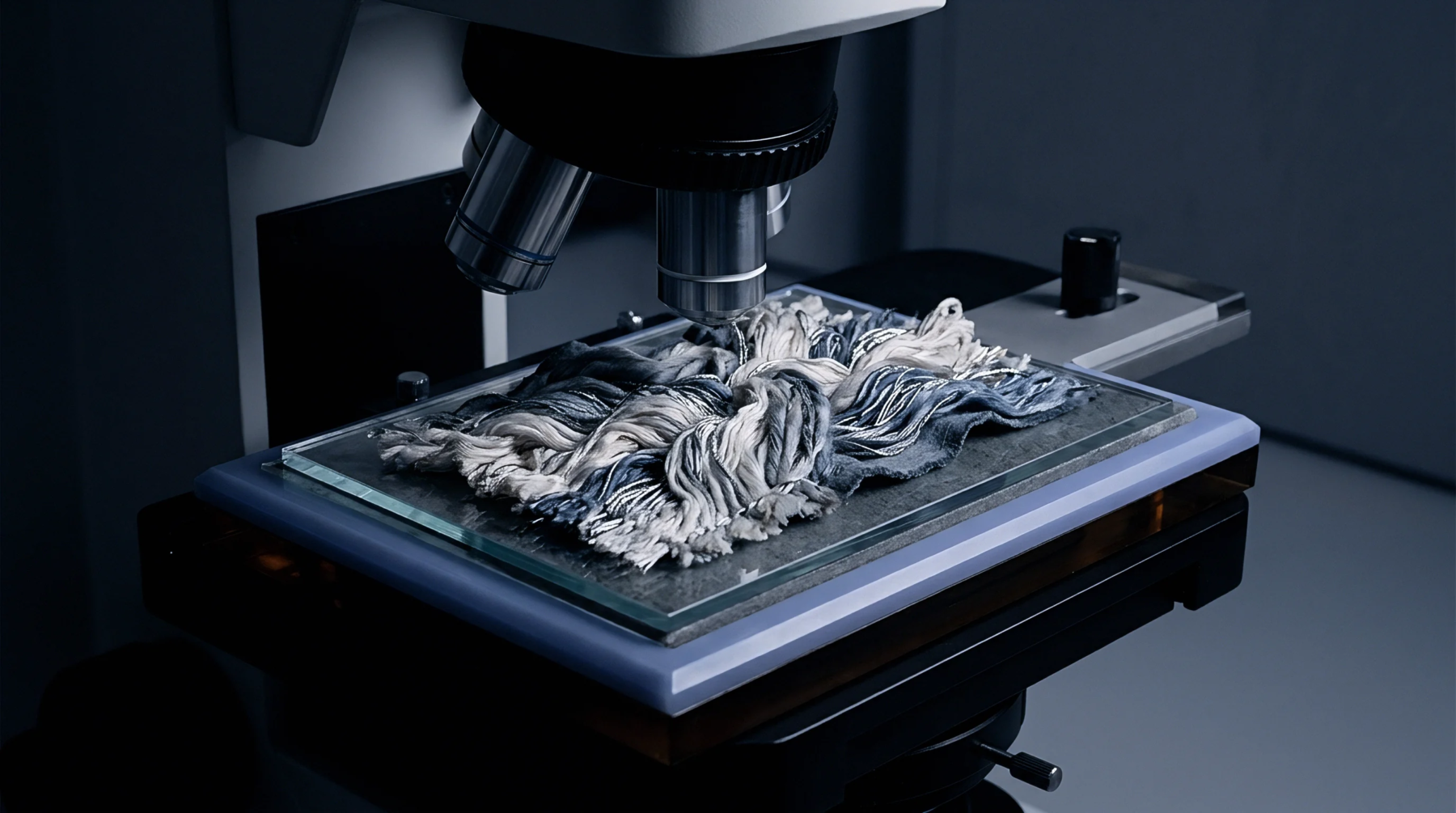
Polymer Byproduct
Low-molecular-weight ring-shaped compounds are formed as natural byproducts during the polymerization of polyethylene terephthalate. These substances, known as cyclic oligomers, are locked within the amorphous regions of the polyester fiber during yarn spinning. They consist of a small number of repeating ester units, primarily the trimer species.
They represent the non-functional fraction of the polymer matrix.
Migration Problem
High-temperature processes, such as dyeing at high pressure, cause these ring-shaped compounds to migrate to the fiber surface. Upon cooling, they crystallize on both the yarn and the dyeing machinery as a fine, abrasive white powder. This deposit causes uneven dyeing, thread breakage during high-speed sewing, and a dusty appearance on the finished fabric.
It also clogs spray nozzles and filters in the dye house.
Removal Protocol
Reducing the impact of these surface deposits requires the addition of specialized oligomer dispersants to the dye bath. These chemical auxiliaries keep the crystallized molecules suspended in the liquor, preventing them from re-depositing on the textile surface. Alternatively, a post-dyeing reduction clear treatment under alkaline conditions is executed to hydrolyze the surface-migrated molecules.
This ensures that the yarn runs smoothly through knitting and weaving machines without generating dust.
Analysis Procedure
The quantification of these compounds is performed by extracting a fabric specimen with boiling chloroform or xylene. The extracted solution is analyzed using high-performance liquid chromatography to determine the concentration of the trimer. This test helps mills adjust their finishing recipes to prevent downstream manufacturing defects.
The total concentration in a standard commercial yarn is kept below one percent.