Verifying Physical Recycled Polyester Content in Filament Yarns
Physical verification of mechanically recycled polyester filament relies on quantifying isophthalic acid, diethylene glycol, and sub-micron polyolefin debris.
Resins
Intrinsic Viscosity Spreads in Melt Spinning
Filament extruders draw polyethylene terephthalate through spinneret capillaries under strict melt pressure. Virgin bottle-grade chips enter drying hoppers at an intrinsic viscosity between 0.80 and 0.84 decilitres per gram. Standard textile-grade virgin polyester polymerizes to an intrinsic viscosity between 0.62 and 0.66 decilitres per gram.
Recycled flakes originating from post-consumer beverage bottles introduce an elevated starting molecular weight to a filament spinning line. Thermal degradation during re-extrusion cleaves the ester bonds, creating a wider polydispersity index than observed in direct-melt virgin lines. A virgin continuous filament yarn exhibits a narrow polydispersity ratio between 1.8 and 2.1.
Yarn spun from mechanically recovered flake commonly demonstrates a ratio from 2.4 to 3.2.
Solid-state polymerization adjusts the chain length before chip transfer to the extruder screw. Extrusion engineers control hydrolytic scission by maintaining chip moisture content below 30 parts per million prior to the feed zone. Flake geometry varies across recycled suppliers, producing unstable bulk densities inside the feed throat.
Virgin chips exhibit uniform cylindrical or spherical geometry, packing consistently at 0.85 grams per cubic centimetre. Post-consumer washed flakes fluctuate between 0.25 and 0.45 grams per cubic centimetre. The resulting surge in screw torque generates thermal spikes that crack polymer chains unevenly.
The spinneret face experiences dynamic pressure shifts. Spun yarn drawn under fluctuating melt pressures carries diagnostic variance across molecular mass distributions.
Post-consumer flake lots dried above fifty parts per million moisture lose zero point zero five decilitres per gram of intrinsic viscosity during extrusion.
Direct chemical identification of recycled content relies on the detection of residual markers left by earlier industrial processing. Virgin yarn produced from pure purified terephthalic acid and monoethylene glycol lacks external plasticizers, catalyst residues outside standard antimony or titanium complexes, and trace comonomers from container packaging. Bottle-grade polyester contains isophthalic acid added during original container polymerization to disrupt crystallization and maintain clarity.
The presence of isophthalic acid units at molar fractions between 1.5 percent and 3.0 percent inside a drawn polyfilament establishes the incorporation of packaging resin into the melt. Virgin semi-dull or bright textile filament typically keeps isophthalic acid content below 0.2 percent.

Comonomer Markers and Catalyst Footprints
Ester exchange during recycling does not destroy comonomer identities. Nuclear magnetic resonance spectroscopy resolves the proton peaks of isophthalic acid modifications within the terephthalate backbone. Diethylene glycol formation occurs as a side reaction in all polyester synthesis, yet mechanical recycling cycles steadily raise diethylene glycol levels.
Virgin filament maintains diethylene glycol content between 0.7 and 1.1 percent by weight. Flake-derived filament reaches levels between 1.4 and 2.2 percent. The elevated diether links alter dye uptake rates, lowering the glass transition temperature of the drawn filament by 2 to 4 degrees Celsius.
Catalyst signatures provide secondary chemical evidence. Antimony trioxide catalyzes conventional condensation polymerization, leaving residual elemental antimony between 180 and 260 parts per million in virgin resin. Titanium-based catalysts or germanium compounds appear in specialty bottle resins.
Modern analytical testing screens filament by inductively coupled plasma mass spectrometry to identify non-antimony metal residues alongside trace levels of cobalt, used historically as a blue toner to mask thermal yellowing in recycled packaging. The presence of cobalt between 5 and 25 parts per million marks the yarn as product derived from recycled bottle resin. Virgin textile polymers achieve target whiteness through titanium dioxide additions rather than organocobalt colorants.
Thermal histories leave distinct chemical fingerprints. Every melt passage introduces carboxyl end groups via thermal cleavage of the polymer chain. Virgin filaments retain carboxyl end group concentrations between 18 and 28 equivalents per metric ton.
Mechanically processed recycled yarns present carboxyl end group counts between 32 and 52 equivalents per metric ton. High carboxyl values compromise hydrolytic stability during alkaline weight-reduction finishing. The technical manager specifies end-group ceilings directly on purchase orders to avert lot degradation during wet processing.


Markers

Inherent Degradation Byproducts versus Additive Signatures
Filament testing requires a clean distinction between inherent degradation artifacts and deliberate synthetic tracer compounds. Thermal breakdown produces cyclic oligomers alongside carboxyl end groups and aldehydes. Acetaldehyde traps within the polyester matrix during high-speed extrusion.
Mechanically recycled filament contains volatile acetaldehyde between 2.0 and 8.0 parts per million when evaluated by static headspace gas chromatography. Virgin continuous filament yarn registers acetaldehyde concentrations below 0.8 parts per million. The volatile signature dissipates partially across atmospheric texturing stages, limiting its utility on aged yarns.
Non-volatile markers offer permanent tracking capacity.
Synthetic tracer technologies inject inorganic or synthetic DNA tags directly into the masterbatch during mechanical chip compounding. Rare-earth ceramic micro-particles resist extrusion temperatures up to 300 degrees Celsius without altering filament tensile properties. Luminescent markers emit specific spectral responses under ultraviolet excitation wavelengths.
A portable optical reader quantifies the presence of the tag on the yarn package. Inorganic tracers establish whether a lot passed through a specific accredited compounding facility. They do not quantify the exact dilution ratio of post-consumer material against clean virgin polymer when processors dilute marked masterbatches on open floor hoppers.
| Parameter | Standard Virgin Filament | Mechanically Recycled Bottle Resin | Chemically Depolymerized Filament | Diagnostic Tolerance |
|---|---|---|---|---|
| Isophthalic Acid Content (mol %) | 0.05 to 0.20 | 1.50 to 2.80 | 0.05 to 0.30 | ± 0.05 |
| Diethylene Glycol (wt %) | 0.80 to 1.10 | 1.45 to 2.10 | 0.75 to 1.05 | ± 0.04 |
| Carboxyl End Groups (eq/ton) | 18 to 26 | 34 to 48 | 19 to 25 | ± 2.0 |
| Residual Cobalt (ppm) | Below 1.0 | 6.5 to 22.0 | Below 1.0 | ± 0.5 |
| Acetaldehyde (ppm) | 0.1 to 0.6 | 2.4 to 7.8 | 0.2 to 0.8 | ± 0.2 |
| Polydispersity Index (Mw/Mn) | 1.85 to 2.10 | 2.45 to 3.10 | 1.80 to 2.05 | ± 0.10 |
Physical verification must account for the chemical recycling route. Glycolysis, methanolysis, and hydrolysis depolymerize waste polyester back into bis(2-hydroxyethyl) terephthalate or pure monomers. The intermediate monomers pass through fractional distillation, crystallization, or activated carbon filtration, eliminating catalyst residues, isophthalic acid, and thermal degradation byproducts.
The repolymerized chips exhibit identical chemical parameters to petroleum-derived virgin polymer. Analytical testing instruments cannot isolate chemically recycled polyester from virgin polyester by spectroscopy, chromatography, or thermal analysis. The supply chain must preserve chain-of-custody documentation for chemically recycled yarns.
A contract clause mandating post-consumer tracer tags renders unauthorized polymer substitution immediately demonstrable on incoming lot inspection.
Isotopic testing provides an emerging physical alternative for distinguishing renewable bio-based polyesters, but petroleum-based virgin polyester and petrochemical-derived recycled beverage bottles share identical carbon-14 signatures. Carbon dating methods return zero percent modern carbon for both streams. Verification resting on physical testing alone remains bounded by mechanical recycling footprints.
The presence of packaging stabilizers, printing ink residuals, and polyolefin cross-contamination provides physical metrics for identifying bottle-flake content in filament yarns.
Spin-finish formulations obscure infrared spectra when analysts evaluate raw yarns without scouring. Emulsion lubricants contain polyoxyethylene esters and fatty acid derivatives that overlap with core polyester carbonyl peaks. Filament specimens undergo complete Soxhlet extraction using petroleum ether or dichloromethane before spectroscopic quantification.
Testing unwashed specimens produces false positives for aliphatic comonomers. Extraction cleaning prepares the physical yarn substrate for clean solvent dissolution and subsequent liquid chromatographic separation.


Tests

Chromatographic and Spectroscopic Qualification Paths
Size-exclusion chromatography reveals the molecular mass architecture of the dissolved filament. The laboratory dissolves filament samples in hexafluoroisopropanol or an ortho-chlorophenol solvent system heated to 45 degrees Celsius. Calibration utilizes narrow-distribution polystyrene standards.
A virgin textile filament yarn yields a symmetrical, unimodal molecular weight distribution curve. Mechanically recycled yarns present an asymmetrical distribution with extended low-molecular-weight tails caused by thermal chain scission. Significant tailing indicates unrecovered polymer fragmentation from multiple melt passes.
Gel permeation chromatography measures the weight-average molecular weight alongside the number-average molecular weight. Virgin 75-denier/72-filament yarn displays a weight-average molecular weight of 38,000 to 44,000 grams per mole. Mechanically recycled lots yield lower weight-average values between 28,000 and 34,000 grams per mole unless compensated by prolonged solid-state polymerization.
Solid-state polymerization increases the average molecular chain length but elevates the polydispersity ratio. This physical distinction serves as a quantitative gate for testing laboratories screening raw draw-textured yarns.
Differential scanning calorimetry tracks the melting and crystallization kinetics of the polymer. The specimen undergoes a controlled heat-cool-heat cycle under a nitrogen purge rate of 50 millilitres per minute according to ISO 11357 standards. The heating ramp proceeds at 10 degrees Celsius per minute up to 280 degrees Celsius.
The first heating scan reflects the drawing and heat-setting thermal history imparted during yarn texturing. The cooling scan exposes the intrinsic crystallization behaviour of the polymer chain. The second heating scan measures the baseline polymer thermodynamic properties cleared of drawing stress.
- Specimen Extraction removes spin finish and texturing lubricants via a four-hour Soxhlet run using analytical-grade dichloromethane at 40 degrees Celsius.
- Moisture Desiccation stabilizes the washed yarn mass in a vacuum desiccator at 60 degrees Celsius for twelve hours to eliminate moisture-induced hydrolytic degradation during thermal scans.
- Differential Scanning Calorimetry maps melting transitions across two heating runs and one cooling cycle between 30 and 280 degrees Celsius under dry nitrogen flow.
- Chromatographic Separation dissolves a 20-milligram dry snippet in hexafluoroisopropanol, injecting the filtered solution into gel permeation columns to quantify weight-average molecular mass.
- Spectroscopic Comonomer Assay quantifies the isophthalic acid and diethylene glycol mole fractions by nuclear magnetic resonance spectroscopy in deuterated trifluoroacetic acid.
Virgin filament exhibits a sharp crystallization peak during controlled cooling from the melt. Recycled filament derived from bottle flake displays a broader crystallization exotherm that shifts downward by 3 to 7 degrees Celsius. Heterogeneous nucleating agents from bottle caps, such as sub-micron polyethylene or polypropylene residues, initiate early crystallization at elevated temperatures.
Micro-contaminants alter the crystalline phase structure. A polarized light microscope reveals spherulite density differences inside filament cross-sections. Virgin filaments display uniform spherulite dimensions, whereas mechanical recycled filaments contain irregular crystal domains grouped around foreign seed particles.

Are Microscopic Inclusions Reliable Recycled Indicators?
Optical microscopy and transmission electron microscopy detect foreign particulate matter embedded inside the polyester matrix. Virgin filament contains titanium dioxide particles distributed as deliberate delustrant agents. Semi-dull virgin filaments incorporate 0.3 percent titanium dioxide with particle sizes centered strictly between 0.2 and 0.4 microns.
Post-consumer mechanical flakes introduce extraneous debris: inorganic silicates from wash water, scorched degraded carbon flecks, and irregular pigment clusters. Filament drawn to 1.0 denier per filament breaks readily when particulate diameters exceed 2.0 microns. High-filament-count yarns demand clean flake lots to prevent spinning breaks.
Transmission electron microscopy highlights un-melted polyolefin inclusions inside the filament matrix. Bottle washing plants separate high-density polyethylene bottle caps from sinking polyester flakes via float-sink tanks. Fine polyolefin dust clings to the polyester flake surface, surviving melt extrusion.
The polyolefin fractions do not solubilize within the molten polyester phase, forming suspended spherical or elongated micro-droplets between 50 and 300 nanometres wide. Energy-dispersive X-ray spectroscopy confirms the aliphatic carbon profile of these inclusions without titanium or ester signals. Finding these sub-micron polyolefin inclusions provides conclusive proof of post-consumer container provenance.
Spectroscopic mapping across filament cross-sections requires precision diamond-knife microtomy. Microtome blades cut transverse sections at thicknesses between 3 and 5 microns. Fourier transform infrared microscopy resolves functional groups within a 10-micron aperture.
Polyolefin C-H stretching vibrations register cleanly between 2920 and 2850 inverse centimetres. The core polyester matrix presents ester carbonyl stretching at 1715 inverse centimetres. Detecting aliphatic C-H bands inside an undyed semi-dull filament cross-section confirms mechanical packaging waste inputs.
The method fails on chemically depolymerized materials due to intermediate filtration down to 0.1 microns.
The buyer receives a test dossier specifying the detection limits of each applied analytical tool. A laboratory using solely infrared spectroscopy misses recycled content blended below 20 percent. Chromatographic separation coupled with elemental spectrometry reliably isolates blend fractions down to 10 percent post-consumer content.
Below this threshold, instrument noise and natural variation in virgin polymer baselines overlap with the analytical readings. Independent labs must state baseline assumptions alongside confidence intervals on every composition certificate.

Flaws

Mechanical Variance across Continuous Filaments
Continuous filament spinning demands continuous rheological uniformity. Filament cross-sections fluctuate when processing degraded recycled chips. Diameter variability registers as percentage coefficient of variation on an evenness tester.
Virgin 150-denier/48-filament semi-dull draw-textured yarn exhibits a mass variability CVm between 0.8 and 1.1 percent. Mechanically recycled equivalents display mass variability between 1.4 and 2.2 percent. The elevated CVm value generates visible barré defects in tightly woven taffeta or circular knitted single jerseys.
Texturing tension drifts across uneven yarn masses.
Tenacity and elongation metrics display immediate degradation when recycled flakes replace virgin chips. A virgin partially oriented polyester yarn spun at 3200 metres per minute draws to a final tenacity between 4.2 and 4.8 centinewtons per dtex. Mechanically recycled drawn yarn drops to a tenacity between 3.4 and 3.9 centinewtons per dtex.
Lower molecular weights and internal micro-voids around contaminant inclusions act as stress concentration points under tensile loads. The breaking elongation of virgin texturized yarn lands within 22 to 28 percent, while mechanically recycled filament produces a wider spread of 16 to 30 percent across a single bobbin package.
A mass variability coefficient of variation exceeding one point six percent indicates high contamination or uneven melt degradation inside the draw-texturing line.
Spinning break rates multiply when mechanical recycled content reaches fine-denier microfilaments. Standard spinning lines experience between 0.5 and 1.5 yarn breaks per metric ton on virgin 50-denier/72-filament yarns. Introducing mechanical bottle flake pushes break frequencies to 4.0 to 9.0 breaks per metric ton.
Extrusion plants compensate by installing expensive automated continuous backwash melt filters with screen mesh sizes down to 15 or 20 microns. Fine filtration removes large particulates but cannot scrub dissolved isophthalic acid, diethylene glycol, or broken polymer chains. Filter pack pressure builds rapidly, increasing operating costs per kilogram.

Contamination Signatures and Processing Failures
Thermal stability diminishes under dry heat application. Filament woven into performance activewear faces heat-setting temperatures between 180 and 195 degrees Celsius. Recycled filament experiences accelerated thermal yellowing under high stenter temperatures.
The yellowing index shifts by 1.5 to 3.5 units when tested according to ASTM E313. Virgin yarns demonstrate yellowing index shifts below 0.8 units under identical heat exposure. The thermal breakdown of diethylene glycol links and trace metallic residues catalyzes oxidative yellowing, complicating the production of optic-white and pastel-dyed goods.
- Barré Streaking arises from fluctuating crystalline orientations and uneven diethylene glycol distributions that cause cyclic dye absorption variations along the yarn axis.
- Filament Fuzzing develops when mechanical micro-voids cause single-filament fractures during high-speed knitting, accumulating broken ends on machine needles.
- Oligomer Dusting coats texturing plates and guides with cyclic trimers, forcing frequent line stoppages to wipe down white powder deposits.
- Tension Spikes during high-speed warping lead to uneven beam densities, causing loose ends and weaving stoppages across water-jet loom sheds.
Dye strike rates accelerate in recycled polyester filament. The higher concentration of diethylene glycol creates a looser, more open amorphous phase inside the drawn yarn. Disperse dyes exhaust into the fibre at lower strike temperatures, shifting dyeing kinetics.
At 100 degrees Celsius, a 100 percent mechanically recycled yarn absorbs disperse dyes 15 to 25 percent faster than a standard virgin filament. If a fabric mill combines virgin warp yarns with mechanically recycled weft yarns without adjusting recipe kinetics, severe shade mismatching occurs across the fabric plane. The processing floor must segregate yarn lots by their verified chemical histories.
Tensile fatigue tests expose the durability gap in recycled filament. Flexural exhaustion testing subjects single filaments to cyclic bending under constant dead-weight tension. Virgin polyester filaments sustain over 25,000 bending cycles before catastrophic fracture.
Filaments containing mechanical recycled bottle flake fail between 12,000 and 17,000 cycles. Premature fatigue initiates at interfacial boundaries between the polyester matrix and sub-micron polyolefin inclusions. Fabrics intended for high-abrasion seating, industrial belting, or luggage will fail field durability qualifications when unverified mechanical recycled filaments replace virgin yarns.
The failure patterns observed across high-speed weaving operations trace back to molten polymer viscosity fluctuations at the pack. When raw flake supply lots vary in intrinsic viscosity by more than 0.02 decilitres per gram, the spinning pump delivers inconsistent mass flow to individual capillary holes. The resulting partially oriented yarn exhibits varying draw ratios along its length.
These differential draw zones react differently to texturing heater plates, fixing latent shrinkage variations into the final package. The downstream dyer discovers these flaws only after wet finishing yields irrecoverable structural fabric streaks.

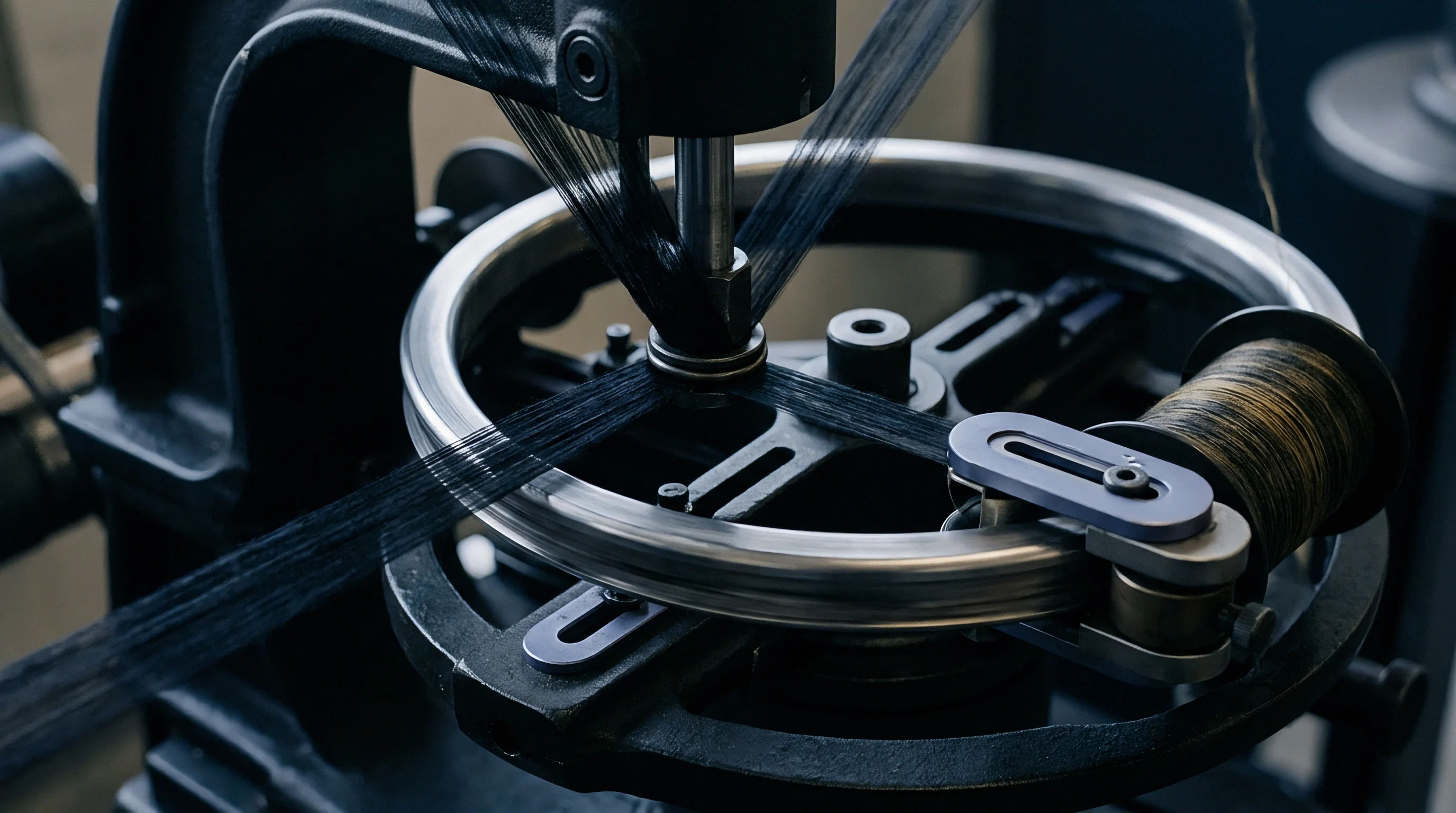
Cargo

Physical Lot Sampling and Packaging Validation
Sampling raw filament yarn packages requires structured discipline across warehouse loading bays. A single container holds between 18 and 22 metric tons of textured filament yarn wound onto cylindrical paper cones. Quality inspectors draw packages according to ISO 2859-1 single sampling plans under general inspection level II.
A standard lot of 20 metric tons comprises approximately 3,300 yarn packages weighing 6 kilograms each. The sampling protocol requires the extraction of 125 individual packages drawn across top, middle, and bottom carton layers from multiple pallet rows. Inspectors reject lots showing signs of moisture exposure, damaged pallet stretch-film, or broken security seals.
Yarn packages undergo visual inspection for winding density, edge collapse, and physical contamination. Packages wound from recycled filament frequently display soft shoulders or density variations across the traverse stroke. Density gauges check bobbin hardness across five points.
Bobbin hardness for standard texturized polyester must fall within 82 to 88 Shore D units. A variance exceeding 4 Shore D units across a single package indicates tension fluctuations on the texturing spindle. Outer carton labels must carry trace codes matching manufacturer certificates of analysis, including lot numbers, line identifiers, and spinning dates.
Laboratory specimens are drawn directly from the core, middle, and outer layers of selected bobbins. The outer 500 metres of yarn on every test cone are stripped and discarded to eliminate surface oxidation, airborne dirt, and spin finish migration. Technicians reel skeins of exact 100-metre lengths using automated wrap reels operating at controlled winding tensions of 0.1 centinewtons per dtex.
The drawn skeins are conditioned according to ISO 139 at 20 degrees Celsius and 65 percent relative humidity for a minimum of 24 hours before physical or chemical testing begins. Skipping standard conditioning distorts subsequent denier, shrinkage, and tenacity measurements.
| Physical Property | Virgin Specification | Mechanical Recycled Target | Rejection Threshold | Governing Standard |
|---|---|---|---|---|
| Linear Density (dtex) | 83.3 ± 1.5% | 83.3 ± 2.5% | Greater than ± 3.0% | ISO 2060 |
| Tenacity at Break (cN/dtex) | 4.4 ± 0.3 | 3.7 ± 0.4 | Below 3.2 | ISO 2062 |
| Elongation at Break (%) | 24.0 ± 2.0 | 22.0 ± 4.0 | Below 16.0 or Above 30.0 | ISO 2062 |
| Boiling Water Shrinkage (%) | 6.5 ± 0.5 | 7.2 ± 0.8 | Greater than ± 1.2% | ASTM D2259 |
| Crimp Contraction (%) | 46.0 ± 2.5 | 42.0 ± 3.5 | Below 36.0 | DIN 53840 |
| Mass Unevenness (CVm %) | 0.95 ± 0.15 | 1.60 ± 0.25 | Above 2.10 | ISO 16549 |
Testing boiling water shrinkage identifies internal stress variations within the lot. Technicians expose conditioned skeins to boiling deionized water for 30 minutes without tension according to ASTM D2259. Recycled yarn lots exhibit broader shrinkage bands than virgin controls.
A shrinkage standard deviation exceeding 0.4 percent across ten sample cones indicates erratic texturing heater temperatures or irregular feed-yarn molecular weights. Non-uniform shrinkage produces puckering in post-dyed woven goods. The warehouse holds goods in quarantine until shrinkage, tenacity, and mass evenness tests clear the laboratory thresholds.

Chain of Custody and Mass Balance Reconciliations
Physical verification must integrate with strict mass balance audits to close supply loop vulnerabilities. Transaction certificates issued under Global Recycled Standard or Recycled Claim Standard frameworks confirm lot-specific trading volumes. The customs invoice, bill of lading, and delivery note must reference identical transaction certificate numbers.
An auditor reconciles incoming flake volumes against outgoing yarn shipments at the filament spinning mill. Producing 1,000 kilograms of drawn texturized filament yarn consumes approximately 1,120 kilograms of raw post-consumer flake, accounting for flake wash losses, solid-state polymerization dust extraction, and spinning waste.
Mills claiming zero operational waste during recycled filament spinning signal fraudulent mass balance reporting. The spinning line purges polymer during lot changeovers and filter changes. Dropped ends on draw-texturing winders create unrecoverable post-industrial waste.
A true mass-balance audit demands sight of monthly electricity utility bills, polymer purchase ledgers, and solid-waste disposal manifests. If a mill shows 10,000 metric tons of recycled yarn output while utility metrics reflect typical virgin polymerization power draw profiles, the desk investigates unauthorized virgin chip feeding.
Customs classification codes link physical fiber properties to border declarations. Virgin and recycled polyester filament share identical Harmonized System tariff codes under heading 5402. The tariff provides no separate commodity code based purely on recycled content percentages.
Border authorities instead verify declared valuations and origin rules. When recycled yarns command a premium in green-procurement consumer markets, unscrupulous distributors misdeclare virgin yarn shipments as recycled to capture margin spreads. Physical testing reports detailing isophthalic acid and diethylene glycol content protect the importer from customs audit inquiries regarding fraudulent origin documentation.
Re-testing protocols safeguard the buyer against bulk substitution. Unscrupulous suppliers ship compliant testing samples drawn from dedicated high-grade production runs while filling shipping containers with unverified standard virgin or contaminated industrial-waste filament. The sourcing practice enforces sealed container loading where an independent third-party surveyor draws physical cones directly from the container packing line.
The surveyor applies tamper-evident container door seals, noting serial numbers directly onto shipping dockets. The receiving warehouse inspects seal integrity before discharge, routing pulled samples to an accredited testing facility for chemical fingerprinting before clearing invoices.
The contract specifies formal arbitration terms for rejected lots. If laboratory chromatography or spectrometry shows isophthalic acid levels below 0.5 percent on an order contracted as 100 percent mechanically recycled bottle-grade yarn, the buyer enforces a material breach clause. The supplier carries liability for testing expenses, inward freight, storage charges, and consequential manufacturing losses.
Stating analytical pass-fail boundaries explicitly within purchase agreements eliminates room for subjective mill-side excuses regarding raw material variance.
If testing confirms unauthorized polymer substitution, standard purchase terms allow the immediate cancellation of outstanding delivery schedules and the debiting of re-testing costs against the supplier account.