Cotton Yarns in Continuous Wet Processing Engineering
Continuous wet processing of cotton yarns demands precise control of yarn structure, swelling draft, liquor application, and transport tension to assure performance.
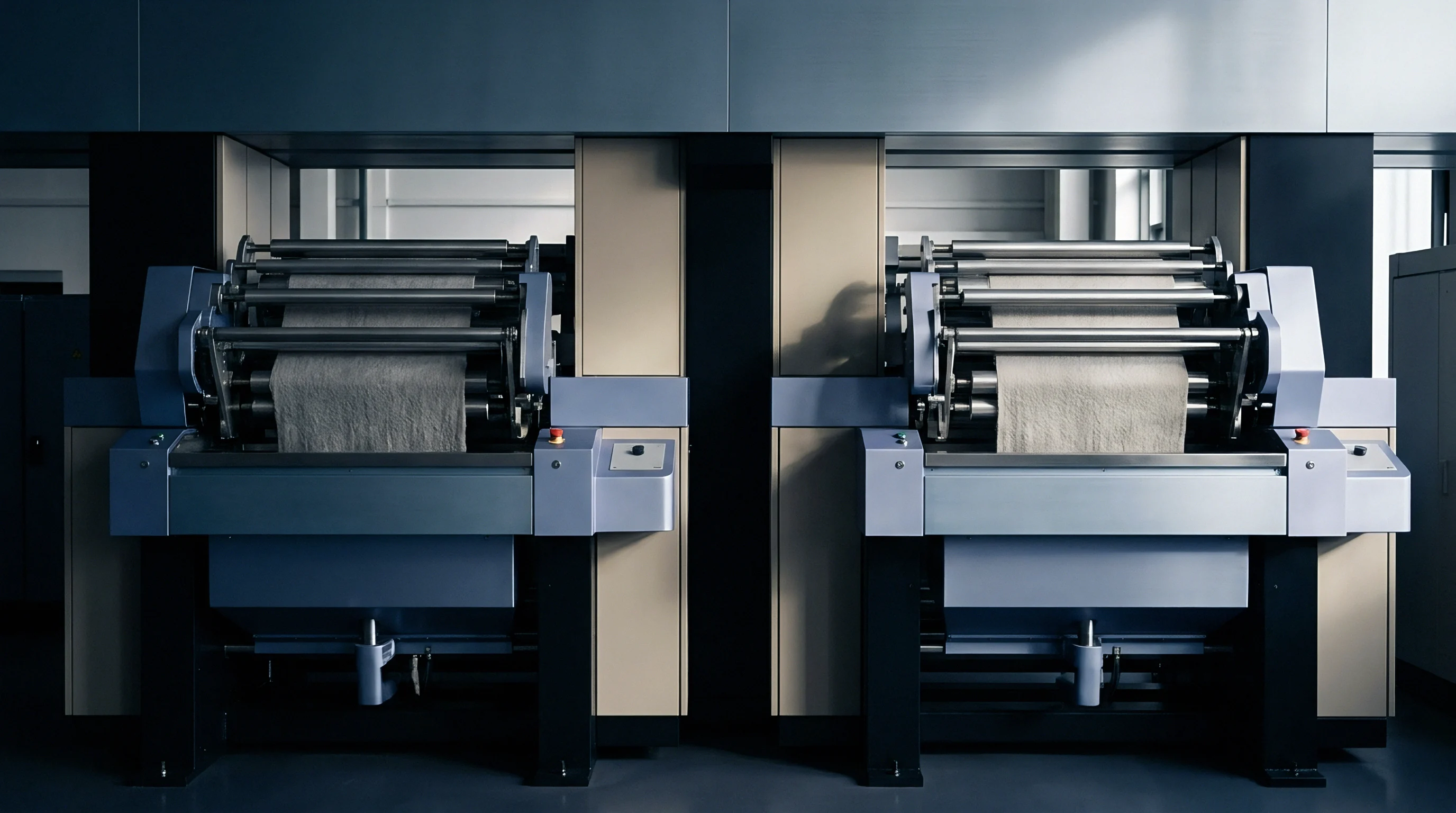

Strand
Greige yarn geometry dictates liquid transport through every wet processing compartment. Whether running flat warp sheets on slashers or gathered ropes on continuous tow ranges, continuous lines demand strict structural uniformity from the spinning mill. Fiber alignment, twist density, and surface hairiness govern chemical wet-out speeds, pickup percentages, and tensile survival during high-speed fluid immersion.
Under the short immersion dwell times typical of continuous pad troughs, ring-spun, compact-spun, open-end rotor, and air-jet vortex yarns display distinctly different capillary absorption behavior.
Compact-spun cotton yarns perform best in continuous ranges because of their low hairiness and uniform packing density. Keeping the S3 hairiness index below 20 per 100 meters on standard optical tests prevents inter-fiber entanglement and fiber shedding in caustic baths. Their tight structural orientation promotes fast capillary suction, achieving uniform core wetting within a 0.8-to-1.5-second dwell time inside the pad trough.
By contrast, hairy ring-spun yarns trap micro-air bubbles in their outer fiber sheath, building boundary layer resistance that blocks full liquor penetration unless wetting agent doses are increased.
| Spinning Architecture | Hairiness Index (H) | Tensile Loss in Wet State (%) | Capillary Rise Speed (mm/s) | Continuous Processing Suitability |
|---|---|---|---|---|
| Compact Ring Spun | 3.2 – 4.1 | -2.5 to +1.0 | 4.2 | Optimal for high-density warp sheets |
| Conventional Ring Spun | 5.5 – 7.2 | -4.0 to -1.5 | 3.1 | Requires aggressive de-aeration chemistry |
| Open-End Rotor | 4.0 – 5.0 | -8.0 to -5.0 | 2.4 | Prone to surface abrasion under tension |
| Air-Jet Vortex | 2.8 – 3.5 | -1.0 to +2.0 | 4.8 | High liquor penetration speed |
Twist multiplier selection controls both fluid migration and stretch resistance under wet tension. Multipliers below 3.2 yield soft yarns that absorb chemical baths quickly, but their weak wet modulus leads to excessive elongation and necking down across roller nips. Multipliers above 4.2 restrict liquor penetration into the yarn core, forcing longer dwell times or requiring vacuum-assisted impregnation heads.
Rotor yarns, with their outer wrapper fibers and disordered core, wick slower by capillary action than compact yarns despite scoring lower in overall hairiness.
A compact ring-spun cotton yarn achieves 98 percent liquor saturation within 1.2 seconds of immersion at 60 degrees Celsius when the twist multiplier remains below 3.6.
Greige yarn meant for continuous ranges requires thorough singeing before entering any liquid bath. Loose fibers extending from unsinged yarn detach in chemical baths and gather on squeegee rolls, guide rollers, and recirculation filters. This accumulated lint creates uneven nip pressure and liquor channeling, which show up as pale streaks during continuous dyeing.
Operating singeing burners at gas pressures between 12 and 18 millibars strips away loose fibrils, leaving clean yarn profiles that preserve stable boundary layer conditions over million-meter production runs.
Spinning mills often blame shade banding and uneven dye pickup on chemical instability in the finishing plant, when the underlying cause is simply uncontrolled twist density variation across spinning frames.
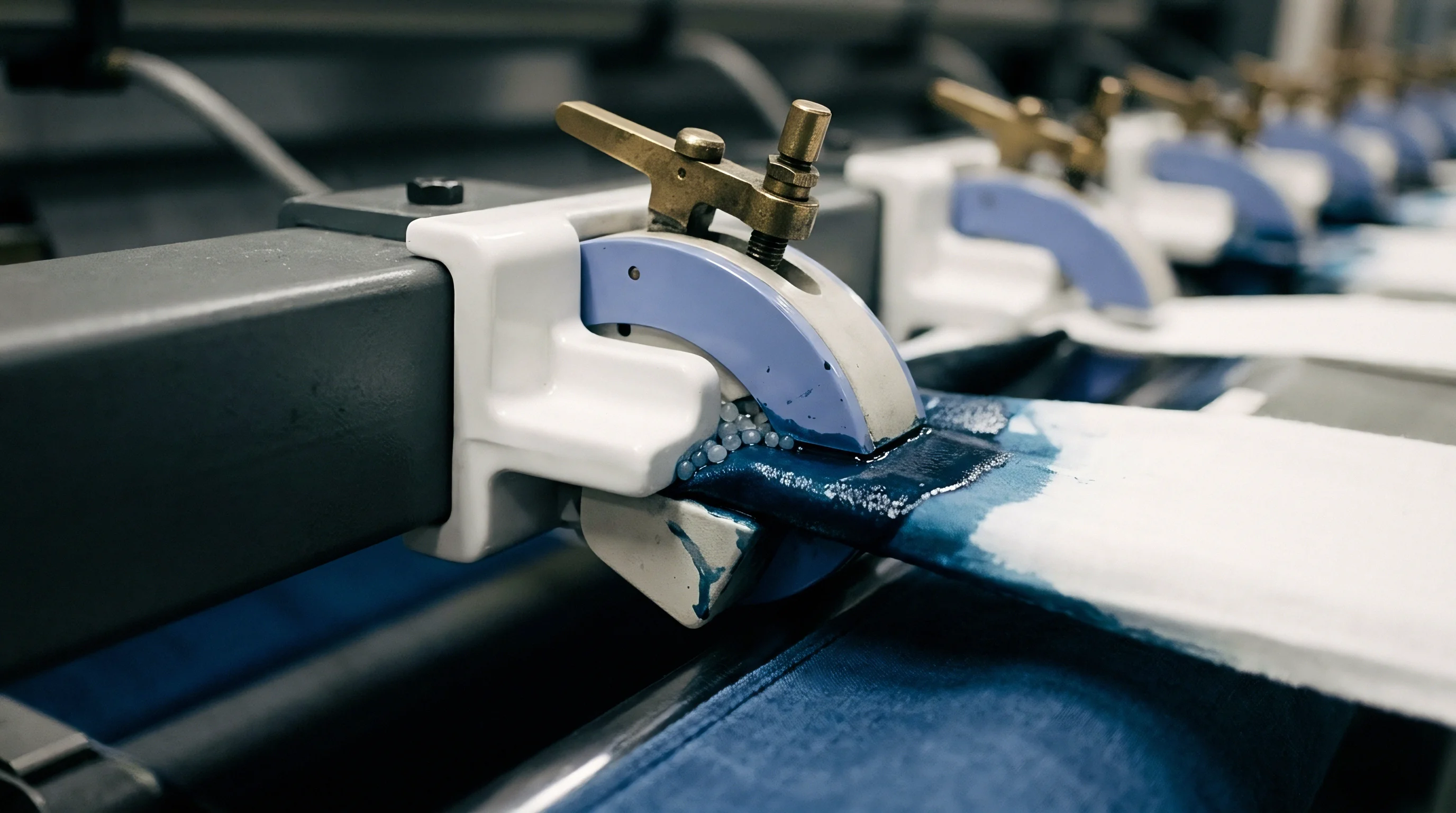
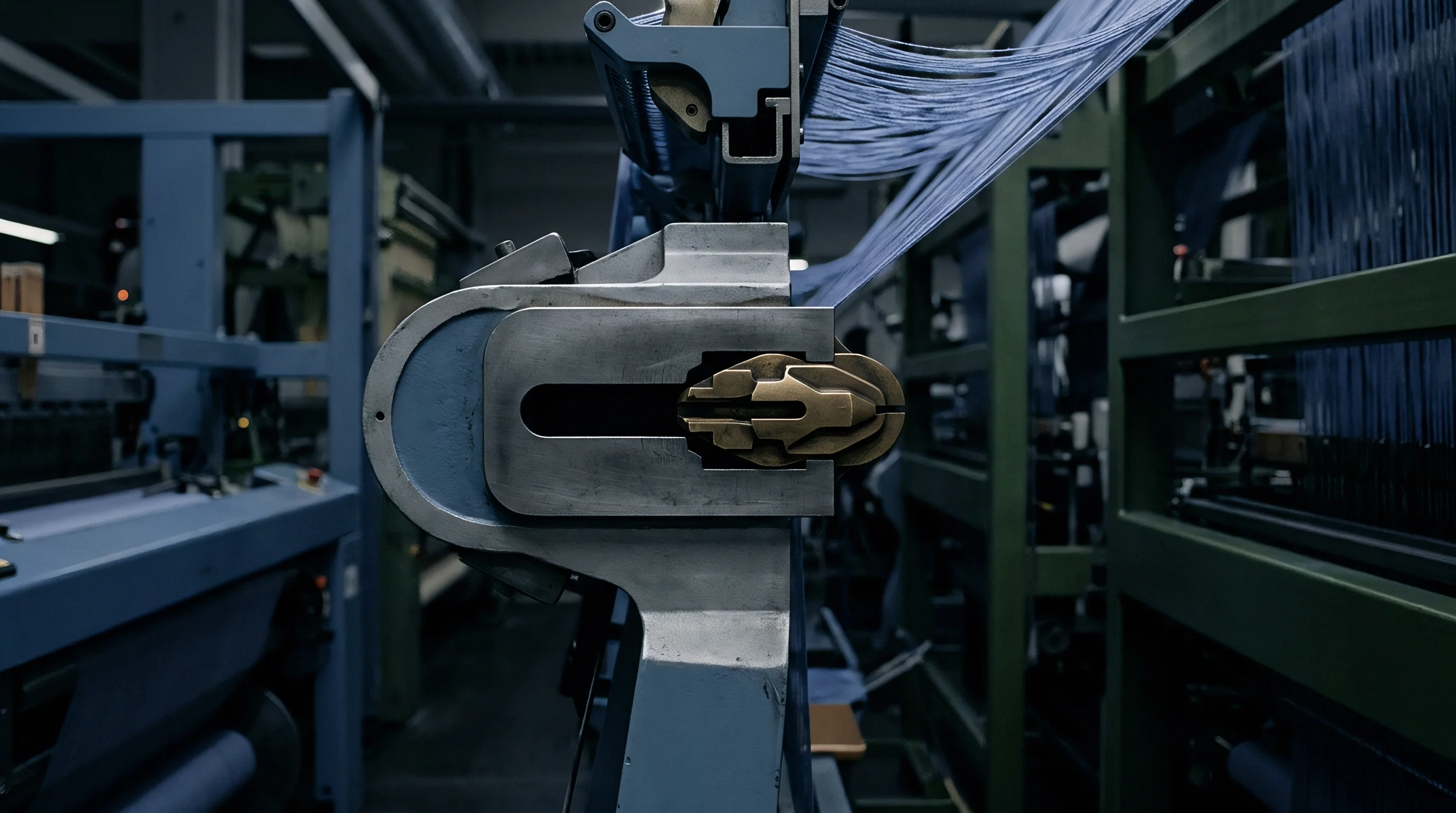
Swell
Caustic mercerization rearranges the crystalline lattice of native cotton cellulose, converting Cellulose I to Cellulose II. In continuous processing, concentrated sodium hydroxide solution is applied to moving yarn sheets under controlled draft. Holding tension prevents untwisting and length shrinkage while cell walls expand, forcing the kidney-shaped cotton fiber cross-section into a smooth round profile with a widened lumen.
This structural shift opens up more hydroxyl groups for dye attachment, boosts tensile strength by 15 to 25 percent, and permanently increases surface lustre.
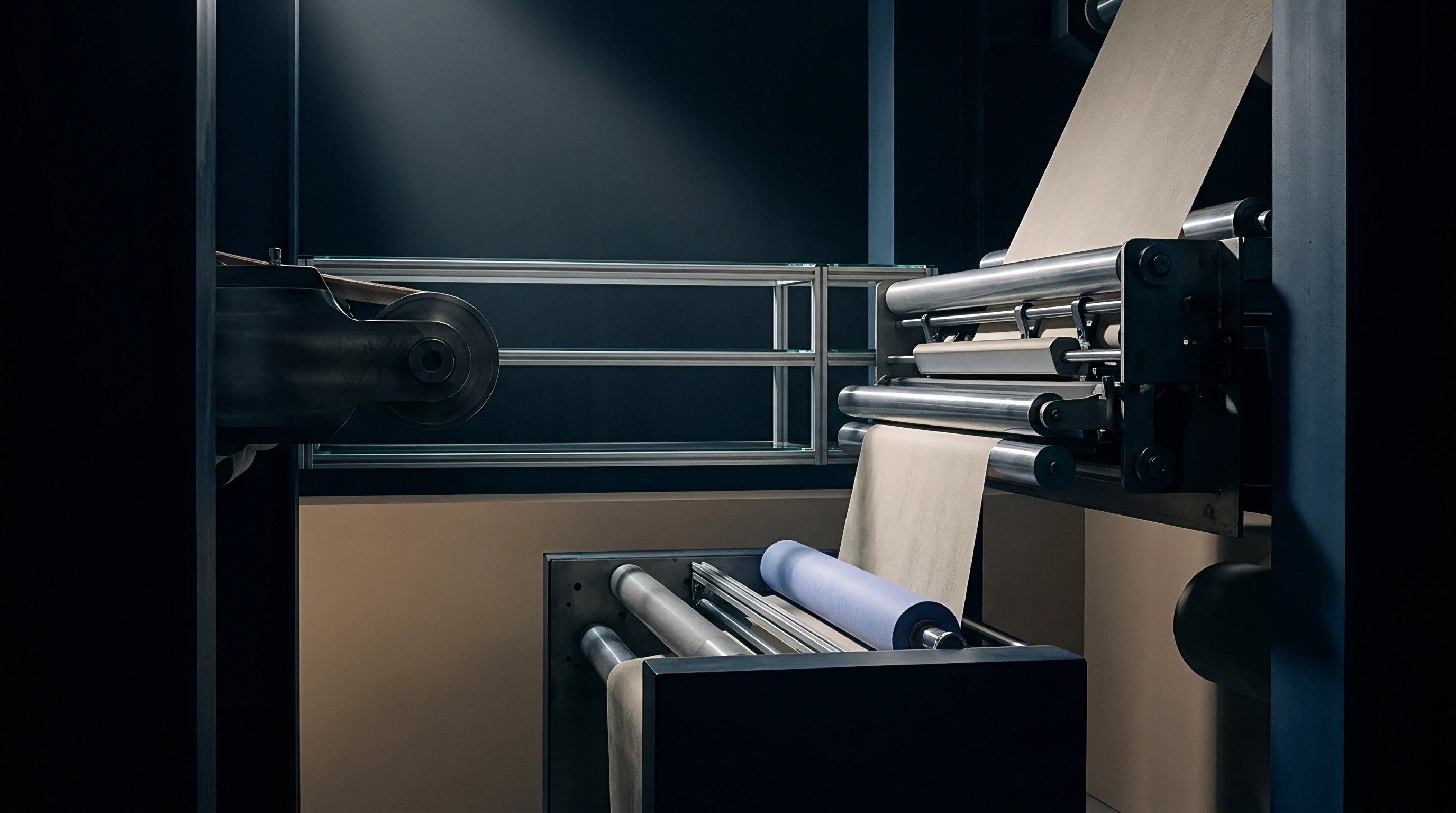
Caustic Impregnation and Temperature Kinematics
Caustic bath concentration determines how deeply crystalline rearrangement occurs. Continuous industrial mercerizers run concentrations between 28 and 30 degrees Baumé, equivalent to 270 to 300 grams of sodium hydroxide per liter of bath liquor. Cold mercerization at 15 to 20 degrees Celsius gives the greatest cell wall expansion, though higher liquor viscosity slows penetration into dense yarn sheets.
Warm mercerization at 55 to 60 degrees Celsius lowers viscosity and speeds liquor penetration through thick yarn bundles before rapid cooling stages lock in the swollen state.
Yarn structure directly dictates how fast and evenly this chemical penetration occurs.
Dwell time inside the caustic saturator runs from 20 to 40 seconds, depending on line speed and nip layout. Skimping on dwell time leaves yarn cores unmercerized, producing ring-dyed cross-sections that yield weak color in subsequent dyeing. Following impregnation, squeegee rollers apply pressures of 30 to 50 kilonewtons per meter of face width to drive caustic into the core while stripping excess surface liquor back into the circulation tank.

Tension Control and Structural Failure Modes
Mechanical draft during swelling and washing sets the final orientation of the cellulose chains. Too little strain during caustic saturation allows fibers to relax, ruining lustre and causing high yarn elongation under light loads. Excessive draft breaks yarn locally and damages fibrils on a microscopic level, reducing final tensile strength.
- Alkali Carryover Residual sodium hydroxide exceeding 0.5 grams per kilogram of dry yarn accelerates dye hydrolysis during reactive fixation stages.
- Lustre Loss Draft levels below 1.5 percent during caustic neutralization allow cellulose microfibrils to recoil into a disordered state.
- Width Variation Uneven threadline spacing across slasher mercerizing creels generates differential strain, altering regional liquor absorbency across the warp sheet.
- Core Ringing Incomplete wetting agent distribution creates a wet surface layer over a dry, unswollen yarn core.
Stabilization washing has to bring caustic concentrations below 100 grams per liter while holding full yarn tension. Releasing tension before removing the caustic causes rapid length shrinkage, undoing the dimensional stability gained during impregnation. High-capacity counter-current wash compartments operating at 85 to 95 degrees Celsius strip away free alkali efficiently before the yarn passes into neutralization baths containing low concentrations of acetic or formic acid.
Maintaining adequate line tension is critical, as low tension ruins crystal orientation.

Pad
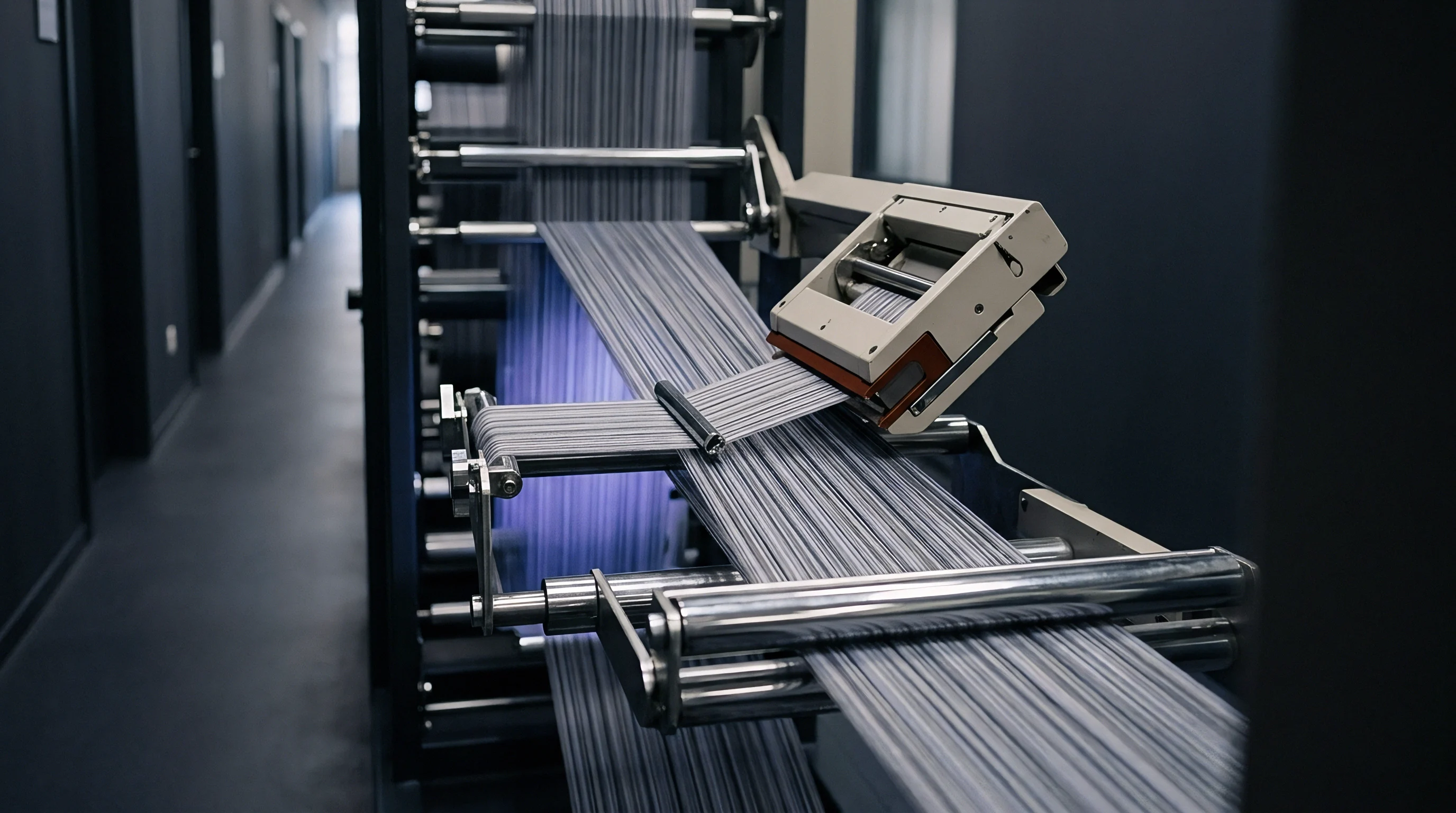
Continuous pretreatment combines desizing, scouring, and bleaching into high-speed fluid application stages. Wetting agents, chelating chemicals, and oxidants need to penetrate the moving threadline rapidly without foaming and breaking liquor contact. Padder configuration, trough volume, and replenishment rates dictate chemical consistency over long production runs.
Bleach Chemistry and Peroxide Control
Continuous hydrogen peroxide bleaching demands precise control over alkalinity and metal sequestration. Caustic soda acts as the activator, raising bath pH to 10.8 to 11.2, where perhydroxyl ions form at optimal rates. Organic phosphonate sequestering agents bind trace iron and copper originating from the raw cotton or mill process water.
Unbound heavy metals catalyze rapid decomposition of hydrogen peroxide, generating radical species that sever cellulose polymer chains and cause severe tensile strength loss.
Standard contracts mandate that peroxide residual on bleached greige yarn must not exceed 10 parts per million prior to reactive dye pad application.
Choosing a stabilizer means balancing peroxide preservation against silicate scale buildup. Sodium silicate buffers and stabilizes peroxide effectively, but forms insoluble calcium and magnesium silicate scale on stainless steel guide rolls, heating coils, and yarn contact surfaces. Non-silicate organic stabilizers avoid machine scaling entirely, keeping roll surfaces smooth for low-friction yarn travel.
How Does Wet on Wet Application Alter Peroxide Dosing?
Applying bleaching chemicals to wet, pre-scoured yarn requires adjusting concentrations to offset water carried in by the threadline. This incoming moisture continuously dilutes the pad liquor, shifting chemical concentrations unless auto-dosing systems monitor bath density or chemical consumption in real time. Vacuum dewatering before the pad trough reduces yarn moisture from 80 percent down to 30 to 40 percent, widening the chemical pickup window and minimizing dilution risks.
| Process Stage | Primary Active Chemical | Concentration Range | Bath Temperature (°C) | Dwell / Steaming Time |
|---|---|---|---|---|
| Enzymatic Desize | Alpha-Amylase Enzyme | 2.5 – 5.0 g/L | 65 – 75 | 30 – 60 seconds |
| Alkali Scour | Sodium Hydroxide (100%) | 25 – 40 g/L | 95 – 100 | 45 – 90 seconds |
| Peroxide Bleach | Hydrogen Peroxide (35%) | 15 – 30 g/L | 98 – 102 | 60 – 120 seconds |
| Acid Neutralization | Acetic Acid (80%) | 1.5 – 3.0 g/L | 40 – 50 | 10 – 20 seconds |
Inadequate dewatering before pad impregnation forces operators to increase liquor concentration in the supply tank, raising chemical costs without achieving target core penetration depth.
Steam
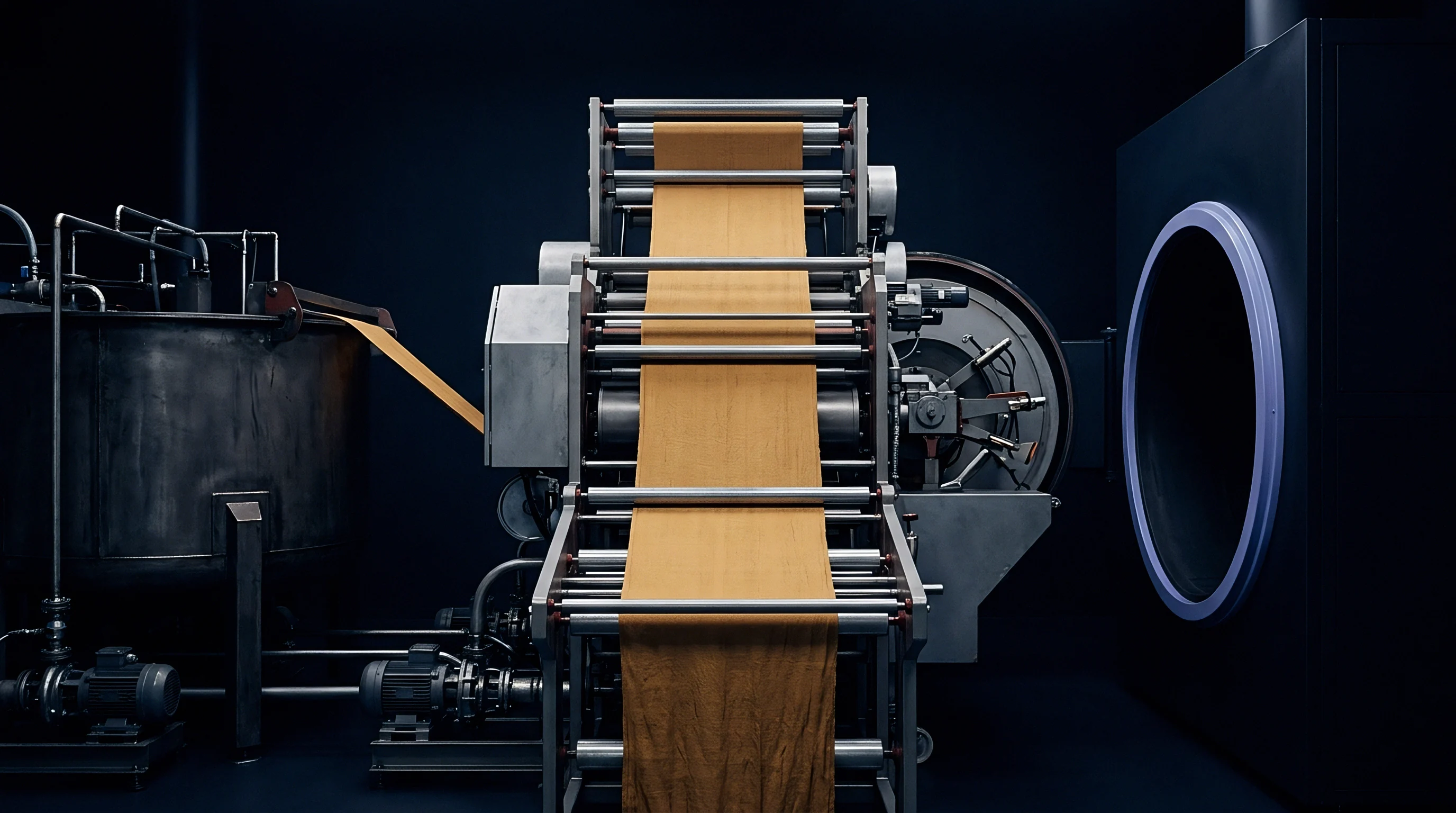
Fixing reactive dyes on cotton yarn in continuous ranges relies on controlled heat transfer and precise moisture management. The pad-steam process applies reactive dye and alkali in a single or two-stage immersion before the saturated yarn sheet enters a sealed steam chamber. Condensing steam delivers heat instantly, swelling the fibers and supplying the liquid medium dye molecules need to diffuse from the fiber surface into the cellulose matrix.
Reactive Dye Chemistry and Steam Fixation Kinetics
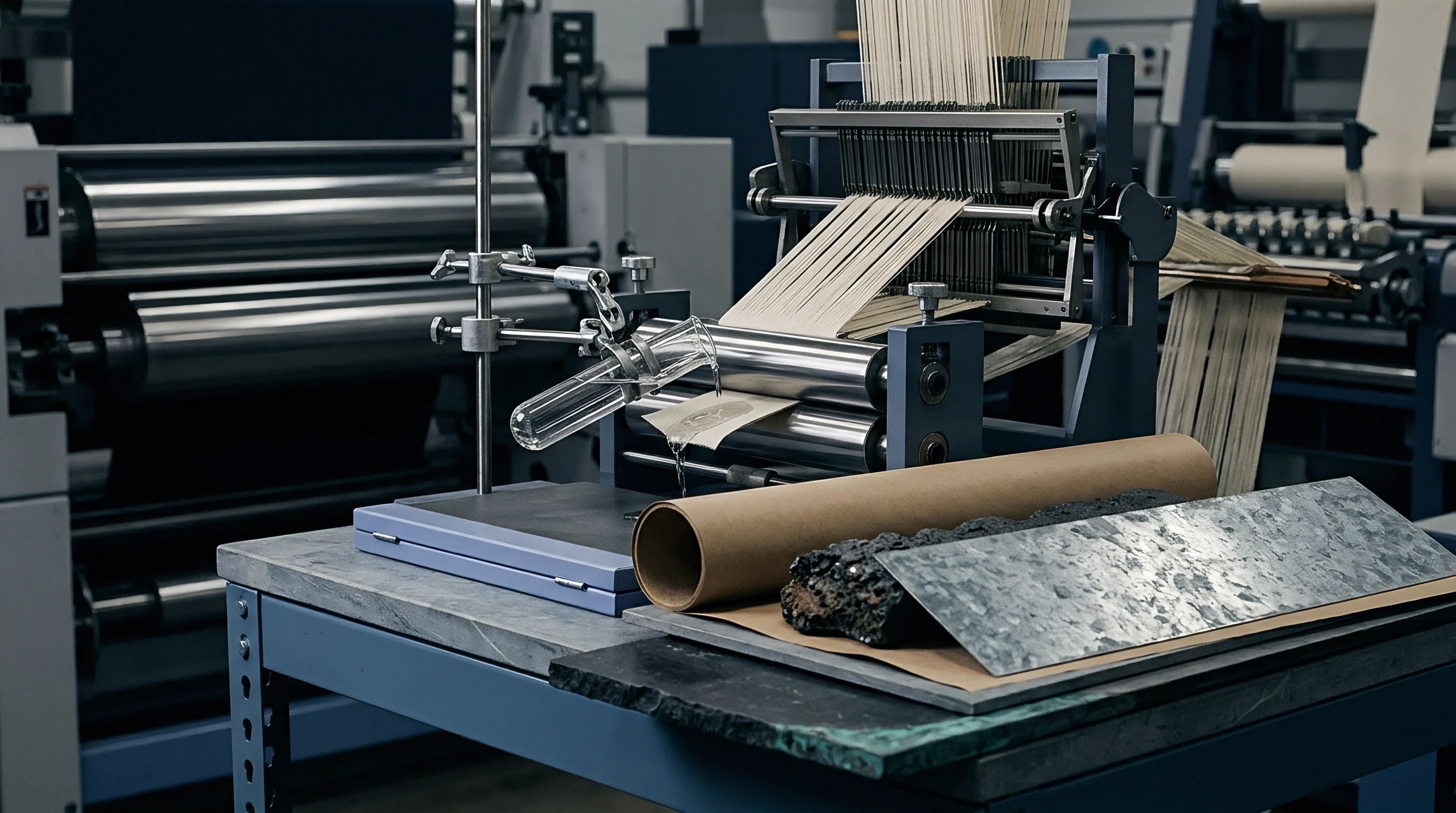
Bifunctional reactive dyes containing both monochlorotriazine and vinyl sulfone groups are the industry standard for continuous yarn dyeing. Monochlorotriazine groups form stable covalent ether links with cellulose hydroxyls at temperatures between 98 and 102 degrees Celsius under alkaline conditions. Vinyl sulfone groups react rapidly at slightly lower temperatures through nucleophilic addition.
The steam inside the chamber must be completely air-free and saturated. Any entrained air lowers the partial pressure of the steam, slowing condensation and creating localized temperature drops that produce pale shade bands.
While dry yarn absorbs liquor immediately, maintaining saturated moisture during steam fixation is critical.
Condensing saturated steam transfers heat while keeping the moisture film around each yarn strand from evaporating. If relative humidity in the steamer drops below 98 percent, water evaporates from the dye film, concentrating salt and alkali locally. Excess salt precipitates dye onto the yarn surface, while dry heat triggers dye hydrolysis, rendering reactive groups incapable of bonding with cellulose hydroxyls.
Worked Example: Liquor Flow Balance in Continuous Warp Dyeing
Consider a continuous slasher dyeing range processing a flat warp sheet of 4,500 ends of 30s Ne (19.7 tex) 100 percent cotton yarn at 35 meters per minute. Total yarn mass throughput is calculated as follows:
Total yarn linear density is 4,500 multiplied by 19.7 tex, giving 88,650 grams per kilometer, or 88.65 grams per meter. At 35 meters per minute, the dry yarn mass flow rate is 88.65 grams per meter times 35 meters per minute, which totals 3,102.75 grams of dry yarn per minute (3.103 kg/min).
Assuming a target wet pickup of 75 percent on dry yarn weight, liquor consumption is 3.103 kg/min multiplied by 0.75, giving 2.327 liters of dye liquor per minute. If the dye recipe calls for a concentration of 40 grams per liter, dye mass delivery is 2.327 L/min times 40 g/L, delivering 93.08 grams of pure dye solids per minute.
With an 82 percent dye fixation rate in the steam chamber, 76.33 grams of dye covalently bond to the cellulose structure every minute. The remaining 18 percent of unreacted or hydrolyzed dye, totaling 16.75 grams per minute, passes into the washing cascade. To keep hydrolyzed dye from redepositing onto the yarn sheet, the continuous counter-current wash box must maintain adequate water flow.
Setting maximum allowable hydrolyzed dye in the final wash chamber at 0.5 grams per liter requires a wash water flow rate of 16.75 g/min divided by 0.5 g/L, or 33.5 liters per minute of fresh, soft water at 92 degrees Celsius.
Hydrolyzed reactive dye molecules lacking covalent bonds to cellulose must be stripped in post-steaming wash cascades operating above 90 degrees Celsius to avoid wet-rub fastness failure.
Under international trade specifications governed by ISO 105-C06 test standards, yarn lots rating below Grade 4 for shade change after 60-degree laundering face immediate rejection at destination.
Tension
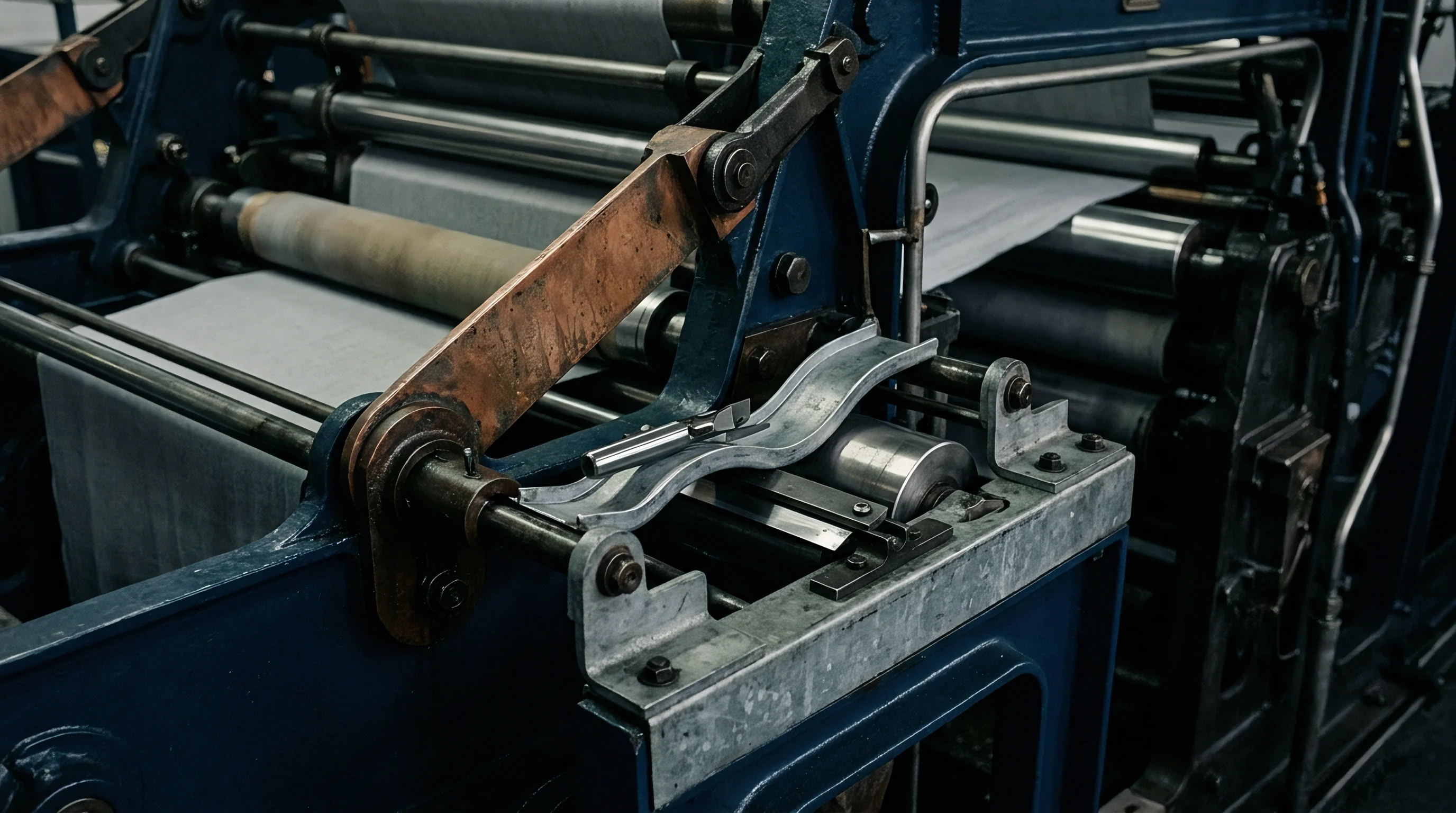
Transporting continuous yarn sheets through liquid baths, nip rollers, steam chests, and drying cylinders generates complex multiaxial strain profiles. Fluid drag in wet compartments exerts shear along the yarn axis, increasing with liquor viscosity, roll immersion depth, and line speed. Uncontrolled strain variation across a line alters physical yarn properties, causes yarn breaks, and leads to differential shrinkage in finished woven or knitted fabrics.
Drive Synchronization and Load Distribution
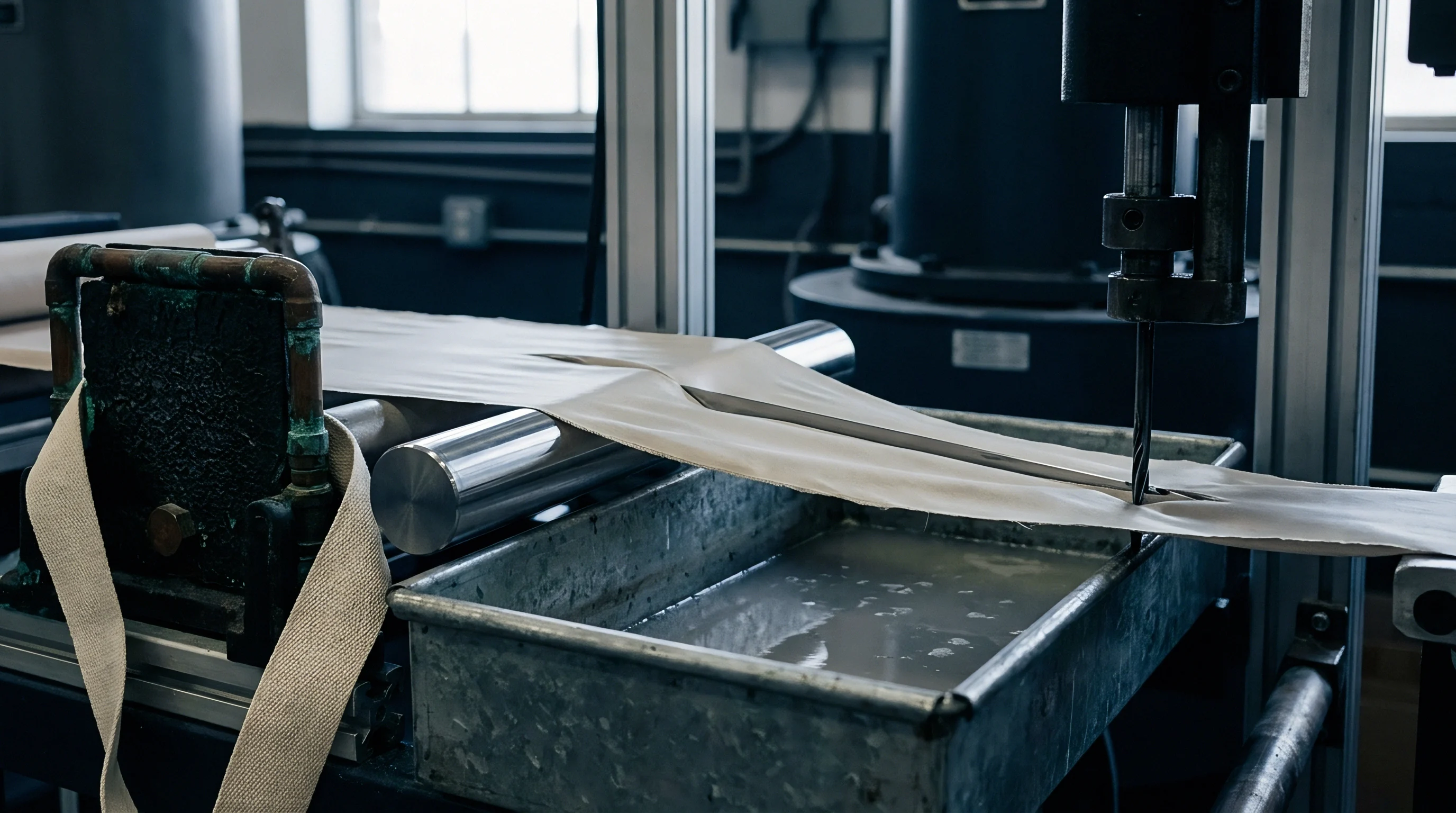
Multi-motor drives use load cells and dancer potentiometers to synchronize speeds between adjacent compartment nips. Variable-frequency AC drives adjust individual motor speeds to keep target draft within 0.1 percent accuracy. Threadline strain must match the wet mechanical modulus of the yarn.
Wet cotton fibers are stronger than dry ones, but their lower initial modulus leaves wet yarn sheets vulnerable to excessive stretching under relatively light tension.
Unchecked hydrolysis wastes active dye molecules and lowers color yield.
Overtensioning continuous yarn sheets during chemical saturation causes fibers to slip within the yarn matrix, permanently reducing residual elongation. When residual elongation falls below 4.5 percent, yarn breaks climb sharply during high-speed weaving on modern air-jet looms.
- Creel Tension Calibration Verify individual yarn bobbin brake torques to eliminate creel-induced tension variance across the warp sheet.
- Dancer Arm Zeroing Calibrate pneumatic dancer pressure regulators against actual yarn sheet strain using hand-held digital tensiometers.
- Compartment Draft Mapping Measure line speed at successive squeegee nips using optical tachometers to establish real draft profiles under loaded wet conditions.
- Drying Cylinder Profiling Adjust steam pressure and cylinder drive speed differentials to match yarn thermal contraction during moisture removal.
Continuous tow or rope ranges introduce torsional shear stresses absent in flat warp slashers. As gathered ropes pass over directional sheaves and through heavy squeegee rolls, outer fibers compress while core fibers bear the full tensile load. Rope untwisting and opening machinery must manage mechanical draft carefully to avoid permanently distorting yarn structure before drying.
Inconsistent line speed leads directly to shade banding across production runs.
What mechanical force threshold marks the transition from elastic stretch to permanent fiber slippage when saturated cotton yarns pass through high-pressure squeegee nips at elevated temperatures?
Margin
Processing greige cotton yarn on continuous lines involves balancing capital expenditure, chemical efficiency, energy demand, and minimum order quantities. Continuous ranges run at high speeds, between 30 and 120 meters per minute, with low liquor ratios of 1:1.5 down to 1:4. These operating parameters cut water and thermal energy costs per kilogram substantially compared to batch package dyeing, which operates at liquor ratios between 1:6 and 1:10.
| Operational Metric | Continuous Slasher / Tow Range | Batch Package Dyeing Machine | Commercial Advantage Boundary |
|---|---|---|---|
| Liquor-to-Yarn Ratio | 1:1.5 – 1:3.0 | 1:6.0 – 1:10.0 | Continuous cuts chemical waste on deep shades |
| Thermal Energy (kWh/kg) | 1.2 – 1.8 | 3.5 – 5.2 | Continuous reduces steam consumption by 60% |
| Water Consumption (L/kg) | 15 – 25 | 60 – 95 | Continuous limits effluent treatment volume |
| Minimum Economic Lot Size | 5,000 kg per shade | 300 kg per vessel | Batch wins on short-run custom colorways |
| Color Change Turnover Time | 4 to 8 hours setup | 45 minutes cleanout | Batch provides higher plant flexibility |
Using counter-current wash configurations reduces overall fresh water requirements.
High setup costs and chemical losses during changeovers dictate large minimum order quantities for continuous yarn ranges. Switching between contrasting shades requires extensive boil-outs of padders, wash boxes, and piping, causing substantial downtime and chemical waste. Continuous lines are best suited to high-volume programs like indigo denim slasher dyeing, uniform bottom-weight warps, and bed linen production where single shade runs exceed 10,000 kilograms.
- Assess Volume Thresholds Audit historical shade order patterns to ensure single-color order volumes satisfy continuous range minimum economic scale targets.
- Verify Water Quality Metrics Test incoming process water for total dissolved solids, iron content, and total hardness before committing to high-speed pad-steam chemical setups.
- Evaluate Thermal Recovery Systems Inspect exhaust steam heat exchangers and hot wash water recycling systems to confirm energy consumption benchmarks meet landed cost targets.
- Audit Threadline Tension Limits Measure maximum yarn elongation tolerances against continuous range transport drive limits to prevent yarn degradation.
Landed cost calculations need to factor in yarn losses during threading and shade adjustment. Line startups generate waste leader yarn until thermal, chemical, and tension balances stabilize across all compartments. Standard production budgets allow between 1.5 and 3.0 percent material loss for setup waste, factoring this directly into the final cost per kilogram of finished yarn.