Continuous Pigmentation
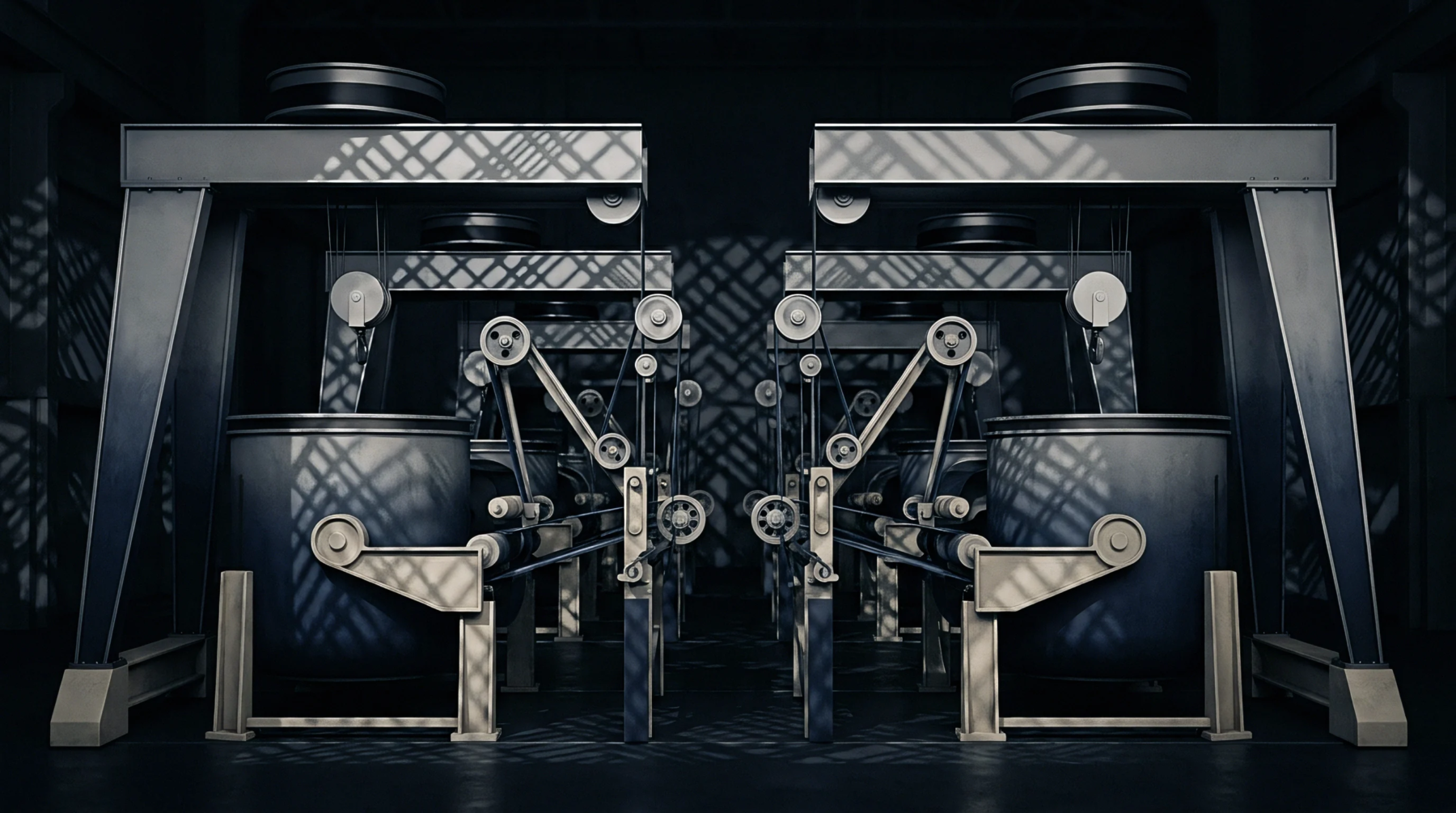
Continuous colour application occurs when warp yarns transit through a liquid bath before sizing. This slasher dyeing process deposits indigo or sulphur pigments directly onto individual yarns at high speeds. Producers rely on this method to achieve uniform shades across large volumes of denim material.
Precision tension control prevents yarn breakage during the transition from the chemical trough to the drying cylinders.
Chemical Immersion
The mechanics of this operation involve multiple dip and oxidation cycles for the yarn sheet. Each sequence allows the chemistry to penetrate deep into the cellulose structure of the cotton fibre. Air exposure between tanks converts soluble dye into its insoluble form, fixing the colourant firmly against the surface.
Constant monitoring of bath concentration prevents shade variation across the length of the warp.
System Efficiency
Output volume reaches massive scales because thousands of ends move through the apparatus simultaneously as a singular sheet. Mills gain a competitive advantage by combining the colouring and starching steps into one line. Capital investment costs remain high due to the footprint of the required machinery and the infrastructure needed for wastewater management.
This configuration reduces inventory holding times compared to conventional piece or skein methods.
Operational Control
Quality assurance focuses on the pick-up rate and the uniformity of the oxidation process across the width of the warp beam. Inconsistent speed creates shade differences between the edges and the center of the fabric roll. Operators verify these parameters against established colour standards before the yarns reach the loom.
Consistent machine performance defines the batch quality for final garment manufacturing.