Optimizing Vessel Volume in Continuous Knit Dyeing
Restricting vessel volume below fifteen litres ensures complete bath turnover within three minutes, stopping reactive dye hydrolysis and knit loop distortion.
Trough
Continuous pad dyeing runs into immediate physical limits when knits displace liquor inside the immersion zone. Circular knit structures transport trapped air into the fluid, creating foam barriers and resisting instantaneous wetting. When an immersion pan holds forty to sixty litres of bath, fresh dye replenishes slowly relative to throughput speed.
High-affinity dyestuffs deplete at the entry point while low-affinity components accumulate, generating gradual shade drift along the yardage. Minimizing fluid capacity forces rapid turnover, matching replenishment rates to the absorption speed of the moving substrate.
Tension breaks the looped stitch. Traditional continuous dyeing ranges for woven goods pull cloth through deep dip tanks under mechanical tensions reaching three hundred newtons. Applying those pulling forces to an open single jersey or interlock causes severe wale elongation and course contraction.
As the loops stretch lengthwise, the inter-yarn capillary channels narrow, choking fluid uptake and locking selvedge curl into the greige state. Low-volume application units isolate the knit web from longitudinal drag by positioning driven guide rollers millimeters above a shallow liquid pool.
Displacement Blocks and Active Fluid Reservoirs
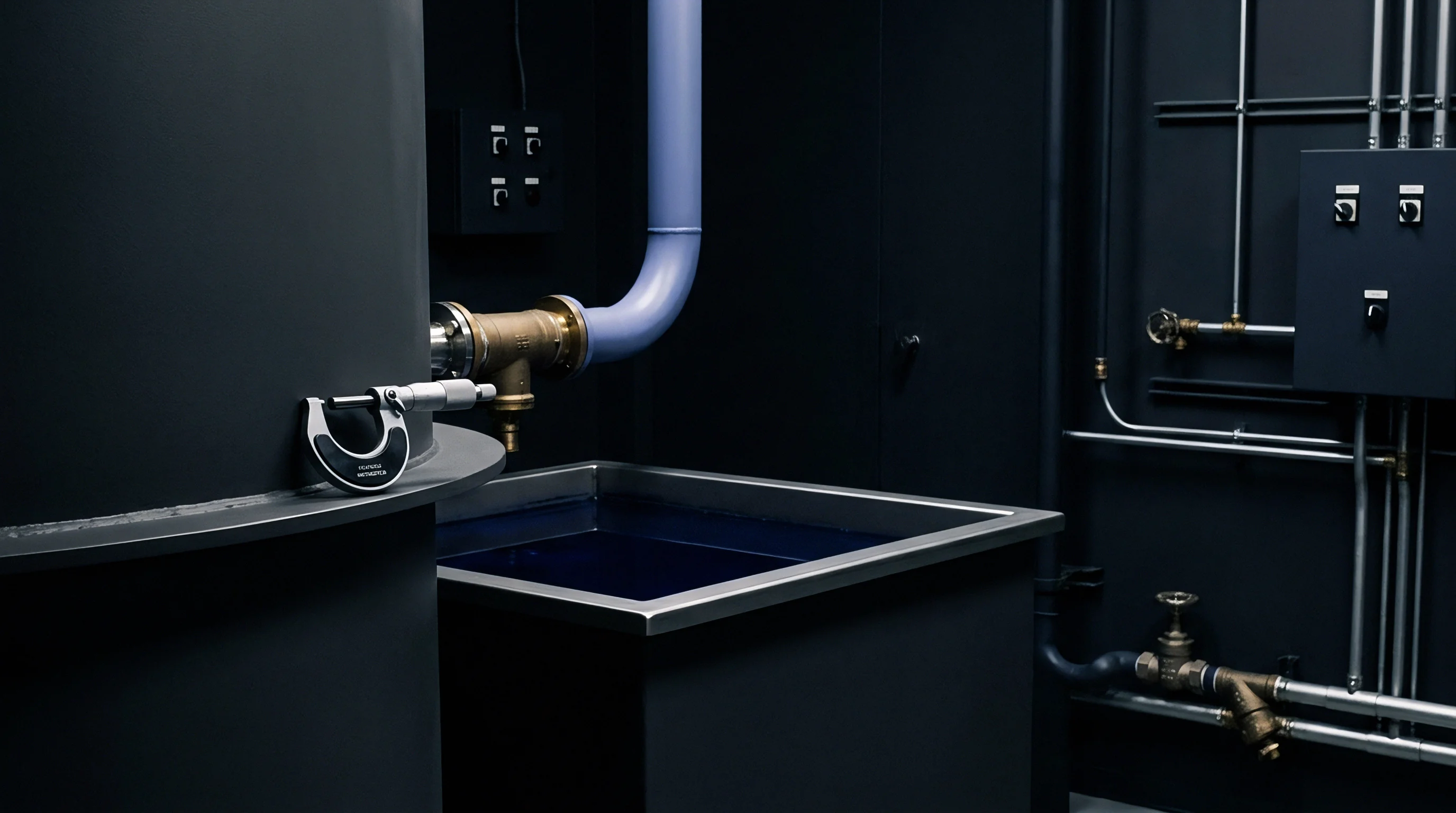
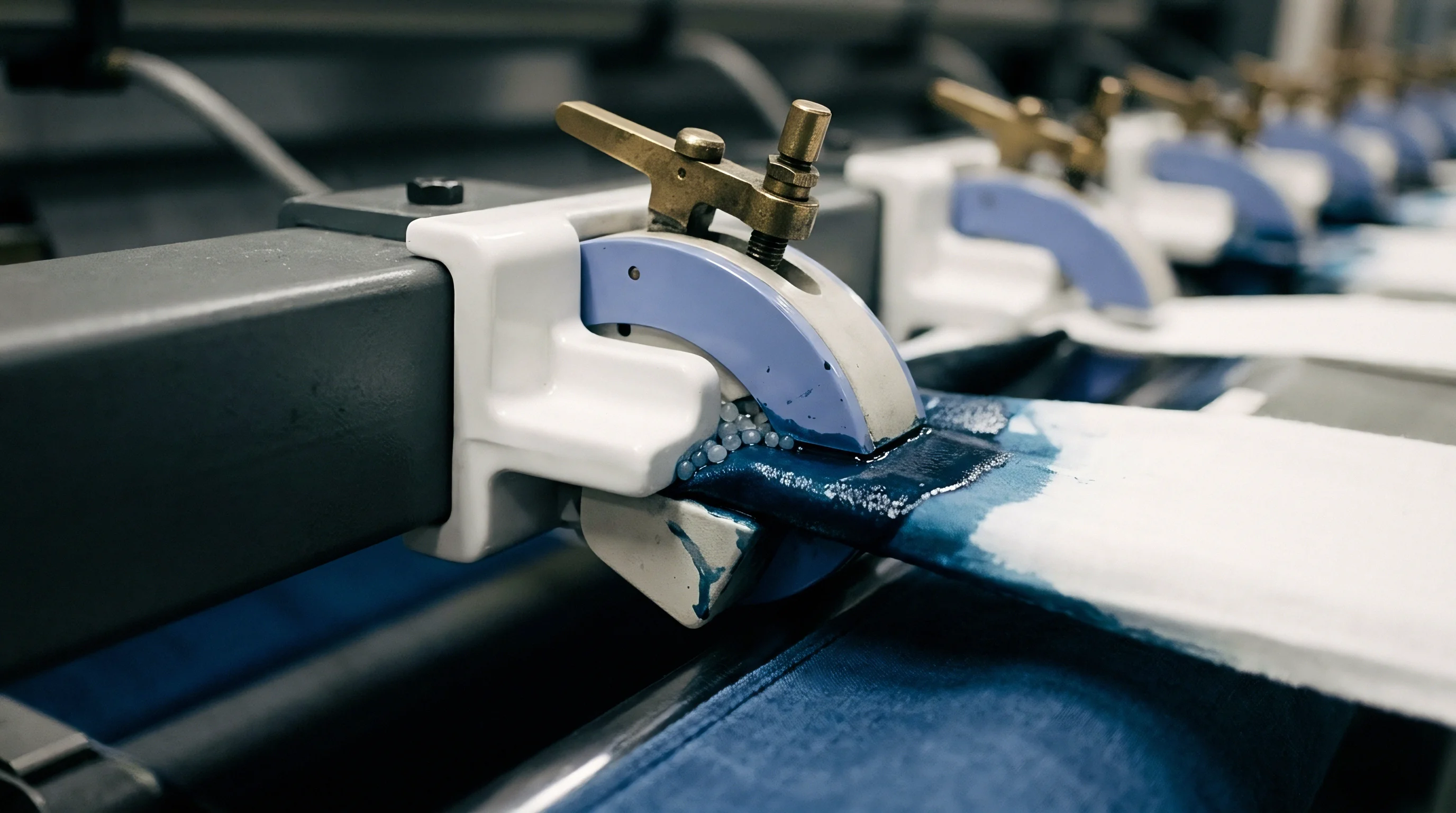
Inserting solid stainless steel wedges into the dip pan reduces holding capacity from forty-five litres to fourteen litres. This modification changes the bath exchange mechanics entirely. A liquor pan volume of fourteen litres rests on inserting high-density PTFE displacement blocks into an eighteen-centimetre radius bowl; removing those blocks expands fluid volume to forty-two litres immediately.
When processing a two hundred gram single jersey at thirty-five metres per minute with an eighty percent wet pick-up, the web consumes twenty-eight litres of dye liquor every four minutes. Inside a fourteen-litre reservoir, the bath renews completely every two minutes, leaving zero time for unstable reactive dye mixtures to hydrolyze before striking the cellulose.
| Reservoir Geometry | Net Bath Volume (L) | Single Jersey 160 gsm Turnover (min) | Interlock 240 gsm Turnover (min) | French Terry 320 gsm Turnover (min) |
|---|---|---|---|---|
| Deep Standard Tank | 55.0 | 9.82 | 6.55 | 4.91 |
| Shallow U-Pan | 28.0 | 5.00 | 3.33 | 2.50 |
| Displacement Wedge Pan | 14.0 | 2.50 | 1.67 | 1.25 |
| Micro-Sump Blade Applicator | 6.5 | 1.16 | 0.77 | 0.58 |
Volume dictates replenishment tempo. Sizing the liquid volume too small introduces hydraulic turbulence around the dip rollers. When the clearance between the displacement body and the moving knit drops below eight millimetres, the traveling web drags fluid faster than gravity returns it to the sump.
The nip rolls suck air, leading to unlevel horizontal streaks across the width. Dyehouse technicians frequently argue that larger liquor pans prevent air bubbles from tracking onto moving loops, brushing off the resulting chemical tailing as an unavoidable feature of knit wet processing.
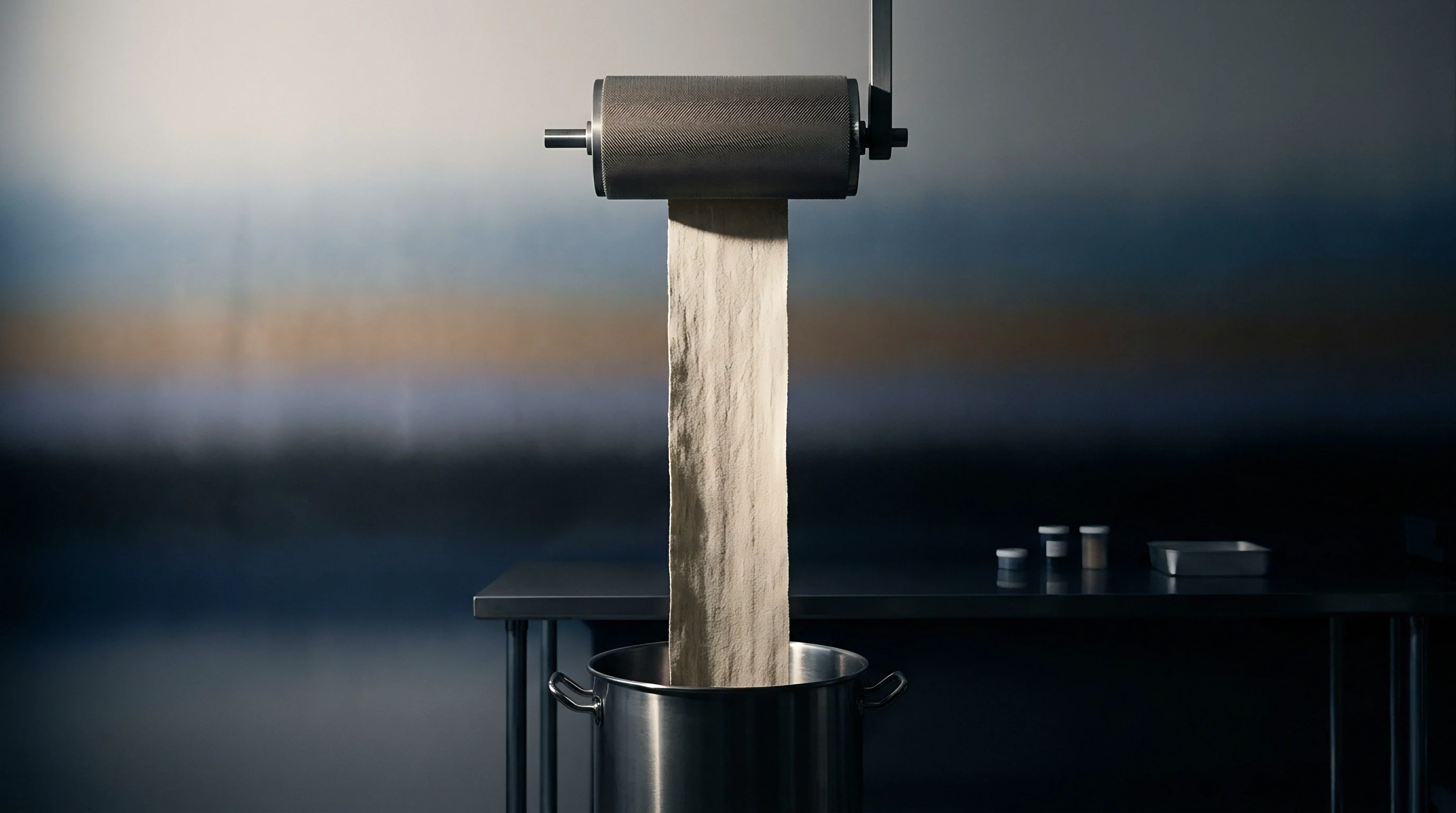
Dwell
Seconds spent submerged dictate how thoroughly dye solution penetrates compact yarn bundles. Knitted yarns feature lower twist multiples than warp yarns, allowing rapid lateral wicking along combed cotton fibers. Excess dwell inside an open vessel promotes dyestuff migration across face and back loops, shifting the shade balance before the squeezing nip secures the wet pick-up.
Restricting liquid exposure to under one point two seconds preserves physical stability while forcing uniform liquor distribution through controlled capillary displacement.
Does Bath Turnover Limit Squeezer Speed?
Operating ranges run between twenty-five and forty-five metres per minute on single jersey constructions. Raising line velocity shortens the immersion interval inside a low-volume trough, demanding immediate liquor expression at the squeezing rollers. Rubber nip rolls ground to sixty-five Shore A hardness deliver an even eighty percent expression across the width, preventing edge-to-center shading.
Squeezer deflection creates selvedge tailing. Crowned rollers compensate for bending loads under hydraulic pressure, guaranteeing consistent pressure across tubular or open-width formats.
Reactive dye liquor standing over forty minutes at thirty degrees Celsius loses seven percent of its fixation yield to alkali-induced hydrolysis.
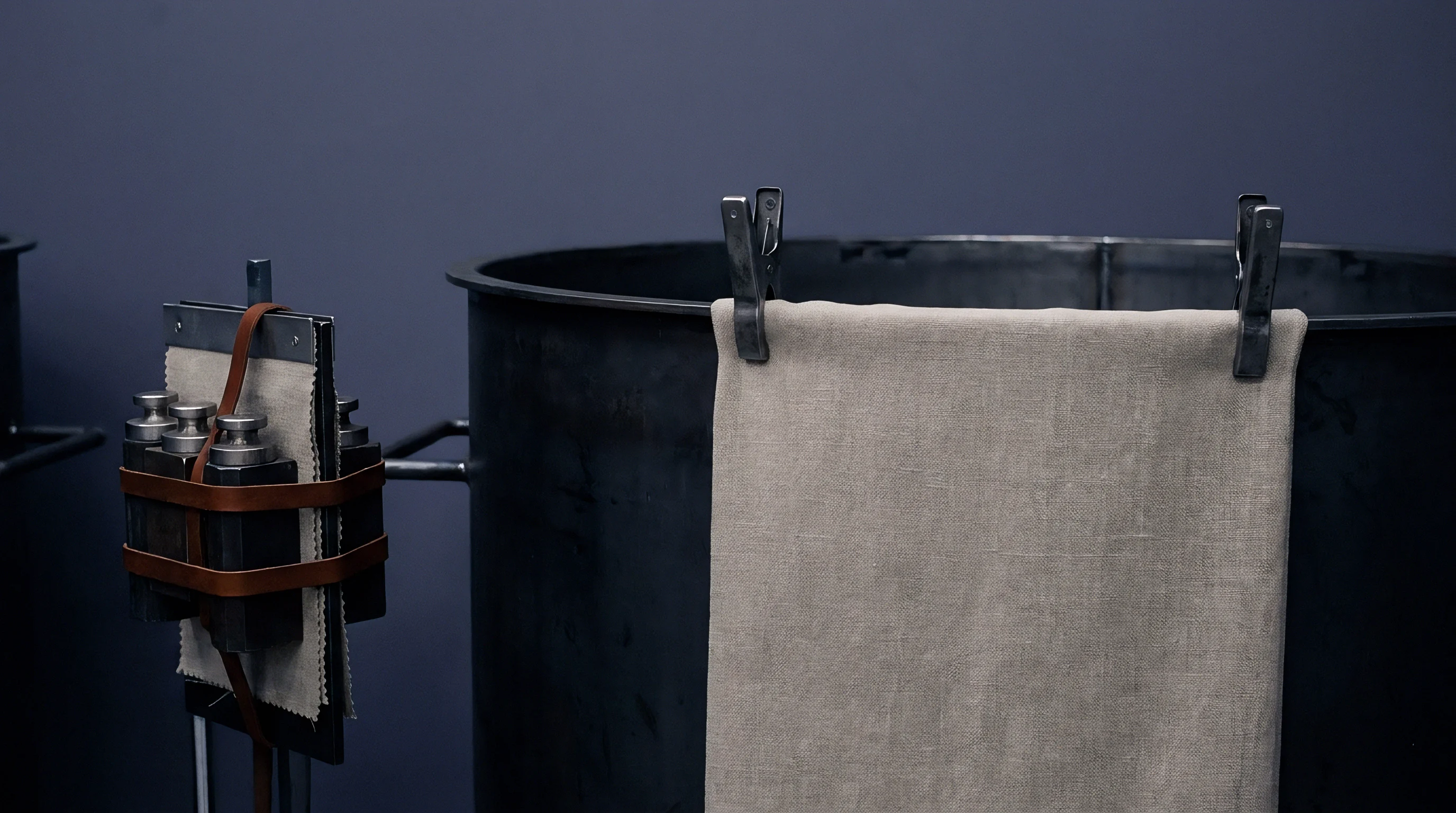
Saturation Dynamics across Varying Areal Weights
Heavy french terry at three hundred grams per square metre absorbs solution at a lower linear velocity than open mesh. High-density sinker loops demand longer wetting contact to drive liquor past the surface fleece into the ground structure. Attempting to run dense looped structures through ultra-low volume sumps without wetting agents causes dry core defects inside the yarn bundles.
Adding non-foaming wetting auxiliaries accelerates wetting kinetics, allowing bath volumes to remain compact without sacrificing core penetration.
- Core Pale Streaking develops when immersion duration drops below zero point six seconds on compacted ring-spun yarns, preventing dyestuff from reaching internal fiber clusters prior to chemical fixation.
- Selvedge Accumulation occurs when curling knit edges trap stagnant liquor along the trough walls, concentrating dyestuffs on the outer wales.
- Hydrolysis Yield Loss strikes reactive dye runs when bath volume exceeds thirty litres, leaving dissolved alkali and vinyl sulfone dyes to react together in stagnant pockets before making contact with the moving web.
- Surface Frothing appears when fast-moving loops drag mechanical air into narrow fluid channels, generating foam blankets that block uniform chemical deposition.
Improper time in the dip pan yields severe barre streaks and uneven cross-sectional ring dyeing that scrap the finished garment panels during final quality sorting.

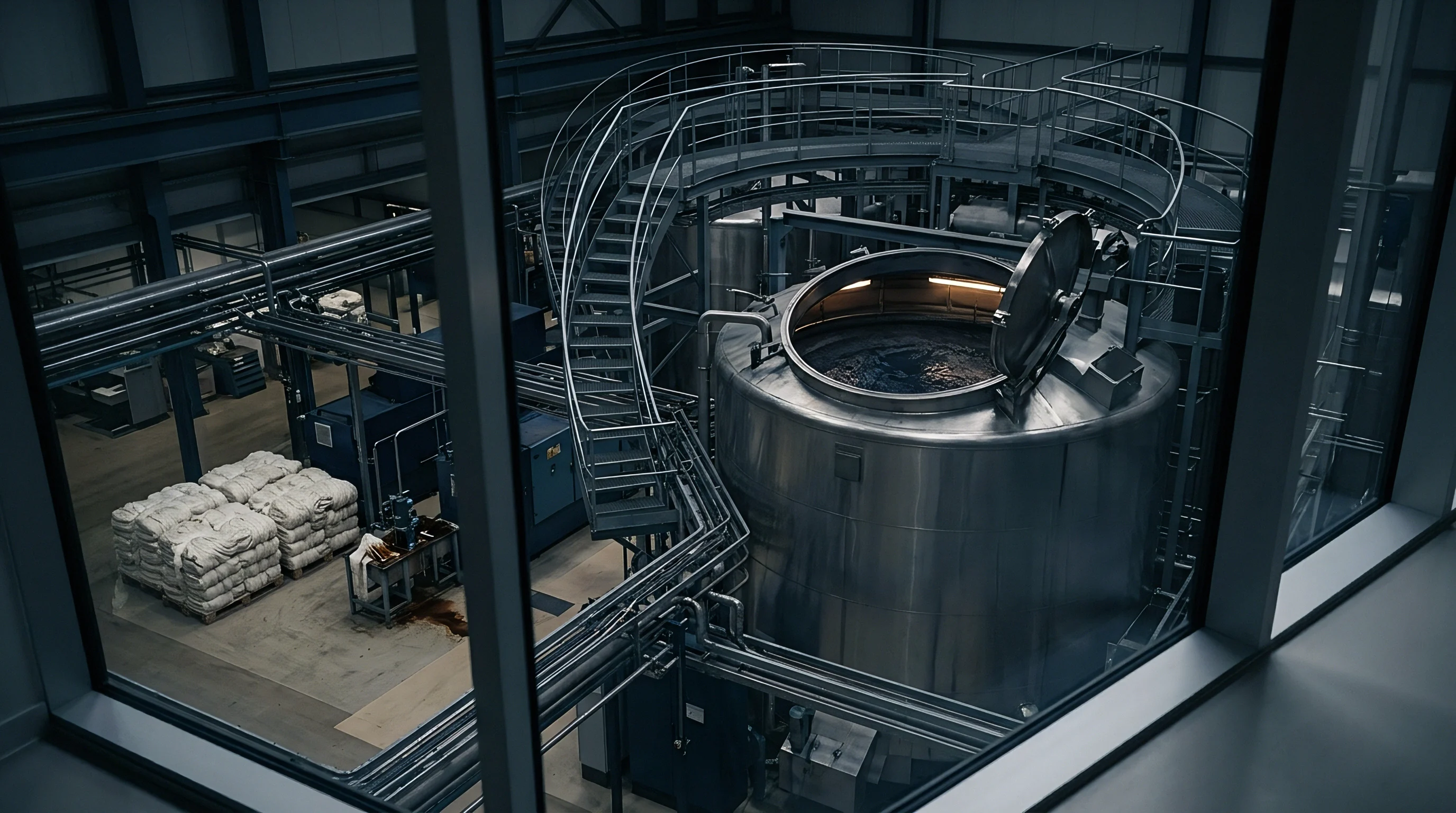
Exchange
Fresh liquor enters through positive displacement pumps slaved directly to line velocity. Maintaining a stable chemical concentration demands continuous dosing of dyestuff, alkali, and wetting agents in separate liquid streams mixed seconds before entering the trough. In batch exhaust processes, the liquor ratio remains fixed across hours.
In continuous ranges, the liquor ratio inside the application zone depends entirely on the ratio of active pan volume to the rate of substrate passage. High affinity accelerates bath exhaustion.
A smaller dip volume protects shade consistency whenever replenishment matches fiber consumption.
Spectrophotometric readings across ten thousand metres reveal measurable colour distance when chemical dosing lags consumption. A measured turnover rate of three point two minutes rests on forty metres per minute line speed and eighty percent wet pick-up on two hundred gram single jersey; increasing pick-up to ninety percent shifts this rate to two point eight minutes. Controlling liquid volume eliminates dead zones where dyes degrade under alkaline conditions.
Chemical engineering handles identical residence challenges inside continuous industrial chlorination reactors, where fluid channeling destroys reaction selectivity when chamber geometry stagnates. Textile pad troughs exhibit the same hydrodynamic channeling when cross-flow circulation drops below critical velocity.
Will Liquor Ratio Drift Shift Knitted Shade?
Spectrophotometric testing measures colour variance across consecutive rolls using the CIEDE2000 formula under D65, TL84, and A illuminants per ISO 105-J03. Dye baths holding thirty-five litres or more show steady drift toward lighter shades across the first eight hundred metres as fiber affinity strips dye faster than the dosing system adds fresh stock. Once equilibrium establishes, running stops or line slow-downs cause dark banding as stagnant goods absorb accumulated dyestuff.
Levelness vanishes downstream.
| Meters Processed | Pan Volume 45 L dE (CIEDE2000) | Pan Volume 14 L dE (CIEDE2000) | Mean Residence Time 45 L (min) | Mean Residence Time 14 L (min) |
|---|---|---|---|---|
| 500 | 0.85 | 0.22 | 8.04 | 2.50 |
| 2,000 | 0.62 | 0.18 | 8.04 | 2.50 |
| 5,000 | 0.31 | 0.15 | 8.04 | 2.50 |
| 10,000 | 0.28 | 0.14 | 8.04 | 2.50 |
| Test parameters: 100% cotton single jersey, 180 gsm, 35 m/min, 78% wet pick-up, reactive trichromatic system. Spectrophotometer geometry d/8, specular included. | ||||
Dyeing lots demand strict metering. Restricting trough capacity stabilizes the residence time, keeping the delta E values within commercially acceptable tolerances below zero point five. A continuous knit range claiming zero point one five delta E variance across fifty thousand metres rests on unverified vendor white papers rather than independent floor audits; an experienced buyer implements three-roll cut inspections every two thousand metres to verify shade limits independently.
- Mass Flow Metering regulates individual dyestuff and alkali feeds through Coriolis sensors, eliminating concentration shifts caused by pump wear.
- Level Sensor Feedback controls the pan drain valve to prevent volume creeping upward during line deceleration.
- Direct Injection Manifolds distribute fresh dye chemistry across the full width of the trough base, preventing central stagnation channels.
- Temperature Controlled Jacketing maintains the liquor at twenty to twenty-five degrees Celsius, suppressing dye-alkali hydrolysis before substrate wetting.
Technologists still debate whether fully automated optical dosing valves can counter affinity drop rapidly enough when running high-affinity bifunctional reactive dyes at low bath volumes.
Drag
Wet knitted loops yield under mechanical pulling forces that flat wovens resist effortlessly. When open-width knits enter continuous troughs, the liquid viscosity exerts a backward drag against the moving web. If guide rollers rely on web friction to rotate, the longitudinal tension spikes past forty newtons, causing immediate wale elongation and irreversible course skew.
Cotton knits stretch under load. Once deformed in the wet state, the loops enter the squeezing nip in an asymmetrical configuration, permanently fixing structural spirality into the finished jersey.
Driven Rollers and Loop Distortion Prevention
Individual servo motors on every dip roll eliminate cumulative pull across the wet processing span. Load cells installed on dancer rolls monitor tension continuously, holding line pull below twelve newtons per metre of width. Minimizing the depth of the vessel directly reduces the submerged surface area of the knit, lowering hydraulic drag forces.
Shallow pans allow the web to travel nearly horizontally across driven support cylinders, preventing selvedge curl from folding inward before entering the nip.
Inspection contracts specifying CIEDE2000 total colour difference below zero point six reject entire dye lots when replenishment pumps drift out of calibration.
Spandex blends amplify tension risks. Knitted goods containing elastane retract sharply in warm baths if longitudinal tension relaxes unevenly, producing puckering and width variations across the piece. Isolating the entry zone with motorized spreading scrolls uncurls the edges and introduces the goods to the low-volume bath at neutral tension.
- Driven Uncurling Spindles flatten rolled selvedges three centimetres ahead of the liquid line to ensure edge-to-edge immersion uniformity.
- Submerged Driven Cylinders match surface speed to line throughput within zero point one percent, eliminating shear stress across the bottom loops.
- Proximity Nip Placement positions the squeezer rollers less than twelve centimetres from the liquid surface to prevent wet web sagging under gravity.
- Electronic Load Cell Interlocks stop feed drives instantly whenever longitudinal web tension exceeds fifteen newtons per metre.
Export purchase orders specifying ISO 5077 dimensional stability tighter than four percent lengthwise shift the entire financial rejection risk to the dyehouse if feed tension stretches wet loops.
Margin
Dumping dye liquor at order changeover incurs direct chemical expenses and effluent surcharges. Traditional continuous ranges require discarding sixty litres of prepared dyestuff at the end of each colour run, wasting expensive reactive dyes and generating heavy wastewater loads. In contrast, operating with a fourteen-litre trough limits end-of-run waste to less than sixteen litres, including delivery piping.
Dead volume liquor faces drainage. Reducing discarded volume protects processing margins on short orders, positioning continuous processing to compete against batch jet dyeing on intermediate production volumes.
Continuous processing transfers chemical exposure risks from bulk exhaust variation directly to mechanical dosing stability.

Run Length Thresholds and Chemical Dumping Costs
Short production runs suffer heavy financial penalties when unused pad liquor exits directly into drain trenches. A forty-five-litre pan wastes three times the chemistry of a fifteen-litre system during washdown. When processing lots under three thousand metres, this difference represents up to eight cents per finished metre in chemical discard alone.
Shorter runs inflate unit expenses. Operating low-volume hardware lowers the economic threshold where continuous dyeing undercuts exhaust jet methods, dropping minimum viable lot lengths from five thousand metres down to fifteen hundred metres.
| Trough Volume (L) | System Drain Loss (L) | Dyestuff Loss at 40 g/L (kg) | Effluent Surcharge per Dump (USD) | Net Waste Cost per Dump (USD) |
|---|---|---|---|---|
| 60.0 | 68.5 | 2.74 | 18.50 | 73.30 |
| 35.0 | 41.2 | 1.65 | 11.12 | 44.12 |
| 15.0 | 18.4 | 0.74 | 4.97 | 19.77 |
| 8.0 | 10.1 | 0.40 | 2.73 | 10.73 |
Calculations based on reactive black formulations demonstrate that a plant executing four colour changes daily saves over forty-five thousand dollars annually simply by swapping deep troughs for displacement-wedge pans. Cold baths prevent premature hydrolysis. Meters verify incoming substrate speed.
The operational savings compound further through reduced water consumption during automated clean-in-place wash cycles, where compact volumes flush clean within ninety seconds. Longer lot commitments yield predictable profits once bath replacement rates balance chemistry with running speed.