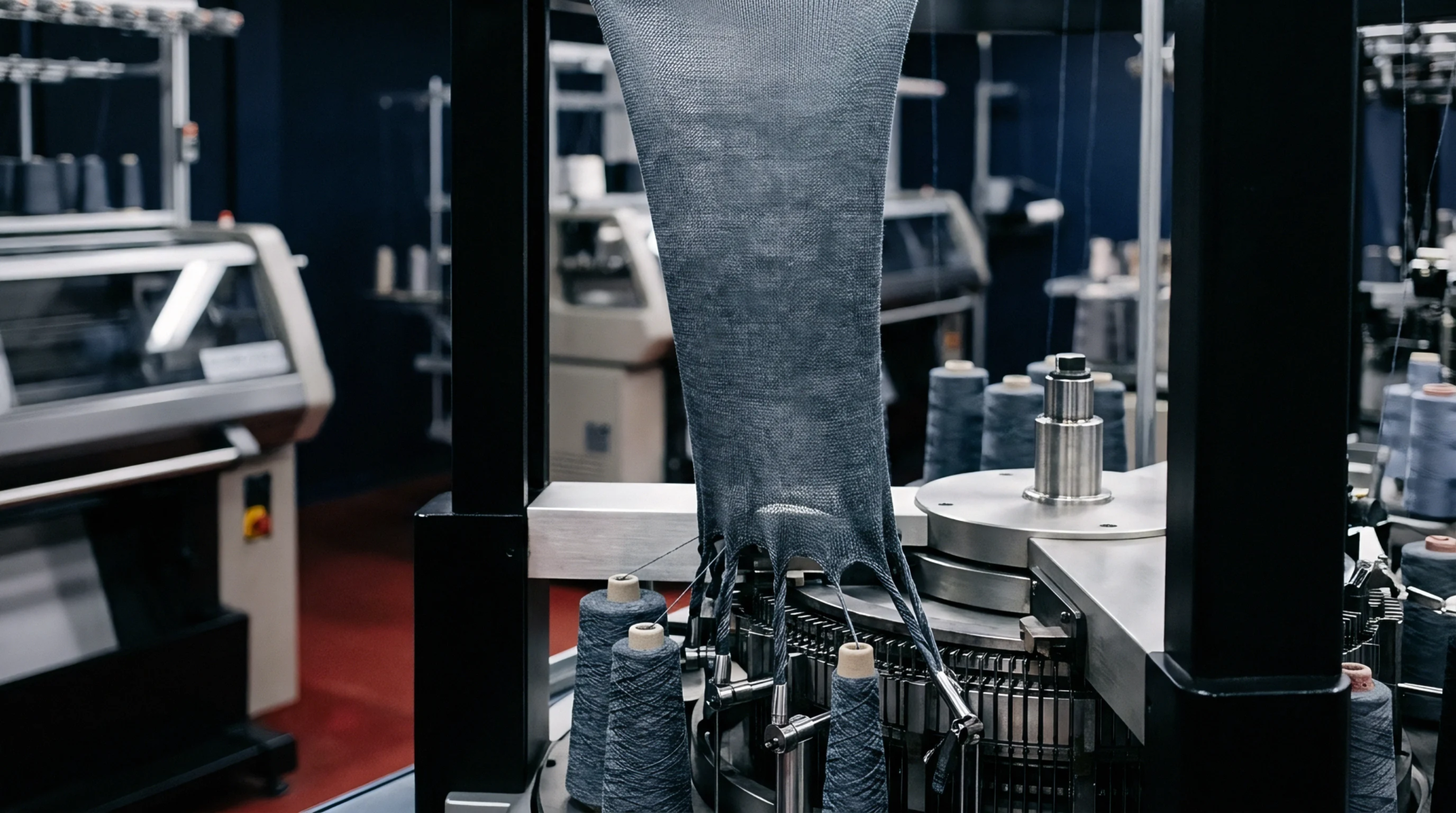
Double Construction
Balanced circular knitting architectures produce double faced fabric formations by alternating loops across two independent needle beds arranged in opposing cylinder and dial configurations. This dual bed arrangement creates a stable textile structure without edge curling tendencies because face loops balance back loops across the internal plane. Mill technicians apply interlock knitting parameters to produce medium weight garments requiring identical surface aesthetics on both sides of the material.
Machine gauge selection determines the fineness of the stitch geometry while yarn feed tension controls dimensional stability before wet processing stages.
Loop Transfer
Counter opposing needles synchronize their movements to deposit yarn loops alternately between front and rear beds during every revolution of the cylinder. Differential timing plates govern the exact moment of needle elevation to prevent dropped stitches while running fine staple yarns at commercial production speeds. Operators adjust cam settings to regulate stitch density and fabric mass per square metre within commercial tolerance limits established by the purchasing contract.
High speed output demands precise lubrication management across the sliding surfaces of the dial to avoid oil contamination in finished apparel lines.
Dimensional Stability
Post knitting shrinkage depends heavily upon relaxation treatments applied during wet finishing operations in commercial dyehouses. Heat setting parameters lock the loop geometry into place to minimize width and length distortions during subsequent garment assembly procedures. Quality assurance laboratories measure area shrinkage percentages by subjecting conditioned samples to standard laundering cycles defined by international testing protocols.
Dimensional recovery values confirm whether the original mechanical tensioning during manufacturing caused residual stress within the textile matrix.
Surface Uniformity
Visual inspection benches check the finished fabric for linear streaks and needle lines that signal mechanical wear within the knitting head. Automated optical scanners detect broken filaments and yarn count variations before the rolls pass to commercial cutting rooms for apparel manufacturing. Surface smoothness directly influences print clarity when applying screen printing or thermal transfer graphics to the outer face of the material.
Final grading categories separate first quality output from secondary rolls according to defect density limits agreed upon between the mill and the apparel brand.