Measuring in Situ Fiber Core Ph Gradients during Rapid Alkali Dosing Cycles in High Density Knits
Ratiometric confocal microscopy measures real-time yarn core pH, proving S-curve alkali dosing prevents peripheral fiber swelling and shade ring-dyeing.

Gradient
Internal Hydroxyl Concentration during Rapid Caustic Metering
Rapid addition of sodium hydroxide to cellulosic interlock and rib structures creates a steep chemical disparity between the outer annulus of the yarn bundle and the center of the individual fiber. When liquid alkali enters an atmospheric jet dyeing vessel at sixty degrees Celsius, the liquor phase reaches nominal bath pH within ninety seconds. The yarn bundle interior responds on a much slower schedule.
In a thirty-four-gauge interlock knitted from combed ring-spun cotton at forty-two yarn count English, the bulk liquor reaches pH 11.2 while the interior lumens of the innermost fibers remain below pH 8.8 for several minutes. Hydroxyl ions migrate along the tortuous inter-fiber pathways against an outward flow of counter-ions and water of swelling, establishing a measurable core gradient that governs local dye fixation rates.
Inter-fiber void spaces within high-density knitted loops restrict convective fluid exchange. Mechanical circulation moves liquor through the nozzle and around the rope basket, but the boundary layer adhering to the knit face requires pure diffusion to move reagents into the yarn axis. The high density of wales and courses, typically exceeding eighteen wales and twenty-two courses per centimeter in unrelaxed double-knit jerseys, functions as a consolidated porous medium.
Fluid shear at the fabric surface fails to penetrate the interior yarn packing fraction of 0.72. The resulting delay in hydroxyl mass transfer produces non-uniform dye fixation kinetics across the fiber diameter. Reactive dyes with high sulfatoethylsulfone reactivity hydrolyze in the bath while the fiber core remains unreactive.
A bulk liquor shift of three pH units over two minutes leaves the fiber core lagging behind by more than two full units across twenty-eight-gauge constructions.
Measurement of this internal chemical microenvironment requires techniques that isolate the cellulosic matrix from the surrounding convective liquor film. Standard bath electrodes only register the external exhaustion environment. Determining the true internal hydrogen ion activity requires localized optical or physical probes embedded directly into the fiber core during the metering sequence.
The operational cost of ignoring this delay shows up downstream in unlevel ring dyeing, reduced wet crockfastness, and rejected bulk yardage.


Probe

Ratiometric Fluorescence and Confocal Micro-Spectroscopy
Optical quantification of internal fiber hydrogen ion concentration relies on chemical fluorophores covalently immobilized to the secondary cellulosic wall. Dextran-conjugated 5-and-6-carboxy-SNARF-1, possessing a molecular weight of ten thousand Daltons, remains trapped within the pore structure of the primary and secondary cellulose walls without leaching into the inter-fiber channels. When excited at five hundred and fourteen nanometers by an argon-ion laser source, this probe emits dual fluorescence peaks at five hundred and eighty nanometers and six hundred and forty nanometers.
The intensity ratio of these emissions correlates to localized hydronium concentration independently of total probe loading or laser attenuation through the fabric structure.
Confocal laser scanning microscopy captures optical sections through the yarn cross-section at five-micrometer depth increments. Calibration curves relate the emission intensity ratio directly to absolute pH values across the range of 7.0 to 12.5. Knitted specimens frozen in liquid nitrogen during defined stages of dosing preserve instantaneous chemical profiles.
Subsequent cryosectioning yields thin transverse slices of five to eight micrometers thickness. Mounting the frozen-hydrated sections on a temperature-controlled stage maintains structural integrity during laser scanning.
- Conjugated SNARF Dextran anchors within the microfibrillar pores and provides emission ratios responsive from neutral conditions up to pH 12.0 without matrix degradation.
- Direct Cellulosic Dyeing Indicators utilize dichlorotriazinyl brilliant yellow derivatives fixed covalently, reading absorption variations through micro-spectrophotometry under polarized reflectance conditions.
- Micro-Electrode Penetration Arrays drive pulled glass capillary electrodes of two-micrometer tip diameters directly through the loop crests into the bundle core during paused cycle flow.
Capillary electrode insertion requires mechanical stabilization of the knitting loops under tension. While glass electrodes deliver continuous millivolt outputs, their presence disrupts the local packing geometry, introducing micro-channels that accelerate liquid bypass. Confocal ratiometric imaging leaves the yarn packing intact, capturing true diffusion phenomena without mechanical artifacts.
Failure to calibrate the fluorophore response against ionic strength distorts the core reading by as much as 0.6 pH units in baths containing sixty grams per liter of sodium sulfate.

Diffusion
Mass Transfer Physics across Inter-Fiber Capillaries
Transient diffusion of hydroxyl ions through tightly packed yarn structures follows an altered form of Fickian diffusion where the apparent diffusion coefficient incorporates physical porosity, pore tortuosity, and chemical adsorption. In cotton yarns of eighty percent packing fraction within double-knit ribs, the apparent diffusion coefficient drops significantly compared to unrestricted aqueous solutions. Swelling of the peripheral cellulose fibers upon contact with alkali further constricts the inter-fiber capillaries, dropping the effective local permeability by up to sixty percent within thirty seconds of initial contact.
| Knit Structure | Gauge (npi) | Fiber Packing Fraction | Effective Permeability (m2) | Apparent Hydroxyl Diffusivity (m2/s) |
|---|---|---|---|---|
| Single Jersey | 24 | 0.58 | 4.2e-13 | 1.4e-9 |
| Single Jersey | 32 | 0.66 | 2.1e-13 | 8.8e-10 |
| Double Interlock | 28 | 0.72 | 1.1e-13 | 4.6e-10 |
| Double Interlock | 36 | 0.79 | 4.5e-14 | 1.8e-10 |
| One-by-One Rib | 20 | 0.52 | 6.8e-13 | 1.9e-9 |
Capillary contraction creates an inward choking mechanism. The outer fibers absorb water and hydroxyl groups, expanding diametrically by twenty to thirty percent. This physical volume expansion closes inter-fiber voids, shifting transport from convective pore seepage to slow matrix diffusion through swollen polymer gels.
Knits produced from compact yarns suffer the severe manifestation of this choking effect because compact spun yarns possess fewer initial void spaces than conventional ring-spun or rotor yarns.
Fiber swelling under alkaline shock reduces yarn capillary cross-sections before core neutralization finishes.
Chemical consumption of the hydroxyl ions occurs simultaneously with transport. Cellulose contains weakly acidic hydroxyl groups with ionization constants between 13.0 and 14.0. As alkali penetrates the amorphous zones, dynamic proton exchange depletes the moving concentration front.
This buffering effect retards the advance of the basic threshold, maintaining an acidic or neutral microclimate in the core long after the bath has reached processing alkalinity.
The dyehouse manager typically defends resulting shade depths by pointing to total meter dosing records rather than bundle diffusion rates.


Shock

Swelling Front Progression and Fiber Deformation
Fiber cross-sections change rapidly when exposed to sudden alkaline fronts exceeding pH 10.5. The natural bean-shaped cross-section of unmercerized cotton rounds out into an elliptical form as secondary wall microfibrils untwist. The inner lumen partially collapses under external compression or expands under internal hydration pressures.
The physical dimensions change unevenly across the knit loop, producing tight mechanical pinning points where the yarn crosses itself at the needle head.
At these crossing zones, loop pressure reaches local peaks exceeding five kilopascals. Fiber mobility drops to zero. Hydroxyl diffusion through these compressed contacts drops by an order of magnitude compared to unconstrained loop lengths.
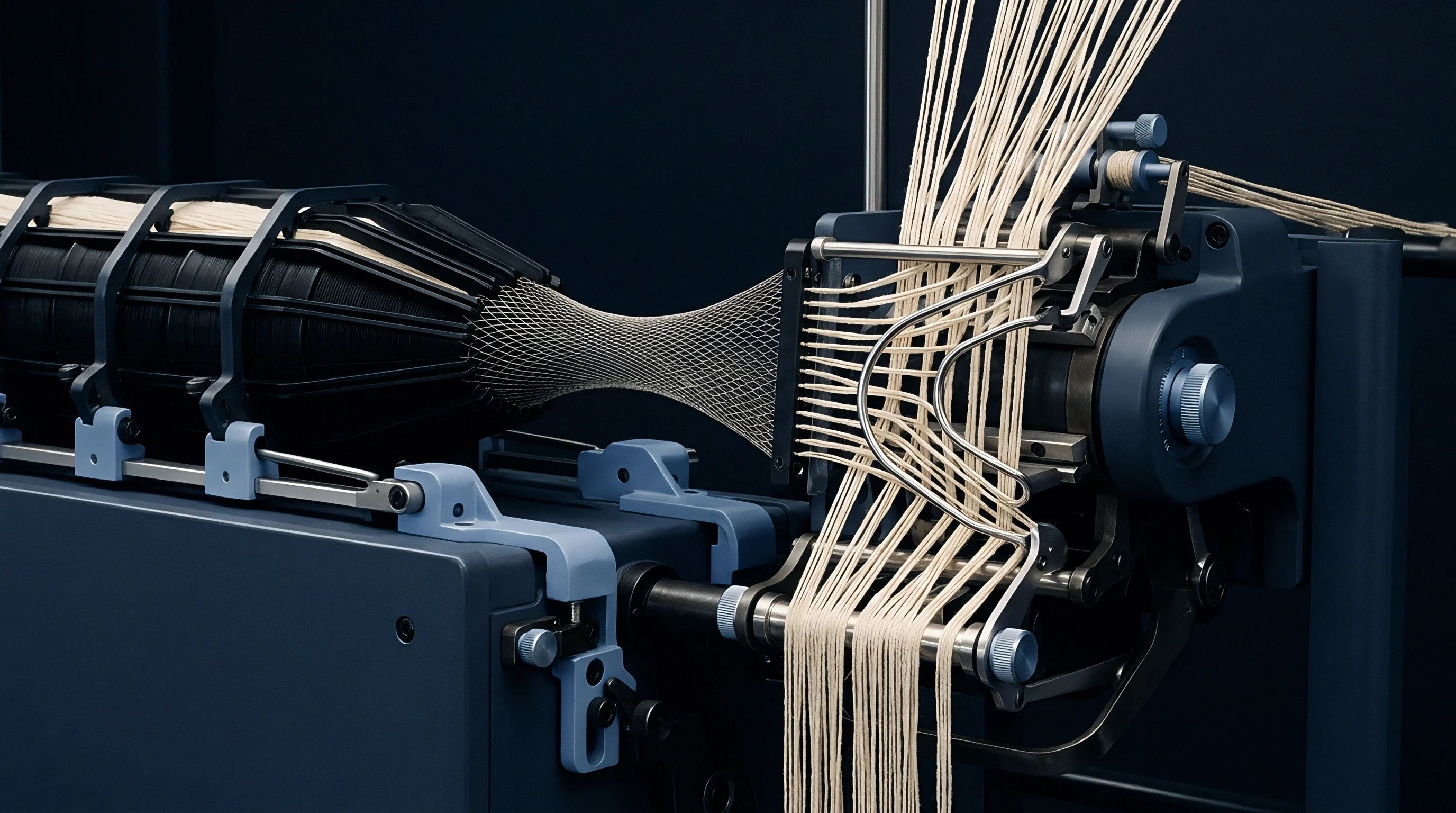
Cross-sections harvested from loop contact points demonstrate asymmetrical core pH zones, where the shaded side of the bundle maintains an internal hydronium concentration five times higher than the exposed outer surface.
A supplier who blames poor batch levelness on dye lot variation frequently overlooks this localized mechanical pinching. The physical constraint prevents chemical access to the core fibers during rapid alkali injection, leading to unlevel ring-dyeing patterns that show up under standard lightbox inspection as mottled shade patches across the knit face.
Standard purchase terms assign complete commercial liability for these visual rejections to the processing mill when core penetration parameters are not verified.

Kinetics

Reactive Color Chemistry under Shifting Internal Acidity
Dye fixation efficiency depends on the competition between dye-fiber nucleophilic substitution and aqueous dye hydrolysis. For vinyl sulfone chemistry, the reactive precursor undergoes beta-elimination to generate the active vinyl sulfone group at pH values above 9.0. Once active, this group attacks cellulosate ions to form covalent ether linkages.
The formation of cellulosate requires elevated alkalinity. When the core remains below pH 9.5 while the exterior sits at pH 11.5, external reactive dye forms stable bonds rapidly, depleting the dye pool in the inter-fiber channels before the core fibers can participate in fixation.
Hydrolysis reactions accelerate exponentially as the bath pH exceeds 10.8 at standard fixation temperatures. Unfixed dye molecules lingering outside the yarn bundle convert to the inactive hydroxyethylsulfone form. These hydrolyzed molecules can no longer form covalent bonds with the cellulose polymer chains.
They penetrate into the fiber core later in the cycle purely as adsorbed direct dyes, held only by weak physical Van der Waals forces.
- Alkali Ingestion Phase begins with progressive dosing pumps metering sodium hydroxide into the circulation loop over a controlled twenty-minute ramp.
- Peripheral Elimination Phase converts sulfatoethylsulfone precursors on exterior fibers into active vinyl sulfone structures between pH 8.5 and 9.5.
- Core Lag Window occurs where the core lags at pH 7.8 while surface fibers fix available surface dye at pH 10.2, exhausting local dye concentrations.
- Hydrolysis Phase destroys remaining unbonded bath dyes at pH values above 11.2, yielding unreactive byproducts that fail to fix upon reaching the fiber core.
The resulting yarn demonstrates dark, fully fixed outer perimeters and pale, weakly bound interior cores. Post-dyeing wash-off processes strip the unbonded direct dye from the fiber interior, leaving the knitted fabric pale and prone to severe wash-down during domestic laundering cycles.
ISO 105-C06 wash fastness ratings plunge from grade 4-5 down to grade 2-3 when this core fixation gap exceeds forty minutes during the alkali dosing stage.

Profiling

Can Dosing Curve Optimization Balance Core Gradients?
Linear dosing profiles supply equal volumes of alkali per unit time, which overwhelms the exterior yarn boundary layer while the core remains unreactive. The rate of internal mass transfer dictates that alkali delivery must follow an exponential or progressive dosing profile. Dosing thirty percent of the total caustic requirement over the first sixty percent of the dosing window prevents the rapid accumulation of high surface concentrations, maintaining peripheral fiber swelling within limits that keep yarn pores open.
| Dosing Profile | Cycle Time (min) | Surface pH at 10m | Core pH at 10m | Differential Delta-pH | Final Fixation Yield (%) |
|---|---|---|---|---|---|
| Instantaneous Shock | 5 | 11.8 | 8.2 | 3.6 | 54 |
| Linear Addition | 20 | 10.9 | 8.8 | 2.1 | 68 |
| Progressive Quadratic | 30 | 9.8 | 9.4 | 0.4 | 79 |
| Progressive S-Curve | 35 | 9.6 | 9.5 | 0.1 | 83 |
| Two-Stage Stepwise | 25 | 10.4 | 9.1 | 1.3 | 72 |
Micro-spectroscopic mapping confirms that an S-curve dosing profile minimizes the radial pH gradient across the yarn. By introducing small chemical increments initially, the system maintains the liquor-to-core difference below 0.5 pH units throughout the migration window. Dye molecules diffuse smoothly into the core before local fixation locks them onto peripheral polymer chains.
The yield of covalently bound dye rises from fifty-four percent under shock addition to eighty-three percent under controlled S-curve profiling.
Total cycle time increases by fifteen minutes when utilizing progressive curves, consuming machine capacity across thirty-ton batch assignments. Mills frequently compress these curves to recover vessel utilization rates, re-establishing the internal gradients that destroy fastness metrics.
What remaining thermodynamic boundary prevents perfect core leveling when working with ultra-fine fifty-gauge modal double knits?