Structural Polymer Dissolution Limits during Industrial Chlorinated Solvent Degreasing of High Orientation Yarns
Solvent degreasing of oriented yarns demands strict bath temperature control below depressed glass transition thresholds to prevent chain relaxation and tenacity decay.
Swell
When high-orientation synthetic yarns are degreased in chlorinated solvents, the polymer matrix experiences rapid localized plasticization. High-tenacity yarns ~ such as ultra-high molecular weight polyethylene (UHMWPE), high-tenacity polyethylene terephthalate (PET), polyamide 66 (PA66), and para-aramids ~ rely on densely aligned macromolecular chains for their tensile modulus and break strength. Running these yarns through perchloroethylene (tetrachloroethylene, PCE), trichloroethylene (TCE), or dichloromethane (methylene chloride, DCM) removes spin finishes, coning oils, and knitting lubricants prior to downstream rubber dipping, extrusion coating, or resin infusion.
These solvents, however, also penetrate non-crystalline interstitial zones across the fiber cross-section. Small halogenated molecules enter these amorphous regions, breaking non-covalent secondary bonds and causing the fiber matrix to swell volumetrically.
Matrix expansion rates and limits stem from thermodynamic interactions between the yarn chemistry and the degreasing agent. Hansen solubility parameters categorize these interactions into dispersion, polar, and hydrogen-bonding energy densities. Diffusion is strongest when the solvent’s total Hansen parameter matches the amorphous domain of the polymer.
Perchloroethylene, with a total solubility parameter of 20.3 MPa1/2, sits very close to unoriented PET at roughly 20.5 MPa1/2. This alignment allows deep fluid ingress at standard scouring temperatures, where the solvent acts as a plasticizer that depresses the amorphous fraction’s effective glass transition temperature by tens of degrees Celsius.
Hansen Solubility Parameters in Highly Drawn Filaments
Solubility depends on how closely a solvent’s dispersion, polar, and hydrogen-bonding parameters align with the polymer chains. In high-orientation filaments, drawing aligns amorphous chains along the fiber axis, dropping free volume and creating a chemical potential barrier to solvent ingress. Matched solubility parameters dissolve unoriented resins outright.
In highly drawn fibers, however, solvent action is usually confined to localized swelling, as crystalline lamellae and extended-chain crystallites serve as physical crosslinks that maintain filament integrity while solvent fills amorphous voids.
Industrial degreasing lines using PCE or TCE generally run baths between 40 °C and 90 °C to accelerate solvent sorption through thermal motion. Dichloromethane boils at 39.6 °C but features strong polar interactions that make it aggressive toward aliphatic polyamides. On continuous open-width scouring lines, immersion times remain short, typically 15 to 120 seconds.
Yet even within these short windows, solvent uptake into the outer amorphous shell of high-tenacity yarns can reach 2 to 8 percent of dry yarn mass, causing rapid transverse swelling.
Perchloroethylene immersion at 85 °C depresses the glass transition temperature of highly oriented polyethylene terephthalate by 24 °C within 120 seconds.
Amorphous Penetration Dynamics across Ultra High Molecular Weight Polyethylene
Crystalline structures formed in high-ratio gel spinning resist overall solvent ingress, but inter-crystalline tie-molecules stay vulnerable. UHMWPE yarns drawn past a 30:1 ratio reach crystallinities over 85 percent. Linear polyethylene has a solubility parameter near 16.5 MPa1/2, leaving a distinct thermodynamic mismatch with solvents such as PCE (20.3 MPa1/2).
As a result, penetration occurs mainly at surface imperfections and defect zones in the tie-molecule network. Prolonged exposure to TCE above 70 °C, however, enables solvent molecules to reach paraffinic chains and destabilize the oriented structure.
Once inside the amorphous UHMWPE matrix, solvent plasticizes axially strained tie-molecules. Reduced intermolecular friction allows these chains to slip, uncoil, and retract toward random coil states. On processing lines, this relaxation manifests as yarn shrinkage and modulus loss.
Because high-tenacity yarns depend on tie-molecules to bridge crystalline domains and transfer mechanical load, plasticizing or dissolving these connections creates micro-voids that rupture under bundle tension.
Exceeding critical thermodynamic solubility limits during solvent scouring degrades filament tenacity, risking yarn breakage on high-speed composite winding equipment.
Diffusion
Mass transport of halogenated hydrocarbons into dense yarn structures strays from standard Fickian behavior. In isotropic polymers, solvent absorption is governed by concentration gradients. Highly drawn filaments instead show Case II or anomalous diffusion driven by strong structural anisotropy and residual mechanical stresses from drawing.
Rather than moving with the square root of time, the boundary between the swollen shell and the glassy core advances at an almost constant velocity. This sharp front exerts compressive radial forces on the core while putting the outer shell under circumferential tension.
Bath temperature governs the transition from standard diffusion to Case II transport. Running degreasing baths near or above the polymer’s solvent-depressed glass transition temperature causes chain mobility to jump, accelerating the penetrant front. At 80 °C, 30 seconds of exposure can saturate a 10-dtex monofilament or individual 1.5-dtex filaments in a multifilament bundle.
Solvent Sorption Profiling and Glass Transition Shifts
Thermodynamic models indicate substantial glass transition depression as halogenated solvents enter technical yarns. Absorbed solvent increases matrix free volume, acting as a plasticizer across various yarn counts. The table below outlines fluid absorption thresholds, Tg depression values, and volumetric swelling metrics for common industrial filament chemistries in standard chlorinated scour baths.
| Filament Chemistry | Solvent Medium | Bath Temp (°C) | Volumetric Swell (%) | Tg Shift (°C) | Critical Immersion Time (s) |
|---|---|---|---|---|---|
| UHMWPE (110 dtex) | Perchloroethylene | 60 | 1.8 | -8 | 180 |
| UHMWPE (110 dtex) | Trichloroethylene | 75 | 4.2 | -16 | 90 |
| HT-PET (1100 dtex) | Perchloroethylene | 85 | 6.5 | -24 | 60 |
| HT-PET (1100 dtex) | Dichloromethane | 35 | 8.9 | -31 | 30 |
| PA66 (940 dtex) | Perchloroethylene | 80 | 5.1 | -19 | 75 |
| PA66 (940 dtex) | Trichloroethylene | 85 | 7.8 | -26 | 45 |
| Para-Aramid (1680 dtex) | Perchloroethylene | 90 | 0.3 | -2 | 600 |
| PPS (550 dtex) | Perchloroethylene | 85 | 2.1 | -9 | 150 |
Fully aromatic polyamides (para-aramids) resist swelling due to rigid phenyl rings and extensive intermolecular hydrogen bonding. By contrast, high-tenacity PET and PA66 suffer marked dimensional expansion and severe Tg depression under identical conditions. If the effective Tg drops below bath temperature, glassy amorphous regions become rubbery, causing the yarn to relax under line tension.
Failure Mechanics in Chlorinated Scour Environments
Filament breakdown during industrial degreasing proceeds in stages. Spin finishes dissolve within seconds of contact. Extended immersion then lets solvent penetrate into the core, inflicting permanent structural damage.
- Core Void Generation occurs when solvent molecules leach out low molecular weight oligomers and unreacted monomer residues from amorphous regions, leaving microscopic open channels within the filament matrix.
- Entropic Chain Retraction takes place as plasticized amorphous tie-molecules lose their forced draw orientation and snap back into coiled conformations, reducing overall yarn orientation factors.
- Filament Fibrillization manifests when longitudinal shear stresses created by differential transverse swelling split the weak interfaces between adjacent crystalline microfibrils.
- Solvent Trapping And Micro-Cavitation develops during rapid desolventizing dry-can procedures, where flash evaporation of volatile fluid trapped inside the core creates internal vapor pressures that rupture surrounding fiber walls.
Chlorinated scouring changes the boundary layer of synthetic filaments. Surface oils dissolve rapidly, but co-extracting low-mass polymer fractions introduces micro-porosity. Mass loss from extractables above 0.50 percent causes measurable density drops.
Preserving yarn integrity depends on keeping process conditions below the critical diffusion threshold for the solvent-polymer system.
Post-degreasing mechanical strength loss often stems from thermal bath plasticization during processing rather than inherited yarn drawing flaws.
Strain
Mechanical tension applied during solvent processing offsets entropic chain retraction from heat and plasticization. On open-width continuous lines, yarn passes over tension rolls, through dip tanks, and between squeeze rolls. Bath entry weakens intermolecular bonds as thermal energy and plasticizer act on the fiber.
If line tension falls below a minimum threshold, filaments contract axially, disrupting fiber alignment and dropping tenacity before the yarn leaves the bath.
Excessive tension causes equal harm, inducing creep and micro-cracks in solvent-swollen yarn. Under high axial loads, plasticized tie-molecules slip permanently rather than deforming elastically. This produces artificial yarn elongation alongside sharp drops in loop and knot strength.
Maintaining nominal tenacity in centinewtons per tex (cN/tex) requires balancing line tension against plasticization kinetics.
Can Line Tension Prevent Orientation Loss in Perchloroethylene Baths?
Continuous axial tension prevents plasticized amorphous domains from relaxing into random coils while submerged in hot chlorinated solvents. Running an 1100-dtex high-tenacity PET yarn through PCE at 80 °C under 0.15 to 0.35 cN/tex maintains molecular orientation. If tension falls below 0.10 cN/tex, longitudinal shrinkage exceeds 3.5 percent within 45 seconds of residence time, degrading yarn properties.
The operating window is governed by tension, residence time, and property retention. For example, a 940-dtex high-tenacity PA66 filament yarn processed through an industrial PCE line at 85 °C starts with a virgin tenacity of 78.5 cN/tex and 13.5 percent breaking elongation. Running this yarn across three tension levels illustrates the trade-offs involved.
In Case 1, line tension is set to 0.05 cN/tex. Immersed in 85 °C PCE for 60 seconds, plasticized tie-molecules relax, causing 4.8 percent yarn shrinkage. Post-drying tensile tests (ASTM D2256) reflect a linear density increase to 987 dtex from shrinkage.
Breaking force falls from 73.8 N to 58.2 N, leaving a tenacity of 58.9 cN/tex (75.0 percent retention). Uncoiling of amorphous chains raises breaking elongation to 21.2 percent, rendering the yarn unsuitable for low-stretch composites.
In Case 2, tension is increased to 0.25 cN/tex. This load holds oriented tie-molecules against retraction, keeping axial shrinkage to 0.3 percent. Dried yarn linear density settles at 943 dtex (accounting for 0.4 percent finish extraction).
Post-scour breaking force reaches 72.5 N, yielding a tenacity of 76.8 cN/tex (97.8 percent retention) while elongation holds at 13.8 percent.
In Case 3, tension is pushed to 0.60 cN/tex. Stress-induced chain slippage in the saturated amorphous zones permanently draws the yarn by 2.6 percent, reducing linear density to 916 dtex. Although breaking force is 68.1 N (apparent tenacity 74.3 cN/tex), micro-cracks form along crystalline boundaries.
Knot tenacity drops 42 percent compared to virgin yarn, and surface micro-fibrillation leads to heavy pilling during weaving.
Bath temperature control during solvent scouring determines whether chain relaxation remains confined to surface amorphous regions or penetrates the oriented core.
Tenacity Retraction Mechanics in Synthetic Filaments
Strength loss in high-tenacity yarns originates from disrupted crystal orientation. Wide-angle X-ray scattering (WAXS) of yarns degreased under low tension shows azimuthal peak broadening, indicating crystallite misalignment relative to the fiber axis. Unconstrained scouring of high-orientation PET in 85 °C PCE reduces Herman’s orientation factor from 0.94 to 0.86.
Tension control during drying is as critical as in the wash tank. On dry cans operating at 110 °C to 130 °C, solvent evaporates while the fiber is hot. Releasing web tension before residual solvent drops below 0.10 percent by mass causes late relaxation, shrinking the yarn on cooling rolls and reversing in-bath tension gains.
How far tension-induced crystal alignment can permanently suppress solvent penetration into highly strained amorphous domains during long perchloroethylene exposure remains a subject of ongoing empirical study.
Elution
Degreasing aims to clear surface spin finishes ~ typically mixtures of fatty acid esters, polyoxyethylene alkyl ethers, refined mineral oils, and silicone antistats. Raw technical yarns carry 0.40 to 1.50 percent finish by weight. Chlorinated solvents dissolve these low-molecular-weight compounds rapidly, concentrating non-volatile greases in the bath and necessitating continuous distillation to keep closed-loop scour lines clean.
Extended bath residence or higher temperatures cause the solvent to attack the polymer core, extracting low-molecular-weight fractions, synthesis oligomers (such as cyclic trimers in PET or caprolactam dimers in PA66), and unreacted additives. This changes both yarn purity and mass balance.
Oligomer Extraction and Mass Loss Verification
Standard separation protocols distinguish surface finish removal from polymer breakdown. Soxhlet extraction using dichloromethane (ASTM D2257) or perchloroethylene applies specific run times and drying cycles to measure total extractables gravimetrically. Distinguishing surface lubricants from internal oligomers requires multi-step elution combined with chromatography.
| Standard Code | Solvent Type | Extraction Duration (h) | Temperature (°C) | Target Extractable | Permissible Tolerance (%) |
|---|---|---|---|---|---|
| ASTM D2257 | Dichloromethane | 4.0 | 39.6 | Total Extractable Matter | ±0.05 |
| ISO 1833-1 | Various Solvents | 2.0 to 6.0 | Boiling Point | Quantitative Separation | ±0.10 |
| ISO 6741-1 | Perchloroethylene | 1.5 | 121.1 | Commercial Mass Clean Basis | ±0.08 |
| AATCC 20A | Trichloroethylene | 3.0 | 87.0 | Non-Fibrous Materials | ±0.05 |
GC-MS and GPC analysis clarify the composition of eluted matter. When high-tenacity PET is scoured in PCE at 85 °C for 120 seconds, surface finish accounts for 0.65 percent mass loss, while 0.18 percent consists of cyclic PET trimers (~576 g/mol). Extracting internal oligomers leaves micro-cavities in inter-crystalline zones, reducing optical clarity, raising moisture regain, and forming stress-concentration sites that accelerate cyclic fatigue failure.
Oligomer elution accelerates rapidly once chlorinated solvents breach the outer skin of drawn polyamide filaments.

Analytical Residue Separation Protocols
Separating surface lubricant mass from extracted polymer fractions requires a strict analytical sequence to prevent errors in yarn composition and dry mass balance.
- Cold Solvent Surface Wash removes loose paraffinic, ester, and silicone lubricants from the fiber exterior within 30 seconds at 20 °C without disturbing internal oligomers.
- High-Temperature Soxhlet Elution extracts deeply embedded low molecular weight polymer fractions and bound spin finish residues over 4 hours at solvent boiling point.
- Evaporative Residue Gravimetry quantifies total non-volatile dissolved matter by evaporating the solvent extract to dryness at 105 °C until mass constancy.
- Chromatographic Fractionation separates extracted residue solutions using high-performance liquid chromatography (HPLC) to measure individual oligomer species concentrations.
Accumulated oligomers in the bath also create redeposition problems. As solvent evaporates during drying, dissolved cyclic trimers or caprolactam oligomers deposit on filament surfaces as fine crystalline dust. This abrasive residue wears metal yarn guides and triggers filament breaks during high-speed warping, knitting, or weaving.
Completing spin finish extraction before polymer oligomers dissolve maintains filament bundle integrity during downstream resin impregnation.


Plunge
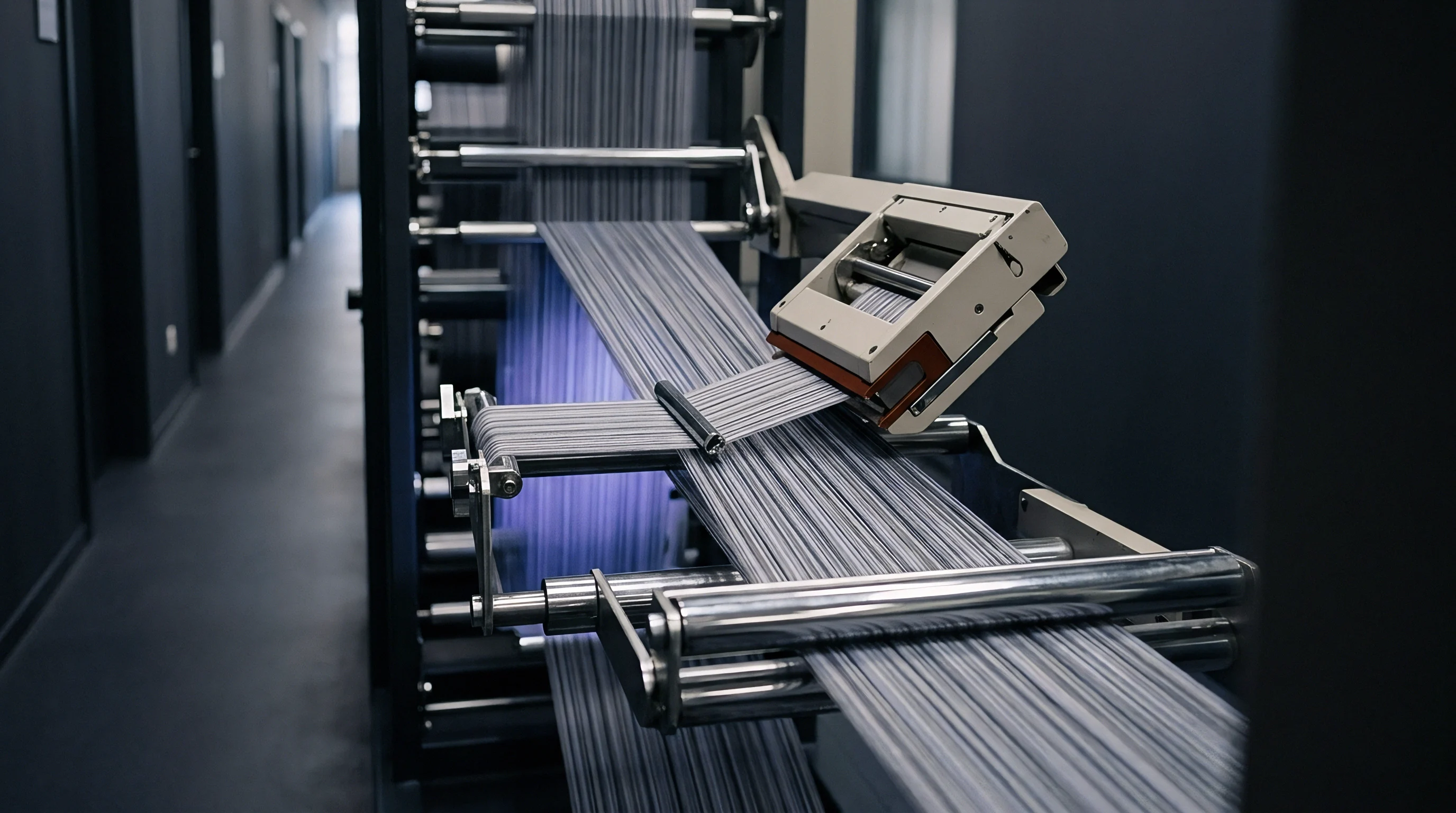
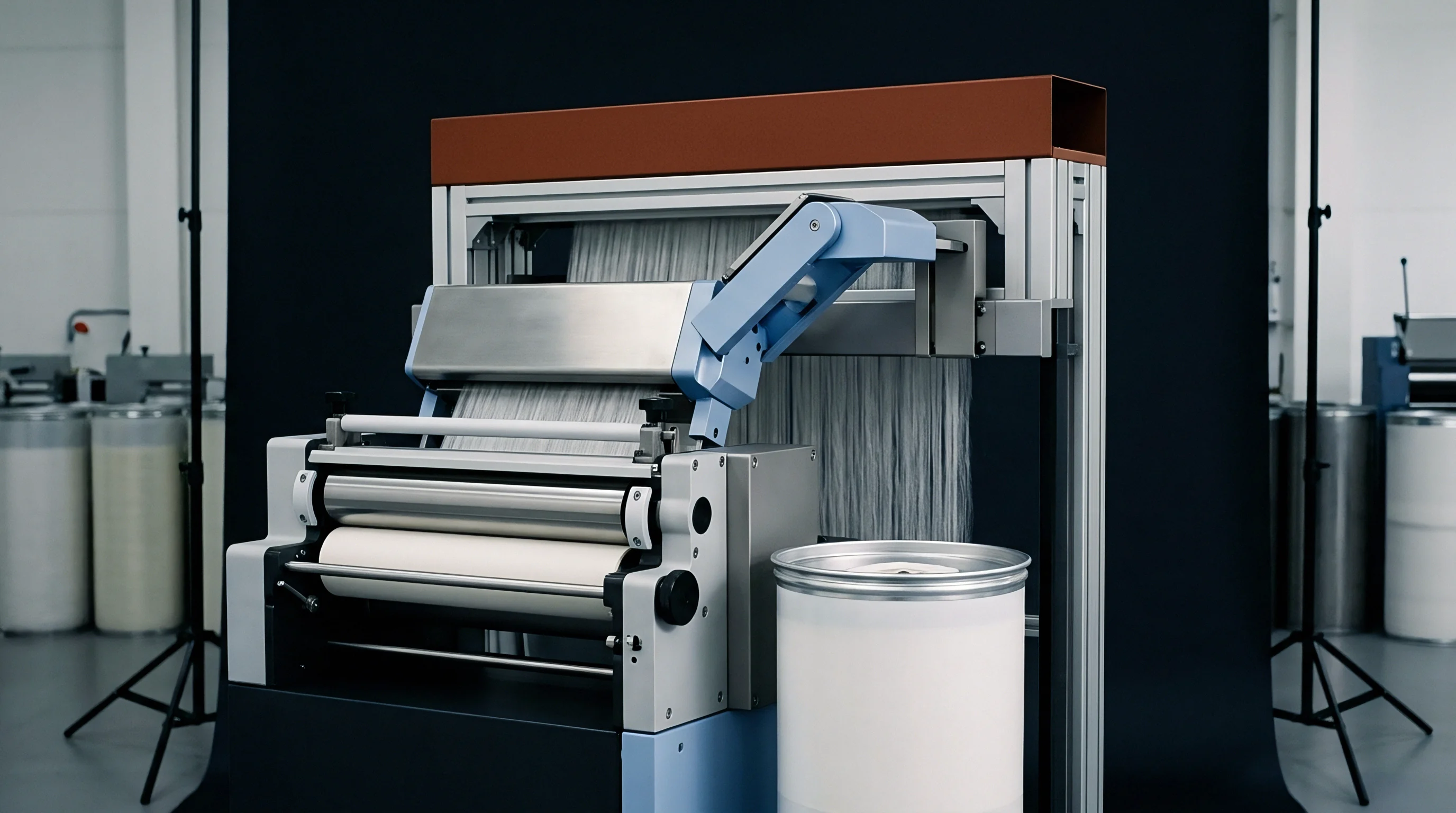
Continuous open-width scouring ranges pull high-orientation yarns through solvent wash tanks equipped with sealed enclosures, squeeze rolls, dry cans, and active-carbon recovery units. Yarn packages or warp sheets enter the initial plunge tank under controlled tension. Surface oil removal and boundary layer exchange depend on fluid flow around individual filaments, where counter-current flow rates and mechanical agitation govern mass transfer into the bundle.
Dense yarn bundles and heavy warp sheets develop concentration gradients between inner and outer filaments. Outer fibers contact fresh solvent first, shedding surface oils rapidly while plasticizing immediately. Inner filaments encounter solvent already loaded with dissolved lubricants.
This uneven contact produces variation in shrinkage, tension, and residual finish across the bundle. Countering this requires tuned fluid delivery and ultrasonic agitation to drive solvent exchange inside bundle cores.
Continuous Open-Width Degreasing Machinery Configuration
Chlorinated degreasing machinery relies on multi-stage counter-current washing: freshly distilled solvent feeds into the final rinse tank and cascades backward against yarn movement toward the primary tank. This setup ensures that exiting yarn contacts clean solvent, minimizing recontamination. Line speeds must balance against required exposure times.
- Yarn enters the pre-tensioning unit to establish baseline axial alignment across all warp ends prior to wet solvent exposure.
- Filament bundle passes into the primary solvent plunge tank containing re-circulated perchloroethylene at 50 °C for initial lubricant stripping.
- Yarn traverses intermediate squeeze rolls operating at 3.5 bar nip pressure to mechanically express contaminated solvent back into the primary tank.
- Filament enters the secondary rinse tank supplied with freshly distilled perchloroethylene at 65 °C for final oligomer and oil trace removal.
- Yarn undergoes high-pressure mechanical de-saturation through a secondary mangle, reducing solvent pick-up below 15 percent by weight.
- Filament sheet enters the steam-heated desolventizing chamber, passing over sealed dry cans at 110 °C to flash off residual chlorinated solvent.
- Yarn passes through a cooling zone under continuous tension control before final take-up winding onto shipping spools.
Desolventizing chamber temperatures govern final yarn quality. Evaporating chlorinated solvents demands substantial heat. If dry cans run cool, solvent remains trapped in the core and continues plasticizing yarn on the spool.
If temperatures exceed the polymer’s dry Tg without enough axial tension, yarn shrinks and loses modulus. Modern equipment combines infrared panels with tensioned dry cans to balance drying speed against orientation retention.
ASTM D2257 extraction limits above 0.35 percent by weight trigger automatic rejection of degreased ultra-high molecular weight polyethylene filament lots.
Operational Controls and Industrial Solvent Recovery Parameters
Running chlorinated solvent ranges demands tight control over emissions and bath purity. Closed-loop recovery systems use activated carbon beds and vacuum distillation to clean recycled perchloroethylene. Reboilers must be drained periodically to clear distillation bottoms composed of extracted esters, oils, and oligomers.
Accumulating high-boiling oils raises solvent boiling points and alters thermal conditions in the plunge tank.
- Bath Distillation Rate maintains dissolved oil concentrations below 0.5 percent by weight in the primary scour tank to prevent finish redeposition.
- Nip Roller Pressure Calibration limits mechanical solvent carry-over into desolventizing dry cans, reducing energy requirements for solvent evaporation.
- Chamber Vacuum Pressure prevents toxic halogenated vapor escape into plant atmospheres while accelerating solvent flash evaporation off hot filaments.
- Residual Solvent Monitoring verifies that finished yarn packages contain under 10 parts per million (ppm) residual chlorinated organic compounds.
Routine testing catches process drift before entire lots suffer damage. Regular checks on tensile strength, linear density, and residual finish ensure that bath temperatures and tension profiles stay within validated limits.
Incorporating ASTM D2256 residual breaking force retention limits after scouring shifts liability for filament degradation from composite weavers back to wet processing mills.
Yield
Commercial settlement for technical yarns hinges on invoiced mass, linear density, and post-scour tensile performance. Scouring strips surface lubricants and leaches oligomers, changing total yarn mass. Purchasing raw yarn on gross weight includes 0.5 to 1.5 percent extractable oils; losing that mass in processing alters commercial mass calculations and changes the final cost per meter.
Customs filings and tariff classifications rely on linear density (dtex or denier) and material purity by weight. Under the Harmonized System, high-tenacity yarns (such as HS 5402.20 for high-tenacity PET or HS 5402.11 for aramids) must meet certified tenacity floors, usually exceeding 60 cN/tex. If improper scouring degrades the polymer below these thresholds, shipments risk reclassification into lower yarn categories with higher duties or anti-dumping surcharges.
Commercial Mass Calculation Adjustments Post Scour
Determining official invoiced weight for scoured yarn follows conditioning calculations in ISO 6741. Commercial mass formulas adjust clean dry mass using standard moisture regain allowances and agreed finish percentages. When complete scouring removes all surface oils, these allowances require reconciliation to prevent disputes between spinners, finishers, and weavers.
Commercial mass (Mc) is calculated using the standardized formula:
Mc = Md × (1 + Rc / 100 + Ac / 100)
where Md represents post-extraction oven-dry mass, Rc is the official moisture regain percentage, and Ac is the agreed commercial finish allowance. For high-tenacity PET, Rc is 0.40 percent; for PA66, Rc is 5.75 percent. If scouring extracts internal oligomers, Md falls below expected dry mass.
While the buyer still receives clean polymer, lost volume alters yarn dimensions and reduces fabric cover factors.
Commercial risk in toll degreasing centers on unmonitored mass loss and mechanical degradation. Contracts need explicit tolerances for linear density drift, tenacity retention, and residual solvent levels. Without clear extraction bounds, buyers risk receiving over-extracted, low-modulus yarn that fails during resin infusion or rubber vulcanization.
Contractual Quality Specifications and Penalty Limits
Enforcing quality standards on scoured technical yarns requires clear contractual baselines, specifying testing protocols and rejection thresholds for delivered lots.
Contract frameworks outline explicit quality parameters for technical yarn supply agreements:
Tenacity Retention Floor: Post-degreasing breaking tenacity must equal or exceed 95.0 percent of raw yarn baseline strength when tested under ASTM D2256 at 20 °C and 65 percent relative humidity.
Residual Spin Finish Ceiling: Total dichloromethane-extractable surface residue must fall between 0.05 percent and 0.15 percent by weight under ASTM D2257, confirming oil removal without over-extracting oligomers.
Linear Density Tolerance: Post-scour linear density must stay within ±1.5 percent of nominal declared dtex after correcting for commercial moisture regain and finish allowance under ISO 2060.
Maximum Residual Solvent Content: Headspace gas chromatography must verify total residual perchloroethylene or trichloroethylene below 5 ppm (mg/kg) of dry mass to prevent toxicity and VOC off-gassing during thermal molding.
Thermal Shrinkage Limit: Dry-air shrinkage at 180 °C for 15 minutes under 0.05 cN/tex tension must not exceed 4.5 percent post-degreasing, confirming that line tension suppressed orientation relaxation.
Monitoring extractable mass fractions defines where lubricant removal completes before compromising the structural core of the yarn bundle.