Transport Coefficient
Geometric deviation of micro-structural diffusion pathways relative to straight linear displacement distances governs fluid transport inside porous materials. Structural tortuosity represents the dimensionless ratio between the actual convoluted pore path length and the direct Euclidean thickness of the textile substrate. Capillary fluids, gases, and thermal energy encounter higher flow resistance as internal channel pathways become more winding.
Values strictly exceed unity, where a value of one indicates perfectly straight cylindrical capillaries running perpendicular to the fabric face. Dense fiber packings force traveling fluids around irregular cross-sections, raising the effective distance traveled. The parameter dictates mass transfer rates through woven filter media, protective barriers, and breathable membranes.
Microstructural Geometry
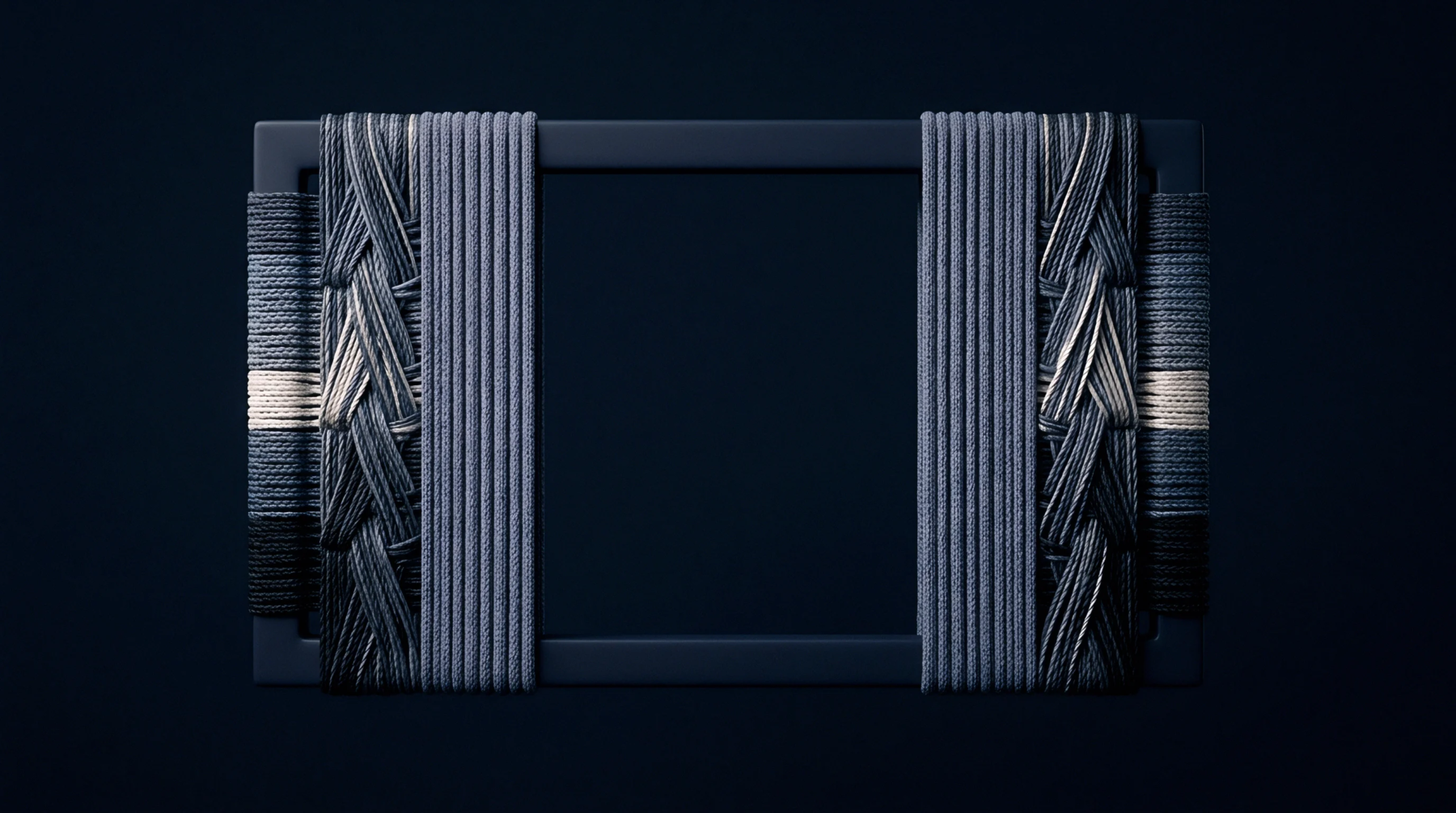
Fibre cross-sectional shape, packing density, and yarn twist levels dictate the tortuous geometry of void networks. Round synthetic filaments pack into relatively direct inter-fibre channels with lower overall flow resistance. Irregular, kidney-shaped cotton fibres or trilobal synthetics create complex, highly obstructed path networks with elevated tortuosity factors.
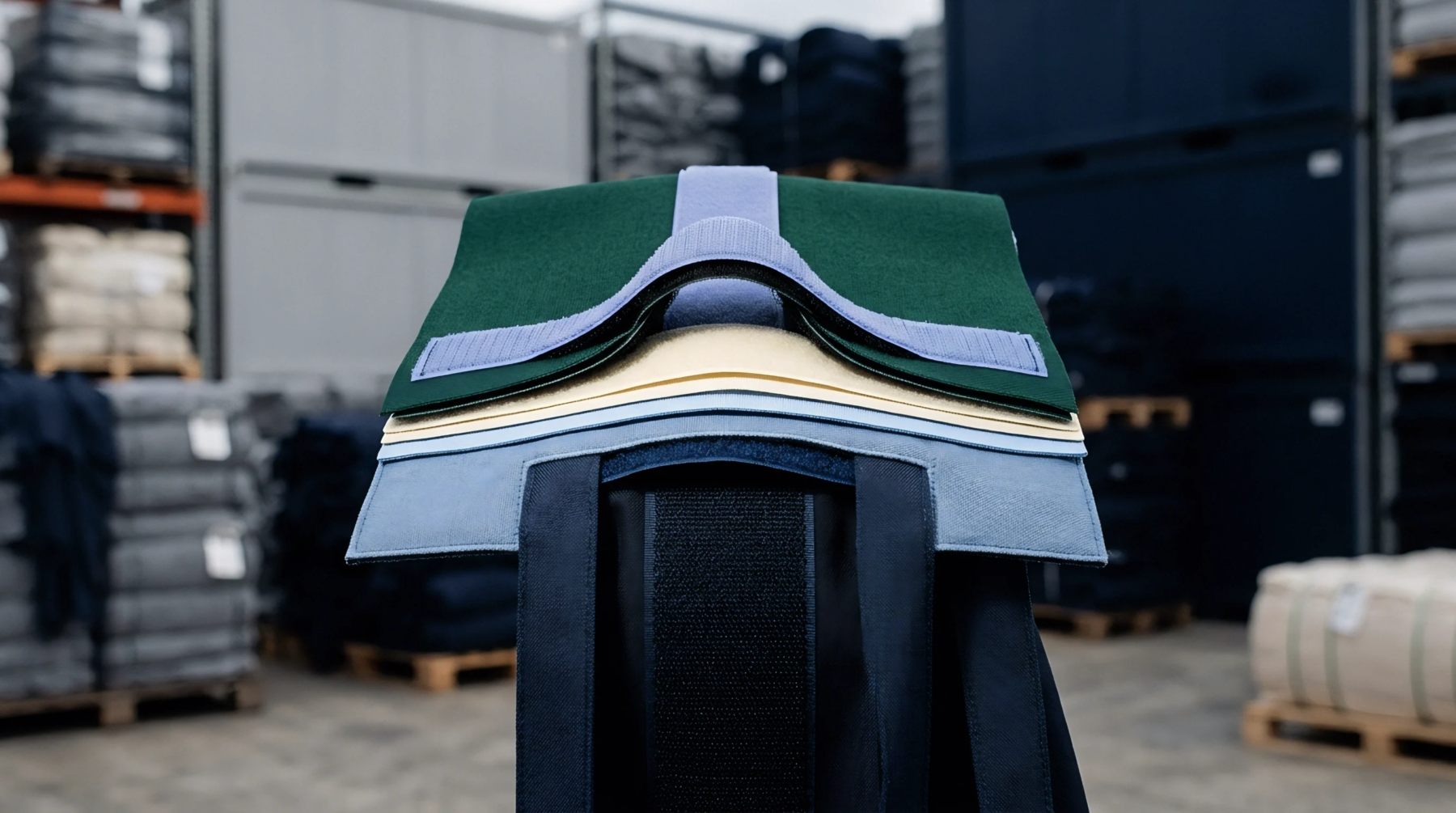
Calendering compresses fabric bulk, crushing vertical voids and forcing transport paths into lateral directions. Heavy yarn twists tighten inter-filament gaps, closing direct conduits and elevating internal path lengths. High needle-punch density in nonwoven felts creates three-dimensional entangled fiber arrays with exceptionally intricate void trajectories.
Performance Function
Industrial filtration systems exploit high internal channel convolution to maximize particle capture efficiency through mechanical interception and inertial impaction. Respirator media rely on tortuous void paths to guarantee aerosol capture without requiring absolute pore sizes smaller than target particles. Protective chemical suits depend on long internal diffusion pathways to delay toxic vapor penetration toward human skin.
Conversely, active sportswear fabrics demand low channel complexity to accelerate sweat vapor release and minimize evaporative resistance. Thermal insulation batts maximize path complexity to suppress convective air movement and minimize heat conduction across the web. Breathable waterproof membranes maintain high path complexity to block pressurized water droplets while permitting water vapor transport.
Measurement Framework
Porosimetry systems measure fluid pressure differentials across textile samples to calculate effective pore path configurations using modified Darcy flow equations. Gas diffusion measurements determine mass transfer rates across dry fabric barriers to derive numerical flow resistance coefficients. X-ray micro-computed tomography generates three-dimensional spatial reconstructions of actual fiber arrays for direct digital path tracking.
Numerical lattice Boltzmann simulations trace virtual liquid particles through digitized pore skeletons, calculating precise tortuosity values. Compressible fabrics display changing values as varying mechanical pressures alter internal void structures during testing. The metric remains valid only for interconnected open-pore networks, breaking down when dead-end or closed cellular pores dominate.