Differential Pressure Thresholds Governing Cross-Sectional Dye Penetration in Compact High-Cover Cellulosic Fabrics
Differential pressure thresholds above 2.2 bar are required to overcome capillary swelling resistance and achieve yarn core dye penetration in compact weaves.
Density
High-cover cellulosic fabrics presented to aqueous dyeing baths exhibit complex dual-porosity capillary networks. The geometric arrangement of warp and weft yarns at cover factors exceeding 0.86 under the Peirce model creates distinct fluid transportation zones. Inter-yarn pores between adjacent thread systems permit rapid convective flow, whereas intra-yarn pores between individual cellulosic filaments restrict fluid transport to capillary suction and forced pressure migration.
When high-count combed cotton or regenerated cellulosic yarns undergo yarn spinning at high twist factors, the intra-yarn void fraction drops below 0.28, severely limiting the cross-sectional movement of dyestuff molecules.
Compact weaves resist initial fluid wetting.
Cellulosic fibers expand rapidly upon contact with aqueous liquor. Single cotton fibers undergo a cross-sectional volume expansion ranging from 40% to 45% within seconds of immersion in alkaline bath solutions. This hydration phase narrows the inter-fiber capillaries within the yarn core, shifting the mean equivalent pore diameter from approximately 12 micrometers down to less than 1.5 micrometers.
As these micro-channels constrict, viscous resistance to fluid flow escalates exponentially in accordance with the Hagen-Poiseuille relationship, where volumetric flow rate scales with the fourth power of pore radius.
| Fabric Construction Class | Peirce Cover Factor | Dry Intra-Yarn Pore Diameter (µm) | Wet Hydrated Pore Diameter (µm) | Saturated Air Permeability (L/m²/s) |
|---|---|---|---|---|
| Standard Plain Weave 30s/1 | 0.72 | 18.4 | 5.2 | 210 |
| High-Density Poplin 40s/1 | 0.84 | 12.1 | 1.8 | 85 |
| Compact Down-Proof Ticking 60s/1 | 0.92 | 8.6 | 0.9 | 24 |
| Ultra-Compact Oxford 80s/2 | 0.96 | 6.2 | 0.4 | 9 |
Darcy’s Law governs macroscopic fluid passage through saturated fabric substrates. In compact cellulosic structures, simple hydrostatic immersion fails to overcome the critical entry pressure required to displace trapped air from intra-yarn capillary spaces. Fluid channels close as fibers expand.
Without an externally applied hydraulic gradient, dye molecules remain confined to the yarn exterior, establishing a steep concentration gradient across the cross-section of the yarn bundle.
Cross-sectional liquor velocity through a high-cover poplin drops below 0.02 millimetres per second when the differential pressure across the fabric plane falls beneath 0.8 bar at 80 degrees Celsius.
Effective core wetting demands that the applied fluid force exceeds the capillary resistance pressure generated by the fiber bundle surface energy. When processing dense Oxford and poplin constructions, yarn twist multiplier and cover factor define the absolute mechanical pressure required to push dye liquor into the center of the thread structure before surface exhaustion locks reactive dyes onto peripheral hydroxyl groups.
Twisting continuous filaments or staple fibers tighter increases internal radial pressure and narrows intra-yarn flow passages.
Head
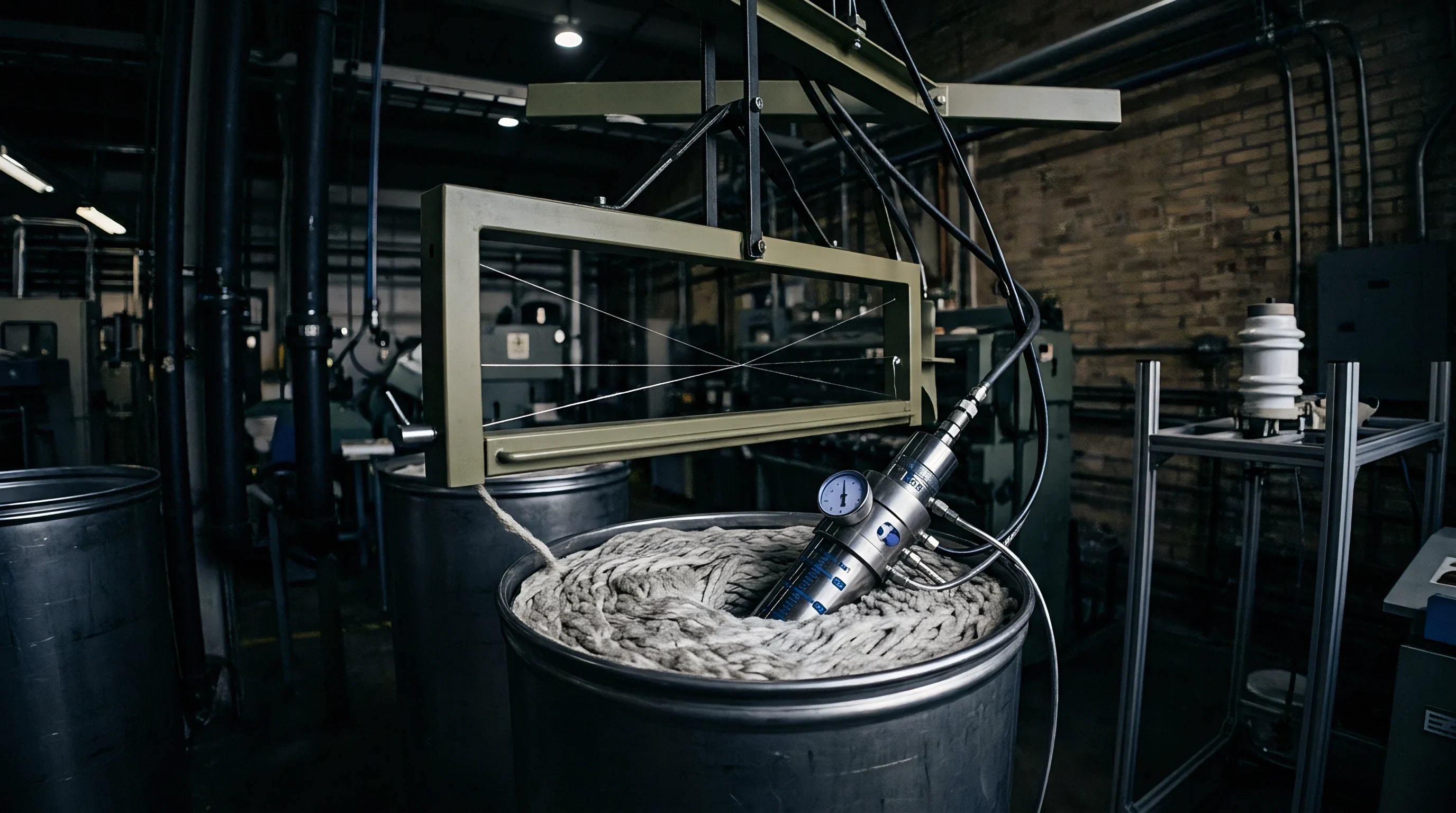
Liquor movement through dense cellulosic substrates depends entirely on the hydrostatic pressure drop enforced across the fabric thickness. Mechanical circulating pumps in package and beam dyeing machinery generate this fluid driving force. In beam dyeing configurations, where woven cloth winds tightly under tension around a perforated core, the differential pressure represents the measured difference between internal beam manifold pressure and external vessel body pressure.
Static pressure alone cannot overcome friction.
Dynamic pressure drives dye molecules through compressed fiber networks. Operating below the required threshold produces surface encapsulation, leaving yarn centers completely un-dyed. Dynamic pressure profiles must overcome both viscous drag within tight capillaries and inertial resistance caused by tortuous flow paths around interlacing warp and weft threads.

Hydraulic Mechanics of Perforated Beam Dyeing
Liquor entering a compact beam batch encounters cumulative hydraulic resistance with each successive fabric layer. As the winding diameter increases, total cross-sectional resistance rises non-linearly. High differential pressure drives deep penetration.
Pump performance curves must deliver stable volumetric flow against increasing backpressure without triggering mechanical fabric distortion or seam slippage.
- Initial Pump Calibration establishes baseline flow metrics across the open beam core prior to loading fabric rolls to verify manifold pressure drop.
- Substrate Winding Control enforces uniform beam hardness between 0.38 and 0.42 density units to prevent localized liquor channeling during pressurized cycles.
- Scouring Fluid Displacement applies a initial differential pressure of 1.2 bar to purge trapped air and processing oils from tight yarn interstices.
- Ramp Phase Pressurization scales hydraulic pressure proportionally with fiber swelling to maintain continuous cross-sectional liquor velocity as capillaries constrict.
- High-Pressure Fixation Hold sustains maximum calculated differential pressure throughout the alkali dosing phase to enforce uniform core reactive dye bond formation.
Low pressure yields severe surface ring dyeing.
| Differential Pressure (bar) | Specific Flow Rate (L/kg/min) | Yarn Core Penetration Depth (%) | Crock Fastness Dry (ISO 105-X12) | Crock Fastness Wet (ISO 105-X12) |
|---|---|---|---|---|
| 0.5 | 8.2 | 32 | Grade 3.0 | Grade 1.5 |
| 1.2 | 14.5 | 58 | Grade 3.5 | Grade 2.5 |
| 2.2 | 22.1 | 84 | Grade 4.0 | Grade 3.5 |
| 3.5 | 28.7 | 98 | Grade 4.5 | Grade 4.0 |
| 4.8 | 31.0 | 99 | Grade 4.5 | Grade 4.0 |
Calculating the optimal hydrostatic head demands balancing pump energy against fabric structural integrity. Pushing differential pressure beyond 4.5 bar on light, high-density cotton weaves causes yarn displacement, longitudinal reorganisation, and surface moiré defects. Operating below 1.8 bar on high-cover fabrics yields un-dyed core fibers that expose white lint during abrasive wear in garment use.
Insufficient driving head leaves raw cellulosic centers exposed, causing early garment wash-out, poor wet-crocking fastness, and catastrophic shade shifting under abrasion testing.
Ring
Cross-sectional distribution of dyestuff determines long-term color performance under abrasive wear. Ring dyeing occurs when dye molecules bond exclusively to the outer annulus of a yarn bundle, leaving the central core un-dyed. In high-cover cellulosic fabrics, ring dyeing results from a mismatch between the dye exhaustion rate and the internal fluid flow velocity through intra-yarn pores.
Core voids remain completely undyed.
Reactive dyes exhibit high affinity for activated cellulosic hydroxyl groups in the presence of alkali. If fixing alkali enters the bath before differential pressure forces dye liquor into the yarn interior, covalent bonding takes place rapidly on outer surface fibers. This rapid surface exhaustion prevents unreacted dye molecules from diffusing deeper into the core structure.

Does Core Penetration Eliminate Crocking Failure in Compact Weaves?
Crocking failure on compact cellulosic fabrics stems from mechanical shear stripping weakly bound surface dye. Core penetration reduces the density of dye molecules residing on the outer fiber annulus, lowering the volume of dyestuff exposed to frictional forces. Core penetration significantly improves wet crocking results, but surface fastness remains dependent on thorough unfixed dye washing and clearing steps.
Fiber swelling narrows the flow channels.
Viscosity increases near the fiber surface. Diffusion rates inside restricted capillaries drop significantly compared to free-solution movement. To achieve deep core penetration, dyehouses adjust chemical kinetics alongside mechanical fluid pressure.
Under ISO 105-X12 fastness testing, fabric batches demonstrating less than 75 percent yarn core dye penetration show a drop of 1.5 fastness grades after twenty commercial laundry cycles.

Failure Modes Associated with Inadequate Cross-Sectional Penetration
- Frosting Failure occurs when abrasive wear strips dyed surface fibers, exposing undyed interior cores and creating white patches on high-friction seam zones.
- Metameric Edge Flaws appear along folded garment edges where creasing breaks surface yarns, revealing light-colored core structures underneath.
- Poor Wet Crocking results from concentrated surface dye layers transferring onto adjacent white test cloth under humid rubbing conditions.
- Shade Washing Bleed manifests during laundering when unfixed trapped surface dyestuff slowly leaches out, staining contrasting garment trim panels.
Dye selection plays a major role in managing cross-sectional migration. Low-reactivity, high-diffusivity bi-reactive dyes migrate into tight cellulosic capillaries more effectively than high-reactivity vinyl sulfone dyes. Lowering the initial salt strike rate gives dye liquor time to permeate the yarn interior under forced differential pressure before alkali addition locks molecules in place.
Determining whether complete core penetration is technically attainable without compromising fabric hand feel remains an active inquiry for wet-processing technicians.
Bench
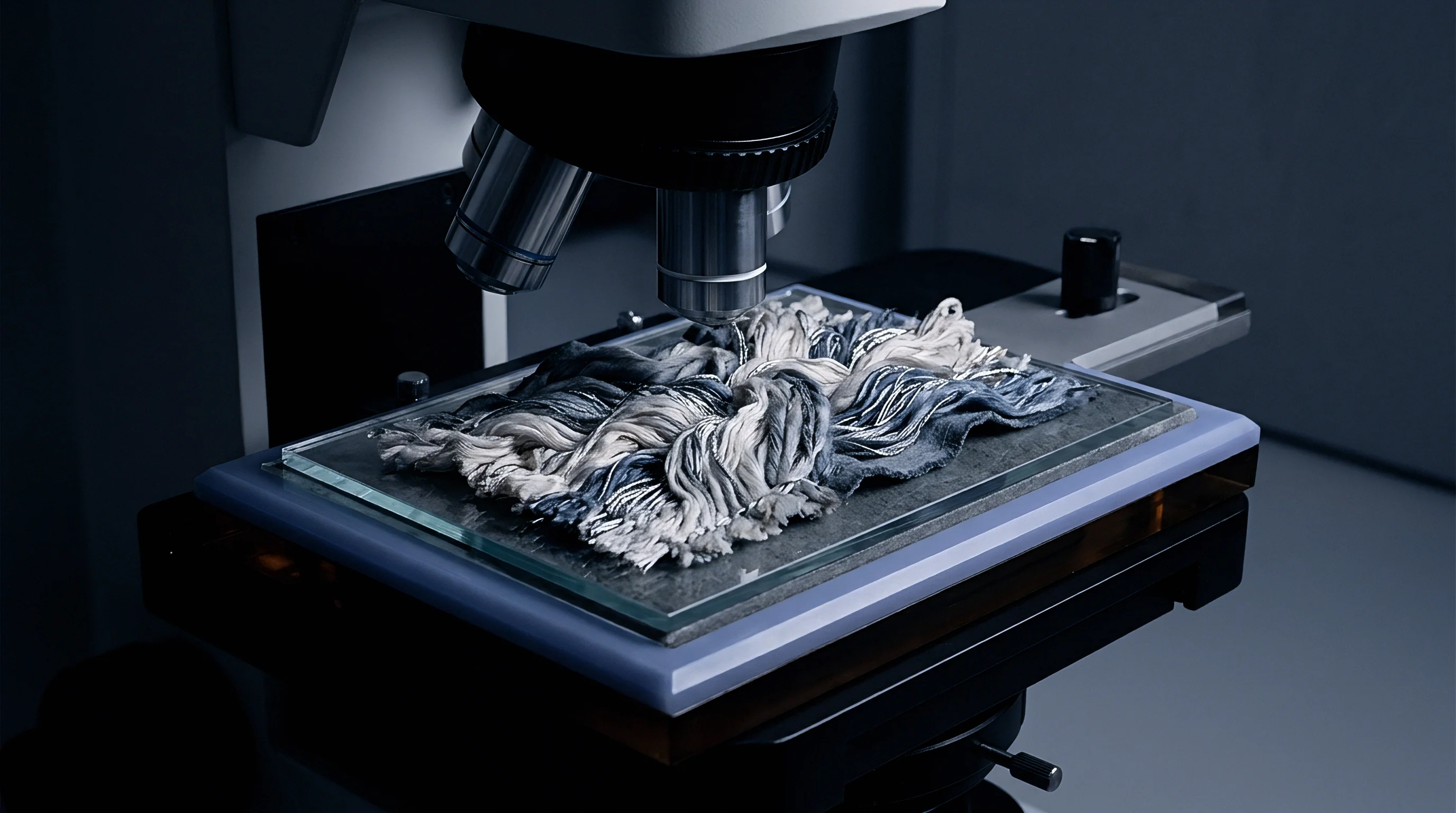
Laboratory verification of cross-sectional dye penetration requires precise sample preparation and microscopic measurement. Technicians mount dyed yarn bundles removed from warp and weft directions into low-viscosity synthetic resin blocks. After curing, a microtome cuts sections between 5 and 10 micrometers thick, which are examined under polarized light microscopy at magnifications ranging from 200x to 500x.
Cross sections expose poor liquor movement.
Digital image analysis quantifies color distribution across individual yarn radii. Software tools calculate the dyed cross-sectional area relative to total yarn area, generating a percentage core penetration rating. High-grade compact fabrics require an average core penetration index exceeding 85% to pass stringent brand rubbing fastness standards.
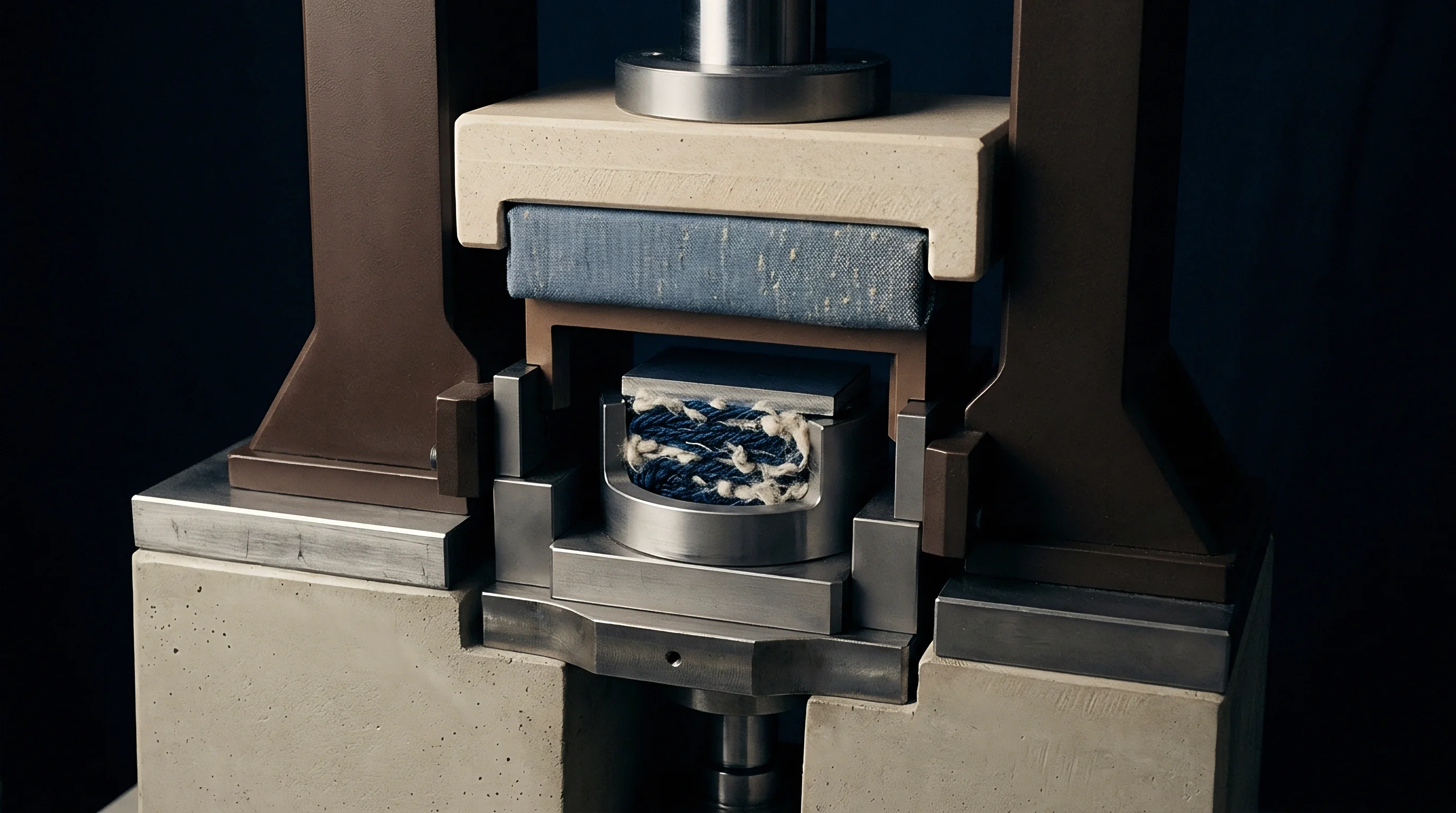
Standardized Cross-Sectional Analysis Protocol
- Extract ten warp and ten weft yarn strands from fabric sections taken at least 150 millimetres away from the selvedge.
- Embed yarn samples vertically into fast-curing acrylic mounting compound under constant axial tension.
- Slice mounted specimens using a rotary microtome equipped with a tungsten carbide blade set to a thickness of 7 micrometers.
- Position slices on optical glass slides under a micro-cover glass using refractive index matching immersion oil.
- Capture digital imagery under calibrated daylight illumination at 400x total magnification using a high-resolution camera.
- Process images through color thresholding algorithms to calculate the ratio of dyed fiber cross-sectional area to total bundle area.
| Penetration Rating Class | Mean Core Area Dyed (%) | Martindale Abrasion Breakdown (Rubs to Frosting) | ISO 105-C06 Wash Fastness Change |
|---|---|---|---|
| Level 1 (Poor) | Below 40 | 3,000 | Grade 2.5 |
| Level 2 (Fair) | 40 to 65 | 8,000 | Grade 3.5 |
| Level 3 (Good) | 66 to 85 | 18,000 | Grade 4.0 |
| Level 4 (Excellent) | 86 to 100 | 35,000 | Grade 4.5 |
Fastness drops when dye stays outside.
Abrasion reveals undyed fiber cores quickly.
Shade depth shifts after heavy washing.
Capillary fluid resistance scales inversely with the fourth power of internal pore radius during active cellulosic fiber hydration.
Dyehouse laboratories frequently attribute surface ring dyeing to initial gray cloth yarn spinning variance rather than inadequate pump pressure profiles during the exhaustion cycle.
Spec
Buying compact cellulosic fabrics demands integrating hydraulic processing parameters into commercial purchasing agreements. Technical specifications that only list weight, weave construction, and total visual color difference fail to protect buyers from surface ring dyeing defects. Binding purchasing documents state required differential pressure minimums alongside cross-sectional microscopic penetration targets.
Commercial dyehouses operate under strict energy consumption boundaries. Circulating high-viscosity dye liquor through dense beam windings at high differential pressure increases pump power demand exponentially. Dyehouse managers may attempt to lower vessel pump speeds to reduce electricity consumption, sacrificing cross-sectional flow velocity and core penetration depth.
To secure consistent quality across bulk production lots, procurement teams implement structured mill qualification frameworks.
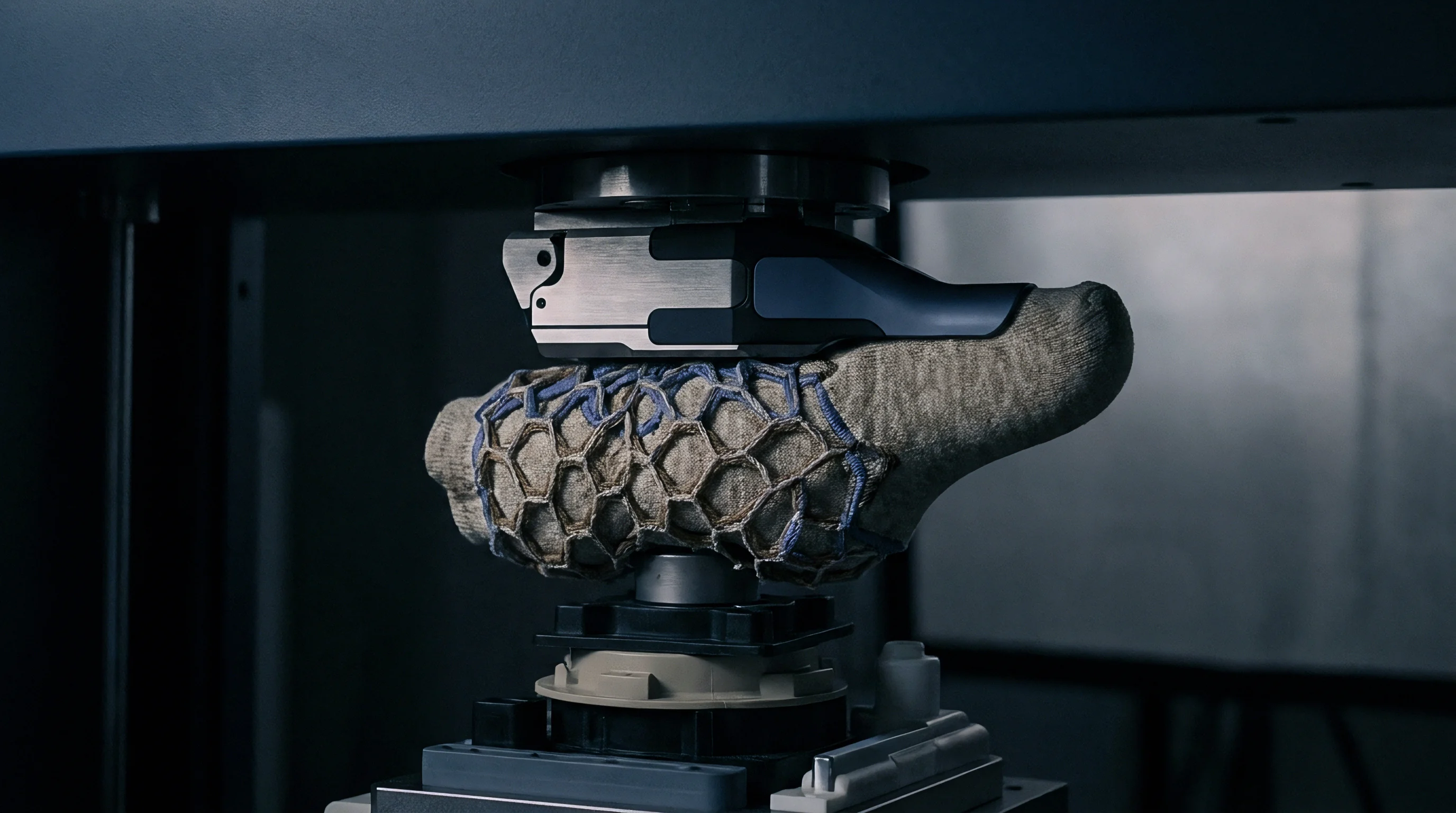
Dyehouse Sourcing Verification Checklist
- Pump Capacity Audit confirms dyeing vessels possess high-head centrifugal circulating pumps capable of sustaining 3.5 bar differential pressure at maximum load.
- Differential Pressure Recording mandates continuous digital logging of manifold pressure drops throughout the entire dye cycle for every batch docket.
- Cross-Sectional Microtome Testing requires lab sample validation of yarn core dye penetration exceeding 80% on first-off bulk production pieces.
- Post-Finish Crock Verification enforces dry and wet crock fastness testing under ISO 105-X12 following final mechanical or chemical finishing.
A contract clause mandating that bulk lots displaying less than 80 percent cross-sectional yarn penetration on microtome inspection are subject to full lot rejection or mandatory re-leveling at the supplier expense changes the converter focus from shade matching alone to absolute structural penetration.