Yarn Linear Density and Crimp Factor Controls on Mass per Unit Area
Fabric mass per unit area is calculated by combining yarn linear density, thread count, and crimp factors across conditioned warp and weft system dimensions.
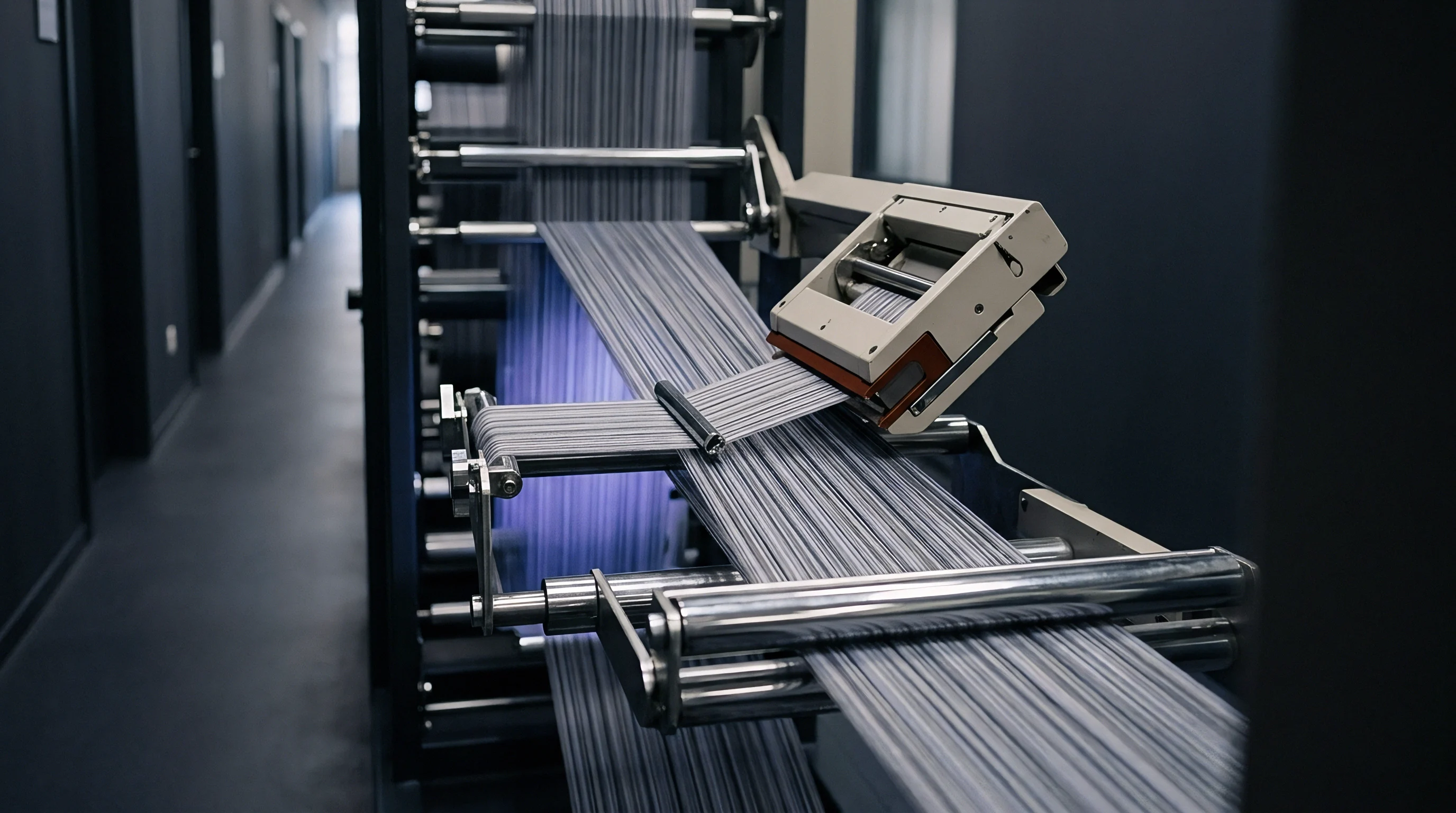
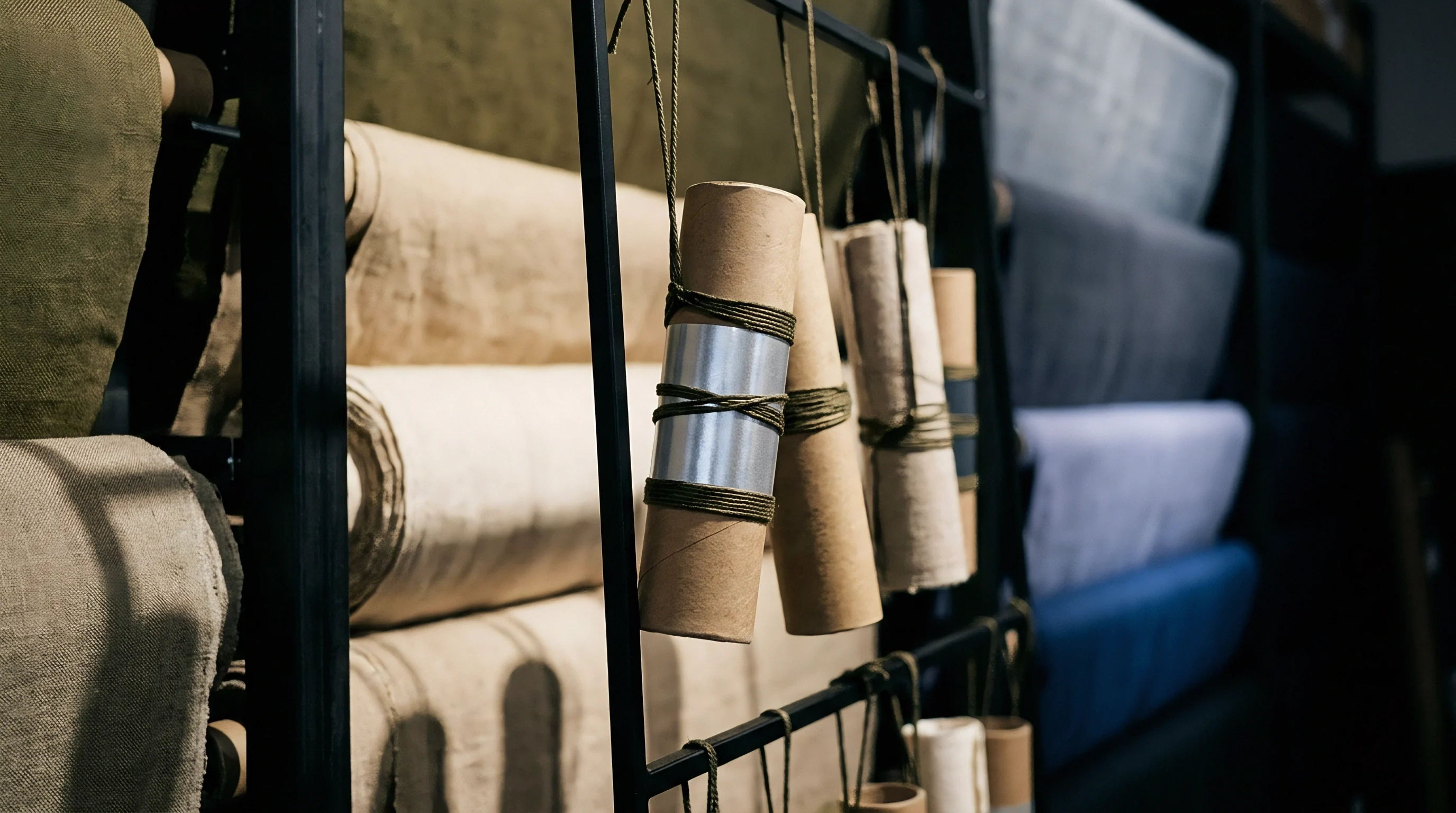
Skein
Mass per unit area in woven and knitted textiles depends primarily on yarn linear density. The mass of individual yarn components dictates cumulative grey weight before weaving geometry, tension, or chemical processing alters fabric dimensions. Measuring thread weight relies on standardized mass-to-length relationships expressed through direct or indirect numbering systems.
In direct systems like tex, decitex, and denier, the numerical value rises alongside yarn thickness because the metric defines the mass contained within a fixed length of filament or spun staple. In indirect systems such as English cotton count, metric count, and worsted count, the number drops as yarn thickness increases because the value represents the length of yarn yielded by a fixed unit of mass.
Accurate linear density testing requires strict conditioning protocols because textile fibers absorb ambient moisture, changing measured yarn weight without altering actual polymer or cellulose volume. ISO 2060 and ASTM D1907 govern linear density determination using wrap reels and precision balances. Because skein weight varies with humidity, evaluating unconditioned raw yarn introduces errors up to eight percent in hydrophilic natural fibers like cotton, viscose, and wool.
Standard laboratory testing mandates exposure to a standard atmosphere at twenty degrees Celsius and sixty-five percent relative humidity until moisture equilibrium occurs. Linear density is evaluated across five conditioned yarn packages before setting grey specifications.
| Yarn Count System | System Type | Base Unit Standard | Conversion Formula to Tex | Mass Drift per Unit Change |
|---|---|---|---|---|
| Tex (tex) | Direct | Grams per 1,000 metres | tex = tex | 1.00 g/km per tex unit |
| Decitex (dtex) | Direct | Grams per 10,000 metres | tex = dtex / 10 | 0.10 g/km per dtex unit |
| Denier (den) | Direct | Grams per 9,000 metres | tex = den / 9 | 0.111 g/km per den unit |
| English Cotton Count (Ne) | Indirect | 840-yard hanks per pound | tex = 590.54 / Ne | Non-linear exponential scale |
| Metric Count (Nm) | Indirect | Metres per gram | tex = 1000 / Nm | Non-linear inverse scale |

Direct versus Indirect Count Metrics
Direct linear density units simplify composite fabric calculations by establishing an absolute mass value per unit thread length. A 20 tex yarn carries double the physical substance of a 10 tex yarn across identical lengths. Fiber blenders and continuous filament extrusion plants utilize tex and decitex to maintain tight gravimetric control over polymer output.
Standard industrial filaments, such as high-tenacity polyester or continuous filament nylon 6,6, document cross-sectional uniformity through low coefficient of variation metrics. Spun staple yarns exhibit higher mass fluctuation due to fiber length variations, drafting wave periodicities, and sliver irregularities during spinning.
Indirect count systems remain rooted in traditional ring and open-end spinning mills, where roving draft ratios correspond to hanks per pound. Converting an indirect count like Ne to tex introduces non-linear weight shifts. A shift from 20 Ne to 30 Ne reduces yarn mass per kilometre from 29.5 tex to 19.7 tex ~ a thirty-three percent weight reduction rather than a ten-unit linear drop.
Product developers misinterpreting indirect count scales frequently miscalculate mass per unit area when specifying finer single yarns, directly impacting landed fabric cost.
Conditioned yarn linear density testing per ISO 2060 requires four hours of climate equilibration at twenty degrees Celsius and sixty-five percent relative humidity.
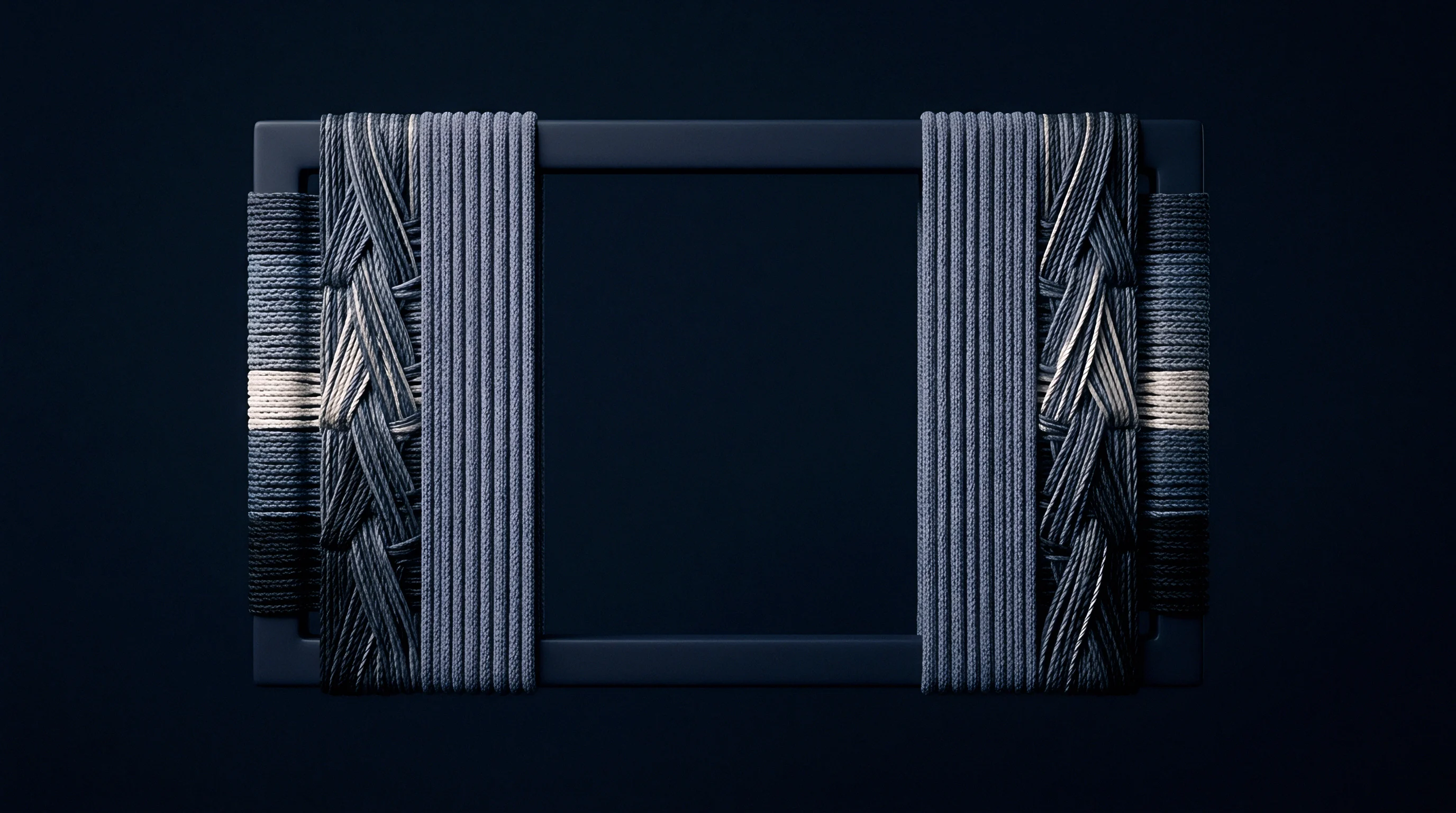
Mass Variance across Spun Fiber Distributions
Mass uniformity along the length of a spun yarn dictates local fabric weight variations. Yarn linear density is rarely perfectly uniform; ring-spun staple yarns carry thin places, thick places, and slubs that alter local thread cross-sections. Testing laboratories utilize Uster evenness testers to measure the mass coefficient of variation along continuous yarn lengths.
A yarn exhibiting a high mass coefficient of variation causes streakiness in woven surfaces and weight banding across knit courses. When yarn thickness fluctuates beyond three percent across continuous packages, warp preparation beams deliver inconsistent mass distributions to the loom shed.
Fiber blending accuracy directly influences mass metrics in blended staple yarns. Polyester and cotton blends require exact proportioning during sliver drawing. Synthetic fibers carry minimal moisture regain under standard laboratory conditions, whereas cotton fibers hold a standard commercial regain of eight and a half percent.
If the fiber ratio shifts during carding or drawing, physical mass per unit length alters even when total strand volume remains constant. Count variations up to three percent often stem from raw cotton micronaire fluctuations across seasonal crops.

Crimp
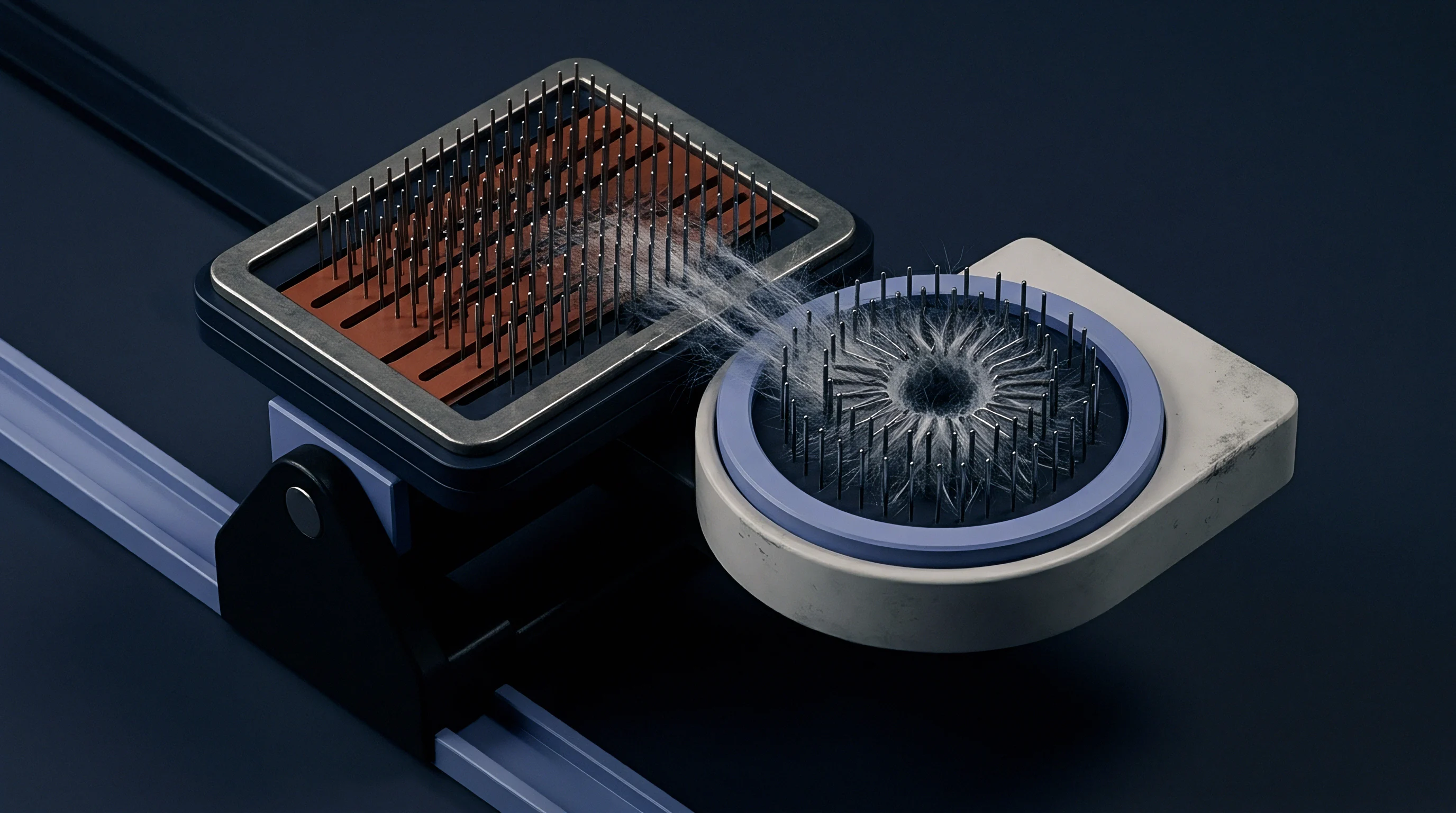
Yarns inside a structural cloth framework do not lie in flat lines. Interlacing warp and weft threads in woven structures, alongside looping strands in knitted fabrics, force yarns into undulating, three-dimensional paths. Crimp represents the physical waviness imparted to a yarn by structural bending over and under intersecting threads.
Because of crimp, the cut length of yarn removed from a fabric sample exceeds the edge length of the specimen itself. Quantifying this difference is mandatory when converting yarn linear density into finished mass per unit area.
Textile technology distinguishes between crimp percentage and crimp factor, though non-technical sourcing teams frequently interchange the terms. Crimp percentage defines the difference between straightened yarn length and original fabric length, expressed as a percentage of the fabric length. Crimp factor expresses the ratio of straightened yarn length to fabric length as a direct multiplier.
A woven fabric specimen measuring 100 millimetres in warp length yields a straightened warp yarn of 110 millimetres, producing a crimp percentage of ten percent and a crimp factor of 1.10.

Unweaving Mechanics and Tension Controls
Accurate measurement of structural curvature demands precise removal of yarns from fabric samples under controlled straightening tension. ISO 7211-3 and ASTM D3883 define standard test methods for extracting warp and weft yarns to calculate crimp. An analyst strips threads from a conditioned specimen, places them into a crimp tester clamp, and applies a standardized tension load to remove undulations without stretching the underlying fiber strand.
Standard tension scales set loads at 0.5 centinewtons per tex for staple spun yarns, adjusting upward for heavy filament or high-twist configurations. Insufficient tension fails to fully straighten structural waves, yielding artificially low crimp figures. Excessive tension elongates the yarn, artificially inflating crimp metrics and corrupting fabric mass models.
Woven structural designs govern the extent of thread undulation across both yarn systems. Plain weave patterns force warp yarns to alter direction at every weft intersection, creating high crimp values in both directions. Twill weaves allow yarns to float over multiple opposing threads before interlacing, reducing total crimp percentage for equivalent thread densities.
Satin weaves, characterized by long structural floats, exhibit low crimp values because thread bending occurs infrequently across the repeat pattern.
Warp yarns under high tension lose structural waviness while transferring excess curvature into relaxed weft threads.

Warp and Weft Crimp Exchange Dynamics
Loom settings directly govern the balance of crimp between warp and weft thread systems during weaving. High warp sheet tension held across the loom shed flattens the warp threads into straight lines, forcing the weft picks to do all the structural bending around the taut warp ends. This phenomenon, known as crimp exchange, transfers structural waviness from one thread system to the other without altering total thread mass on the loom.
When the cloth leaves the loom beat-up zone and relaxes, internal elastic forces redistribute the undulations until tension forces reach equilibrium across both yarn sets.
Wet processing and finishing operations permanently alter crimp exchange balances established during weaving. Scouring, dyeing, and drying relax internal yarn stresses while allowing fibers to swell in aqueous baths. High longitudinal tension applied during continuous dyeing or stenter processing pulls the warp straight, forcing additional crimp into the weft direction.
Conversely, tensionless tumbler drying allows warp relaxation, increasing warp crimp while decreasing fabric length and driving up total weight per square metre.
- Excessive Warp Sheet Tension Pulls warp threads straight during weaving, driving weft crimp beyond nominal limits and causing widthwise fabric instability.
- Insufficient Weft Insertion Force Leaves loose pick paths, leading to uneven crimp distributions that manifest as diagonal cockling in finished goods.
- Uncontrolled Stenter Longitudinal Pull Strips warp crimp out of wet fabric, reducing finished weight per square metre below buyer specification thresholds.
- Unbalanced Weave Interlacing Triggers differential crimp contraction, causing edge curls and skewing during continuous wet finishing processes.
- Asymmetrical Yarn Twist Selection Interacts with structural crimp paths to generate torque, forcing finished cloth rolls into spirality and bow defects.
How does warp crimp decay behave when heavy hydrophobic yarns undergo cyclic mechanical washing under variable drying tensions?

Formula
Mathematical integration of yarn linear density, thread density, and crimp factors enables exact prediction of un-finished fabric mass per unit area. Fabric weight calculations combine the total mass of the warp yarn system with the total mass of the weft yarn system contained within a square unit of cloth. Calculating mass without accounting for structural crimp yields massive underestimations of fabric weight, because thread counts measured on fabric faces represent compressed lengths of undulating yarn.
The total mass per unit area for a woven fabric (M, expressed in grams per square metre) sums the warp mass component (Mwarp) and the weft mass component (Mweft). Warp end density (E, in ends per centimetre) and weft pick density (P, in picks per centimetre) define thread frequency across fabric faces. Yarn linear density (Twarp and Tweft, expressed in tex) establishes strand weight per unit length.
The crimp factors (Fwarp and Fweft, expressed as structural multipliers where a crimp percentage of C% yields F = 1 + C/100) adjust straight fabric dimensions to true yarn lengths embedded within the construction. The fundamental woven fabric mass equation translates as follows:
M = (E T_{warp} F_{warp} 0.1) + (P T_{weft} F_{weft} 0.1)
The constant factor of 0.1 adjusts thread counts per centimetre and yarn tex metrics to produce a final unit output in grams per square metre. For single jersey knitted constructions, fabric mass models replace thread density counts with course density (Kc, courses per centimetre), wale density (Kw, wales per centimetre), stitch length (L, in millimetres per loop), and yarn linear density (T, in tex):
M = (K_c K_w L T) / 100
How Does Crimp Variation Distort Calculated Mass per Unit Area?
Sensitivity analysis demonstrates that minor shifts in structural crimp alter calculated fabric weight as significantly as substantial changes in yarn linear density. In a standard cotton poplin construction running 40 ends per centimetre and 28 picks per centimetre using 15 tex yarns in both warp and weft, setting nominal warp crimp at eight percent (Fwarp = 1.08) and weft crimp at five percent (Fweft = 1.05) yields a theoretical grey weight of 78.9 grams per square metre. If warp crimp expands to twelve percent (Fwarp = 1.12) while weft crimp increases to eight percent (Fweft = 1.08) under heavy loom beat-up forces, calculated fabric mass climbs to 83.0 grams per square metre.
The structural crimp shift adds 4.1 grams per square metre, representing a five percent increase in fabric mass without modifying yarn count or reed settings.
An unrecovered loss of twelve thousand dollars occurred on a hundred-thousand-metre cotton gabardine run where uncorrected weave crimp caused fabric weight to drift below contract limits. Heavy twill constructions with high float structures display high sensitivity to weft crimp shifts. When mills alter loom reed width to force higher pick insertion rates, they modify the crimp exchange ratio, shifting finished fabric mass off target limits.
| Fabric Type | Yarn Count (tex) | Ends x Picks (per cm) | Warp x Weft Crimp Factor | Calculated Weight (g/m²) | Measured Weight (g/m²) |
|---|---|---|---|---|---|
| Cotton Plain Weave | Warp: 20 / Weft: 20 | 30 x 24 | 1.07 x 1.05 | 114.6 | 116.2 |
| Cotton 2/2 Twill | Warp: 30 / Weft: 30 | 42 x 22 | 1.11 x 1.06 | 209.6 | 212.0 |
| Polyester Plain Workwear | Warp: 15 / Weft: 15 | 40 x 30 | 1.05 x 1.04 | 109.8 | 110.5 |
| Viscose Plain Dress Cloth | Warp: 18 / Weft: 18 | 36 x 28 | 1.08 x 1.06 | 123.3 | 125.8 |
| Heavy Denim Twill | Warp: 60 / Weft: 50 | 26 x 18 | 1.14 x 1.05 | 272.2 | 278.0 |
Mass per unit area calculated under ISO 3801 integrates conditioned yarn count, reed sett, and yarn crimp factor across finished dimensions.
Step-by-Step Laboratory Fabric Mass Verification
Verification of mass calculations against physical fabric rolls mandates absolute adherence to standard laboratory measurement protocols to eliminate environmental and structural distortion.
- Cut five square test specimens across the full usable fabric width using a calibrated circular sample cutter measuring exactly 100 square centimetres, taking no sample within 100 millimetres of the fabric selvedge edge.
- Condition all cut specimens inside a standard atmosphere testing chamber operating at twenty degrees Celsius and sixty-five percent relative humidity for a minimum of four continuous hours per ISO 139 standards.
- Weigh each conditioned circular specimen independently on an analytical balance calibrated to an accuracy of 0.001 grams, recording individual specimen weights.
- Calculate the mean mass of the five specimens in grams and multiply the resulting value by 100 to yield the physical fabric mass per unit area in grams per square metre.
- Extract individual warp and weft yarns from three separate test specimens, measure their unraveled straightened length under standard 0.5 cN/tex tension on a crimp tester, and calculate true structural crimp factors.
- Weigh the extracted straightened yarns on an analytical balance to verify true linear density in tex, accounting for any chemical finish add-on present on finished goods.
- Input the verified physical crimp factors, thread counts, and linear densities into the woven mass equation to compare theoretical calculated mass against measured physical mass per square metre.


Contraction
Wet processing and thermal finishing stages convert grey, unfinished cloth into commercial fabric by permanently altering structural thread counts, yarn diameters, and crimp levels. Grey fabric exiting the loom shed sits under residual warp tension, carrying sizing compounds, weaving oils, and mechanical strain. Scouring and bleaching processes strip away lubricants while causing natural cellulosic fibers to swell, triggering structural relaxation shrinkage.
Fiber swelling shortens yarn lengths, forces thread paths into tighter undulations, increases warp and weft crimp, and raises overall mass per unit area.
Finishing mills rely on stenter frames to control finished fabric width, course density, and weight per square metre. A stenter uses a continuous pin or clip chain to grip fabric selvedges while transporting the web through heated drying zones. Controlling the speed ratio between incoming feed rollers and the stenter chain, known as overfeed, allows finishing technicians to adjust warp crimp and thread density with high precision.
Setting an overfeed percentage forces fabric length contraction, driving picks per centimetre higher and raising finished weight. Applying mechanical chain tension stretches fabric length, pulling out warp crimp and dropping finished mass per square metre below grey loom calculations.
| Processing Phase | Warp Sett (ends/cm) | Weft Sett (picks/cm) | Warp Crimp (%) | Weft Crimp (%) | Fabric Mass (g/m²) |
|---|---|---|---|---|---|
| Grey Loom Output | 38.0 | 26.0 | 7.5 | 5.0 | 162.0 |
| Desized & Scoured | 39.2 | 26.8 | 9.2 | 6.1 | 168.5 |
| Caustic Mercerized | 41.0 | 27.5 | 11.5 | 7.2 | 179.0 |
| Jet Dyed (Rope Form) | 41.8 | 28.2 | 12.8 | 7.8 | 186.2 |
| Stenter Heat Set (2% Overfeed) | 40.0 | 27.0 | 10.0 | 6.0 | 172.0 |
| Sanforized (Compressive) | 40.5 | 27.8 | 11.2 | 6.4 | 176.5 |
Chemical Add-On and Fiber Loss Interactions
Physical yarn movement is not the sole driver of mass changes during wet processing operations. Chemical treatments apply non-fibrous mass to fabric webs, directly inflating finished weight per square metre. Dyes, cross-linking resin softeners, fluorocarbon water repellents, and flame retardants add measurable mass to thread surfaces.
Heavy functional coatings or backings add between 15 and 50 grams per square metre of solid polymer formulation. Finish application parameters must be accounted for when verifying finished fabric specs against initial grey construction formulas.
Chemical add-on acts alongside fiber loss occurring during desizing, scouring, and singeing operations. Singeing burns away protruding surface fibrils, reducing fabric mass by 0.5 to 1.5 percent. Alkaline desizing and scouring strip natural waxes, pectins, and temporary warp sizes (such as polyvinyl alcohol or starch), removing three to eight percent of grey fabric weight.
Finishing formulations must balance structural compaction against chemical mass increases to land finished goods within commercial weight tolerances.
Stenter overfeed settings alter fabric weight by modifying thread spacing before thermal heat setting locks yarn geometry.
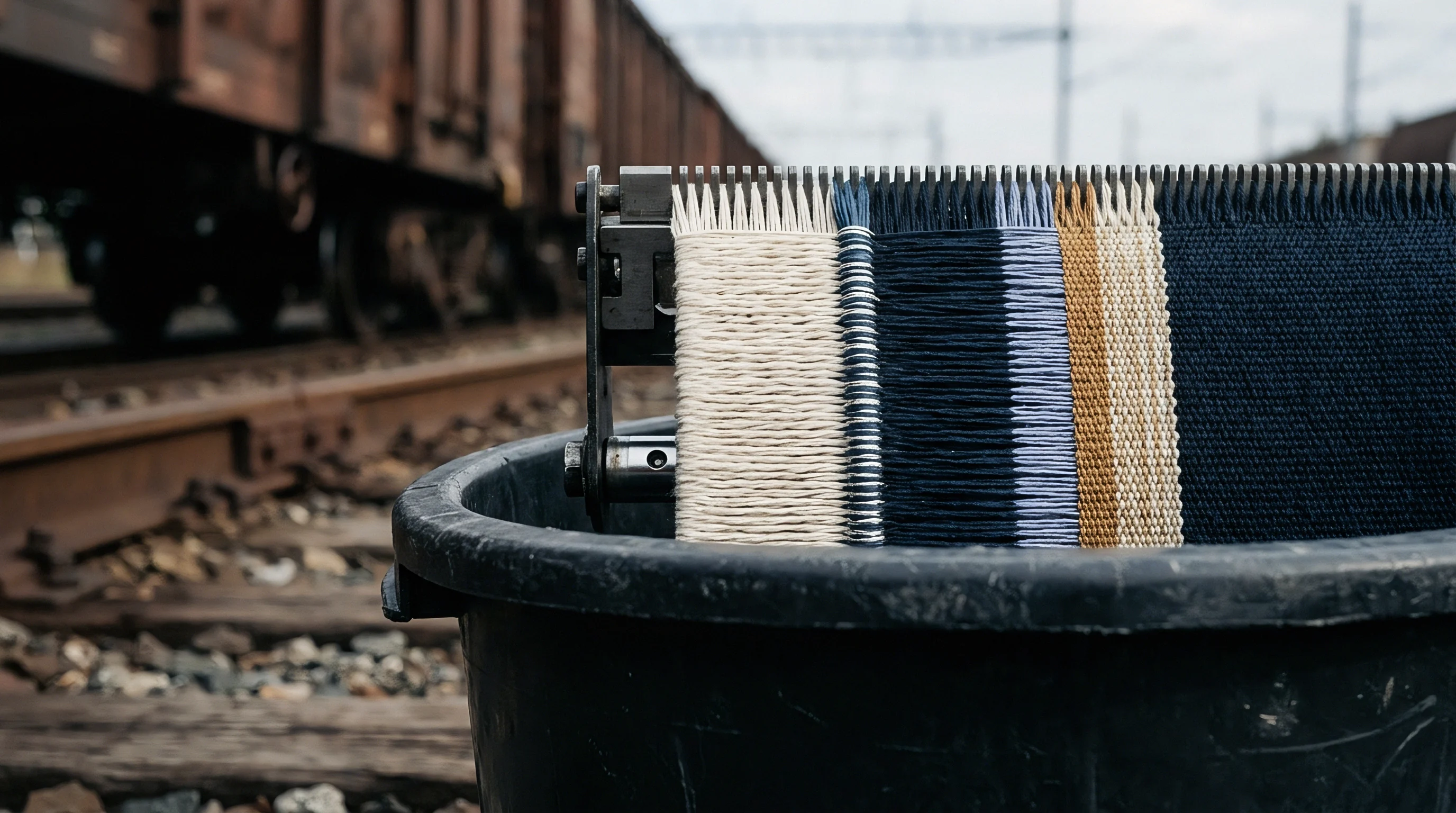
Stenter Frame Control Parameters
Auditing a wet finishing plant mandates absolute operational oversight of stenter frame heat, overfeed, and rail width settings to prevent off-spec mass deliveries.
- Feed Roller Overfeed Ratio Governs longitudinal shrinkage during drying, directly setting warp thread density and warp crimp percentage across finished goods.
- Chain Rail Width Differential Sets transversal fabric tension, controlling weft crimp relaxation and establishing final thread count per centimetre across the usable width.
- Thermosol Temperature Profiles Controls thermal heat setting in synthetic blends, permanently locking fiber molecular alignment and locking structural crimp geometry into place.
- Blower Air Velocity Distribution Prevents uneven drying across the fabric web, eliminating center-to-selvedge weight variations across wide-width production runs.
- Exhaust Dampening Controls Regulates chamber humidity during drying, optimizing energy consumption and preventing over-drying that degrades natural fiber moisture regain.
Standard master purchase agreements incorporate ISO 5077 and ISO 6330 dimensional stability benchmarks, stipulating that post-finishing dimensional variation shall not exceed plus or minus two percent across five continuous commercial laundering cycles.


Docket
Commercial sourcing contracts treat fabric mass per unit area as a primary quality gate governing purchase approval, duty calculations, and cutting room garment yields. Off-weight fabric distorts thermal comfort, durability, and drape characteristics while disrupting automated garment cutting operations. Sourcing dossiers specify fabric weight targets alongside rigid tolerance thresholds, typically set at plus or minus three percent for solid piece-dyed continuous runs and plus or minus five percent for complex yarn-dyed or heavily finished technical fabrics.
Sampling methodologies applied during incoming roll inspections determine whether bulk shipments comply with contract mass specifications. ISO 3801 defines distinct options for measuring mass, including full-roll weighing (Method 5) and cut swatch weighing (Method 2). Sourcing teams auditing incoming goods must apply identical measurement options to resolve roll acceptance disputes.
Weighing full rolls over calibrated inline scales provides exact average roll weight, eliminating localized swatch cutting errors. Cut swatch testing remains necessary for verifying cross-roll weight uniformity from selvedge to center.
Commercial Dispute Arbitration and Toll-Gating
When an incoming fabric shipment fails weight qualification testing at a garment factory, arbitration procedures isolate whether the non-compliance stems from raw yarn count drift or improper finishing stenter adjustments. Four-point inspection systems per ASTM D5430 assign penalty points to weight variations, banding, and narrow width issues. If laboratory dissection reveals yarn linear density meets specs while warp crimp factor falls significantly below approved pre-production swatches, liability shifts to the finishing converter for over-stretching the fabric web during stentering.
Garment cutting tables operate on strict weight-to-yield assumptions. Marker making software calculates apparel unit consumption based on precise fabric width and mass per square metre figures. Light fabric forces garment buyers to reject shipments due to opacity and bursting strength failures.
Heavy fabric increases shipping costs, alters garment drape, and reduces total apparel yield per roll, generating severe commercial friction between apparel brands and textile converters.
Specifying ISO 3801 Method 5 test conditions across all mill audit protocols prevents moisture weight disputes.
A mill operating without real-time crimp tension monitoring on continuous warping lines will inevitably deliver mass fluctuations across long dye lots.