
Determining Fabric Mass and Width Specifications in Woven Sourcing
Specify conditioned mass under ISO 3801 and minimum cuttable width excluding selvedges to lock in garment yield and protect unit production economics.
Specify conditioned mass under ISO 3801 and minimum cuttable width excluding selvedges to lock in garment yield and protect unit production economics.

Standardizing specimen pretensioning at 0.5 cN per tex during cut length density audits eliminates crimp skew and ensures accurate fabric weight verification.

Baseline moisture allowances convert raw lot weight into commercial mass using ISO regains to prevent paying yarn prices for ambient water.

Quantitative chemical dissolution corrections require applying d-factors and official commercial regain values to establish true dry fiber composition for invoice settlement.

Accurate direct linear density verification in ring spun yarn demands exact tension control, moisture regain correction, and calibrated specimen lengths.
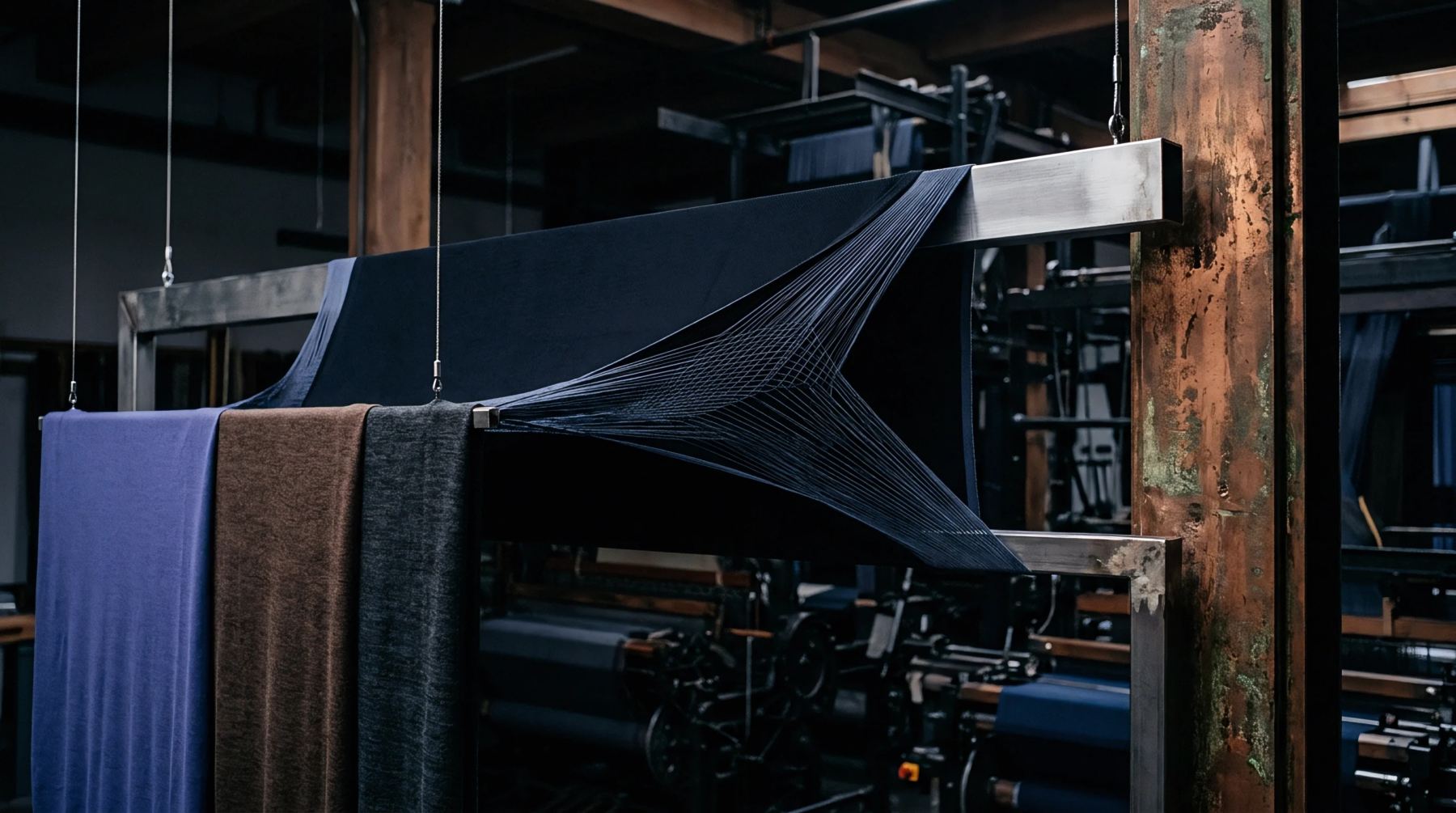
Calculating correct loom reed width requires combining off-loom grey contraction, finished warp sett, and weft crimp percentage into one unified formula.

Buyers verify viscose pulp origin using stable isotope profiling alongside physically segregated chain of custody documentation from pulp mill to yarn.

Fabric performance depends on greige interlacing geometry, wet processing relaxation, and multi-mill supply chain lead times.

Sett and cover factor define structural thread packing; maintaining high pick density and tight fractional cover locks yarn crowns to maximize abrasion life.

Fabric weight tolerance written as a mill range holds commercial validity only when tested under ISO 139 standard atmosphere using ISO 3801 methods.
Expertise is a utility, not a secret. sentiention™ publishes its working knowledge as open reference: intelligence layer covering the materials it sources, the markets it enters, and the reference that serves both.