Yarn Forward Origin Rules in Preferential Trade Agreements
Yarn forward origin rules mandate regional spinning from the roving stage outward, demanding complete traceability dossiers to secure zero-duty tariff preference.
Spindle
Ring frames and open-end rotors create the legal boundary for tariff preference under Western Hemisphere trade agreements. Raw uncarded or carded staple enters from any third country without penalty, while the mechanical conversion into yarn anchors the legal origin of the subsequent cloth and finished apparel. Cotton grown in India or polyester staple synthesized in China remains fully eligible for preferential status under treaties like the United States-Mexico-Canada Agreement or the Dominican Republic-Central America Free Trade Agreement once drafted and twisted inside a member territory.
Origin attaches at the spinning frame. The rule establishes strict vertical geographic continuity from yarn formation through assembly.
Trade treaties enforce varying structural parameters along this production line. Certain agreements demand that every component from the spinning frame outward originates in the territory, whereas other systems establish origin through double-transformation rules where the formation of cloth and cut-and-sew operations suffice.
| Agreement Designation | Origin Determination Level | Third-Party Staple Allowance | Sewing Yarn Requirement | Elastomeric Rule |
|---|---|---|---|---|
| USMCA | Yarn Forward | Permitted uncarded and carded | Originating required | Zero tolerance rule |
| CAFTA-DR | Yarn Forward | Permitted uncarded and carded | Originating required | Zero tolerance rule |
| CPTPP | Yarn Forward | Permitted with exceptions | Flexible by tariff line | De minimis applies |
| EU-Vietnam (EVFTA) | Fabric Forward | Permitted through yarn stage | Non-originating permitted | Standard tolerance applies |
The processing threshold dictates factory allocation. Sourcing managers route yarn production to domestic or regional mills to capture the margin spread between general column-one import tariffs and zero-duty preferential treatment.
Ring frames operating at 18,000 revolutions per minute confer regional origin under treaty definitions whenever the drafted strand receives its final twist inside member territories.
Compliance across sequential operations requires specific stage tracking. The transformation sequence follows a rigid legal hierarchy:
- Raw staple reception admits foreign baled cotton or synthetic staple without altering eventual preference calculations, allowing mills to source base polymers at global market rates.
- Carding and drafting stages organize loose fibers into parallel webs without conferring treaty status, keeping slivers legally neutral until rotational twisting occurs.
- Mechanical spinning conversion imparts true twist through ring travelers or rotor navels, locking the nationality of the continuous strand to the mill facility coordinates.
- Substrate knitting or interlacing constructs the structural textile within signatory borders, satisfying the intermediate condition of preferential classification.
Contract drafting controls this sequence by inserting compliance covenants into raw material purchase orders. Purchase contracts across the Western Hemisphere bind yarn mills through standard origin guarantee riders where the spinning facility warrants that all conversion steps occurred strictly within signatory borders under penalty of immediate lot rejection.


Carveout
Exceptions to strict domestic spinning rules operate through formal statutory exemptions written directly into trade treaties. These legal mechanisms permit apparel producers to integrate third-country yarns or substrates when regional industrial capacity cannot supply the market. The commercial availability mechanism, known colloquially as the short supply list, allows specific textile constructions to bypass regional yarn requirements while preserving zero-duty entry for the finished garment.

Short Supply Mechanisms and Commercial Capacity
Apparel companies petition trade bodies like the Committee for the Implementation of Textile Agreements to add specialized constructions to tariff exemption schedules. Fine-count combed cotton yarns, specialized microdenier filaments, and custom heather yarns frequently secure short supply designations when local mills refuse small-batch runs. Once an item enters the commercial availability schedule, cutting facilities legally incorporate foreign yarn from China, India, or Turkey without forfeiting preferential access at destination ports.
Does Short Supply Relief Bypass Local Spinning?
Statutory flexibility remains bound to rigid line-item descriptions. If an entry lists a single-ply yarn of forty combed metric count, an importer cannot substitute a two-ply twenty count yarn without invalidating preferential tariff classification. The de minimis tolerance provides an alternate escape valve.
Treaties typically permit up to ten percent by weight of non-originating fibers or yarns in the component that determines tariff classification.
A ten percent de minimis allowance ceases to function whenever the non-originating input consists of elastomeric filament yarns.
Elastomeric components carry distinct legal liabilities. Treaties consistently mandate zero tolerance for non-originating spandex or elastane filaments present in the component determining tariff classification. Single-filament elastic inclusions ruin entire shipment classifications when sourced outside treaty partner borders.
Sourcing teams encounter consistent friction when applying these allowances:
- Inadvertent weight calculation errors develop when mills compute de minimis percentages across whole garment weights rather than solely across the specific classification-determining component.
- Unlisted fiber diameter variations invalidate short supply entries whenever delivered filament dtex readings diverge from published commercial availability descriptions.
- Third-country stitching cord usage disqualifies otherwise compliant garments because trade rules treat sewing yarns as isolated origin criteria outside general de minimis rules.
Suppliers routinely dismiss these precise border rejections by arguing that negligible amounts of foreign elastic filament cannot possibly alter the commercial utility of the finished apparel.


Strand
Linear density and filament geometry govern whether an imported synthetic sliver qualifies under tariff transformation categories. Spinning facilities verify the exact metric count, twist factor, and cross-sectional morphology of incoming strands to prevent customs disqualifications. A yarn designated as Ne 30/1 ring spun cotton must reflect consistent drafting ratios across carding, drawing, and roving before taking its defining twist at the spindle.
Ring frames establish legal origin.
Linear Density and Drafting Limits
Fiber staple length dictates draft limits. Ring spinning demands staple lengths between 28 and 38 millimeters for combed cotton to avoid excessive drafting resistance and uneven roving delivery. Rotor open-end spinning tolerates shorter staples down to 22 millimeters, producing bulkier yarns with lower tensile strength.
When non-originating synthetic staple enters a regional spinning plant, technicians calculate the moisture regain according to ASTM D1909 standards. Standard moisture regain for cotton sits at 8.5 percent, while polyester stabilizes near 0.4 percent. Ignoring regain calculations distorts the dry-weight basis of the final yarn, yielding inaccurate weight percentages on entry declarations.
| Nominal Count (Ne) | Linear Density (dtex) | Spinning Route | Drafting System | Moisture Regain Allowance |
|---|---|---|---|---|
| 10/1 Rotor | 590.5 | Open-End Rotor | Direct sliver-to-yarn | 8.5% cotton basis |
| 20/1 Ring | 295.3 | Ring Frame | Three-over-three apron | 8.5% cotton basis |
| 30/1 Combed Ring | 196.9 | Ring Frame | Double-apron high-draft | 8.5% cotton basis |
| 40/1 Combed Ring | 147.6 | Ring Frame | Double-apron high-draft | 8.5% cotton basis |
| 150D Filament | 166.7 | Melt Extrusion | Spin-draw take-up | 0.4% polyester basis |
Textile mills must document the continuous strand formation. Carded sliver remains origin-neutral. The actual legal transformation occurs during drawing and twisting.
The legal identity of the finished yarn tracks back to spindle logs.

Binary Mixtures under Quantitative Analysis
Analytical laboratories separate co-spun fibers by dissolution to verify declared blend percentages. Under ISO 1833 test conditions, seventy percent sulfuric acid at room temperature completely dissolves cellulose, leaving polyester residue intact for gravimetric quantification. The standard tolerance band allows a plus or minus three percent commercial variance on declared ratios.
A declared 60/40 cotton-polyester yarn that returns a 56/44 ratio under quantitative chemical extraction risks outright border seizure if non-originating polyester drives the shift. Denier variances trigger redelivery notices.
Mechanical performance mirrors these quantitative chemical divisions. Rotor-spun yarns show distinct structural wrapper fibers that contrast sharply with the true helices of ring-spun structures under optical microscopy. Customs enforcement specialists use cross-sectional analysis to verify that a declared premium combed yarn was not substituted with lower-cost open-end yarns during regional production runs.
Calculated blend percentages govern classification headings on entry declarations whenever dual-polymer mixtures span multiple tariff lines.
Production consistency determines audit survival. A mill spinning an intimate mixture of regional cotton and imported staple must hold draw-frame delivery variations within precise limits. Slivers running off-weight by two percent compound into substantial linear density deviations at the spindle.
Filament extrusion creates local content.
The practical rule establishes that any batch displaying uneven sliver drafting will fail gravimetric lab checks upon port examination.


Dossier
Auditors at national customs authorities demand clear production records linking raw staple invoices directly to spinning machine run-sheets. A Certificate of Origin represents nothing more than an unverified assertion until supported by source manufacturing records. Importers face retrospective tariff assessments covering five prior calendar years whenever verification trails break down.
Port agents demand entry dockets.

Will Commercial Invoices Satisfy Port Inspectors?
Commercial invoices fail to satisfy customs authorities conducting an origin verification under treaty enforcement protocols. An official administrative questionnaire targets production capacity, electrical usage records, and machinery maintenance manifests. If a Mexican or Guatemalan spinning mill produces forty thousand kilograms of carded cotton yarn, the customs officer demands proof that the facility owned and operated sufficient ring frames to produce that volume within the stated production window.
Customs liquidations close after five years.
A commercial broker cannot defend preferential tariff treatment using commercial bills of lading without concurrent access to spinning machine shift tallies.
Tracing raw materials demands strict segregation protocols in the warehouse. Mills processing both treaty-compliant regional staple and non-originating imported staple must maintain physically partitioned bale rooms. Blending carded slivers from non-qualifying inventory into preferential lots invalidates the entire yarn run.
Uncarded staples move across borders. Importers build thorough compliance portfolios containing verified documents:
- Raw material purchase documentation establishes the acquisition of natural raw staple or polymer chips with certified shipping containers and mill delivery slips.
- Blowroom and carding production logs record actual batch poundage entering the opening line against final sliver can yields to verify mass balance continuity.
- Spinning frame mechanical allocation sheets document the specific machine numbers, rotor speeds, spindle counts, and shift operating hours dedicated to the order.
- Finishing and winding manifests confirm package delivery weights, yarn count testing certificates, and cones packed into serialized export cartons.
Failure to provide this granular manufacturing documentation results in the immediate cancellation of preferential status, the retroactive collection of most-favored-nation duties, and the issuance of heavy civil fraud penalties against the declaring importer.
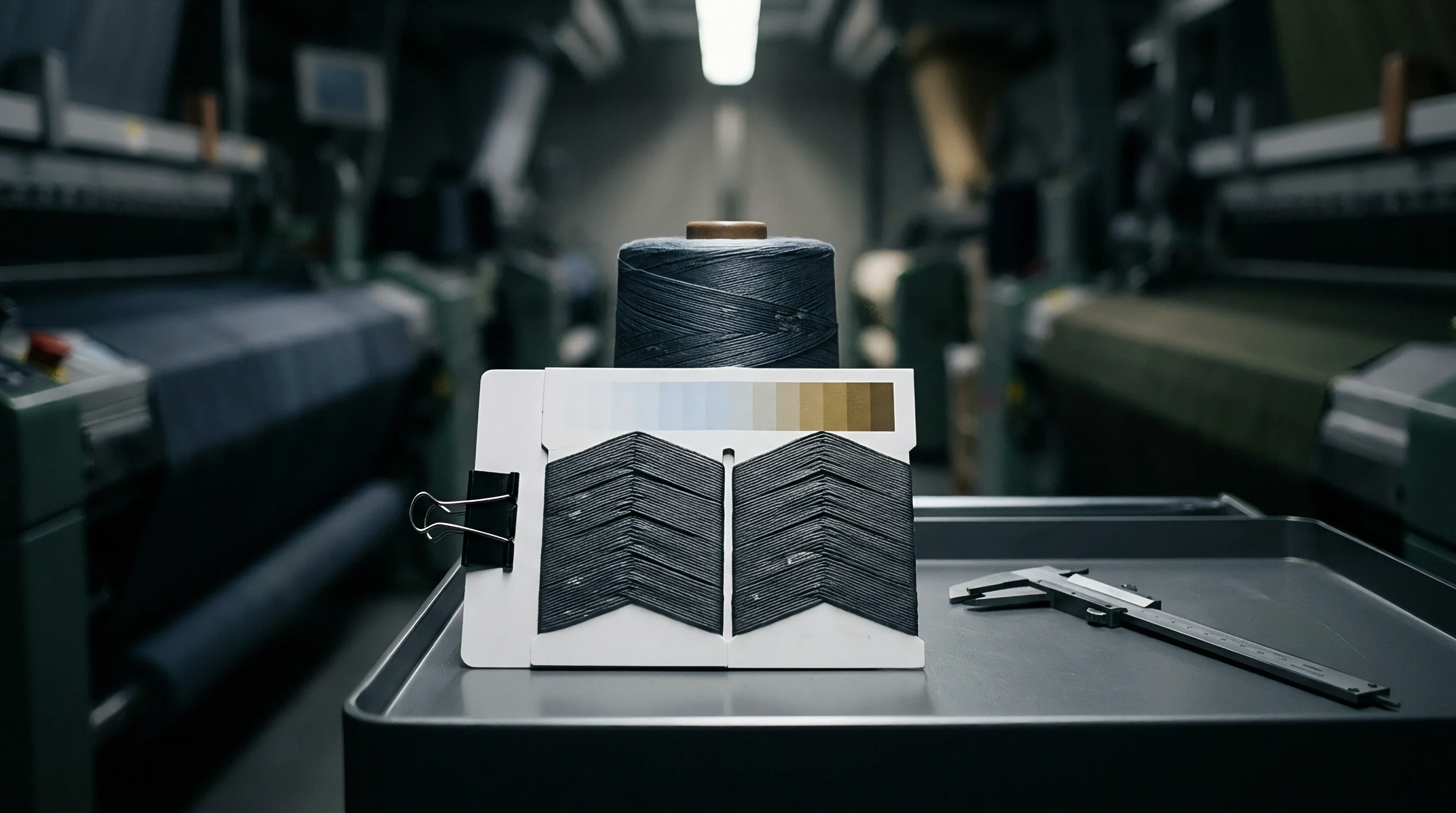

Arbitrage
Price differences between Asian spinning mills and regional treaty-compliant spinners create constant tension across apparel landed costs. Sourcing decision-makers balance the duty savings achieved under trade agreements against the substantial price premiums charged by regional ring spinners. Sourcing yarns outside preferential trade zones often lowers the initial fabric FOB price while incurring steep destination import tariffs.

Duty Offsets against Regional Spinning Premiums
A standard adult cotton knit shirt classified under Harmonized Tariff Schedule heading 6109.10 carries a general column-one duty rate of 16.5 percent upon United States entry. Sourcing an identical garment manufactured in Central America from regional yarn yields a preferential tariff rate of zero. Spinning costs in Central America or Mexico typically exceed Chinese, Indian, or Pakistani yarn prices by fifteen to thirty-five cents per pound due to higher energy rates, lower machine automation, and smaller regional scale economies.
Preferential duty drops to zero.
| Cost Component per Garment | USMCA Regional Yarn Option | Third-Country Imported Yarn Option |
|---|---|---|
| Yarn Consumption Cost (0.25 kg net) | $1.15 | $0.85 |
| Textile Conversion and Dyeing | $0.90 | $0.75 |
| Cut, Make, and Trim (CMT) | $1.40 | $1.40 |
| Freight and Logistics to Port | $0.25 | $0.35 |
| Subtotal Customs Value | $3.70 | $3.35 |
| Ad Valorem Duty Rate | 0.0% (Preferential) | 16.5% (MFN Column One) |
| Duty Amount Paid at Entry | $0.00 | $0.55 |
| Total Landed Cost | $3.70 | $3.90 |
The regional yarn option preserves a twenty-cent per unit cost advantage despite paying thirty cents more for the yarn input. Sourcing teams commit to domestic or regional spinning whenever the ad valorem duty rate surpasses the regional yarn price premium. If the base product carries an import tariff below six percent, non-originating yarns from low-cost spinning centers almost always deliver lower total landed costs.
Importers bear retroactive duty exposure.
The market leaves open the question of how rapidly evolving bilateral trade pacts and sudden logistics disruptions will recalibrate regional spinning margins against low-cost Asian commodity output.