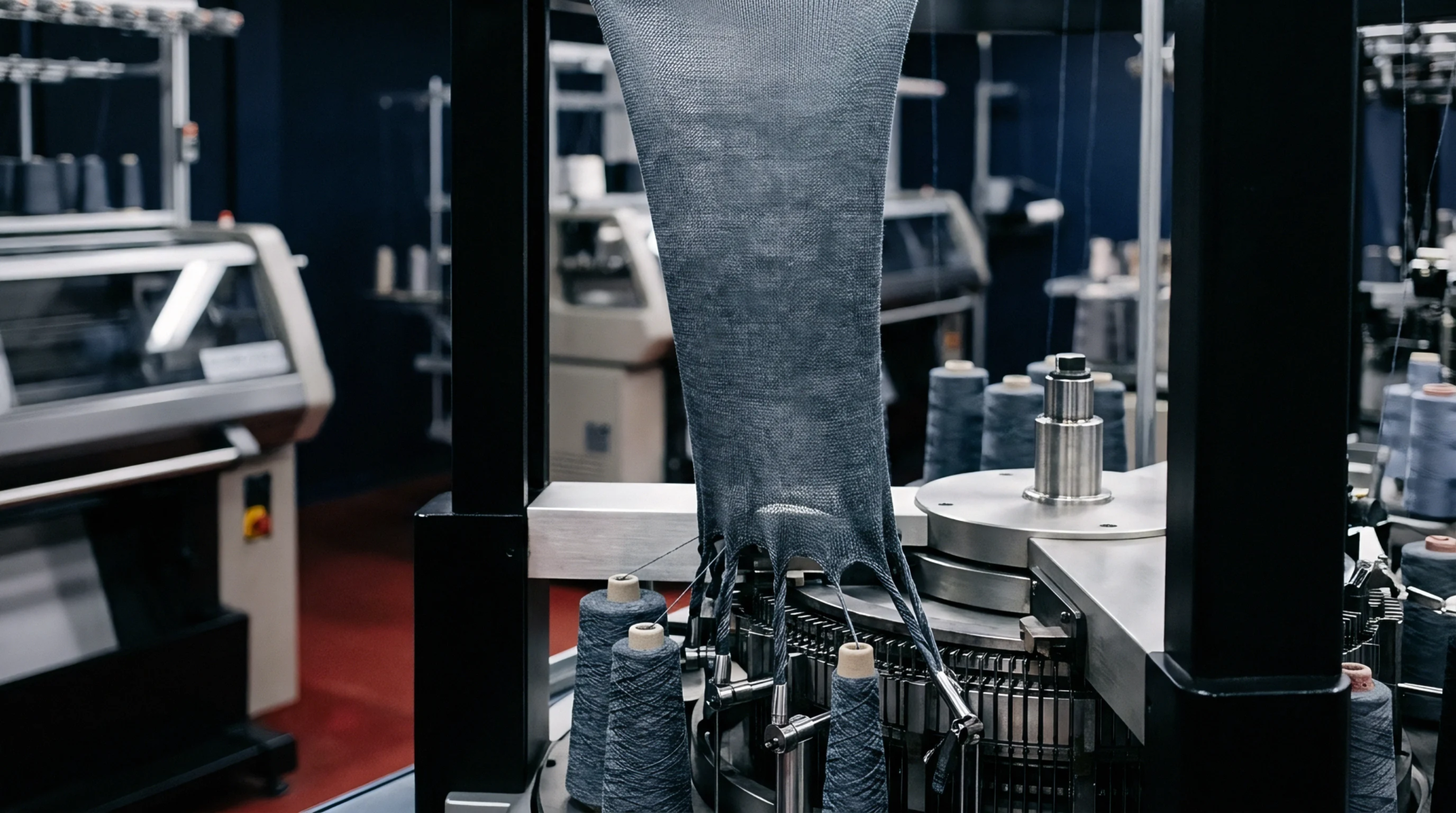
Cylinder Configuration
Continuous fabric tube formation on a revolving cylindrical bed of latch needles defines the primary mechanical class of weft-knitted structure synthesis. Industrial circular knitting operates by drawing yarn through individual needle hooks around a circular needle bed to produce continuous tubular fabric or wide open-width knit rolls. Mill inspections check wale density and course count immediately after off-machine relaxation.
The process stops applying once the fabric structure transitions to flatbed latch needle arrangements or warp-knitted tricot networks.
Loop Formation
Needle cams force latch needles into vertical reciprocating movements as the cylinder rotates past stationary yarn feeds. High-speed circular knitting depends on precise sinker movement to hold down existing loops while new yarn loops pass through the needle hooks. Variations in dial-to-cylinder clearance alter stitch length and alter knit density across the fabric width.
Substandard cam tracks generate uneven loop heights, producing horizontal band defects known as barre in finished dyed jersey.
Feeder Capacity
Multi-feeder machine frames allow simultaneous yarn insertion across dozens of knitting stations to maximize fabric yield per revolution. High feeder density in circular knitting elevates hourly fabric output while placing mechanical stress on filament yarns. Yarn tension spikes at high feeder counts cause needle breakage and cause elastomeric core breakage in plated stretch fabrics.
Tension Control
Yarn delivery capstans regulate input tension from creels to the knitting elements. Precise yarn feeding in circular knitting prevents vertical spirality and maintains uniform fabric grammage across commercial production lots.