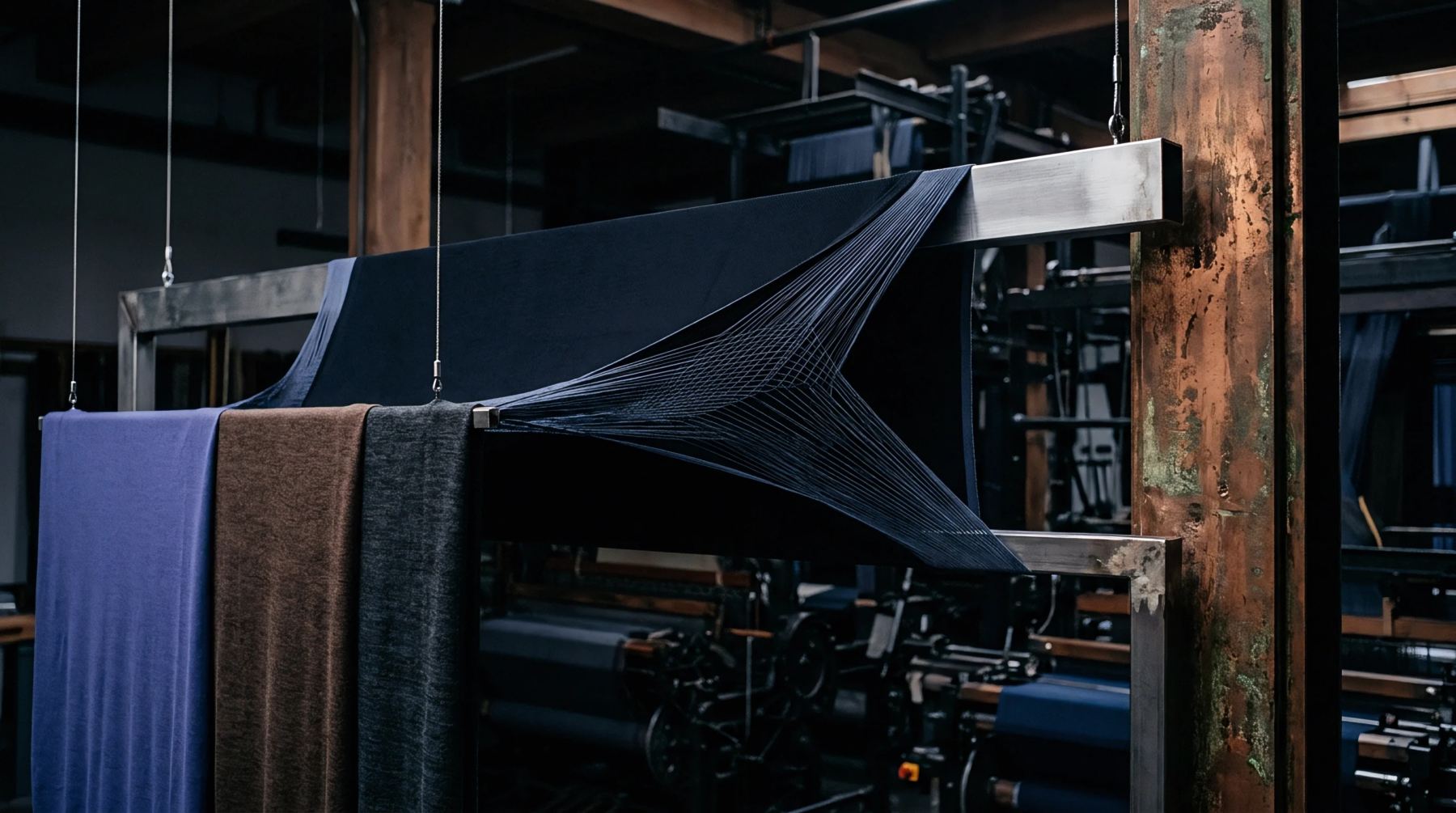
Warp Density
Technical fabric specifications rely on longitudinal counting protocols to verify the total count of individual yarn strands situated along one linear inch of a loom state cloth. This measurement determines the longitudinal coverage of a specific textile construction by identifying how many distinct yarns lie parallel to the selvedge within a defined span. It defines the physical boundary of the structure as the count remains fixed until the mechanical agitation of the loom alters the tension or the spacing of the reed dents.
Fabric Integrity
Consistency depends on the precise alignment of these strands across the horizontal width of the loom beam. Mechanical reed adjustment forces the yarn into specific positions to ensure the uniform distribution required for industrial applications. Technicians verify the count by manual inspection or automated optical scanning to detect missing or doubled yarns that compromise the structural balance of the final product.
Variation in the count results in uneven tensile strength across the fabric width. A higher number of these yarns produces a denser, heavier cloth whereas a lower count generates an open structure suitable for filtration or specialized air permeability tasks.
Production Verification
Mills report the count to customers to ensure compliance with quality standards during the initial weaving stage. Factory auditors check the density against the provided technical sheet to guarantee the batch matches the order requirements before the dyeing or finishing processes commence. Discrepancies between the intended specification and the measured output indicate improper reed settings or incorrect yarn sizing at the entry point of the loom.
Adjustments at this checkpoint prevent downstream waste in the coating or laminating departments. Quality assurance programs record these measurements to map the stability of the mechanical equipment over time.
Metric Significance
The density acts as a predictor for the eventual weight and the drape characteristics of a finished textile product. It governs the amount of raw material consumed per square meter of cloth and affects the processing speed for subsequent stages. Manufacturers rely on this count to calculate the yarn consumption required for long production runs or the cost of the raw goods per yard.
Accurate control over the spacing ensures that the material performs as predicted under mechanical load or chemical exposure. Higher density provides a barrier against fluid penetration when treated with water repellents while lower density allows for faster moisture transfer or better bonding during lamination. The density remains the primary control point for balancing raw material efficiency against the functional requirements of the finished goods.
This measurement stands as the absolute limit for the mechanical load bearing capacity of the fabric.