Scope Verification Requirements for Woven Cotton Fabric Certifications
Scope verification for woven cotton demands reconciling transaction certificate mass balances against laboratory batch chemistry and structural loom limits.


Loom
Shipment detentions at target ports routinely originate from discrepancies between registered weaving parameters and delivered piece goods. Cotton broadcloth, plain weave sheeting, and twill substrates fall under rigorous standard declarations where nominal yarn counts, warp densities, and filling picks per inch define the certified article. When an invoice details a 40s combed cotton poplin at 133 by 72 ends and picks, yet the facility scope documents list only coarse twill constructions up to 30s yarn count, the legal validity of the claim dissolves.
Certification bodies link facility permissions directly to production processes. A mill certified exclusively for open-end spinning and low-density weaving cannot extend its certification stamp to combed ring-spun textiles without explicit annex amendments.
Every certificate issued by accredited bodies delineates physical operations. Greige goods production operates under specific machinery classifications. Inspection personnel assess reed width limits, insertion mechanisms, and sizing chemistry application at the shed.

Structural Boundaries of Certified Greige Goods
Thread density tolerances define conformity under international audit guidelines. Mechanical variations during shedding, picking, and beat-up alter areal density, shifting finished square meter weights past allowable ranges. A variance exceeding five percent between the recorded greige weight and the certificate annex baseline prompts immediate non-compliance citations during destination customs reviews.
The table below delineates typical structural baseline parameters alongside acceptable variance thresholds for primary cotton constructions.
| Construction Profile | Yarn Count (Warp x Weft) | Nominal Density (Ends x Picks / Inch) | Nominal Weight (g/m²) | Permitted Tolerance Range |
|---|---|---|---|---|
| Plain Weave Broadcloth | 40s Ne x 40s Ne | 133 x 72 | 115 | ±3.0% Weight, ±2.5% Count |
| Twill 3/1 Chino | 20s Ne x 16s Ne | 108 x 56 | 240 | ±4.0% Weight, ±3.0% Count |
| High-Density Poplin | 50s Ne x 50s Ne | 144 x 76 | 105 | ±3.0% Weight, ±2.0% Count |
| Sateen 4/1 Sheeting | 60s Ne x 60s Ne | 173 x 120 | 125 | ±2.5% Weight, ±2.0% Count |
| Heavy Duck Canvas | 10s Ne / 2 x 10s Ne / 2 | 48 x 36 | 380 | ±5.0% Weight, ±3.5% Count |
Yarn origin controls represent an equally demanding checkpoint. Sourcing combed cotton yarns from unlisted spinning partners breaches chain-of-custody controls, even when the weaving mill holds valid facility licenses. Documentation trails must reveal inward gate passes, delivery challans, and yarn purchase contracts corresponding exactly to the produced lot yardage.
A discrepancy in spinning lot numbers between purchase records and blending manifests leads to immediate revocation of transaction documents.
Discrepancies between billed yarn counts and certified construction weights expose shipments to immediate border seizure.

Discrepancies in Base Yarn Construction
Spinning technologies introduce distinct regulatory risk profiles. Rotor spun cotton displays divergent chemical uptake profiles compared to ring-spun fibers, altering the retention of sizing agents and subsequent wet processing auxiliaries. Auditing standards evaluate yarn production machinery types.
- Open-end rotor yarn substitution reduces tensile performance while creating unexpected variations in desizing liquor consumption during preparation.
- Carded sliver blending errors introduce higher trash content, necessitating aggressive scouring chemistry that compromises finished organic purity metrics.
- Unregistered elastomeric core insertion during spinning shifts fiber composition past standard five percent synthetic blend allowances.
- Uncertified sizing starch residues derived from genetically modified maize trigger positive PCR amplification tests during destination botanical surveillance.
Failure to align greige specifications with wet processing listings produces cancelled export clearances and irrecoverable warehousing demurrage.


Ledger
Documentation verification demands strict reconciliation between Scope Certificates (SC) and Transaction Certificates (TC). A Scope Certificate confirms that a processing site possesses the machinery, effluent systems, and management routines necessary to manufacture conforming goods. It functions as an operational license.
It does not validate that a specific batch of shipped textile complies with certified criteria. Batch compliance rests exclusively upon the Transaction Certificate, which tracks the physical transfer of discrete mass volumes through certified tiers. When the volume recorded on an export bill of lading exceeds the balance remaining on the underlying input transaction certificates, reconciliation collapses.
Importers encounter major exposure when relying upon general facility Scope Certificates. Mills frequently present an active corporate credential while shipping goods produced from uncertified merchant greige lots. The inspector traces each roll number through warehouse picking tickets to confirm physical linkage with certified lots.

Will Transaction Certificates Cover Divergent Dye Lots?
Split dyeing runs present severe administrative challenges across commercial finishing orders. If a weaving mill delivers twenty thousand linear meters of certified greige broadcloth to an independent commission dyehouse, the lot frequently divides into four distinct five-thousand-meter colorways. Each colorway consumes differing dye classes, leveling agents, and fixation chemicals.
The resulting finished lots cannot share a single unamended transaction record. The buyer confirms that individual colorway volumes, dyehouse chemical batch references, and commercial invoice identifiers appear on separate transaction manifests.
Mass balance accounting permits zero inventory leakage. Certification schemes apply strict input-output balancing ratios to woven cotton production. Processing waste, including selvedge trimmings, desizing shrinkage, and shearing losses, must balance against outgoing finished meterage.
Calculating mass yields exposes fraudulent document duplication.
- The auditor retrieves the certified raw yarn intake tickets and cross-references net delivered kilograms against spinning mill shipping manifests.
- Weaving room production logs are checked against machinery operational hours to establish authentic fabric formation volumes.
- Wet processing boil-off and dimensional loss factors are deducted from total greige yardage using certified finishing parameter tolerances.
- Final commercial packing lists are reconciled against the net dry mass declared on the draft transaction certificate.
A scope certificate without matching transaction certificates amounts to an unverified facility brochure.
Discrepancies frequently emerge in intermediate subcontracting phases. A weaving facility with valid certification might outsource sizing or singing to an uncertified nearby site. Standard guidelines prohibit processing across uninspected units without prior certification body approval and subsequent on-site audit amendments.
Unapproved third-party processing invalidates the certification trail across the entire output volume, preventing transaction certificate issuance regardless of physical fabric test scores.

Sequential Chain Auditing across Processing Facilities
Traceability breaks quickly when merchant converters intervene between weaving units and export garment factories. Converters taking legal ownership of cotton goods without holding an intermediate Scope Certificate break the official chain of custody. The certificate examiner checks that every invoice entity holding legal title to the cotton substrate possesses a valid trader or handler scope document covering the specific product class.
Direct delivery from mill to apparel factory does not resolve the compliance deficit if financial billing routes pass through uncertified intermediary agencies.
The finishing plant frequently insists that an annual facility audit covers all seasonal yarn substitutions automatically.

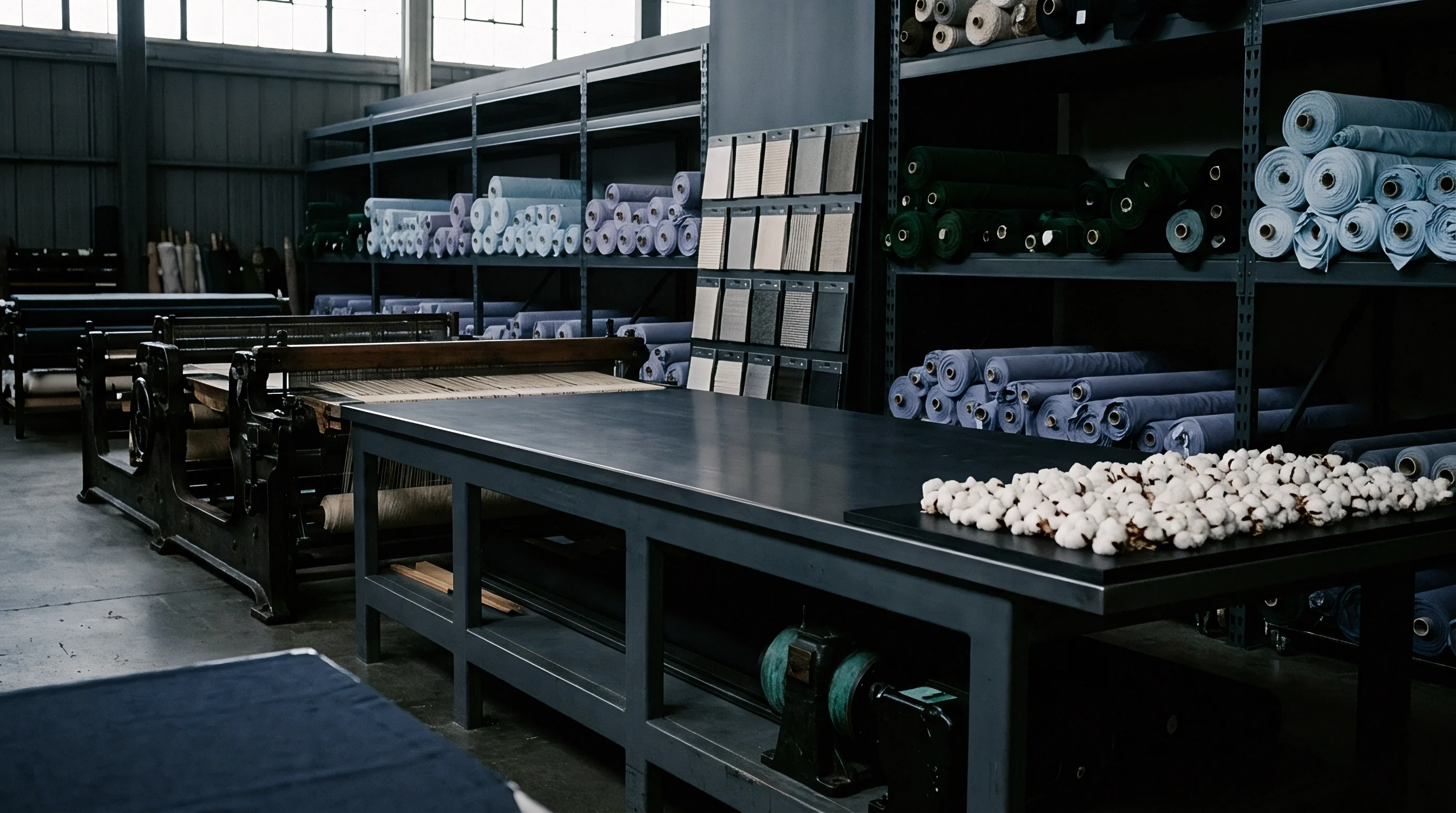
Reagent
Wet processing introduces the vast majority of restricted chemical substances discovered during post-import surveillance testing. Sizing starches, scouring surfactants, bleaching stabilizers, mercerizing caustic liquors, reactive dyes, and softening emulsions leave analytical residues on the finished cotton web. Standards such as OEKO-TEX Standard 100, Global Organic Textile Standard (GOTS), and national product regulations enforce tight concentration ceilings on prohibited chemical groups.
Verification requires analytical testing executed according to established ISO and EN extraction methods.
Testing laboratories isolate volatile and extractable compounds using gas chromatography-mass spectrometry (GC-MS) and liquid chromatography-tandem mass spectrometry (LC-MS/MS). A certified facility must demonstrate that input dyestuffs and auxiliaries appear on positive lists approved by accredited conformity assessment bodies. The presence of nonylphenol ethoxylates (NPEOs) in washing formulations or banned poly- and perfluoroalkyl substances (PFAS) in stain-repellent finishes results in immediate batch rejection.

Analytical Thresholds for Extractable Processing Chemistry
Regulatory frameworks diverge sharply regarding chemical ceilings and analytical sensitivity demands. Infant items designated under OEKO-TEX Product Class I demand far lower extractable chemical thresholds than apparel items falling under Product Class II. GOTS establishes even stricter restrictions on specific synthetic auxiliary classes.
The table below compiles analytical threshold limits across dominant assurance frameworks for finished woven cotton piece goods.
| Chemical Agent / Parameter | Test Standard / Method | OEKO-TEX Class I (Infant) | OEKO-TEX Class II (Direct Skin) | GOTS Version 7.0 Baseline |
|---|---|---|---|---|
| Free & Hydrolyzed Formaldehyde | EN ISO 14184-1 | < 16 mg/kg (Detection limit) | < 75 mg/kg | < 16 mg/kg (Detection limit) |
| Cleavable Arylamines (Azo) | EN 14362-1 / 3 | < 20 mg/kg | < 20 mg/kg | < 20 mg/kg |
| Extractable Heavy Metals (Lead) | EN 16711-2 (Acid Sweat) | < 0.2 mg/kg | < 1.0 mg/kg | < 1.0 mg/kg |
| Extractable Heavy Metals (Cadmium) | EN 16711-2 (Acid Sweat) | < 0.1 mg/kg | < 0.1 mg/kg | < 0.1 mg/kg |
| Alkylphenol Ethoxylates (NPEO/OPEO) | EN ISO 18254-1 | < 100 mg/kg Total | < 100 mg/kg Total | < 20 mg/kg Total |
| Total Fluorinated Organic Content | CEN/TS 17892 / Combustion | < 10 mg/kg | < 10 mg/kg | Prohibited intentionally |
| Aqueous Extract pH Value | ISO 3071 (0.1M KCl) | 4.0 to 7.5 | 4.0 to 7.5 | 4.0 to 7.5 |
Processing residues often vary significantly across distinct sections of a single woven roll. Caustic soda recovery during mercerization can leave alkaline patches along the selvedges if washing washboxes experience uneven spray pressure. An aqueous extract pH exceeding 7.5 prompts re-washing interventions that disrupt lead times and add drying costs.
A formaldehyde release above sixteen milligrams per kilogram triggers immediate quarantine under Product Class I test conditions.

Are Mills Bound by Intermediate Stage Audits?
Commission finishers routinely dispute verification responsibilities across intermediate preparation steps. Desizing enzymes and scouring auxiliaries are rinsed away prior to dye application, yet unremoved surfactant residues cause downstream analytical failures. Intermediate monitoring prevents costly late-stage rejections.
The testing protocol targets specific chemical vectors across the preparation train.
- Enzymatic desizing baths must undergo checks for synthetic wetting agents containing banned alkylphenol ethoxylates.
- Hydrogen peroxide bleaching baths demand verification of organic complexing agents, avoiding prohibited ethylenediaminetetraacetic acid (EDTA) formulations.
- Mercerizing caustic streams require ongoing screening to verify zero usage of phenolic wetting additives.
- Sanforizing and compressive shrinkage runs must utilize silicone or wax finishing lubricants free from banned cyclic siloxanes (D4, D5, D6).
Consider a standard production run of 40,000 meters of 210 g/m² woven cotton twill destined for childrenswear. Assume a laboratory screening package cost of 1,800 dollars per composite sample. If the production is divided into four distinct dye batches, testing each batch independently adds 7,200 dollars to landed expenditure.
Skipping batch testing creates massive vulnerability: an undetected failure on cleavable arylamines under EN 14362-1 leaves the importer exposed to cargo destruction orders and statutory civil penalties exceeding 50,000 dollars under consumer protection legislation.
Colorways alter uptake.
Cotton absorbs moisture readily.
The lot fails.
Whether analytical limits for wet processing residues can account for varying soil-borne pesticide carryover remains an unresolved debate across international compliance panels.


Border
Customs and market surveillance authorities enforce zero tolerance for fraudulent or incomplete textile compliance filings. In the United States, Customs and Border Protection enforces Withhold Release Orders (WRO) and the Uyghur Forced Labor Prevention Act (UFLPA), demanding forensic traceability dossiers for cotton goods before granting port clearance. The European Union Market Surveillance Regulation (EU 2019/1020) and REACH Annex XVII establish parallel border inspection checkpoints for restricted chemicals.
Submitting an unverified or general certification certificate without supporting batch chain records triggers immediate customs holds and container demurrage charges.
Traceability files must document physical movement from raw cotton harvest through ginning, spinning, weaving, wet processing, and packaging. Importers must hold clear documentation linking the unique commercial invoice to the exact container seal number. Document examiners cross-examine bills of lading, inland freight consignment notes, and mill production tallies for chronological plausibility.

Customs Scrutiny of Declared Fiber Classifications
Regulatory inspection teams employ isotopic ratio mass spectrometry (IRMS) and trace element profiling to confirm the geographic origin of cotton fibers. If laboratory isotope analysis establishes that raw lint was grown in an excluded agricultural region, conventional commercial certificates are dismissed. Importers bear all seizure liability.
Paperwork shields nobody at entry.
The discrepancy halts customs entry.
The container stays impounded.
A complete traceability portfolio incorporates five core components:
- Ginner cotton lint purchase dockets confirming source farm coordinates, seed certification, and raw harvest delivery receipts.
- Spinning mill bale consumption ledgers showing identical lot numbers moving into the blowroom and carding units.
- Weaving shed yarn inventory tallies matching yarn count and delivery weight against the finished fabric construction specifications.
- Dyehouse wet processing manifests listing certified dyes and processing auxiliary lot numbers tied to specific fabric batch codes.
- Transaction certificates issued by accredited certification bodies explicitly naming the buyer, destination country, transport details, and net kilogram shipment weight.

Documenting Origin Traces under Withhold Release Orders
Authorities reject documentation packages displaying timing incongruities. A spinning date occurring after the declared weaving completion date invalidates the entire submission. A commercial invoice dated months prior to the certified laboratory test report signals that sample collection did not reflect actual shipment yardage.
The compliance team reconciles transit timelines across each subcontracted facility.
Customs checks gross weight.
Testing identifies split lots.
Inserting standard purchase condition twenty-two shifts total fiscal liability for container detention to the primary vendor upon document rejection.


Charge
Unevidenced textile claims inflict severe financial losses across apparel brands and industrial fabric converters. When a shipment fails document audits or analytical chemistry screenings at the import terminal, direct costs escalate rapidly. Port storage and container demurrage fees routinely reach several hundred dollars per day per forty-foot container.
Analytical retest expenses at accredited destination laboratories compound the balance. Contractual non-compliance penalties from retail customers include complete order cancellations, chargebacks for marketing shortfalls, and mandatory compensation for alternative spot-market sourcing.
A certificate covers specified limits.
The buyer assumes the fine.
The laboratory bill doubles.
The mill absorbs the deduction.

Allocation of Secondary Laboratory Retest Tariffs
Purchase orders must delineate exact financial responsibilities for dispute testing. Standard clauses should stipulate that if initial customs or importer screening tests reveal a non-conformity, the primary vendor funds an independent verification panel at an accredited ISO 17025 laboratory. If the second round confirms non-compliance, the mill reimburses freight, testing, and disposal expenses.
Establishing clear commercial terms prevents protracted legal wrangling over contaminated yardage. Purchase agreements enforce clear deduction rights against open letters of credit when certificates prove deficient. Converters who protect their margins draft clear indemnification language covering consequential commercial losses.

Commercial Indemnification for Divergent Inventory
Liability insurance policies frequently exclude coverage for regulatory detentions resulting from administrative certificate mismatches. Underwriters treat the absence of a required transaction certificate as a preventable commercial error rather than an insurable casualty loss. Companies must establish rigid internal document gates prior to authorizing supplier payment disbursements.
Traceable physical records across wet processing stages guarantee border release far more reliably than generic corporate credentials.