Standard Industrial Inspection Protocols for Greige Fabric Sett Verification
Verify greige fabric sett on tensionless, conditioned swatches under ISO 7211-2 to prevent finished weight deficits and enforce contract chargeback limits.
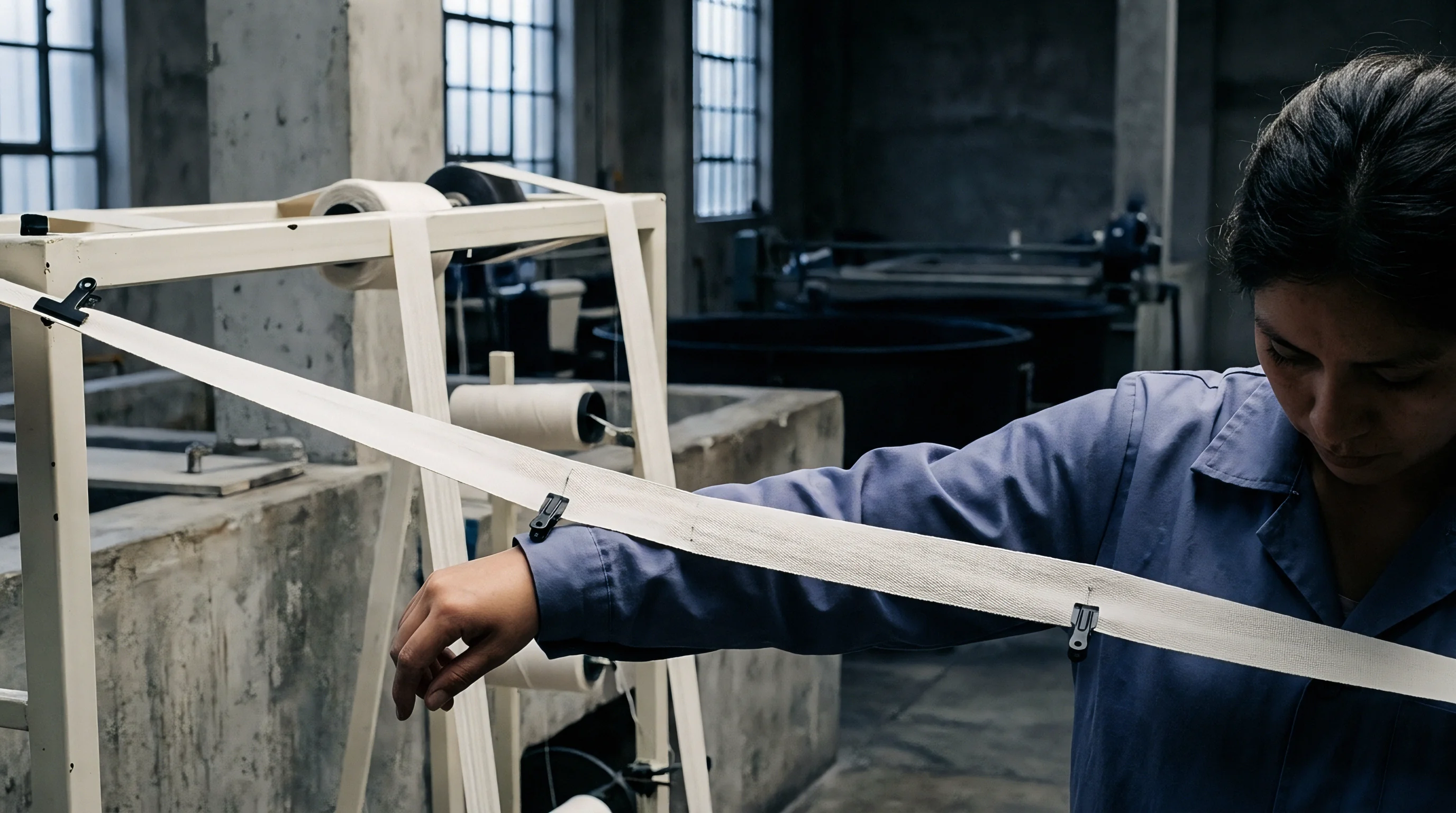

Beam
Loom shed conditions fix the initial geometry of woven cloth under tension, but that state is temporary. As warp yarns pass through drop wires, heddles, and reed teeth under high tension, end spacing is held rigid by the reed denting plan, while filling yarns ~ driven by air jets, rapiers, or shuttles ~ land at intervals set by the loom’s take-up gear ratio. Once the greige fabric leaves the take-up roll and relaxes, elastic recovery alters the number of ends and picks per unit length.
Counting threads straight off the loom arm without allowing for relaxation yields false density figures.
Fabric rolls fresh off the loom retain internal stress, mostly along the longitudinal axis where warp threads were pulled continuously during weaving. Standard inspection rules require a clear division between loom-state and relaxed counts: loom-state numbers help weavers manage internal quality control, but commercial qualification depends entirely on relaxed greige counts taken in standardized atmospheric conditions.
Standard lab procedure calls for letting rolls rest off-loom for thirty minutes to track tension decay before mounting them on an inspection frame. This resting period allows structural crimp to redistribute between warp and filling systems until forces balance out. If an inspector counts picks while the fabric remains taut across the table rollers, longitudinal strain will skew the picks per inch artificially low.
Proper bench procedure calls for unrolling the first two metres flat and completely tensionless, letting elastic bounce-back finish before setting down a counting grid or lens.
Loom Shed Geometries and off Frame Relaxation Dynamics
Warp ends per inch or centimetre depend mainly on the reed number and how ends are dented in the shed. A reed calculated at 40 dents per inch with two ends per dent gives a nominal warp sett of 80 ends per inch under weaving load. Once past the fell of the cloth, warp yarns contract as structural crimp forms around the filling picks.
That crimp pulls the fabric in across its width, so the measured ends per inch on a relaxed roll end up higher than the nominal reed density.
Filling density follows a different mechanism, governed by the take-up wheel or electronic stepping motor. Pick density stays uniform along the roll only when yarn tension, let-off speed, and take-up rates stay in step. Changes in filling yarn friction, shrinking beam diameter, or thermal expansion in the take-up drive components can cause pick counts to drift across a roll.
Inspection routines catch these local swings by checking pick counts at three spots across the width: near the left selvedge, in the middle, and near the right selvedge.
| Fabric Construction Class | Target Reed Density (Ends/cm) | Nominal Off-Loom Sett (Ends x Picks/cm) | Conditioned Relaxed Sett (Ends x Picks/cm) | Standard Test Method Reference | Maximum Permitted Deviation (%) |
|---|---|---|---|---|---|
| Plain Weave Cotton (Ne 30/1 x 30/1) | 24.0 | 24.5 x 22.0 | 26.0 x 23.5 | ISO 7211-2 Method A | +/- 1.5 |
| Twill 3/1 Polyester/Cotton (Ne 20/1 x 16/1) | 32.0 | 32.8 x 18.5 | 35.2 x 20.0 | ASTM D3775 Option 1 | +/- 2.0 |
| Satin 5/1 Filament Viscose (75d x 75d) | 54.0 | 54.5 x 36.0 | 57.8 x 38.2 | ISO 7211-2 Method B | +/- 1.0 |
| High-Density Poplin (Ne 40/1 x 40/1) | 44.0 | 45.0 x 28.0 | 48.5 x 30.0 | ASTM D3775 Option 2 | +/- 1.5 |
The difference between off-loom width and relaxed width sets the end density magnification factor. If cloth woven at a reed width of 165 centimetres contracts to 158 centimetres off the loom, it shrinks 4.24 percent in width. That compression packs warp ends into a tighter space, raising the measured warp count.
Skipping this step leads to inaccurate cover factor calculations, which throw off bulk finishing settings down the line.
Crimp interchange controls how density shifts once tension comes off. As warp tension drops, warp yarns yield space to the filling, letting filling crimp convert into warp crimp. High warp tension holds filling picks straight in the shed, but once tension releases, warp threads bend around the filling picks, pulling adjacent ends closer together.
Measuring density before this interchange finishes generates unreliable figures that throw off grey-stage verification records.

Standardized Environmental Conditioning Parameters
Greige fibers absorb atmospheric moisture according to their specific regain curves. Hydrophilic fibers like cotton, linen, and rayon swell in ambient humidity, expanding in diameter while shortening axially. This swelling directly alters density readings on the inspection floor: a cotton greige roll measured at 85 percent relative humidity shows a higher thread count per unit length than the same roll evaluated in dry air.
- Standard Inspection Atmosphere Maintain laboratory temperature at 20 degrees Celsius plus or minus 2 degrees and relative humidity at 65 percent plus or minus 4 percent per ISO 139 standards.
- Conditioning Duration Expose open greige swatches or unrolled inspection ends to circulating standard air for at least 24 continuous hours before taking measurements.
- Moisture Equilibrium Verification Weigh test samples every two hours until consecutive readings change by less than 0.1 percent, confirming moisture equilibrium.
- Bench Mounting Tension Clamp samples onto counting frames under flat, zero-strain conditions, using spirit levels so manual stretching doesn’t skew optical evaluation.
- Calibrated Counting Scales Use certified stainless steel counting plates with laser-etched aperture windows calibrated to national metrological length standards.
Unconditioned mill inspections cause endless disputes between buyers and weaving plants. A weave room in a humid tropical climate produces greige rolls that shift dimensionally by the time they arrive at a dry warehouse. Standardizing environmental conditioning turns raw floor numbers into comparable data, taking weather variations out of compliance audits.
Verification rules require measuring sample dimensions before and after conditioning to gauge environmental sensitivity. Synthetics like polyester or nylon show almost no moisture movement, but cotton and rayon greige can shift more than 2 percent across humidity changes. Technical dossiers attached to commercial shipments have to log ambient bench temperature and relative humidity alongside raw density counts to hold up during trade arbitration.
Loom frame vibration during a run can cause temporary pick density drops that subsequently self-correct during stenter drying.
Glass
Directly checking thread counts by eye depends on optical magnification over a calibrated aperture. Standard pick glasses use a folding frame that holds a magnifying lens above a square base window ~ usually one square inch or one square centimetre. Laying the glass flat against the greige fabric lets an inspector count individual yarn crowns in the illuminated field.
Getting accurate counts on fine or dense fabrics relies heavily on proper lighting, lens quality, and counting methodology.
Counting errors throw off yield projections. The lens has to sit parallel to the fabric face to avoid perspective distortion at the edges of the aperture. If an inspector views the lens off-center, parallax error shifts boundary threads into or out of the field.
Standard procedure requires looking straight down under diffuse vertical light, supplemented by low-angle side lighting to cast small shadows behind fine yarn crowns.
Dense cotton or micro-denier synthetic greige can blur into continuous surface ridges under low magnification. In those cases, technicians use dissecting needles mounted on micro-positioning stages to trace yarn paths across the window, counting thread intersections one by one. Skewed or bowed filling picks add another complication, requiring angular correction calculations whenever picks cross the aperture at an angle.

Aperture Selection and Counting Methodologies
Aperture size directly influences measurement precision across different fabric densities. Coarse industrial greige with fewer than 10 ends per centimetre requires at least a 5-centimetre or 2-inch counting length to smooth out local variation. Dense fabrics carrying 50 to 100 ends per centimetre are counted over smaller 1-centimetre or 0.5-inch windows to ease eye strain and keep manual tracking accurate.
Counting picks over wider swatches minimizes local filling density distortions caused by stop marks.
Manual counting rules dictate how to handle threads sitting right on the aperture boundary. Under ASTM D3775, threads fully visible inside the frame count as full yarns. Any thread split by the left or bottom inner edge is included in the count, while threads cut by the right or top inner edges are excluded.
This edge convention maintains consistency when different technicians check the same swatch.
Digital traveling pick counters bypass manual error by running a digital microscope along a motorized lead-screw track. The operator aligns the tracking line with the fabric axis, and image analysis software identifies yarn crowns by picking up periodic peaks in light reflection. The optical sensor maps the surface profile, generating density logs over long fabric lengths.
These automated systems work well on dark greige or slub yarns where picking out crowns by eye gets difficult.
Crimp Removal Mechanics for High Density Yarns
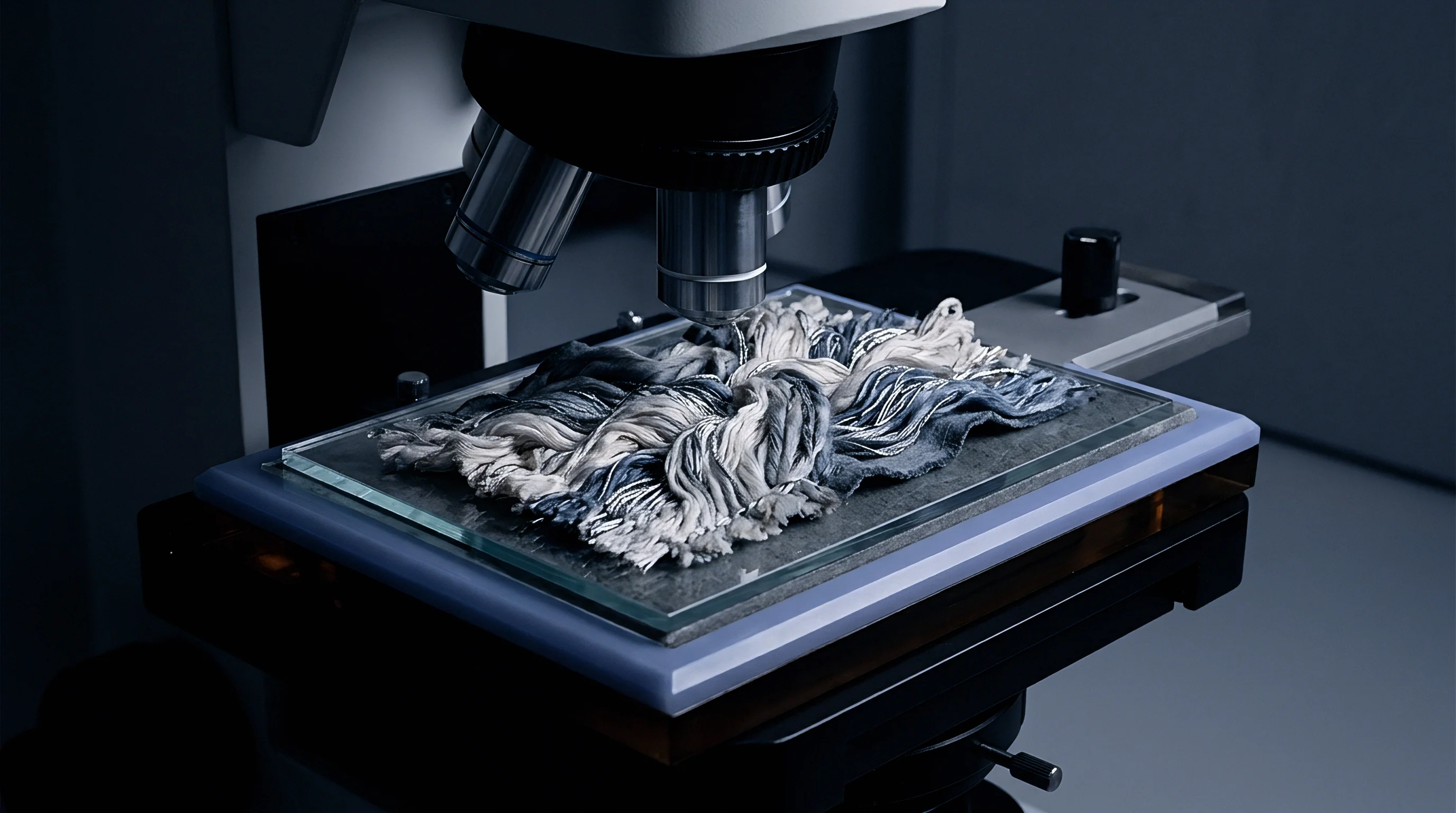
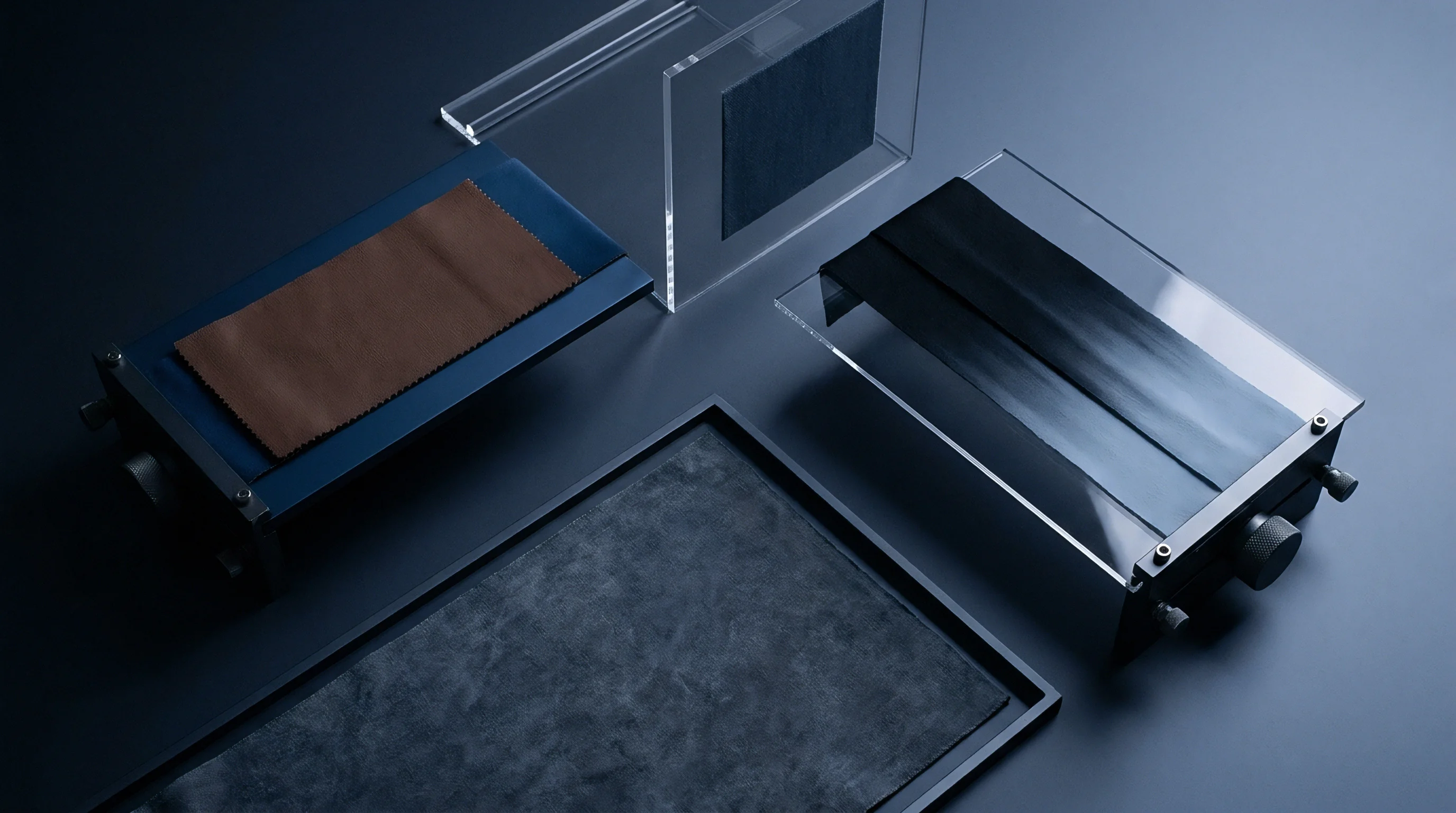
Counting surface crowns gives nominal density figures, but true structural verification means isolating yarn crimp and actual thread paths. Dense greige forces warp yarns into sharp wave shapes around flat filling picks, hiding parts of the yarn structure under surface crossings. Unraveling fringe ends allows technicians to dissect the fabric matrix and verify yarn alignment and thread counts across complex patterns.
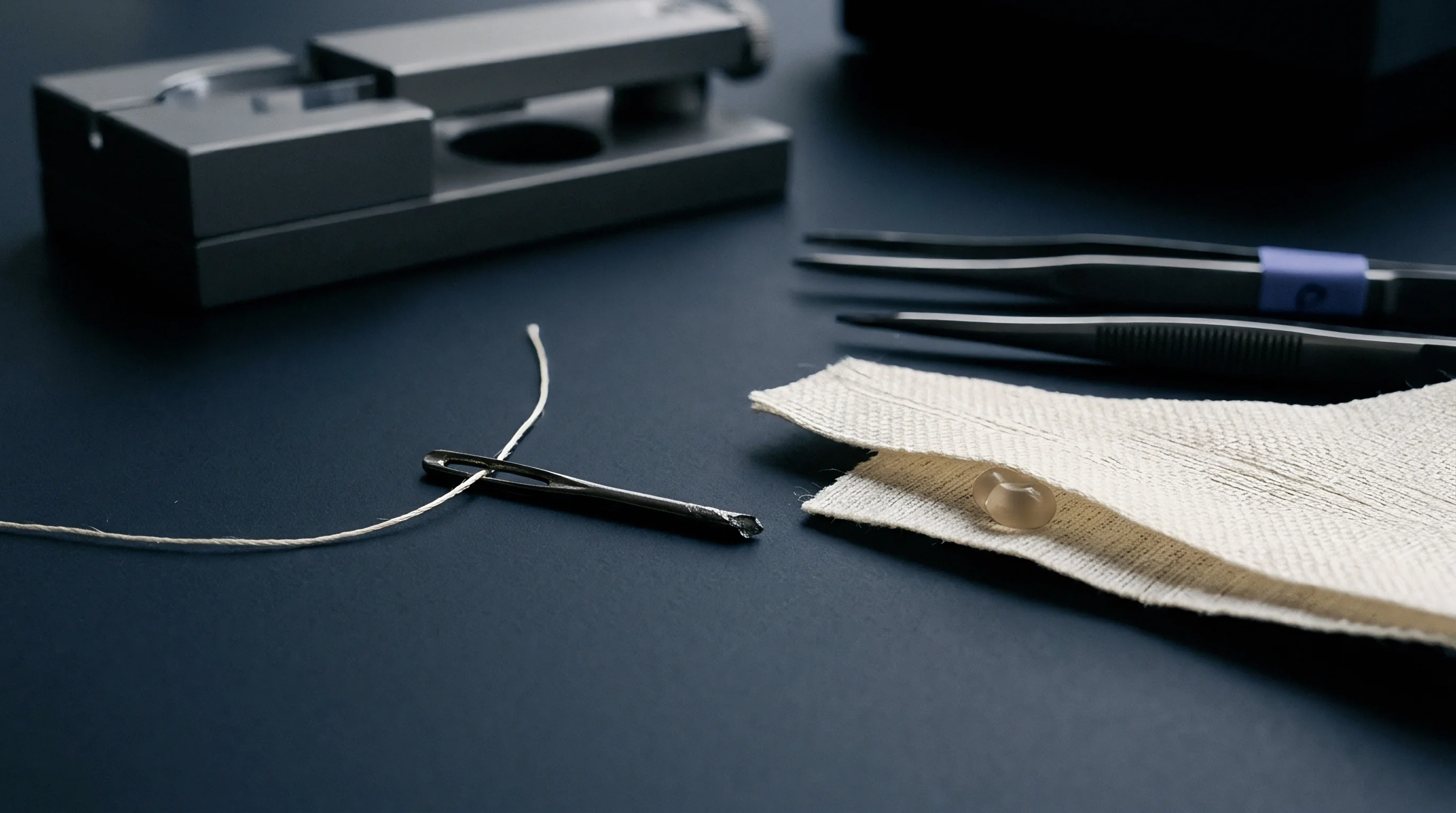
Fringe dissection starts by stripping back parallel yarns along a 5-centimetre edge to expose clean thread extensions. Mounting the swatch under a stereo microscope, a technician uses fine forceps to pull individual filling picks from the warp structure one by one. Counting these unravelled threads confirms surface optical readings while exposing double picks, missing ends, or internal defects missed during a pick glass check.
Yarn crimp extraction measures the difference between straight yarn length and woven fabric length. A technician pulls a 200-millimetre section of warp yarn from the sample, mounts it in a crimp tester, and applies the uncurling force specified in ISO 7211-3. That force must straighten the yarn without stretching its internal fiber core.
Measuring the extended length gives the true yarn density required to hit target fabric weights, linking loom setup to finished mass.
A wider counting aperture yields higher statistical reproducibility when measuring non-uniform slub greige weaves.
Sampling
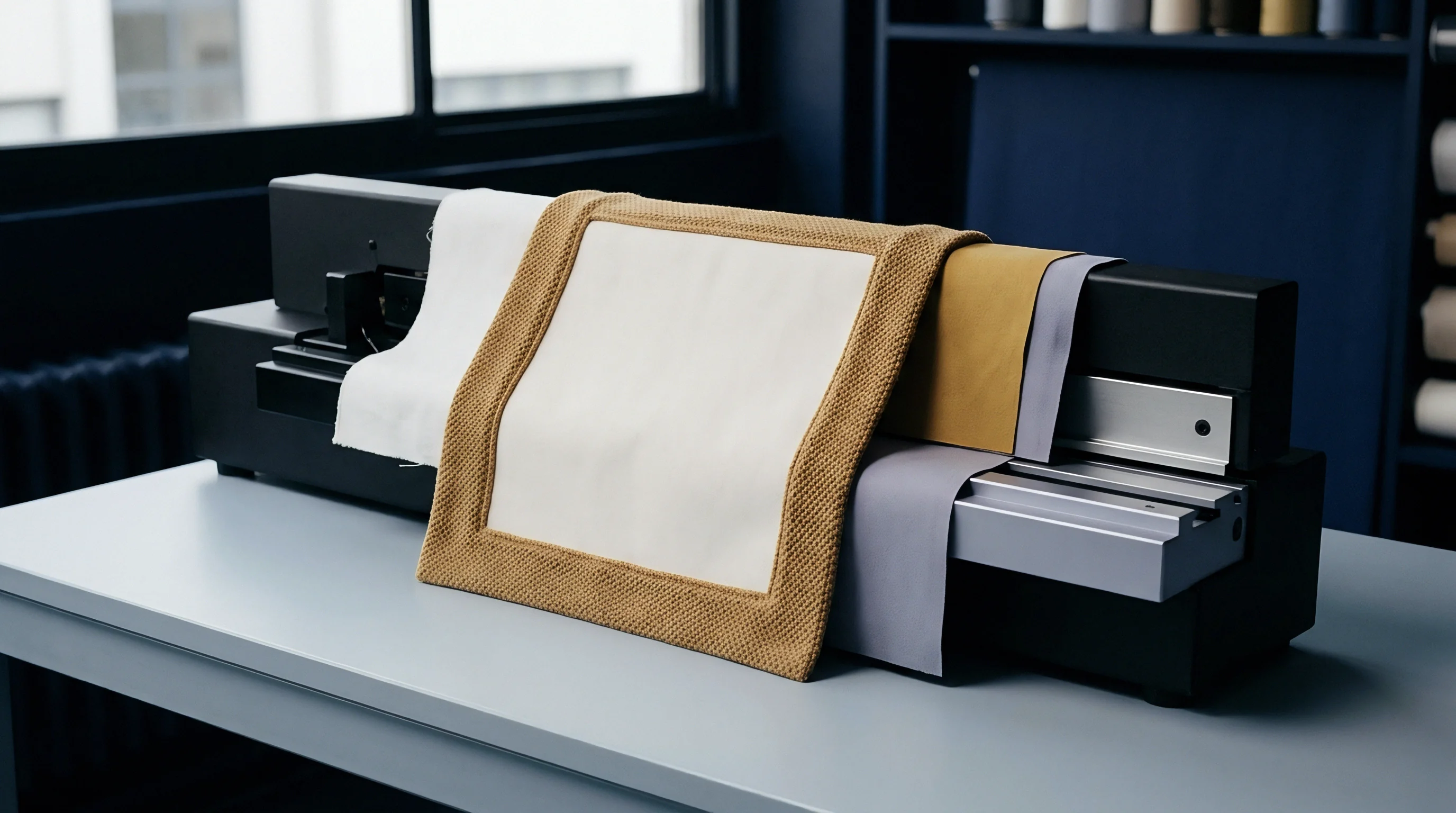
Proper statistical sampling keeps roll selection unbiased so inspection data reflects the whole shipment. Random sampling protocols require pulling rolls from pallets distributed throughout the lot rather than grabbing easy-to-reach rolls by the container door. Standards like ISO 2859-1 and ANSI/ASQ Z1.4 outline single and double sampling plans built around the Acceptable Quality Limits in purchase contracts.
Testing labs default to general inspection level II unless a mill’s solid compliance record justifies dropping to level I.
Full yardage mapping involves running selected greige bolts end-to-end across inspection tables fitted with calibrated length meters and electronic tension controls. Pick density often varies near beam changes or loom stops, where warp tension shifts before automatic let-off controls balance out. Sampling rules call for counting picks at the outer tail, at three evenly spaced points along the roll, and near the inner head fixed to the cardboard core.
A sample size of ten rolls per batch yields ninety-five percent statistical confidence when evaluating filling density variance across a five thousand metre shipment.
Optical bench counts led to the rejection of forty-two thousand metres of greige twill across three container shipments after proving a six percent filling density deficit. Checking center-to-selvedge density gradients highlights reed deflection and temple roll wear. A concave profile ~ where warp counts drop in the center compared to the edges ~ signals excessive warp sheet tension that bows the loom reed.
Inspectors record five points across the width on each selected roll to verify uniformity before releasing lots to finishing.
Is Automated Optical Counting Reliable for High Density Weaves?
High-density filament weaves and fine combed cottons push standard camera counters to their limits. Image analysis software relies on visual contrast between yarn crowns and the spaces between them. When high-density weaves pack yarns so tightly that those gaps vanish, camera sensors read uniform reflected light and software counts slip.
In those cases, high-resolution backlighting systems or manual dissection are still required to confirm structural sett.
Automated optical systems perform best on balanced plain weaves, twills, and open meshes with clear, repeated surface patterns. Camera arrays mounted right on inspection frames can monitor 100 percent of the moving web at speeds over 60 metres per minute. They flag sudden density drops from broken ends or missing picks instantly, mapping defects directly to roll yardage markers.
Continuous optical scanning generates detailed logs of pick density shifts over thousands of metres. Instead of relying on isolated spot checks, software builds spatial heat maps showing density across whole production lots. Finishing engineers use this data to adjust stenter speeds and overfeed settings dynamically, compensating for density changes along individual rolls.

Statistical Acceptance Rules under International Standards
Acceptance sampling converts raw thread counts into pass or fail decisions based on mathematical limits. The evaluation follows a set sequence once a shipment arrives at the receiving warehouse.
- Isolate the delivery batch and check shipping manifest bolt numbers against the mill bill of lading.
- Determine the lot size category and check ANSI/ASQ Z1.4 tables to find the corresponding sample size code letter.
- Select sample rolls at random across all pallet layers using a random number table to eliminate bias.
- Condition sample rolls in a standard atmosphere for 24 hours before unrolling them onto inspection frames.
- Take five warp and five filling density readings per sample roll using calibrated optical counting plates.
- Calculate the mean thread count and standard deviation for warp and filling across the sample set.
- Compare the sample metrics against contract acceptance quality limits to mark the lot accepted or rejected.
Four-point inspection under ASTM D5430 combines thread count checks with visual quality grading. While point penalties account for surface defects like slubs, holes, or oil spots, systemic density errors trigger batch rejection outright. If the average warp or filling count across the sample set drops below contract limits, the entire shipment fails inspection.
Documenting results requires clean record-keeping. Inspection reports log individual roll density values, batch averages, standard deviations, ambient conditions, and instrument serial numbers. Digital archives keep raw image files from automated counts, preserving full audit trails if commercial disputes surface months after delivery.
Re-testing confirmed a fifty-pick deficit across forty rolls, forcing a loom re-set and incurring an eleven thousand dollar air-freight premium.

Contraction
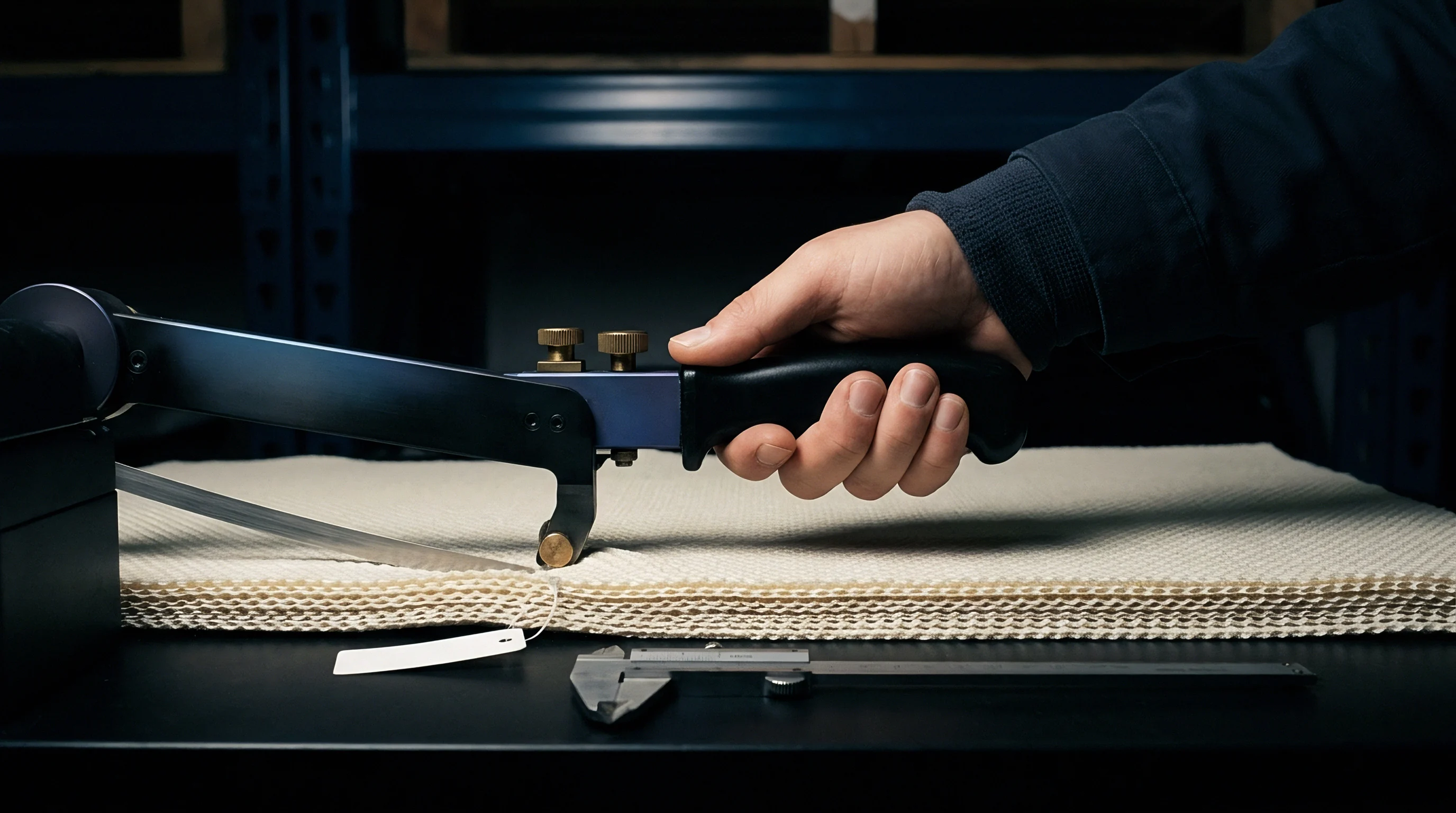
Greige dimensions change significantly during wet processing, converting raw loom counts into finished specifications. Desizing, scouring, bleaching, mercerizing, dyeing, and stenter setting all apply thermal, chemical, and mechanical forces that reshape yarn packing. Warp threads contract axially during tensionless wet relaxation ~ which raises filling density ~ while longitudinal tension on the stenter frame pulls warp threads tight, lowering pick counts per unit length.
Hitting finished specifications means mapping density through every step of finishing.
When greige cotton enters warm scouring baths, sizing polymers dissolve and release internal fiber strains locked in during weaving. As fibers swell, yarn diameters expand, forcing warp ends into a sharper serpentine path around filling picks. This crimp interchange shrinks the fabric in length and width, raising overall thread density per square centimetre while reducing total yardage.
Tracking crimp interchange on both axes during finishing prevents width collapse on the stenter. Mercerizing cotton greige under tension with caustic soda swells cellulose fibers into smooth cylinders. Under warp tension, warp ends stretch while filling picks pull inward, boosting warp density per centimetre and dropping filling density.
Finishing plants adjust greige targets depending on whether the line runs under high longitudinal tension or tensionless relaxation.
Crimp Interchange Dynamics during Wet Processing
The transition from greige to finished cloth follows predictable geometric principles tied to yarn rigidity and spacing. Peirce’s fabric model shows how warp crimp and filling crimp maintain an inverse balance under planar stress. Pulling warp threads tight flattens their crimp nearly to zero, forcing filling yarns to bend completely around them and pulling the fabric width inward.
| Fabric Base Construction | Target Greige Sett (Ends x Picks/cm) | Wet Processing Sequence Applied | Dimensional Change Warp/Weft (%) | Target Finished Sett (Ends x Picks/cm) | Finished Cover Factor (Peirce K) |
|---|---|---|---|---|---|
| Cotton Plain Weave 120 gsm | 24.0 x 22.0 | Continuous Pad-Steam Bleach + Stenter Dry | – 3.5 / – 4.0 | 24.9 x 22.9 | 14.2 |
| Cotton Twill 3/1 240 gsm | 35.0 x 20.0 | Cold Pad-Batch Dye + Mercerize + Sanforize | + 1.5 / – 6.5 | 34.5 x 21.4 | 18.6 |
| Poly/Cotton Poplin 110 gsm | 45.0 x 28.0 | Thermosol Dye + Heat-Set Stenter | – 0.5 / – 2.0 | 45.2 x 28.6 | 21.1 |
| Polyester Micro-Taffeta 70 gsm | 68.0 x 42.0 | Jet Dyeing + Weight Reduction + Stenter | – 5.0 / – 8.0 | 71.6 x 45.6 | 24.8 |
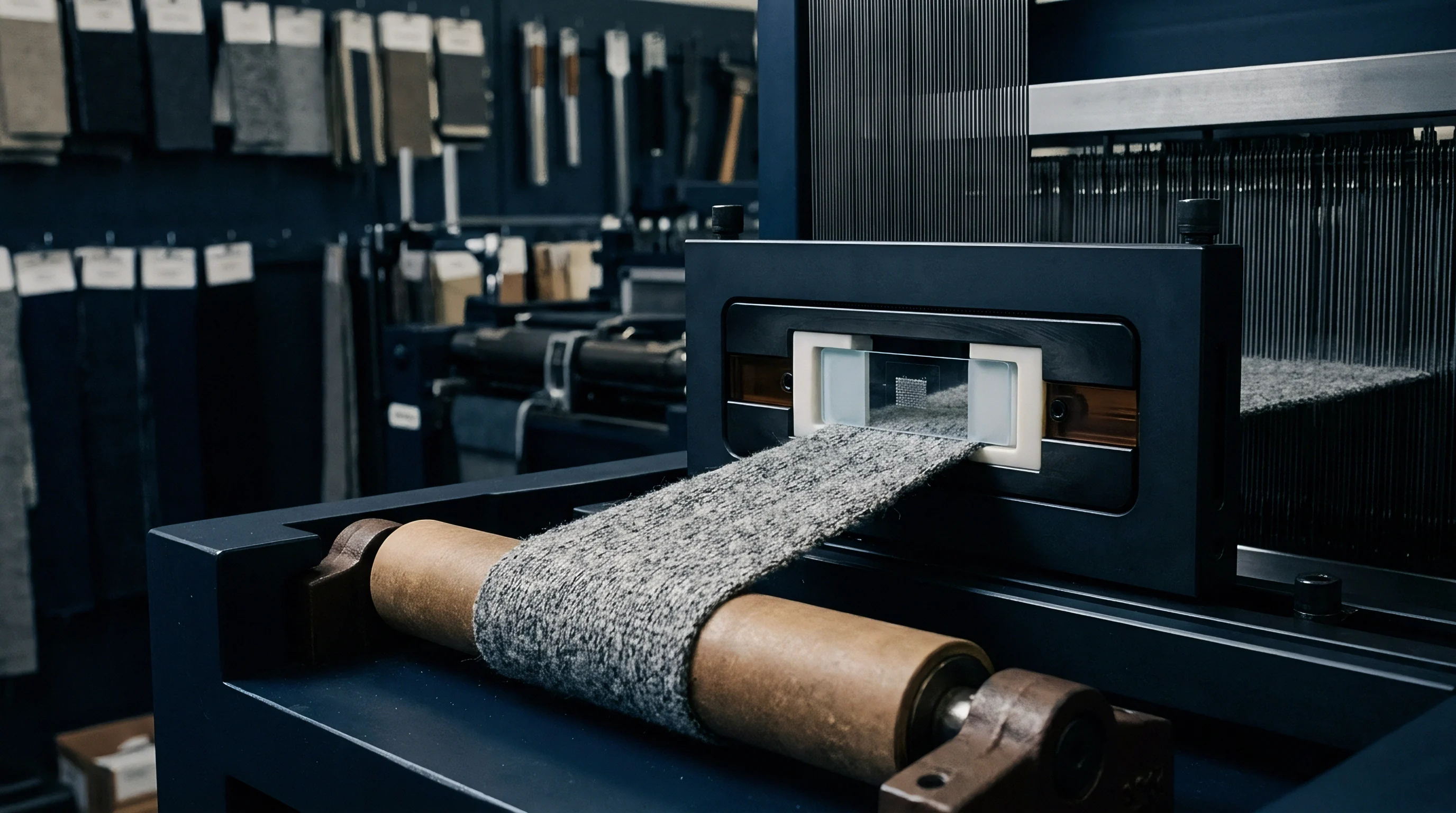
Stenter processing allows final adjustments to thread count using overfeed and width controls. Overfeeding feeds greige onto pin chains faster than the chain track moves, letting the fabric relax along its length. Running a 5 percent overfeed packs warp ends closer together longitudinally, raising the finished pick count per centimetre to hit target fabric weights.
Section four of the purchasing agreement voids supplier liability for density shortfall if the buyer processes greige cloth through uncalibrated wet finishing lines.
Mechanical compressive shrinkage, like Sanforizing, compacts cotton fabric longitudinally to ensure stability during home laundering. The rubber belt shrinking unit presses filling picks closer together using heat and steam. Target shrinkage of 6 percent pushes a greige cloth with 20 picks per centimetre up to 21.3 picks on the finished fold, altering the density profile entirely.
Stenter Overfeed Arithmetic and Dimensional Yield
Calculating the greige thread count needed to hit finished specs requires accounting for process shrinkage. Sourcing engineers rely on conversion factors built from production history across specific dyehouse equipment setups.
- Target Finished Density Identification Set final required ends and picks per unit length according to garment performance and weight specifications.
- Process Shrinkage Matrix Integration Factor in expected length and width shifts from desizing, bleaching, dyeing, and compressive shrinking.
- Greige Warp Count Calculation Divide target finished ends per centimetre by the width contraction factor to determine required reed and off-loom warp density.
- Greige Filling Count Calculation Divide target finished picks per centimetre by the length shrinkage factor to set loom take-up gearing.
- Yarn Linear Density Cross-Check Confirm that target greige counts and yarn numbers yield proper grey weight without exceeding loom cover limits.
Miscalculating contraction leads to costly mistakes. If a converter orders greige poplin with too few picks, the finishing plant has to stretch the fabric lengthwise to meet yardage targets, resulting in cloth that shrinks out of spec when washed. On the flip side, running higher pick density than needed consumes extra yarn and eats into margins on large production runs.
Yield loss ties greige density directly to financial results. When fabric shrinks more than expected during wet processing, total linear yardage drops while weight per square metre climbs past target limits. Sourcing teams have to balance density targets against finished yield commitments in conversion contracts.
Will future high-speed optical inspection systems integrate real-time crimp interchange modeling directly into loom let-off control loops?

Tolerance
Commercial contracts establish precise limits on acceptable variance between target thread counts and delivered greige numbers. Industry standards generally allow plus or minus 2 to 3 percent for warp end counts and plus or minus 3 to 4 percent for filling picks. Because warp density is constrained by the loom reed, warp counts show less variation than filling counts, which fluctuate with take-up wear, yarn friction, and manual adjustments.
Density deficits alter finished fabric weight. Delivering greige with a 4 percent pick shortfall lowers weight per unit area, risking failures in tensile strength, seam slippage, or opacity tests. Sourcing engineers assess whether a shortfall is a minor defect subject to a price rebate or a major structural failure requiring rejection.
Technicians check yarn linear density alongside thread count whenever a mill disputes a density shortfall. A mill might compensate for lower thread count by weaving slightly coarser yarn to preserve weight per square metre. But changing yarn size alters cover factor, drape, permeability, and hand feel, which is why thread count compliance remains a strict independent requirement.
Commercial Specification Limits and Yarn Count Interaction
Yarn size dictates thread packing. In Peirce’s cover factor model, warp cover equals warp ends per inch divided by the square root of the yarn count. Dropping ends per inch while substituting coarser yarn shifts the cover factor and changes fabric performance.
Specifications must state independent minimums for thread count and yarn count to prevent unapproved structural changes.
- Warp Sett Tolerance Limits Allow up to +/- 2.0 percent deviation from contract ends per unit length across batch averages.
- Filling Sett Tolerance Limits Allow up to +/- 3.0 percent deviation from contract picks per unit length across batch averages.
- Single Roll Outlier Limits Reject any single roll showing thread count deviations beyond +/- 5.0 percent from target.
- Yarn Count Cross-Verification Check yarn linear density per ISO 2060 standards whenever thread count falls within 1 percent of the lower limit.
Standard dispute resolution requires re-testing disputed greige lots at an accredited third-party lab operating under ISO/IEC 17025. Third-party testing calls for taking ten swatches from five different rolls, conditioning them for 24 hours in a standard atmosphere, and conducting side-by-side manual and digital counts across identical aperture windows.
Off-loom pick variance systematically exceeds end density variance due to filling insertion dynamics.
Lab findings settle contract disputes. When third-party testing confirms that thread counts fall below tolerance limits, the buyer applies contractual chargeback formulas or rejects the lot. Verified inspection reports eliminate subjective debate, placing financial responsibility back on the mill.
Standardized Testing Conditions for Dispute Resolution
Resolving claims over out-of-spec greige requires strict adherence to international standard methods. ISO 7211-2 and ASTM D3775 serve as primary reference standards in textile trade disputes, and purchase orders must cite which method applies to prevent disagreements during arbitration.
ISO 7211-2 outlines three counting procedures based on fabric complexity and density. Method A unravels threads from fabric swatches, giving high accuracy for fine or complex weaves. Method B uses a counting glass on intact fabric faces, suitable for high-contrast weaves.
Method C relies on automated optical counters, valid only when calibrated against Method A baseline data.
ASTM D3775 sets reporting rules for US trade contracts, requiring warp and filling counts to be rounded to the nearest whole thread per inch or centimetre. When converting imperial counts to metric values, figures must round to the nearest 0.5 threads per centimetre to avoid implying unearned precision.
Proper atmospheric conditioning prior to testing prevents environmental measurement drift during inspection.
Clause five of standard master purchasing agreements specifies that ISO 17025 accredited third-party lab test results serve as final binding arbitration for density disputes.

Rebate
Financial chargeback frameworks convert thread count shortfalls into price adjustments, balancing commercial equities between buyers and mills. When delivered greige falls outside tolerance limits but remains usable for secondary product lines, buyers apply rebate schedules instead of rejecting the lot outright. These formulas scale penalties to match lost fabric weight, cover factor, and processing yield.
Delivering greige with a 5 percent filling deficit saves raw yarn for the mill while reducing fabric weight per linear metre for the converter. The buyer calculates the penalty by applying the percentage deficit to the total invoice value, then adding fees for yield loss and stenter adjustments at the dyehouse.
| Sett Deviation Level (%) | Warp Count Deficit Action | Filling Count Deficit Action | Financial Penalty Formula Applied | Commercial Remedy Option |
|---|---|---|---|---|
| 0.0 to – 1.5 | Full Acceptance | Full Acceptance | Zero Penalty (Within Spec) | Standard Delivery Clearance |
| – 1.6 to – 3.0 | Accept with Warning | Full Acceptance | 1.0% Invoice Rebate | Price Adjustment on Batch |
| – 3.1 to – 5.0 | Mandatory Re-test | Accept with Penalty | Direct Deficit % + 2.0% Processing Fee | Pro-rata Invoice Deduction |
| – 5.1 to – 8.0 | Conditional Rejection | Conditional Rejection | Direct Deficit % + 5.0% Yield Loss Fee | Buyer Option to Reject or Reprice |
| Greater than – 8.0 | Absolute Rejection | Absolute Rejection | Full Batch Return + Freight Costs | Mill Re-weaving or Full Refund |
Mills sometimes argue that wet finishing will restore fabric density through shrinkage. Sourcing engineers test this claim by checking crimp potential with ISO 6330 laboratory boil-off tests. If boiling water relaxation fails to shrink the swatch to target density, the deficit is permanent, confirming the buyer’s rebate claim.

Financial Chargeback Schedules for Sett Shortfalls
Penalty schedules must be spelled out in contract appendices before production orders go out. Standardizing these schedules places deficits into tiered bands, creating clear financial consequences for out-of-spec production.
Tier one penalties apply to minor shortfalls between 1.5 and 3.0 percent below specification. The mill absorbs a flat 1.0 to 2.0 percent invoice discount to cover minor weight drops without stalling production. The receiving facility logs the issue in the supplier’s performance scorecard to track mill reliability over time.
Tier two penalties apply to moderate deficits between 3.1 and 5.0 percent below target. At this level, fabric performance suffers, forcing the dyehouse to alter stenter overfeeds or add body-building finishes to build back fabric weight. The penalty calculation combines the raw yarn deficit percentage with any extra processing fees incurred to reach target specs.
Tier three non-conformance applies when deficits exceed 5.0 percent. Shortfalls this large undermine fabric integrity, leading to seam slippage, reduced tear strength, or excessive transparency. Under tier three rules, the buyer can reject the batch outright, requiring full replacement at the mill’s expense, including all freight and customs duties.
Contractual Remedies for out of Spec Greige Deliveries
Enforcing legal remedies requires clear chain-of-custody records and verified inspection data. Purchasing agreements usually mandate formal notice of non-conformance within thirty calendar days of receipt at the port or warehouse. Missing this window waives the buyer’s right to claim compensation or return the shipment.
Notices of non-conformance must include lab test dossiers covering sample selection, ambient conditioning logs, raw counts, mean deviations, and instrument calibration certificates. Providing complete technical data prevents procedural pushback and speeds up settlement negotiations.
When a shipment is rejected, contract terms require the supplier to issue a Return Material Authorization within ten business days. The mill can either pay to ship the rejected rolls back or arrange local sale through secondary liquidators. Contracts explicitly forbid mills from reselling rejected proprietary or trademarked greige in the buyer’s primary domestic market.
Arbitration clauses resolve disputes when chargeback negotiations stall. International contracts typically designate bodies like the International Chamber of Commerce or regional textile panels to settle claims. Arbitrators review original specifications, quality logs, and lab reports before issuing binding decisions.
Rigorous greige verification protocols create the foundation for transparent cross-border sourcing. Combining standard conditioning, precise optical counts, statistical sampling, and clear chargeback rules protects product quality while keeping commercial agreements enforceable with global weaving partners.