Dimensional Stability
Fibre cells swell when atmospheric moisture increases because water molecules settle within the amorphous regions of the polymer chains. This hygral expansion alters the length or width of a textile component during shifts in relative humidity. The measurement defines the degree of physical growth occurring as natural or regenerated cellulose fibres absorb vapour from the surrounding air.
It applies strictly to individual filaments and spun yarns before their assembly into a coherent textile construction. Stability thresholds rely on the moisture regain capacity of the specific fibre type. Proper control of these fluctuations prevents internal tensions within a finished garment.
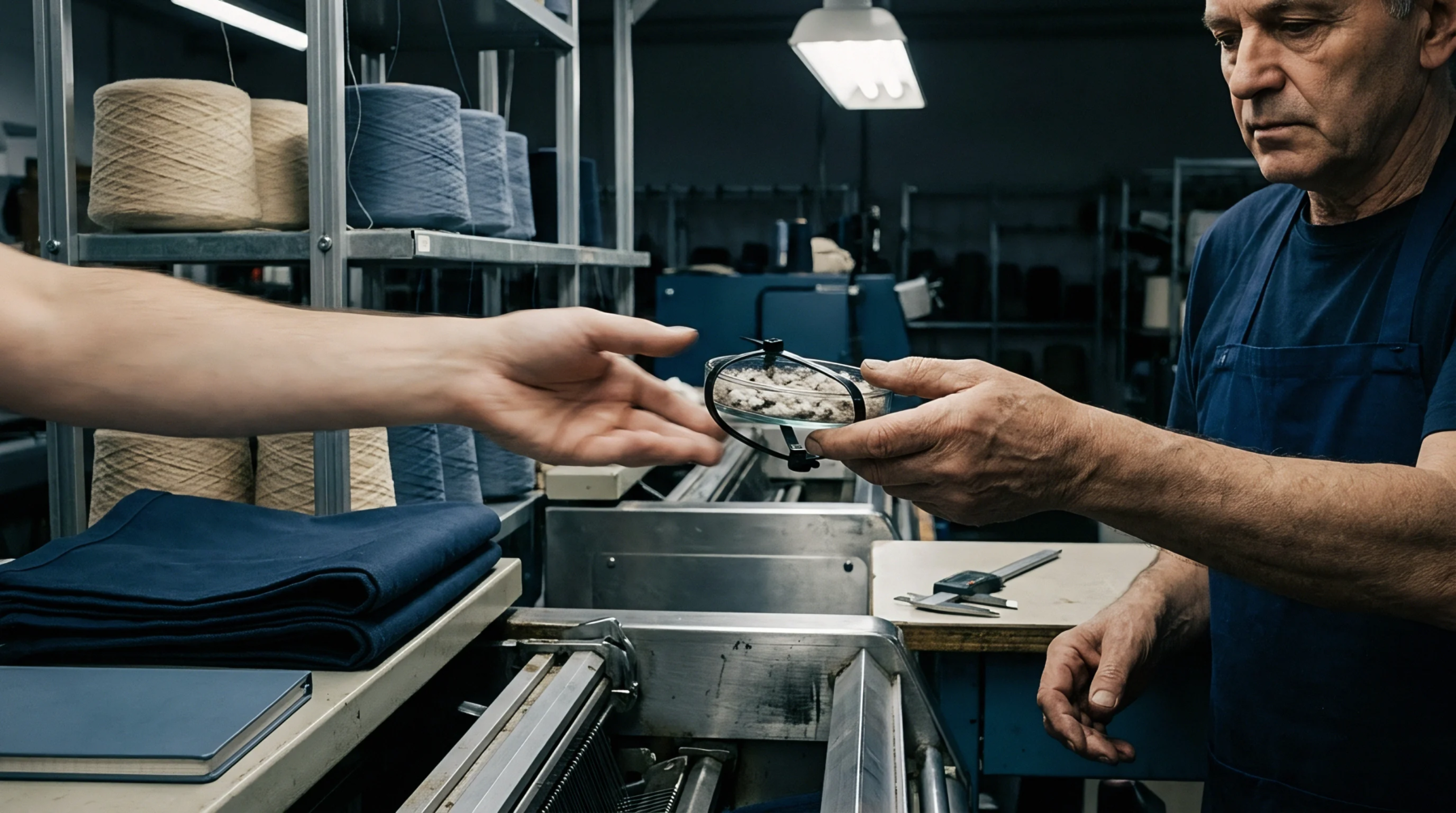
Testing happens at the spinning mill level using controlled humidity chambers to quantify the deformation against dry standards.
Moisture Response
Textile engineers monitor this physical change to calculate precise allowances for pattern sizing during the cutting process. Because natural fibres like wool or cotton hold varying amounts of water within their structure, hygral expansion forces the internal geometry of a fabric to rearrange itself under changing environmental conditions. Small adjustments occur in the microscopic alignment of polymers when saturated states replace dry ones.
These movements accumulate across the entire surface area of a garment, creating measurable shifts in sleeve length or torso fit. Factories verify these changes by exposing raw cloth samples to extreme humidity cycles. The collected data guides the garment manufacturer regarding how much extra space to add in the design phase to avoid distortion during transport through varied climates.
Such protocols ensure the final dimensions remain consistent with the original technical specification regardless of transit conditions.
Fabric Constraint
Complex mechanics govern how individual fibres push against their neighbours inside a tight weave. Hygral expansion creates pressure between adjacent yarns when swelling occurs, pushing the crimp structure of the fabric toward a different configuration. Tight constructions resist this internal force through friction and inter-yarn locking, while loose weaves show more visible movement across the flat surface.
The stiffness of the finish applied to the cloth also impacts the degree of deformation by pinning fibres into a fixed position. Textile labs determine this reaction by measuring the change in area after moving a sample between two specific equilibrium humidity levels. Results indicate how the internal structure of the textile handles the outward force generated by the volumetric growth of the individual fibre components.
Process Verification
Commercial checkpoints require the verification of these values before high-end apparel moves from production into distribution channels. Buyers demand that the fabric samples demonstrate minimal variation during standard climate cycles to avoid potential claims regarding garment distortion. Accurate testing identifies if a particular dye application or chemical treatment restricts the mobility of the fibres sufficiently to limit the influence of hygral expansion on the final product.
Reliable control of these physical movements relies on the correct initial fibre selection and the balanced construction of the yarn twist. Fabrics that undergo rigorous moisture conditioning during the finishing stage exhibit greater reliability in the field than untreated equivalents. Consistent testing methods maintain the integrity of the apparel by confirming the material behaves within the predicted tolerances throughout the life of the clothing.