Reconciling Atmospheric Equilibrium Shifts and Core Probe Moisture Gradients in Transoceanic Raw Cotton Shipments
True cotton mass rests on oven-dry desiccation because maritime humidity alters outer bale layers while interior compressed lint stays dry during transit.
Hold
Universal density cotton bales leave export terminals at nominal gross weights certified by ginners under inland humidity conditions. Ocean freight introduces these compressed packages to harsh temperature swings, high ambient humidity, and boundary layer condensation inside unvented forty-foot steel containers. The cargo mass does not stay static during a twenty-five-day sea passage.
Exterior lint absorbs water vapor from humid maritime air, expanding outer layers while internal fibers remain trapped at original ginning moisture levels. Port-of-entry weighbridges detect tonnage gains that prompt immediate commercial friction between spinning mills and international merchants.
Standard marine containers lack active thermal management. Diurnal cycles across tropical trade lanes generate severe thermal differentials between the container ceiling and the stowed cargo. Peak daytime solar radiation elevates steel skin temperatures above sixty degrees Celsius, driving moisture out of the uppermost bale tiers into the overhead headspace.
Nighttime cooling drops bulkhead temperatures below the local dew point. Liquid water precipitates onto bale ties and jute or polypropylene bagging, creating localized bands of wet lint while the central fiber mass stays completely dry.
- Initial quay weighing establishes the gross bill-of-lading tonnage before container loading commences at the departure dock.
- Bulkhead temperature tracking captures thermal cycles that force moisture vaporization from top-tier packages into cargo headspace during equatorial crossings.
- Dew point monitoring reveals condensation thresholds where suspended vapor precipitates directly onto exterior packaging materials.
- Destination weighbridge certification records apparent mass gains that trigger formal payment withholdings and cargo condition claims.
Cotton fibres absorb vapor rapidly. Inbound lots frequently exhibit substantial weight increases on harbor scales even when warehouse storage occurred under arid conditions. Marine transit forces raw lint through transient sorption states that standard bill-of-lading clauses fail to accommodate.
When container doors open at destination discharge berths, classers encounter damp bagging surrounding dense, highly compressed packages whose internal cellulose retains gin-level dryness.
A forty-foot sea container carrying eighty-eight universal density bales absorbs up to seventy kilograms of water vapor across a twenty-day equatorial voyage at ninety percent ambient humidity.
Overseas shippers frequently argue that cargo containers represent hermetically sealed environments capable of preserving origin moisture percentages across global shipping routes.

Gradient
Radial compression forces produce drastic density variations from the external bagging to the interior heart of a raw cotton package. Universal density baling presses compact lint to nominal densities exceeding four hundred kilograms per cubic meter. High mechanical compaction collapses interstitial voids, creating severe resistance to vapor transfer.
While atmospheric moisture penetrates outer layers within forty-eight hours, vapor diffusion into interior lint proceeds at microscopic rates governed by Fickian transport mechanics.
Physical Barriers to Vapor Flow
Compressed lint exhibits steep resistance to gas permeability. Surface fibers equilibrate with ambient sea air within hours, yet internal strata remain insulated against humidity shifts. Thermal energy travels through packed cellulose faster than water molecules can diffuse through the tortuous interstitial pathways between compacted fibers.
The resulting imbalance establishes a parabolic moisture profile that distorts conventional lot evaluations.
- Inter-fiber tortuosity restricts gaseous diffusion pathways, slowing moisture migration toward the central mass to negligible fractions of surface rates.
- High compaction zones near steel tie bands create localized density peaks that resist liquid water migration even under direct condensation exposure.
- Hysteresis boundaries lock central fibers into initial desorption states while exterior layers follow high-regain adsorption curves.
Internal bale density restricts flow. Water follows thermal gradients inward. Ambient humidity drives moisture into the perimeter, whereas thermal energy drives vapor toward cooler interior sectors during daytime heating.
These counteracting forces create distinct concentric zones of variable regain across the bale cross-section.
Denser packings preserve inland interior moisture while marine humidity saturates the uncompressed outer layers.

Why Do Dense Bales Resist Desorption?
Sorption isotherms for raw cotton demonstrate clear hysteresis loops between drying and wetting pathways. Fibers packaged at seven percent moisture content in Texas or West Africa retain their bound water tenaciously because desorption requires higher activation energy than simple surface condensation. Peripheral fibers exposed to marine air adsorb moisture along the upper wetting boundary of the isotherm, reaching regain levels above ten percent.
Meanwhile, interior fibers remain isolated along the original drying path.
| Bale Depth Zone | Packing Density (kg/m³) | Equilibrium Regain at 65% RH (%) | Equilibrium Regain at 85% RH (%) | Effective Diffusion Coefficient (m²/s) |
|---|---|---|---|---|
| Outer Shell (0 to 50 mm) | 280 to 320 | 7.2 | 10.4 | 4.2 × 10⁻⁸ |
| Intermediate Zone (50 to 150 mm) | 360 to 410 | 6.8 | 8.6 | 1.5 × 10⁻⁸ |
| Interior Zone (150 to 350 mm) | 440 to 490 | 6.5 | 7.1 | 3.1 × 10⁻⁹ |
Steeper internal density differences create sharper divisions between wet bale shells and dry centers.


Sensor
Electronic moisture measurement tools rely on dielectric properties or direct current electrical conductivity to estimate lint regain. Resistance probes insert paired steel pins into the lint mass, recording conductivity across the contact gap. Capacitance devices project high-frequency electromagnetic fields through the fiber matrix, measuring changes in permittivity caused by the polar water molecule.
Both instrumentation families face severe limitations when evaluating packages with pronounced radial gradients.
Can Penetration Depth Disprove Surface Regain?
Short lance probes measure only the saturated outer crust of incoming bales. A standard five-centimeter hand probe samples exclusively within the damp boundary layer, returning moisture estimates between nine and eleven percent. A forty-centimeter heavy-duty lance penetrates the dense central zone, recording readings between six and seven percent on the identical package.
Destination receiving docks that rely on shallow surface readings overstate the actual moisture content of the consignment, triggering groundless quality rejections.
Surface sensors register false gains. Resistance pins measure local conductivity. Water distribution within the outer shell is rarely homogeneous, particularly along the compressed edges where steel ties indent the lint.
Dual-pin instruments take readings along path-of-least-resistance vectors, causing single damp fibers spanning the electrodes to register as an entirely saturated package.
| Measurement Technology | Effective Penetration Depth (mm) | Indicated Moisture at Shell Zone (%) | Indicated Moisture at Interior Zone (%) | Deviation from Oven-Dry Standard (%) |
|---|---|---|---|---|
| Short Dual-Pin Resistance | 50 | 10.2 | Not Detected | +2.4 |
| Long Heavy-Duty Lance Resistance | 400 | 8.8 | 6.7 | +0.4 |
| High-Frequency Microwave Insertion | 300 | 8.1 | 6.9 | +0.2 |
| Surface Radio-Frequency Plate | 25 | 11.5 | Not Detected | +3.7 |
| Oven-dry desiccation according to ASTM D2495 serves as the baseline reference at 105 degrees Celsius to constant mass. | ||||
High temperatures release bound water. Verifying moisture distribution demands strict segregation between surface measurements and deep penetration tests. Standard hand-held lances lack mechanical rigidity to penetrate the four-hundred-kilogram density plateau without bending, forcing operators to sample soft spots that skew the moisture average upward.
Testing under ASTM D2495 oven drying overrides electrical probe readings whenever invoice settlement values trigger official arbitration.
The industry still faces the unresolved dilemma of whether multi-frequency radio sensors can ever separate ambient humidity adsorption from bound moisture without destructive bale slicing.


Draft
Commercial invoices in raw cotton trading establish monetary value through certified weight certificates adjusted for commercial moisture regain. The International Cotton Association and regional trade bodies set standard moisture regain allowances at eight and one-half percent on dry cellulose mass. Consignments landing above this limit incur direct weight deductions, while lots landing below the threshold entitle the seller to invoice for dry fiber delivery.
Marine weight gains distort this accounting mechanism when destination weighbridges record damp packaging as usable raw material.

Adjusting Landed Weights by Oven Drying
Accurate settlement demands reconciling gross landed mass with certified oven-dry desiccation tests. When a hundred-ton consignment absorbs two tons of marine humidity in transit, the port weighbridge bills container drayage on one hundred and two tons. If the mill accepts this figure without core sampling, the enterprise pays virgin lint prices for ocean water.
Establishing correct settlement mass requires deducting tare, calculating true dry matter content via laboratory desiccation, and applying the contractually agreed commercial regain allowance.
- Gross quay weight confirms the physical scale readout obtained immediately upon container discharge at the destination port.
- Tare verification establishes the precise tare mass of steel strapping, plastic wrapping, and wooden skids across a ten-bale random draw.
- Desiccated dry yield defines the residual bone-dry fiber mass obtained after heating laboratory samples to one hundred and five degrees Celsius.
- Commercial invoice mass calculates the final payable weight by adding the legal eight and one-half percent commercial regain allowance to the desiccated dry yield.
Port scales record gross tonnage. Buyers pay for dry cellulose. Weighbridge certificates capture external water pickup that evaporates during mill opening and cleaning operations, leaving blowroom yields severely depleted relative to invoice masses.
| Settlement Parameter | Origin Invoice Value | Destination Quay Value | Laboratory Corrected Value | Commercial Balance Impact |
|---|---|---|---|---|
| Gross Parcel Weight (kg) | 100,000 | 101,850 | 101,850 | +1,850 kg apparent gain |
| Average Moisture Content (%) | 6.80 | 8.65 (Surface Sample) | 7.15 (Core Average) | -1.50% measurement error |
| Oven-Dry Fiber Mass (kg) | 93,200 | 93,040 | 94,567 | +1,527 kg dry substance |
| Payable Mass at 8.5% Regain (kg) | 101,122 | 100,948 | 102,605 | +1,483 kg merchant balance |
Inaccurate commercial mass adjustments cause severe settlement write-offs and trigger prolonged payment disputes between spinning mills and merchant shippers.


Accord
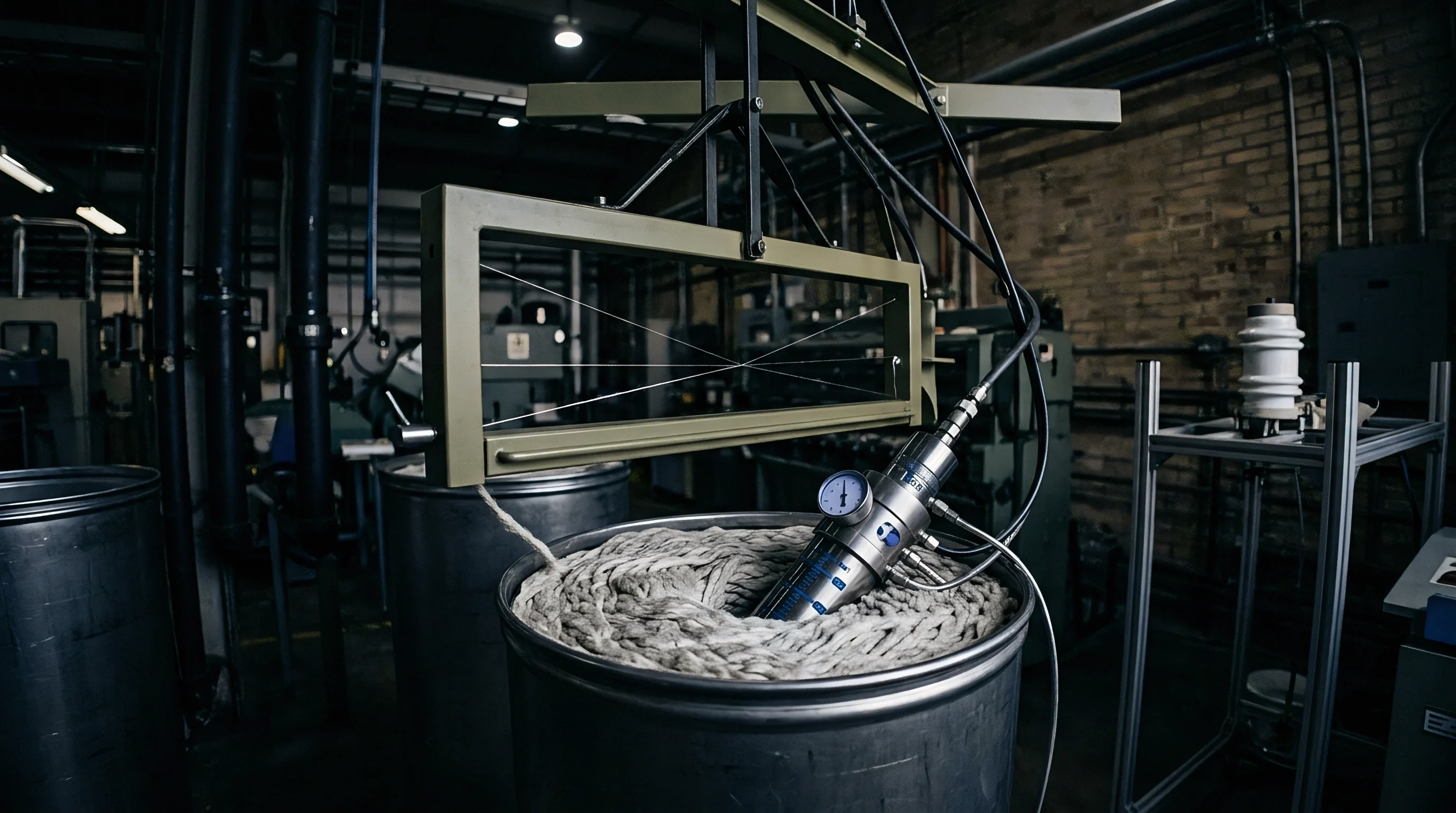
International cotton trade operations resolve weight disputes by applying structured arbitration rules defined by regional merchant associations. When landing weights diverge from invoice declarations beyond established tolerance thresholds, standard terms mandate joint testing supervised by sworn marine surveyors. Disinterested inspectors extract core specimens from deep interior strata using hydraulic lances, placing the fiber into hermetically sealed jars for direct laboratory analysis.
These steps eliminate superficial container sweat from the settlement arithmetic.

Contract Rules for Moisture Claims
Standard purchase contracts establish clear tolerances for transit mass variance. Discrepancies below one half of one percent generally settle without penalty, absorbing normal atmospheric fluctuation during handling. Variations exceeding this boundary require immediate invocation of formal adjustment clauses.
Marine insurance policies exclude atmospheric moisture absorption from cargo damage coverage, categorizing vapor uptake as an inherent vice of natural hygroscopic fibres unless seawater ingress is chemically verified through silver nitrate chloride testing.
Container sweat damages exterior lint. Steel bands maintain internal compression. Disinterested surveyors isolate water-stained packaging from clean bales to prevent local mold spores from contaminating sound lint during warehouse staging.
Spinning mills preserve their commercial margins by enforcing deep core testing before releasing funds on letters of credit.
Quay weighing records gross mass fluctuations that chemical laboratory testing assigns entirely to water migration.
Inserting the International Cotton Association moisture clause makes destination oven-dry testing legally decisive and suppresses disputed quay weight gains.