Dynamic Hygrothermal Creep and Atmospheric Moisture Equilibrium during Extended Marine Container Transit
Dynamic marine container heat cycles drive cyclic moisture sorption and permanent hygrothermal creep in wound textiles, requiring foil barriers and sized desiccants.
Box
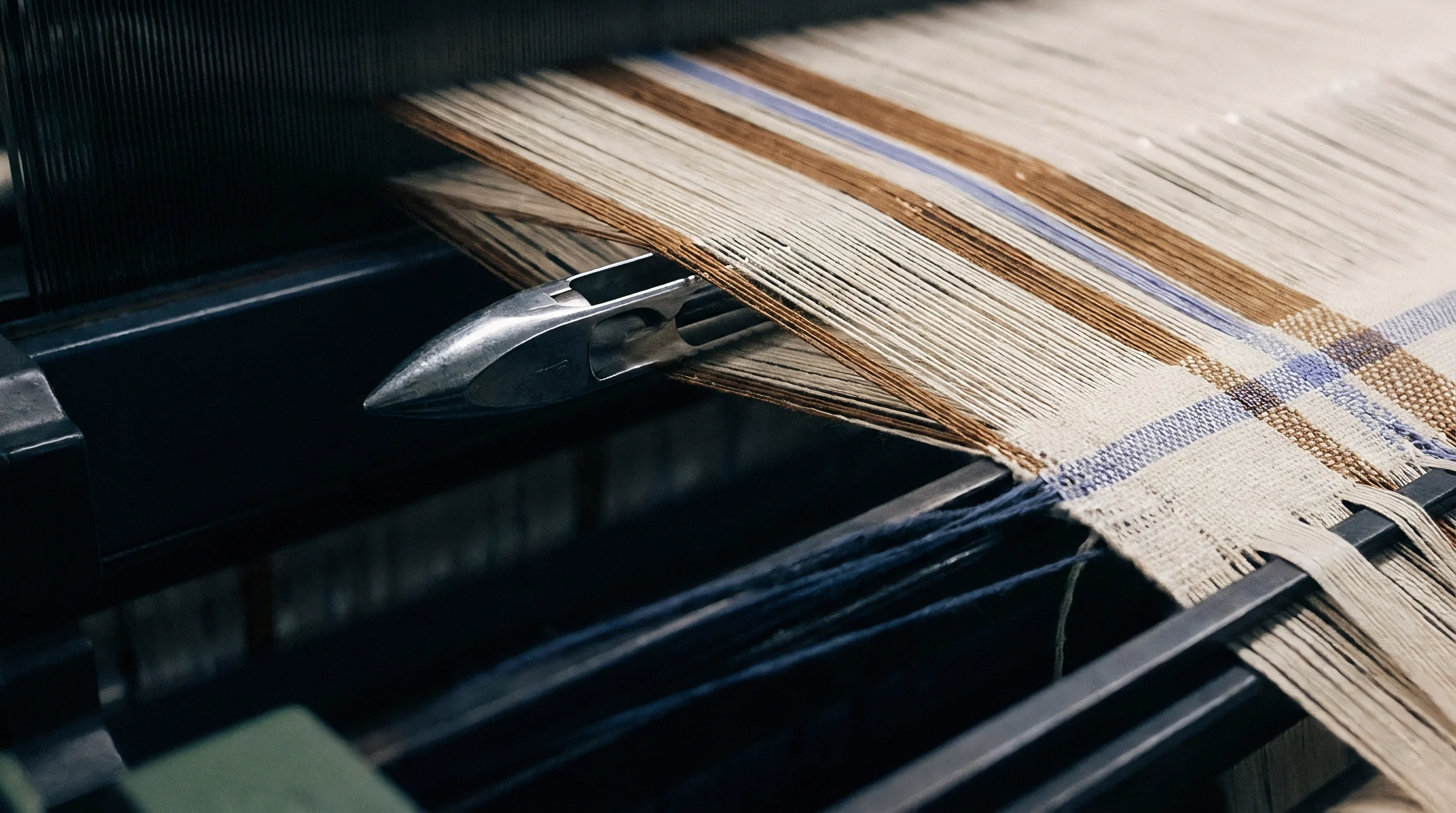
An inspector unrolls a five-hundred-metre batch of 240-gram cotton twill onto an illuminated inspection table, checking the pick counter against the mill delivery ticket. The greige invoice specified 28 picks per centimetre at standard laboratory conditions. The glass reads 29.5 picks per centimetre near the roll core, while the width has dropped from 150 centimetres down to 146.8 centimetres.
Forty-two days in an unventilated steel container moving from Shenzhen through the Suez Canal to Rotterdam transformed the physical geometry of the material without water ever touching the outer carton. Steel shipping containers function as crude psychrometric retorts under ocean passage.
Solar radiation strikes the uninsulated corrugated corten steel roof of a standard container during daylight hours, pushing interior surface temperatures past 65 degrees Celsius in equatorial waters. Air directly below the ceiling heats rapidly, expanding its moisture capacity and stripping bound water from the exposed outer carton packaging and upper pallets. At nightfall, radiative loss to the clear maritime sky cools the container ceiling down to 15 degrees Celsius in less than four hours.
Steel conducts heat rapidly. The saturated headspace reaches dew point, driving condensation cycles that soak top-tier cartons and create aggressive local humidity drives downward into the stow.
Direct ceiling skin temperature reaches 68 degrees Celsius at solar zenith in equatorial waters, driving local relative humidity down to 18 percent before nocturnal cooling triggers condensation on uninsulated steel panels.

Diurnal Thermal Cycling across Ocean Corridors
Ambient conditions across equatorial maritime lanes oscillate predictably yet violently. Sunlight warms the deck cargo, generating a vertical temperature differential of 35 degrees Celsius between the top container corner casting and the shaded floor deck. Warm air carries elevated levels of gaseous moisture evaporated from timber floorboards and corrugated carton packaging.
As the vessel sails through northern latitudes or encounters cold ocean currents, container sidewalls chill rapidly. The resulting thermal inversion initiates internal convective currents. Air circulates continuously across cargo surfaces, depositing moisture wherever local steel temperatures drop below the instantaneous dew point.
| Transit Zone | Ceiling Temp Range (C) | Floor Temp Range (C) | Headspace RH Range (%) | Dew Point Range (C) | Vapor Pressure (kPa) |
|---|---|---|---|---|---|
| South China Sea | 28 to 62 | 26 to 34 | 45 to 92 | 22 to 27 | 2.64 to 3.56 |
| Malacca Strait | 30 to 65 | 27 to 35 | 50 to 95 | 24 to 28 | 2.98 to 3.78 |
| Indian Ocean Central | 25 to 58 | 24 to 32 | 40 to 88 | 20 to 25 | 2.33 to 3.16 |
| Red Sea Northern | 22 to 68 | 21 to 30 | 30 to 78 | 16 to 22 | 1.81 to 2.64 |
| Mediterranean West | 14 to 46 | 13 to 22 | 48 to 90 | 11 to 18 | 1.31 to 2.06 |
| North Atlantic Approach | 6 to 32 | 5 to 16 | 55 to 96 | 4 to 12 | 0.81 to 1.40 |
Vapor Phase Gradients and Cargo Sweat
Direct liquid drip occurs when steel temperatures cross below the saturated headspace dew point. Condensation forms liquid beads along corrugated ceiling ribs, coalescing into droplets that fall onto upper cargo tiers. Cargo sweat follows a reverse thermal trajectory.
When cold-stowed textile cargo enters a warm, humid marine zone, humid ambient air entering passive container vents hits the cold rolls. Moisture condenses directly onto roll surfaces. The textile package itself acts as a cold sink, absorbing water into outer roll laps while inner cores remain dry.
Non-uniform hydration across the roll radius sets up steep physical tension variations throughout the wound package.
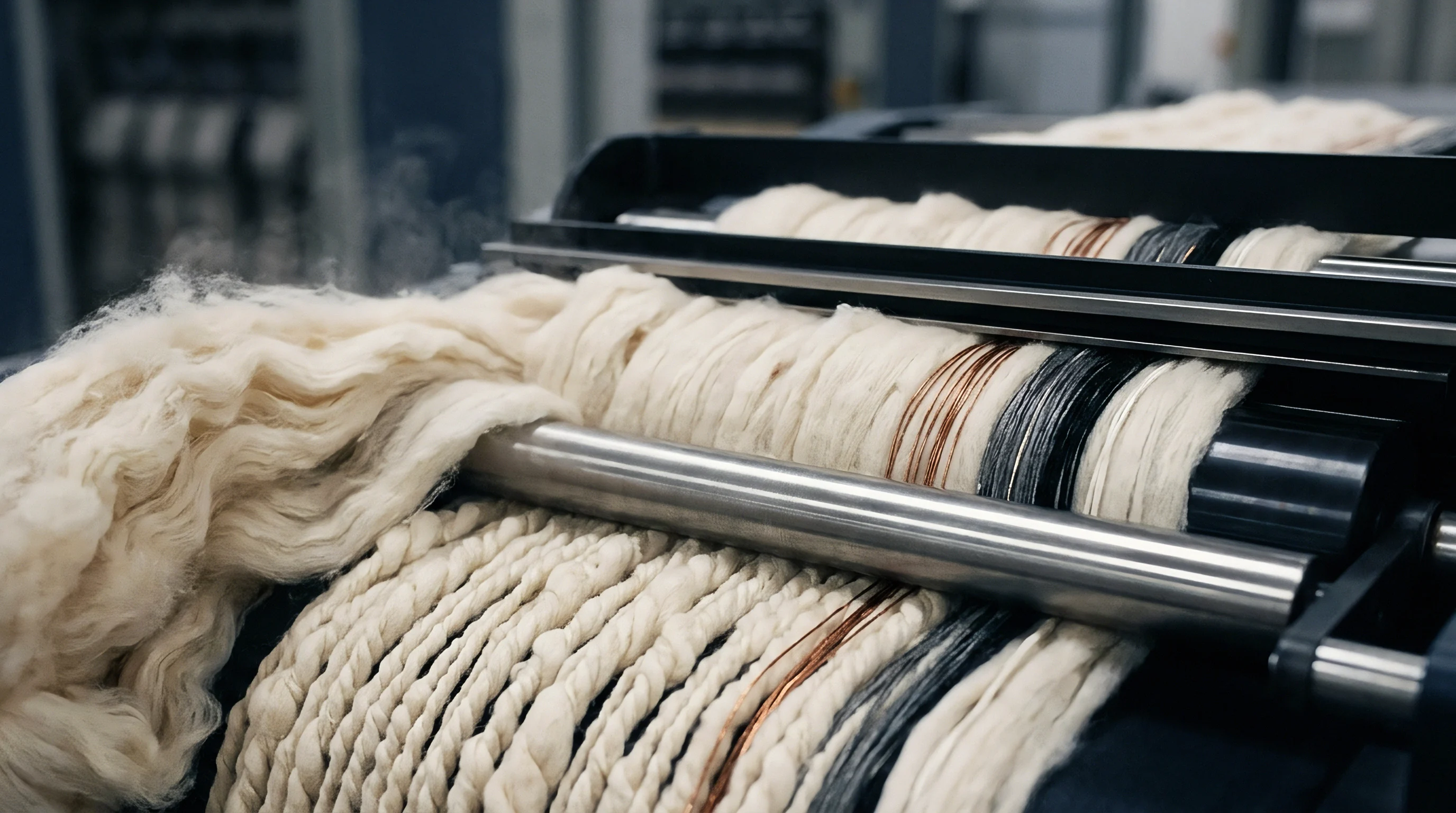
Woven rolls packed without hermetic moisture barriers continuously breathe these ambient fluctuations. Air enters through container relief vents and non-hermetic door gaskets under fluctuating barometric pressure. The internal hygroscopic payload, which often totals twelve metric tons of cotton, absorbs or desorbs moisture according to transient psychrometric gradients, altering roll geometry continuously over the voyage.
Sorption
Fibre polymers bind atmospheric water molecules through polar bonding mechanisms governed by ambient relative humidity. Natural cellulosic fibres contain accessible hydroxyl groups along non-crystalline amorphous chains. These hydroxyl sites pull gaseous water molecules out of the air, converting them into bound hydrate layers that generate exothermic heat of sorption.
Synthetic filaments such as polyethylene terephthalate contain few accessible polar groups, limiting equilibrium water pickup to small fractions of a percent. Polyamide 6 and 6,6 structures occupy an intermediate position, using recurring amide groups along aliphatic backbones to hold moderate moisture levels. The physical structure of yarn packages dictates how fast these water molecules migrate into dense yarn bundles.
Regenerated cellulose yarns absorb twice the water mass of standard upland cotton under identical maritime atmospheric vapor pressures.
Moisture Regain Isotherms in Polymer Assemblies
Equilibrium moisture content follows a sigmoidal relationship known as a sorption isotherm. Desorption paths sit higher than absorption paths across every relative humidity tier, creating a permanent hysteresis loop. When goods load at 65 percent relative humidity in a conditioning room and enter a marine container hovering at 85 percent relative humidity, the fibres traverse the absorption curve.
If the container ceiling subsequently heats to 60 degrees Celsius, local relative humidity plummets and fibres begin desorbing along the upper branch of the hysteresis loop. Fibres emerging from this loop retain higher moisture content than goods conditioned purely on the absorption branch.
ASTM D1909 rates standard commercial moisture regain of combed cotton yarn at 8.5 percent under standard conditions of 21 degrees Celsius and 65 percent relative humidity. Marine transits crossing the Arabian Sea routinely expose stowage to 85 percent relative humidity at 32 degrees Celsius, elevating cotton regain to 12.2 percent. This shift rests on continuous sorption testing across open-end and ring-spun cotton yarns in controlled psychrometric chambers.
Higher relative humidity opens secondary sorption sites within amorphous cellulose regions when ambient vapor pressure exceeds 2.5 kilopascals, swelling individual fibre diameters up to 14 percent while fibre length remains virtually unchanged.
- Cellulosic Hydroxyl Saturation drives lateral fibril swelling, expanding fibre diameter while contracting longitudinal yarn crimp paths.
- Regenerated Viscose Hysteresis traps substantial hydrate layers within disorganized amorphous regions, reducing wet modulus and promoting plastic yield under light winding tension.
- Polyamide Hydrogen Plasticization breaks inter-chain amide bonds under elevated humidity, lowering polymer glass transition temperatures toward ambient container levels.
- Polyester Inertia maintains dimensional rigidity by excluding water molecules from tightly packed crystalline lattices, concentrating physical strain entirely on synthetic core elastane components.
Equilibrium States across Hydrophilic and Synthetic Blends
Blended yarns create composite mechanical responses during extended ocean storage. In a 60 percent combed cotton and 40 percent polyester intimate blend, the cellulosic component absorbs almost all arriving moisture vapor. The cotton fibres swell diametrically within the yarn matrix, wedging against adjacent polyester filaments.
This internal pressure locks the yarn structure, elevating yarn-on-yarn friction and preventing internal filament migration. If the yarn carries residual spinning torque, elevated moisture acts as a lubricant, enabling sudden stress relaxation that skews woven structures off-square.
Whether natural yarn crimp memory can completely re-establish its original structural geometry after multiple maritime hydration-dehydration cycles without pressurized mechanical finishing remains an open technological question.


Strain
Wound textile packages enter shipping containers under residual mechanical tension imparted by inspection frames and automated batch winders. A standard mill winder applies between 15 and 35 centinewtons per tex of winding tension to ensure stable roll formation and prevent telescoping during handling. Once loaded inside the container, this static mechanical tension interacts directly with cyclic atmospheric moisture.
Water molecules penetrating amorphous polymer domains act as plasticizers, interrupting intermolecular hydrogen bonds between adjacent polymer chains. Under sustained winding tension, these lubricated polymer chains slip permanently past one another, generating irreversible mechanical elongation termed hygrothermal creep.
Stored winding stresses decay over weeks. The rate of relaxation escalates whenever ambient humidity and temperature spike simultaneously. In analogous industrial fields, such as timber seasoning and marine composite mooring cables, cyclic hygrothermal conditions accelerate stress redistribution through viscoelastic matrices.
Inside a rolled textile package, this mechanism produces uneven longitudinal stretching from outer laps down to the core.
Container shipments exceeding thirty days at relative humidity above eighty percent produce up to 2.4 percent permanent warp elongation under standard winding tensions.
Will Marine Hygrothermal Fluctuations Induce Creep?
Viscoelastic materials exhibit time-dependent deformation under continuous load. When relative humidity fluctuates inside a shipping container, this deformation accelerates through mechanosorptive behavior. The rate of creep under cycling humidity exceeds the creep rate observed under constant high humidity.
Every time moisture enters or leaves the fibre, secondary bonds break and reform in altered spatial positions. Under external winding tension, newly reformed bonds lock in the extended physical state. The cloth permanently lengthens in the warp direction while picks per centimetre drop below initial specification.
| Construction | Initial Warp Tension (cN/tex) | Initial Regain (%) | Final Regain (%) | Permanent Warp Creep (%) | Pick Count Shift (picks/cm) | Skew Angle Shift (degrees) |
|---|---|---|---|---|---|---|
| Carded Cotton Sheeting 20×20 | 0.28 | 6.8 | 10.4 | +1.8 | -1.2 | +2.4 |
| Combed Cotton Twill 3/1 40×40 | 0.32 | 7.1 | 10.8 | +2.2 | -1.6 | +3.1 |
| Viscose Challis 30×30 | 0.18 | 9.5 | 14.8 | +3.6 | -2.4 | +4.2 |
| Polyester Interlock Knit 75D | 0.12 | 0.4 | 0.6 | +0.4 | -0.2 | +0.5 |
| Polyamide 6,6 Plain Weave 70D | 0.22 | 3.8 | 6.2 | +1.9 | -0.8 | +1.8 |
| Cotton/Poly 65/35 Poplin | 0.26 | 4.5 | 7.2 | +1.1 | -0.7 | +1.4 |
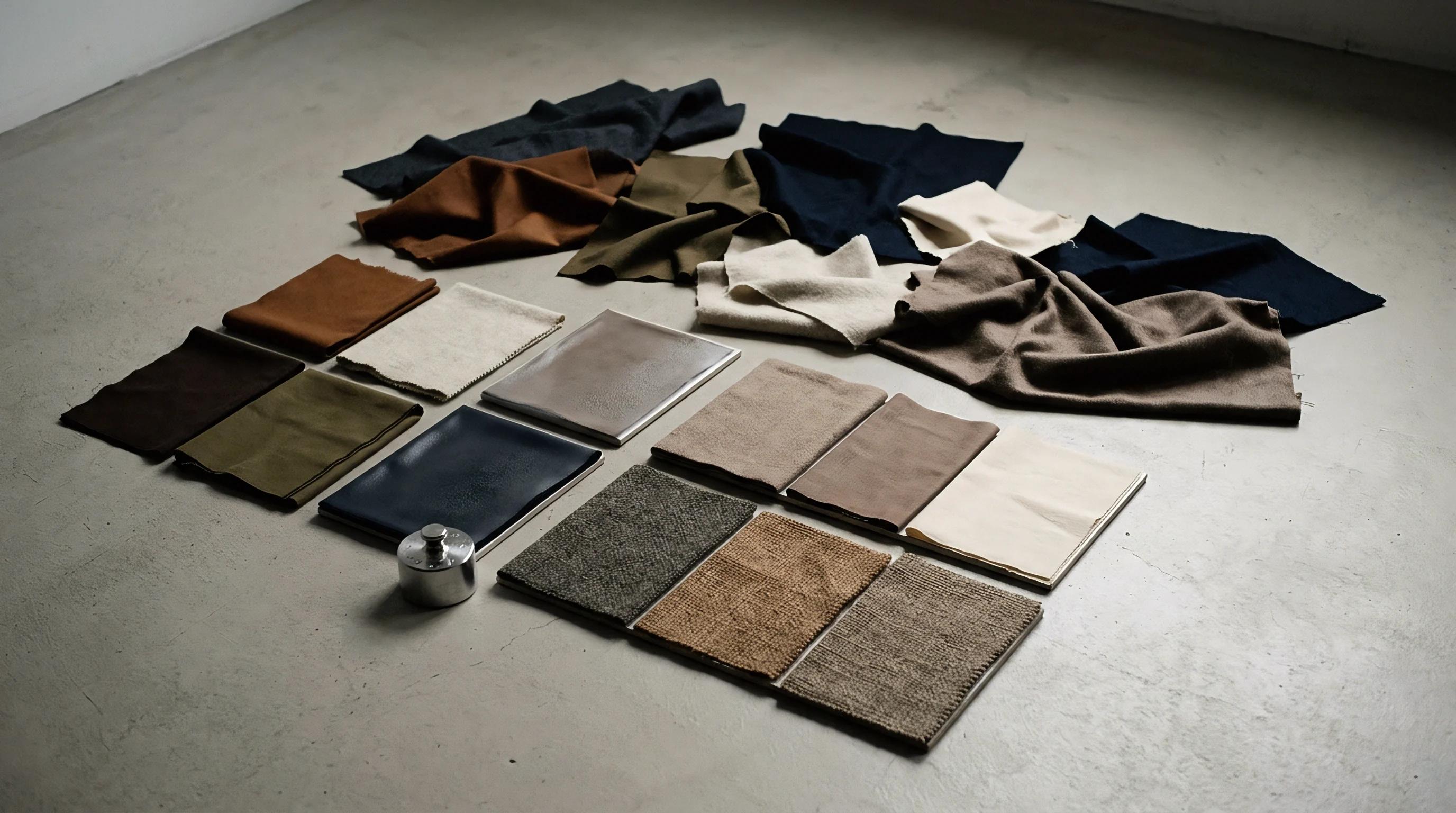
Calculated data shows carded cotton sheeting exhibiting 1.8 percent permanent elongation from winding tension relaxation under cyclic humidity during 35-day simulation runs. This figure derives from standard ISO 13934 tensile strip tests performed after 24-hour conditioning against matched unaged control rolls. Lowering initial winder tension below 0.15 centinewtons per tex reduces this extension down to 0.4 percent, confirming that mechanical storage tension provides the primary driving force for irreversible structural deformation during transit.
Internal Pressure Gradients across Wound Rolls
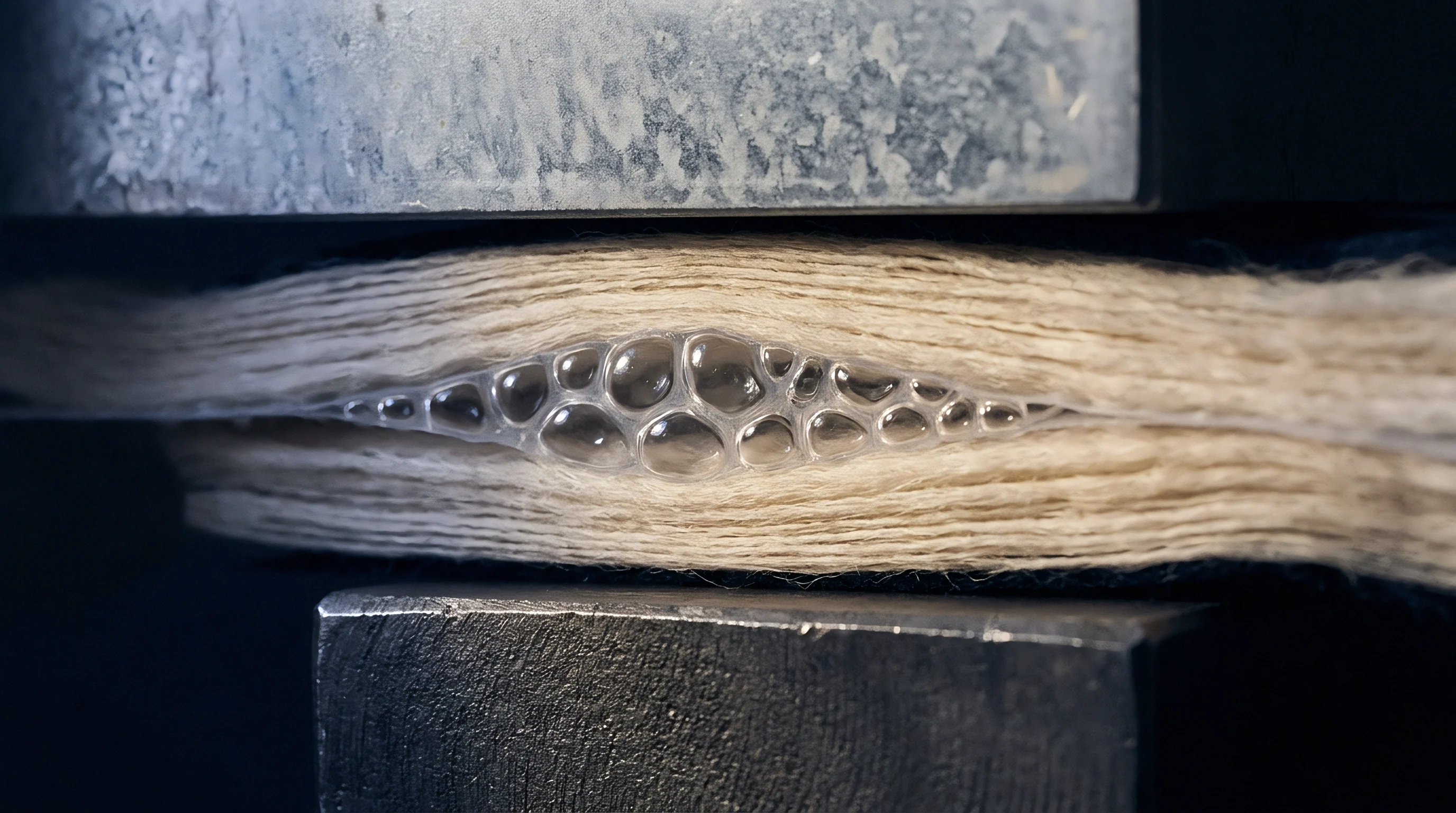
Pressure distributions inside wound cloth packages follow non-linear radial profiles. Outer laps bear minimal compressive force from overlying material, experiencing free radial swelling as atmospheric moisture enters. Inner layers near the cardboard core experience severe radial compression, often exceeding 120 kilopascals in densely packed 1,000-metre rolls.
This radial pressure restricts diametrical fibre swelling, forcing incoming moisture to alter yarn crimp geometry along the roll axis instead. Winding defects manifest through distinct structural failures:
- Core Crushing occurs when outer layers swell under elevated moisture, increasing total circumferential tension and collapsing rigid cardboard tubes.
- Barrel Distortion develops as roll centres absorb moisture slower than exposed roll ends, establishing differential radial pressures across the winding width.
- Edge Tightness Loss results from moisture evaporating rapidly from selvages during hot dry daylight phases, leaving outer edges slack relative to damp roll centers.
- Moisture Creasing locks deep, irreversible wrinkles into inner roll layers where high radial compression coincides with polymer plasticization temperatures.
Viscoelastic Relaxation and Latent Skewing
Yarn twisting imparts torque that finishing plants balance through chemical resins, steaming, or physical setting. Woven structures hold this latent energy in check through inter-yarn friction. When container humidity rises, moisture lubricates yarn contact junctions.
The yarn uncurls slightly, releasing latent torque into the surrounding weave. Symmetrical twills and plain weaves twist out of plane, creating off-square skewing across the finished roll. The warp and weft yarns no longer intersect at 90 degrees.
Garment cutting facilities spreading these rolls encounter severe pattern misalignment and twisting side seams.
A cutting room running pattern pieces from rolls subjected to unmonitored ocean hygrothermal creep faces extensive panel twisting, mismatched stripe alignment, and structural torque rejections exceeding four percent of total production volume.
Finish
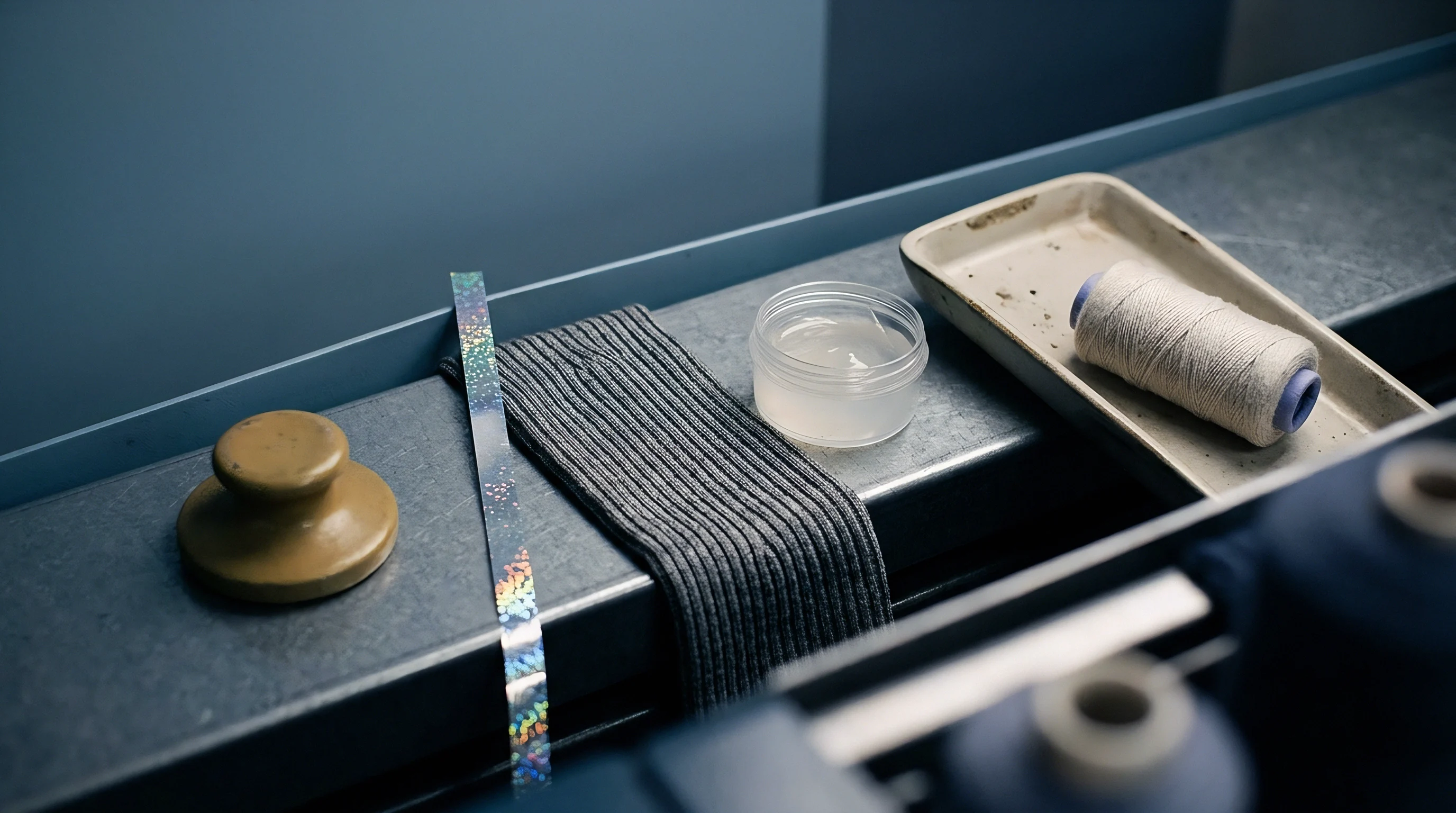
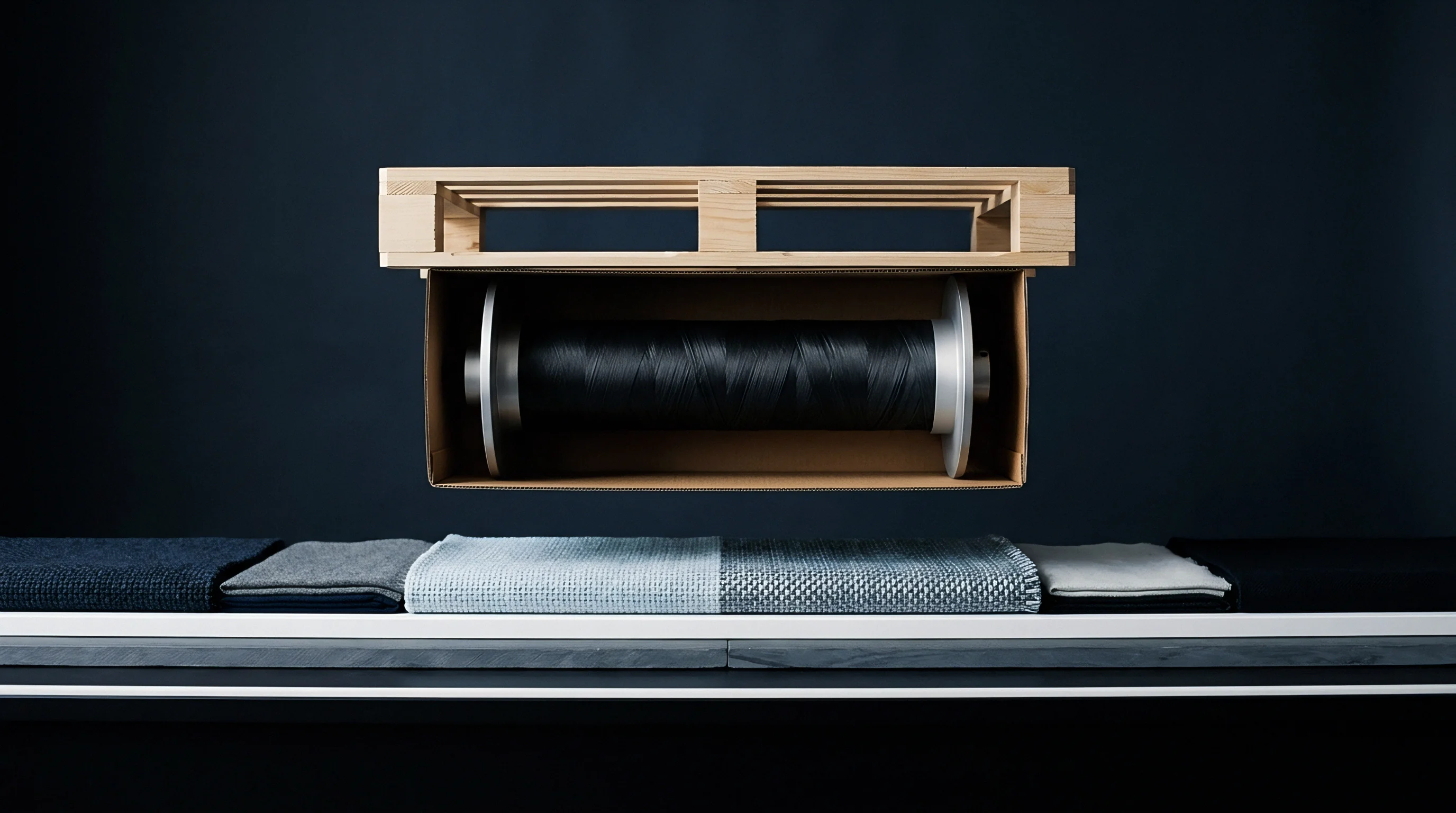
Chemical applications and heat-setting protocols deployed during final stenter frame operations establish how finished piece goods respond to marine container atmospheres. A mill running cotton-rich poplin sets width, overfeed, and drying profiles to achieve specific delivery specifications. If the stenter operator overdries the substrate to three percent residual moisture to accelerate machine throughput, the cloth enters packaging in an unnaturally starved state.
Once enclosed in a shipping container, this overdried material acts as an aggressive desiccant, sucking atmospheric water vapor through packaging seams and generating intense heat of sorption that accelerates physical relaxation.
Overfeed settings determine residual garment shrinkage. Running excessive overfeed on a pin stenter leaves yarn crimp packed loosely within the weave plane. When moisture lubricates the structure during ocean transit, the relaxed yarns contract longitudinally, causing unprovoked fabric shrinkage on the roll before domestic cutting.
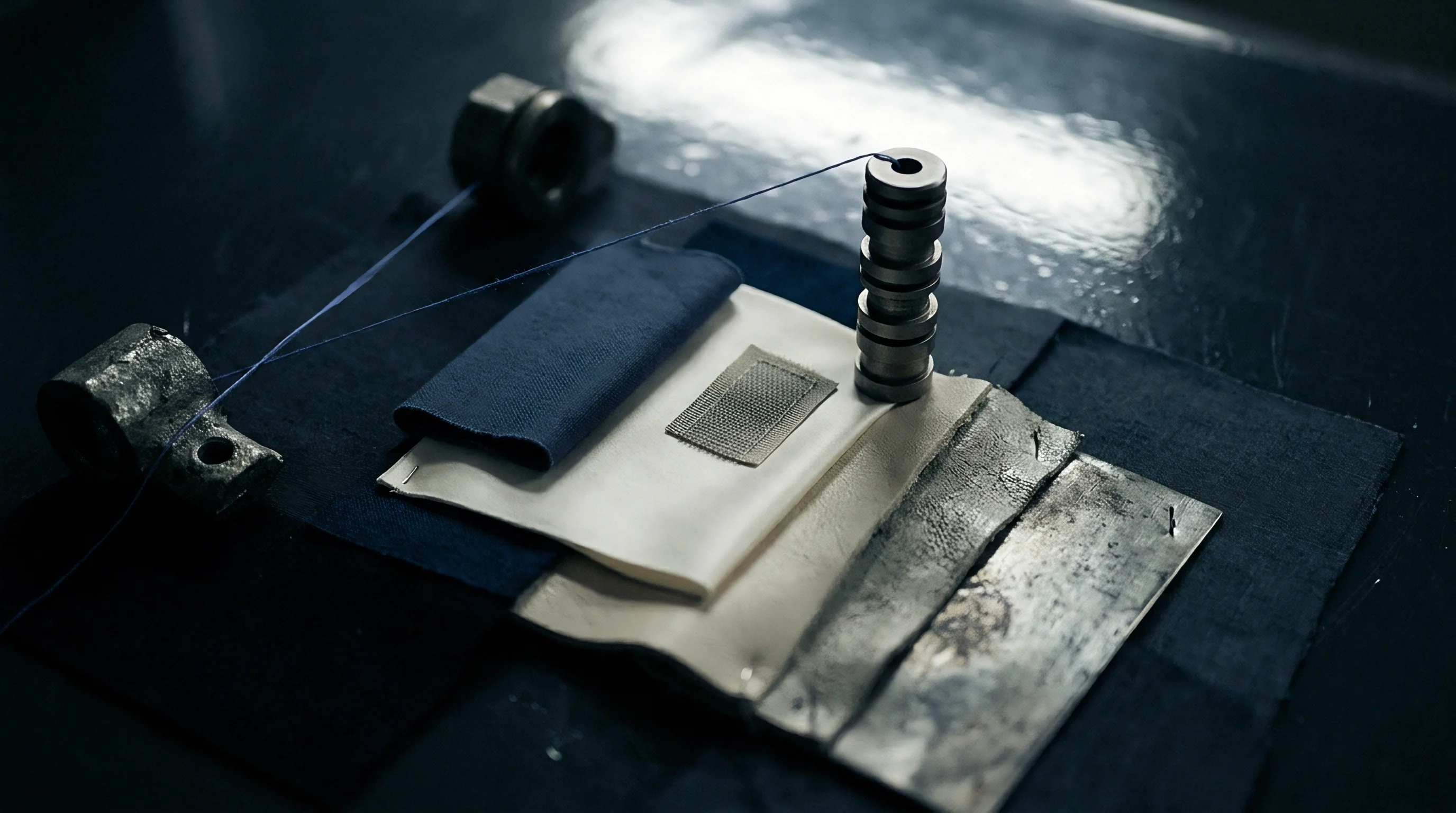
Chemical Topography and Moisture Interaction
Finishing chemistry controls the accessibility of fibre sorption sites. Durable press resins such as dimethyloldihydroxyethyleneurea crosslink cellulose chains within amorphous zones. By tying adjacent hydroxyl groups together with covalent ether bonds, these resins physically block water molecule penetration, reducing total moisture regain and stabilizing warp and weft dimensions.
Non-crosslinked starches and hydrophilic polyethylene softeners produce the opposite result. They attract airborne moisture, accelerating local water absorption and lowering the temperature threshold at which viscoelastic creep begins.
- Fluorochemical Repellents deposit low-surface-energy fluorocarbon tails along yarn surfaces, creating a physical barrier that retards liquid condensation while allowing moisture vapor to penetrate undisturbed.
- Durable Press Resins reduce amorphous cellulose swelling through chemical crosslinking, restricting transit-induced warp extension to less than 0.5 percent under standard winding loads.
- Hydrophilic Polyurethane Coatings absorb significant vapor fractions into their polymer backbones, plasticizing the synthetic layer and promoting blocking where roll faces press together under heat.
- Cationic Fatty Acid Softeners lubricate inter-yarn contact zones, lowering internal shear resistance and tripling the rate of latent torque release during ocean voyages.
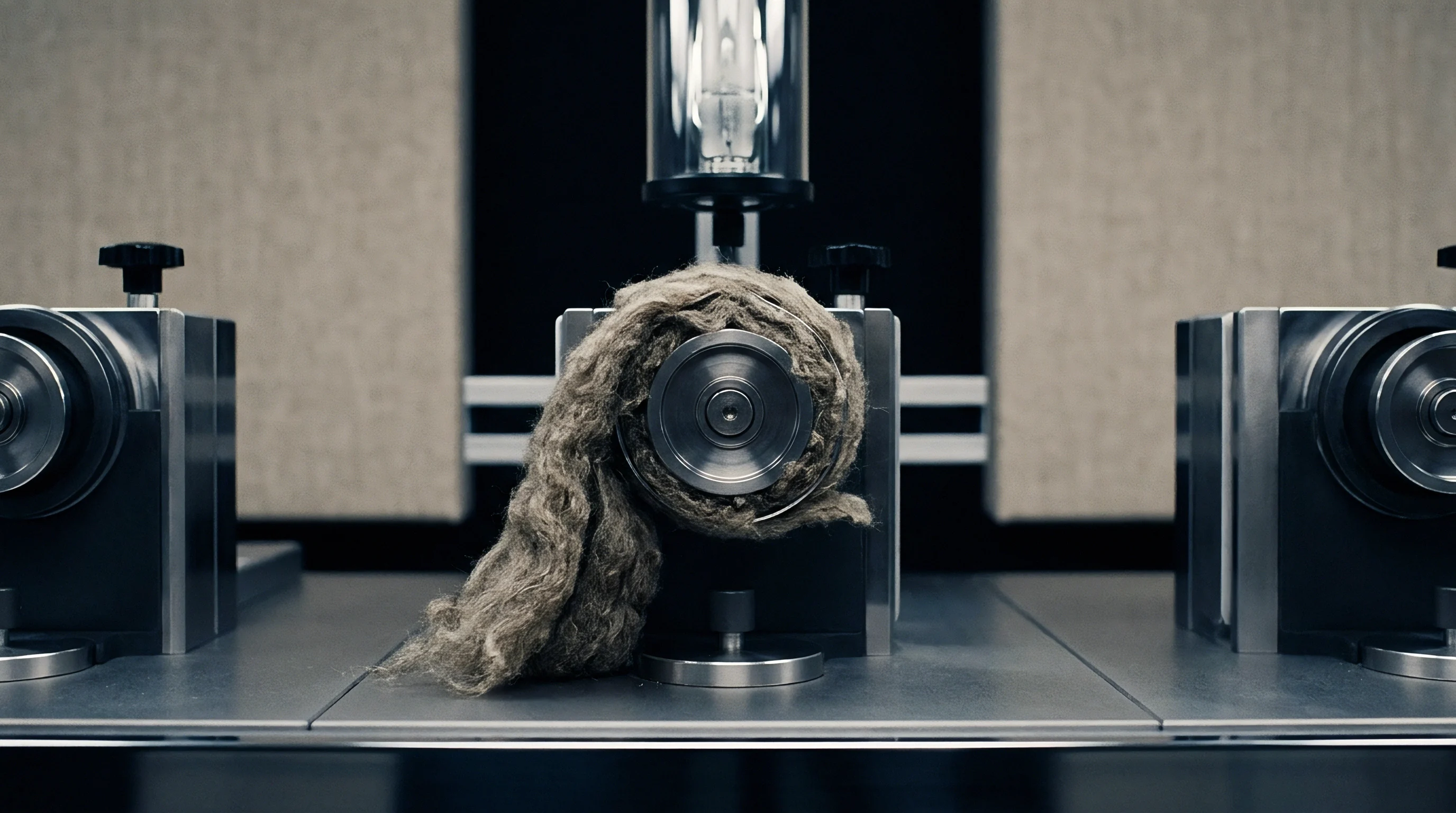
Thermal Stabilization Parameters on Stenter Frames
Synthetic yarns require rigorous heat-setting to resist transit distortion. Polyester and polyamide goods processed on stenters must reach their specific crystallization temperatures to lock polymer morphology against future thermal disruption. For polyester, holding core temperatures at 195 degrees Celsius for 30 seconds ensures stable crystalline alignment.
Running the stenter at 170 degrees Celsius to save gas leaves incomplete crystallites scattered along the filaments. When container roof temperatures hit 65 degrees Celsius during maritime voyages, these poorly organized synthetic domains undergo thermal relaxation, resulting in roll edge curling, narrow width yield, and permanent moiré pressure marks across embossed surfaces.
The dyehouse manager typically asserts that all finished lots matched target width and pick specifications upon exit from the stenter pins and that any subsequent dimensional distortion arose purely from shipping line negligence.
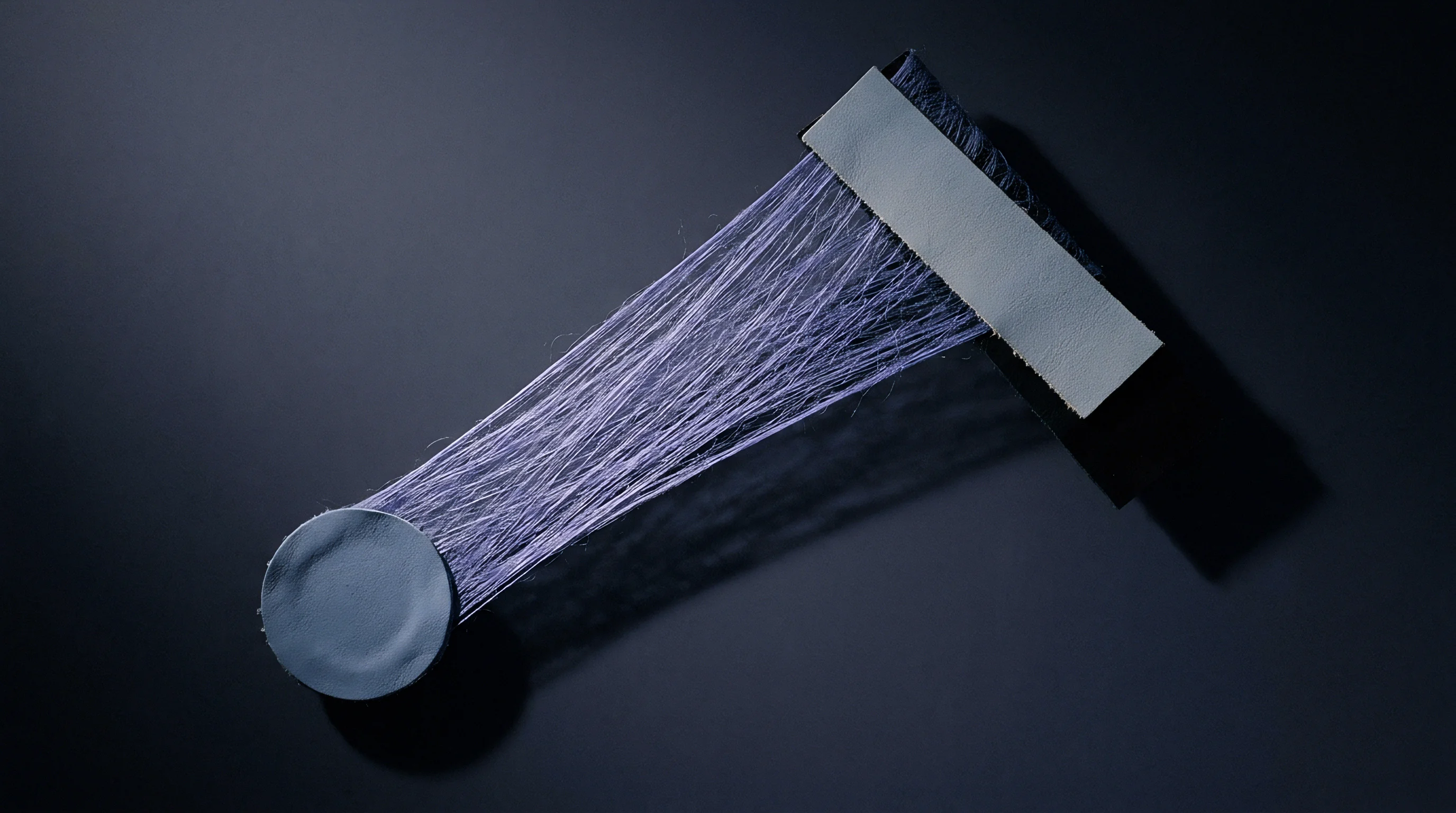
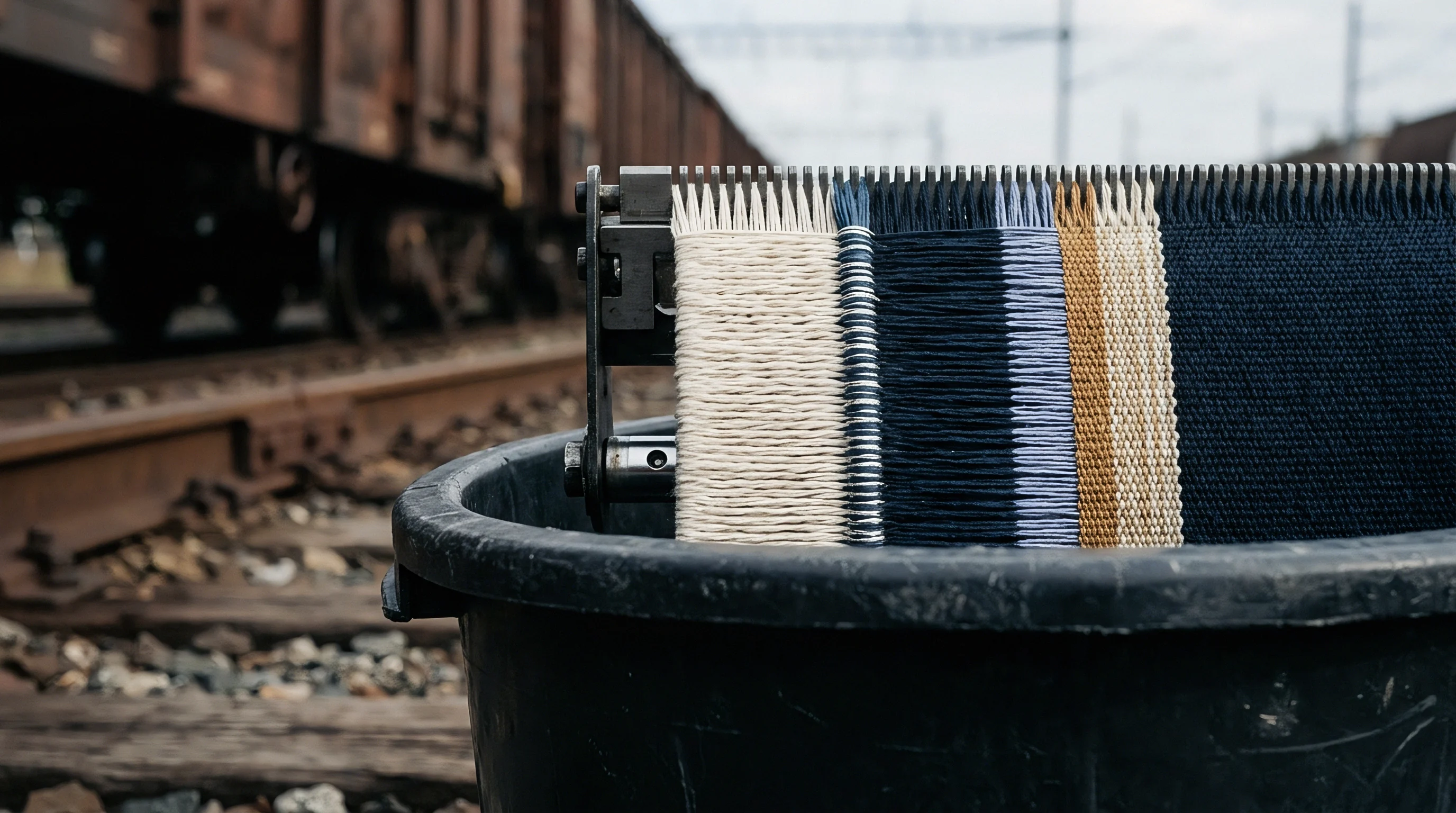
Desiccant
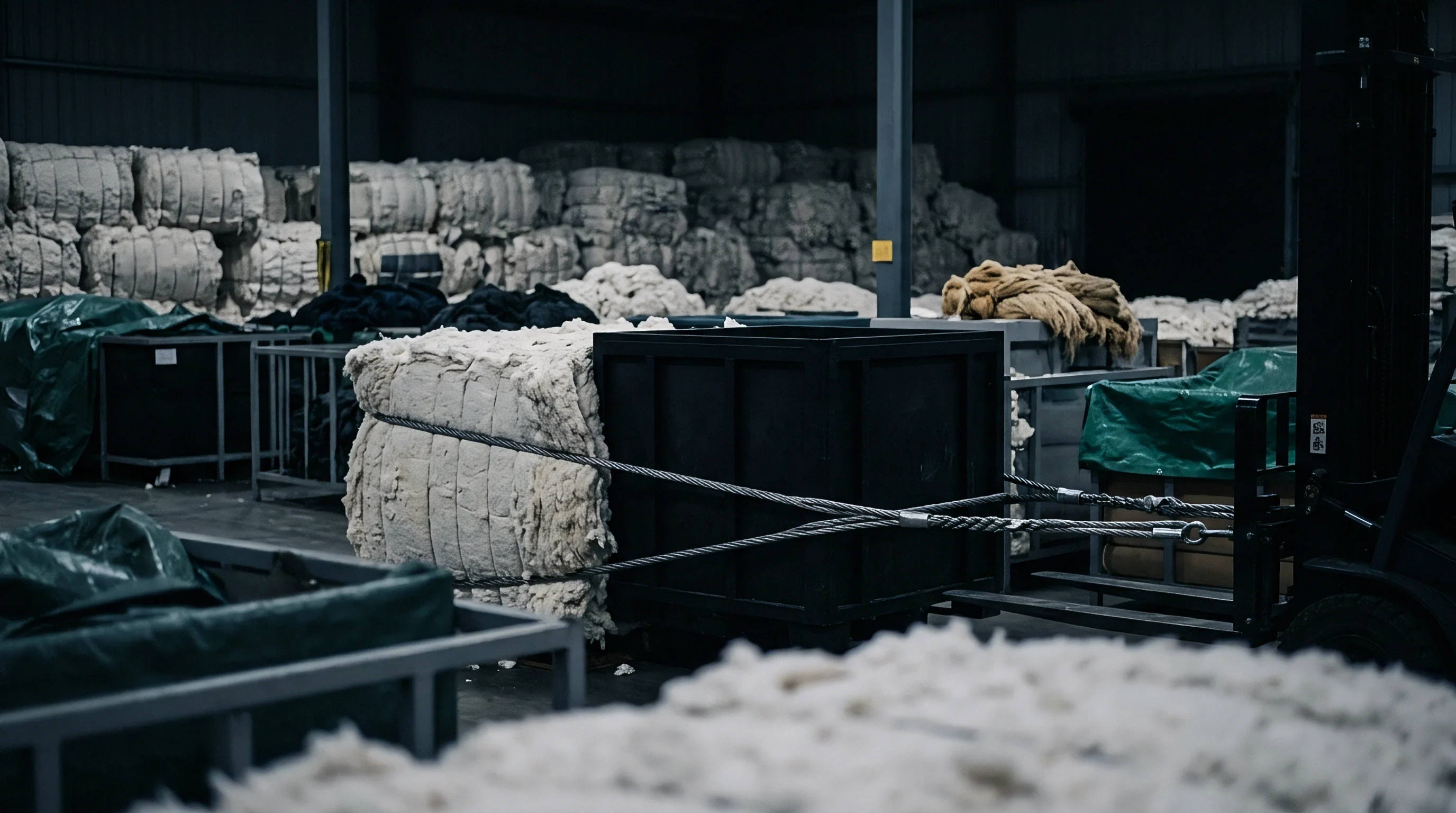
Protecting hygroscopic textiles during ocean container transit demands engineering calculations based on absolute water mass rather than arbitrary packet placement. A standard forty-foot container packed with twelve metric tons of cotton piece goods carries over one metric ton of bound water at eight percent commercial moisture regain. If container ceiling temperatures swing through 40 degrees Celsius daily cycles, hundreds of kilograms of water vapor circulate between the cloth, the packaging headspace, and the container envelope.
Calcium chloride absorbers convert gaseous water into an aqueous brine solution, holding up to 300 percent of their dry weight in moisture, whereas traditional bentonite clay and silica gel bags saturate after absorbing 25 to 30 percent of their dry mass.
Sealing roll goods in fifty-micron low-density polyethylene without active desiccant accelerates internal mold formation by trapping expelled moisture vapor within the roll package during daily solar cycles.
Absorption Mechanics and Sorbent Sizing Calculations
Desiccant sizing formulas rely on voyage duration, total packaging wood mass, textile weight, and container volume. Calculating sorbent requirements for a forty-foot ocean container carrying woven cotton rolls begins by determining total hygroscopic payload mass. A cargo loading of 10,000 kilograms of cotton cloth at 7.5 percent moisture content holds 750 kilograms of water.
Desorption under tropical transit conditions releases approximately two percent of this total water mass into the internal atmosphere, generating 15 kilograms of free vapor that requires chemical neutralization.
| Desiccant Chemistry | Absorption Capacity at 90% RH (wt %) | Physical State After Saturation | 40-Foot Container Units (Cotton Cargo) | 40-Foot Container Units (Synthetic Cargo) | Risk Profile |
|---|---|---|---|---|---|
| Calcium Chloride (CaCl2) + Starch | 250 to 320 | Immobilized Solid Gel | 12 to 16 poles (1 kg each) | 4 to 6 poles (1 kg each) | Pouch rupture leaks corrosive liquid |
| Bentonite Activated Clay | 22 to 28 | Free-Flowing Granular Solid | 120 to 160 bags (Unit 16) | 40 to 60 bags (Unit 16) | Low capacity demands massive volume |
| Silica Gel (Type A Beads) | 30 to 36 | Solid Vitreous Pellets | 90 to 120 bags (500 g) | 30 to 45 bags (500 g) | Desorbs rapidly if temperatures exceed 50 C |
| Molecular Sieve (Zeolite 4A) | 18 to 22 | Solid Crystalline Powder | 150 to 190 bags (500 g) | 50 to 70 bags (500 g) | Uneconomic for bulk commodity transit |
Industry practice relies on twelve to sixteen 1,000-gram calcium chloride poles distributed along container sidewall corrugations for a forty-foot load of natural piece goods. This specific unit count represents an empirical operating compromise that this desk cannot defend through closed-form physical thermodynamics alone. True moisture exchange surface areas within stacks of wrapped rolls remain impossible to quantify without continuous, destructive internal logging throughout multi-week oceanic transits.
Under this real-world technical uncertainty, specifying sixteen 1-kilogram calcium chloride suspension poles provides a necessary buffer against unexpected transshipment delays.

Barrier Packaging Permeance and Film Integrity
Roll packaging systems dictate how fast moisture transfers between the container headspace and wound piece goods. Standard transparent roll wraps utilize low-density polyethylene films ranging from 30 to 60 microns in thickness. These films display high water vapor transmission rates, allowing moisture to permeate the package within days.
Wrapping rolls tightly in perforated film encourages localized moisture collection beneath outer layers. High-value piece goods demand high-barrier aluminum foil laminate films heat-sealed under partial vacuum to prevent vapor migration entirely.
- Inspect container interior for floorboard moisture content exceeding eighteen percent using a calibrated pin-type resistance probe before loading cargo.
- Hang calcium chloride desiccant poles vertically inside wall corrugation recesses, securing suspension hooks directly to internal lash rings.
- Position pallets with ten centimetres of clearance from container sidewalls to preserve convective airflow channels and prevent direct contact with condensation.
- Heat-seal all roll packaging using co-extruded aluminum laminate foil displaying a water vapor transmission rate under 0.05 grams per square metre per day.
- Verify door gasket compression seals around the entire door frame perimeter using a light-transmission test before signing container seal documentation.
Thick impermeable foil wraps preserve initial mill moisture content only when the package contains zero unconditioned air at the moment of sealing.
Claim
Receiving docks facing off-spec width, crushed roll cores, or distorted pick counts must separate container transit damage from genuine mill production defects before raising formal commercial claims. When a container arrives at a destination warehouse, receiving personnel must pull representative sample rolls from the door tier, middle tier, and front wall bulkhead. These rolls must move immediately into an environmentally controlled conditioning room operating at 20 degrees Celsius plus or minus two degrees and 65 percent relative humidity plus or minus four percent, strictly adhering to ISO 139 and ASTM D1776 conditioning standards.
Testing unconditioned rolls straight from a hot container yields false rejections. A roll pulled from a 45-degree container environment with an elevated moisture content of eleven percent will demonstrate depressed tensile strength, inflated pick counts, and distorted width measurements. The physical substrate requires a minimum of 24 hours of relaxed, flat conditioning on open slatted racks before any physical verification measurement holds legal validity against mill sales contracts.
Laboratory Conditioning and Dimensional Change Testing
Standardized measurement protocols establish whether dimensional distortions represent reversible hygrothermal strain or permanent mechanical creep. Technicians cut square bench marks of 500 millimetres by 500 millimetres on conditioned swatches, measuring initial gauge lengths with a steel rule accurate to 0.5 millimetres. The samples then undergo commercial domestic laundering cycles following ISO 6330 or warm-soak relaxation testing.
If dimensional changes recover completely after relaxation, the transit deformation consisted of temporary elastic strain. If gauge lengths remain stretched in the warp direction and contracted across the weft, the rolls suffered irreversible mechanosorptive creep under excessive winding tension during container transit.
Commercial Fault Allocation and Tolerance Limits
Allocating financial liability requires cross-referencing container data logger histories with mill quality documentation. If the buyer ordered piece goods packed in basic low-density polyethylene wrap without desiccants to minimize packaging costs, shipping lines reject cargo sweat claims under the inherent vice exclusion of maritime carriage conventions. Conversely, if mill inspection dockets show final winding tensions exceeded 0.35 centinewtons per tex, the liability for off-square skewing and warp elongation shifts to the finishing plant.
Standard purchase contracts incorporating the International Chamber of Commerce Incoterms clear delivery rules state that risk passes upon container stuffing under FOB terms, leaving the unhedged buyer entirely responsible for transit-induced hygrothermal deformation unless clear packaging non-compliance can be proved against the vendor.