Reconciling Commercial Moisture Allowance Discrepancies during Customs Tariff Audits
Reconciling customs moisture discrepancies requires converting physical import weights to oven-dry mass and reapplying statutory regulatory regain schedules.

Disparity
Commercial Regain Mechanics and Customs Weighing
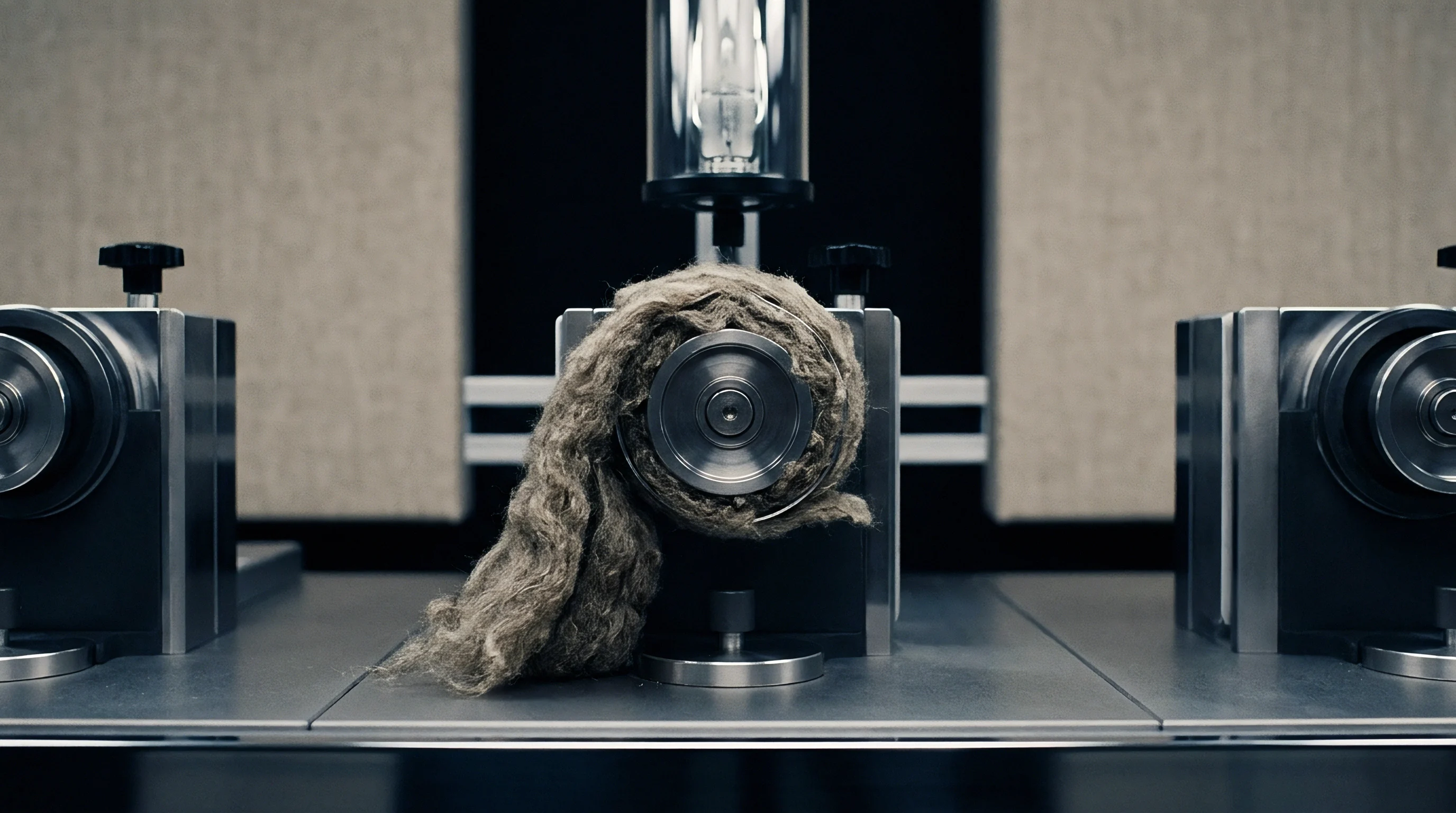
Invoiced consignment mass in cross-border yarn and textile trade relies on standard commercial moisture regain values. Sellers calculate commercial mass by drying an extraction sample to anhydrous state, stripping non-fibrous processing oils, and adding a standardized percentage allowance defined by international consensus. Customs authorities inspecting cargo at container freight stations take direct physical readings on mechanical or electronic weighbridges.
Ambient humidity inside a marine shipping container frequently reaches ninety percent during transoceanic transit. Hydrophilic fibers absorb atmospheric water vapor until reaching physical equilibrium with the container atmosphere. The scale at the maritime border measures gross physical weight, recording water molecules as dutiable textile substrate.
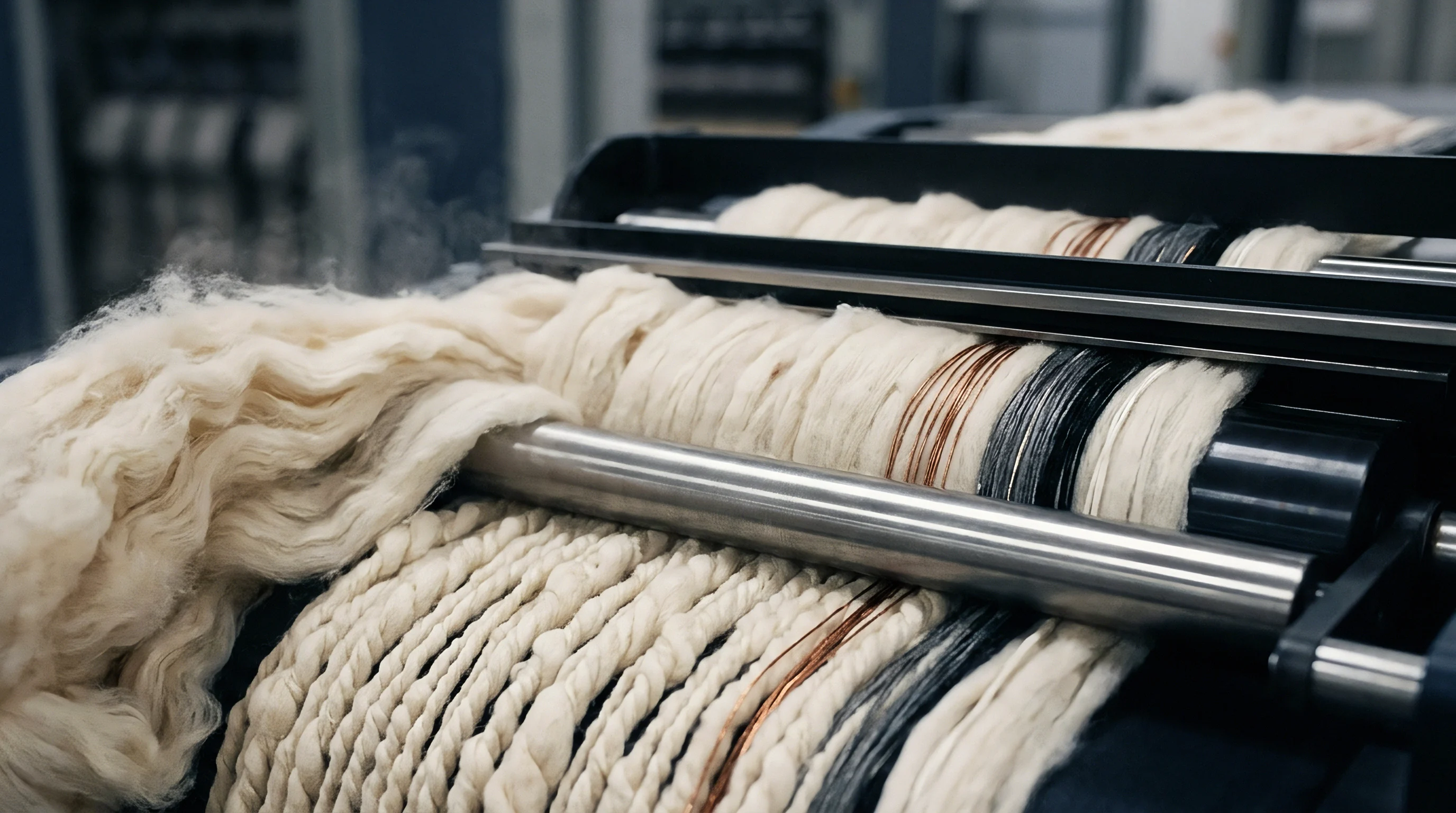
Regain shifts invoice mass. Tariffs applied on a specific rate per kilogram convert atmospheric water directly into customs assessments. When goods enter under ad valorem duty rates, moisture uptake increases total declared weight without changing invoice value, raising red flags within automated customs fraud targeting algorithms.
Discrepancies between packing list net mass and border inspection mass trigger formal audits under customs valuation and classification directives. Border officials view mass variances exceeding two percent as potential undeclared volume or false invoicing.
Customs laboratories assess tariff thresholds on absolute chemical mass stripped of atmospheric water.
Tariff classification disputes emerge when weight changes alter the relative predominance of fibers within a multi-component yarn or cloth. Customs tariff schedules classify composite goods according to the constituent fiber predominating by weight under Harmonized System Section XI Legal Note 2. An intimate mixture spun from equal proportions of combed wool and filament polyester illustrates the vulnerability.
Wool carries an official commercial moisture regain between thirteen point six and eighteen point two five percent depending on the processing stage and governing jurisdiction. Polyester holds an official commercial moisture allowance of zero point four to one point five percent. A customs officer weighing raw incoming yarn at ambient conditions observes a physical weight ratio skewed toward the hygroscopic animal fiber.
Tariff lines shift on moisture. If wool accounts for forty-nine percent of oven-dry mass and polyester accounts for fifty-one percent, the true anhydrous composition leaves the article under Chapter 54 or Chapter 55 as a synthetic textile. In a hot, humid port warehouse, wool absorbs eighteen percent moisture while polyester absorbs less than one half of one percent.
The physical mass of the wool component expands to fifty-seven point eight units while polyester remains near fifty-one point two units. Direct laboratory separation performed without moisture normalization classifies the lot under Chapter 51 as a wool-predominant textile. Wool wovens typically face substantially higher tariff rates than synthetic wovens in major importing jurisdictions.
Importers facing post-clearance audits receive notices of action asserting classification fraud or duty evasion based solely on raw analytical mass measurements. The customs audit team compares the commercial invoice, which lists standard commercial mass determined under trade trade association conventions, against border laboratory reports stating unadjusted conditioned weight. Customs officials issue demand notices assessing five years of retroactive duties, statutory interest, and civil misdeclaration penalties across historical entries.

Oven
Thermal Desorption and Anhydrous Mass Determination
Laboratory determination of true commercial mass requires forced-air thermal desorption to isolate anhydrous fiber substance. ISO 6741 and ASTM D1576 mandate heating specimen skeins or slivers in a ventilated drying chamber maintained at one hundred and five degrees Celsius, plus or minus two degrees. The chamber circulates dry air through the specimen basket until successive weighings taken at fifteen-minute intervals show an alteration under zero point zero five percent of total specimen mass.
The resulting stable figure represents dry mass freed from all physical moisture.
Dry weights eliminate ambient skew. Industrial fibers contain volatile spin finishes, sizing agents, waxes, and knitting lubricants that evaporate alongside water during thermal processing. ISO 6741 Part 1 demands pre-treatment washing with petroleum ether or enzymatic desizing to extract non-fibrous additions prior to final anhydrous weighing.
If an analytical chemist omits the extraction step, finishing waxes volatilize during oven drying and record as evaporated moisture, artificially inflating the apparent moisture regain of the lot.
Failure to stipulate dry mass determination under ISO 6741 in the purchase contract shifts ambient humidity risk entirely to the importer during customs inspections.
Natural protein fibers demand tighter thermal control during laboratory verification. Wool keratins undergo thermal scission and sulfur volatile loss when exposed to temperatures exceeding one hundred and ten degrees Celsius for sustained intervals. ASTM D2495 isolates moisture in raw cotton by heating lint samples at one hundred and five degrees Celsius for two hours, maintaining rapid air turnover to prevent caramelization of natural pectin sugars.
Burning sugars generates mass loss unrelated to water evaporation, introducing systemic error into the anhydrous calculation baseline.
The sequence of operations required to establish certified commercial mass follows rigid analytical criteria:
- Specimen Selection drawn immediately upon container unsealing across multiple production cartons isolates core bobbins protected from outer atmospheric exposure.
- Aerosol Extraction using neutral organic solvents strips paraffin oils, mineral lubricants, and warp sizes without degrading core polymer chains.
- Convective Drying inside an electric conditioning apparatus at one hundred and five degrees Celsius continues until mass equilibrium reaches mathematical cessation.
- Anhydrous Weighing completed within an airtight balance enclosure prevents dry hygroscopic fibers from scavenging atmospheric water during the mechanical recording phase.
- Regain Application adds the legally designated percentage allowance to the dry extracted mass to derive true billing weight.
Customs laboratory chemists frequently deviate from full commercial conditioning cycles due to sample processing backlogs. A border laboratory might condition samples at room temperature inside an environmental chamber held at twenty degrees Celsius and sixty-five percent relative humidity per ISO 139, weighing the sample once equilibrium appears reached. Ambient conditioning never matches the precision of oven desorption.
Hysteresis loops prevent fibers from reaching identical moisture content during re-wetting compared to drying down from a saturated state.
Desorption curves exhibit hysteresis. When cotton absorbs moisture from bone-dry conditions to standard atmosphere, it reaches approximately seven percent moisture content. When cotton desorbs water from a saturated state down to the same standard atmosphere, it retains eight point five percent moisture.
An auditor relying on ambient conditioning rather than oven-dry desorption incorporates the entire width of the sorption hysteresis loop into the customs calculation.
| Fiber Type | Commercial Regain ISO 6741 (%) | Commercial Regain ASTM D1909 (%) | Customs Allowance 19 CFR 151.61 (%) | Equilibrium Regain at 65% RH (%) |
|---|---|---|---|---|
| Combed Cotton Yarn | 8.50 | 7.50 | 8.50 | 7.00 to 8.20 |
| Wool Combed Sliver | 18.25 | 15.00 | 13.60 | 15.50 to 17.50 |
| Viscose Rayon Staple | 13.00 | 11.00 | 11.00 | 12.00 to 14.00 |
| Polyester Filament | 1.50 | 0.40 | 1.50 | 0.30 to 0.50 |
| Polyamide 6,6 Filament | 5.75 | 4.50 | 4.50 | 4.00 to 4.50 |
| Flax Clean Fiber | 12.00 | 12.00 | 12.00 | 9.00 to 11.50 |
Oven methods govern truth while atmospheric conditioning records weather.

Standard

Why Do Regulatory Regain Schedules Depart from Trade?
Statutory customs provisions create friction because governmental moisture schedules do not mirror commercial trade contracts. The International Bureau for the Standardisation of Man-Made Fibres, known as BISFA, publishes rules specifying commercial regain values universally adopted in yarn purchase contracts. The International Wool Textile Organisation, known as IWTO, issues Blue Certificates defining greasy wool scoured yield and clean wool commercial weight.
In contrast, customs tariff regulations establish legal schedules within domestic statutes that remain frozen across decades.
Regulatory authorities defend rigid schedules as administrative imperatives. If customs brokers could substitute arbitrary commercial allowances during entry summary filing, tariff revenue calculations would fluctuate with every private sales contract. The United States Customs and Border Protection operates under Title 19 of the Code of Federal Regulations, where Section 151.61 fixes wool moisture content allowances strictly at thirteen point six percent for clean wool content.
A mill purchasing Australian merino tops under an IWTO contract pays for goods on an eighteen point two five percent regain allowance. When that shipment arrives at a United States marine terminal, customs calculates clean yield using the statutory thirteen point six percent limit, immediately generating an apparent four point six five percent weight discrepancy.
Wool combed tops conditioned under ISO 139 at twenty degrees Celsius and sixty-five percent relative humidity carry a commercial regain allowance of 18.25 percent on oven-dry mass.
Wool absorbs eighteen percent vapor. That discrepancy translates into an administrative assertion of over-invoicing or manifest discrepancy. Customs agents identify that the declared commercial invoice mass exceeds the customs clean content mass calculated under domestic law.
They suspect the importer of manipulating transfer pricing to shift cash reserves abroad. Alternatively, when specific duties apply per kilogram, customs applies the lower statutory regain allowance, recalculates net mass, and demands penalties for misstating net dutiable weight.
European Union customs authorities operate under the Union Customs Code, applying Annex 22-03 of Commission Delegated Regulation 2015/2446. The European schedule details mandatory official tolerances and moisture allowances for textile products subjected to customs quantitative analysis. The Union schedule assigns cotton a commercial allowance of eight point five percent for yarn and eight point zero percent for woven piece goods.
ASTM D1909, widely utilized throughout North and South American spinning mills, assigns natural cotton yarn an official regain of seven point five percent. A yarn parcel spun in North Carolina and exported to an Italian weaver enters Europe with documentation based on seven point five percent regain. Italian customs testing the parcel under EU methods applies eight point five percent, concluding the importer underdeclared physical mass by one full percent.
Importers must navigate a formal sequence of verification steps when customs authorities raise moisture-based inquiries:
- Documentary Interrogation compares purchase orders, bills of lading, and mill test certificates to expose discrepancies between contract regain and statutory schedules.
- Specimen Extraction under customs custody isolates reference packages before clearing port control, ensuring preserved chains of custody.
- Laboratory Arbitration using accredited private laboratories determines oven-dry clean content through quantitative chemical separation according to ISO 1833.
- Mathematical Conversion recalculates the contested entry mass by applying statutory regulatory regain factors to the verified anhydrous lab results.
- Administrative Petitions filed with the national customs valuation office request dismissal of rate advances and civil monetary penalties.
International standard ISO 1833 governs the quantitative chemical analysis of fiber mixtures. The standard instructs analytical laboratories to remove non-cellulosic impurities, dissolve one fiber component with an appropriate reagent, and calculate the proportion of each constituent on an oven-dry mass basis. The standard provides specific correction factors, designated as d-factors, to account for small amounts of fiber degradation during chemical digestion.
The test protocol then applies nominal moisture regain values to the dry mass percentages to calculate the commercial composition.
A contract clause governing international fiber procurement reads: Net billed weight shall equal anhydrous mass determined in accordance with ISO 6741-1 following solvent extraction, plus the commercial moisture allowance specified by BISFA guidelines for each constituent fiber; any customs tariff adjustments arising from statutory regain variations shall be reconciled against this certified bone-dry laboratory baseline.

Scale
What Discrepancy Margin Triggers Mandatory Secondary Testing?
Gross physical weighing errors initiate the majority of customs value audits. Border checkpoints rely on axle scales, dynamic motion scales, or static container hoists. These heavy industrial measuring systems operate with gross weighing tolerances ranging between plus or minus fifty and two hundred kilograms.
A twenty-foot shipping container carrying eighteen thousand kilograms of combed yarn can register two hundred kilograms of error from the mechanical hoist alone. If high ambient humidity adds three hundred kilograms of water vapor during thirty days at sea, customs unloads a container weighing five hundred kilograms over manifest weight.
Desorption curves exhibit hysteresis. Customs directives instruct audit personnel to flag any import entry where the border scale reading diverges from declared net weight by more than two point five percent. When that threshold breaks, customs holds the shipment for comprehensive physical inspection.
Officers unbundle cartons, open plastic moisture-barrier liners, and expose hygroscopic yarn packages directly to coastal fog or high heat. This invasive handling destroys the environmental equilibrium established in the spinning mill packhouse.
Core boring draws representative samples. For greasy and scoured wool imports, sampling relies on pneumatic core boring tubes described in ASTM D1060 and IWTO-19. Workers drive steel tubes deep into compressed bales to extract core plugs along randomized vectors.
The core tubes generate friction heat during penetration, driving off moisture from the core plug before laboratory weighing. An inept sampling technician who leaves core samples exposed in unsealed polyethylene bags for twenty minutes compromises the anhydrous baseline. In dry desert ports, the sample loses moisture rapidly; in tropical river ports, it absorbs water within minutes.
| Parameter | Commercial Baseline (BISFA) | Customs Raw Analytical Reading | Statutory Customs Reconciliation |
|---|---|---|---|
| Assumptions: 40,000 kg declared commercial mass; true anhydrous composition 18,332 kg wool, 18,484 kg polyester; ambient absorption at port warehouse 14.0% wool, 0.4% polyester. | |||
| Anhydrous Wool Mass (kg) | 18,332 | 18,332 | 18,332 |
| Anhydrous Polyester Mass (kg) | 18,484 | 18,484 | 18,484 |
| Applied Wool Regain Allowance (%) | 18.25 | 14.00 (Ambient Port Reading) | 13.60 (Customs Schedule) |
| Applied Polyester Regain Allowance (%) | 1.50 | 0.40 (Ambient Port Reading) | 1.50 (Customs Schedule) |
| Calculated Wool Component Mass (kg) | 21,678 | 20,898 | 20,825 |
| Calculated Polyester Component Mass (kg) | 18,761 | 18,558 | 18,761 |
| Total Lot Net Mass (kg) | 40,439 | 39,456 | 39,586 |
| Wool Predominance Ratio (%) | 53.61 | 52.97 | 52.61 |
| Tariff Heading Assignment | 5109.10 (Wool Predominant) | 5109.10 (Wool Predominant) | 5109.10 (Wool Predominant) |
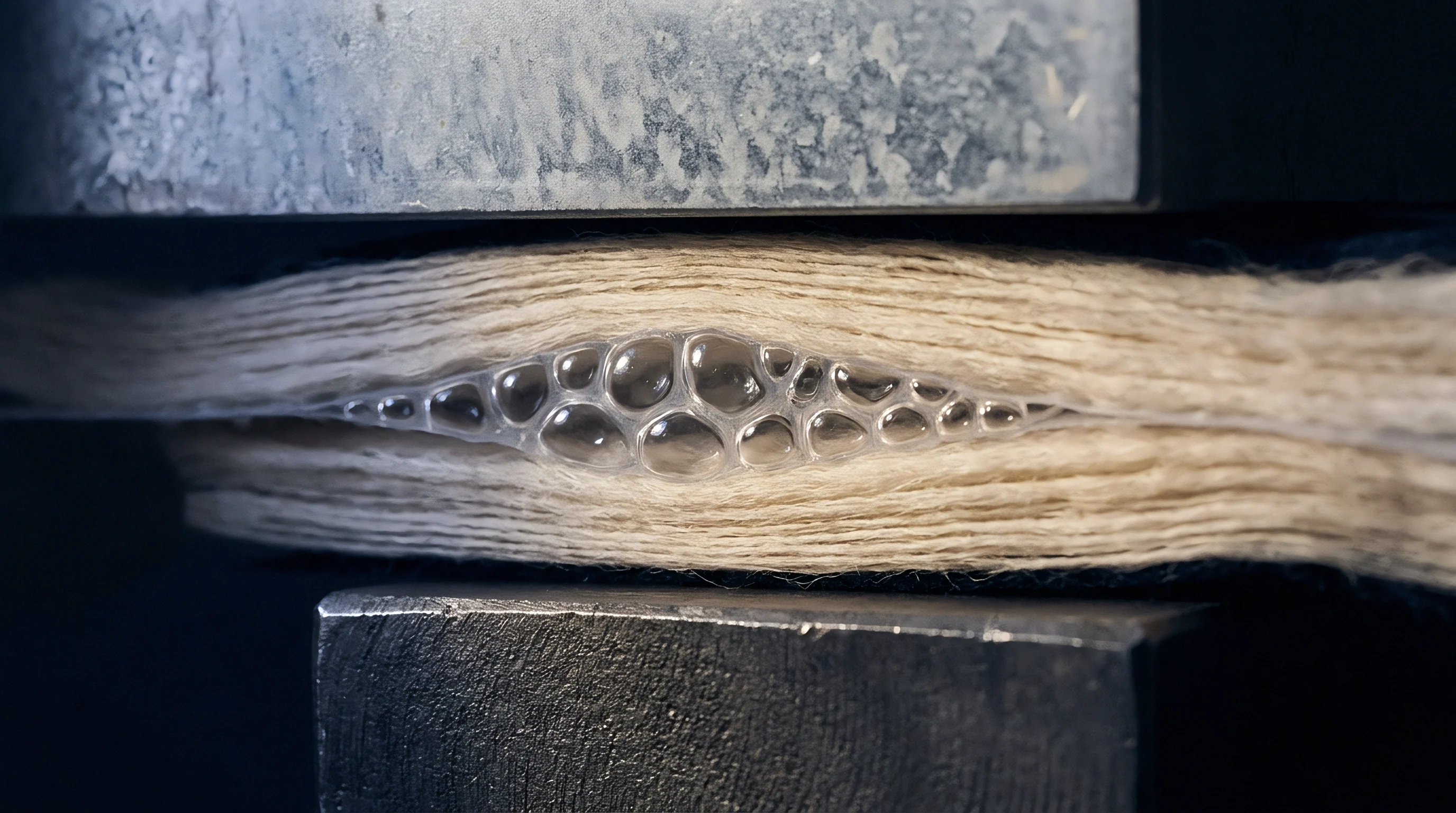
Liquid water voids regain allowances. Sourcing teams encountering audit discrepancies must evaluate whether shipments sustained liquid condensation during voyage transit. Maritime cargo containers regularly experience container rain, where rapid temperature drops force warm, moist air inside the container to condense against cold steel ceilings and drip onto cargo.
Commercial moisture allowances cover vapor absorption into the molecular cell structure of the fiber. Surface wetting from condensed liquid droplets represents physical cargo damage governed by maritime insurance, completely excluded from trade regain adjustments.
Sourcing practitioners encounter standard mill defenses when investigating moisture variances across bulk shipments:
- Mill Atmospheric Stability claims assert that automatic ring-spinning air washers maintained constant sixty-five percent relative humidity, precluding weight variations.
- Impermeable Wrapping Defense contends that low-density polyethylene carton wraps prevent moisture exchange during maritime container transit.
- Desiccant Performance Assurances state that silica gel packages inside container interiors absorbed all ambient water vapor before textile fibers reacted.
- Natural Fatty Wax Protection claims argue that residual sheep wool lanolin or raw cotton wax barriers stopped moisture ingress into the polymer core.
Microscopic examination of fiber cross-sections exposes whether moisture entered through vapor sorption or liquid wetting. Vapor sorption expands fiber diameter uniformly through hydrogen bonding within amorphous polymer zones. Liquid wetting causes localized dye bleeding, surface salt deposition, and surface fungal mildew formation.
Presenting moisture damage as standard commercial regain variation during a customs audit constitutes false representation under customs law.
The yarn left the spinning floor at the certified moisture content, and ocean atmospheric variations remain outside mill responsibility.
Ledger
Reconciling Commercial Invoices and Dutiable Mass
Post-clearance accounting adjustments resolve discrepancies through mathematical normalization rather than speculative litigation. When a customs tariff audit issues a preliminary notice of discrepancy based on moisture-induced weight variances, the importer files an administrative protest supported by a technical reconciliation dossier. The dossier re-establishes the entry values by linking certified laboratory dry mass tests directly to financial ledger entries.
Customs audits test anhydrous mass. The reconciliation calculation extracts the moisture weight from the audited entry, restates the true anhydrous fiber content, and applies the official customs regulatory allowances. If an importer paid fifteen dollars per kilogram for twenty thousand kilograms of billed yarn, the invoice total equals three hundred thousand dollars.
If customs asserts that physical weight was only nineteen thousand kilograms due to arid port conditions during inspection, the customs officer might argue the importer overpaid or submitted fraudulent documentation. By calculating backward from verified anhydrous residue, the trade specialist proves that the nineteen thousand kilograms of physical material contained the identical bone-dry fiber mass contracted on the purchase order.
A secondary financial consequence involves preferential trade origin claims under regional trade agreements. Free trade agreements such as USMCA, CAFTA-DR, or European Union bilateral treaties utilize regional value content and tariff shift rules based on strict weight thresholds. When rules of origin permit up to seven or ten percent non-originating elastomeric or synthetic yarns in a natural fiber article, moisture regain determines whether the foreign content stays beneath the de minimis cap.
An article containing dry mass ratios of ninety-one percent domestic cotton and nine percent foreign elastane satisfies a ten percent de minimis rule. If ambient moisture is added without normalization, and the testing laboratory tests the article under desiccated conditions, cotton loses mass while synthetic elastane retains its weight, potentially pushing foreign content past the ten percent limit and revoking duty-free trade preference.
Settling tariff liabilities requires clear evidence proving that moisture movements occurred through natural hygroscopic respiration without physical cargo diversion. Importers submit conditioning house certificates issued by laboratories operating under ISO/IEC 17025 accreditation, complete with date-stamped moisture desorption curves. These documents substantiate that invoice discrepancies reflect atmospheric water adjustments rather than missing or added commercial substance.
Importers avoid financial penalties when customs accept that anhydrous mass remained stable from mill packhouse to port weighbridge.
How international customs authorities will harmonize statutory moisture regain tables with evolving multi-component synthetic and bio-based fibers remains an unsettled question across the World Customs Organization.